
Balsa Wood: Complete Guide to Properties, Uses and Selection

Balsa wood is the pale, lightweight timber of Ochroma pyramidale, a fast-growing tropical American flowering tree. It is botanically a hardwood, yet its low density makes it easy to cut, dent, carve, and use in models, lightweight structures, insulation, and composite cores.
Table of Contents
What Is Balsa Wood?
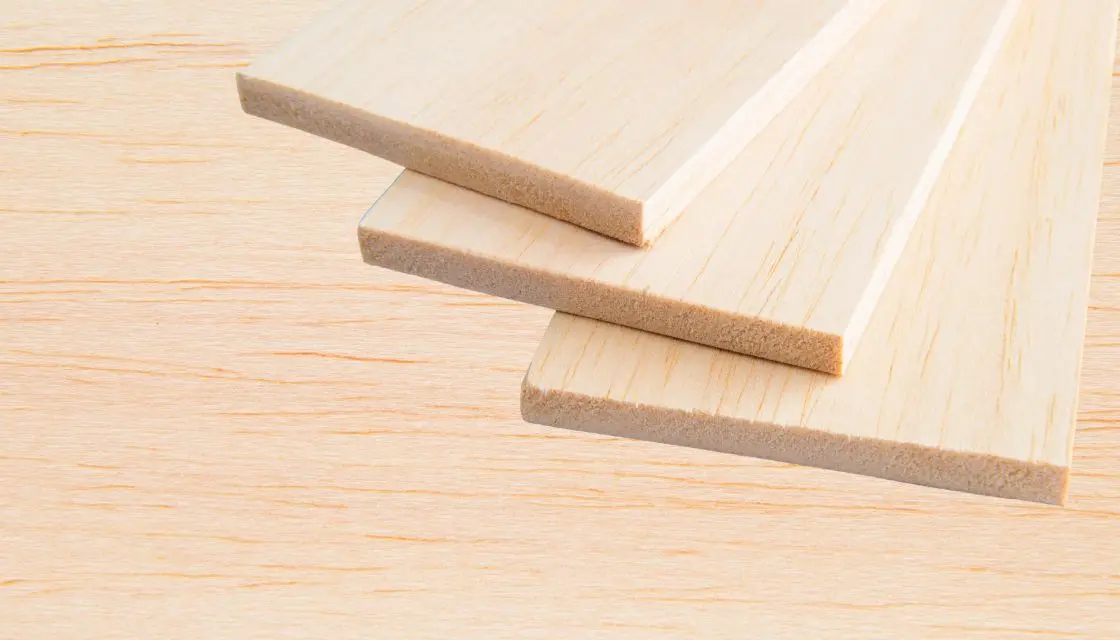
Balsa is one of the lightest woods sold commercially. Average dried density is about 9 lb/ft³ or 150 kg/m³, but two equal-size sheets can feel strikingly different when lifted because density varies across a tree and between growing sites.
Botanical Identity
Ochroma pyramidale, formerly listed as Ochroma lagopus, belongs to the Malvaceae family. It is a pioneer tree native to tropical parts of the Americas and may reach roughly 20–30 meters; Encyclopaedia Britannica describes its large leaves, rapid growth, and lightweight wood.
Commercial trees can produce usable timber in roughly four to seven years, depending on the site and management. Fast growth doesn’t make every board equal: position in the trunk, drying quality, moisture, and growth conditions change its weight and strength.
Hardwood or Softwood?
Balsa is a hardwood because it comes from a flowering broadleaf tree. “Hardwood” is a botanical classification rather than a hardness rating, so balsa can be softer than many woods commonly called softwoods.
This distinction prevents a common beginner error: choosing stock from a soft wood guide based solely on how easily it dents. Species group, density, and measured hardness answer different questions.
Why Balsa Is Light
Balsa contains thin cell walls surrounding large internal cavities, leaving a high proportion of open cellular space. Drying removes the tree’s abundant water and leaves a low-mass framework that feels almost warm and weightless in the hand.
The same structure explains its buoyancy, insulation, easy cutting, and rapid liquid absorption. A drop of thin adhesive can disappear along the grain in seconds, while hard clamp pads can leave a permanent hollow before the joint cures.
Color and Identification
Typical balsa colour ranges from nearly white through cream to pale tan, sometimes with a faint pink or gray cast. The grain is usually straight and open, with little odor and a soft, slightly fuzzy surface after dull-blade cutting.
Color alone can’t confirm the species because basswood, paulownia, poplar, and other light-colored wood may look similar. Genuine balsa’s unusually low weight is the fastest practical clue; supplier species identification remains the better proof.
Balsa or Balsam Wood?
Balsa and balsam aren’t the same. Balsa comes from Ochroma pyramidale; “balsam wood” usually refers to timber from a balsam fir or may appear as an imprecise retail label.
Search labels such as “bals wood,” “baksa wood,” “balasa teak wood,” “balasha teak wood,” and “balda wood” are often misspellings or unrelated trade names. Balsa isn’t teak, so check the scientific species before buying material advertised under those terms.
Balsa Wood Properties
Balsa wood properties combine exceptionally low weight with low hardness and useful performance relative to mass. Published values describe tested clear wood, not a guarantee for an ungraded craft sheet.
Technical Data Table
The representative figures below come from The Wood Database. Moisture content, density, grain direction, and defects can move actual results far from these averages.
| Property | Representative value | Practical meaning |
|---|---|---|
| Average dried density | 9 lb/ft³; 150 kg/m³ | Exceptionally light |
| Basic specific gravity | 0.12 | Very little wood substance per unit volume |
| Specific gravity at 12% moisture | 0.15 | Still much lighter than common lumber |
| Janka hardness | 70 lbf; 310 N | Fingernails can dent it |
| Modulus of rupture | 2,840 psi; 19.6 MPa | Low absolute bending strength |
| Modulus of elasticity | 538,000 psi; 3.71 GPa | Flexible beside denser structural woods |
| Crushing strength | 1,690 psi; 11.6 MPa | Concentrated loads can crush fibers |
| Radial shrinkage | 2.3% | Movement across one grain axis |
| Tangential shrinkage | 6.3% | Higher movement around growth rings |
| Volumetric shrinkage | 8.9% | Total drying-related volume change |
Strength-to-Weight Ratio
Balsa has low absolute strength, but its strength-to-weight ratio can be useful when grain direction and density match the load. This distinction explains why it works in model wings and sandwich panels yet performs poorly as an exposed shelf or screw plate.
Never specify an engineered part from average density alone. A straight, denser strip may carry far more load than a soft strip with diagonal grain runout, while weighing only a few grams more.
Hardness and Denting
At roughly 70 lbf Janka, balsa sits near the bottom of the wood hardness scale. A thumbnail leaves a visible crescent, and a metal straightedge can bruise the surface if pressed hard.
Use broad cauls, soft pads, and light clamping pressure. Sealer can reduce surface fuzz and minor abrasion, but it won’t turn the weak cellular core into a wear-resistant surface.
Moisture, Rot, and Durability
Balsa isn’t waterproof and has poor natural decay resistance. Open end grain takes up water quickly, after which fungal decay, swelling, adhesive failure, and hidden softening can occur.
Outdoor and marine work needs sealed faces, edges, holes, and damaged coating areas. Paint alone is unreliable because a single unsealed screw hole can feed moisture behind an apparently sound outer skin.
Thermal and Acoustic Behavior
Balsa’s trapped air gives it useful thermal insulation and vibration-damping behavior. Conductivity changes with density, moisture, temperature, and grain direction, so a universal thermal value isn’t suitable for design work.
The material can reduce resonance inside a laminated panel, but it isn’t soundproof or fireproof. Dry, thin balsa catches fire readily and needs protection near heat sources.
Advantages and Limitations
- Advantages: extremely low weight, easy cutting, fast sanding, buoyancy, insulation, and wide availability in hobby dimensions.
- Limitations: denting, splitting, variable density, poor screw holding, moisture sensitivity, weak abrasion resistance, and rapid finish absorption.
- Best workaround: place grain with the load, reinforce concentrated-load areas, seal porous surfaces, and select each piece by weight and straightness.
Balsa Grain, Grades, and Forms
Grain orientation changes how a balsa sheet bends, curls, and splits. Supplier terminology can differ, so compare the visible grain and physical flexibility rather than trusting an A-, B-, or C-grain label alone.
A-Grain Balsa
A-grain balsa is commonly tangentially cut, with long grain lines and good flexibility across the sheet. It wraps around curved model-aircraft skins readily but can curl after uneven wetting or one-sided painting.
B-Grain Balsa
B-grain stock has an intermediate orientation and balances stiffness with flexibility. It is the practical general-purpose choice for miniatures, ordinary ribs, craft panels, and model components without extreme bending demands.
C-Grain Balsa
C-grain balsa is associated with quarter-sawn stock and often shows a speckled ray pattern. It stays flatter and feels stiffer across its width, but it may split when forced around a tight curve.
Density Selection
Calculate density as mass ÷ volume using consistent units. For example, weighing several sheets of identical dimensions quickly separates soft skin stock from denser material suited to loaded strips or hard points.
Pressing every piece with a thumbnail damages saleable stock and gives a poor comparison. A digital scale, calipers, and a visual check for grain runout provide more repeatable results; our guide to wood density explains the calculation in more detail.
Sheets and Thicknesses
Balsa wood sheets commonly come in 1/32, 1/16, 3/32, 1/8, and 1/4-inch thicknesses. Thin stock suits ribs, skins, ornaments, and architectural models but arrives warped or edge-crushed more often than thicker pieces.
Sticks, Strips, and Dowels
Sticks and strips form trusses, longerons, bridge members, and miniature framing. Sight along each piece from one end: bow appears as a gentle arc, while twist makes the far face seem to rotate.
Reject structural strips with grain crossing the side over a short distance. That diagonal runout forms an easy fracture path, often beside a glue joint where beginners expect the member to be strongest.
Blocks and Balsa Board
Balsa blocks suit carving, shaped fuselage parts, floats, and prototype forms. “Balsa board” can mean a wide solid sheet, a laminated board, or a lightweight panel, so confirm its construction and actual dimensions before purchase.
End-Grain Balsa Core
End-grain core turns the wood cells roughly perpendicular to composite skins. This orientation gives better through-thickness compression and shear performance than an ordinary flat craft sheet placed between fiberglass layers.
Common Balsa Wood Uses

Common balsa wood uses include model aircraft, miniatures, educational bridges, carving, prototypes, insulation, packaging, and engineered sandwich panels. Its role works best where saving weight matters more than resisting dents or holding screws.
Model Aircraft
Model aircraft use sheets for skins and ribs, strips for framing, and blocks for noses or wing tips. Grain placement matters: long fibers should follow the main tensile or bending load rather than cross it.
A frequent mistake is selecting the lightest stock for every component. Softer balsa suits fairings and lightly loaded skins, while spars, landing-gear supports, and connection zones need denser wood, plywood reinforcement, or another engineered material.
Architectural Models and Miniatures
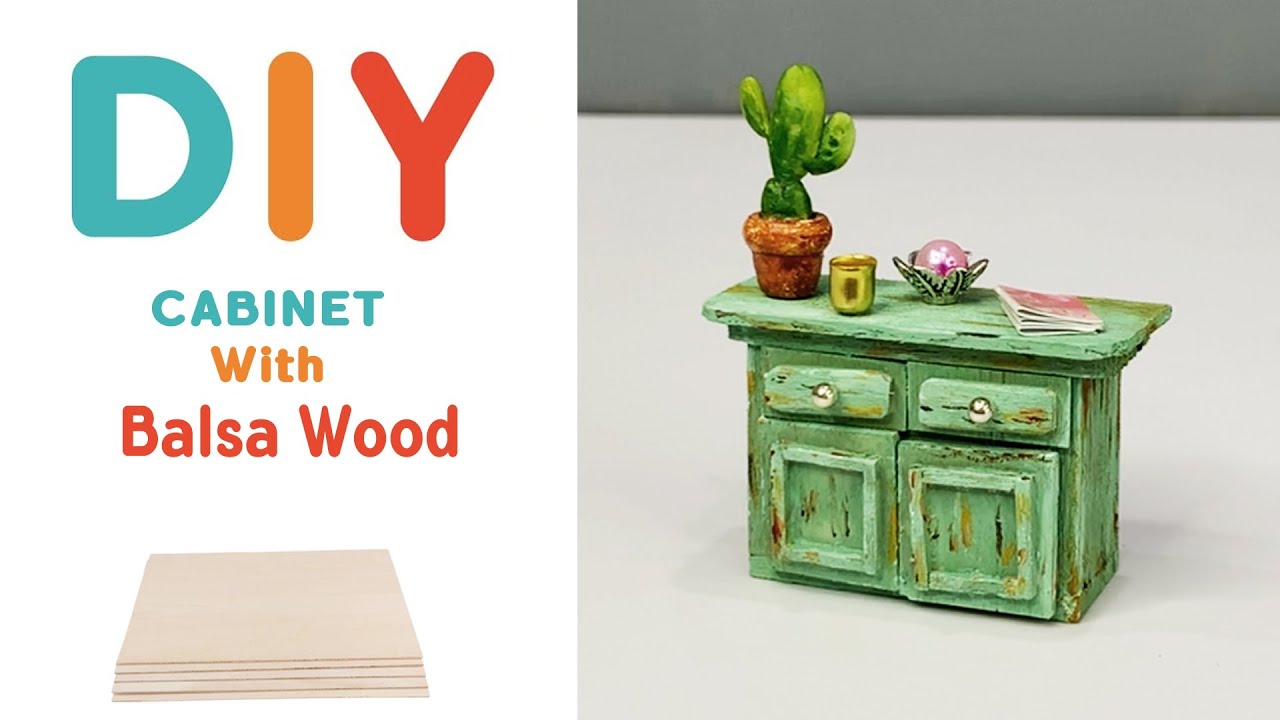
Architectural models benefit from fast cutting and readily available thin stock. Seal and sand exposed edges before painting because raw balsa can look furry at scale, especially under side lighting.
Paint both faces of a free-standing thin panel with light coats. Coating only one side creates unequal moisture and film stress, which can turn a flat wall into a shallow curve overnight.
Carving and Whittling
Balsa offers low cutting resistance, making it friendly for simple figures, study forms, and painted prototypes. A sharp knife produces a quiet slicing sound and a clean curl; a dull edge compresses the surface into pale, woolly fibers.
It performs poorly in thin, frequently handled details. Basswood gives crisp facial features, fingers, and sharp folds more support, while balsa favors broad shapes with generous cross-sections.
Bridges and Engineering Projects
A successful balsa wood bridge depends on straight members, accurate joints, bracing, and controlled glue mass. Compression members often buckle before the wood reaches its theoretical crushing strength.
Sort equal-size strips by weight, then pair similar pieces on opposite sides of the truss. Avoid bulky glue fillets: they add mass while concealing joints that don’t fit closely enough to transfer load efficiently.
Marine and Composite Structures
In a sandwich panel, stiff fiberglass or carbon skins carry much of the face tension and compression. The balsa core separates those skins, carries shear, and creates a thick, stiff panel without the mass of solid laminate.
Composite Design Risks
Real failure modes include water entry, skin-to-core debonding, local crushing, resin starvation, excess resin uptake, and poorly sealed hardware penetrations. A glossy outer laminate can hide wet, softened core for years.
Don’t tighten loaded hardware directly against low-density core. Replace core locally with a suitable insert, seal drilled openings, and spread loads according to the laminate design; engineered marine repairs may need qualified structural review.
Packaging, Insulation, and Prototypes
Balsa works in lightweight prototypes, protective packaging, thermal barriers, and easily machined forms. Foam may offer more uniform density and water resistance, while balsa provides natural grain and greater stiffness in slender members.
How to Work With Balsa Wood
Work balsa with sharp tools, several light cuts, restrained clamping, and thin adhesive films. Most poor results come from excessive force rather than a lack of specialized equipment.
Cutting Sheets and Blocks
Cut thin sheets with a fresh hobby blade, metal straightedge, and self-healing mat. Make several shallow passes; one hard pass follows soft grain, crushes the edge, and increases the chance of a knife slip.
Use a fine razor saw for thick sheets and blocks, leaving a small sanding allowance. Rotate the work so every knife stroke moves away from your hands and body.
Laser Cutting and Engraving
Clean, uncoated balsa can be laser cut and engraved, but settings vary with thickness, density, moisture, focus, machine output, and air assist. Test scrap from the same sheet because dense streaks may cut darker or fail to separate.
Stay with the machine throughout the cut. Balsa ignites readily, and unknown coatings or adhesives may release hazardous fumes or leave burning residue.
CA, PVA, and Epoxy
Cyanoacrylate adhesive, or CA, gives fast lightweight joints but wicks deeply, bonds skin instantly, and may form brittle connections. Apply the smallest workable drop with ventilation and eye protection.
PVA suits many crafts and close-fitting wood joints, though its water can warp thin stock. Epoxy fills gaps and bonds selected composite systems, but careless use adds weight and can soak heavily into end grain.
Adhesive Selection Table
| Application | Likely choice | Main risk |
|---|---|---|
| Light model frame | CA or thin PVA | Excess weight or brittle joints |
| School craft | PVA | Warping from water |
| Joined carving blocks | PVA or epoxy | Crushing from clamps |
| Balsa-to-fiberglass laminate | Specified laminating epoxy | Resin uptake or poor compatibility |
| Temporary mock-up | Repositionable craft adhesive | Fibers tearing during removal |
Sanding, Sealing, and Painting
Use a flat sanding block and progress toward 220–320 grit for many painted models. Finger sanding creates dips in soft areas and rounds structural edges before they look visibly uneven.
Sanding sealer, lightweight filler, or a compatible thin coating limits paint absorption. Test on scrap, apply light coats, and treat both faces of thin free panels to reduce curl.
Storage and Moisture Care
Store sheets flat and supported, away from concrete, direct sun, and damp air. Keep long strips horizontal or supported along their length so they don’t acquire a permanent sag.
Let stock acclimate before precision assembly. Persistent musty odor, dark moisture staining, mold, or unusually soft patches can signal damaged material that shouldn’t enter a structural model.
Tool, Dust, and Fire Safety
Fine balsa dust can irritate eyes, skin, and airways. Use extraction, eye protection, suitable respiratory protection, and safe cutting methods consistent with OSHA wood-dust guidance.
- Cut away from the body on a stable mat.
- Use a straightedge that resists blade override.
- Secure small blocks before sawing or drilling.
- Never blow sanding dust around the room with compressed air.
- Keep laser equipment attended and ready for fire response.
Balsa Wood Comparisons
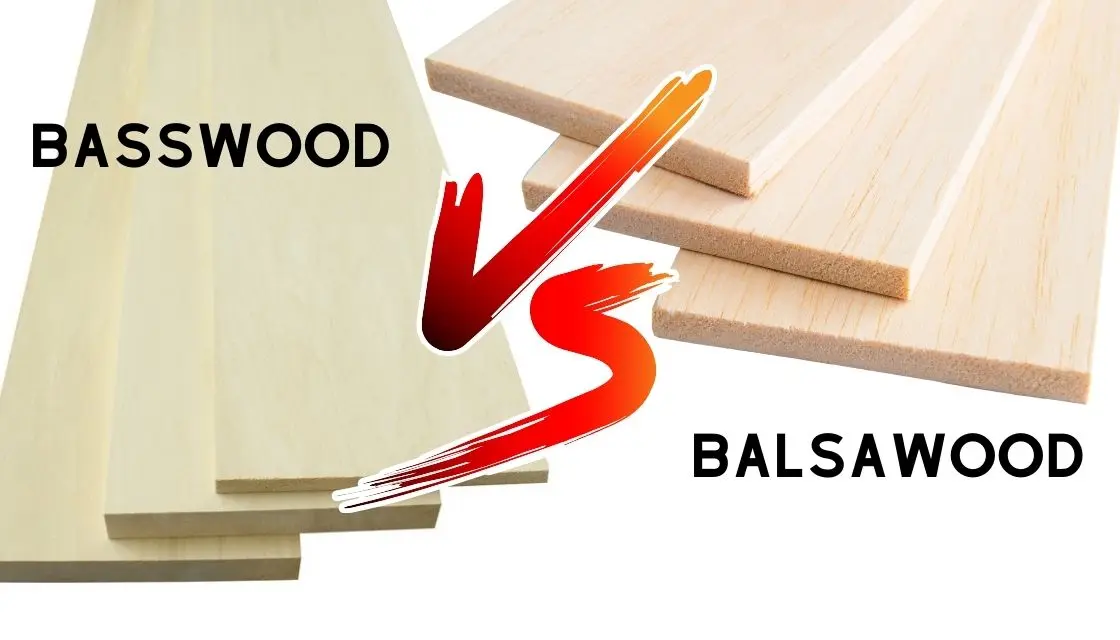
The best balsa alternative depends on whether weight, stiffness, carving detail, moisture resistance, flatness, or fastening strength matters most. No substitute wins every category.
Balsa vs. Basswood
Are basswood and balsa wood the same? No. Both are botanically hardwoods, but basswood is typically much heavier, harder, and better at holding crisp carved details.
| Factor | Balsa | Basswood |
|---|---|---|
| Representative dried density | 150 kg/m³ | 415 kg/m³ |
| Representative Janka hardness | 70 lbf | 410 lbf |
| Cutting feel | Very little resistance | Light, controlled resistance |
| Dent resistance | Very low | Much better |
| Carving detail | Broad, simple forms | Cleaner fine details |
| Model use | Best where low mass leads | Best where hardness matters more |
For balsa wood vs basswood, choose balsa for minimum flying weight, easy shaping, and broad forms. Choose basswood for fine carving, firmer edges, and parts that receive more handling.
Balsa vs. Plywood
Balsa is lighter and easier to shape; plywood holds fasteners better and gains stability from cross-laminated veneers. Model builders often combine balsa skins or shapes with plywood mounting plates and load-spreading inserts.
Balsa vs. Foam Board
Foam board supplies uniform flat panels for quick mock-ups, while balsa makes better slender wooden frames and sanded three-dimensional forms. Check adhesives carefully because solvent-based products can dissolve some foam cores.
Balsa vs. Cork
Cork is resilient and compressible, making it useful for gaskets, pinboards, and vibration control. Balsa forms rigid lightweight members, so it better suits trusses, model frames, carved blocks, and sandwich cores.
Alternative Material Guide
| Priority | Material to assess | Trade-off |
|---|---|---|
| Lowest model weight | Balsa | Dents and crushes easily |
| Fine carving | Basswood | Heavier than balsa |
| Stable screw plate | Aircraft plywood | Higher mass and harder cutting |
| Large quick mock-up | Foam board | Weaker edges and adhesive limits |
| Compressible layer | Cork | Unsuitable for slender rigid members |
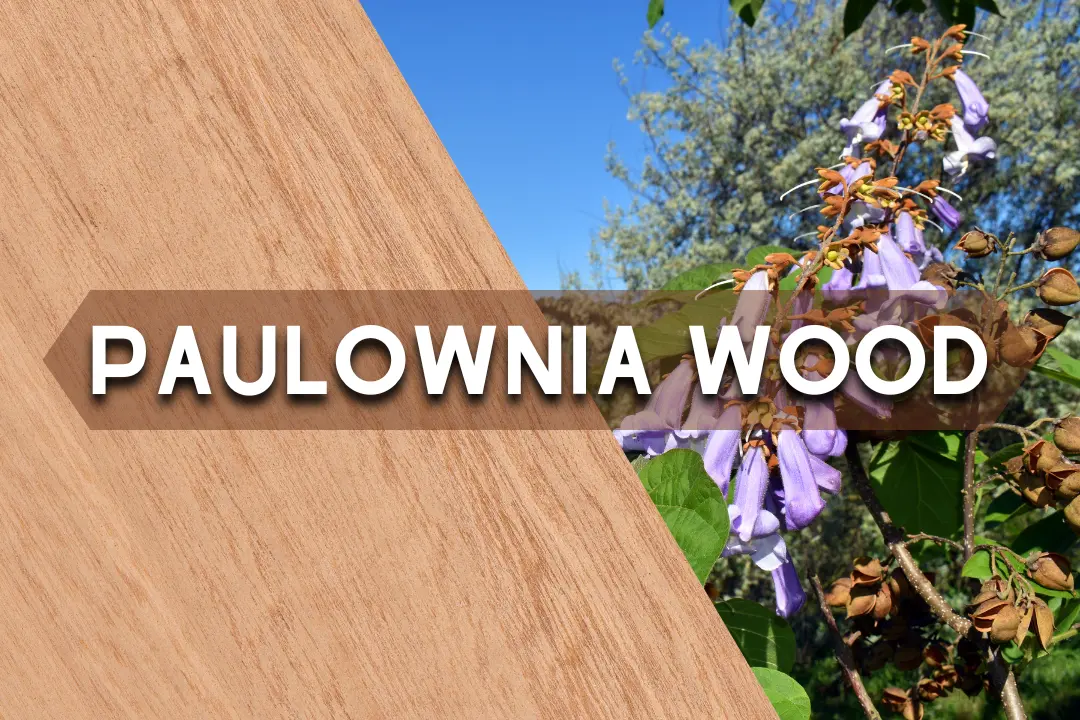
| Light solid timber | Paulownia | Heavier and harder to cut than balsa |
Paulownia wood is useful when a project needs lightweight solid timber with more surface durability. It doesn’t replace selected end-grain balsa in a certified composite design without engineering approval.
Choosing and Buying Balsa Wood
Choose balsa by format, dimensions, density, grain, and usable yield, not pack price alone. Retail listings often omit species, moisture, tolerance, and grain grade, so inspect delivered material before committing it to a project.
Project Selection Table
| Project | Suitable format | Selection priority |
|---|---|---|
| Architectural model | Thin smooth sheet | Flatness and clean surface |
| Aircraft skin | Thin A- or B-grain sheet | Low mass and suitable flexibility |
| Aircraft rib | Stiffer sheet | Grain direction and consistency |
| School bridge | Square strips | Straightness and weight matching |
| Carving | Block | Uniform texture and sound corners |
| Laser ornament | Flat uncoated sheet | Uniform thickness |
| Composite panel | Specified end-grain core | Certification and moisture control |
Grain and Density Checks
Look for straight continuous grain, then flex sheets gently without creasing them. Weigh equal-size pieces and calculate density when matching aircraft wings, bridge sides, or other paired components.
A mottled C-grain face isn’t a defect, and a plain A-grain face isn’t lower quality. Quality depends on matching the cut, density, and fiber direction to the job.
Receipt Inspection Checklist
- Measure actual thickness with calipers.
- Sight down strips for bow and twist.
- Check sheet corners and edges for crushing.
- Compare the weight of identical dimensions.
- Look for severe runout, splits, mold, and moisture stains.
- Confirm piece count and species description.
- Separate warped stock before it affects flat pieces.
Practical inspection saves more material than trying to flatten every poor sheet later. Keep usable offcuts sorted by thickness; small straight pieces often become gussets, test coupons, paint samples, or laser-setting samples.
Dimensions and Price Comparisons
Compare sheets by cost per square foot, blocks by volume, and strips by linear length. Include shipping damage and warped pieces when calculating usable yield, since a cheap pack can cost more after rejects are removed.
Long straight strips, density-selected sheets, and tightly graded grain often carry a premium. Nominal thickness can differ from measured thickness, which matters when parts fit slots or laminated assemblies.
Thin Laser-Cutting Sheets
One-sixteenth-inch sheets suit ornaments, ribs, engraved pieces, and architectural work. Confirm that any “pre-finished” surface is safe for the laser and compatible with the chosen adhesive or paint.

Thin Balsa Craft Sheets
- Five 12-inch square sheets
- Thin one-sixteenth-inch profile
- Smooth pre-finished surfaces
- Easy to cut and engrave
- Ideal for crafts and models
 Buy on Amazon
Mixed Sheets and Sticks
A mixed balsa kit is convenient for miniatures and prototypes that need both flat panels and framing. Mixed packs rarely supply density-selected contest stock, so sort every structural piece before assembly.

Balsa Sticks and Sheets Kit
- Complete 150-piece assortment
- Includes sheets and wood sticks
- Pre-sanded unfinished surfaces
- Mixed stick widths for versatility
- Useful for models and miniatures
Buy on Amazon
Carving Blocks
Choose blocks with uniform resistance across every face. Sudden soft patches can tear beneath a carving knife, while hidden splits may open only after the shape becomes thin.

Balsa Blocks for Carving
- Twelve unfinished carving blocks
- Four assorted block sizes
- Soft wood for easy whittling
- Ready for painting or staining
- Great for beginner carving projects
Buy on Amazon
Structural Model Strips
Bulk strips suit bridges, trusses, and repetitive frames, but sorting is part of the build. Match straight pieces by weight and cross-section before pairing them in symmetrical load paths.

Mixed Balsa Strip Bundle
- Large 222-piece strip set
- Full 12-inch strip length
- Three square strip sizes
- Lightweight for structural models
- Ideal for hobby and DIY builds
Buy on Amazon
Sustainability and Responsible Sourcing

Balsa grows quickly, but fast growth alone doesn’t prove responsible production. Land history, harvesting legality, labor conditions, biodiversity, processing waste, and traceability all affect a product’s environmental record.
Fast Growth and Impacts
Balsa’s short commercial rotation can reduce the wait for usable timber compared with slow-growing tree species. Poorly planned production can still replace diverse habitat, encourage informal cutting, or create single-species plantations with limited ecological value.
FSC Certification and Traceability
Check a supplier’s claim through the FSC certificate database rather than relying on a logo shown in marketplace images. Chain-of-custody records connect certified forest material with later processing and sale.
Ecuadorian Balsa Supply
Ecuador is a major source of commercial balsa for hobby and composite markets. Demand from wind-energy and sandwich-panel industries can affect availability, harvesting pressure, export patterns, and the grades reaching small retail packs.
Avoid fixed market-share claims without a dated primary record. Production totals can miss informal harvesting and can change sharply as industrial demand rises or falls.
Responsible Supplier Questions
- Is the species confirmed as Ochroma pyramidale?
- What country and region supplied the wood?
- Is certification or independent traceability available?
- Was the material plantation-grown, community-grown, or wild-harvested?
- Does the supplier state density, moisture, grain, and dimensional tolerances?
- How is damaged or off-grade material used rather than discarded?
Responsible buying combines traceability with careful material use. Selecting the right density, storing sheets flat, and turning sound offcuts into small parts reduces waste while producing stronger, lighter projects.
FAQs
Is Balsa Wood A Hardwood Or Softwood?
Balsa wood is a hardwood, despite being exceptionally light and easy to cut. Botanically, it comes from a flowering broadleaf tree, which defines hardwood. Its low density makes it behave more like a softwood in models and crafts, but its classification remains hardwood for woodworking purposes.
Are Basswood And Balsa Wood The Same?
Basswood and balsa wood are different types of wood with distinct properties. Basswood is denser, heavier, and usually has a finer, more even grain. Balsa is much lighter and is favored for lightweight models, while basswood is commonly used for carving, scroll sawing, and craft projects.
Is Balsa Wood Strong And Waterproof?
Balsa wood is strong for its weight but is not naturally waterproof. It can support light structural loads when grain direction is considered, making it popular for model aircraft. Moisture can cause swelling, warping, or weakening, so seal it with paint, epoxy, polyurethane, or another suitable finish before outdoor use.
What Is The Best Glue For Balsa Wood?
The best glue for most balsa wood projects is PVA wood glue, such as aliphatic resin or standard carpenter’s glue. It bonds well, sands easily, and gives you time to position parts. For model aircraft or quick repairs, thin or medium CA glue works faster, while epoxy is useful when extra gap filling or water resistance is needed.
Can Balsa Wood Be Laser Cut Safely?
Balsa wood can be laser cut safely when it is clean, untreated, and cut with proper ventilation and supervision. Use laser-safe wood without paint, varnish, glue residue, or unknown coatings, which can release harmful fumes. Because balsa ignites easily, use appropriate settings, keep an extinguisher nearby, and never leave the laser unattended.
Affiliate Disclosure: Some links in this post are affiliate links. If you make a purchase through these links, we may earn a small commission at no extra cost to you. We only recommend products we genuinely believe in.