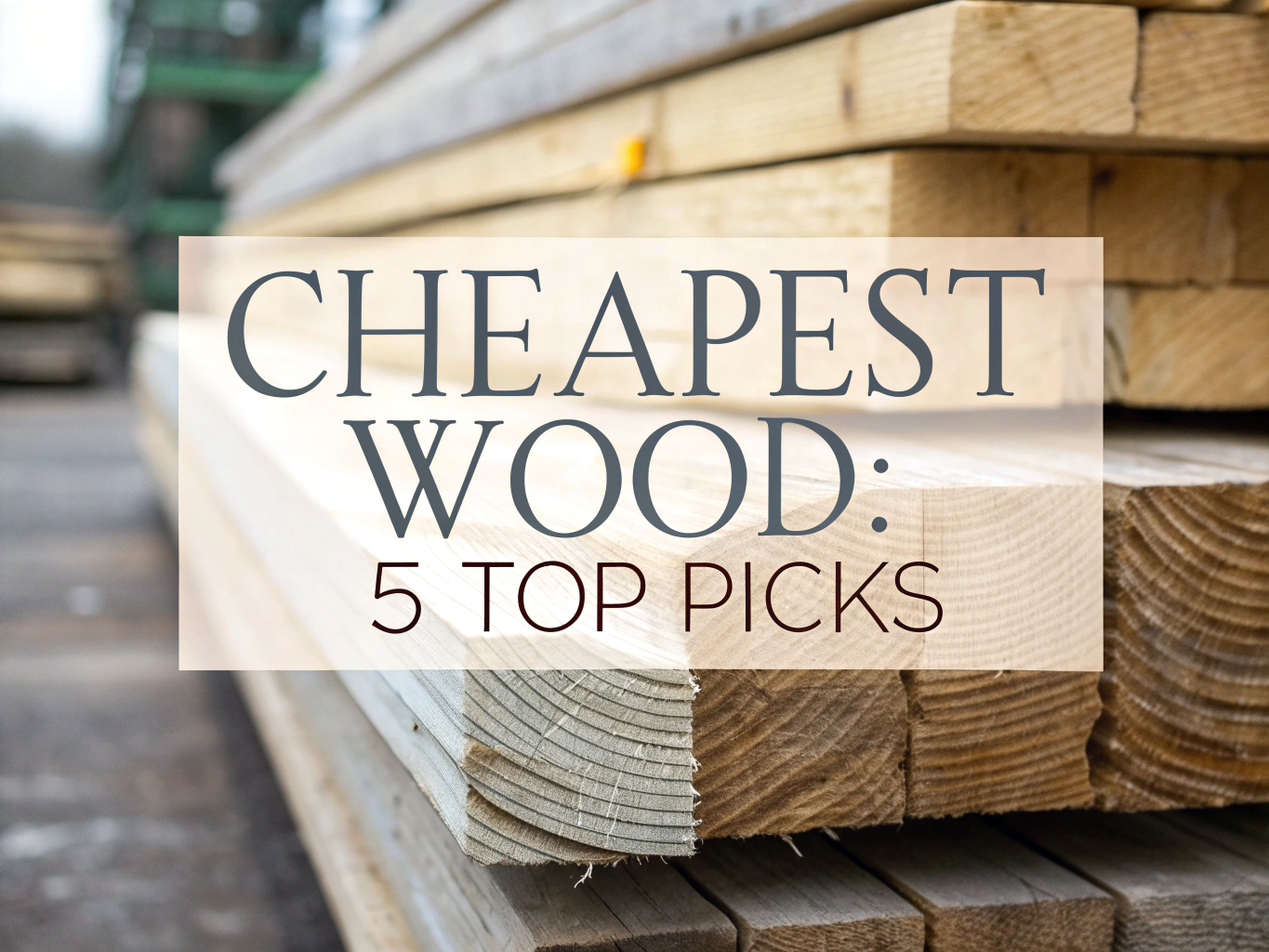

Looking for the cheapest wood that still looks good? This guide breaks down five top choices so you can pick the right wood for floors, furniture, or small projects. Each entry shows typical prices, common uses, and quick buying tips. Read on to learn how to save money and make smart choices in 2026.
Table of Contents
Looking for the cheapest wood that still works well for real projects? This guide compares prices, uses, and buying tips for 2026. It helps you choose the right budget lumber quickly. It also answers what is the cheapest wood and shows the best low-cost flooring options.
1- Pine: The Most Affordable Wood Option
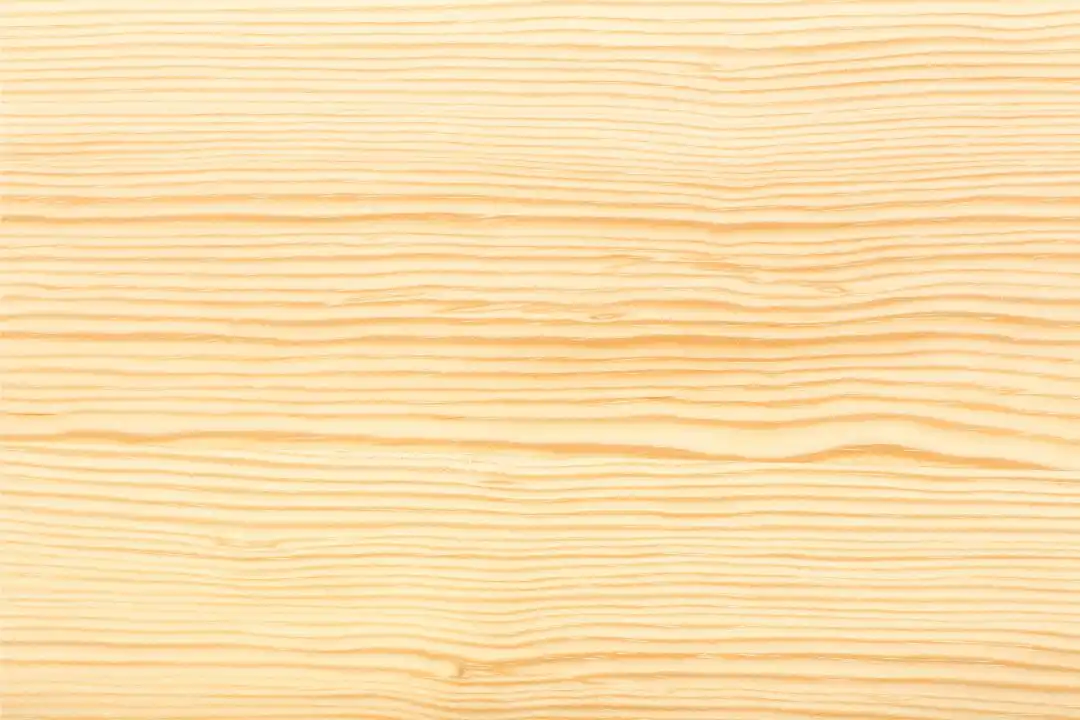
Why Pine Tops the List
Pine is abundant, easy to mill, and widely stocked, which keeps costs very low for framing, furniture, and DIY. Current averages often run $2.00–$3.50 per board foot, with regional swings based on grade and thickness (2025 wood prices).
Builders like SPF studs for structural work, while yellow pine offers extra stiffness for decks and floors. You can stain pine for a warm look, or paint it to hide knots and color variation.
Best Uses for Pine
Pick pine for framing, shelving, rustic tables, trim, and cheapest wood flooring in low-traffic rooms. For furniture, choose kiln-dried boards and consider #2 or better to reduce warp and pitch.
Pine Pricing Breakdown
Here’s a quick price snapshot that shows why pine sits at the top for affordability in 2025. Use these ranges to set budgets and compare substitutes before you buy.
| Wood Type | Typical Price per Board Foot |
|---|---|
| Pine | $2.00–$3.50 |
| Poplar | $3.00–$5.00 |
| Red Oak | $4.00–$5.70 |
| Ash | $5.95–$6.50 |
| Alder | Generally under $6.00 |

Square Pine Wood Dowel Rods – 20 Pack
- Set of 20 square pine wood dowel rods
- Smooth unfinished wood ready for cutting, sanding, staining or painting
- Ideal for crafts, woodworking, modeling and DIY projects
- Natural grain wood that’s easy to work with
- Versatile size perfect for home decor and educational uses
 Buy on Amazon
2- Poplar: Budget-Friendly Hardwood Alternative
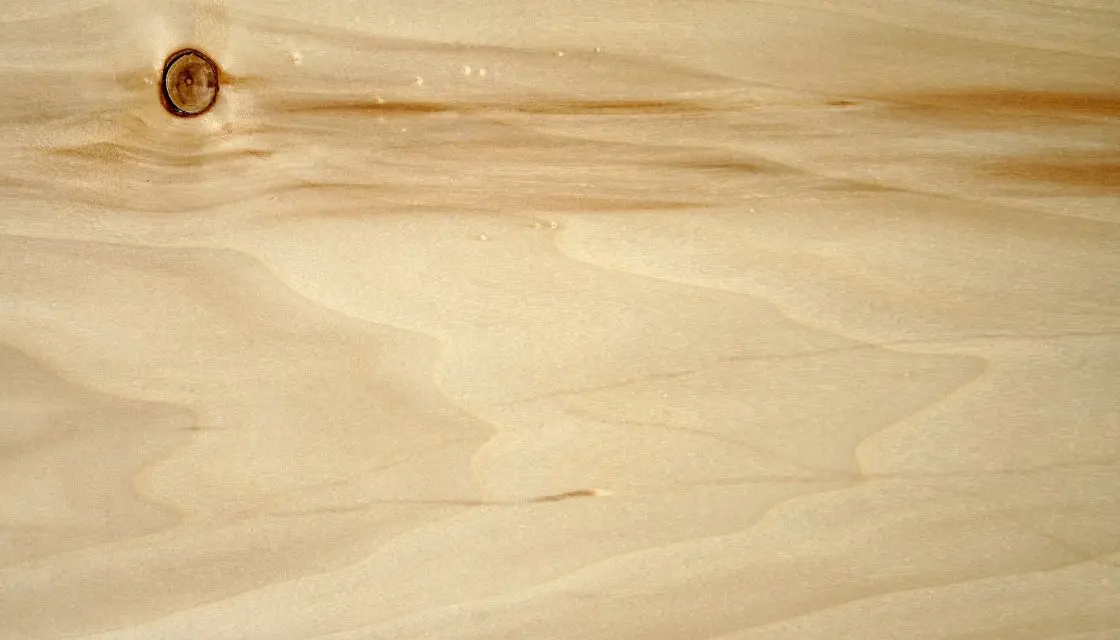
Poplar’s Cost Advantages
Poplar is a go-to hardwood for painted furniture and built-ins because it machines well and costs less than premium species. Expect $3.00–$5.00 per board foot in many markets (CRLumber price list).
If you need a hardwood feel without a hardwood price, poplar beats maple or cherry for budget frames. For a deep stain, use a conditioner or choose a different wood since poplar can blotch.
Ideal Projects for Poplar
Use poplar for painted cabinets, face frames, drawers, and trim. Learn the basics of the species here: poplar wood for more grain, strength, and finishing notes.
Price Comparison with Other Woods
Poplar usually lands above pine and below red oak on price. That balance makes it smart for painted furniture where you want hardwood stability at a lower cost.

Solid Unfinished Poplar Wood Board 1/2 x 5-1/2 x 6 ft
- 1/2 x 5-1/2 x 6 foot solid poplar hardwood board
- Unfinished surface ready for paint, stain, or custom finishes
- Real American hardwood for strength and durability
- Ideal for board & batten, moulding, baseboards, and woodworking
- Versatile DIY and home improvement material
Buy on Amazon
3- Alder: The Poor Man’s Cherry
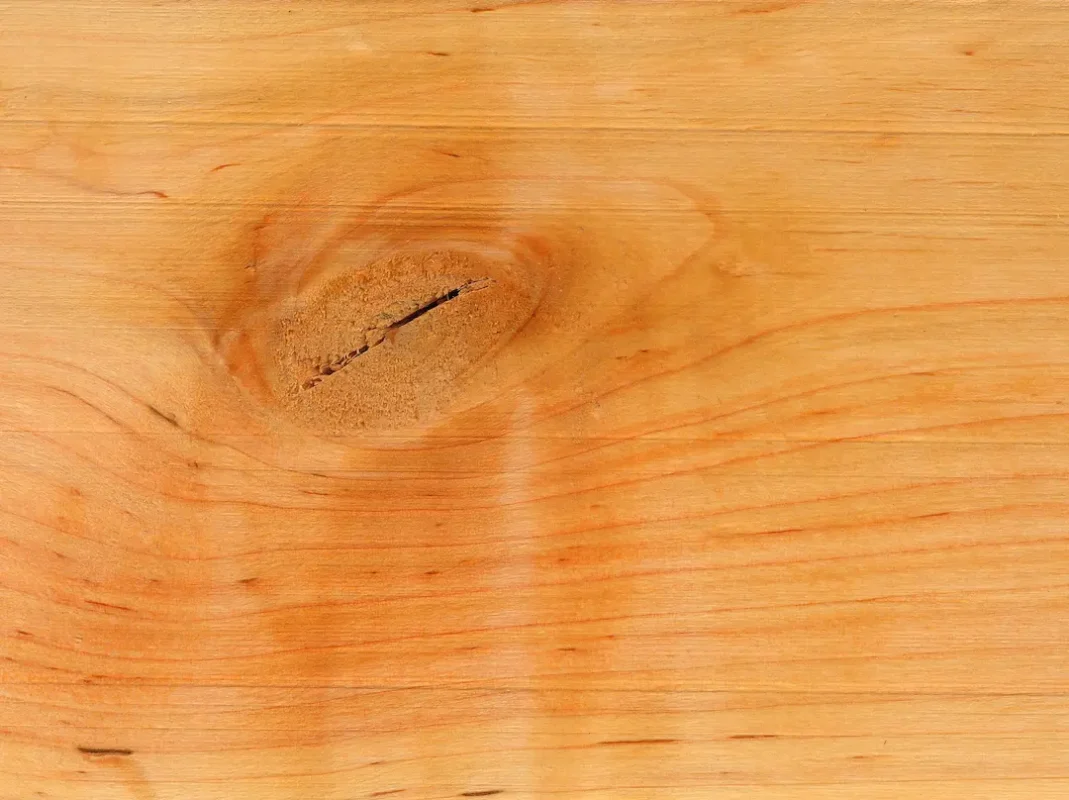
Knotty vs Clear Alder Options
Knotty alder gives a rustic look with visible character, while clear alder offers a smoother, cherry-like vibe at a fraction of the cost. Many shops call it “poor man’s cherry” for its warm finish and easy workability.
Regional Availability and Pricing
Alder is more common in western states, which often keeps prices under $6.00 per board foot for many grades. It’s a practical cabinet wood where supply is strong (cabinet wood types and costs).
Best Applications for Alder
Choose alder for stained cabinets, doors, and casual furniture where you want warmth on a budget. Pre-drill fasteners, watch for end grain absorption, and test stains for color match.

BeaverCraft Alder Wood Carving Blocks – 10-Piece Set
- High-quality alder wood carving blocks for whittling and craft projects
- Set includes 10 unfinished blocks in varied sizes
- Smooth, consistent grain that’s easy to carve and shape
- Perfect for beginners and experienced woodworkers
- Blocks ready to use and customizable with paint or stain
Buy on Amazon
4-5 Ash and Red Oak: Affordable Hardwood Choices
4- Ash for Durability on a Budget
Ash delivers a tough, open-grain look at mid-low prices, often $5.95–$6.50 per board foot, which beats many premium hardwoods. It works well for tabletops, chairs, and utility pieces you expect to use hard (CRLumber price list).
5- Red Oak as Cheapest Wood Flooring
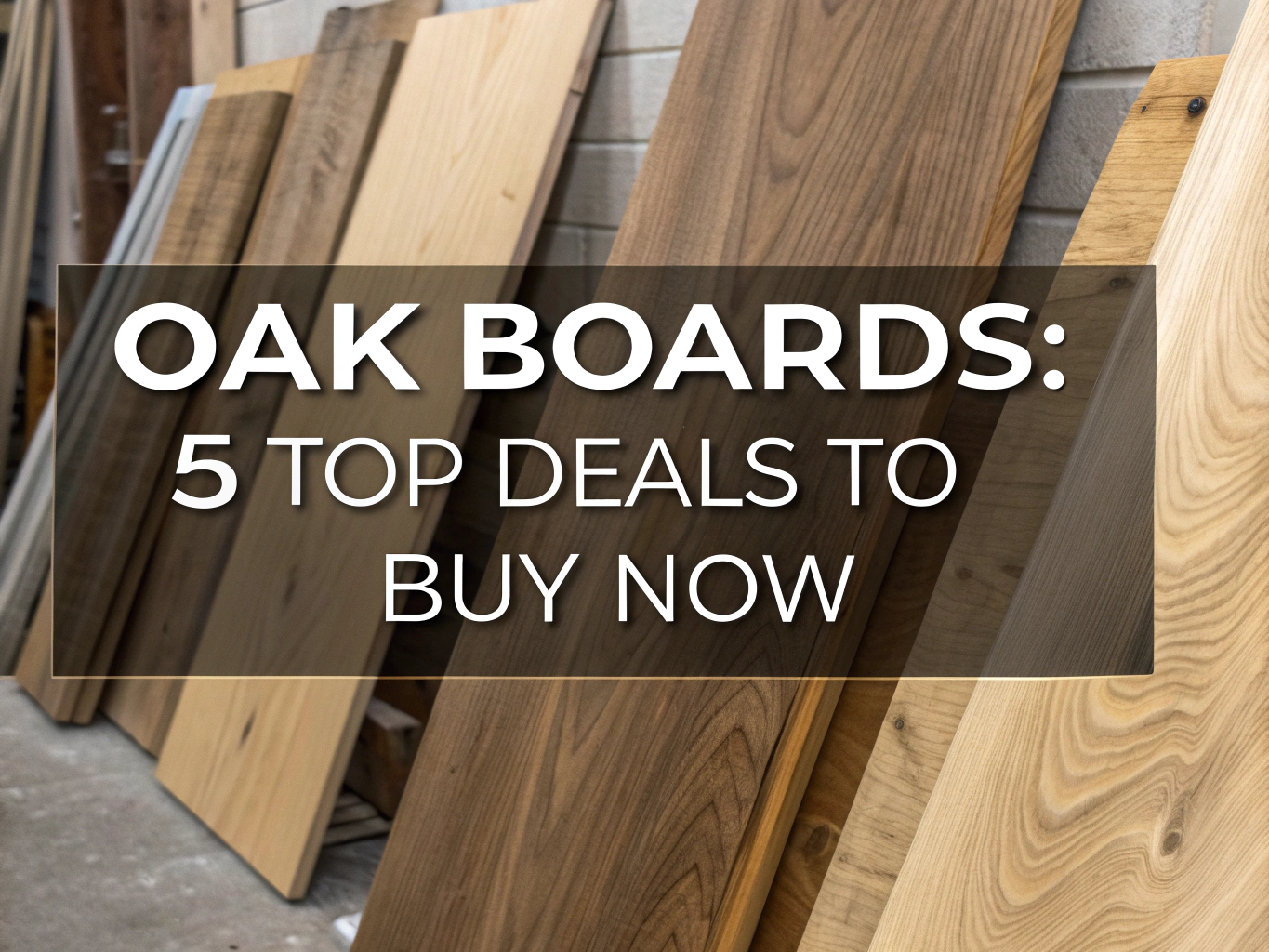
Red oak is often the cheapest hardwood flooring choice that still looks classic and wears well. Many yards price it around $4.00–$5.70 per board foot, and it sands and finishes predictably for a clean, even result.
Plan subfloor prep and underlayment quality to avoid squeaks and movement; brush up on plywood grades if you’re replacing sheathing before laying red oak.
For a fast visual walkthrough on budget-friendly hardwood installs, watch this video.
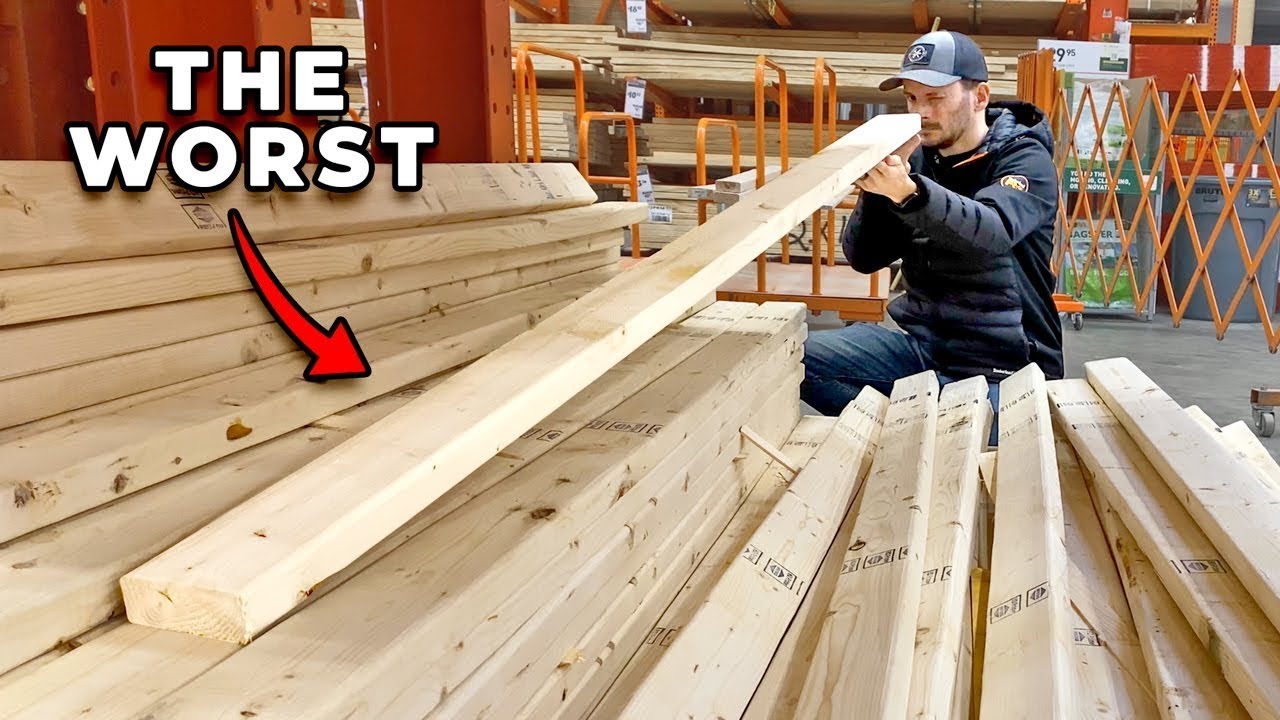
Hardwood vs Softwood Cost Analysis
Softwoods like pine win on raw cost and work speed; hardwoods like red oak or ash win on wear. For floors, red oak beats pine for dent resistance; for framed walls or painted shelves, pine beats red oak on price.
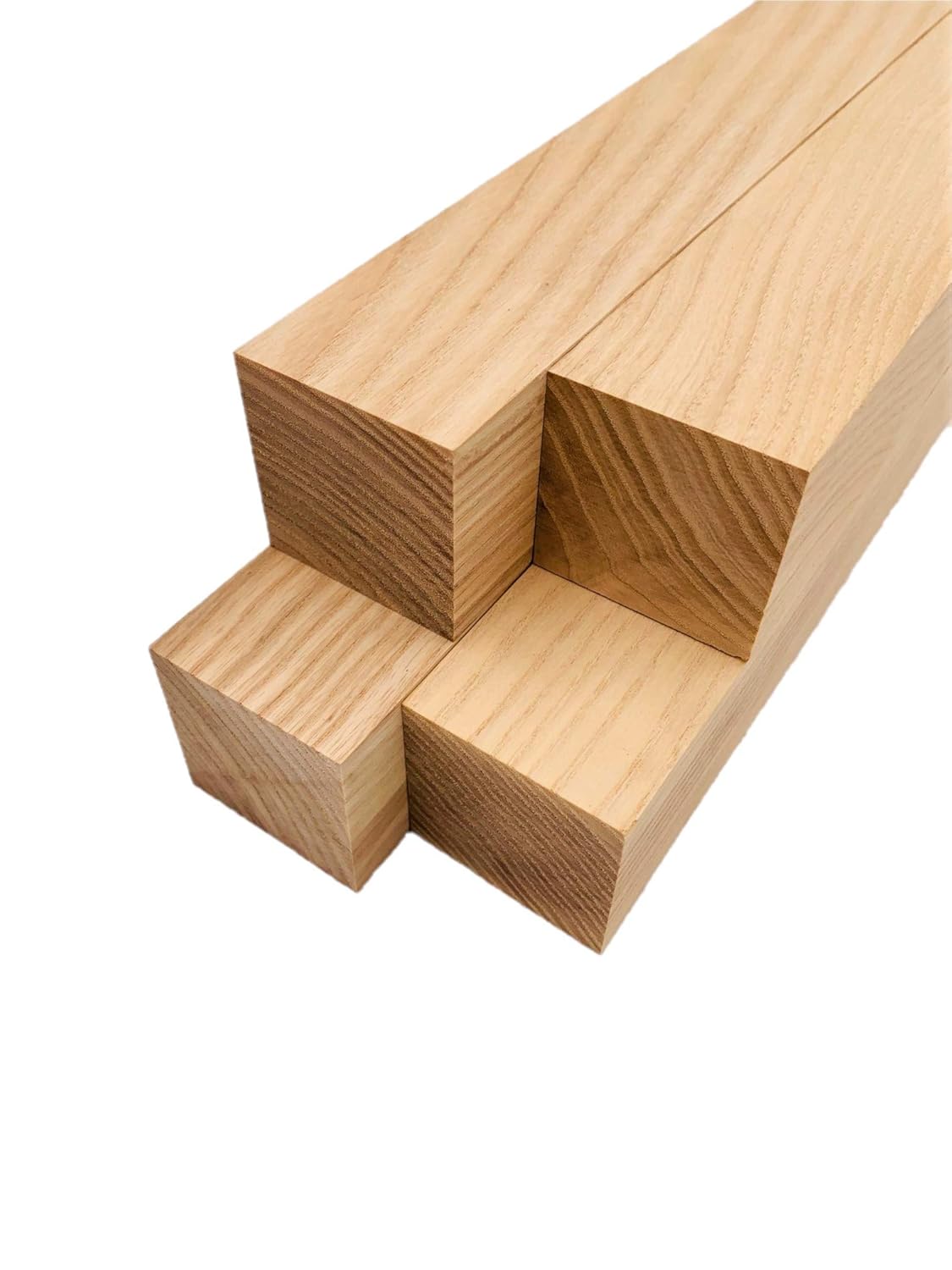
White Ash Lumber Turning Blanks (4 pc) – 2×2×12″ Premium Hardwood
- Four white ash turning blanks
- 2″×2″×12″ size
- Premium hardwood for woodturning
- Great for pens, handles & small crafts
- Durable, ready to shape
Buy on Amazon
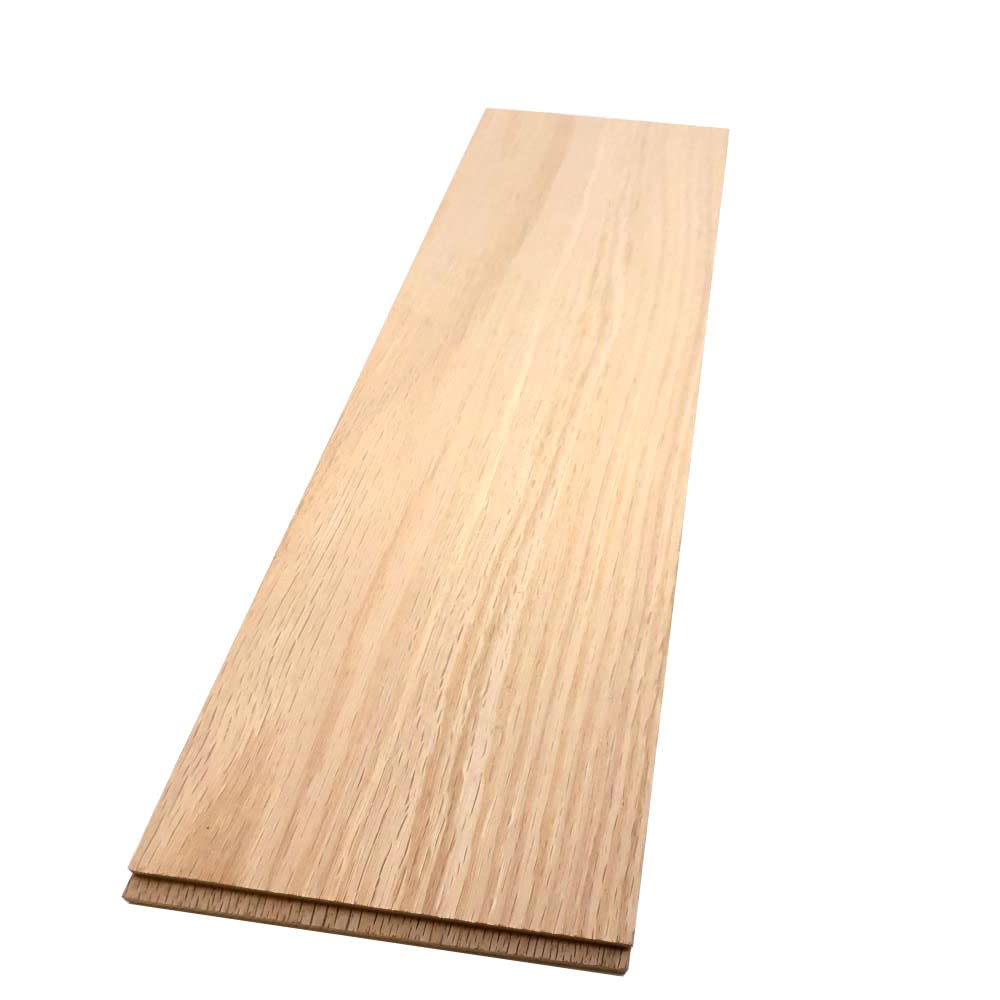
Red Oak Craft Boards – Solid Hardwood Laser-Ready (2 Pack)
- Solid red oak hardwood boards
- 2-pack for projects
- Laser-ready surface for engraving & cutting
- Perfect for crafts, DIY, woodworking
- Durable premium material
Buy on Amazon
What Is the Cheapest Wood for Your Project?
Framing and Construction Needs
For studs, joists, and rafters, pine is the answer to “what is the cheapest wood” in 2025. If you’re replacing subfloors or wall sheathing, compare plywood grades to balance strength, flatness, and cost.
Cabinetry and Furniture Projects
Poplar wins for painted cabinets and built-ins; alder wins for a warm stained look on a budget. For ultra-light pieces, check paulownia wood or eco options like rubberwood to save weight and cost.
Cheapest Wood Flooring Options
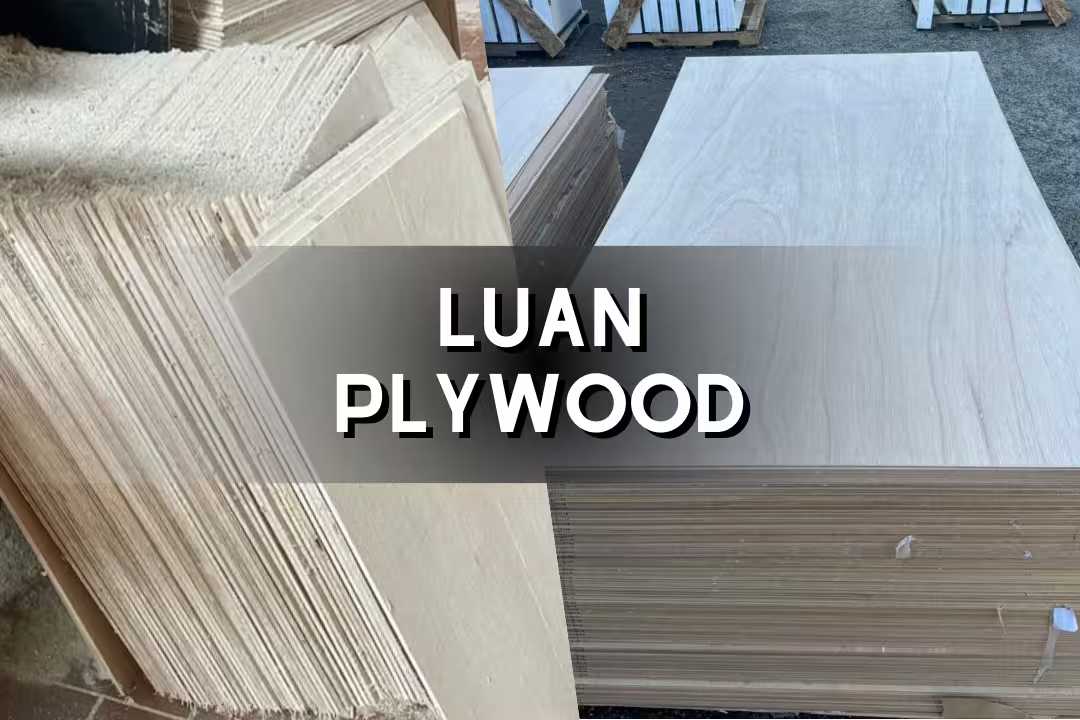
Pine flooring is the lowest-cost pick with a rustic vibe, but it dents easily; red oak is the cheapest hardwood with better durability. If you’re leveling or patching underlayment, a thin luan plywood layer can smooth small dips before finish installation.
Craft and Hobby Wood: Amazon Top Picks
Basswood for Precision Work
Basswood cuts clean, weighs little, and accepts detail, which makes it perfect for laser jobs, models, and whittling. Use sharp tools, light passes, and thin adhesives for crisp, flat assemblies.
Pine for Rustic Projects
Pine adds visible grain and color variation that looks great on coasters, signs, and small shelves. Seal knots with shellac-based primer to stop bleed-through before paint or stain.
Here are top-value craft wood packs with consistent sizes and smooth surfaces for DIY and classroom projects.
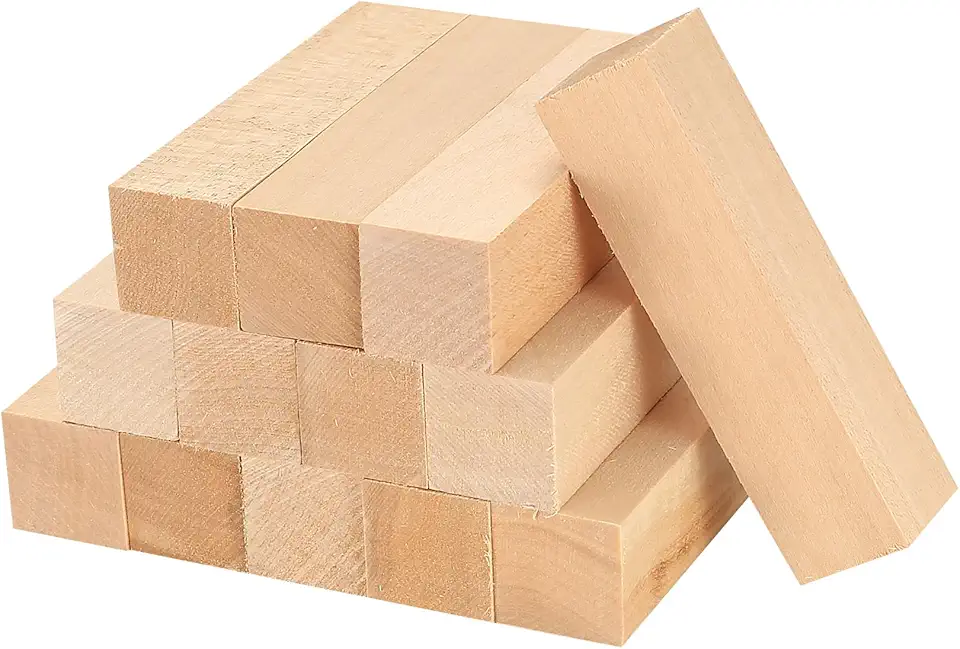
13-Pack Basswood Carving Blocks — Smooth Unfinished Craft Wood
- 13 blocks (3.9 x 1 x 1 in) ideal for carving and whittling
- Fine, even grain for clean cuts and detailed work
- Smooth unfinished surface ready to sand, paint, or stain
- Lightweight basswood perfect for models, ornaments, and DIY projects
- Suitable for beginners and experienced carvers
Buy on Amazon

7-Pack Basswood Blocks, Two Sizes for Carving & Crafts
- Two sizes (4 x 1 x 1 and 4 x 2 x 2 in) for varied projects
- High-quality basswood with consistent grain for precise carving
- Easy-to-shape and sand for smooth finishes
- Versatile for model building, crafts, and small furniture details
- Compact pack ideal for hobbyists and classes
Buy on Amazon

15-Pack Basswood Sheets 150x100x2mm — Craft Boards
- 15 sheets 150 x 100 x 2 mm for small models and ornaments
- Uniform 2mm thickness for accurate cuts and layering
- Smooth, unfinished surface ready for painting, staining, or burning
- Lightweight and easy to score, cut, or sand
- Great for school projects, aircraft models, and DIY crafts
Buy on Amazon
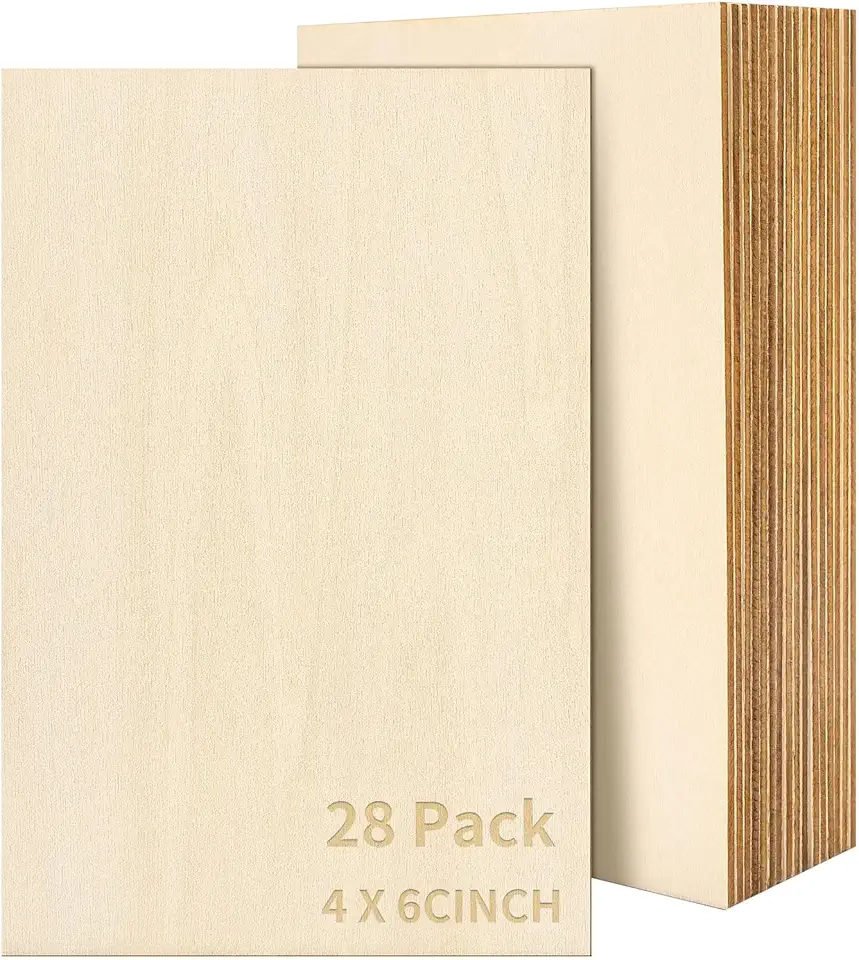
28 Thin Basswood Sheets 4 x 6 x 1/16 in — Precision Panels
- 28 thin 4 x 6 x 1/16 in sheets perfect for delicate model parts
- Consistent thickness for laser cutting and precise assembly
- Smooth, unfinished wood that accepts paint and glue well
- Ideal for architectural models, crafts, and engraving
- Lightweight planks that are easy to shape and sand
Buy on Amazon
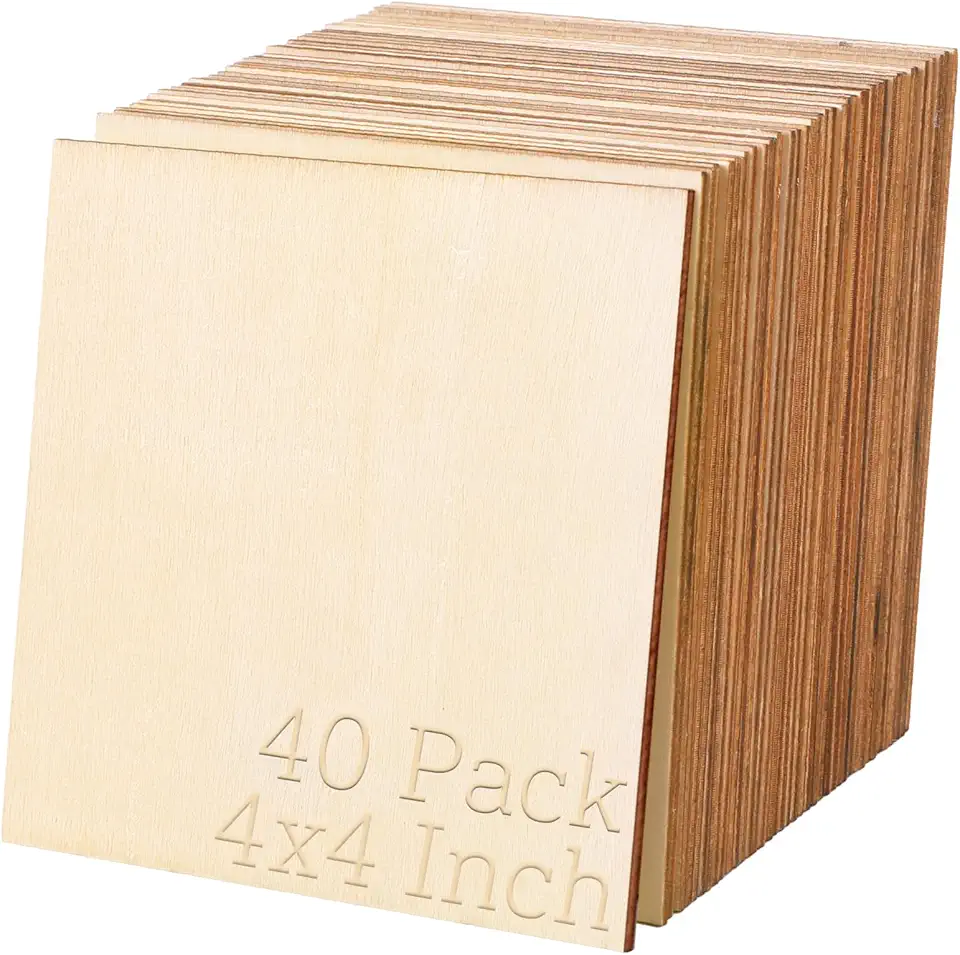
40-Pack 4x4 Basswood Squares — Thin Craft Sheets
- 40 squares 4 x 4 x 1/16 in for mass projects and prototypes
- Thin, uniform sheets ideal for laser cutting and layering
- Smooth surface ready for burning, painting, or staining
- Great value pack for hobbyists, teachers, and makers
- Easy to trim, glue, and finish for custom decor
Buy on Amazon

15 Unfinished 4 x 6 Wood Squares — Ready-to-Decorate Panels
- 15 unfinished 4 x 6 in squares ready to personalize
- Smooth faces ideal for painting, staining, and engraving
- Durable enough for carving, stamping, and woodburning
- Perfect size for signs, coasters, and mini art panels
- Sandable edges for a clean, finished look
Buy on Amazon

18-Pack 6x6 Basswood Squares — Thin Plywood for Crafts
- 18 squares 6 x 6 x 1/16 in for larger craft projects
- Thin, stable basswood ideal for cutting and engraving
- Smooth plywood-like surface accepts paints and markers well
- Works great for laser cutting, woodburning, and model building
- Uniform thickness reduces warping and eases assembly
Buy on Amazon

10-Pack Unfinished Wood Planks 5 7/8 x 2 x 3/4 in — DIY Rectangles
- 10 sturdy planks 5 7/8 x 2 x 3/4 in ready for carving and DIY
- Thicker profile offers strength for structural craft pieces
- Smooth unfinished surface accepts paint, stain, and varnish
- Great for shelves, signs, and custom woodworking projects
- Ideal for hobbyists who need uniform, pre-cut boards
Buy on Amazon
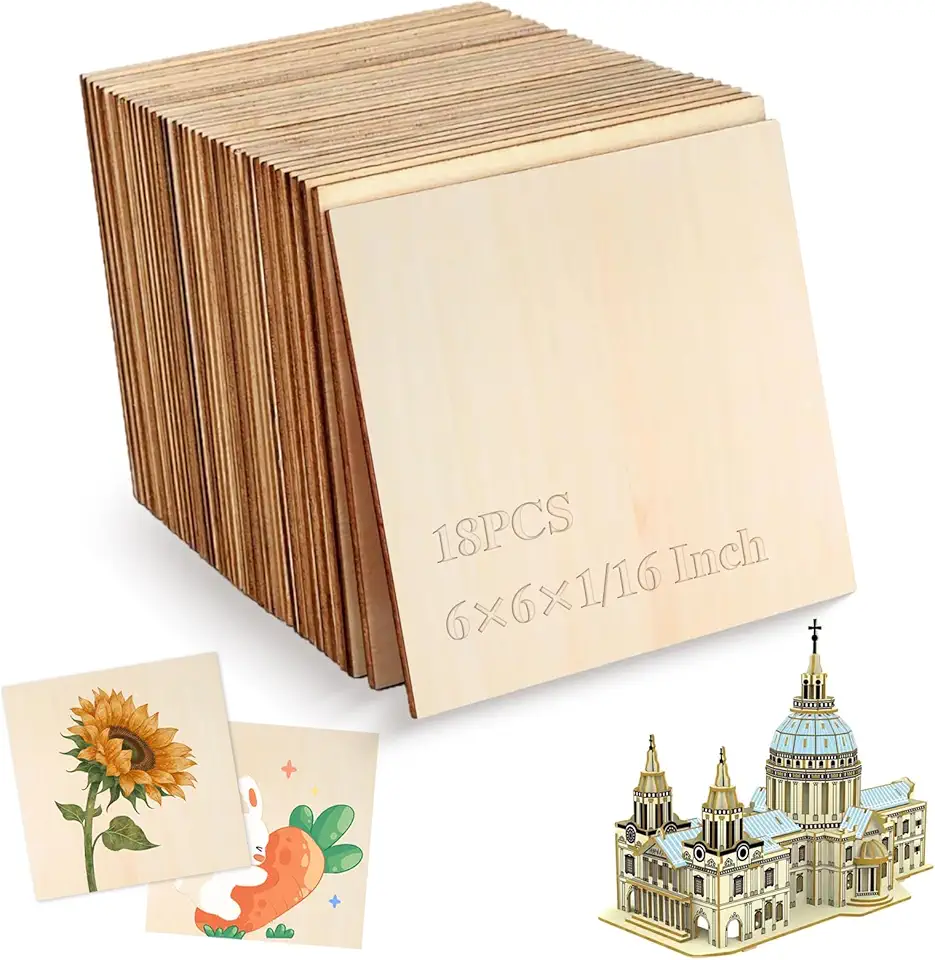
18 Balsa/Basswood Sheets 6x6 — Smooth Thin Panels
- 18 thin 6 x 6 x 1/13 in balsa/basswood sheets with smooth finish
- Lightweight panels perfect for miniatures and sculptures
- Uniform thickness suitable for laser cutting and precise modeling
- Easy to sand, paint, and glue for detailed work
- Strong enough for small assemblies while remaining easy to shape
Buy on Amazon

10 Pine Mini Panels 3.5 x 1.6 x 0.2 in — Small Craft Planks
- 10 small pine panels 3.5 x 1.6 x 0.2 in ideal for miniature work
- Natural pine grain gives a warm, rustic look when finished
- Thin profile fits dollhouses, models, and tiny displays
- Pre-cut pieces save prep time for painting and detailing
- Easy to sand, stain, or glue for custom projects
Buy on Amazon
Factors Affecting Wood Prices in 2026
Supply Chain Challenges
Prices remain higher than pre-2020 norms in many areas because mills, transport, and demand still run tight in waves. Seasonal spikes in spring add pressure as housing and DIY projects ramp up (NAHB framing lumber prices).
Tariffs and Market Impact
Trade policies, including U.S. duties on Canadian softwood, raise landed costs that trickle into retail tags. Expect steady swings as import rates and currency shifts affect wholesale quotes.
Local vs National Pricing
Local species with short haul routes can beat national averages, while long-distance freight adds margin. Call two or three nearby yards and ask about overstock bins or “shorts” for instant savings.
Money-Saving Tips for Buying Cheapest Wood
Bulk Purchasing Strategies
Buy by the unit or bundle to cut per-board cost; many yards shave 5–15% for volume orders. Ask for mixed-grade packs for shop projects where hidden parts don’t need perfect faces.
- Time buys for weekday mornings when mills release fresh packs.
- Request “mill run” pricing on full lifts of common species.
- Split bundles with a friend to hit volume tiers.
Local Supplier Benefits
Small yards often have offcuts, shorts, and returned pieces at steep discounts. Bring a tape measure and pick straight, dry boards to avoid waste and extra sanding.
Environmental Considerations
Favor nearby species like pine, poplar, or alder to cut freight emissions and costs. Look for FSC labels when possible, and salvage usable lumber from deconstruction for free material.
FAQs
What Is The Cheapest Wood For Furniture Making?
Pine, poplar, and fir are among the most affordable choices for furniture. Pine is widely available and easy to work with, while poplar machines smoothly and takes paint well. Keep in mind these softer woods are less durable than hardwoods, so they’re best for painted finishes, light-use pieces, or budget builds.
Which Wood Is The Most Affordable For Building A Deck?
Pressure-treated pine (often southern yellow pine) is typically the most affordable decking material. It’s treated to resist rot and insects and is widely available. Cedar and redwood cost more but need less chemical treatment; composites are low-maintenance but usually pricier up front.
Where Can I Buy Inexpensive Wood For A Diy Project?
Check big-box stores (Home Depot, Lowe’s), local lumberyards, and reclaimed-wood suppliers for good value. Online marketplaces, construction surplus yards, and classifieds (Craigslist, Facebook Marketplace) can also yield cheap or reclaimed boards. Always inspect for straightness, rot, and pests before purchase.
What Is The Cheapest Type Of Wood For Flooring?
Engineered wood and softwood planks like pine are generally cheaper than solid hardwoods. Laminate and luxury vinyl plank are the most budget-friendly alternatives to real wood. If you prefer real wood, pine or lower-grade engineered oak can lower costs but may dent more easily.
Is Plywood Cheaper Than Solid Wood For Home Projects?
Yes. Plywood is usually less expensive per surface area than solid hardwood and comes in large, stable sheets that reduce waste. It’s great for cabinets, shelving, and subfloors, though its exposed edges need edging or veneering for a finished look.