

Engineered Wood Flooring: Costs, Installation, and Buying Guide

Engineered wood flooring has a real hardwood surface bonded to a layered core, giving it better dimensional stability than solid wood in many installations. This guide explains construction, comparisons, specifications, costs, installation, cleaning, and whether engineered wood floors can be refinished.
Table of Contents
What Is Engineered Wood Flooring?

Engineered hardwood is real wood flooring, not a printed imitation. Its hardwood wear layer sits over plywood, softwood, or fiber-based layers arranged to reduce movement during seasonal humidity changes.
Layers and Core Construction
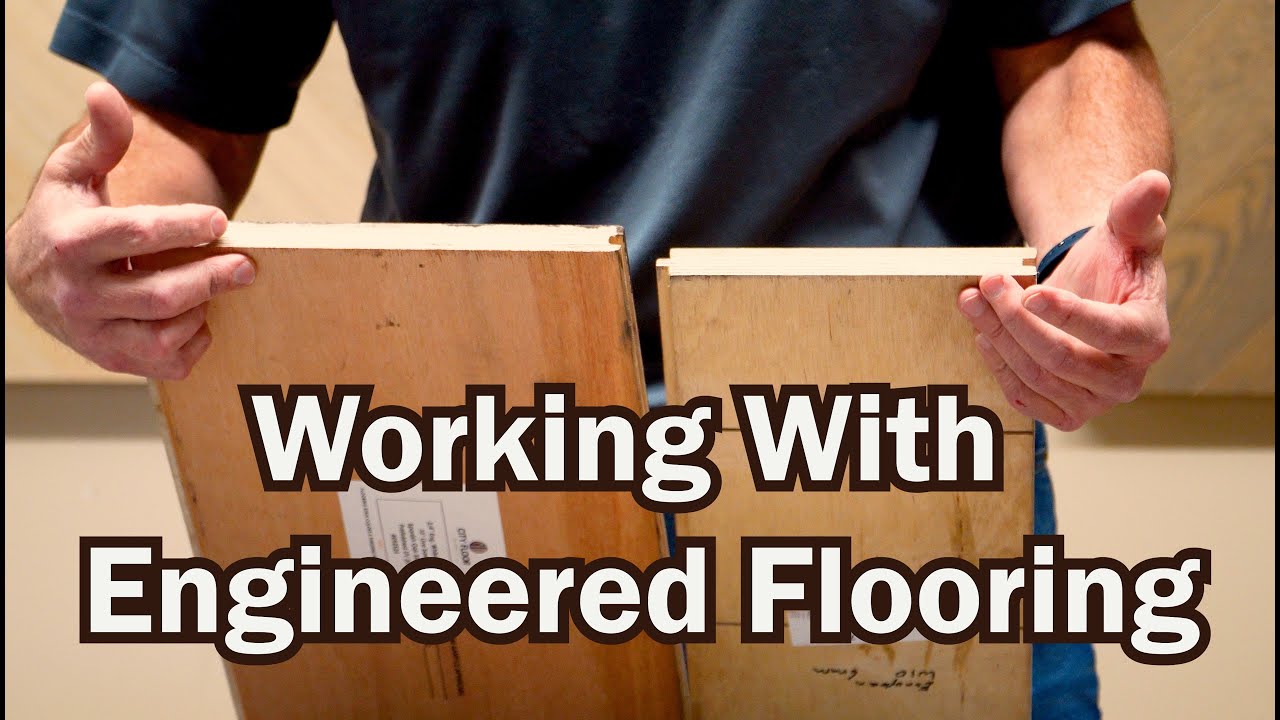
A typical plank has a factory finish, hardwood veneer, layered core, and balancing back. Cross-laminated core sheets run in alternating directions, which limits the swelling and shrinking seen across the grain of a solid board. This construction improves dimensional stability, but it doesn’t make wood immune to leaks or wet slabs.
Plywood cores usually feel firm underfoot and tolerate seasonal change well when the veneers are bonded cleanly. Fiber-based cores can support precise click joints, yet an exposed fiber edge may swell after prolonged water contact. Ply count alone isn’t a quality score; veneer depth, adhesive quality, core density, and milling accuracy matter just as much.
Real Wood Versus Wood-Look
Real hardwood grain runs through the surface veneer, so scratches, pores, knots, and color variation look natural from different angles. Laminate and vinyl use printed décor layers. Repeated knots or identical grain marks across several boards often reveal a printed surface.
Benefits and tradeoffs: engineered wood can often be floated or glued over concrete, and approved products can work below grade or over radiant heat. Its limitations include a finite wear layer, moisture-sensitive edges, variable repair potential, and a higher purchase price than many laminate floors.
- Best reasons to choose it: real wood character, flexible installation methods, and lower seasonal movement than solid boards.
- Main compromise: thin veneers may never tolerate conventional sanding.
- Common beginner mistake: assuming every engineered plank is waterproof because it is more stable than solid hardwood.
- Practical workaround: request the wear-layer measurement, installation manual, and complete warranty before comparing colors.
Engineered Wood Flooring Compared
Engineered wood flooring offers real hardwood with more installation flexibility than solid wood. Laminate and vinyl can cost less and tolerate different types of wear, but neither can develop or be repaired like a genuine wood surface.
Feature Comparison Table
| Feature | Engineered wood | Solid hardwood | Laminate | Vinyl plank |
|---|---|---|---|---|
| Surface | Real hardwood | Solid wood throughout | Printed image | Printed vinyl layer |
| Seasonal movement | Usually moderate | Usually greater | Low in dry conditions | Low, though heat can affect it |
| Refinishing | Depends on wear layer | Usually permits several sandings | Cannot be sanded | Cannot be sanded |
| Concrete installation | Often approved | More restricted | Commonly floated | Commonly floated or glued |
| Below-grade use | Product-dependent | Often restricted | Product-dependent | Common with approved products |
| Water tolerance | Warranty-dependent | Limited | Core-dependent | High at the plank surface |
| Damaged surface | May be recoated, sanded, or replaced | Often repairable | Plank replacement | Plank replacement |
Engineered Versus Solid Hardwood
Choose engineered flooring over solid hardwood for many concrete, basement, and radiant-heat projects where the product documentation permits it. Choose solid wood when future sanding capacity and traditional site finishing carry more weight than installation flexibility.
Engineered hardwood versus laminate: engineered flooring has a wood veneer that may accept repairs or refinishing. Laminate often resists light scratches well, but damage through its clear wear surface exposes a printed layer that can’t be sanded.
Engineered wood versus vinyl: vinyl handles topical moisture more predictably and can suit spill-prone rooms. Engineered wood feels firmer and warmer in character; bare feet can detect its grain and small seasonal seams, while vinyl usually feels more uniform.
Choosing by project needs: start with the room, subfloor, flood risk, humidity, pets, and expected repair life. A family with a wet basement may gain more from vinyl, while a dry main floor where natural patina matters can justify engineered oak. Compare oak choices in the guide to red oak vs white oak.
Engineered Flooring Specifications
The best specification for predicting repair potential is the wear-layer thickness, measured in millimeters. Total plank thickness, core material, finish, board length, edge profile, certifications, and warranty limits then determine whether a product fits the project.
Wear-Layer Thickness
Entry-grade veneers may measure around 0.6 to 1 millimeter, while premium sawn veneers can reach 4 to 6 millimeters. Ask for the actual figure rather than accepting phrases such as thick veneer. A thicker layer creates repair options, but it can’t compensate for loose joints or poor core bonding.
Refinishing potential table: these figures are planning guidance, not a sanding guarantee. Bevel depth, dents, remaining wood above the tongue, floor flatness, and prior sanding all affect the result.
| Approximate wear layer | Likely treatment | Buying implication |
|---|---|---|
| Under 1 mm | Cleaning, touch-up, or plank replacement | Conventional sanding is usually unsuitable |
| 1–2 mm | Recoating may be possible | Confirm finish compatibility |
| 2–3 mm | One careful sanding may be possible | Manufacturer approval and inspection needed |
| 4 mm or more | More than one professional refinish may be possible | Condition still controls the final number |
Construction, Finish, and Product Checklist
Total plank thickness commonly runs from about 3/8 inch to 3/4 inch. Thickness affects door clearance, transitions, structural feel, and fastening options, but a 3/4-inch plank with a thin veneer isn’t automatically better than a thinner product with a substantial wear layer.
Core type and ply count: compare plywood, softwood, and high-density fiberboard cores by bond quality and moisture limits. More plies can reduce movement, yet voids, weak adhesives, or a brittle locking edge can erase that advantage.
Edge and locking profiles: tongue-and-groove boards may support glue, nail, staple, or approved floating installation. Click-lock joints simplify floating work. Micro-bevels conceal slight board-to-board height variation, while deep bevels catch pale dust that becomes visible along dark floors.
Finish systems: aluminum-oxide urethane and UV-cured urethane resist routine abrasion. Oil and hardwax-oil finishes often allow localized care but demand an approved maintenance cycle. Very hard factory coatings may last well yet resist abrasion during a later recoat, so ask about compatible renewal products.
Species and Janka hardness: black walnut measures about 1,010 lbf, red oak 1,290, white oak 1,360, hard maple 1,450, and hickory 1,820. The wood hardness scale describes indentation resistance, not finish life, joint strength, or water tolerance.
Plank width and length: widths of 5 to 7 inches create fewer visual seams, while narrow boards give a busier, traditional pattern. Wide boards magnify slab waves and humidity movement. Check average length and the percentage of short boards; cartons full of short pieces make a large room look chopped up.
Durability and pets: matte, wire-brushed, character-grade surfaces hide claw marks better than dark, smooth, high-gloss floors. Hickory resists dents better than walnut, but concentrated furniture feet can mark either. Urine must be blotted at once before it enters a joint and darkens the wood.
Air quality certifications: verify composite-wood compliance with EPA TSCA Title VI and any claimed FloorScore or GREENGUARD certification. The EPA composite wood standards explain federal formaldehyde requirements; low odor alone doesn’t prove low emissions.
Warranty and documentation: collect the warranty, installation instructions, technical data sheet, care guide, emissions record, and adhesive data before ordering. Check humidity limits, grade approval, radiant-heat limits, water exclusions, required cleaners, and whether professional installation is a claim condition.
- Record the wear layer in millimeters and total thickness in inches or millimeters.
- Confirm the subfloor, grade level, installation method, and room are approved.
- Compare fixed or random lengths, average board length, finish, texture, and bevel.
- Check matching stair noses, reducers, vents, thresholds, and repair cartons.
- Ask who pays for testing, floor preparation, moisture control, and claim inspections.
- Keep technical documents and purchase receipts with dated moisture records.
Engineered Wood Flooring Options
Engineered flooring options differ most in wear layer, core, width, edge system, finish, and room approval. Product descriptions below illustrate common formats, but buyers should verify technical documents rather than rely on a title or appearance alone.
Wide European Oak
Seven-inch European oak planks create long grain lines and fewer seams. The broad surface makes the natural wood grain pattern easy to see, but it also makes subfloor waves and end-joint clusters more noticeable.

European Oak Rosewood Flooring
- Engineered European oak construction
- Warm autumn brown rosewood tone
- Seven-inch wide planks
- Half-inch thick profile
- Covers 26.24 square feet per box
 Buy on Amazon

European Oak Rosewood Floor
- Engineered European oak construction
- Rosewood color and grain look
- Seven-inch wide plank format
- Hardwood surface styling
- Designed for whole-room flooring updates
Buy on Amazon
Before buying, confirm the veneer thickness, average length, finish chemistry, approved installation method, and grade level. Dark brown boards reveal pale grit and pet hair quickly, so inspect a full-size sample in morning and evening light.
Water-Resistant, Click-Lock, and Textured Options
Water-resistant multi-ply flooring: multi-ply construction can limit ordinary movement, but a waterproof label may cover only topical spills for a stated period. Read exclusions for floods, plumbing leaks, wet subfloors, hydrostatic pressure, mold, damaged edges, and unsealed expansion gaps.

Waterproof Multi-Ply Wood Floor
- Multi-ply engineered hardwood design
- Waterproof wood floor construction
- Smooth brown finish
- Tongue and groove plank edges
- Ten planks cover 21.5 square feet
Buy on Amazon
Narrow click-lock planks: three-inch boards produce more seams and a traditional rhythm. They can visually soften minor room irregularities, yet the click joints still need a flat base and the expansion gap stated in the installation manual.

Bruce Natural Click-Lock Floor
- Engineered hardwood construction
- Natural wood appearance
- Click-lock installation system
- Three-inch wide planks
- One case covers 22 square feet
Buy on Amazon
Wide click-lock planks: five-inch boards give rooms a calmer pattern without reaching the scale of extra-wide oak. Don’t force a joint with a steel hammer; use the maker’s tapping block, because a bruised edge may close initially and separate after foot traffic begins.

Bruce Wide Click-Lock Floor
- Engineered hardwood construction
- Natural wood appearance
- Click-lock installation system
- Five-inch wide planks
- One case covers 22 square feet
Buy on Amazon
Textured hickory flooring: handscraped texture breaks reflected light, helping minor dents blend into the surface. Deep low spots need extra passes with a microfiber pad because fine grit settles where a flat mop barely touches.

Mohawk Handscraped Hickory Floor
- Engineered hardwood flooring
- Handscraped hickory appearance
- Five-inch wide planks
- Textured character-rich style
- Carton covers 23 square feet
Buy on Amazon

Bronze Hickory Engineered Floor
- Engineered hickory hardwood flooring
- Rich bronze color tone
- Five-inch wide planks
- Three-eighth-inch thickness
- Natural hardwood-inspired finish
Buy on Amazon
Hickory’s color variation can be dramatic, so open several cartons and blend boards before fastening them. Learn how its dense fibers behave in the guide to hickory wood.
Room and Subfloor Suitability
Engineered flooring can suit concrete, plywood, OSB, kitchens, basements, and radiant heat only where the product documentation approves the room, substrate, and installation system. Better dimensional stability doesn’t cancel moisture testing or flood risk.
Concrete Slabs, Plywood, OSB, and Basements
Concrete slabs: approved boards may be glued or floated over concrete after checking moisture, surface strength, cleanliness, and flatness. Common flatness targets are 3/16 inch across 10 feet or 1/8 inch across 6 feet, but the flooring and adhesive instructions set the binding tolerance.
A slab can look pale and feel dry while releasing enough vapor to weaken adhesive or raise board edges. Moisture testing may use in-situ relative-humidity probes under ASTM F2170 or calcium-chloride testing where the system accepts it. ASTM’s overview of ASTM F2170 describes in-situ concrete RH testing.
Plywood and OSB: inspect panel thickness, joist spacing, deflection, protruding fasteners, moisture content, and squeaks. Some manufacturers restrict fastening into certain OSB panels. Refasten movement before flooring goes down; covering a squeak usually turns it into a harder-to-reach squeak.
Basements and below grade: use a product expressly approved for the location. Review exterior drainage, sump history, wall staining, and prior flooding. A floating underlayment can slow vapor movement, but it can’t protect wood from a failed water heater or rising groundwater.
Wet Rooms, Radiant Heating, and Waterproof Limits
Kitchens: engineered wood performs well where spills are wiped up and appliance lines are monitored. Inspect the dishwasher, refrigerator supply, sink cabinet, and ice maker. Use breathable mats; a rubber-backed mat can trap moisture or react with some finishes.
Bathrooms and laundry rooms: full baths and laundry spaces carry overflow, humidity, and hidden-leak risks. Install wood only if the maker approves that room type. Tile or waterproof vinyl presents a lower-risk choice where standing water is predictable.
Radiant heating: pair approved flooring with an approved adhesive or floating system. Surface-temperature limits often fall near 80–85°F, though the product’s written limit controls. Raise and lower heat gradually, and track room humidity during winter. Stable cuts such as quarter-sawn oak can help limit visible movement.
Waterproof claim limits: water enters through end joints, cut edges, expansion gaps, fastener holes, and finish damage. A warranty may cover a surface spill while excluding the wet subfloor beneath it. Ask what liquid, exposure time, cleanup method, and installation details qualify for coverage.
Engineered Hardwood Installation
Successful engineered hardwood installation depends on moisture control, floor flatness, indoor climate, and the approved fastening method. Most failures blamed on the plank begin with an untreated slab, uneven base, restricted floating floor, or poorly transferred adhesive.
Moisture, Flatness, and Acclimation
Moisture and flatness testing: record concrete test locations and wood-subfloor readings with calibrated tools. There is no universal pass number for every floor. The strictest compatible limit among the flooring, adhesive, and moisture-control products governs the assembly.
Acclimation and indoor conditions: don’t apply an automatic 72-hour rule. Some products need staged acclimation, while others call for prompt installation in a conditioned building. Permanent HVAC should run, wet trades should be finished, and cartons should be stored in the orientation stated by the maker.
Installation Methods, Waste, and Failures
Floating installation: connected boards rest over underlayment without being fixed to the base. This method works well in many renovations, but low spots produce a soft, clicking sensation under a heel. Cabinets, islands, or tight trim can pin the floor and cause buckling.
Glue-down installation: direct bonding creates a quieter, firmer step over concrete. Use the stated trowel notch, open time, working time, and roller weight. Ridges should transfer evenly to the board back; dry ridges or bare patches often become hollow-sounding areas.
Nail-down and staple-down: these methods normally require an approved wood subfloor. Match fastener gauge, length, spacing, and compressor pressure to the manual. Excess pressure cracks tongues; low pressure leaves proud fasteners that keep the next board from seating.
Waste and spare planks: allow roughly 5–10% for simple rooms and 10–15% or more for diagonal layouts, closets, color selection, and irregular cuts. Buy all cartons from a matching production lot and retain several full boards for later repairs.
Common installation failures: edge lift points to moisture imbalance; buckling often signals restricted expansion or moisture; hollow spots suggest poor transfer or slab variation; click damage follows forced joints or excessive flex. Telegraphing through a thin floor usually traces back to panel seams or base irregularities.
Practical notes from real-world use: walk the prepared base in thin-soled shoes before opening cartons. A broad slab hump feels like a gradual rise, while an isolated low spot gives a distinct heel drop. Marking those areas early costs far less than lifting a finished floating floor.
Engineered Wood Flooring Costs
Engineered wood flooring materials commonly cost about $3–$16 or more per square foot, while professional installation often adds $3–$8 or more. A realistic installed project may run from $6 to above $24 per square foot before major repairs, stairs, or moisture mitigation.
Material, Labor, and Hidden Costs
Material price ranges: entry products often sit near $3–$6 per square foot, midrange boards near $6–$10, and premium floors near $10–$16 or more. Species, veneer depth, core construction, board size, finish, texture, origin, and certification drive the spread.
Labor and preparation: straightforward floating work tends to cost less than glue-down layouts, stairs, borders, or occupied-home projects. Concrete grinding, patching, plywood repair, adhesive removal, and moisture-control coatings require separate allowances.
Hidden project costs: include delivery, tax, furniture moving, old-floor disposal, door trimming, baseboard work, underlayment, adhesive, vapor control, reducers, stair noses, vents, and appliance handling. Carton prices can conceal these items, so compare complete price-per-square-foot proposals.
Quantity, Waste, and Lifetime Value
Quantity and waste example: a 500-square-foot area with 10% waste needs 550 square feet. At $7 per square foot, flooring costs $3,850. Installation at $5 per square foot adds $2,500, producing a $6,350 base subtotal before preparation, trims, delivery, adhesive, removal, and tax.
Divide usable room area plus waste by the carton coverage, then round up to a full carton. If a carton covers 23 square feet, 550 square feet requires 24 cartons because 550 ÷ 23 equals 23.91. Ordering only 23 leaves the job 21 square feet short.
Lifetime value factors: compare wear-layer depth, finish renewal, replacement-board supply, expected humidity control, warranty exclusions, and repair cost. A 30-year residential warranty doesn’t promise 30 years of flawless appearance; many warranties cover finish wear-through rather than scratches, gloss change, dents, or color shift.
Cleaning and Refinishing
To clean engineered wood floors, remove grit with a soft broom, microfiber pad, or hard-floor vacuum, then use a lightly damp microfiber mop with an approved cleaner. Some engineered wood floors can be refinished, but the veneer must be thick enough for sanding.
How to Clean Engineered Wood Floors
Routine dry cleaning: remove grit several times per week in busy homes. Switch off the vacuum’s rotating brush or use a hard-floor head. Sand grains make a faint rasping sound under shoes and act like abrasive paper across the finish.
Safe damp cleaning: spray cleaner onto the pad rather than the floor, work in small zones, and wipe spills at once. The mop should feel barely damp, not heavy or dripping. Follow the floor or finish maker’s product list because incompatible residues can block a future recoat.
Products and methods to avoid: skip steam mops, saturated string mops, bleach, ammonia, abrasive powder, steel wool, oil soap, acrylic polish, and undiluted vinegar without written approval. Steam pushes heat and moisture into seams; oil soap and polish can leave a slick haze that resists new finish.
Scratch and dent prevention: fit clean felt pads beneath furniture, use wide cups under heavy legs, place walk-off mats at entrances, trim pet nails, and lift furniture rather than dragging it. Maintain the humidity range in the warranty, often around 30–50% or 35–55% RH.
Can Engineered Wood Floors Be Refinished?
Yes, some can, but a real wood surface doesn’t guarantee sanding capacity. Floors below about 2 millimeters usually call for recoating, touch-up, or plank replacement. A 2–3-millimeter veneer may accept one careful sanding, while 4 millimeters or more may permit several.
Refinishing by wear layer: a technician should inspect bevel depth, remaining wood above the tongue, damaged areas, previous sanding, and floor flatness. Aggressive drum sanding can cut through a thin veneer at a high board edge before the surrounding finish is removed.
Recoating versus sanding: recoating prepares the existing finish and adds a compatible topcoat without removing much wood. It can restore sheen and protect light wear, but it won’t erase dents or scratches that have cut through stain. An adhesion test detects wax, silicone, polish, or cleaner contamination.
Plank repair and replacement: replacement often makes more sense when damage is localized, the veneer is thin, a click joint has broken, or water has caused swelling or delamination. Spare boards from the original production lot usually match color, thickness, edge milling, and finish better than later stock.
Plan repairs before installation by storing several flat, dry boards in conditioned space. That small reserve can prevent an entire room from being replaced after one refrigerator leak, deep gouge, or damaged doorway plank.
FAQs
What Are The Disadvantages Of Engineered Wood Flooring?
Engineered wood flooring can be scratched, dented, and damaged by standing water. Its top hardwood layer is thinner than solid wood, so it can only be refinished a limited number of times. Quality varies widely, and lower-cost boards may feel less stable or look less natural over time.
Is Engineered Wood Flooring Better Than Solid Hardwood?
Engineered wood flooring is not universally better than solid hardwood; it is better for some homes and conditions. Its layered construction handles humidity changes well and often costs less to install. Solid hardwood can be sanded more times and may offer greater long-term restoration options.
Can Engineered Wood Floors Be Refinished?
Yes, many engineered wood floors can be refinished, but the number of times depends on the thickness of the hardwood veneer. Floors with a thicker wear layer may tolerate one or more light sandings. Thin veneers, damaged boards, and factory finishes may require replacement instead.
How Do You Clean Engineered Wood Floors Without Damaging Them?
Clean engineered wood floors with a soft broom or vacuum made for hard floors, then use a well-wrung microfiber mop and a manufacturer-approved cleaner. Wipe spills promptly and avoid soaking the surface. Do not use steam mops, abrasive pads, wax, or harsh cleaners, as they can harm the finish and seams.
Is Engineered Wood Flooring Waterproof?
No, most engineered wood flooring is water-resistant rather than waterproof. Its layered core can resist brief spills better than some solid wood floors, but standing water can still cause swelling, staining, or delamination. Use it cautiously in kitchens and avoid it in wet rooms unless the manufacturer specifically approves it.
Affiliate Disclosure: Some links in this post are affiliate links. If you make a purchase through these links, we may earn a small commission at no extra cost to you. We only recommend products we genuinely believe in.

