Acacia Wood Flooring: 7 Best Picks for Stylish, Durable Floors

Want a floor that looks warm and lasts? Acacia wood flooring brings bold grain and rich tones to any space. This post highlights top picks, what sets Taiwan acacia apart, and simple care steps to keep your floor looking great. Read on for clear advice and practical tips for 2026.
Table of Contents
Acacia wood flooring brings striking grain, high hardness, and easy care to homes and businesses, with Taiwan acacia earning special praise for strength and beauty. This guide covers durability, types, pricing, installation, and the best picks for 2026 so you can buy with confidence.
What Is Acacia Wood Flooring?
Durability and Hardness
Taiwan acacia ranks about 2676 on the Janka scale, which puts it well above many common hardwoods like oak or maple for dent resistance; see the UA Floors product page for reference values. That level of hardness supports high‑traffic rooms, rolling office chairs, and busy retail areas without quick wear.
Natural Resilience
Acacia naturally resists termites, decay, and moisture, which helps reduce maintenance over time. For background on structure and uses, see our quick primer on acacia wood for grain behavior, density, and common applications.
Distinctive Appearance
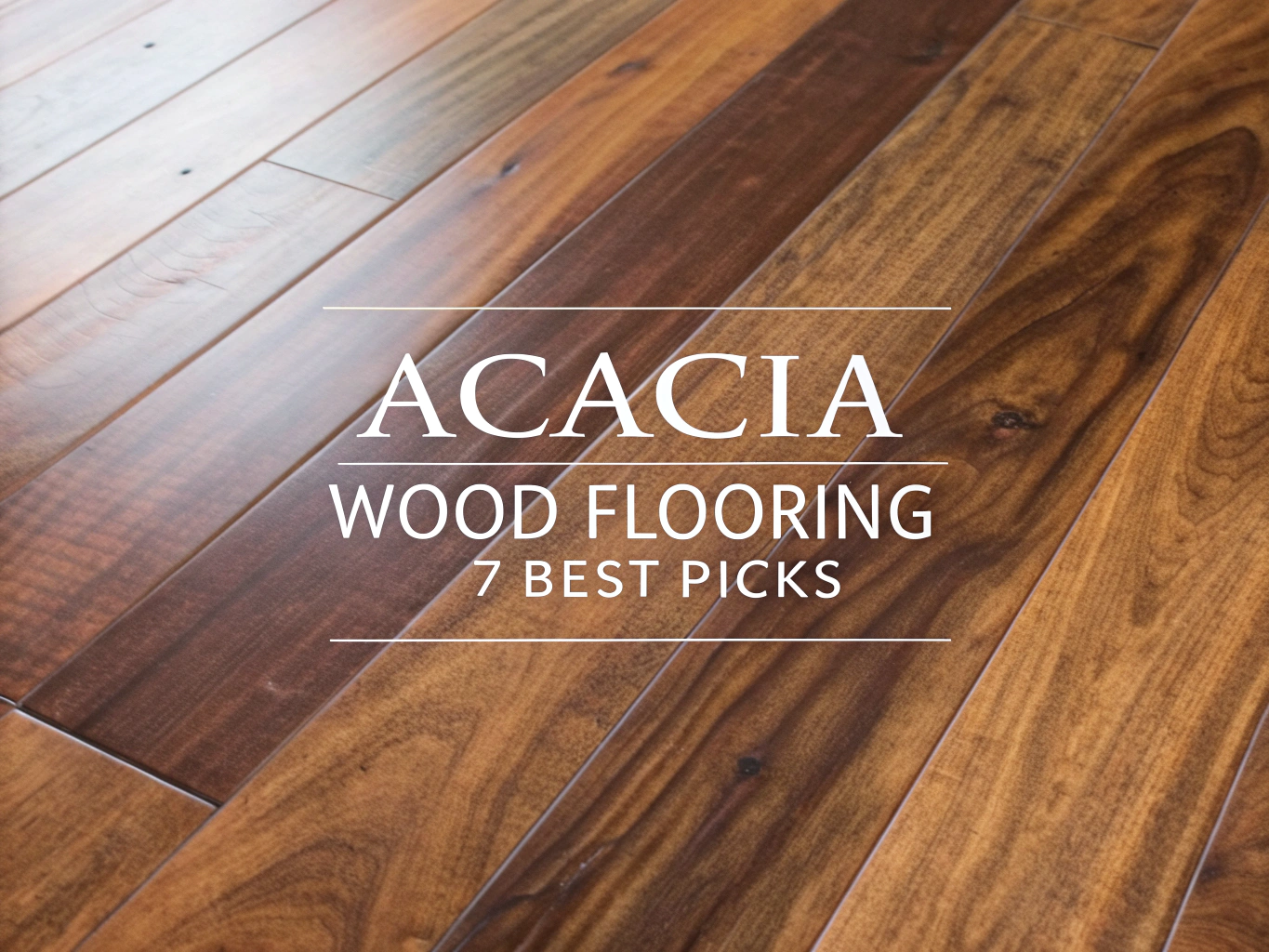
Color variation ranges from honey gold to espresso brown, with dramatic swirls and ribboned grain that hide small scratches well. Narrow strips feel classic, while wide planks highlight the bold figure for modern spaces, so match plank width to your design goal.
Sustainability Benefits
Many producers source acacia from managed forests, and Taiwan acacia is prized for strong carbon fixation and fast growth. Ask for verifiable harvest documents and third‑party audits to keep your project aligned with your values.
Choose verified sources and clear chain‑of‑custody documents to support responsible forestry in tropical hardwoods.
Project specification tip
Types and Grades of Acacia Wood Flooring
Solid vs. Engineered Options
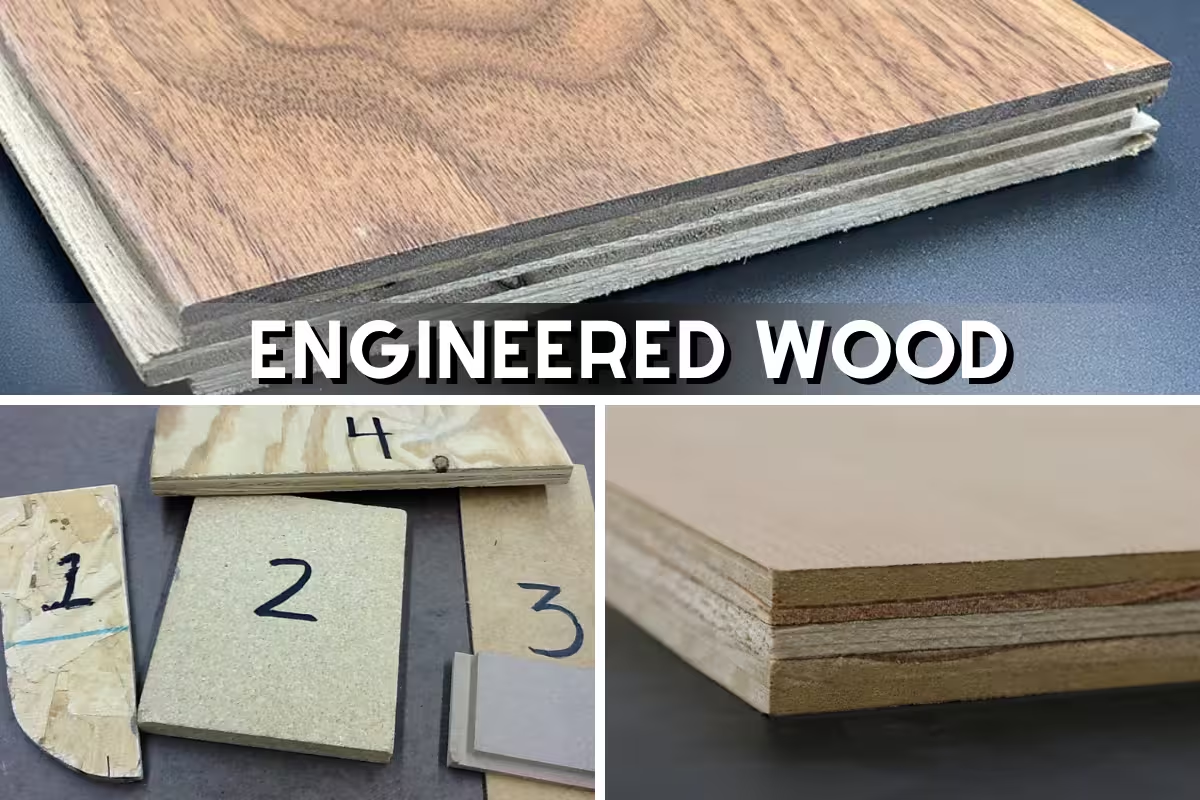
Solid acacia is one species through the entire plank, supports multiple sand‑and‑refinish cycles, and delivers an authentic, heavy feel underfoot. Engineered acacia uses a real acacia wear layer over stable plywood for better moisture tolerance and easier installs over concrete or radiant heat.
If you need a budget alternative for utility spaces, research laminated wood options, as they can mimic acacia visuals while lowering costs. Match format to subfloor, humidity swings, and expected traffic to stretch both performance and budget.
Acacia Species Comparison
Different acacia species vary in hardness, color, and price, which affects where they fit best. Use this quick table to match species to room type and project goals.
| Species | Approx. Janka (lbf) | Typical Color/Grain | Best Use Cases |
|---|---|---|---|
| Acacia confusa (Taiwan acacia) | ~2676 | Bold ribbon grain; gold to deep brown | Luxury homes, busy living areas, boutiques |
| Acacia mangium | ~1100–1200 | Straighter grain; medium brown | Bedrooms, light‑to‑medium traffic areas |
| Acacia koa (Hawaiian koa) | ~1170 | Chatoyant figure; amber to reddish brown | Feature rooms, statement ceilings, cabinetry |
Surface Treatments and Finishes
Factory UV‑cured finishes and abrasion‑resistant systems like Treffert help reduce scratches, stains, and fading, which keeps floors looking fresh longer. Review coating specs (sheen level, abrasion rating, and warranty) from a trusted source such as the Hardwood Timber Floors guide before ordering large quantities.
Taiwan Acacia: Premium Properties
Unique Characteristics
Taiwan acacia pairs a radiant sheen with striking ribbon grain and a wide color span, which delivers a high‑end look without fragile surfaces. Export data and product catalogs on TradeKey Taiwan acacia highlight its availability for premium projects.
Performance Advantages
High hardness resists dents, while dense fiber structure improves impact resistance during daily use. The wood’s natural oils slow moisture uptake, which supports dimensional stability in kitchens, entries, and mixed‑use spaces.
Commercial Applications
Designers pick Taiwan acacia for retail floors, hotel lobbies, and café counters where rich aesthetics must handle steady traffic. Consider these common use cases to map your specification quickly.
- Boutiques: Feature walls and cash wraps to spotlight grain figure.
- Hotels: Lobby planks with matte UV finish to reduce glare.
- Restaurants: Engineered planks over concrete with moisture barrier.
- Spas: Deck tiles in relaxation zones with drainage patterns.
7 Best Acacia Wood Flooring Products for 2026
Below are proven products for indoor rooms and outdoor spaces, covering different sizes, finishes, and budgets. Pick a format that fits your subfloor, climate, and installation skills.

Golden Teak Acacia Deck Tiles (10 pcs, 10 sq ft)
- Durable waterproof acacia wood construction
- Easy snap-together installation for a quick makeover
- Weather-resistant finish for year-round outdoor use
- Versatile for balcony, patio, or indoor accents
- Natural teak tone hides wear and adds warmth
 Buy on Amazon
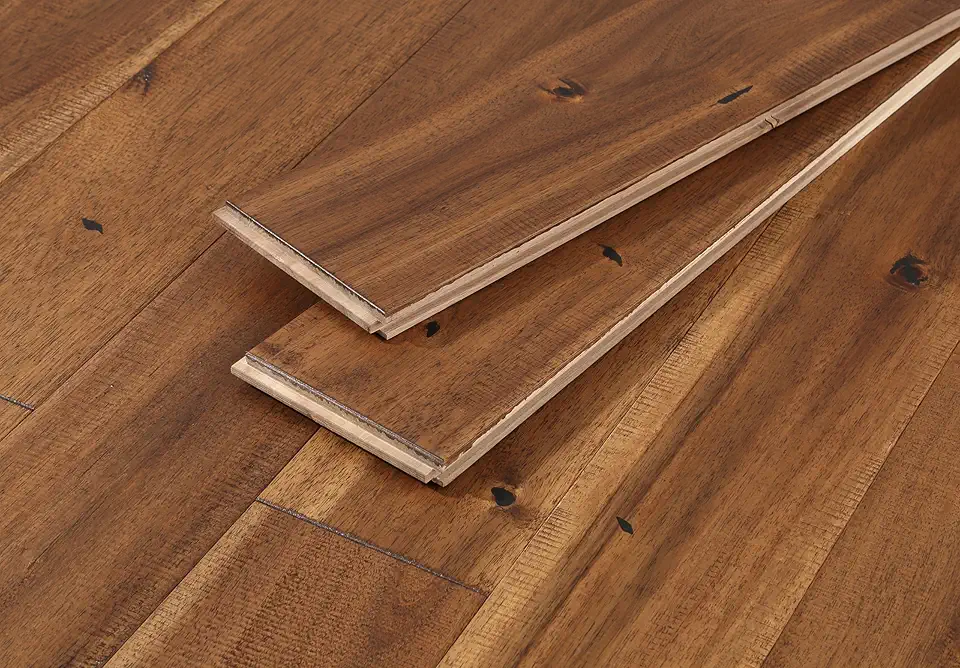
Montrose Solid Acacia Hardwood 5/8 in (24.26 sq ft)
- Genuine acacia with rich grain and long-lasting durability
- 5/8 in thickness for stable, sturdy flooring
- Prefinished surface reduces installation time
- Suitable for high-traffic rooms and living areas
- Natural finish enhances warmth and resale appeal
Buy on Amazon
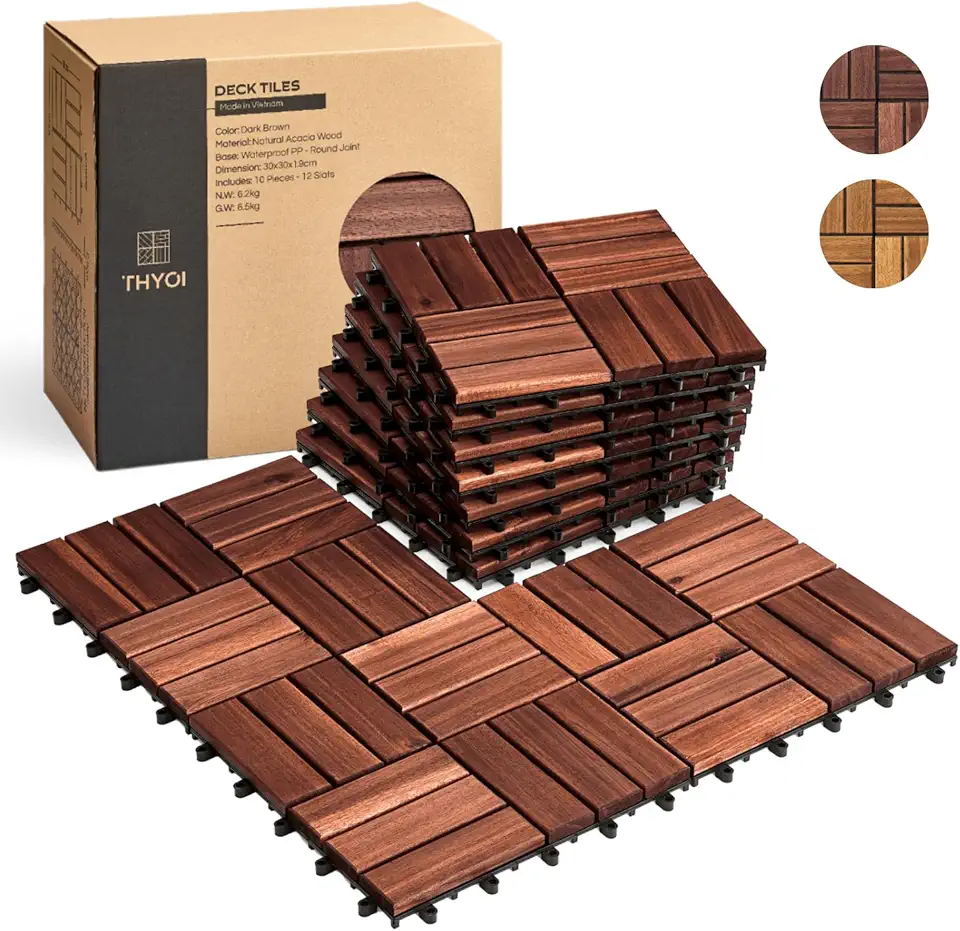
Dark Brown Acacia Deck Tiles – Round Joint (10 pcs)
- Interlocking design for tool-free, fast assembly
- Waterproof acacia built for all-weather performance
- Round joints promote drainage and airflow
- Durable hardwood resists warping and fading
- Perfect for balconies, patios, and indoor accent areas
Buy on Amazon

Yaheetech Acacia Interlocking Deck Tiles – 54 pcs
- Large 54-piece set covers bigger outdoor surfaces
- Interlocking tiles snap together for quick installation
- Waterproof acacia resists rot and weathering
- Modular design allows custom layouts and easy cutting
- Low maintenance and simple to clean with a hose or mop
Buy on Amazon
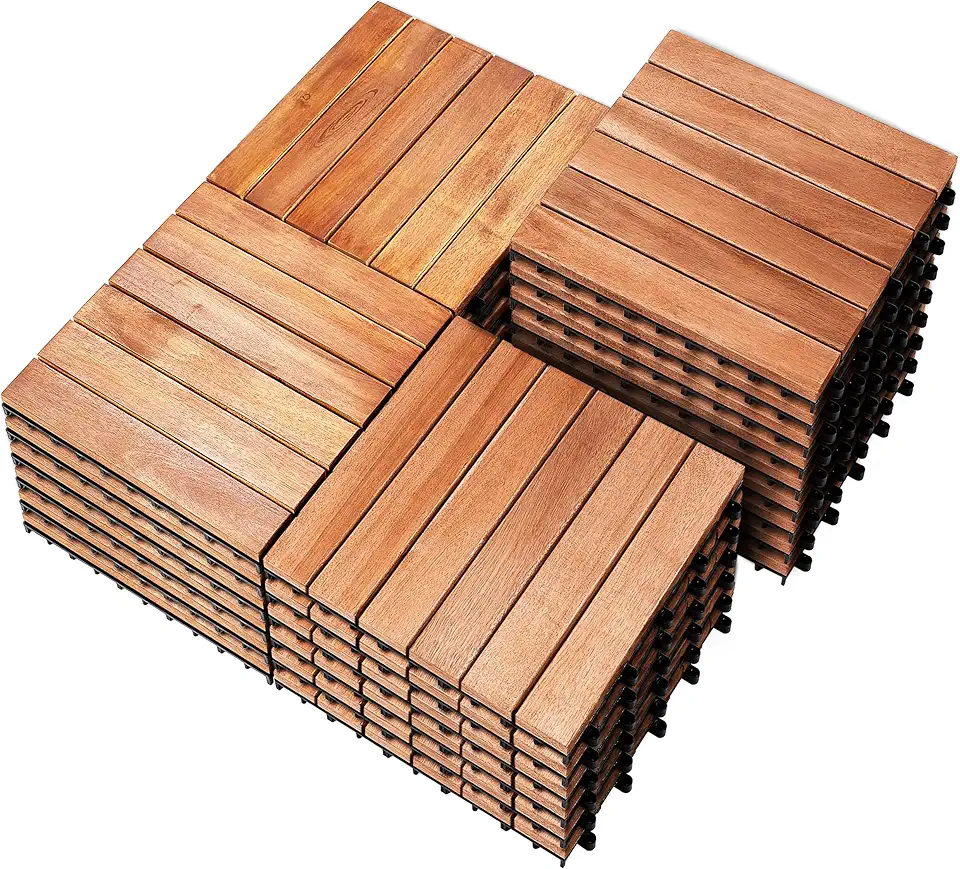
PrimeZone Solid Acacia Deck Tiles – 27 pcs (12x12)
- Solid acacia planks deliver strength and natural beauty
- 12x12 interlocking tiles make layout simple and fast
- Waterproof finish protects against outdoor elements
- Quick, no-glue installation for instant transformation
- Ideal for balconies, gardens, and poolside areas
Buy on Amazon

Yaheetech 27-piece Acacia Deck Tiles (12x12)
- Durable acacia hardwood built for outdoor wear
- Interlocking system enables tool-free setup
- Waterproof treatment suitable for patios and poolside
- Small tiles allow flexible patterns and easy replacement
- Smooth natural finish gives a warm, modern look
Buy on Amazon
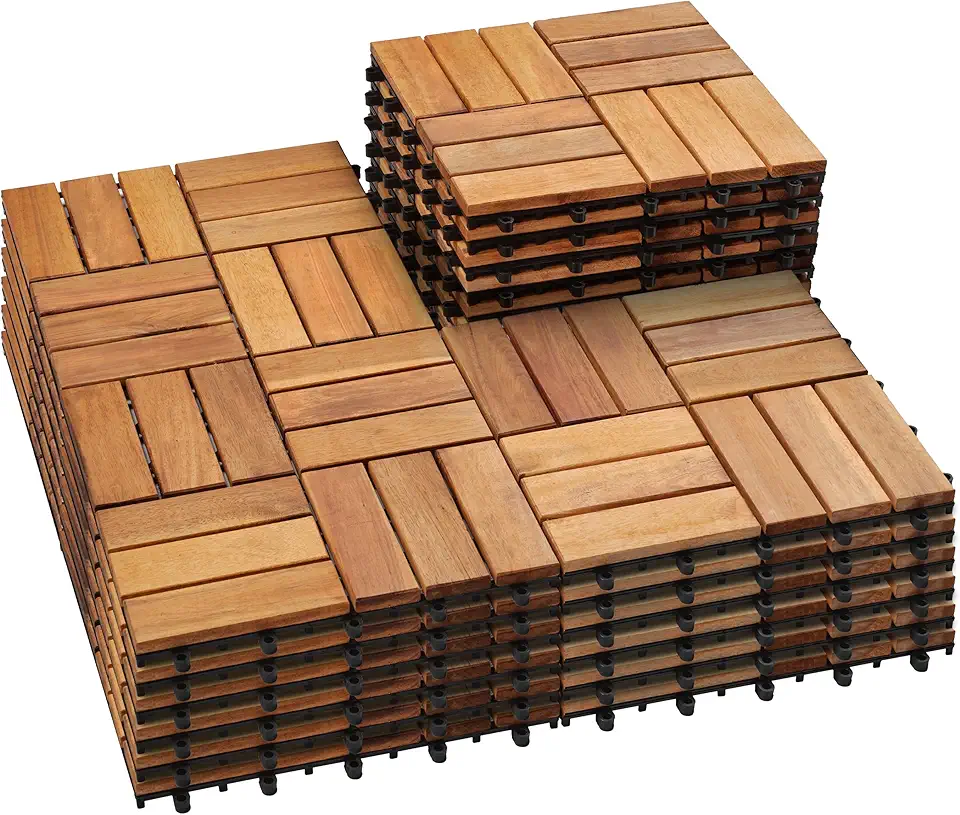
PrimeZone Checker Acacia Deck Tiles – 27 pcs (12x12)
- Checker pattern adds visual interest and improved traction
- Solid acacia construction stands up to weather
- Snap-together installation saves time and effort
- Waterproof and low-maintenance for outdoor use
- Modular tiles are easy to expand or replace
Buy on Amazon
Need a single featured option for quick checkout? Drop this comparison into your shortlist and decide by size, finish, and warranty .
Pricing and Value Considerations
Cost Factors
Price varies by species, plank width, finish system, and order size. Plan for extras like underlayment, adhesives, freight, and 5–10% overage for cuts and pattern matching.
Manufacturer Direct Benefits
Buying factory direct or in bulk can trim costs on premium acacia, as shown on Acacia Depot pricing. Ask for volume brackets, lead times, and finish specs in writing to lock predictable quotes.
Long-term Investment Value
Dense acacia wears slowly, so refinishing cycles are spaced out, and lifetime cost per year looks attractive. High resale appeal from the wood’s character can also boost perceived value during future sales.
Installation and Maintenance Guide
Pre-Installation Preparation
Acclimate planks for at least 48 hours in the install space and stack with spacers for airflow. Check moisture with a meter, confirm flatness (within 3/16 in over 10 ft), and stage tools before the first row.
- Subfloor: Clean, dry, flat; add vapor retarder over concrete.
- Layout: Snap a reference line and balance end cuts.
- Expansion: Leave 1/2 in gap at fixed walls and columns.
- Boxes: Mix planks from multiple cartons for color blend.
Installation Methods
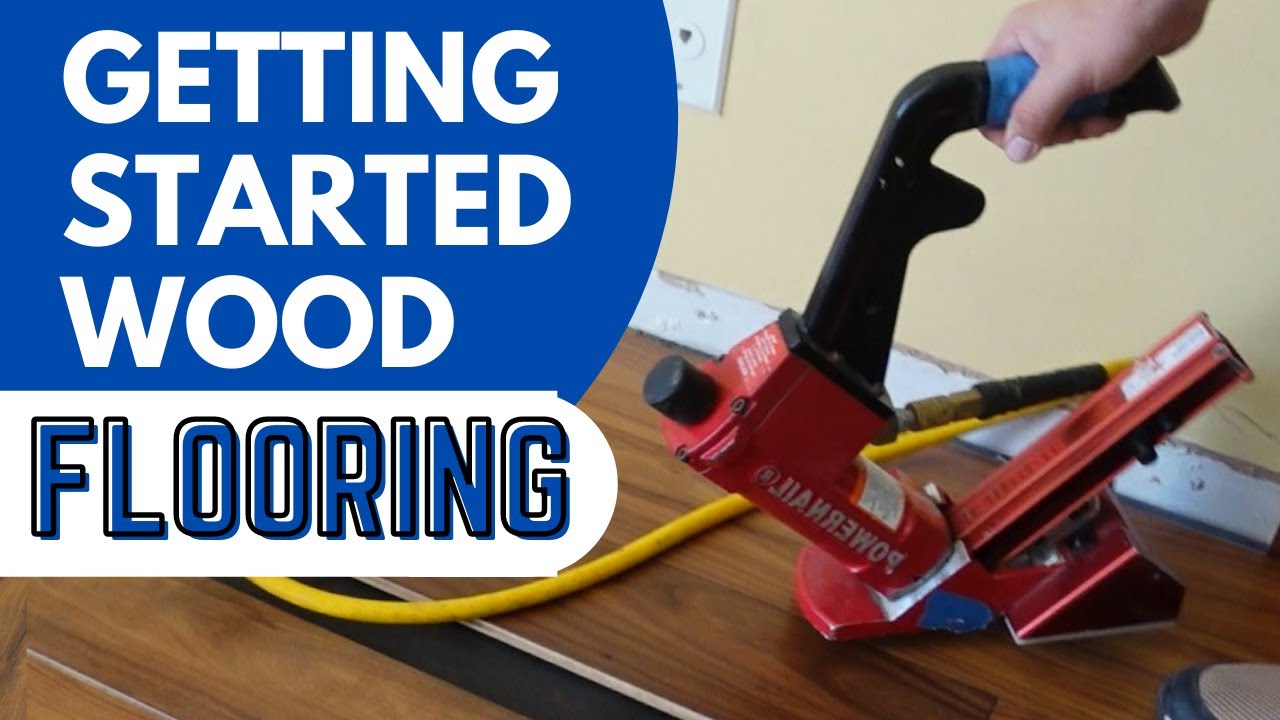
Nail or staple solid planks over plywood; use adhesive for slabs; float engineered planks with approved underlayment. For balconies or patios, interlocking acacia tiles snap together without glue and allow fast drainage.
Care and Cleaning
Sweep or vacuum with a soft brush, then damp mop with a wood‑safe cleaner; skip steam. Place felt pads, use walk‑off mats, and rotate rugs to limit UV contrast on sunny windows.
Repair Options
Spot repair light scratches with color‑matched wax or a quick buff; deeper marks may need refinishing. For DIY tips on sanding and finishing techniques, browse acacia woodworking guides before you pick up a sander.
Warranties and Longevity
Coverage Options
Many premium lines include residential finish coverage (often 25 years) and shorter terms on commercial installs, plus separate structural coverage. Review sample language and specs on the UA Floors warranty details page before you finalize the order.
Expected Lifespan
With proper installation and normal care, solid and engineered acacia can serve for decades. Solid planks allow multiple sandings, while thick‑wear‑layer engineered floors usually support at least one full refinish.
Performance Guarantees
Look for finish abrasion ratings, scratch tests, and sheen tolerance in the datasheet to set realistic expectations. Ask the seller to state maintenance requirements in writing so coverage stays valid after routine cleaning.
2026 Trends in Acacia Wood Flooring
Market Demand
Home projects keep leaning on acacia’s durability and lively patterns for fast refreshes, from rentals to primary residences. Outdoor living growth also pushes interlocking deck tiles for patios, balconies, and pool edges.
Design Innovations
Matte and ultra‑matte finishes reduce glare and fingerprints while wide planks emphasize grain movement. Mixed‑width layouts and chevron/herringbone patterns give acacia a fresh look in modern and classic spaces.
Sustainable Sourcing
Shoppers ask for verified origin, legal harvest, and lower‑VOC finishes to cut indoor emissions. For exterior applications, pairing acacia with thermally modified wood components can improve stability in sun‑and‑rain cycles.
FAQs
Is Acacia Wood Good For Flooring?
Acacia Is A Very Good Choice For Flooring Because It Is Extremely Hard And Durable, Has A Distinctive Grain And Warm Color Variations, And Takes Finishes Well; With Proper Installation And Maintenance It Performs Better Than Many Softer Woods And Can Resist Everyday Wear And Moisture More Effectively.
How Does Acacia Wood Flooring Compare To Oak?
Compared To Oak, Acacia Is Generally Harder And Denser, With More Dramatic Grain Patterns And Darker, More Varied Colors; Oak Offers A Classic, Uniform Look And Is Widely Available And Easy To Refinish, While Acacia Provides Greater Scratch Resistance And A More Exotic Appearance, Though It May Be Priced Higher And Show More Natural color Variation.
What Are The Pros And Cons Of Acacia Wood Floors?
The Pros Of Acacia Include High Hardness And Durability, Unique And Attractive Grain, Good Stability, And Often Eco-Friendly Sourcing; The Cons Include Noticeable Color Variation Between Planks, Potentially Higher Cost, Limited Availability In Some Markets, And Sensitivity To Extreme Humidity Changes If Not Properly Installed Or Finished.
How Do You Maintain Acacia Wood Flooring?
Maintain Acacia Flooring By Sweeping Or Vacuuming Regularly, Using A Damp Mop With A pH-Neutral Cleaner When Needed, Wiping Spills Immediately, Placing Felt Pads Under Furniture, Using Area Rugs In High-Use Zones, And Controlling Indoor Humidity; Recoat Or Refinish The Surface As Recommended To Preserve The Finish.
Is Acacia Wood Flooring Suitable For High Traffic Areas?
Yes, Acacia Is Well Suited For High Traffic Areas Because Of Its Hardness And Wear Resistance; To Ensure Long-Term Performance Choose A Durable Finish, Consider Engineered Acacia For Better Dimensional Stability, And Maintain The Floor Regularly To Prevent Abrasion And Surface Damage.