

Albidum sassafras is more correctly written as Sassafras albidum, the scientific name for the native North American sassafras tree. You can recognize it by its three leaf shapes, aromatic twigs, blue-black fruit on red stalks, and vivid yellow-to-scarlet fall color.
This guide covers identification, growing, safety, ecological value, disease risks, propagation, sassafras lumber, and comparisons with walnut wood.
Table of Contents
Albidum Sassafras Name and Quick Facts
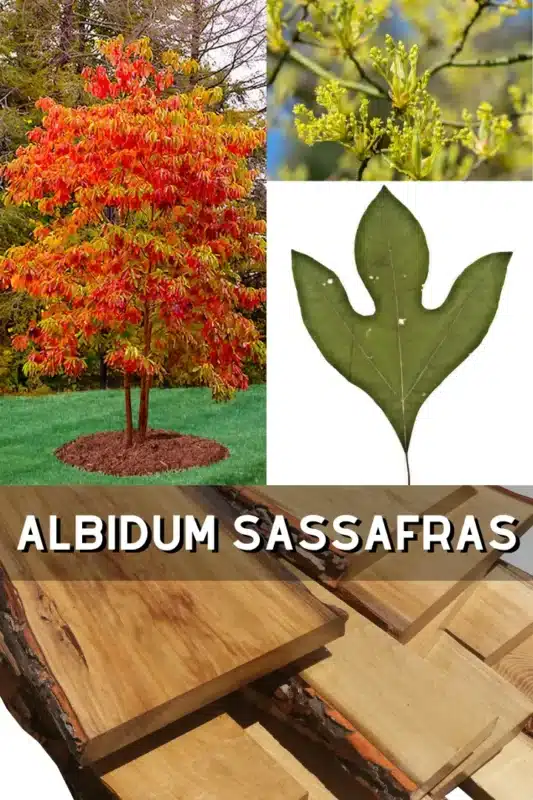
Sassafras albidum is a deciduous broadleaf tree in the laurel family. The reversed phrase “albidum sassafras,” along with spellings such as “sasafrass,” normally refers to this same species.
Botanical Name and Classification
The accepted scientific name is Sassafras albidum (Nutt.) Nees. Sassafras is the genus, while albidum is the specific epithet; botanical names place the genus first and capitalize it, while the epithet remains lowercase.
The Latin albidum meaning relates to being whitish or pale, a reference often associated with the light-colored inner tissues. The species belongs to Lauraceae and the order Laurales, alongside aromatic relatives such as spicebush, redbay, cinnamon, and avocado. Its accepted taxonomy appears in the Plants of the World Online record.
Sassafras Tree Quick Facts
A mature sassafras commonly reaches 30–60 feet tall and spreads 25–40 feet. Forest-grown specimens on favorable soil may approach 80–100 feet, while repeatedly cut plants can remain shrub-like and form broad colonies.
| Trait | Typical description |
|---|---|
| Native status | Eastern North America |
| Hardiness | Commonly USDA zones 4–9 |
| Light | Full sun to partial shade |
| Preferred soil | Acidic, moderately moist, and well drained |
| Mature size | 30–60 feet tall; 25–40 feet wide |
| Leaf forms | Unlobed, mitten-shaped, and three-lobed |
| Flowers | Small yellow-green clusters in spring |
| Fruit | Blue-black drupes on red stalks |
| Fall color | Yellow, orange, red, and scarlet |
| Main caution | Root suckering and laurel wilt exposure |
Size, form, and hardiness: Young trees tend to grow upright with an irregular crown that rounds out with age. Full sun creates a denser canopy and stronger fall color, while heavy shade can produce a thin, leaning form.
Sex, fruit, and suckering: Sassafras is usually dioecious, meaning male and female flowers grow on separate trees. A male tree won’t bear fruit, and an unsexed nursery seedling offers no guarantee of future berries. Both sexes may send up shoots from spreading roots.
How to Identify Sassafras albidum

Identify Sassafras albidum by checking several traits together: alternate variable leaves, smooth margins, aromatic green twigs, furrowed mature bark, and seasonal flowers or fruit. Leaf shape alone can mislead because mulberry and young tulip trees may also carry lobed leaves.
Three Leaf Shapes
A healthy tree can display three leaf forms at once: an unlobed oval leaf, a one-lobed “mitten,” and a symmetrical or uneven three-lobed leaf. The leaves are alternate, commonly 4–7 inches long, with smooth rather than toothed margins.
- Unlobed: Oval to elliptical, often with a pointed tip.
- Mitten-shaped: One side lobe creates a left- or right-handed mitten outline.
- Three-lobed: A long central lobe sits between two shorter side lobes.
- Arrangement: One leaf grows at each node rather than in opposite pairs.
The variable forms are a normal growth trait, not separate species. If you’re comparing mulberry trees’ leaves, look at the edges: mulberry foliage usually has obvious teeth, while sassafras margins feel smooth beneath a fingertip.
Twigs, Bark, and Aroma
Young sassafras twigs are often green and aromatic. Gently rubbing a fallen twig or one leaf releases a warm citrus-spice scent that many people compare with old-fashioned root beer; avoid stripping bark from a living tree merely to test the aroma.
Young bark looks fairly smooth and gray-brown. On older trunks, it becomes reddish-brown and furrowed, with interlacing ridges that feel corky beneath the hand. The bark pattern is supportive evidence, but it varies with tree age and growing conditions.
Flowers and blue-black fruit: Small yellow-green flowers appear in spring near leaf emergence. Female flowers can develop into pea-sized blue-black drupes seated in red cup-like structures on bright red stems. Birds often remove ripe fruit quickly, so an empty female crown in autumn doesn’t prove the tree never fruited.
Fall foliage colors: A single crown may carry lemon-yellow, orange, coral-red, and scarlet leaves at the same time. On a dry autumn morning, fallen leaves feel thin and slightly leathery, while bruised ones retain their spicy aroma.
Similar trees and errors: Mulberry has toothed leaves and elongated aggregate fruit. Tulip tree leaves have squared, clipped-looking tips. Spicebush is an aromatic shrub with consistently unlobed leaves, while poison ivy has three separate leaflets instead of one three-lobed blade.

Native Range and Ecological Value
Sassafras is native across much of eastern North America, where it occupies forest edges, old fields, roadsides, open woods, and dry upland slopes. Its fruit feeds birds, its foliage supports butterfly larvae, and its spreading roots create protective thickets.
Geographic Distribution
The native range extends from southern Ontario and parts of New England west into the Midwest and margins of the Great Plains. It continues south through Florida and west into eastern Texas and Oklahoma, as documented in the USDA Forest Service species account.
Local abundance doesn’t mean every site suits the species. Regional climate and drainage shape performance, while laurel wilt changes the planting risk in affected southeastern areas.
Natural Habitats
Sassafras acts as an early-successional tree. It moves into sunny ground after cultivation, clearing, fire, or storm disturbance, then loses vigor as taller trees close the canopy and reduce available light.
Common habitats include old fields, fence rows, woodland edges, dry slopes, and disturbed roadsides. It tolerates varied soil textures, but stagnant water and deep permanent shade produce weak growth or root decline.
Birds and mammals: Songbirds consume the dark drupes and disperse seeds in their droppings. Browsing mammals may eat tender shoots and foliage, while dense colonies offer low cover. Fruiting can appear brief because birds strip a small tree within days.
Butterfly host value: Sassafras serves as a larval host for the spicebush swallowtail. Caterpillars fold leaves into shelters, so rolled foliage with neat silk seams isn’t always disease damage; open one gently before removing it.
Succession and colonies: Underground roots send up genetically identical stems that help occupy disturbed soil. That behavior adds habitat structure in naturalized areas, but it becomes troublesome in lawn edges and formal beds where shoots require repeated cutting.
Growing and Propagating Sassafras
Grow sassafras in sun or light shade, acidic well-drained soil, and a site large enough for a 25–40-foot canopy plus root suckers. Young seedlings establish more reliably than large wild-dug trees because sassafras reacts poorly to major root loss.
Light and Soil
Full sun promotes compact branching and richer autumn color. Partial shade suits young plants, but heavy shade often leaves mature crowns sparse and drawn toward the nearest opening.
Acidic, loose soil with moderate moisture offers the best establishment conditions. Once rooted, sassafras tolerates periodic dryness, yet a new transplant has little drought reserve. Waterlogged clay poses the opposite problem by restricting oxygen around roots.
Spacing and Site Selection
Keep the tree away from foundations, patios, narrow borders, septic fields, and areas where suckers can’t be reached. A woodland edge or broad wildlife planting gives its natural colony habit room to work without constant conflict.
Check mature canopy clearance around overhead lines and neighboring structures. For a mixed planting, allow roughly 20–30 feet between sassafras and other canopy trees, adjusting for the desired density and long-term thinning plan.
Watering, mulching, and pruning: Soak the root zone when the upper few inches of soil become dry during establishment. Spread 2–3 inches of organic mulch across the root area, leaving the trunk flare exposed. Remove dead, crossing, or damaged branches rather than thinning the entire crown.
Managing root suckers: Cut small shoots at or just below soil level and expect follow-up work. Mowing alone may trigger more shoots. Never spray systemic herbicide onto a sucker attached to a valued tree, since connected roots can carry the chemical back to the parent.
Seed stratification: Collect fully ripe blue-black fruit, remove all fleshy pulp, and place the cleaned seed in a moist medium for about 90–120 days of cold treatment. Some seed lots respond to a warm period before chilling, and dry or old seed can germinate poorly regardless of treatment.
Root sucker propagation: Select a dormant sucker with independent fine roots, not merely a leafy shoot attached to a thick parent root. Severing a shoot without feeder roots often produces a limp stem within hours. A propagated sucker is a clone and retains the parent tree’s sex.
Seedlings and transplanting: Plant the root flare at soil level, spread circling roots, and backfill with native soil. Container-grown seedlings or small dormant bare-root plants usually outperform large specimens dug from the wild. Water through the first growing seasons rather than assuming immediate drought tolerance.
Practical notes from use: A properly watered planting settles with firm soil but no standing puddle, and the trunk should remain upright without tight staking. The common failure is a deep, narrow hole filled with rich compost; roots circle inside the amended pocket instead of moving into surrounding soil.
Buy from a seller who identifies plant condition, shipment timing, and legal destination. For restoration work, local-source seedlings often match regional climate better than stock raised far outside the planting area.

Well-Rooted Sassafras Tree Seedling
- One well-rooted sassafras seedling
- Hardy native deciduous tree
- Bright fall color adds seasonal beauty
- Excellent for wildlife-friendly gardens
- A natural choice for landscape planting
 Buy on Amazon
Diseases and Growing Failures
The gravest regional threat is laurel wilt, while poor drainage, deep planting, drought after transplanting, and limited yard space cause many noninfectious failures. Sudden whole-crown wilting requires a different response from gradual yellowing in saturated soil.
Laurel Wilt
Laurel wilt is a lethal vascular disease associated with the fungus Harringtonia lauricola, called Raffaelea lauricola in older sources. The invasive redbay ambrosia beetle, Xyleborus glabratus, introduces the fungus while boring into susceptible trees.
Warning signs include sudden crown wilting, brown leaves retained on branches, dark streaking beneath the bark, tiny entry holes, and fine boring dust. The USDA Forest Service maintains regional information through its laurel wilt research.
Contact a state forestry office or local extension service before transporting or disposing of suspect wood. Moving infested firewood can spread beetles, and disposal rules differ between affected regions.
Beetle and Fungus Signs
One pin-sized hole doesn’t confirm laurel wilt; native borers also use stressed wood. Look for a combination of symptoms, including rapid canopy collapse and vascular discoloration. A laboratory or forestry diagnosis is more reliable than matching one online picture.
Root and moisture problems: Yellow leaves, sparse growth, and dieback can arise when roots remain wet or the trunk flare sits below grade. Pull mulch away from the bark, correct irrigation, and improve surface drainage without cutting major roots.
Transplant shock: Large wild trees lose much of their fine-root network when dug. The crown may wilt, leaf edges turn crisp, and twigs remain flexible before dying back. Move small dormant plants with a wide root ball and resist heavy fertilizer during recovery.
Small-yard challenges: A tree planted six feet from a patio may fit for several years, then send shoots through nearby beds as the crown broadens. Repeated pruning won’t make a naturally spreading tree suitable for a confined site; choose a smaller species instead.
Historical Uses and Safrole Safety
Sassafras has a long history in beverages, seasonings, household goods, and woodworking, but safrole changes the safety picture. The living tree isn’t broadly illegal in the United States; federal restrictions concern safrole as a food additive rather than ordinary ornamental ownership.
Traditional Sassafras Uses
Communities historically used roots and root bark in aromatic drinks, while wood went into rails, posts, small furniture, and boat-related components. The old phrase “bay root” can refer to aromatic roots or bark sold under regional common names, so it shouldn’t be treated as a precise botanical label.
Traditional use doesn’t establish medical safety. Concentration, preparation, plant part, dose, and exposure frequency can vary widely, making homemade root-bark extracts unsuitable for casual health claims.
Root Beer History
Early root beer recipes commonly drew flavor from sassafras root or bark. Modern commercial root beer usually uses alternative flavor systems or processed safrole-free flavoring rather than untreated root material.
Safrole and FDA regulation: Safrole is an aromatic compound concentrated in sassafras oil and associated strongly with root bark. Animal studies linked exposure with carcinogenic effects, and the FDA prohibited safrole as a direct food additive in 1960. The legal wording appears in 21 CFR § 189.180.
Dried leaves and filé: Dried sassafras leaves are ground into filé powder, a traditional gumbo seasoning and thickener. Leaf-based filé differs from root bark and concentrated essential oil, so products sharing the sassafras name shouldn’t be treated as chemically identical.
Essential oil risks: Sassafras essential oil creates a far more concentrated exposure than smelling a bruised leaf or using a regulated culinary product. Don’t swallow it or apply undiluted oil to skin. Pregnancy, medication, liver concerns, or possible poisoning call for guidance from a qualified medical service.
Sassafras Wood vs Walnut Wood

Sassafras wood is lighter, softer, and coarser than American black walnut. Walnut offers a darker color and greater surface hardness, while sassafras offers low weight, easy machining, and useful natural decay resistance.
Sassafras Wood Appearance
Sassafras heartwood ranges from golden tan to medium brown, sometimes showing orange or olive casts. Pale yellow-to-white sapwood forms a sharp border on some boards. Its open, coarse grain can resemble ash or chestnut, especially after a clear finish.
Freshly machined sassafras gives off a mild spicy scent, and its low weight becomes clear when lifting a wide plank. Cutting tools usually leave clean edges, though coarse earlywood pores remain visible beneath glossy finishes.
Walnut Wood Color
Walnut wood color runs from light brown to deep chocolate, with occasional gray, purple, or reddish undertones. The sapwood is cream to nearly white. Exposure and clear finishes often mellow black walnut toward a warmer brown rather than making it progressively darker.
Color varies across boards, so match project parts under the same lighting before cutting. The broader guide to wood colors explains why finish, oxidation, and heartwood content change the final appearance.
| Property | Sassafras | American black walnut |
|---|---|---|
| Typical heartwood | Golden to medium brown | Light to deep chocolate brown |
| Janka hardness | About 630 lbf | About 1,010 lbf |
| Dried density | About 31 lb/ft³ | About 38 lb/ft³ |
| Grain | Usually straight and coarse | Usually straight and moderately open |
| Machining | Easy; low tool resistance | Easy to moderate; holds detail better |
| Common roles | Rustic furniture, posts, paneling | Fine furniture, cabinetry, carving |
Hardness and density: Sassafras measures about 630 pounds-force on the Janka scale, compared with roughly 1,010 lbf for black walnut. Those values vary between boards and test sources, but walnut resists dents better. See the site’s wood hardness scale for broader comparisons.
Workability and durability: Sassafras machines and glues easily, though its pores may need filling for a mirror-smooth surface. Its heartwood has useful decay resistance, but outdoor parts still need drainage and end-grain protection. Walnut cuts cleanly and holds carved detail better.
Black walnut vs walnut: Black walnut means Juglans nigra. An unqualified “walnut” label may mean that species, English walnut (Juglans regia), or another regional commercial wood. American dealers often shorten black walnut to walnut, so confirm the species before comparing boards.
Sassafras vs black walnut: Choose sassafras for light construction, rustic texture, easier handling, or decay-resistant heartwood. Choose black walnut for darker premium furniture, harder wearing surfaces, carving, and higher resale recognition. The detailed walnut wood guide covers the latter material in depth.
Buying Timber Boards and Planks
Buy sassafras and walnut hardwood by usable board-foot yield, not length alone. Grade, width, thickness, drying quality, surfacing, sapwood, figure, checking, and shipping can affect project cost more than the advertised rate.
Board-Foot Measurements
One board foot equals 144 cubic inches, or a board 1 inch thick, 12 inches wide, and 12 inches long. Calculate it as thickness in inches × width in inches × length in feet ÷ 12.
A rough board measuring 1 × 8 × 10 feet contains about 6.67 board feet before defect deductions.
Board-foot calculation example
Measure random-width boards across their actual widths and ask how the dealer rounds measurements. Live-edge boards need a stated averaging method, since using the widest point exaggerates usable volume.
Rough 4/4 Lumber
Rough 4/4 lumber starts near 1 inch thick. After jointing and planing, it may finish around 3/4 or 13/16 inch, depending on the mill and board distortion. Don’t design a 1-inch finished part from ordinary 4/4 stock.
Walnut timber boards: Inspect both faces for sapwood, knots, end checks, pith, cup, and twist. Wide clear heartwood costs more because it yields uninterrupted dark parts. Narrower boards can offer better value when a project allows glue-ups.
Walnut timber planks: Thick planks and live-edge slabs require verified moisture readings at more than one depth. A dry surface can hide a wet core, leading to fresh cracks or cupping after the plank enters a heated workshop.
Grades and pricing factors: Compare species, grade, thickness, board width, length, kiln-dried or air-dried status, rough or surfaced condition, sapwood allowance, figure, and freight. A lower sticker rate can cost more if checks and knots remove half the board.
Sassafras lumber availability: Sassafras is less consistently stocked than black walnut, so regional sawmills and specialty hardwood dealers may offer the best selection. Buy extra for grain matching and defects; its coarse grain looks most unified when adjoining boards share similar growth-ring spacing.
Before ordering, create a cut list and add a realistic waste allowance of 15–30 percent. Straight, narrow components need less extra stock than wide panels, live-edge work, or projects that exclude pale sapwood.
FAQs
Is Albidum Sassafras The Same As Sassafras Albidum?
Yes, albidum sassafras usually refers to the species Sassafras albidum. Sassafras albidum is the scientific name for the native North American sassafras tree. Botanical names are written with the genus capitalized and the species lowercase, so Sassafras albidum is the correct formal form.
How Can You Identify A Sassafras Tree By Its Leaves?
Sassafras trees are easy to recognize by their three leaf shapes on the same tree. Leaves may be oval, mitten-shaped with one side lobe, or three-lobed like a small trident. They grow alternately along twigs and release a spicy, citrus-like scent when crushed.
Does Every Sassafras Tree Produce Berries?
No, only female sassafras trees produce berries. Sassafras trees are usually dioecious, meaning male and female flowers grow on separate trees. A female tree also needs a nearby male tree for pollination before it can develop the small dark-blue berries in late summer or fall.
Is Sassafras Poisonous Or Illegal In The United States?
Sassafras trees are legal in the United States, but sassafras oil and safrole should not be consumed. Safrole is restricted as a food additive because high doses caused health concerns in animal studies. Tea made from safrole-free commercial products is different, but homemade root or oil preparations are not recommended.
Is Sassafras Wood More Valuable Than Walnut Wood?
No, walnut wood is generally more valuable than sassafras wood. Walnut is widely prized for its rich color, fine grain, furniture quality, and strong demand among woodworkers. Sassafras is attractive, lightweight, and rot-resistant, but it is less common in premium furniture markets and usually sells for less.
Affiliate Disclosure: Some links in this post are affiliate links. If you make a purchase through these links, we may earn a small commission at no extra cost to you. We only recommend products we genuinely believe in.