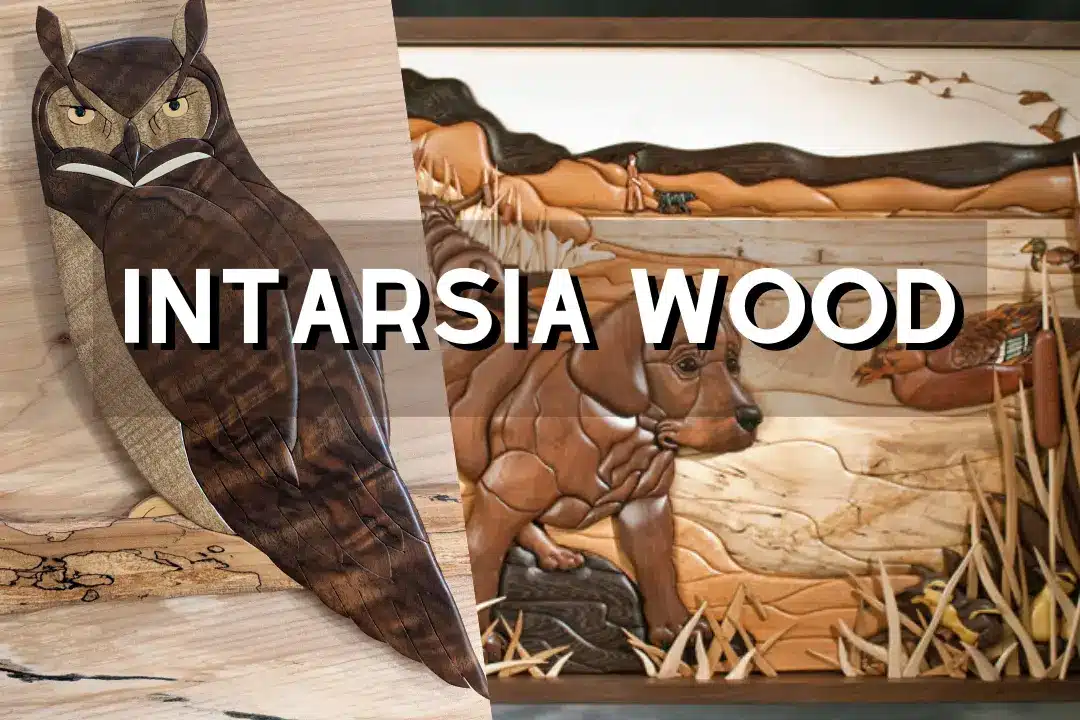

How can 3,200 tiny pieces form a 15‑foot mural with no stain at all? That’s the magic of intarsia wood. This guide shares 7 unique pieces that range from church murals to mini gifts. You’ll find ideas, patterns, and starter kits so you can try wood intarsia with simple tools.
Table of Contents
Intarsia wood turns natural color, grain, and texture into vivid pictures and panels, from pocket-size miniatures to church-scale murals built from thousands of pieces. I’ll share how makers plan, cut, shape, and assemble wooden intarsia, and I’ll show real projects, patterns, and materials that bring intarsia wood art to life.
1. Large-Scale Wall Mural by Joe Carr

Dimensions: 15′ x 9’3″
This landmark piece spans 15 feet wide and rises to 9 feet 3 inches tall, which changes how viewers read the art from up close and across a room. I study murals at this size to learn how wood intarsia scales, how sightlines shift, and how a layout map keeps thousands of cuts aligned over months of work.
3,200 pieces, 29 species
The mural contains 3,200 pieces cut and shaped from 29 wood species, a palette built from North American and exotic hardwoods. I pay close attention to density, color stability, and grain flow so edges meet cleanly and the piece holds a crisp silhouette under raking light.
No stains or dyes
Every hue and tone comes from natural wood alone—no stains, dyes, or colorants—which keeps the image honest to the tree. If you want proof that color variety exists in wood, look at projects like this and the notes shared in Joe Carr’s intarsia thread, which highlights the scale, palette, and scope.
4,000+ spacers for depth
Behind the surface, 4,000+ risers lift select pieces for shadow lines and relief. I use spacer stacks to push backgrounds back, bring features forward, and cut tiny channels that make highlights breathe under normal room light.
5,100+ hours, 21 months
The mural consumed 5,100+ hours across 21 months of layout, cutting, shaping, sanding, assembly, and finish. I plan long timelines with precise milestones: draw, rough cut, refine, dry fit, glue, backer attach, finish, and installation checks.
Install time: over a week
Even after the last piece seats, the install demands over a week for panel alignment, mechanical attachment, and seam touch-ups. I preplan hardware, wall flatness, and on-site protection so the surface stays clean during handling and lift moves.
Holy Infant Catholic Church
The mural lives at Holy Infant Catholic Church in Durham, North Carolina, where the composition honors local ministries and community life. I like church and civic placements for intarsia wood because diffuse light and tall walls make the relief and grain stand out all day.
Second-largest in the U.S.
Among documented projects, this piece ranks as the second-largest intarsia installed in the United States. I treat claims like this as motivation to aim high with intarsia wood art scale, engineering, and storytelling.
| Specification | Value |
|---|---|
| Total dimensions | 15′ (W) x 9′ 3″ (H) |
| Piece count | 3,200 individual parts |
| Wood species | 29 species (domestic + exotic) |
| Spacers | 4,000+ internal risers |
| Build time | 5,100+ hours over 21 months |
| Install time | More than one week |
| Location | Holy Infant Catholic Church, Durham, NC |
| Rank | Second-largest in U.S. |
I study large commissions to learn how depth, shadow, and grain coherence scale with viewing distance, and I carry those lessons into smaller wood intarsia builds.
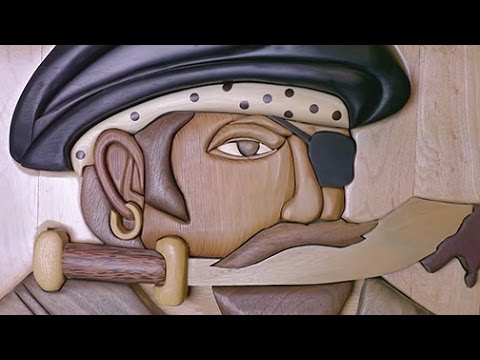
Watch how large-format intarsia flows from pattern to wall and study spacer strategy, panelization, and finishing passes in action. This video illustrates techniques that serve both massive murals and small panels.
2. Intarsia Wildlife Portraits
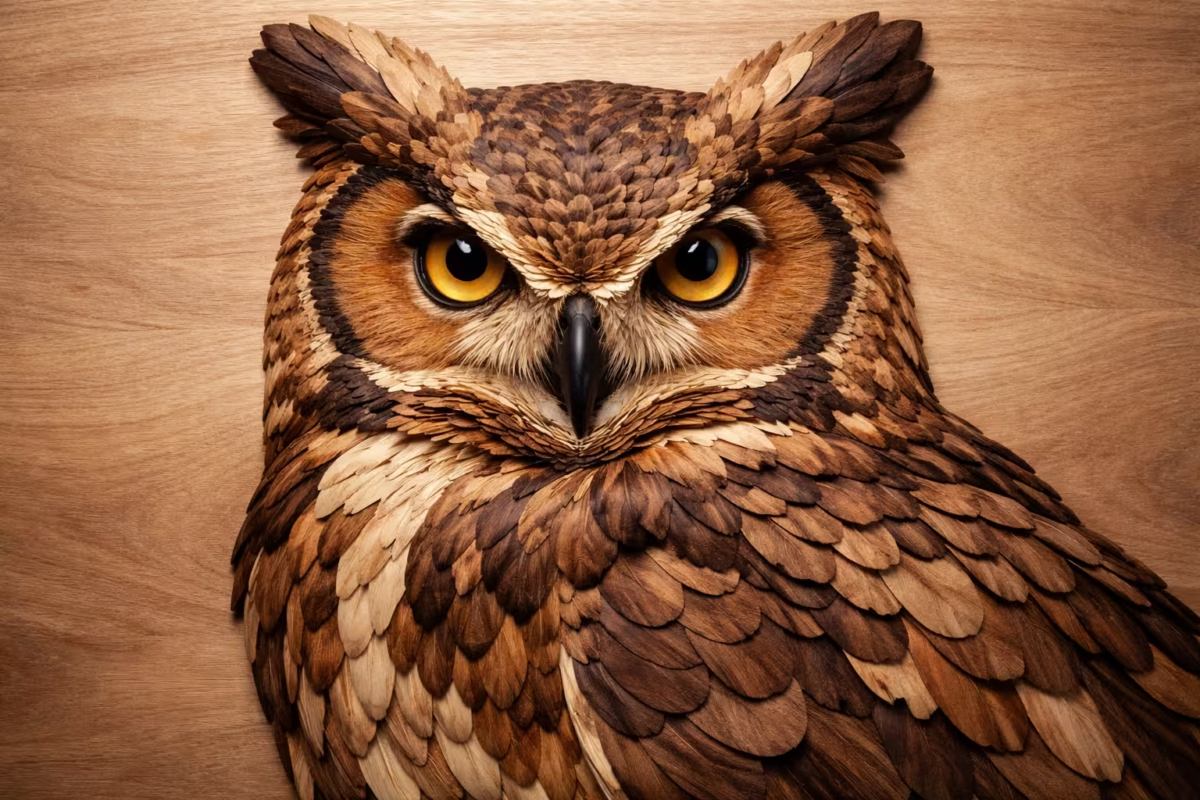
3D animal intarsia
Wildlife portraits show off 3D contours better than almost any subject. I use controlled doming on cheeks and snouts, sharp feather edges, and subtle bevels around eyes so the intarsia wood face reads alive under natural light.
Wolves, birds, deer, fish
I reach for wolves, birds of prey, deer, and stream fish because each teaches a new texturing trick. For wolves, I stack short feathered cuts for fur; for owls, I carve layered fans; for deer, I model the muzzle and eye set; and for fish, I add thin scales with a V-tool and burnished highlights.
Natural wood shading
Natural shading comes from wood choice and grain alignment, not stain. Walnut for shadow, cherry for mid-tones, maple for highlights, and a touch of padauk or purpleheart for accents can carry a lifelike palette in wooden intarsia portraits.
Intarsia wood patterns
Good intarsia wood patterns separate planes cleanly and mark grain direction on every part. I print full-size sheets, label species on the pattern, and mirror-flip parts as needed so intarsia wood art joints seat tight from the start.
3. Wooden Intarsia “Old Couple”
Finished art or patterns
The “Old Couple” motif works as finished art or as a DIY kit with patterns for scroll saw users. I favor this piece for practice because face planes, hair texture, and clothing folds push wood intarsia shaping skills without huge material cost.
Sizes from 12″ x 12″
Most builds start around 12 x 12 inches, then scale up by enlarging the print and thickening parts for more relief. I keep proportion by scaling spacer heights too, so the profiles and silhouettes remain consistent.
Sentimental, nostalgic appeal
Couple scenes carry nostalgia and warmth, which makes them popular for anniversaries and family gifts. I lean on gentle maple highlights for hair and hand edges, with walnut or cherry base tones that give the portrait depth without paint.
Around $210 2026
As a gift or decor piece, I see prices cluster near $210 for mid-size builds in 2026, based on listings in the intarsia woodworking gifts category. Prices shift with species choice, finish, and whether the art ships framed or as a free-hanging panel.
4. Floral Intarsia Panels
Multi-layer floral designs
Floral pieces benefit from multi-layer construction: petals on risers, stems set back, and a textured center on a higher spacer. I cut petals in clusters, pre-sand edges for soft light falloff, then blend the profiles with micro-mesh pads before assembly.
Multiple wood species
I select two to four species per bloom—maple for highlights, cherry for mids, walnut for depth, and a vibrant accent like padauk for a stamen ring. This palette keeps wooden intarsia flowers lifelike without tinting.
Realistic color, no stains
For color without stain, I rely on species selection and grain orientation to steer tones. Tangential grain can look brighter than radial grain; I mix those to separate petals and keep the flower open under daylight.
Wall art and accents
Floral intarsia hangs as wall art or sets into furniture doors and drawer fronts as panel accents. I float panels in frames with a small reveal so seasonal movement doesn’t pinch the edges.
5. Architectural Intarsia Crests or Logos
Custom commissions
Organizations commission crests, seals, and logos for lobbies, sanctuaries, and lecture halls. I break complex emblems into clean color blocks first, then refine sub-parts so the icon reads from 20 feet and from 2 feet.
Recognizable emblems, logos
Accuracy matters for brand marks, so I trace vector art, add kerf allowances, and test-fit curves around type. Reference builds and community notes such as this intarsia wall project help me plan scale, panels, and installation steps.
Individually shaped pieces
Every segment gets shaping so highlights catch and shadows define edges. I round just enough to suggest relief while keeping crisp borders where letters and shields meet.
Integrated panels for murals
Large crests mount on interlocking panels that register with biscuit slots or loose tenons, making transport and on-site work smoother. I label the back of each panel with a map so the mural assembles in a predictable order.
6. Intarsia Landscape Art
Mountains, forests, lakes
Landscape scenes thrive on layered depth: a distant haze line, mid-ground trees, and a foreground rock or fence. I add soft shaping on the horizon and stronger relief up front so the eye travels into the frame.
Dozens of wood segments
Even modest pieces carry dozens of segments, with grain leaned uphill for ridges and downhill for valleys. I keep track with printed maps, color codes, and small trays so each part returns to its exact position after sanding.
Natural grain shading
Grain lines act like brushstrokes. Quartered maple becomes sky streaks, rift cherry becomes water ripples, and flatsawn walnut becomes dark forest masses that shape the silhouette of hills.
Wood intarsia enthusiasts
This genre draws enthusiasts who like long cuts and large curves. I suggest landscapes to students who want smoother sanding runs and clearer practice on depth with risers.
7. Intarsia Woodworking Miniatures
Key holders, clocks, magnets
Mini projects like key holders, small clocks, and magnets teach tight fitting without big material costs. I keep parts thick enough to shape lightly, then add a quick backer and hardware.
Use off-cuts efficiently
These builds turn off-cuts into value. I sort scraps by species and thickness, label bins, and pair neutral woods with bright accents so small intarsia shines.
Quick builds, starter kits
Starter kits and small patterns let you finish a project in a weekend. I suggest a simple animal or flower first, so you can practice shaping, gluing, and finishing without overload.
Great gifts for beginners
- Pick a 6″–10″ pattern with fewer than 25 parts.
- Choose contrasting woods; add one colorful accent.
- Sand edges before assembly for crisp joints.
- Glue onto a thin backer, then flush-trim.
- Finish with oil/varnish blend for warmth and easy repair.
Intarsia wood basics & resources 2026
What is intarsia wood?
Intarsia wood is a mosaic method where different species are cut, shaped, and fitted into a picture with relief and natural color. I treat it like sculpted puzzle work: every piece gains form, then all parts glue to a backer to hold the scene together.
Key facts and figures
Big builds can reach thousands of pieces, span more than 10 feet, and require months of work. Smaller frames finish in days and teach grain planning, contours, and smart glue-ups you can apply to bigger projects later.
Current trends & gifts 2026
I see strong demand for wildlife, couples, and nature abstractions, with dozens of unique designs surfacing at any given time. Custom nameplates, anniversary art, and pet portraits sell well because the story connects instantly.
Popular searches
Search interest clusters around terms like wooden intarsia, intarsia wall art, and intarsia wood patterns; browsing boards such as pinterest.com/nydragon69/intarsia-wood shows recurring themes and palettes in circulation. I scan these galleries to spark ideas and to gauge what buyers ask for.
Learning & workshops 2026
If you want guided practice, look for a focused class that covers patterns, wood selection, shaping, sanding, and finishing. Programs like the Creating Intarsia Art workshop outline a direct path from idea to finished panel with hands-on coaching.
Choosing materials
I build a palette from domestic staples and a few colorful exotics, always leaning on contrast and grain flow. For shadows, I reach for black walnut; for warm mids, I like cherry wood; for bright highlights, I use maple; for vivid accents, I’ll add a touch of purpleheart. For practice and hidden backers, I’ll pull from poplar because it cuts cleanly and stays flat.
Here are convenient stock options I like for small builds, accents, and testing palettes before cutting a full scene.

Walnut, Cherry & Maple Board Combo, 15 Boards
- Mixed pack of walnut, cherry, and maple
- 15 boards at 3/4 x 2 x 24 inches each
- Uniform dimensions for consistent results
- Great for accents, laminations, and small builds
- Ready for cutting, shaping, and sanding
 Buy on Amazon

Exotic Hardwood Assortment: Purpleheart, Padauk, Zebrawood, Walnut
- Variety pack of premium exotic hardwoods
- Vibrant colors and striking grain patterns
- Perfect for small projects, inlay, and accents
- Convenient pre-cut blanks to reduce waste
- Explore species without buying full boards
Buy on Amazon
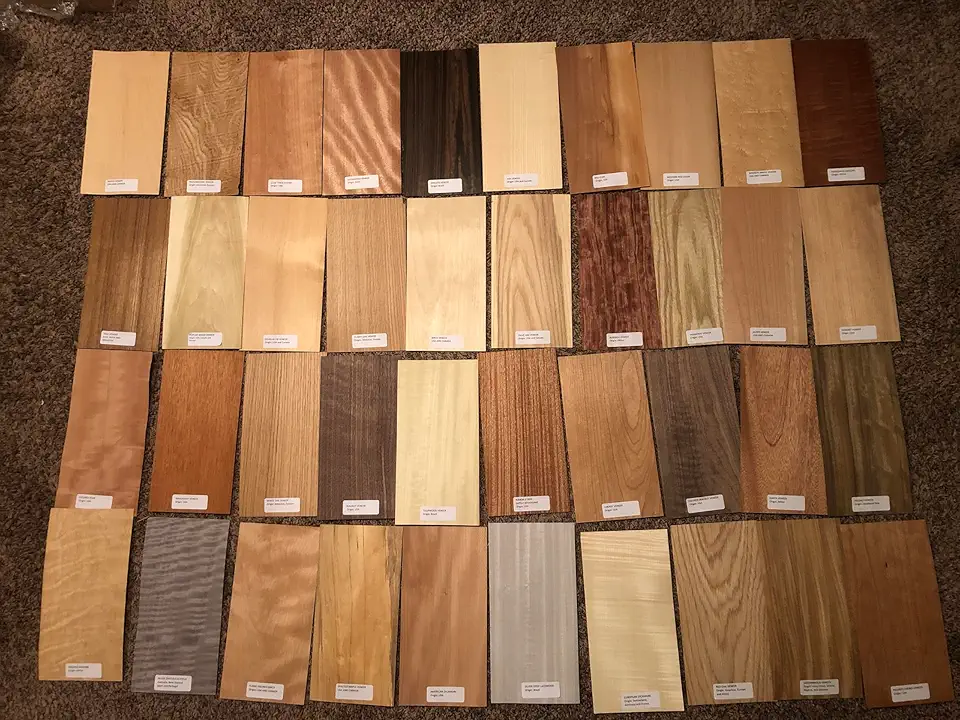
40 Labeled 6x12 Wood Veneers, 20 Sq Ft
- Assorted exotic and domestic species for variety
- 40 pieces at 6x12 for 20 sq ft coverage
- Labeled sheets for easy identification
- Consistent sizing for clean layouts and seams
- Ideal for marquetry, inlay, and fine crafts
Buy on Amazon
Patterns & project books
I keep a small library of patterns that teach sequence, shaping depth, and clean joints, from quick weekend builds to advanced panels. These picks help you practice core moves and step up with confidence to larger intarsia scenes.

Intarsia for Beginners: 25 Skill-Building Projects
- Step-by-step lessons that build intarsia skills
- 25 beginner-friendly projects to practice
- Patterns, cutting guides, and layout tips
- Tool, wood, and safety basics explained
- Techniques for shaping, sanding, and finishing
Buy on Amazon
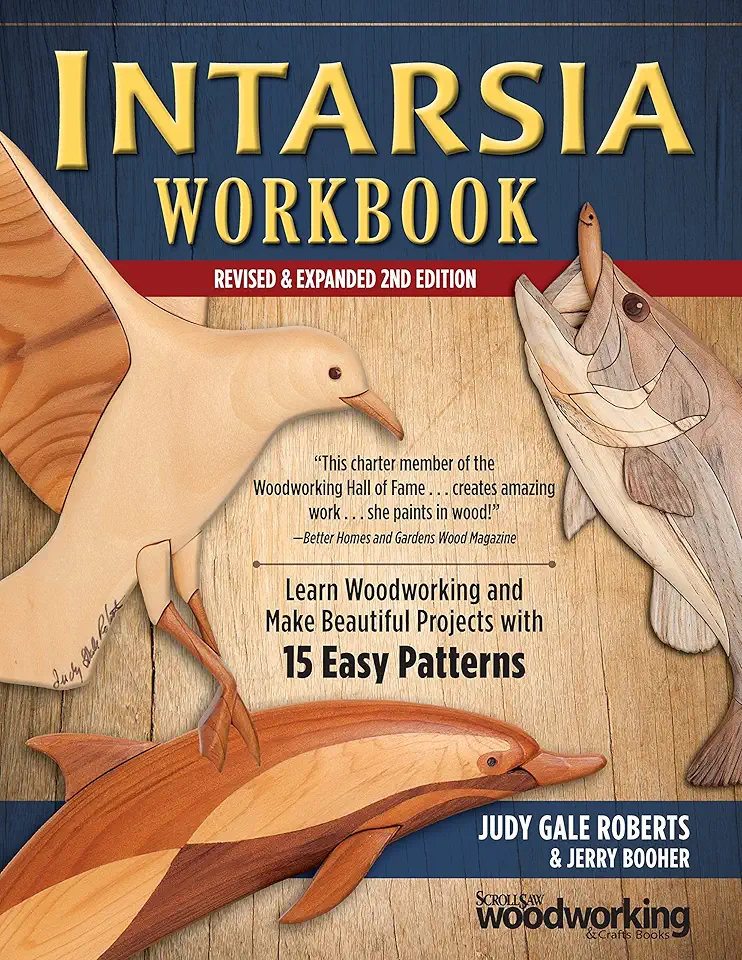
Intarsia Workbook, 2nd Edition: 15 Easy Patterns
- Revised and expanded guidance for today’s makers
- 15 easy patterns with full photo steps
- Clear scroll saw and shaping techniques
- Skill-building projects from simple to advanced
- Finishing, assembly, and troubleshooting tips
Buy on Amazon
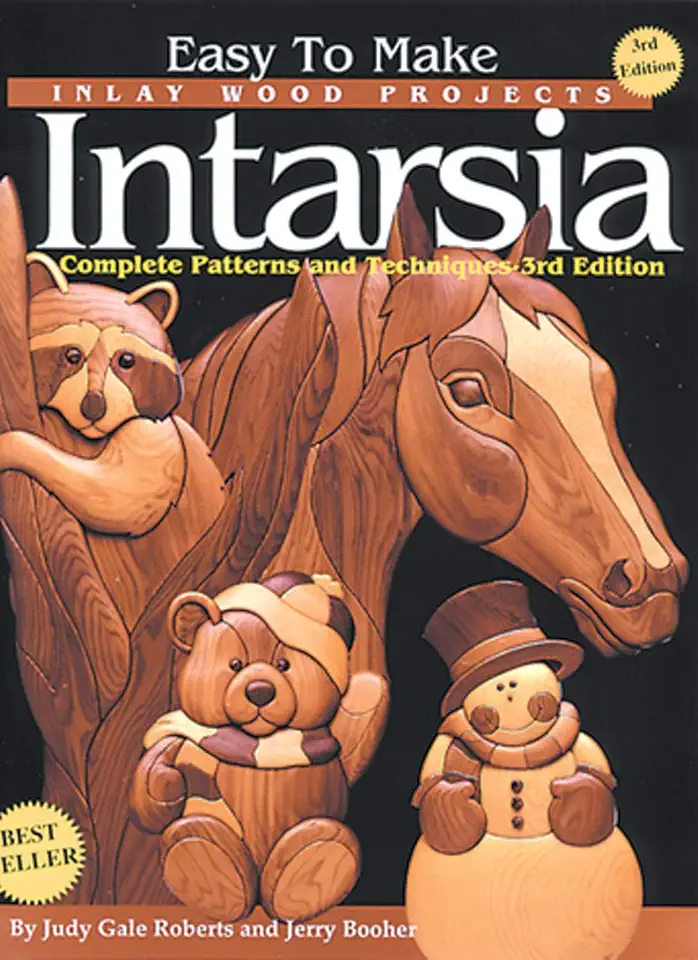
Easy Intarsia Inlay Projects: 3rd Edition
- Complete patterns and proven techniques
- Step-by-step intarsia and inlay instruction
- Projects sized for quick, satisfying builds
- Guidance on wood selection and grain
- Tips for shaping, gluing, and finishing
Buy on Amazon

Big Book of Intarsia: 37 Projects & Pro Techniques
- 37 projects with step-by-step guidance
- Patterns for segmentation and classic intarsia
- Pro tips for contours, joints, and fit
- Suited to beginner through advanced makers
- Finishing and display recommendations
Buy on Amazon
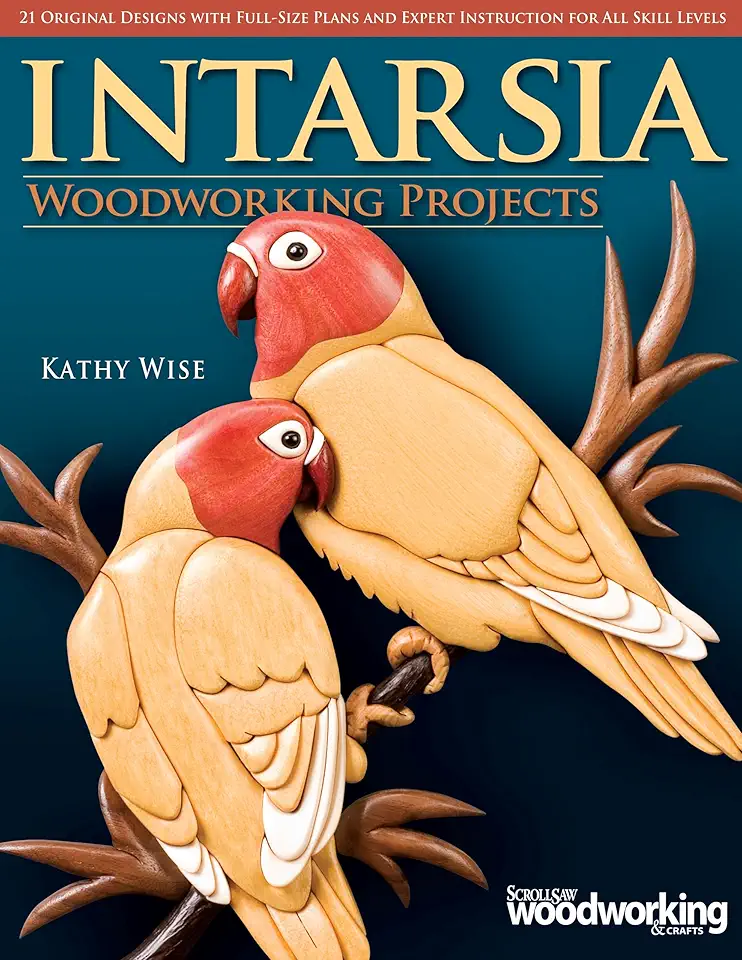
Intarsia Woodworking Projects: 21 Original Designs
- 21 original designs with full-size plans
- Clear instruction for every cut and glue-up
- Techniques to add depth, shading, and motion
- Scroll saw friendly layouts and patterns
- Projects for all skill levels
Buy on Amazon
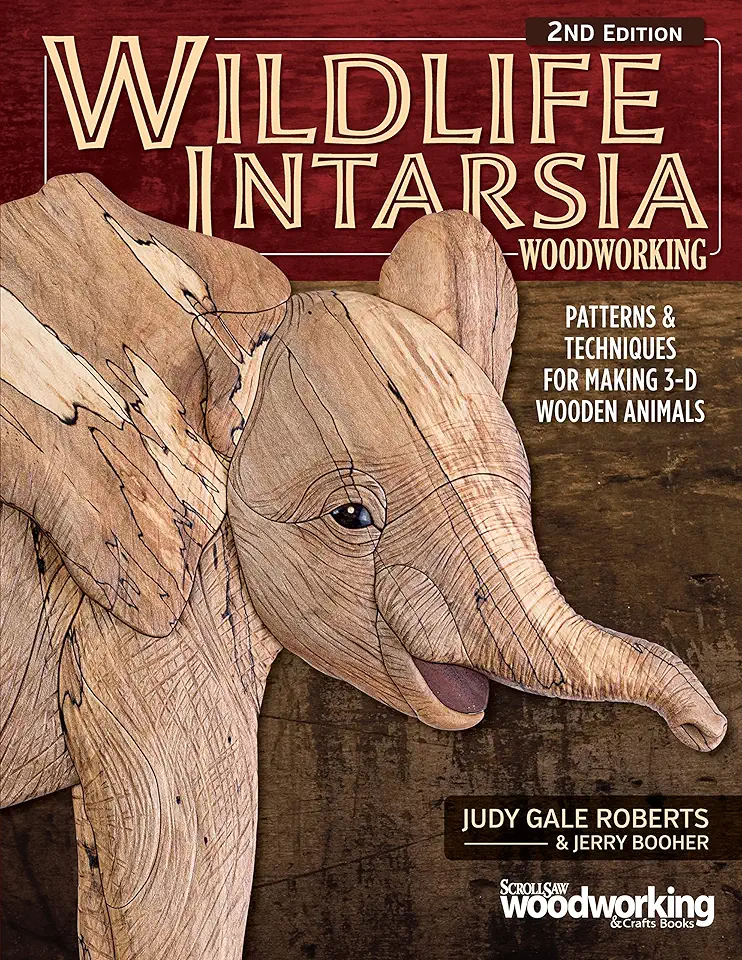
Wildlife Intarsia, 2nd Edition: 3-D Animal Projects
- Detailed wildlife patterns for 3-D effects
- Step-by-step shaping for realistic forms
- Advice on wood choice and grain direction
- Techniques for textures, eyes, and fur
- Finishing tips for durable, lifelike displays
Buy on Amazon
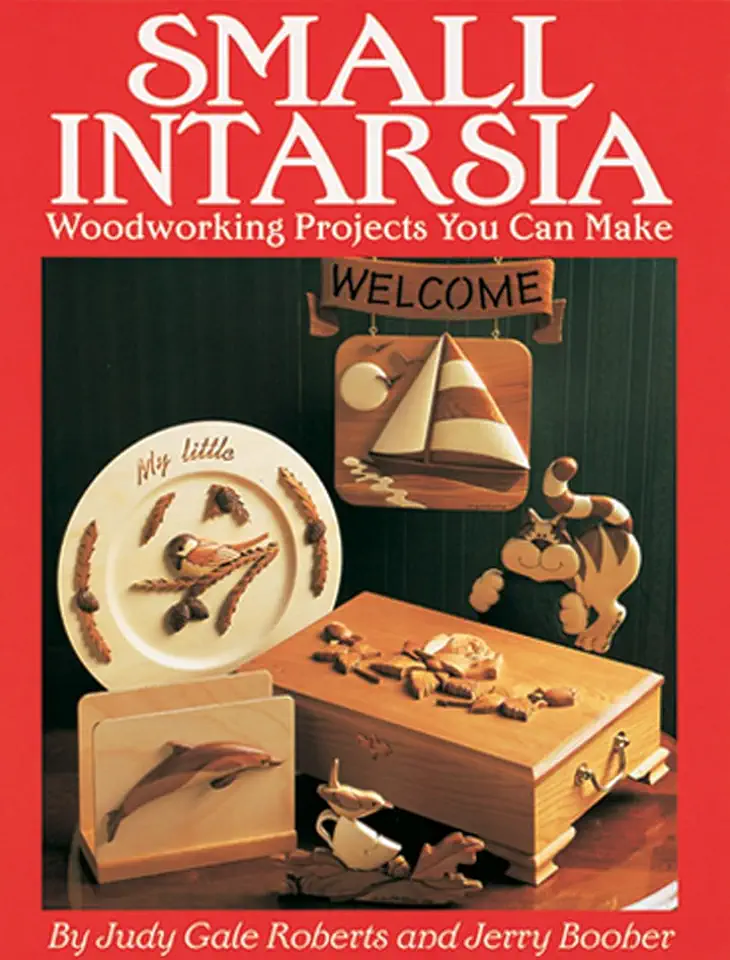
Small Intarsia: Projects You Can Make
- Compact intarsia projects that fit any shop
- Beginner-friendly designs with included patterns
- Quick builds for weekend crafting
- Minimal materials and tools required
- Great for gifts, decor, and skill building
Buy on Amazon
FAQs
What Is Intarsia Wood And How Is It Made?
Intarsia is a woodworking art that creates a picture or relief by cutting, shaping, and fitting individual pieces of differently colored wood, then assembling them on a backer. Instead of paint, you use the wood’s natural hue and grain to build depth and contrast.
The basic process is: choose a pattern, select species for color and grain, transfer the pattern to boards, cut the parts (usually on a scroll saw), refine the fit with slight bevels, shape and dome the surfaces for dimension, dry-fit everything, glue pieces to a stable backing, then sand and apply finish.
How Do You Start Intarsia Wood Projects?
Start with a simple pattern to learn the workflow. Gather a few contrasting woods, print and label the pattern, mark grain direction, and prepare flat stock of consistent thickness.
Cut the parts slightly proud on a scroll saw, keep them organized and numbered, dry-fit on a backer, then shape gradually with sanding drums, files, and a rotary tool. Glue in manageable sections on a sealed plywood backer, protect the surface with wax paper, let it cure flat, then final-sand and finish.
What Tools Are Needed For Intarsia Woodworking?
Essential tools include a scroll saw with fine blades, sanding drums or a spindle sander, a rotary tool with burrs, rasps and files, sanding blocks, spray adhesive or tape for patterns, and a stable backer such as plywood.
Helpful extras are a band saw for roughing, calipers for thickness control, small clamps or weights, micro pins or toothpicks for alignment, and good dust collection. Always wear eye, hearing, and respiratory protection.
What Types Of Wood Are Best For Intarsia?
Choose woods for natural color, grain, and workability. Great staples are walnut, cherry, maple, oak, poplar, and basswood; add color accents with cedar, padauk, purpleheart, wenge, or yellowheart.
For beginners, softer, predictable woods like basswood and poplar shape easily. Avoid very oily or brittle species unless you are experienced. Let boards acclimate, watch grain direction to enhance the design, and rely on natural color rather than heavy stains.
How Do You Finish And Protect An Intarsia Project?
Sand progressively (for example 120 to 220 or 320 grit), remove dust, and seal the piece. Wipe-on oil blends or tung oil warm the color; lacquer or waterborne polyurethane keep things clear; wipe-on polyurethane adds durable protection.
Apply several thin coats, allowing proper cure, and avoid heavy film that can blur edges. Add paste wax for sheen if desired. Keep the piece out of direct sun and high humidity, and mount it on a sealed, stable backer to minimize movement.