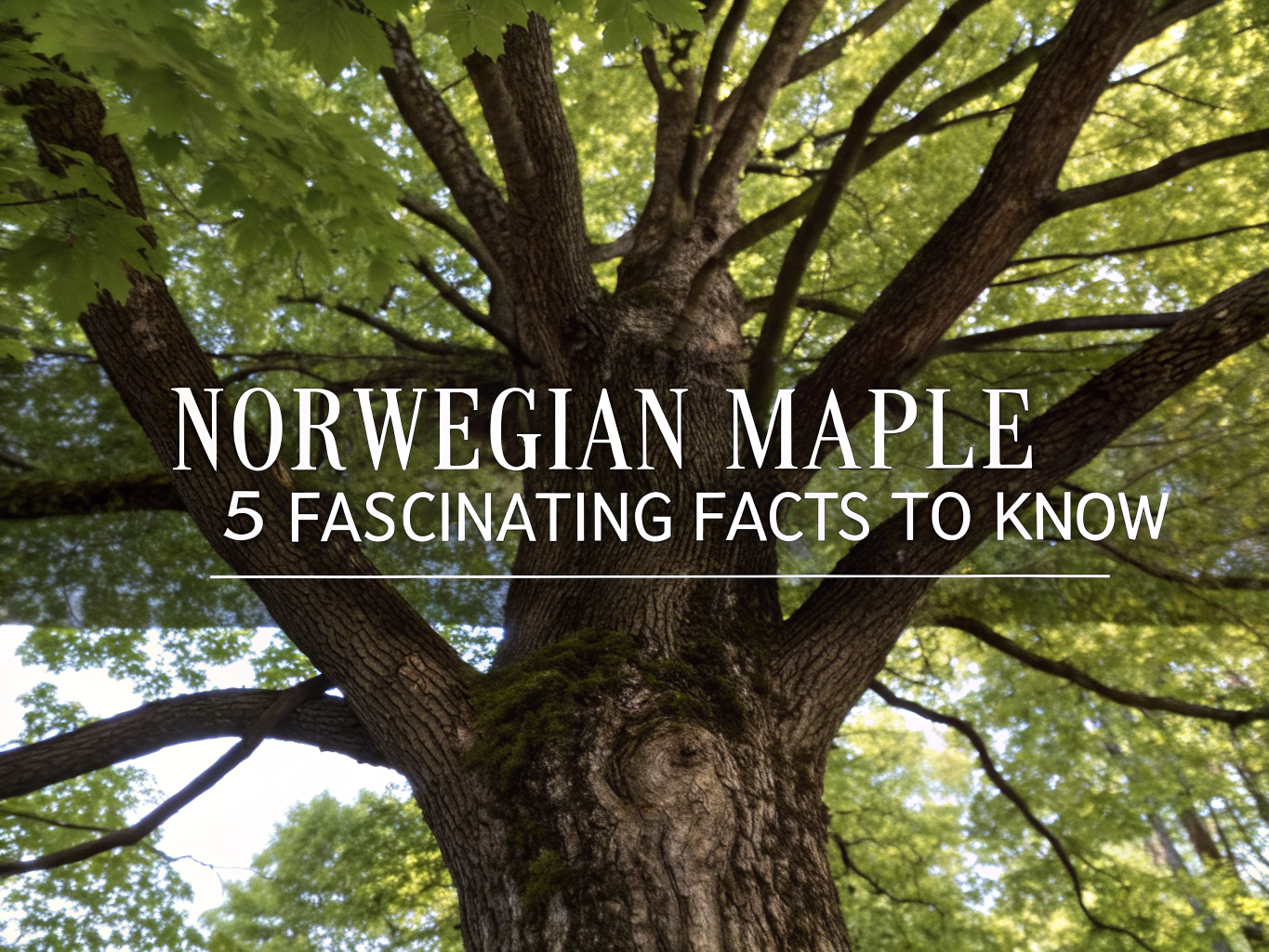

Have you spotted a maple with milky sap and wondered what it is? The Norwegian maple can look like other maples at first glance. It has wide leaves, creamy sap, and can spread quickly in some spots. This post shares five clear facts about its appearance, its impact on local trees, how to ID one, and simple care tips. Read on to see what to watch for in your yard.
Table of Contents
The Norwegian maple (Acer platanoides) is a hardy shade tree known for wide crowns, yellow-green flowers, and abundant seeds. This guide explains physical traits, ID tips, ecological impact, landscape use, and how it compares with sugar maple.
Physical Characteristics of the Norwegian Maple
Size and Growth Habit
The Norwegian maple tree grows 40–60 feet tall, with rare specimens topping 90 feet and forming a broad crown. Dense foliage casts deep shade, which is a hallmark feature noted by the UConn factsheet.
Branches create a rounded outline and a tight canopy. Growth is steady in cities and parks where it tolerates compacted soils and street heat.
Distinctive Foliage Features
Norway maple leaves are simple, opposite, and usually 4–7 inches wide with five lobes that are wider than tall—classic Norway maple leaves. Cultivars such as ‘Crimson King’ keep deep reddish-purple foliage through the growing season.
Leaf margins are coarsely toothed, and petioles are long and stout. This foliage builds the dense shade many people seek in a fast, urban-tough shade tree.
Bark and Seasonal Changes
Mature bark turns gray-black and furrowed, while young bark stays olive to light brown with fine ridges. Fall color trends pale yellow on the straight species, unlike the vivid orange and red seen on many sugar maples.
Twigs are brown and buds are blunt at the tip on this acer platanoides. That bluntness helps with Norway maple identification during the dormant season.
Flowers and Seeds
Showy clusters of yellow to greenish-yellow flowers open in April–May before or with the leaves, drawing early pollinators. Paired “helicopter” samaras spread wide and mature by late summer, dropping many viable seeds.
This heavy seed set explains fast spread in parks and yards where seedlings pop up in mulch beds. You’ll also see volunteers along fences in cities and near older street plantings.
Ecological Impact and Invasiveness
Non-Native Introduction
Norwegian maple arrived in North America as a tough, handsome street tree and a quick shade source for yards. It’s now listed as invasive in many regions by agencies such as the Minnesota Department of Agriculture.
Historic planting followed losses from Dutch elm disease, which opened space in avenues and neighborhoods. The tree thrived in that role and spread beyond planned sites.
Competition with Native Species
Seedlings grow fast and tolerate shade, so they outcompete native sugar maple and many wildflowers. Shallow, dense roots also grab water and nutrients before shrubs and groundcovers can respond.
Large seed crops create carpets of saplings that form single-species thickets called monocultures. That shift alters forest composition and reduces habitat quality for native species.
Dense Shade Effects
Deep shade limits the spring wildflower show and cuts understory diversity beneath a closed canopy. Gardeners also struggle to grow turf or perennials under mature norway maple trees because light and moisture are scarce.
Dense shade and prolific seeding allow Norway maple to dominate understories where it establishes.
Minnesota Department of Agriculture
How to Identify a Norwegian Maple Tree
Leaf Characteristics and Milky Sap Test
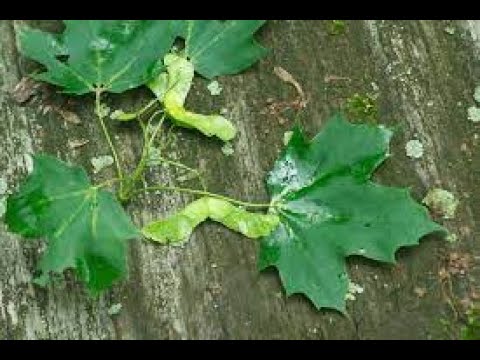
Look for large, five-lobed leaves that are broader than tall and attached in opposite pairs on the twig. Break a leaf stalk; milky sap signals Norway maple, a tip highlighted by the University of Minnesota Extension.
Petiole milkiness separates it from sugar maple, whose sap runs clear. That quick check works from late spring through fall and pairs well with a fast bark scan.
Bark Texture Comparison
Norway maple bark is dark, furrowed, and more grid-like on mature trunks, while sugar maple often looks more shaggy. Buds on Norway maple appear blunt, which contrasts with the sharper tips on sugar maple.
Young stems show olive to light brown tones that darken with age into rough ridges. That shift helps with winter ID when leaves and seeds have dropped.
Seed and Flower Features
Flowers are small and yellow-green in clusters that open in early spring before or with the foliage. Samaras grow in pairs with wings that spread wide and often sit nearly horizontal.
Seeds mature by late summer and fall, so seedlings appear the next spring across beds and lawns. Early leaf-out also distinguishes Norway maple in mixed stands of maples.
Cultivation and Landscape Use
Growing Conditions and Adaptability
This species handles sand to clay soils, from acidic to alkaline, and accepts full sun or partial shade. Urban tolerance made the norwegian maple tree a common street choice where salt, heat, and compaction are routine.
If you enjoy exploring related species for yards or woodcraft, scan our guide to types of maple trees for quick comparisons. You’ll see how acer platanoides sits beside maples prized for figure like birdseye maple with its striking grain.
Popular Cultivars
‘Crimson King’ stands out for burgundy foliage that holds color all season on a full-size tree. A broader list of selections appears on the Acer platanoides page, which includes variegated and columnar forms.
For bold structure near Norway maples, consider pairing with tough evergreen accents like the two spruces below for year-round texture.

Elegant Weeping Norway Spruce
- Graceful weeping form adds architectural interest
- hardy evergreen offers year-round color
- 3-year nursery-grown for established growth
- low-maintenance once established
- perfect focal point for gardens or containers
 Buy on Amazon

Golden Weeping Norway Spruce
- Striking golden needles brighten the landscape
- compact weeping habit works as a specimen or accent
- 2-year nursery-grown for healthy establishment
- drought-tolerant once set
- easy to plant and low-maintenance
Buy on Amazon
Maintenance Considerations
Expect leaf and seed cleanup, and be ready to thin self-sown seedlings each spring to curb future spread. Underplant with tough groundcovers, use drip irrigation, and avoid high-maintenance turf directly under mature canopies.
- Prune young trees for one central leader and strong branch spacing.
- Remove seedlings promptly from beds, cracks, and fence lines.
- Mulch 2–3 inches deep to protect roots and suppress weeds.
- Water during long dry spells to reduce stress and limb dieback.
- Monitor for girdling roots and correct with careful root pruning.
Woodworkers comparing maple species for furniture can review maple wood characteristics by type. That quick read helps separate acer platanoides from lumber staples like hard maple used for flooring.
Norwegian Maple vs Sugar Maple
Leaf Shape and Sap Differences
Norway maple leaves are broader with longer, more triangular lobes, while sugar maple leaves tend to be taller with rounder lobes. The petiole test is decisive: Norway maple bleeds milky sap; sugar maple sap is clear NY Invasive Species.
Bark and Seed Characteristics
Norway maple bark forms criss-cross furrows; sugar maple often peels into shaggier plates. Paired samaras spread flatter on Norway maple, while sugar maple wings meet in a tighter V.
Seasonal Timing Variations
Norway maple leafs out earlier and drops viable seeds by late summer, giving seedlings a head start the next spring. Sugar maple often peaks with brighter fall color, from orange to red, while Norway maple skews yellow.
| Feature | Norwegian Maple (Acer platanoides) | Sugar Maple (Acer saccharum) |
|---|---|---|
| Leaf shape | Broader than tall; longer triangular lobes | Taller than wide; rounder lobes |
| Sap at petiole | Milky | Clear |
| Bark | Dark, furrowed, grid-like | More shaggy or platy |
| Samara angle | Wide, often near horizontal | Narrower V-shape |
| Fall color | Pale yellow (species) | Orange to red |
| Spring timing | Earlier leaf-out and seed set | Later leaf-out and seed set |
5 Fascinating Norwegian Maple Facts
1. Native Origin and Introduction History
The norwegian maple is native to Europe and western Asia and spread across cities in North America after 18th-century introduction. Planting surged in urban areas where a tough shade tree met street and park needs.
2. Unique Flowering Biology
This species can show heterodichogamy, with timing differences between male and female flower function on different trees. Heavy seed crops usually begin after about twenty years, adding to its invasive reputation.
3. Popular Cultivar Recognition
‘Crimson King’ remains a top landscape pick for long-lasting purple foliage on a full-sized canopy. Other selections vary in leaf color and habit, from green and variegated forms to compact shapes.
4. Controversial Landscape Status
Many cities now restrict new plantings because the norwegian maple is widely considered invasive. Ecologists favor native replacements to support diverse understory plants and local wildlife.
5. Management and Control Methods
Control methods include manual pulling of seedlings, cutting and treating stumps, mowing, and, in some regions, prescribed burning. Land managers also recommend planting alternatives to protect the norway maple ecosystem from further shift.
For more on specialty figures valued by makers, scan curly maple and compare it with spalted maple wood used in artistic projects. Those pages give quick visuals that contrast with the typical grain of acer platanoides.
FAQs
How Do I Care For A Norwegian Maple Tree?
Plant In Full Sun To Part Shade In Well-Drained Soil, Water Regularly During The First 2–3 Years And During Droughts, Apply 2–3 Inches Of Mulch Leaving A Gap Around The Trunk, Prune In Late Winter Or Early Spring To Remove Dead Or Crossing Branches And To Shape The Crown, Fertilize Sparingly In Spring If Growth Is Poor, And Monitor For Pests And Diseases Like Aphids Or Verticillium Wilt.
What Are The Pros And Cons Of Planting A Norway Maple In My Yard?
Pros Include Fast Growth, Good Shade, Adaptability To Urban Conditions, And Attractive Foliage; Cons Include A Tendency To Produce Many Samaras (Messy Seed Pods), Shallow Roots That Can Lift Pavement, A Dense Canopy That Suppresses Understory Plants, And In Some Regions A Propensity To Naturalize And Compete With Native Trees. Consider Site Size, Maintenance Capacity, And Local Ecology Before Planting.
Are Norwegian Maples Invasive?
They Can Be. Norway/Norwegian Maples (Acer platanoides) Are Considered Invasive In Parts Of North America Where They Naturalize In Woodlands And Outcompete Native Species. Their Invasiveness Is Region-Dependent, So Check Local Invasive Species Lists, Avoid Planting Near Natural Areas, Remove Volunteering Seedlings, And Consider Native Alternatives Or Sterile Cultivars Where Available.
How Fast Do Norway Maple Trees Grow?
Norway Maples Typically Grow At A Moderate To Fast Rate — Often About 1–2 Feet (30–60 Cm) Per Year When Young Under Good Conditions. Growth Slows As The Tree Matures, And Final Height Usually Reaches Around 40–60 Feet Depending On The Cultivar And Site Conditions.
Can Norwegian Maple Trees Survive Cold Winters?
Yes. Norway Maples Are Cold-Hardy In Many Regions (Commonly USDA Zones 3–7) And Tolerate Typical Winter Temperatures In Those Zones. Young Trees Benefit From Mulch To Protect Roots, Avoiding Late-Season Fertilization And Providing Wind Or Burlap Protection In Extremely Harsh Climates Can Reduce Winter Damage.