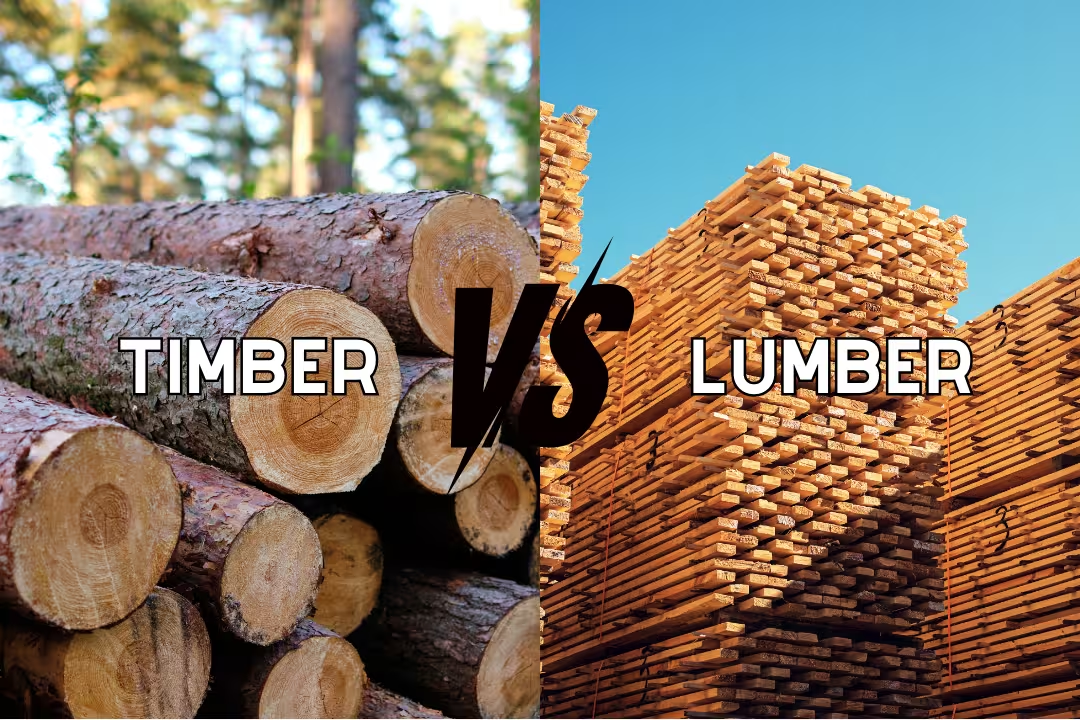
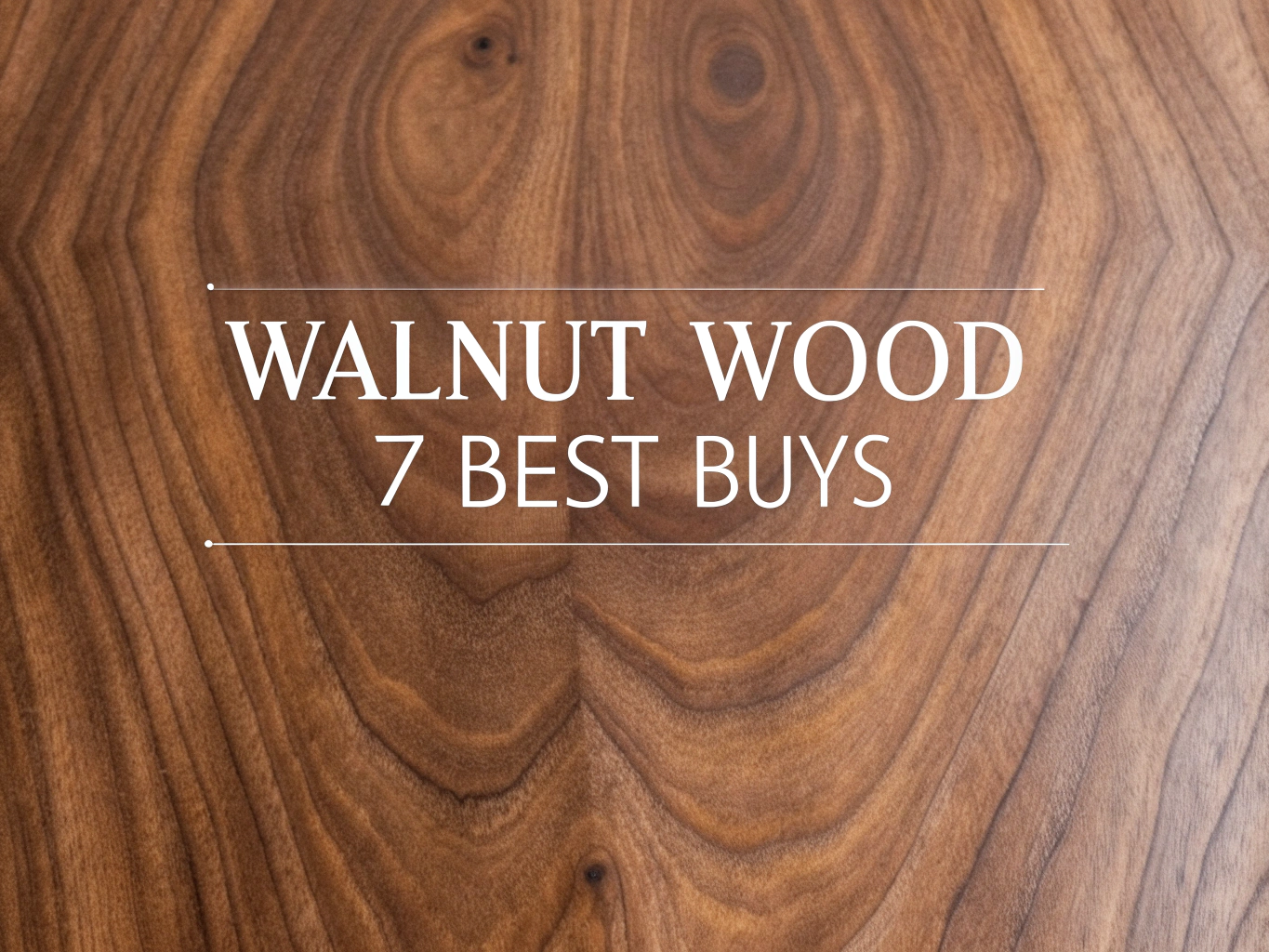

Walnut wood — want a piece that looks rich and machines easily? It has deep brown tones and a smooth, easy-to-finish grain. Use walnut timber boards for tabletops or shelving, and walnut timber planks for cutting boards, trim, and small projects. This post lists seven top buys, gives simple finishing tips, and helps you choose the right option for your build.
Table of Contents
Walnut wood brings rich color, striking grain, and reliable performance to furniture, decor, and craft projects. This guide covers benefits, plywood vs. solid choices, best walnut timber boards and planks, finishing tips, and care so you can build pieces that last.
What Makes Walnut Wood Special
Distinctive Characteristics
American walnut shows deep brown heartwood with purple undertones, creamy sapwood accents, and bold, flowing grain. It machines cleanly, sands to a silky feel, accepts oil or film finishes beautifully, and holds joinery well thanks to its dimensional stability.
Black walnut’s natural dark color and straight-to-wavy grain give projects a premium look without heavy staining.
Shop notes
Workability stands out: sharp knives leave crisp profiles, screws bite without splitting when pre-drilled, and the wood’s moderate hardness (about 1010 Janka) balances durability with easy hand-tool use. Those traits make walnut timber planks a go-to for visible surfaces where detail and polish matter.
North American Black Walnut Benefits
Black walnut is the only North American hardwood with a naturally dark-brown heartwood, giving upscale character without dye. For furniture buyers and woodworkers, that means consistent color and a classic style profile (Walnut wood furniture).
Choose regionally sourced walnut timber boards for steady supply, fewer color surprises across boards, and shorter lead times. For species background and comparable options, see black walnut wood.
Applications and Uses
Visible projects benefit most: tables, cabinets, shelves, casework faces, stair parts, guitars, bowls, and premium trim. Walnut’s ability to polish to a deep luster helps statement pieces stand out among medium-toned hardwoods.
- Furniture: table tops, desks, dressers, and chairs (mix with maple for contrast).
- Cabinetry: doors, drawer fronts, and face frames using matching walnut timber planks.
- Décor: live-edge shelves, charcuterie boards, picture frames, and mantels.
- Joinery: inlays, edge banding, panels, and veneered fronts for stable, wide surfaces.
- Turning and carving: handles, bowls, spindles, and instrument components.
For broader material comparisons and project planning, skim types of wood for furniture to pair walnut with other species by color and hardness.
Walnut Plywood vs Solid Walnut Wood
Cost and Performance Comparison
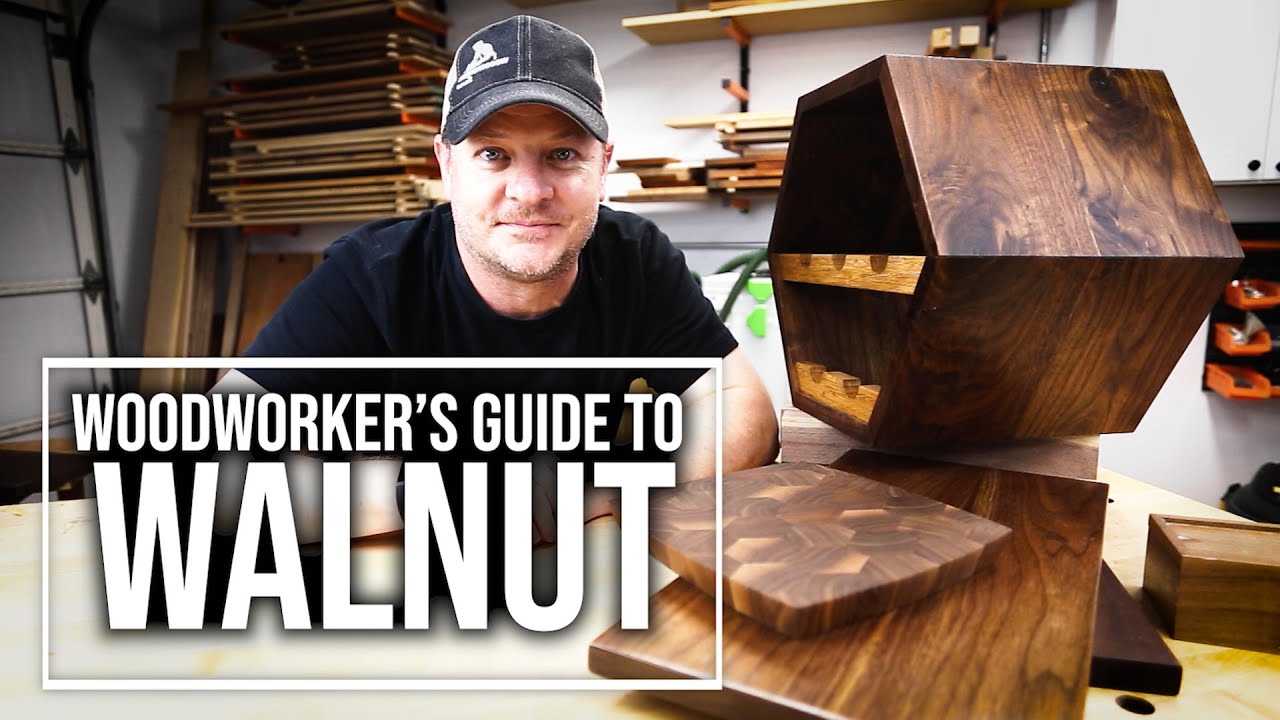
Walnut plywood places a real walnut veneer over a stable core, giving wide panels at lower cost and weight with a similar look (Walnut plywood overview). Solid walnut offers deeper sculpting, repair-friendly thickness, and long-term refinish potential.
| Factor | Walnut Plywood | Solid Walnut Wood |
|---|---|---|
| Material makeup | Walnut veneer over hardwood/softwood core | 100% walnut lumber |
| Typical cost | Lower cost per square foot; great for large panels | Higher per board foot; premium for wide, clear boards |
| Weight | Lighter for cabinets and wall panels | Heavier; dense feel for furniture |
| Stability | High panel stability; minimal seasonal movement | Moves with humidity; plan for wood movement |
| Edge finishing | Needs edge banding or solid lipping | Visible edges finish beautifully |
| Joinery | Excellent for case construction (confirm core quality) | Ideal for mortise/tenon, dovetails, laminations |
| Refinishing | Limited; thin veneer | Multiple sand/finish cycles over decades |
| Best panel width | 4×8 sheets common; seamless expanses | Glue-ups required for wide panels |
Best Use Cases for Each Type
Use plywood for cabinet boxes, closet systems, wall paneling, and drawer bottoms where light weight and flatness matter. Choose solid walnut timber boards for table tops, doors, edging, legs, sculpted pulls, and any surface that needs thick, repairable material or profile work; if you prefer thin face layers with a stable core, read about veneer walnut wood.
1. Multi-Wood Strip Sets
Mixed strip packs give you color-matched pieces for inlays, edging, and small builds without hunting for offcuts. They’re ideal for jigs, trim, and accent bands that pair walnut with maple and cherry.
Here are reliable multi-species strip sets for fast project work:

Barrington 15-Pack Domestic Hardwood Strips (Walnut, Maple, Cherry)
- Includes 5 walnut, 5 maple and 5 cherry strips for matched projects
- Consistent 3/4 in thickness for predictable joinery and finishing
- Smooth-sanded faces ready for stain or oil
- Ideal for trim, inlays, small furniture and repairs
- Kiln-dried stock for improved stability and reduced warping
 Buy on Amazon
2. Solid Walnut Timber Boards
Solid boards showcase full-depth color and grain for shelves, small tops, and drawer fronts. Pick flat, straight pieces for glue-ups and keep growth-ring orientation alternating to reduce cup risk.
Consider these dependable options for visible projects and accents:
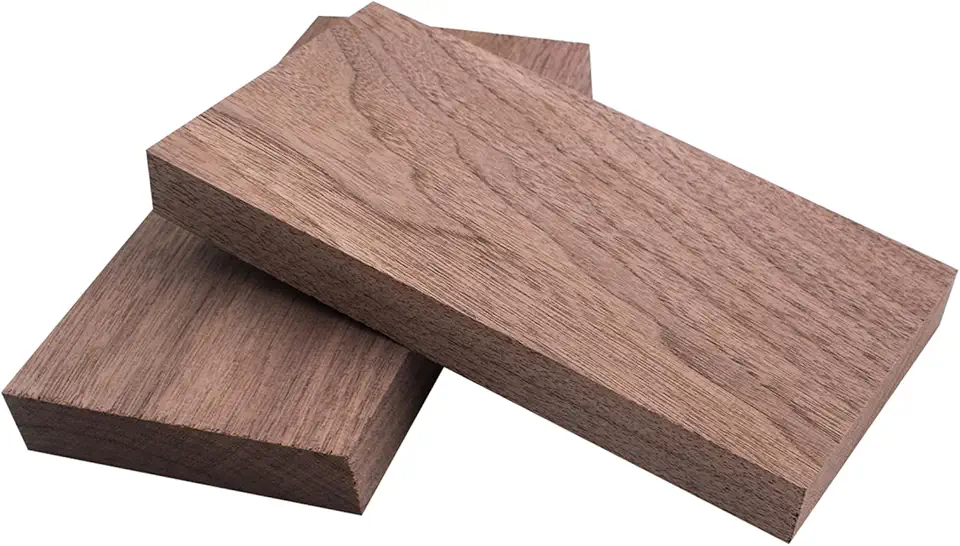
2-Pack Unfinished Walnut Boards 7/8 x 4 x 8
- Solid walnut lumber with full-face grain for visible projects
- Unfinished surface ready for sanding, staining or oiling
- Thick 7/8 profile offers strength for structural or decorative use
- Long planks reduce seams for larger projects and laminations
- Versatile for scroll saw work, CNC, laser cutting and DIY crafts
Buy on Amazon

Barrington Walnut Boards 2-Pack 3/4 x 6 x 18 in
- Two wide walnut boards ideal for visible surfaces and accents
- Consistent thickness and flat faces for easy glue-ups and routing
- Rich walnut color that polishes to a deep luster
- Great for small tabletops, shelving, and furniture accents
- Kiln-dried to help prevent warping and twisting
Buy on Amazon
3. Specialty Walnut Timber Planks
Pre-sized blanks save milling time for cutting boards, edge work, and turning. Stock a few sets so you can batch projects and match grain; for dramatic figure ideas, preview burl wood accents.
These specialty sizes fit common craft and turning workflows:
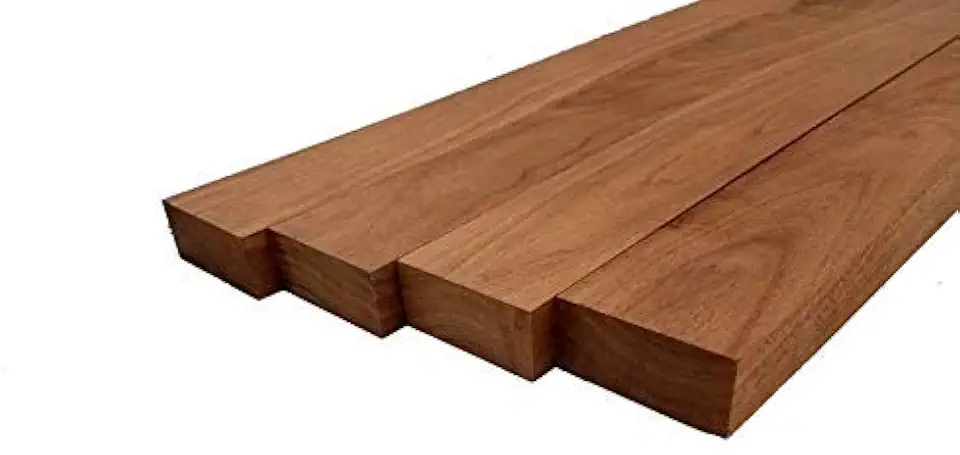
Barrington Walnut Strips 4-Pack 3/4 x 2 x 12 in
- Pack of four uniform walnut strips sized for small builds and repairs
- Smooth, straight-grain lumber that takes stain and finish well
- Stable 3/4 in thickness for solid joinery and edge work
- Perfect for trim, inlay, shelf edging and craft projects
- Kiln-dried pieces minimize movement over time
Buy on Amazon
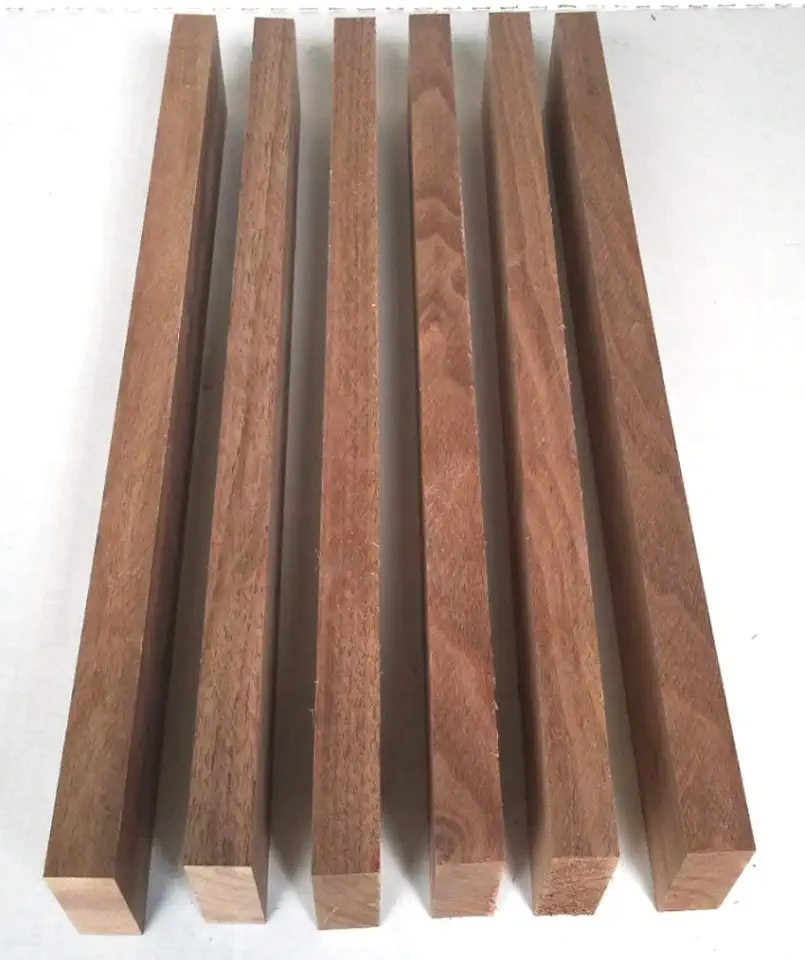
Woodchucks Walnut Cutting Board Blanks 6-Pack 3/4 x 2 x 16 in
- Solid walnut pieces sized for cutting board projects and inlays
- Uniform 3/4 in thickness for easy lamination and edge gluing
- Smooth-sanded surfaces reduce prep time before finishing
- Dense hardwood with natural resistance to wear and dents
- Ideal for hobbyists making boards, utensils, and small gifts
Buy on Amazon

Barrington Black Walnut Turning Squares 4-Pack 2 x 2 x 12 in
- Premium black walnut turning blanks with straight grain and rich color
- Square 2 x 2 profile is ready for lathe work and detailed turning
- Kiln-dried stock for greater stability during machining
- Smooth faces reduce initial prep and sanding time
- Great for pens, handles, spindles and small turned projects
Buy on Amazon
4. Walnut Sheets and Veneer Options
Thin sheets and plywood unlock marquetry, laser work, and lightweight panels. Use tape, vacuum, or cauls for clean veneer bonds, and seal both faces to balance moisture.
Here are reliable sheet goods for craft panels and veneered faces:

Craftiff Thin Walnut Sheets 5-Pack — Dark Unfinished Boards
- Five thin walnut sheets ideal for veneers, inlays and model making
- Consistent thin profile that works well with laser cutting and engraving
- Smooth, unfinished surface accepts stain, paint, and adhesives easily
- Lightweight panels for hobby and craft projects
- Easy to cut, sand and shape for fine detail work
Buy on Amazon
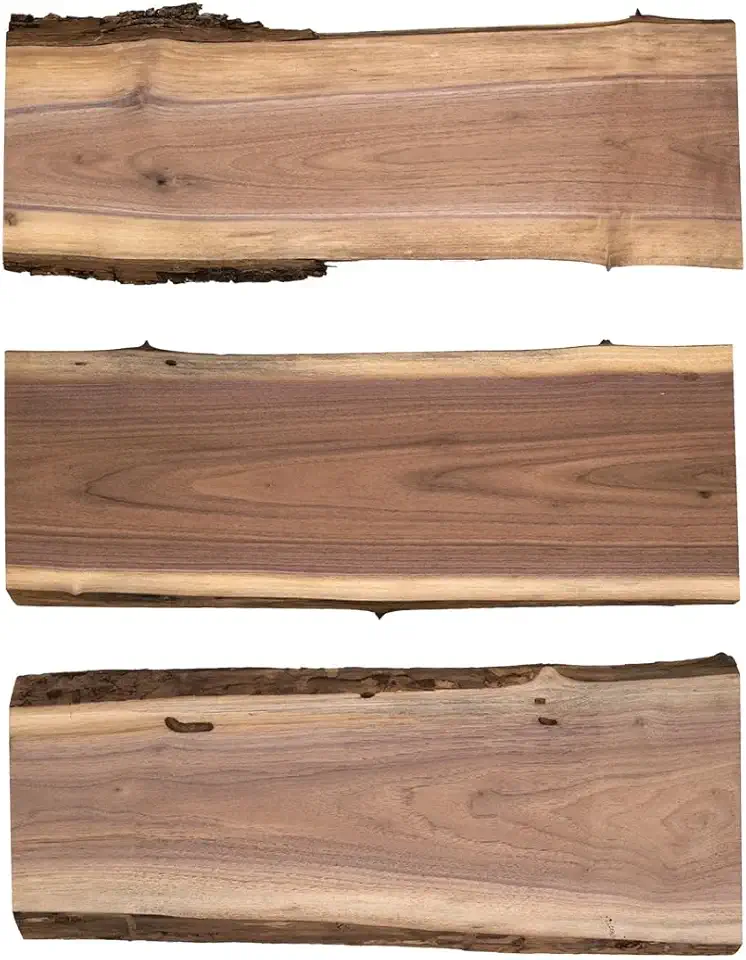
Walrus Oil Live-Edge Walnut Slabs 3-Pack 18 x 5–8 x 7/8 in
- Natural live-edge slabs add rustic character to decor and small furniture
- Pre-cut sizes perfect for shelves, charcuterie boards and accents
- Solid 7/8 in thickness for durability while remaining easy to handle
- Each slab shows unique grain and bark edge for one-of-a-kind pieces
- Ready to sand and finish with oil, wax or varnish
Buy on Amazon
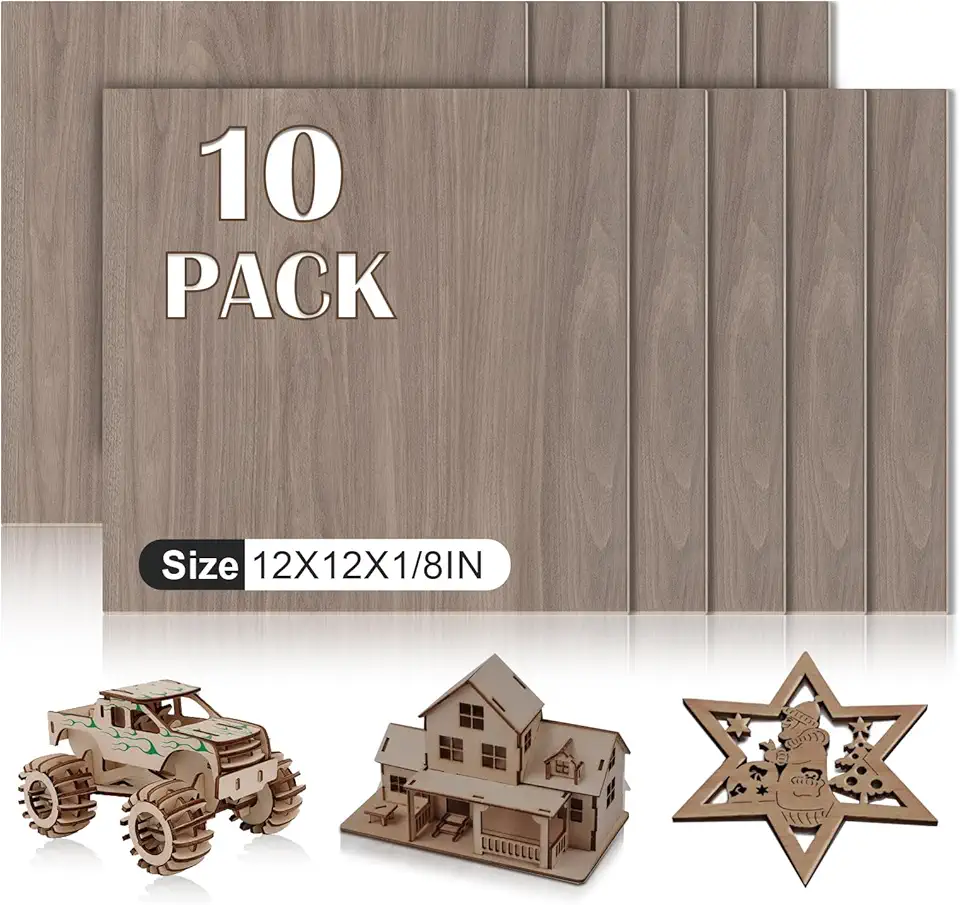
10-Pack Walnut Plywood Sheets 12 x 12 x 1/8 in (3mm)
- Ten uniform 3mm walnut plywood squares for precise craft work
- Smooth surface engineered for laser cutting and engraving
- Thin, stable sheets ideal for models, marquetry and ornaments
- Unfinished boards ready for burning, staining or painting
- Affordable pack size for classroom, hobby and prototyping use
Buy on Amazon
5. Value Walnut Wood Packs
Scrap assortments are budget-friendly for jigs, fixtures, and small gifts. Sort by color and grain on day one so later glue-ups look intentional.
Grab a mixed pack if you need multiple small parts quickly:

Black Walnut Scrap Box 16 in Length — 3/4 in Thick Boards
- Assorted 16 in walnut boards perfect for small projects and repairs
- Solid 3/4 in thickness suitable for turning, laminates and shelf trim
- Mix of grain patterns adds visual interest to smaller builds
- Great value for hobbyists needing multiple pieces for jigs and prototypes
- Ready to sand, glue and finish for immediate use
Buy on Amazon
Walnut Wood Finishing Guide
Popular Stain Options for 2026
Stain choices that highlight walnut include Asbury Brown (dramatic grain blend), Almond (light, warm tone), Golden Pecan (higher contrast), and Vintage Antique (subtle aged look). See application insights in this practical guide (5 best finishes for walnut wood).
Application Techniques
Prep right to get pro results on walnut timber planks. Work in dust-free space and keep coats thin.
- Sand through 180–220–320 grits; break edges lightly.
- Raise grain with a damp wipe; let dry; scuff with 320.
- Apply dye or stain in thin, even coats; wipe off excess promptly.
- Seal with dewaxed shellac if using oil-based topcoats over dye.
- Build finish with oil/varnish blend, varnish, or lacquer; sand 320 between coats.
- Target 3–4 film coats for tabletops; more for high-wear surfaces.
Testing Before Committing
Always test on offcuts from the same boards since walnut color varies. Label each sample with grit, stain, and topcoat so you can match the exact recipe later.
Sustainability and Environmental Considerations
North American Sourcing Benefits
Local sourcing often means stronger forestry standards, shorter transport, and more consistent grading for walnut timber boards. Learn why many buyers choose domestic sources for responsible wood purchasing (Hennepin Made: walnut wood).
Looking for premium grades and price context? Read this quick overview of the most expensive wood categories and how walnut compares by figure and width.
Care and Maintenance Tips
Protect color with clear, non-toxic finishes and periodic oil refreshes to slow UV shift. Keep pieces out of harsh sunlight and maintain stable indoor humidity to reduce movement.
- Dust with a soft cloth; avoid abrasive pads.
- Wipe spills quickly; use coasters and trivets on flat surfaces.
- Renew oil/wax finishes every 6–12 months in dry climates.
- For film finishes, clean with mild soap and water; dry thoroughly.
- Spot-sand and touch up scratches with color-matched wax or tinted shellac.
For color-matching projects or lighter companion species, look at butternut wood as a compatible option with similar grain but paler tone. Hobbyists shopping sets can search phrases like Top walnut wood products 2026 and Best walnut timber boards and planks for 2026 to compare current availability.
FAQs
Is Walnut Wood Good For Furniture?
Walnut Is An Excellent Choice For Furniture Because It Combines Strength And Durability With A Rich, Attractive Grain That Finishes Beautifully; It’S Well Suited For Tables, Cabinets, And High-End Pieces Where Appearance And Longevity Matter.
How Does Walnut Wood Compare To Oak?
Walnut Typically Has A Darker, Finer Grain And A More Luxurious Appearance, While Oak Is Usually Harder, More Open-Grained, And Often More Resistant To Wear; Oak Tends To Be More Affordable And Rustic, Whereas Walnut Is Chosen For A Smoother, More Refined Look.
What Are The Pros And Cons Of Using Walnut Wood?
Pros Include Beautiful Color And Grain, Good Workability, Strong Stability, And Excellent Finishing Qualities. Cons Include Higher Cost, Greater Susceptibility To Surface Dents Compared With Some Harder Species, And Potential Color Changes From Sunlight Over Time.
How Can You Tell If Wood Is Real Walnut?
Real Walnut Shows A Distinctive Dark Brown To Chocolate Color With A Straight To Wavy Grain; Check End Grain And Weight, Look For Consistent Grain Patterns (Not Repeating Veneer Patterns), Smell Freshly Cut Areas For A Mild Nutty Scent, And Ask The Seller For Species Identification Or Certification If Unsure.
How Do You Maintain And Care For Walnut Wood Furniture?
Dust Regularly With A Soft Cloth, Wipe Spills Immediately, Use Coasters And Mats To Prevent Heat And Water Damage, Avoid Direct Sunlight To Minimize Fading, Clean With A Mild Wood Cleaner, And Reapply Wax Or Oil According To The Manufacturer’S Finish To Keep The Surface Nourished.