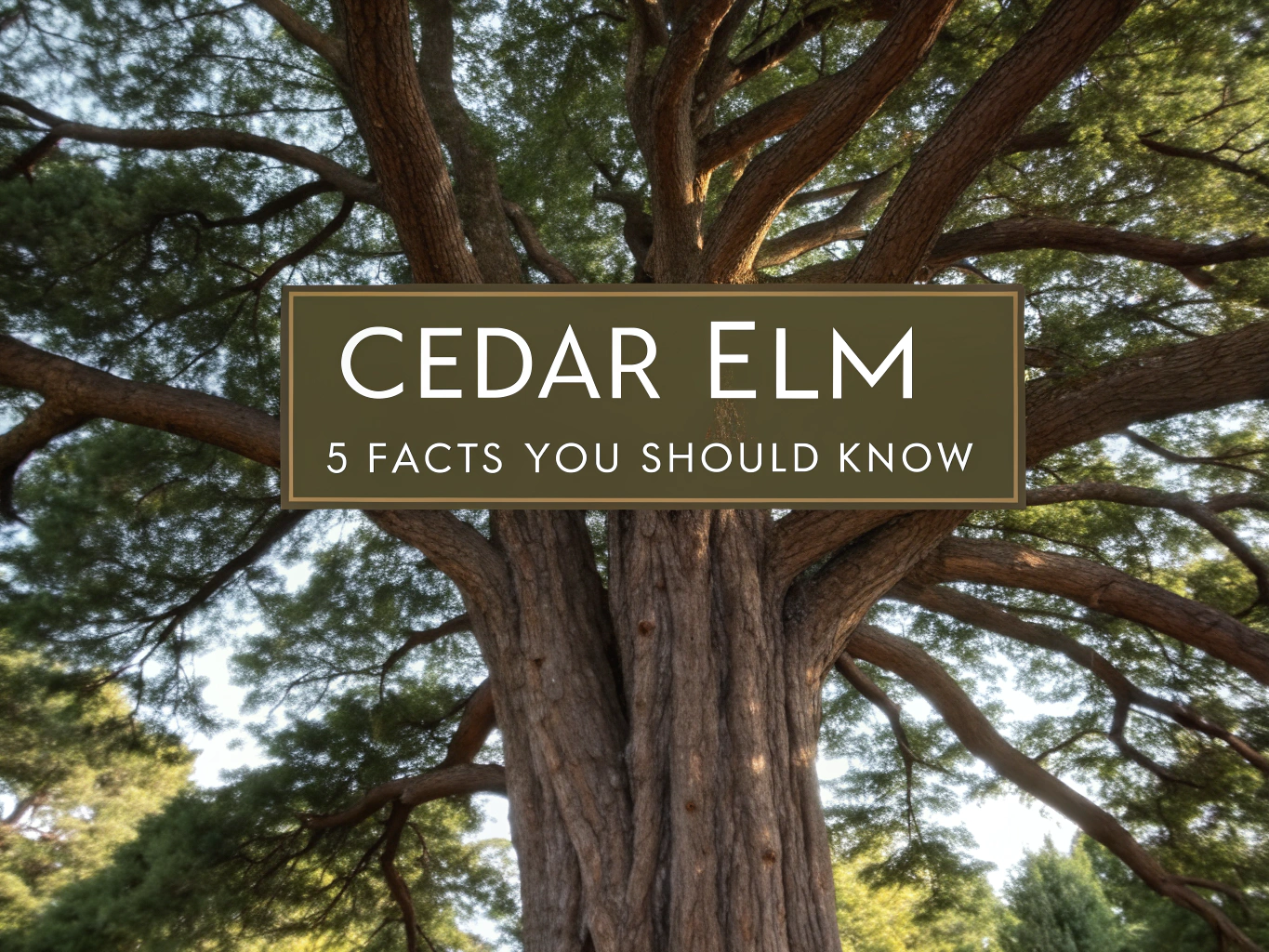

Did you know a single cedar elm can attract many birds and provide strong, useful wood for small projects? This post shares five clear facts about the cedar elm. You will learn how big it grows, what its wood is used for, how it helps wildlife, and easy steps to grow and care for one.
Table of Contents
Cedar elm (Ulmus crassifolia) is a long-lived native shade tree known for drought hardiness, dense wood, and bright fall color. This guide explains the cedar elm tree, growth habits, cedar elm wood uses, planting methods, and care tips for yards and streetscapes.
What is Cedar Elm: Native Tree Overview
Scientific Classification and Common Names
Ulmus crassifolia is the scientific name for cedar elm, a medium to large deciduous elm native to south-central North America. Common names include Texas cedar elm, basket elm, fall elm, scrub elm, lime elm, and southern rock elm, as listed in the UF/IFAS fact sheet.
Name clarity matters because cedar elm isn’t a true cedar; it’s an elm with small, thick leaves and strong wood. Tree buyers avoid confusion by comparing “elm wood” and cedar wood since these woods perform differently.
Natural Habitat and Geographic Range
Native range includes Texas, Oklahoma, Arkansas, Louisiana, parts of other southern states, and northeastern Mexico. Stands appear along stream terraces, fencerows, blackland prairies, and rocky uplands where soils range from clay to sand.
Site selection is flexible, which is why cedar elm thrives as a street tree and on windy, dry lots. Landscapers prize its ability to handle urban heat, tight tree lawns, and periodic wet-to-dry cycles.
Growth Characteristics and Size Potential
Mature Tree Dimensions
Typical size reaches 50–90 feet in height with 40–60 feet of crown spread in good sites. Trunks often reach about 36 inches in diameter, and exceptional trees approach the mid‑90‑foot range per the USDA Silvics Manual.
| Trait | Typical Range | Notes |
|---|---|---|
| Height at maturity | 50–90 ft | Champion specimens near 94 ft |
| Crown spread | 40–60 ft | Rounded to broad |
| Trunk diameter | ~36 in | Large urban shade potential |
Growth Rate and Crown Development
Growth speed is fast in nursery trials and landscapes, forming an upright to vase-shaped frame that rounds with age. Early pruning sets strong scaffold branches so the crown clears pedestrians and vehicles.
Root System and Transplanting Considerations
Rooting habit starts shallow on young trees, which aids ball-and-burlap or container moves. Keep roots moist during handling and plant at grade to support quick recovery after transplanting.
Distinctive Features of Cedar Elm Tree
Leaf Structure and Fall Color Display
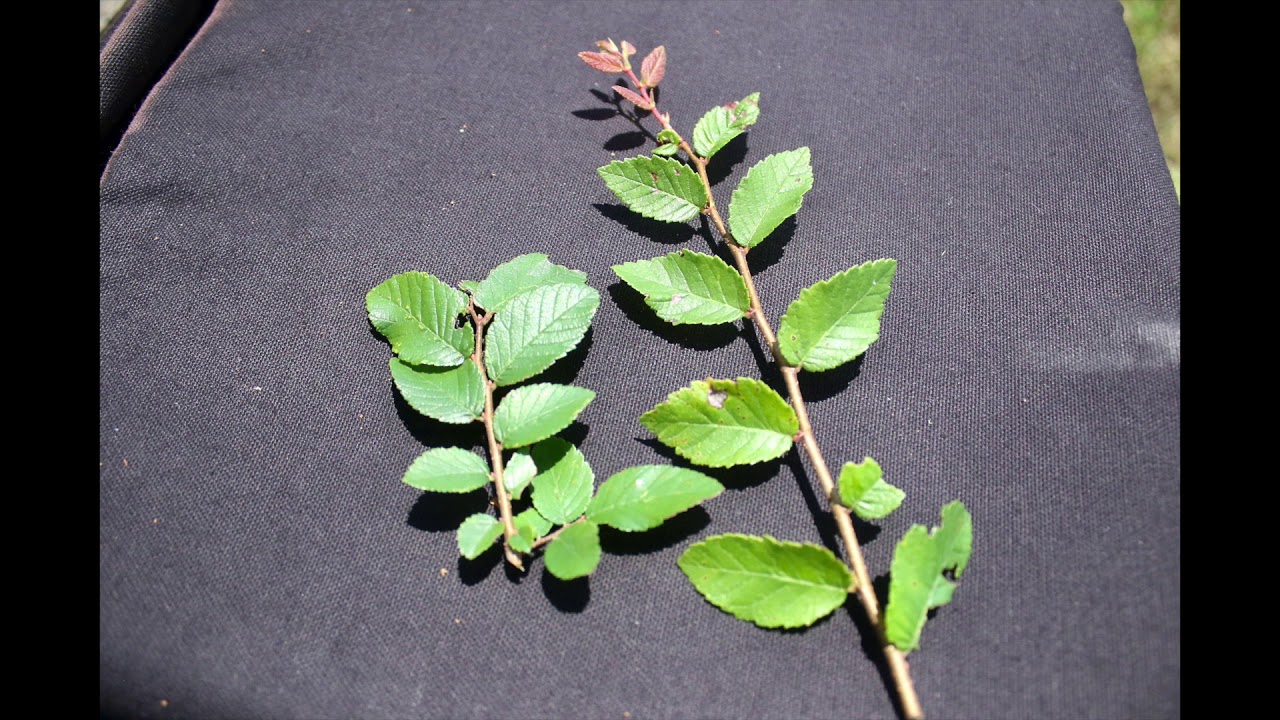
Leaves are small (about 2.5–5 cm long) and thick, glossy dark green in summer, then bright yellow in fall. Botanical keys list alternate arrangement with double-serrated margins and an elliptic to obovate shape; details match the UC Davis Arboretum tree database.
- Small, thick blades for heat tolerance
- Double-serrated edges for classic elm look
- Elliptic to obovate shape for easy ID
- Showy yellow fall color in most regions
Flowering and Fruiting Patterns
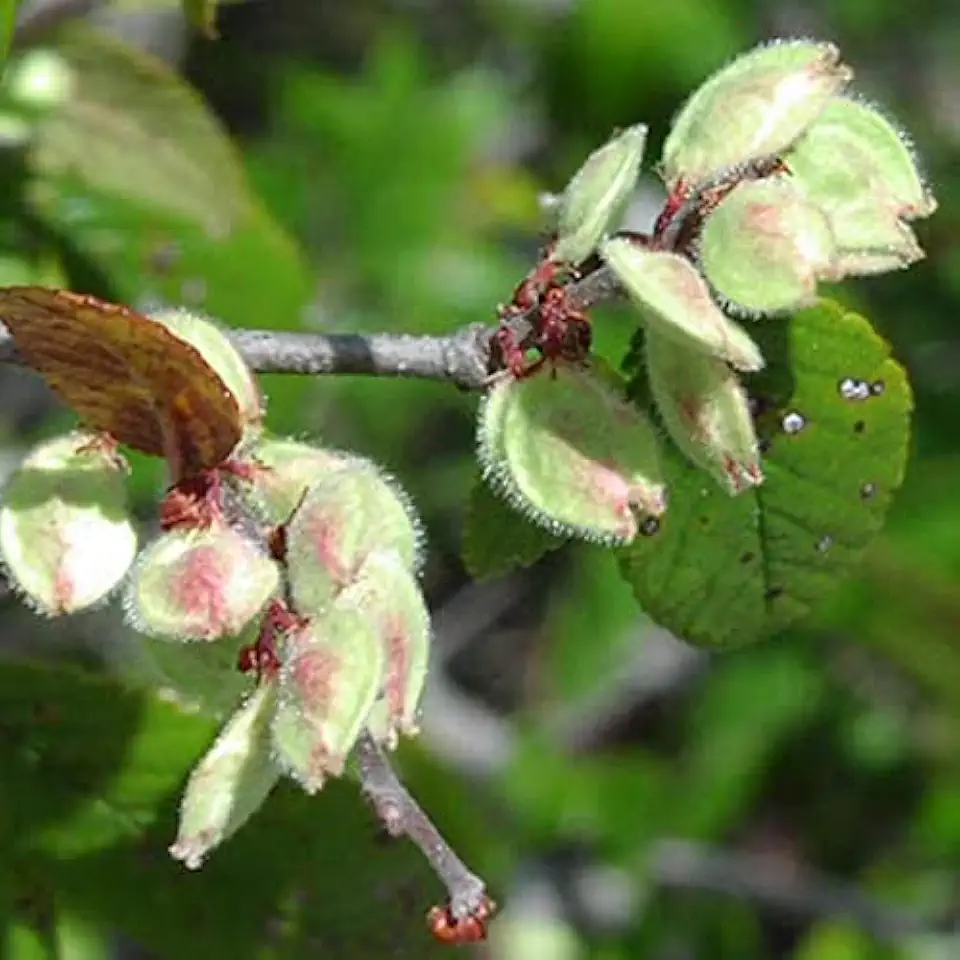
Flowers appear late summer into early fall and are wind‑pollinated, small, and green to reddish‑purple. Samaras mature quickly in late fall, are 8–10 mm, and rarely create heavy litter under street trees.
Seasonal Growth Cycle
Spring flush pushes new shoots, summer builds wood density, and fall delivers color before leaf drop. Winter pruning windows let crews shape structure while the tree is dormant.
Cedar Elm Wood Properties and Uses
Strength and Shock Resistance
Cedar elm wood is tough, bend‑resistant, and known for high shock strength, ranking well among native hardwood elms. Data on durability and uses appear in the USDA Silvics Manual.
Commercial Applications
Industries use this species for furniture frames, caskets, fence posts, bee frames, crates, barrels, baskets, and curved containers. Mills sometimes sell it as “rock elm” alongside other elm hardwoods because strength classes overlap with elm wood groups.
Woodworking and Manufacturing Value
Grain character is fine and flexible, so steam-bending and curved laminations perform well. Shops pick straight sections for joinery and reserve interlocked grain for parts that benefit from impact resistance.
Ecological Benefits and Wildlife Support
Bird and Wildlife Attraction
Wildlife value includes seeds eaten by wild turkey and plain chachalaca, with squirrels browsing buds and seeds, as noted in The Many Beneficial Traits of Cedar Elm. Monarchs may pause on cedar elm during migration, adding seasonal interest in flyway regions.
Soil Adaptability and Tolerance
Soil range spans clay, loam, and sand with either acidic or alkaline reaction. Trees handle brief flooding once established and cope with dry spells after root systems spread.
Environmental Resilience
Urban stress like heat, reflected light, and moderate compaction rarely slows mature cedar elm. Crews report steady leaf health on medians and parking lots where irrigation is limited.
Growing Cedar Elm: Propagation Methods
Starting stock is easy from seed or cuttings, and the options below help home growers and restoration teams. Pick quantities that match your project size and storage space.

Cedar Elm Seeds — Vibrant Fall Color
- Easy-to-grow native tree for yards and landscapes
- Produces striking yellow, red and brown fall foliage
- Great for wildlife habitat and shade
- High-quality seeds from MySeeds.Co for reliable planting
- Ideal for trial packets and small plantings
 Buy on Amazon

Cedar Elm Seeds — Classic Shade Tree
- Dark green summer leaves that turn vivid colors in fall
- Hardy and drought-tolerant once established
- Simple to start from seed for home growers
- Excellent choice for street trees and large yards
- Quantity selection lets you buy the right amount
Buy on Amazon
Cedar Elm Seeds — 1/2 oz (1,625 seeds)
- Bulk seed pack ideal for propagation or restoration projects
- Economical amount for mass planting or nurseries
- Supports native landscaping and wildlife
- High seed count for better germination chances
- Produces attractive fall color and reliable shade
Buy on Amazon
Seed Stratification and Germination
Cold stratify cleaned seed for 60–90 days in moist, labeled bags at 34–41°F, then sow shallowly in a free‑draining mix. Keep evenly moist, provide bright light, and pot up seedlings once the first true leaves harden off.
Alternative Propagation Techniques
Cuttings work with softwood or greenwood in late spring; use rooting hormone and high humidity to speed callus. Air‑layering on semi‑hardwood shoots also roots well for clonal copies of a standout cedar elm tree.
Transplanting Best Practices
Move young trees during dormancy, keep the rootball intact, and set the flare at soil level. Water deeply the first growing season, mulch 2–3 inches, and avoid trunk contact to reduce rot.
Urban Landscaping and Maintenance
Drought Tolerance Benefits
Water savings show up after establishment, making cedar elm a smart pick for medians and wide parkways. Turf-rain overlap zones benefit from this species since it holds leaf quality under light irrigation.
Pruning Requirements
Structure first: set a single leader, select well-spaced laterals, and raise the canopy gradually. Remove weak crotches early and clear sightlines so branches don’t hamper sidewalks or drive lanes.
Soil Compatibility
Soil matching is easy thanks to tolerance of clay, loam, and sandy profiles with various pH levels. On poor sites, add compost to planting backfill and topdress annually to support steady growth.
Potential Challenges and Disease Concerns
Dutch Elm Disease Susceptibility
DED risk exists, even though cedar elm shows useful urban toughness. Work with local arborists on sanitation pruning and, where appropriate, preventive fungicide programs for high‑value specimens.
Environmental Considerations
Pollen may affect sensitive people, and quick seed sprouting can add volunteers in beds. Rake or mow seedlings early if unwanted, and choose planting spots away from allergy-sensitive entrances.
Management Strategies
Integrated care keeps cedar elm healthy: select diverse cultivars in mixed plantings, prune during dormancy, and water deeply in long dry spells. For naming clarity with clients, explain that cedar elm isn’t a true cedar like Atlas cedar, which helps set realistic wood and care expectations.
FAQs
What Are The Common Uses Of Cedar Elm Wood?
Cedar elm wood Is Valued For Its Strength And Workability; It’S Commonly Used For Furniture, Flooring, Millwork, And Veneer. Because It’S Durable And Holds Fasteners Well, It’S Also Used For Fencing, Posts, Crates, And Firewood. In Some Regions It’S Used For Small-Scale Construction And Woodturning Projects.
How Do I Identify A Cedar Elm Tree?
Cedar Elm Has Asymmetrical, Rough-Textured Leaves With Serrated Edges That Are Usually 1–3 Inches Long; The Bark Is Dark Gray To Brown, Often Shaggy Or Flaky With Narrow Ridges. Look For Small Winged Samaras (Elm Seeds) And A Rounded To Vase-Shaped Crown. Size, Leaf Texture, And The Distinctive Seedpods Help Differentiate It From Other Elms.
What Are The Ideal Growing Conditions For Cedar Elm Trees?
Cedar Elm Prefers Full Sun And Well-Drained Soils But Tolerates A Wide Range Of Soil Types Including Clay. It Is Drought-Tolerant Once Established And Performs Well In Urban Settings. Best Growth Occurs In USDA Zones Approximately 6–9. Provide Moderate Watering During Establishment And Avoid Poorly Drained, Waterlogged Sites.
How Fast Do Cedar Elms Grow?
Cedar Elms Typically Grow At A Moderate To Fast Rate, Often Adding About 1–2 Feet Of Height Per Year When Young And Well-Cared-For. Growth Slows As The Tree Matures; Mature Heights Commonly Range From 40 To 70 Feet Depending On Site Conditions And Care.
Are Cedar Elms Resistant To Diseases Or Pests?
Cedar Elm Shows Some Tolerance To Certain Elm Diseases Compared With Other Species, But It Can Still Be Affected By Dutch Elm Disease, Elm Leaf Beetle, Borers, And Fungal Leaf Spots. Good Practices—Such As Planting In Well-Drained Soil, Proper Pruning, Monitoring For Pests, And Removing Infected Wood—Reduce Risk. Consult Local Arborists Or Extension Services For Targeted Treatments When Needed.