
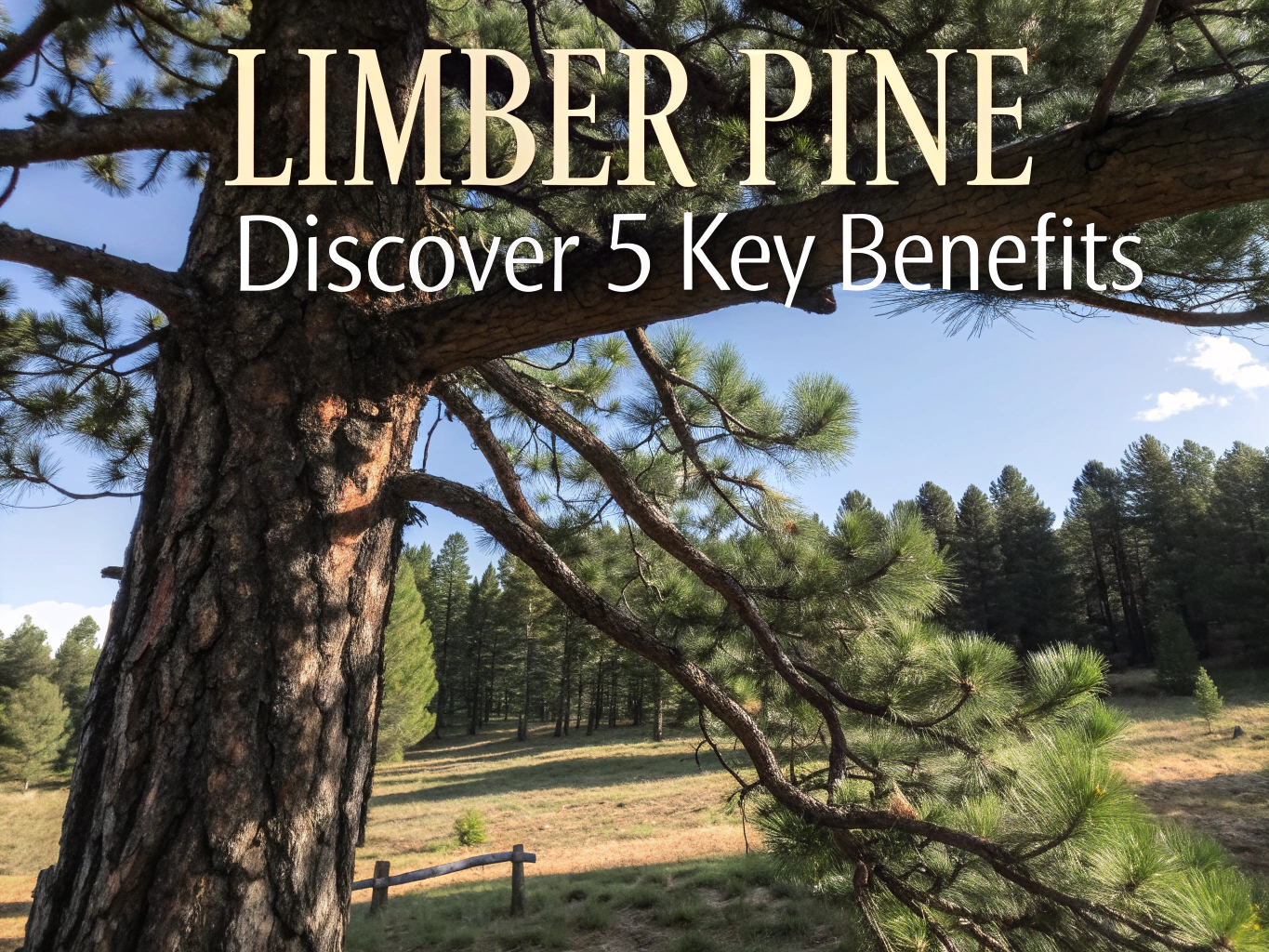
Limber Pine Species Guide: Identification, Ecology, and Conservation

Limber pine (Pinus flexilis) is a long-lived western North American conifer recognized by five needles per bundle, flexible young branches, and broad cones that open on the tree. It grows from dry foothills to exposed subalpine ridges, where Clark’s nutcrackers disperse its large seeds.
This species guide explains limber pine identification, range, growth, ecology, threats, conservation, cultivation, and differences from similar five-needle pines.
Table of Contents
What Is a Limber Pine?
A limber pine is an evergreen white pine native to western North America. Its flexible twigs, large wingless or nearly wingless seeds, and ability to survive cold, dry, rocky sites separate it from many familiar forest pines.
Taxonomy and Scientific Name
The accepted scientific name is Pinus flexilis E. James. It belongs to the family Pinaceae, genus Pinus, subgenus Strobus, which contains the five-needle white pines.
- Kingdom: Plantae
- Family: Pinaceae
- Genus: Pinus
- Subgenus: Strobus
- Species: Pinus flexilis
The word flexilis refers to the tree’s flexible branches. Botanical boundaries become less clear in parts of the Southwest, where populations may show traits associated with Pinus reflexa or other regional white pines.
Why Branches Are Limber
Young limber pine branches contain wood that can bend through a broad arc without snapping. This springy branch structure lets them yield under snow and persistent mountain wind rather than resisting every load as a rigid limb would.
A living twig feels smooth and slightly waxy beneath the fingers, then pushes back when released. The common mistake is testing an old branch: mature limbs lose much of this flexibility and may break like those of other pines.
Forms From Forest to Krummholz. Sheltered trees may have upright trunks and full crowns, while exposed specimens become broad, twisted, or flag-shaped. Near timberline, wind-driven ice crystals scour the foliage, and repeated snow pressure can produce low krummholz mats that barely resemble a conventional tree.
How to Identify Limber Pine
Identify limber pine by checking several features together: five needles per fascicle, a sheath that falls away, flexible young twigs, and thick-scaled cones that open on the branch. Elevation and crown shape support an identification but don’t prove it.
Needles and Fascicle Sheaths
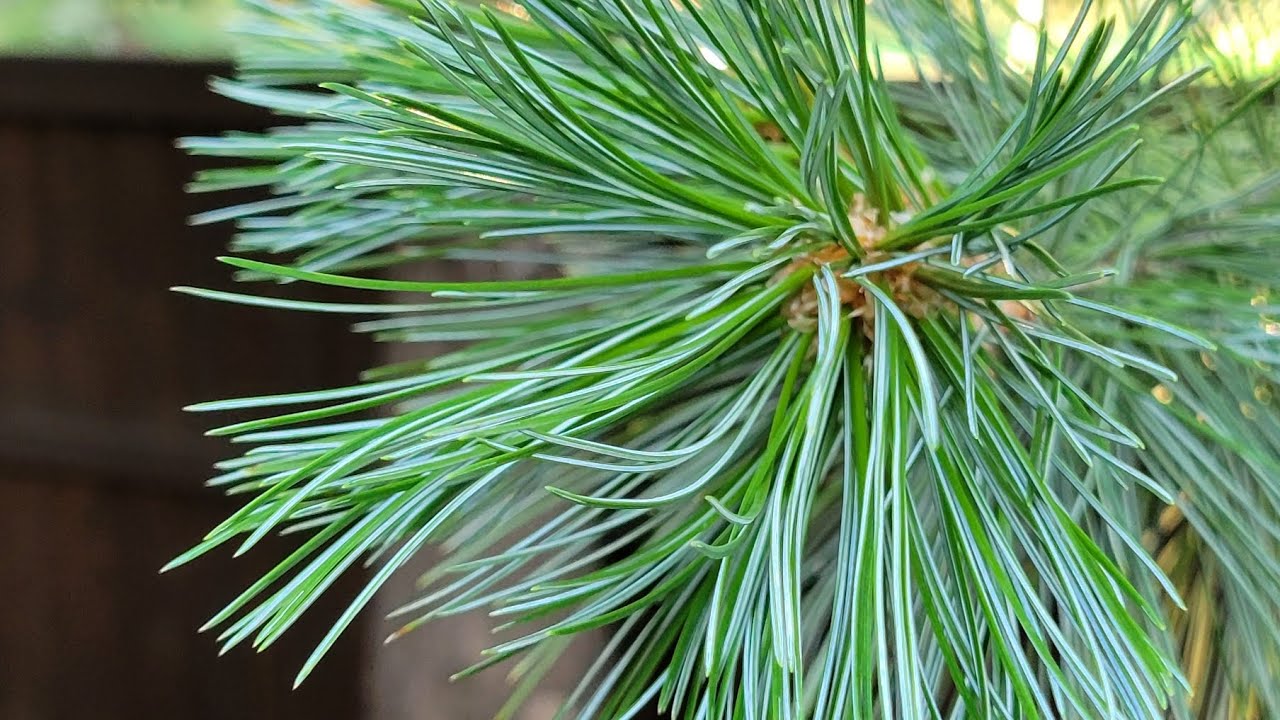
Limber pine needles occur in bundles called fascicles, with five needles in each bundle. They typically measure about 3–7 centimeters and range from green to blue-green, often forming soft-looking tufts near branch tips.
The thin sheath around a new fascicle is deciduous, meaning it drops away. This matters because several similar pines retain a visible papery sleeve at the needle base; inspect more than one bundle since debris can resemble a persistent sheath.
Cones, Seeds, and Wings
Mature limber pine cones commonly measure about 7–15 centimeters. They’re broadly cylindrical to egg-shaped, often sticky with resin when young, and have thick scales without the long bristles seen on bristlecone pine.
Ripe cones normally open while attached and release large seeds. Each seed has little or no useful wing, so wind can’t carry it far; animal transport supplies the long-distance dispersal that winged pine seeds often receive from moving air.
Bark, Branches, and Crown. Young bark is fairly smooth and gray. Older trunks develop darker plates and shallow furrows, while open-grown crowns become broad and irregular instead of forming the narrow spire associated with many high-elevation conifers.
Field Identification Checklist. Don’t name a tree from needle count alone. Follow this sequence and treat the cone as the strongest field clue.
- Count five needles in several intact fascicles.
- Check that the basal fascicle sheath has fallen away.
- Look for relatively short, blue-green or green needles.
- Test only a small living twig for flexibility without damaging it.
- Find a mature cone and confirm that its scales open normally.
- Check for thick scales without a prominent bristle.
- Use range, elevation, and habitat to support the result.
Limber Pine Photos. A useful image set should show a whole tree, a five-needle fascicle, an open cone, the reduced seed wing, mature bark, and a young branch. Diagnostic alt text such as “five blue-green limber pine needles joined in one fascicle” serves readers better than “pine tree picture.”
The following video supplies additional visual field context. Pause on close views and compare needle bundles and cones rather than relying on overall crown shape.
Five-Needle Pine Comparison Table. Cone structure usually separates look-alike species more reliably than height, color, or exposure-shaped crowns.
| Feature | Limber pine | Whitebark pine | Great Basin bristlecone pine | Western white pine |
|---|---|---|---|---|
| Scientific name | Pinus flexilis | Pinus albicaulis | Pinus longaeva | Pinus monticola |
| Needles per bundle | 5 | 5 | 5 | 5 |
| Typical cone behavior | Opens on the tree | Usually remains closed | Opens; scales carry bristles | Opens; long and slender |
| Approximate cone length | 7–15 cm | 4–8 cm | 5–10 cm | 20–50 cm |
| Strong field clue | Flexible twigs and broad open cones | Closed cones broken apart by animals | Resin-flecked needles and bristled scales | Long, hanging cones |
| Frequent habitat | Foothills through subalpine ridges | High subalpine forests | Dry high-elevation terrain | Cooler, moister mountain forests |
Limber Pine vs. Whitebark Pine. Limber pine cones open and release seeds, while whitebark pine cones usually stay closed and must be pulled apart by nutcrackers or other animals. Whitebark needles may look more densely clustered, but cone behavior is the safer distinction.
Other Similar Pine Species. Bristlecone pine has short, long-retained needles with visible resin flecks and bristled cone scales. Western white pine carries much longer, narrow cones, while common pinyon pine species usually have one, two, or three needles per bundle rather than five.
Range and Habitat
Limber pine grows across western North America, principally through the Rocky Mountains and adjoining ranges. Its broad environmental span includes dry foothill margins, rocky ridges, open subalpine woodland, and upper treeline.
Native Range
The main range extends from Alberta and southeastern British Columbia south through Montana, Idaho, Wyoming, Colorado, Utah, Nevada, eastern California, Arizona, and New Mexico. Outlying populations occur in South Dakota and neighboring mountain areas; the USDA Fire Effects Information System documents regional distribution and associated vegetation.
Maps can differ around isolated populations because botanical records, survey coverage, and species boundaries aren’t uniform. Use a government database or herbarium record when a location falls outside the familiar Rocky Mountain range.
Elevation by Latitude
Across its range, limber pine occurs from roughly 900 to 3,700 meters above sea level, with some records beyond those broad limits. Northern trees can grow relatively low, while southern populations tend to occupy higher, cooler mountain terrain.
Elevation is a climate proxy rather than a fixed species rule. A 1,500-meter site in Alberta can present winter conditions comparable to a much higher slope in Colorado or New Mexico.
Habitats and Soil Types. The tree occupies cliffs, talus, exposed slopes, open woodland, grassland margins, and shallow soils over several rock types, including limestone. Roots need air around them, so coarse, gravelly soil often suits the species better than deep clay that holds water.
On a dry ridge, the ground can feel loose and sharp under a boot while wind strips moisture from the surface. Limber pine survives there partly because faster-growing competitors struggle with the same cold, exposure, and limited soil volume.
Southwestern Taxonomic Boundaries. Five-needle pines in Arizona, New Mexico, and nearby Mexico may be assigned to Pinus flexilis, Pinus reflexa, or related taxa depending on the authority and specimen traits. Cone, needle, pollen, genetic, and geographic evidence may all be needed for a firm name.
Size, Growth Rate, and Lifespan
Limber pine typically reaches 10–20 meters tall, grows slowly, and can live for many centuries. Site quality changes all three traits, so a small windswept tree may be far older than a taller forest specimen.
Mature Height and Form
A sheltered wild tree commonly develops a single trunk and a broad crown, while favorable sites may support individuals taller than 20 meters. Landscape references often give mature heights of roughly 9–15 meters, or 30–50 feet, but seed source and climate can shift that range.
Exposed trees may remain low, multi-stemmed, or one-sided. Measuring only vertical height misses much of the plant’s form because a snow-pressed trunk can extend horizontally before turning upward.
Limber Pine Growth Rate
The limber pine growth rate is usually slow, particularly where drought, cold, and wind shorten the growing season. Young cultivated trees may extend faster in full sun with moderate establishment water, yet there’s no dependable annual figure across all provenances and sites.
Overwatering doesn’t turn this species into a fast-growing tree. Soft, lush growth produced by rich soil and frequent irrigation may be less suited to winter exposure and can come at the cost of root health.
Limber Pine Lifespan. Many trees survive for several centuries, and verified individuals can exceed 1,000 years. Slow growth, low competition, and infrequent severe disturbance can support longevity, though harsh conditions also create dead sections and missing rings that complicate age estimates.
How Tree Age Is Measured. Researchers remove a narrow increment core and cross-date its ring pattern against nearby trees. If the core misses the center or the oldest heartwood has decayed, they estimate the absent years from ring curvature and growth rates rather than reporting a false exact age.
Trunk diameter is a poor age gauge. A thick, sheltered tree may be relatively young, while an ancient ridge tree can have a trunk narrow enough to encircle with two hands.
Ecological Role and Fire
Limber pine feeds wildlife, stabilizes exposed ground, traps snow, and helps colonize disturbed mountain sites. Its ecology centers on a close seed-caching relationship with Clark’s nutcracker.
Clark’s Nutcracker Seed Dispersal
Clark’s nutcracker (Nucifraga columbiana) removes seeds from open cones and carries them in a specialized pouch beneath its tongue. The bird buries groups of seeds as food stores, and forgotten caches can germinate far from the parent tree.
This behavior moves heavy, poorly winged seeds uphill, across open ground, and into burned areas. Several seedlings may emerge from one cache, which helps explain close clumps that look like a single multi-trunked tree.
Wildlife Food and Habitat
The large, energy-rich seeds feed nutcrackers and rodents, including squirrels and chipmunks, while bears and other wildlife may take them when available. Branches provide exposed perches, nest sites, shelter, and structure near treeline.
Dependence varies from place to place. A poor cone crop may send nutcrackers elsewhere, reducing seed movement and leaving more cones available to resident rodents near the parent trees.
Soil and Watershed Roles. Roots bind shallow soil between rocks, while trunks and low branches slow wind and collect drifting snow. The shade and litter beneath a crown reduce surface temperature swings, creating a small patch where seedlings and soil organisms face less exposure.
Succession and Nurse Trees. Limber pine can establish on open mineral soil and function as a pioneer. Once established, its crown softens wind and traps organic material, producing a nurse site for grasses, shrubs, Engelmann spruce, or subalpine fir.
Fire Sensitivity and Recovery. Limber pine has thinner bark than strongly fire-resistant pines, and low resinous branches can carry flames into the crown. Young trees die readily, while larger individuals may survive a mild surface burn if heat doesn’t girdle the trunk or scorch most foliage.
The species can still colonize after fire because nutcrackers cache seeds in open, disturbed ground. This doesn’t mean each tree is fire resistant; it means dispersal can support recovery where living cone-producing trees remain within reach.
Fire-Management Nuance. A severe, extensive burn may remove both mature seed sources and rust-resistant survivors. Long fire exclusion can create dense competing vegetation and heavier fuels, so managers weigh stand structure, local fire history, disease, beetles, and cone production rather than applying one rule across the range.
Threats to Limber Pine
The main threats are white pine blister rust, mountain pine beetle, prolonged drought, warming conditions, and severe fire. Damage becomes greater when one disturbance reduces seed production or weakens trees before another arrives.
White Pine Blister Rust Biology
White pine blister rust is caused by the introduced fungus Cronartium ribicola. Spores infect needles, then the fungus grows into branches or the main stem, where a canker can interrupt water and carbohydrate transport.
The pathogen alternates between five-needle pines and other hosts, particularly Ribes currants and gooseberries. Castilleja and Pedicularis can also take part in its life cycle, as explained by the USDA Forest Service.
Removing nearby currants isn’t a complete remedy. Spores can move from outside a yard or treatment area, alternate hosts may be hidden, and eradication can damage native plant communities without stopping infection.
Blister Rust Symptoms
Symptoms include swollen or discolored bark, resin flow, spindle-shaped cankers, orange-yellow spore structures, dead branches, and a dead upper crown above an infected stem. Fresh resin may feel sticky and smell sharply of pine, but resin alone doesn’t confirm rust.
A common beginner error is diagnosing every red branch as blister rust. Breakage, drought, porcupine feeding, bark beetles, and other fungi can cause similar flagging, so inspect where dead and living tissue meet and seek laboratory confirmation for management decisions.
Mountain Pine Beetle Signs. Mountain pine beetles (Dendroctonus ponderosae) bore through bark and form galleries beneath it. Pitch tubes, reddish boring dust in bark cracks, winding galleries, and foliage fading from green through yellow to red are key signs.
Pitch tubes can be tiny or absent on severely stressed trees that can’t produce much resin. Peeling bark too early causes extra injury; examine naturally loose bark or have a trained tree specialist inspect a small area.
Drought and Climate Change. Limber pine tolerates dry sites, but long moisture deficits reduce ring growth, cone production, defensive resin, and seedling survival. Warmer conditions may shift suitable habitat upslope, where available ground eventually ends at rocky summits.
Compounding Disturbances. Rust can kill cone-bearing branches before drought weakens the remaining crown. Beetles may then remove mature seed trees, while a later severe fire destroys survivors and seedlings; sparse cone crops can also reduce nutcracker visits and seed dispersal.
Conservation Status and Restoration
Limber pine doesn’t have one universal conservation status. Legal and biological assessments differ by country, province, state, and region because each system measures a different geographic population and applies different listing rules.
Why Status Varies
A species can remain widespread across the continent while suffering steep losses along one edge of its range. Global assessments describe extinction risk across the full distribution, while national laws and local rankings address narrower populations or management units.
For that reason, “endangered everywhere” and “not threatened” can both misrepresent the evidence. Status statements should name the jurisdiction, assessment body, legal category, and review date.
Regional and Legal Classifications
Canadian populations have received substantial conservation attention under federal and provincial systems. Editors should verify classifications during the 2026 status review using the Species at Risk Public Registry and the relevant provincial registry rather than copying an undated label.
United States classifications may include agency watch lists, regional conservation ranks, and forest-level management priorities without creating one national endangered-species designation. These categories aren’t interchangeable.
Rust-Resistant Seed Sources. Field crews locate healthy, cone-producing trees in heavily infected stands, collect seed, and expose offspring to the pathogen under controlled screening. Survival can reveal inherited resistance mechanisms, though resistance doesn’t mean complete immunity.
Genetic Diversity and Provenance. Seed origin matters because northern, southern, low-elevation, and treeline populations face different temperatures, drought patterns, and growing seasons. Collecting from many parents preserves options that a narrow group of apparently resistant trees may lose.
Moving seed far from its source can produce seedlings that grow well for several years but suffer during an unusual freeze, drought, or early spring thaw. Climate-informed transfer tests are safer than assuming warmer-source seed will perform better everywhere.
Restoration Challenges. Planted seedlings still face dry soil, browsing, competing vegetation, fire, rodents, and infection. Crews often gain better survival by placing seedlings beside rocks or low vegetation that reduce wind and afternoon heat without creating deep shade.
Long-Term Monitoring. Planting totals say little about restoration success. Monitoring must track survival, height growth, rust symptoms, cone production, natural recruitment, and whether surviving trees reach reproductive age over several decades.
Cultivation, Uses, and Research
Limber pine can grow in cold, sunny yards with excellent drainage and enough space for an irregular crown. Its slow growth and intolerance of persistently wet soil make site selection more valuable than fertilizer or intensive pruning.
Suitable Landscape Conditions
Typical landscape conditions include full sun, freely draining soil, cold winters, and low to moderate irrigation after establishment. Many horticultural references place the species around USDA zones 4–7, though provenance and cultivar differences can change cold and heat response.
Avoid low ground where rain or lawn irrigation leaves soil slick and airless. Limber pine roots perform better in a gritty profile where squeezed soil crumbles instead of forming a wet, polished ribbon.
Planting and Establishment
Set the root flare level with, or slightly above, the surrounding grade. Dig a broad hole no deeper than the root ball, loosen circling container roots, backfill with native soil, and water deeply enough to wet the full root zone.
- Choose a sunny site outside frequently irrigated lawn.
- Check drainage before planting by observing how long a test hole holds water.
- Keep the trunk flare visible rather than burying it.
- Apply a thin mulch layer without piling it against the bark.
- Water young roots during dry periods, then reduce frequency as they establish.
- Leave enough room for mature width and irregular branches.
Don’t collect seedlings or cones from protected wild populations. Nursery-grown stock with a documented seed source reduces transplant shock, legal risk, and the chance of removing scarce regeneration.
Common Cultivation Failures. Frequent lawn irrigation, compacted clay, deep planting, small planting spaces, and expectations of fast growth cause repeated problems. Drought tolerance also gets misread: a newly planted tree has a confined root ball and still needs measured watering.
Field Experience Insights. Check moisture beneath the mulch rather than judging by its dry surface. If soil at root-ball depth feels cool and forms a sticky lump, delay watering; if it feels dry and falls apart with light pressure, water slowly across the original root ball and nearby soil.
Established trees can respond poorly to relocation because many active roots extend beyond the visible crown. Move small nursery stock early instead of attempting to transplant a mature specimen after years of site adaptation.
Landscape Cultivars. Pinus flexilis ‘Vanderwolf’s Pyramid’ is known for blue-green foliage and a more upright form. Its nursery dimensions aren’t guaranteed limits; climate, age, root space, and pruning all affect eventual size.
Wood and Historical Uses. Limber wood is soft, light, and usually less commercially significant than lumber from widespread timber pines. It has served locally as fuel, rough construction material, and wood for practical objects where larger trees were scarce; readers comparing broader material categories can consult this guide to pine board.
The twisted trunks common on exposed sites limit straight lumber yield. Conservation value, remote habitat, irregular form, and modest size also make limber pine a poor candidate for large-scale pine wood production.
Seeds and Cultural Context. The seeds are nutritious and have been used as food by Indigenous peoples in parts of the range. Any cultural account should identify the nation and a reliable ethnobotanical source rather than treating distinct communities as one group.
Edibility doesn’t make wild harvesting appropriate. Protected lands may prohibit collection, and taking cones from declining stands removes food from wildlife and seed needed for natural regeneration.
Scientific and Tree-Ring Research. Long-lived trees preserve annual records of drought, temperature, fire injury, insect events, and growth release. Researchers cross-date narrow and missing rings among several specimens, which turns one difficult core into a dated regional chronology.
Limber pine also supports research on rust resistance, climate-linked range shifts, high-elevation adaptation, and bird-mediated seed dispersal. Its value lies in the connection between a slow-growing tree, mobile seed-caching birds, mountain soils, and disturbances operating across centuries.
FAQs
What Is Special About A Limber Pine?
Limber pine is a tough, long-lived tree known for its flexible branches and ability to survive harsh mountain conditions. It has bundles of five needles and can grow in dry, windy, rocky locations where many trees struggle. Its seeds also provide important food for birds and small mammals.
How Do You Identify A Limber Pine Tree?
You can identify a limber pine by its soft, blue-green needles growing in bundles of five and its flexible twigs. Its cones are usually long, narrow, and slightly curved, while mature trees often have broad, irregular crowns. The branches can bend noticeably without breaking, which inspired the tree’s name.
Where Do Limber Pine Trees Grow?
Limber pine trees grow across western North America, especially in the Rocky Mountains, Great Basin, and other high or dry regions. They commonly live on exposed slopes, foothills, and mountain ridges. These trees tolerate cold winters, strong winds, poor soils, and lower moisture better than many other pine species.
Is Limber Pine The Same As Whitebark Pine?
Limber pine and whitebark pine are different but closely related five-needle pine species. Limber pine usually grows at lower elevations and has flexible branches with longer cones. Whitebark pine typically grows nearer the treeline, has shorter cones, and often relies heavily on Clark’s nutcrackers to spread its seeds.
What Is Killing Limber Pine Trees?
Limber pine trees are mainly threatened by white pine blister rust, mountain pine beetles, drought, and warming temperatures. Blister rust is a nonnative disease that can kill branches and entire trees. Stress from hotter, drier conditions can also make trees more vulnerable to insects and disease.
Affiliate Disclosure: Some links in this post are affiliate links. If you make a purchase through these links, we may earn a small commission at no extra cost to you. We only recommend products we genuinely believe in.