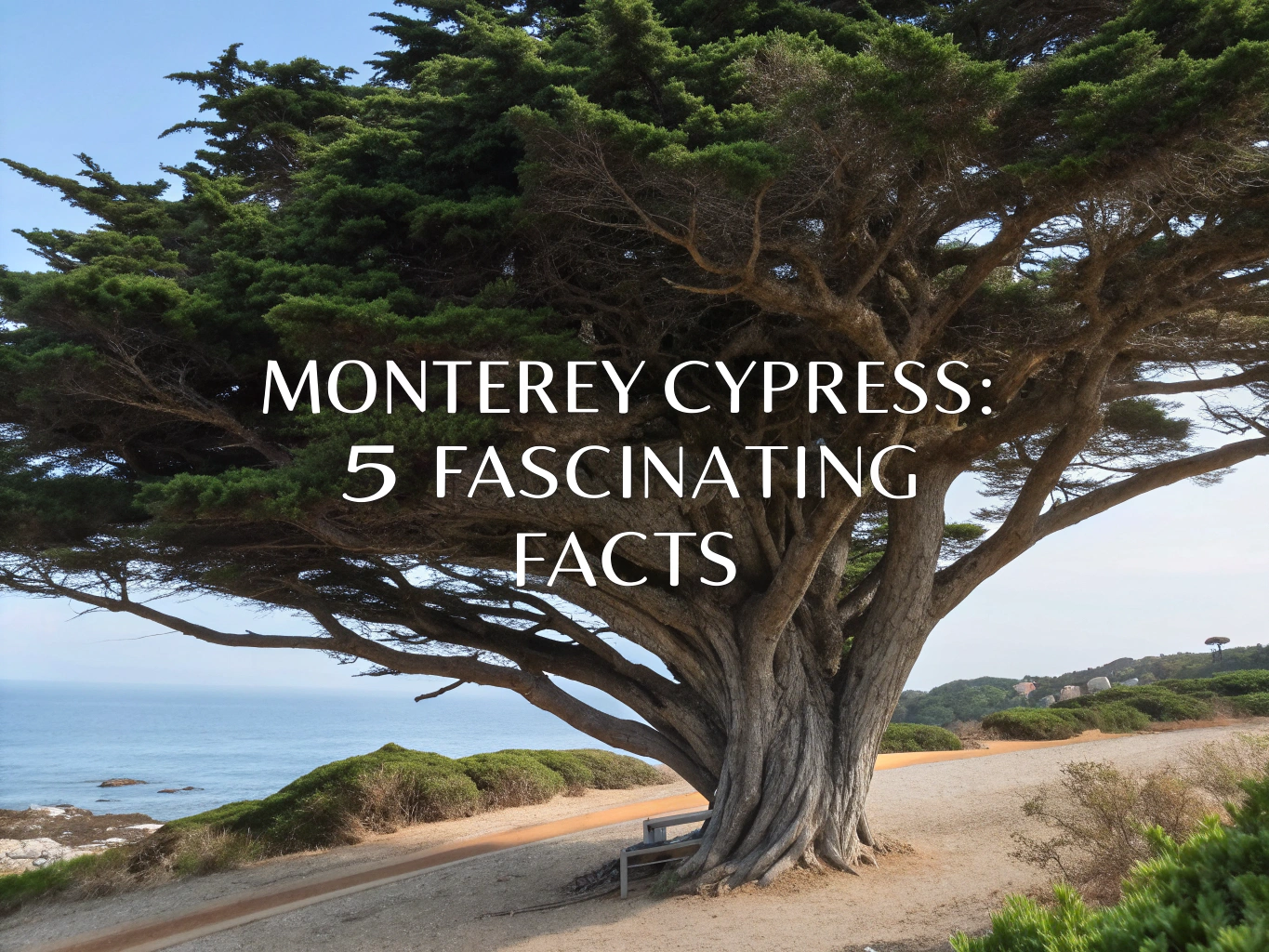

Only two natural groves of the Monterey cypress survive on California’s coast. These hardy trees, Cupressus monterey, stand up to salt, wind, and fog. You’ll find one iconic specimen at Pebble Beach — the Lone Cypress. This post shares five quick facts on size and lifespan, coastal traits, wildlife value, and popular types like Wilma Goldcrest Monterey cypress.
Table of Contents
The Monterey cypress (Cupressus macrocarpa, Hesperocyparis macrocarpa) is a rare California coastal tree with a dramatic profile and deep cultural roots. Gardeners, hikers, and photographers know the monterey cypress for its wind-shaped form, citrus scent, and the legendary Lone Cypress.
Native Habitat: A Rare California Treasure
Only Two Natural Groves Exist
In the wild, the monterey cypress tree grows naturally in only two places: Cypress Point in Pebble Beach and Point Lobos near Carmel—nowhere else on Earth. For distribution maps and ecology notes, see the U.S. Forest Service FEIS profile of Hesperocyparis macrocarpa (USDA FEIS species review).
This razor-thin native range makes the species a true California treasure. Botanists often list both names—Cupressus macrocarpa and Hesperocyparis macrocarpa—because of taxonomic updates in cypress classification.
Cypress Point and Point Lobos
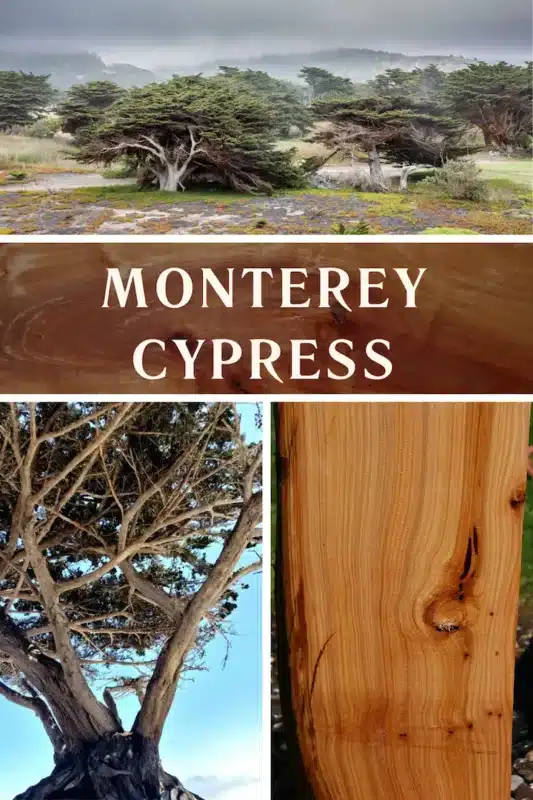
Cool fog, ocean winds, and rocky headlands shape these tiny groves. Fog drip supplies extra moisture during dry summers, while salt spray prunes and sculpts the canopy into the famous windswept look seen at Point Lobos.
Hikers visiting the groves notice pale, plated bark and tight, scale-like foliage with a faint lemon scent when crushed. The cones are round and shiny, about an inch across, and feed birds in late seasons.
Global Cultivation Success
Though rare in nature, cupressus monterey thrives in similar climates around the globe. You’ll find windbreak rows and park specimens in the UK, Ireland, New Zealand, coastal South America, and parts of Australia.
Plantings outside the fog belt tend to look more upright and less contorted. With the right coastal conditions, trees grow fast when young and form striking canopies over time.
1. The Iconic Lone Cypress Monterey
Most Photographed Tree in North America
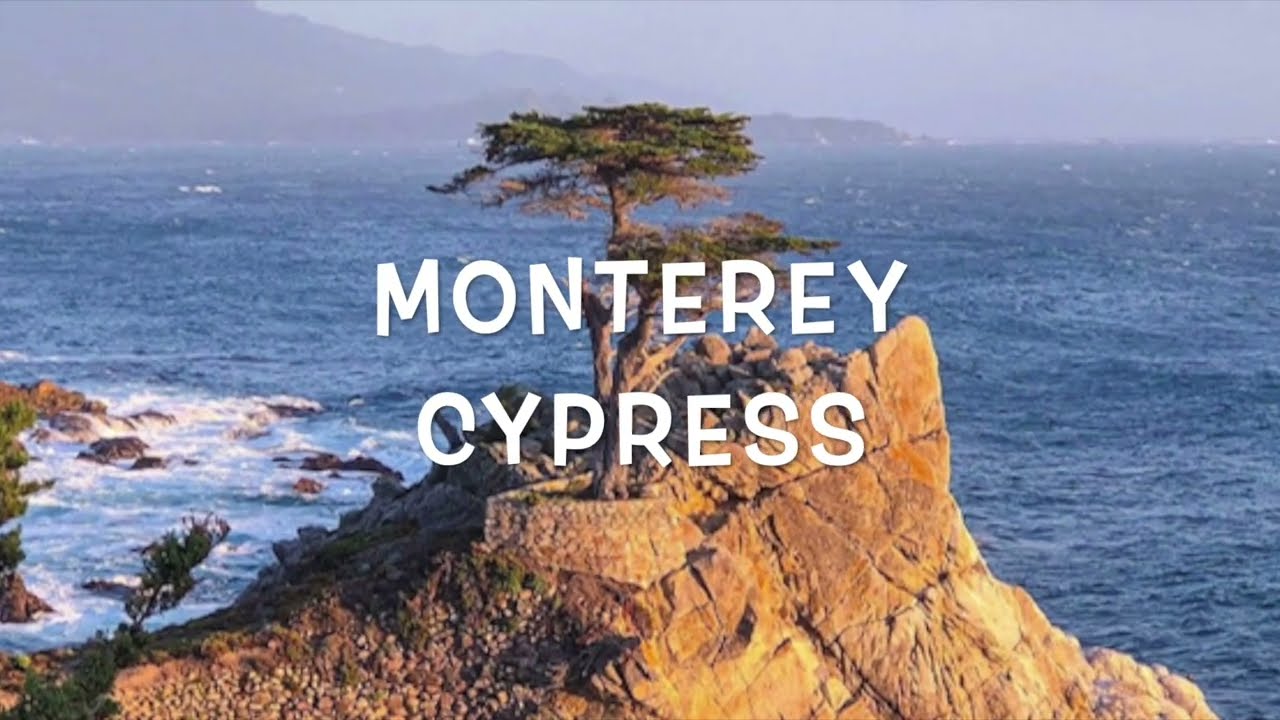
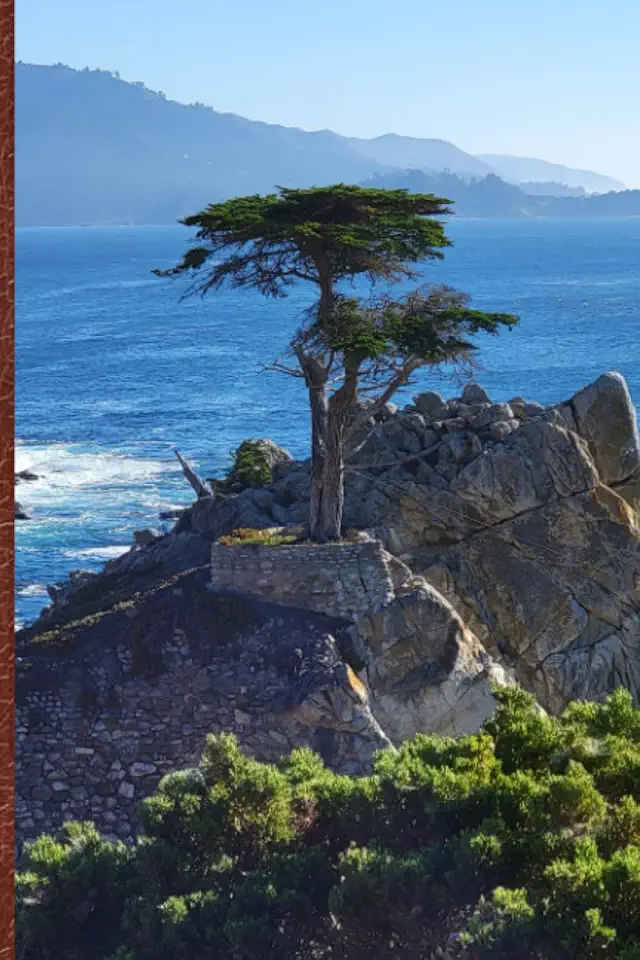
The Lone Cypress Monterey on 17‑Mile Drive is often called the most photographed tree in North America. Learn more about its heritage and coastal setting from Santa Barbara Beautiful, which highlights the species’ iconic status.
Pebble Beach’s Famous Landmark
Perched on a granite outcrop, the Lone Cypress has faced a century of wind and spray. Pebble Beach visitors stop for the classic silhouette and the sweeping Pacific view.
Cultural Symbol of California Coast
The tree’s silhouette appears in regional art, logos, and park iconography, reinforcing its role as an iconic tree of the California coast. Many artists study the flagged canopy lines to learn how wind shapes coastal forms.
A single Monterey cypress can define an entire coastline.
Coastal arborists
Fans of the Lone Cypress will enjoy these thoughtful gifts and keepsakes.

Monterey Cypress Notecard Set — 8 Blank Cards
- Eight artist-designed cards featuring cypress artwork
- Blank interiors for personalized messages
- Comes with matching envelopes ready to mail
- High-quality cardstock for a premium look and feel
- Perfect for thank-yous, notes, and gifts
 Buy on Amazon
Lone Cypress Lined Notebook — 110 Pages
- 110 lined pages for journaling, notes, and sketches
- Compact size fits backpacks and desk piles
- Durable cover with Monterey Lone Cypress art
- Smooth paper suitable for pens and pencils
- Perfect for writers, students, and creative use
Buy on Amazon

Among the Cypress — The Monterey Peninsula
- Explores the natural and cultural history of Monterey cypress
- Beautiful photography and maps highlight the peninsula
- Ideal for nature lovers, historians, and collectors
- Well-researched essays from local and botanical experts
- Hardcover keepsake for your coffee table or library
Buy on Amazon
2. Impressive Size and Longevity Stats
Heights Up to 90 Feet
In gardens and streetscapes, mature trees typically reach 60–90 feet, with rare specimens to 130 feet in prime coastal sites. See growth ranges and care notes in the NC State Extension plant profile.
Trunk Diameter Over 6 Feet
Old trees often exceed 6 feet in trunk diameter, with some records over 8 feet. Broad, flat-topped crowns form as branches stretch into the wind and create massive scaffolds.
| Trait | Typical Range | Notes |
|---|---|---|
| Height | 60–90 ft (18–27 m) | Rarely to ~130 ft on ideal coasts |
| Trunk diameter | 4–6+ ft (1.2–1.8+ m) | Ancient trees exceed 8 ft |
| Lifespan | 100–300 years | Shorter in hot, dry inland sites |
| Growth rate (young) | Fast | Slows with age and exposure |
| Cones | ~1 inch, 8–12 scales | Seasonal wildlife food |
Lifespan of 100-300 Years
Along foggy coasts, trees often live 100–300 years; urban stress can cut that span. Craftspeople value the wood for furniture and joinery; compare it with options in our guide to best wood for outdoor furniture.
Woodworkers sometimes compare it to Douglas fir wood for certain projects. Always season boards well to reduce splitting and unwanted movement.
3. Windswept Coastal Adaptations
Fog and Salt-Tolerant Growth
Monterey cypress thrives where fog drip tops up summer moisture and salt spray prunes exposed shoots. An overview of habitat and traits appears in Hesperocyparis macrocarpa.
Distinctive Flagged Canopy Shape
Constant onshore wind bends leaders and shortens windward twigs, creating a flat, “flagged” crown. In sheltered inland sites, the same genetics produce a more upright and regular form.
Lemony Fragrant Foliage
Crushed foliage releases a clean, lemony scent, especially on young shoots. That aroma inspired compact selections like the popular wilma goldcrest monterey cypress sold for patios and holiday decor.
4. Ecological Benefits and Wildlife Support
Natural Windbreak Protection
Dense branch structure makes superb living screens along coasts and open fields. Landscapers often plant rows for salt-wind shelter near homes and farms.
- Farm edges and orchard borders
- Neighborhood privacy and noise buffers
- Coastal parks and shoreline trails
- Golf courses and public greens
Habitat for Birds and Wildlife
Broad crowns offer nesting space for hawks, jays, and crows; trunks and hollows shelter insects and small mammals. Even raccoons use dense limbs as refuge in coastal corridors.
Seasonal Cone Food Source
Female cones open and weather over time, providing seasonal feed for birds and other wildlife. Gardeners who enjoy propagation can try small batches of seeds at home.
Here are seed and seedling options for home projects and coastal plantings.

Monterey Cypress Premium Seeds (10 Pack)
- High-quality Monterey cypress seeds for reliable germination
- Ideal for hedges, windbreaks, and coastal gardens
- Suitable for container or ground planting
- Easy-to-follow planting and care instructions included
- Compact pack of 10 seeds for small projects or trial plantings
Buy on Amazon

Monterey Cypress Seeds — Pack of 10
- Ten green seeds for small planting projects
- Suitable for garden beds, borders, or containers
- Affordable way to propagate Monterey cypress
- Store properly for improved germination rates
- Ideal for hobby gardeners and beginners
Buy on Amazon

Monterey Cypress Seeds by MySeeds.Co — 1/4 oz
- Large quantity of seeds for serious planting projects
- High seed count gives options for selection and loss
- Great for nurseries, landscapers, and enthusiasts
- Store cool and dry to maintain viability
- Detailed seed handling tips included by seller
Buy on Amazon

Monterey Tree Seedling Collection — 5 Pack
- Five young seedlings ideal for starting a grove
- Native Monterey species suited to coastal climates
- Great for reforestation, windbreaks, or landscaping
- Compact seedlings are easy to transplant and establish
- Includes planting guidance for best survival rates
Buy on Amazon
5. Cultivars and Conservation Concerns
Wilma Goldcrest Monterey Cypress Varieties
Nurseries offer compact forms like ‘Goldcrest’ and ‘Wilma,’ often sold as “lemon cypress” for patios and bright indoor spots. These selections keep tight foliage, vivid color, and a citrus scent—handy for small spaces
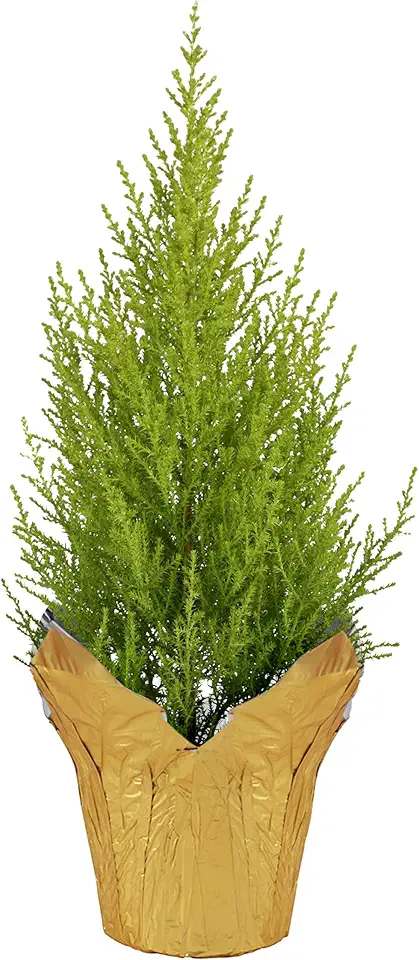
12-inch Live Lemon Cypress in Decorative Cover
- Fresh citrus-scented foliage brightens indoor spaces
- Compact 12-inch size fits tabletops and shelves
- Comes in a decorative cover ready to display
- Easy care with moderate light and regular watering
- Great as a gift or seasonal accent plant
Buy on Amazon
They’re a different experience than windswept coastal giants but belong to the same species lineage. For outdoor plantings, place them where light, airflow, and soil drainage support healthy growth.
Limited Natural Population Threats
Only two natural groves remain, and pressure comes from habitat loss, invasive plants, and disease, including cypress canker. See management concerns in the USDA FEIS account.
Livestock owners should keep animals away from foliage; it’s slightly toxic and has caused cattle miscarriages in reports. City trees may decline earlier than coastal natives because heat and low humidity stress branchlets.
Cultivation Outside Native Range
Plant cupressus monterey in cool, maritime zones for best results; inland heat and dry air increase disease risk. Prune lightly, avoid topping, and select sites with room for the mature crown spread.
Woodworkers who like its color and aroma often compare pieces with cedar wood for fragrance-driven projects. Use kiln-dried, well-seasoned lumber to reduce checking and resin issues.
FAQs
What Are The Growing Conditions Needed For A Monterey Cypress Tree?
Monterey cypress thrives in full sun to light afternoon shade, prefers well-drained sandy or loamy soils and tolerates poor soils and a range of pH levels. It needs moderate moisture when young and becomes drought-tolerant once established. Best performance occurs in mild, maritime climates with good air circulation; avoid heavy clay or waterlogged sites to reduce risk of root rot and fungal diseases.
How Fast Do Monterey Cypress Trees Grow?
Growth rate is generally moderate to fast, commonly about 1–2 feet (30–60 cm) per year under favorable coastal conditions. Growth slows as the tree matures; many trees reach 40–70 feet over several decades, though wind-exposed specimens may remain shorter and develop a more gnarled form.
Are Monterey Cypress Trees Suitable For Coastal Landscaping?
Yes. Monterey cypress is well suited to coastal landscaping because it tolerates salt spray, strong winds and sandy soils. However, it can become very large and may need space and regular pruning to maintain a desired shape; consider planting distance, wind exposure and using smaller cultivars where space is limited.
What Pests Or Diseases Affect Monterey Cypress?
Common problems include cypress canker (fungal infections) and root rots in poorly drained soils. Pests such as scale, aphids and spider mites can also occur. Prevent issues by planting in well-drained locations, maintaining tree vigor with proper watering and pruning, removing infected wood promptly, and treating severe infections or infestations with appropriate fungicides or insect controls.
How Can You Propagate A Monterey Cypress Tree?
You can propagate Monterey cypress from seed or cuttings. Seeds will germinate but offspring may be variable; for true-to-type plants take semi-hardwood cuttings in late spring or summer, dip in rooting hormone and keep in a humid, well-drained medium with bottom heat if available. Grafting is also used commercially for specific cultivars.