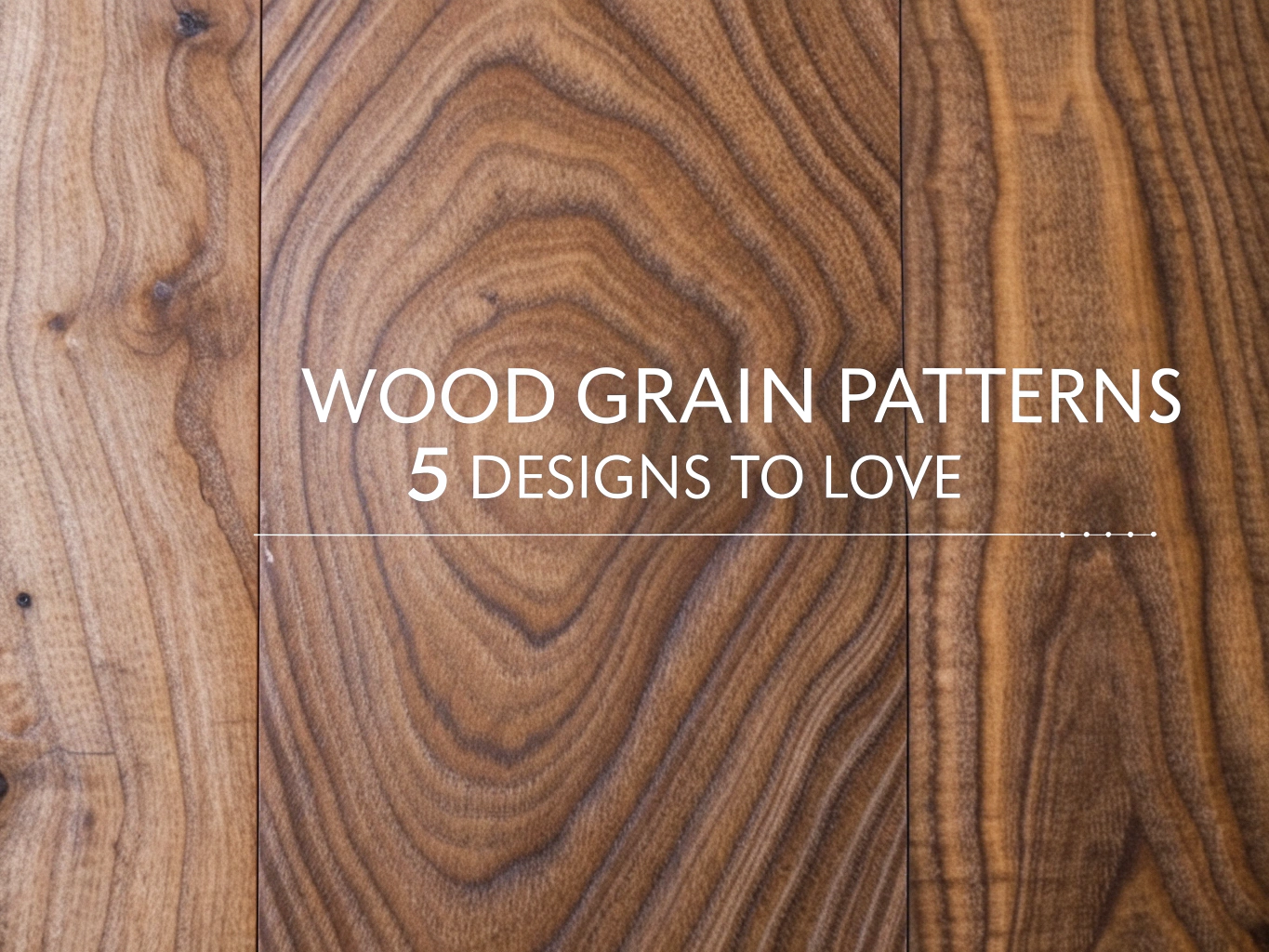

Have you ever stared at a tabletop and wondered why its lines catch your eye? Wood grain patterns shape the feel and look of furniture in quiet ways. This post shows five popular patterns and what makes each one special. You will get clear notes on species like mahogany wood grain pattern, where each style works best, and simple care tips. Try a few DIY tools to copy these looks at home.
Table of Contents
The wood grain pattern you see on boards tells a story about growth, cut, and light. This guide explains grain patterns in wood with clear examples, 2025 picks, and pro tips you can use today.
Wood Grain Pattern Basics
Understanding Wood Grain Structure
A wood grain pattern forms from how fibers, growth rings, and pores appear after sawing or slicing. You’re seeing the orientation of cells and features like figure, curl, and ribboning that reflect light in different ways; a helpful primer is Wood grain patterns, types & terminology.
Species, growth speed, and cut style shape what your eyes read as straight, wavy, curly, or ribbon-striped grain, and no two boards look the same.
Expert insight
Factors That Shape Grain Patterns
Four key factors set the grain patterns you get from any log. Use this list to predict looks and plan projects.
- Species: pore size and density create smooth, open, or dramatic looks.
- Growth: slow growth tightens rings; fast growth makes wider, bolder lines.
- Cut: quarter sawn amplifies stripes and rays; flat sawn shows cathedral arcs.
- Board width: wider faces reveal bigger, more varied figure.
Trends for 2025 favor straight grain for clean design and bold flame, ribbon, and quilted figures for statement panels, echoing popular queries like “grain patterns in wood” and “wood grains.”
Hardwood vs. Softwood Patterns
Hardwoods often show open pores and varied figure, while many softwoods keep even, tight lines. Use the table to match species to the look you want.
| Wood type / Example | Typical grain look | Notes for projects |
|---|---|---|
| Hardwood — Mahogany | Straight/ribbon; open pores | Finishes glow; stains penetrate evenly |
| Hardwood — Walnut | Flowing, curly figure | Great for contrast panels and guitars |
| Hardwood — Cherry | Fine, smooth lines | Darkens with light; sleek modern feel |
| Softwood — Pine | Prominent early/latewood bands | Rustic vibes; blotch control helps with stain |
| Softwood — Douglas-fir | Strong, straight lines | Framing and trim with clean stripes |
1. Straight Grain Pattern
A straight grain pattern shows parallel lines that run along the board’s length. The look stays clean and consistent across wide panels and long runs like flooring.
Mahogany Wood Grain Pattern Features
The classic mahogany wood grain pattern skews straight and uniform with few knots. Many pieces show a warm reddish-brown tone and a soft glow that takes polish beautifully; see the overview on Mahogany wood.
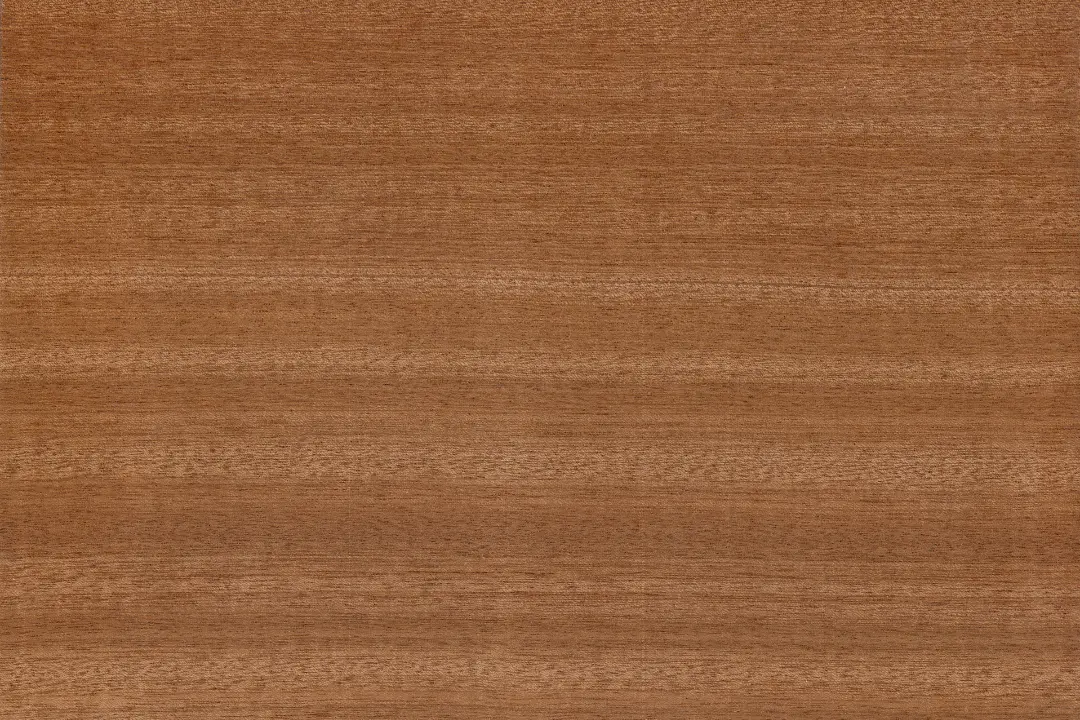
Honduran mahogany sits around 800 lbf on the Janka scale, offering easy machining with a refined finish suited to furniture and cabinetry.
Mahogany basics
Applications in Furniture and Cabinetry
Use straight-grain boards for clean lines on Shaker doors, slab drawer fronts, and long tabletops. Bookmatch adjacent boards to keep the pattern steady on large case pieces.
2. Flame and Ribbon Grain Pattern
Ribbon and flame figures add movement and shimmer. These patterns catch light in bands that flip tone as you walk past.
Ribbon Curl Characteristics
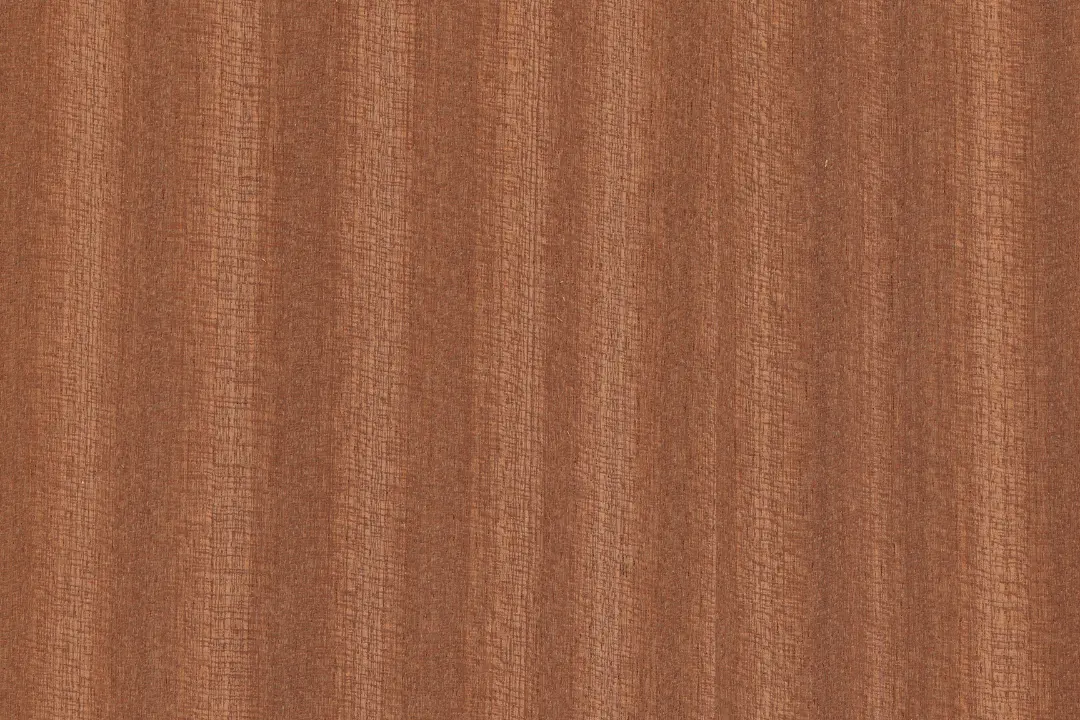
Ribbon curl appears where fibers change direction in alternating layers, common in sapele and African mahoganies. Reference notes on stripe figure and species in the Mahogany mixups article.
Flame Grain Visual Impact
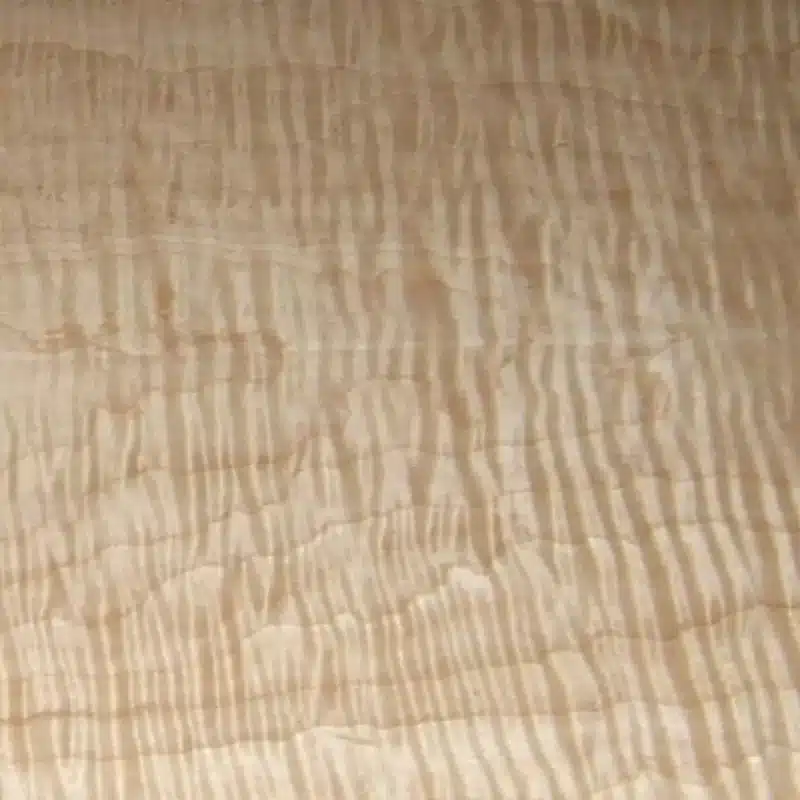
Flame grain shows wavy streaks that resemble flickering fire across the face. Highlight it on headboards, speaker fronts, and architectural panels for a luxe accent.
Veneer Applications
Veneer lets you place rare figure where it counts while keeping costs down. Lay up matched leaves for continuous ribbons across doors and tall casework.
3. Quilted and Curly Grain Pattern
Quilted grain creates 3D bubbles that flash under finish. It’s dramatic on cabinet panels, guitars, and art pieces where light can move.
Three-Dimensional Quilted Effects
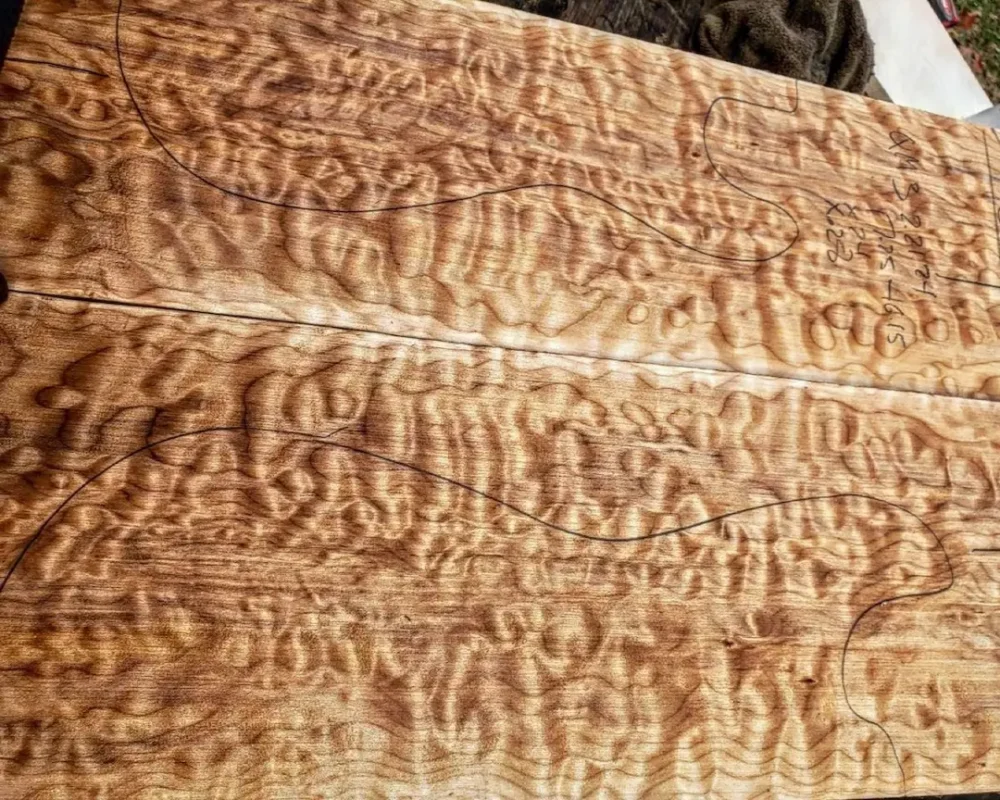
For a deeper quilt, choose species like quilted maple with broad, rolling undulations. A thin dye coat under clear finish boosts the holographic pop.
Musical Instrument Applications
Curly boards with tight ripples shine on guitar tops, violin backs, and drum shells. See curly maple and pair it with a light amber tint for classic depth.
4. Interlocked and Irregular Grain Pattern
Interlocked grain flips direction with each growth layer, creating ribbon stripes on quartered faces. Irregular grain adds character but needs sharp tools and light passes.
African Mahogany Variations
Khaya species vary from mostly straight to strongly interlocked, impacting stripe width and chatoyance; see a practical overview in A guide to mahogany characteristics.
Quarter Sawn Stripe Patterns
Quarter sawing reveals parallel ribbons that run the full board length. Use sequenced boards for tall doors so stripes align from top to bottom.
5. Open Pore and Textured Grain Pattern
Open-pore woods like mahogany show visible pores that add shadow and depth. The look reads rich under oil, shellac, or modern clear coats.
Depth and Stain Absorption
Pores act like tiny wells, so pigments settle and darken grain lines. Wipe back evenly and test colors on offcuts to hit the tone you want.
Surface Finishing Techniques
For glass-smooth results, grain-fill open pores, sand to 320–400, then apply thin finish coats. Skip filler if you prefer a tactile surface with natural texture.
Popular Wood Species for Pattern Inspiration
Mahogany Varieties and Characteristics
Swietenia macrophylla (Big-leaf) often shows straight grain with steady luster, while some boards reveal subtle ribbon. A short overview of color and glow appears in Characteristics of mahogany.
Sapele and Exotic Hardwoods
Sapele’s interlocked fibers deliver golden stripes that look dramatic on quartered faces. For showy patterns, consider zebrawood with bold dark bands.
Cherry, Walnut, and Rosewood
Cherry reads smooth and fine, walnut flows with subtle curl, and rosewood brings heavy contrast. For special accents, try burl wood or Birdseye maple on small panels and drawer fronts.
DIY Tools for Creating Wood Grain Effects
You can fake or boost wood grains on walls, cabinets, and art with simple tools. Watch, practice, then move to your real surface.
See this short video for a quick overview of graining motion and pressure.
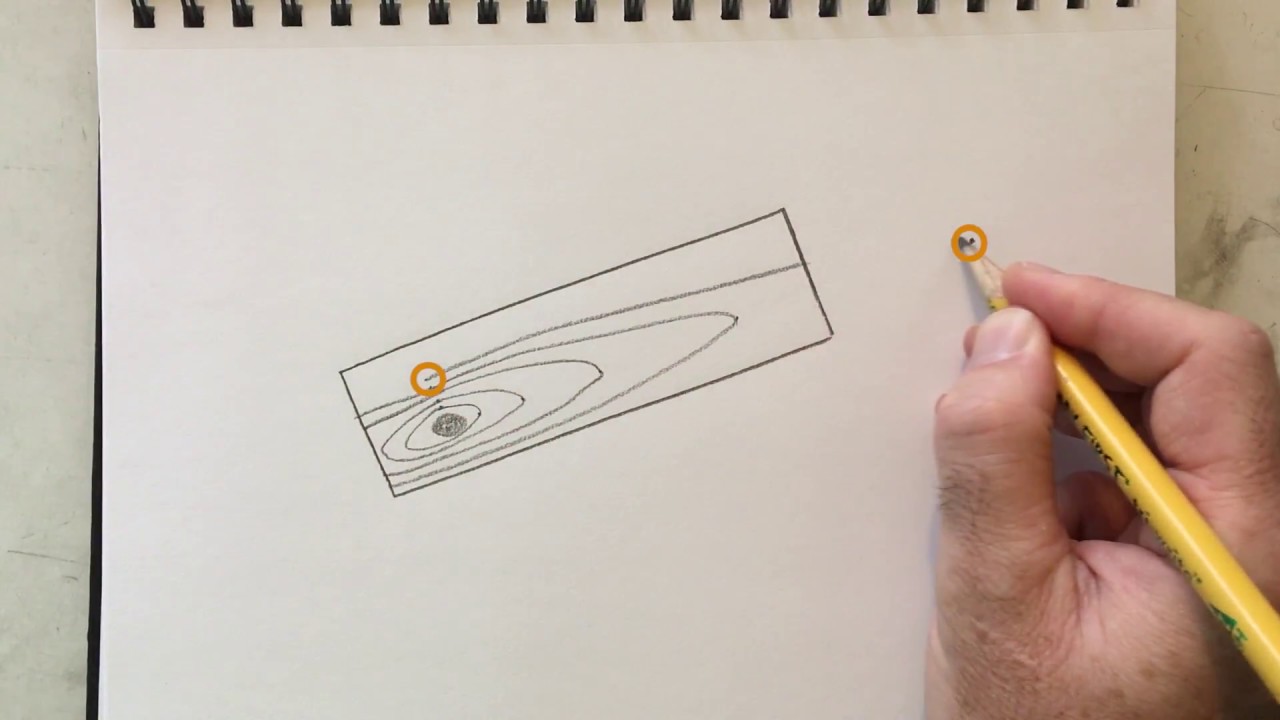
Explore these top-rated tools to create convincing patterns or touch up surfaces.

Natural Wood Grain Maker — DIY Wood Graining Tool Set
- Creates realistic wood grain finishes
- Easy-to-use for furniture, walls, and crafts
- Durable rubber rollers for consistent patterns
- Speeds up projects with professional-looking results
- Compact set for beginners and pros
 Buy on Amazon

6-Piece Wood Grain Roller Set — 7-inch DIY Graining Tools
- Six rollers and handle for varied wood effects
- 7-inch size covers large surfaces quickly
- Rubber texture reproduces authentic wood patterns
- Ideal for walls, furniture, cabinets
- Washable and reusable for multiple projects
Buy on Amazon

Peel & Stick Wood Slat Wallpaper — Tan Waterproof Vinyl (17.3 x 120)
- Realistic wood slat look without installation mess
- Self-adhesive backing peels on and removes cleanly
- Waterproof vinyl resists splashes and humidity
- Easy to cut for custom fits around outlets and corners
- Perfect for accent walls, bedrooms, and rentals
Buy on Amazon
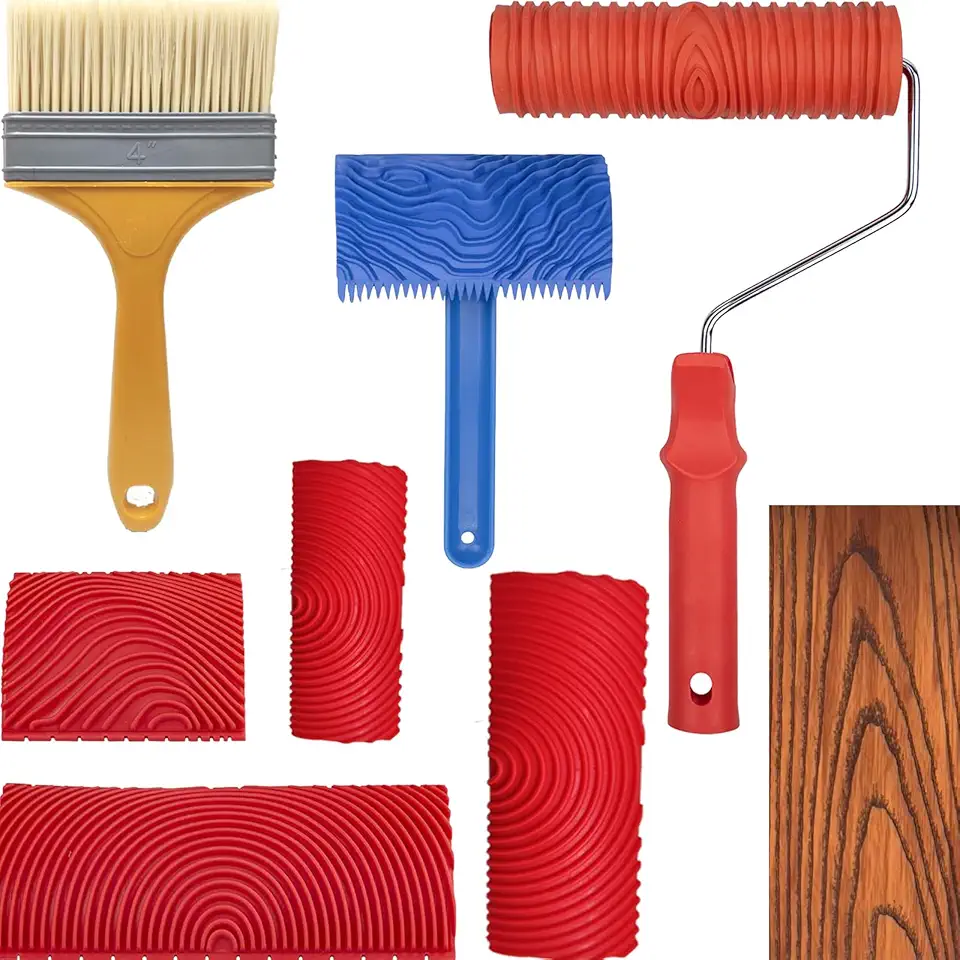
7-Piece Wood Grain Tool Kit — Rubber Rollers & Texturing Tools
- Seven tools for a variety of wood grain styles
- Soft rubber rollers create natural grain effects
- Suitable for walls, furniture, and art projects
- Lightweight and easy to handle during long jobs
- Reusable and simple to clean after use
Buy on Amazon

HUIKANGSHENG 4-Piece Wood Graining Tool Set
- Four knurling and graining tools for realistic textures
- Works on paint, stain, varnish, and other surfaces
- Ergonomic design for steady, controlled strokes
- Creates consistent patterns for professional finishes
- Compact kit stores easily between jobs
Buy on Amazon
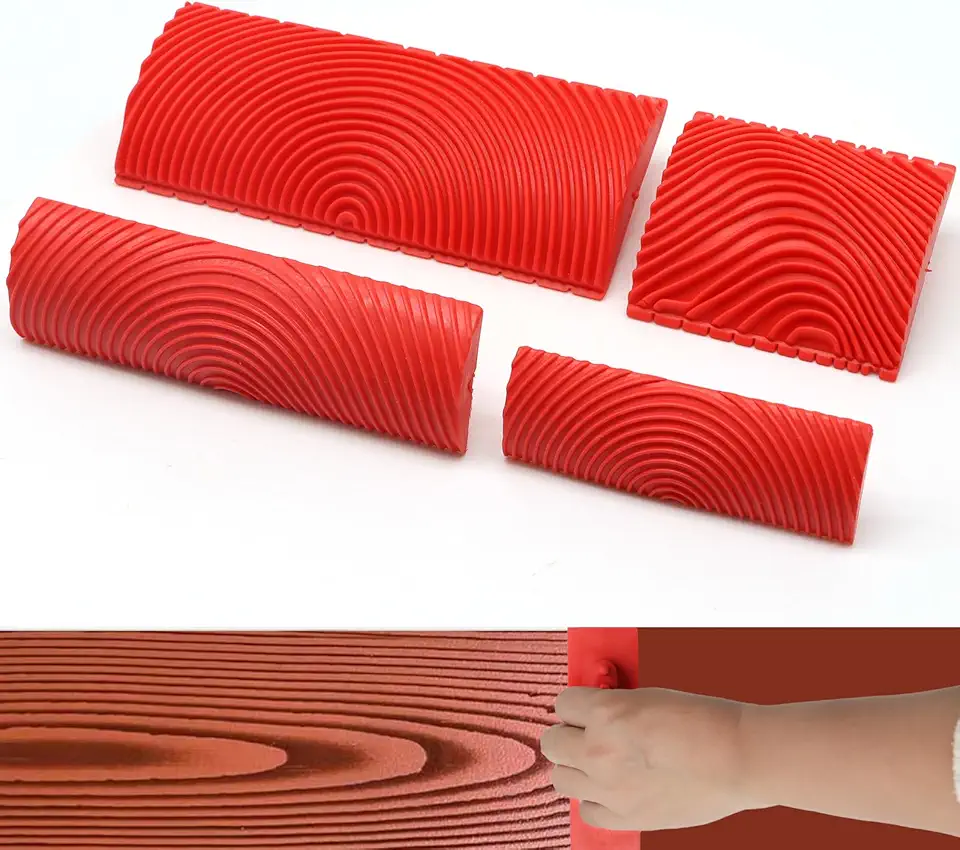
4-Piece Simulated Wood Grain Brush Set — Decorative Finish Tools
- Designed to mimic real wood grain with minimal effort
- Varied brush shapes for different grain sizes and effects
- Perfect for walls, furniture, and DIY décor
- Durable construction for repeated projects
- Easy to clean and store
Buy on Amazon
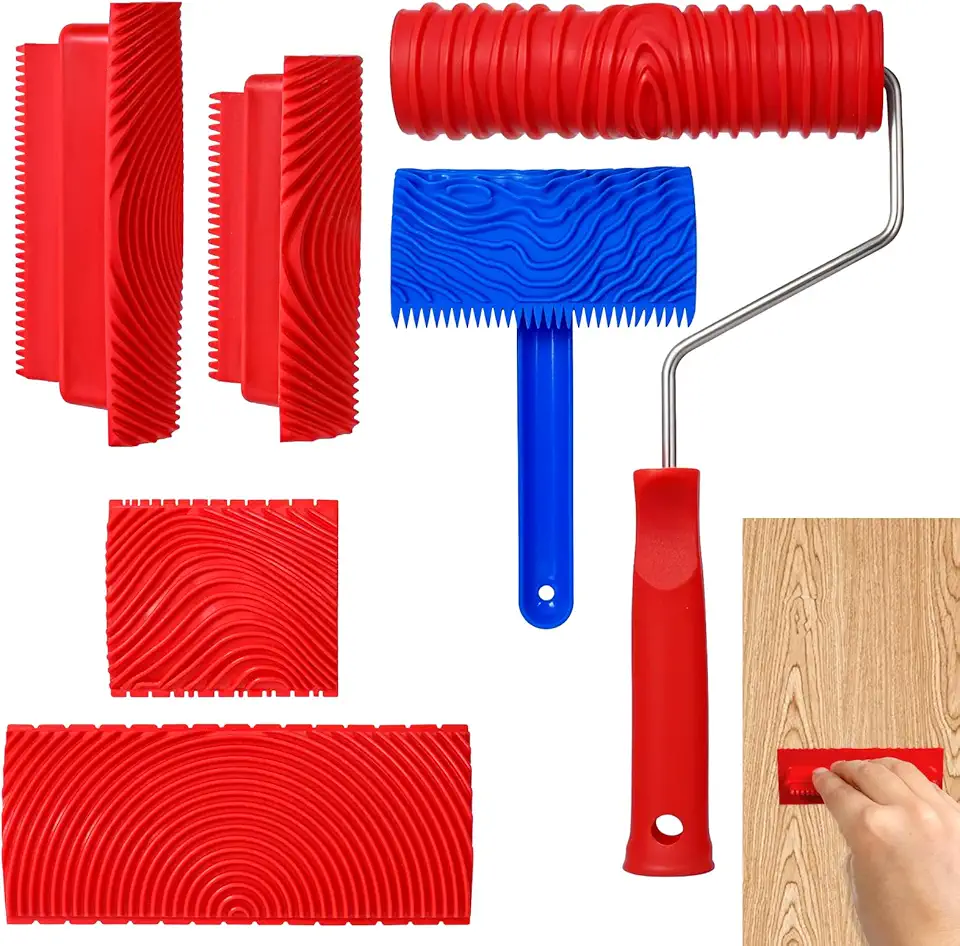
6-Piece Fake Grain Roller Set — 7-inch Wood Graining Tools
- Includes six rollers and a comfortable handle for coverage
- Rubber rollers replicate realistic wood patterns
- Fast application for walls and large surfaces
- Great for refinishing projects and art accents
- Reusable and simple to maintain
Buy on Amazon
Graining Tool Sets
Work in layers to build a realistic look: base coat, glaze coat, then texture with rollers or combs before it sets. Pull long, steady passes and vary angles so the pattern doesn’t repeat.
For bold figure, add a thin dye to the glaze, then use a rocker tool to create cathedral arcs. Practice on scrap to dial in pressure and timing.
Wallpaper Alternatives
Peel-and-stick options offer quick makeovers for rentals and test spaces. Apply to clean, smooth walls or furniture panels.
Browse these easy wall updates and repair aids before your next project.
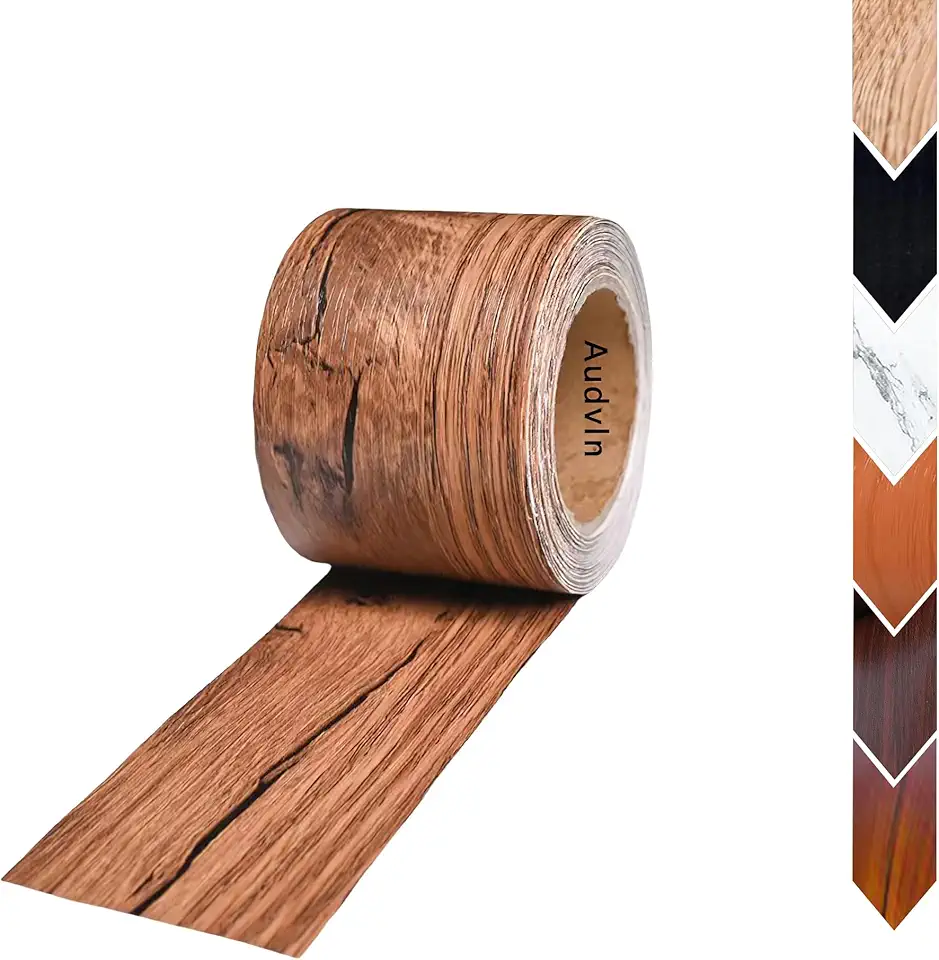
Self-Adhesive Wood Grain Repair Tape 2 in x 32 ft
- Instantly hides scratches and nicks on furniture and floors
- Durable, water-resistant vinyl for long-lasting repairs
- Peel-and-stick application for quick, mess-free fixes
- Matches wood patterns for near-seamless blending
- Cuts easily to length for custom repairs
Buy on Amazon
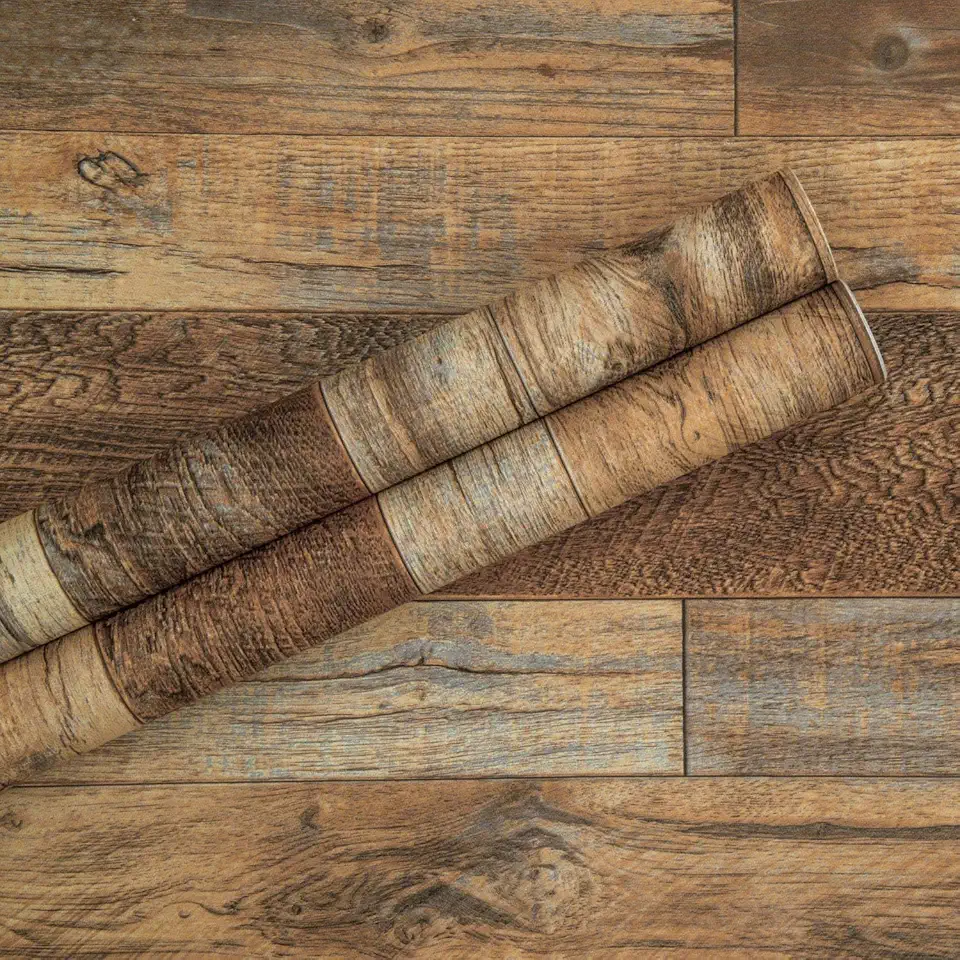
Distressed Shiplap Peel & Stick Wallpaper — Brown Wood Plank (17.71 x 118)
- Rustic wood-plank look without demolition
- Self-adhesive vinyl installs and removes cleanly
- Textured distressed finish adds character to any room
- Durable, wipeable surface ideal for high-traffic areas
- Easy to trim and fit around windows and outlets
Buy on Amazon

Sevalo Peel & Stick Wood Contact Paper — Light Wood Grain (15.7 x 118)
- Natural light wood look for cabinets and drawers
- Self-adhesive vinyl is waterproof and wipeable
- Removable without leaving residue in many cases
- Easy to cut and apply for quick updates
- Great for rentals, crafts, and furniture makeovers
Buy on Amazon
Design Selection and Care Tips
Matching Patterns to Style
Pick a pattern that fits the room’s mood. Straight grain suits minimal spaces; flame, ribbon, and quilted figures create strong focal points; irregular or spalted maple adds artful texture.
- Choose species and cut that deliver the target figure.
- Mock up color with a sample stack: dye, stain, topcoat.
- Bookmatch or sequence boards for visual flow across panels.
- Add quiet frames around loud figures to keep balance.
Maintenance and Protection
Clean with a soft cloth and a mild wood-safe polish to keep luster and clarity. Shield pieces from harsh sun and humidity swings; rotate display surfaces so tone ages evenly.
For deep pores, refresh the finish lightly rather than sanding through the topcoat. Small nicks on patterned surfaces hide well with matching repair tape or a tinted wax stick.
Want more figure ideas? Compare Birdseye maple to quilted and curly looks to fine-tune your design palette.
FAQs
How Can I Enhance Wood Grain Patterns On Furniture?
Sand the surface smooth, then use grain filler or a sanding sealer on open-grained species. Test stains or wood dyes to increase contrast, and apply thin coats of oil or clear finish to deepen color and highlight the figure. For texture, consider wire brushing or hand-rubbed finishes; always test techniques on scrap first.
What Does The Wood Grain Pattern Tell You About The Type Of Wood?
Grain Reveals Species Characteristics, Growth Conditions, And Milling Method—oak, for example, shows prominent rays, while quarter-sawn boards display linear flecks. Grain Can Also Indicate Strength, Stability, And How The Wood Will React To Stain And Finishes.
How Do I Choose The Best Wood Grain Pattern For My Flooring?
Consider Durability, Maintenance, And Style: Straight, Subtle Grain Works Well In High-Traffic Areas And Modern Interiors, While Figured Grain Adds Character But May Show Wear More Readily. Also Factor In Species Hardness, Plank Width, Color, And Whether Quarter-Sawn Boards For Added Stability Are Preferred.
What Is The Difference Between Straight And Wavy Wood Grain?
Straight Grain Runs Parallel Along The Board And Offers A Uniform, Predictable Appearance And Stability. Wavy Or Curly Grain Has Undulating Fibers That Create Decorative Figure And Chatoyance, But It Can Be More Challenging To Plane, Finish, And Sometimes Less Stable.
Can I Change The Wood Grain Pattern On My Wooden Projects?
You Can Change The Appearance But Not The Wood’s Natural Growth Pattern. Techniques Like Staining, Dyeing, Wire Brushing, Burnishing, Veneering, Or Applying Faux-Grain Finishes Can Dramatically Alter How The Grain Looks; To Change Structure, Choose Different Cuts Or Species.