Brazilian Rosewood Guide: Uses, Legality, Value, and Buyer Cautions

Table of Contents
Brazilian rosewood is Dalbergia nigra, a rare Brazilian hardwood prized for guitars, veneer, furniture, and luxury interiors. It’s heavily restricted under CITES Appendix I, so buyers need proof of lawful origin before purchasing, shipping, or exporting it.
This guide explains what makes brazilian rosewood valuable, why legality matters, how identification can fail, and which safer alternatives make sense for woodworking, guitars, flooring, and restoration.
What Is Brazilian Rosewood?
Brazilian rosewood is the trade name for a dense, dark, fragrant hardwood from Brazil that became famous in fine furniture and acoustic instruments. It belongs to the Dalbergia genus, but the name “rosewood” gets used loosely, so the scientific name matters more than the sales label.
Dalbergia nigra
Dalbergia nigra is a true rosewood in the legume family, Fabaceae. It’s dense, naturally oily, darkly streaked, and often has a sweet floral smell when cut; fresh sanding can release a warm, spicy scent that clings to your hands and shop air for a while.
In practical use, Brazilian rosewood wood feels heavier than many domestic hardwoods of the same size. A small board has a cool, waxy surface, and sharp tools give a crisp shaving before the edge starts to lose its bite.
Common Names
Common names can help with research, but they can also cause expensive mistakes. A seller may use “jacaranda” honestly in one market and vaguely in another, so ask for Dalbergia nigra every time.
- Bahia rosewood
- Rio rosewood
- Jacarandá-da-Bahia
- Jacaranda, used loosely in some listings
- Brazilian rosewood tonewood, often used for guitar sets
Atlantic Forest Origins
Atlantic Forest origins are central to the story. Dalbergia nigra is native to Brazil’s Atlantic Forest region, and the IUCN Red List treats the species as threatened by historic logging, habitat loss, and illegal trade pressure.
This origin also explains the conservation burden. The best modern source of legal material is often old stock, reclaimed furniture, documented veneer, or antique wood already in circulation rather than newly cut wild trees.
Why It Became Famous
Brazilian rosewood became famous because it combines dramatic color, high density, strong acoustic response, natural luster, and a scent that feels different from ordinary cabinet woods. It also gained prestige through pre-war and mid-century guitars, luxury casework, and bookmatched veneer panels.
Its reputation sits beside other rare materials in discussions of the most expensive wood, but it isn’t the “best wood in the world” for every job. For many projects, its legal burden outweighs the beauty.
Legality, CITES, and Ownership
Brazilian rosewood legality depends on the item, country, date of acquisition, documentation, and whether it crosses a border. Owning an old guitar or table is different from exporting raw lumber, selling veneer overseas, or traveling internationally with an instrument.
CITES Appendix I
CITES Appendix I is the strictest CITES trade category, and Dalbergia nigra is listed there. The CITES appendices restrict international commercial trade in species threatened with extinction, with narrow exceptions for properly documented material.
For buyers, the key phrase is international trade. A domestic seller may legally own a piece, yet still lack the export permit, import permit, or re-export certificate needed to move it across borders.
Domestic vs International Trade
Domestic sale and international shipment are separate issues. A Brazilian rosewood cabinet sold inside one country may be treated differently from the same cabinet shipped abroad, where customs officers may ask for CITES paperwork before release.
The common beginner mistake is accepting “legal here” as proof that the item can travel anywhere. Before paying, ask whether the paperwork supports domestic ownership, commercial sale, export, import, or re-export.
Pre-Convention and Pre-Ban
Pre-Convention usually means the wood was acquired before the CITES listing applied to that species. “Pre-ban” is a looser market term, and it has little value without dated invoices, inventory records, permits, or a chain of custody tied to the actual piece.
In real transactions, paperwork can be worth almost as much as the wood. If a seller can’t connect a pre-ban claim to specific boards, guitar sets, veneer bundles, or furniture parts, assume resale and export will be limited.
Guitar Travel Documents
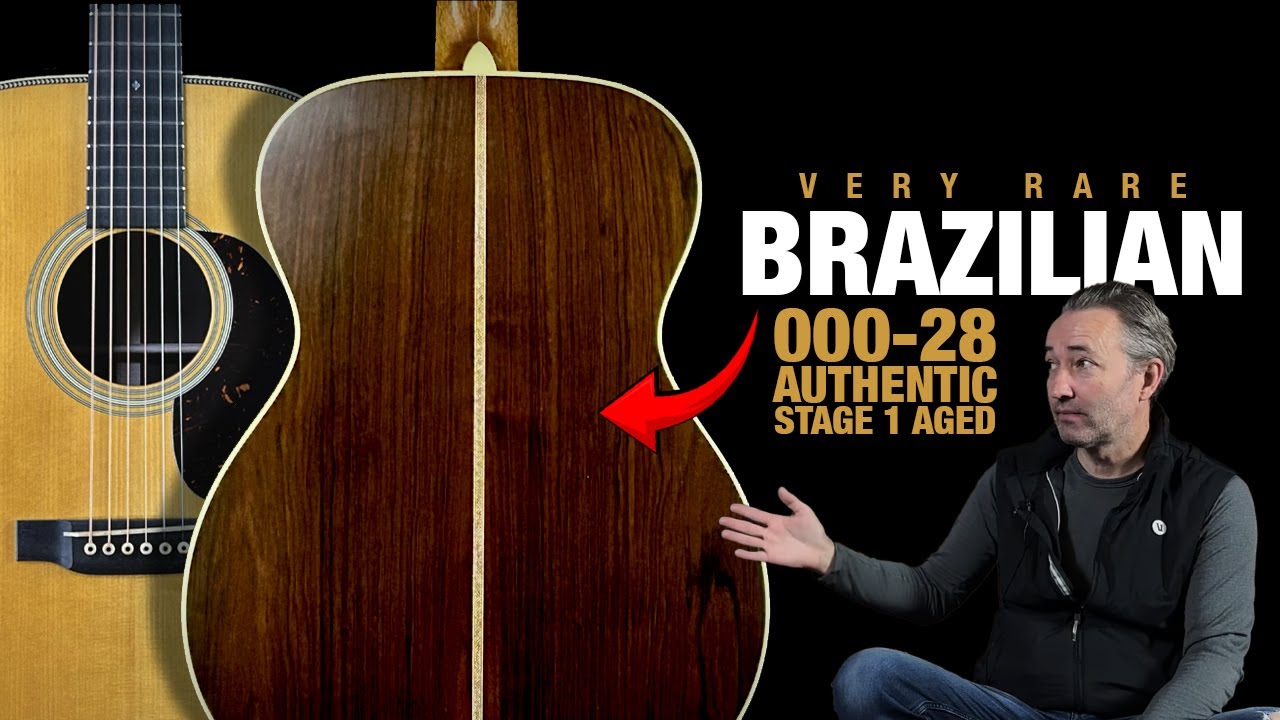
Brazilian rosewood guitars can need CITES travel documents when crossing borders. A vintage acoustic may pass through airport security easily, then get delayed at customs because the back and sides contain Dalbergia nigra and the owner has no certificate.
Players should ask about a Musical Instrument Certificate, re-export certificate, serial-number documentation, and proof of manufacture date before touring. The safest workaround is to travel with a non-restricted instrument when paperwork is unclear.
Value, Price, and Market Risks
Brazilian rosewood value comes from rarity, beauty, historic demand, and documentation. Undocumented material may be genuine, but it can be hard to sell, insure, ship, or build into a guitar with strong future resale value.
Why It Is Expensive
Rare supply drives much of the price. Old-growth material was heavily harvested before modern controls, and legal supply now comes mainly from pre-Convention stock, reclaimed furniture, documented veneer, old luthier inventory, and antiques.
Demand stays high because guitar collectors, luthiers, veneer buyers, and furniture restorers still want the sound, figure, and story. That mix makes it an expensive dark wood, but scarcity alone doesn’t prove quality or legality.
Price and Value Factors
Price factors include size, cut, figure, defects, moisture content, species verification, age, documentation, and whether the piece can legally be exported. Wide, clear, quartersawn, bookmatched guitar backs and sides usually sit at the high end of the market.
| Factor | Effect on Brazilian rosewood value |
|---|---|
| Verified Dalbergia nigra | Raises confidence and marketability |
| Pre-Convention paperwork | Can create a major documentation premium |
| Bookmatched guitar set | Often more valuable than random boards |
| Cracks, checks, worm holes | Reduce yield and finished value |
| Export eligibility | Expands buyer pool when documents are correct |
| No records | Limits resale, shipping, and appraisal confidence |
Documentation Premium
Documentation premium means two visually similar boards can have very different practical value. The board with dated inventory records, CITES documents, and clear chain of custody can be used in higher-value work with less legal friction.
Builders often avoid undocumented Brazilian rosewood lumber because it can trap value inside the finished object. A luthier may build a beautiful guitar, then the owner discovers it can’t be shipped overseas for sale.
Common Red Flags
Red flags usually appear in the sales language before they appear in the wood. Phrases like “ships worldwide, no CITES needed” or “looks just like Brazilian” tell you the seller may not understand the rules or may be avoiding them.
- No paperwork, only a verbal “old stock” claim
- Very low price for supposedly rare Brazilian rosewood
- Blurry photos with no endgrain or dimensions
- Vague names such as jacaranda, rosewood, or Brazilian-style
- No return policy if customs refuses shipment
- Seller pressure to pay before documents are reviewed
Appearance, Properties, and Identification
Brazilian rosewood identification starts with color, grain, smell, and density, but those clues don’t prove species by themselves. Several rosewoods, pau ferro, stained veneers, and dark tropical hardwoods can mimic the look closely enough to fool photos.
Color and Grain
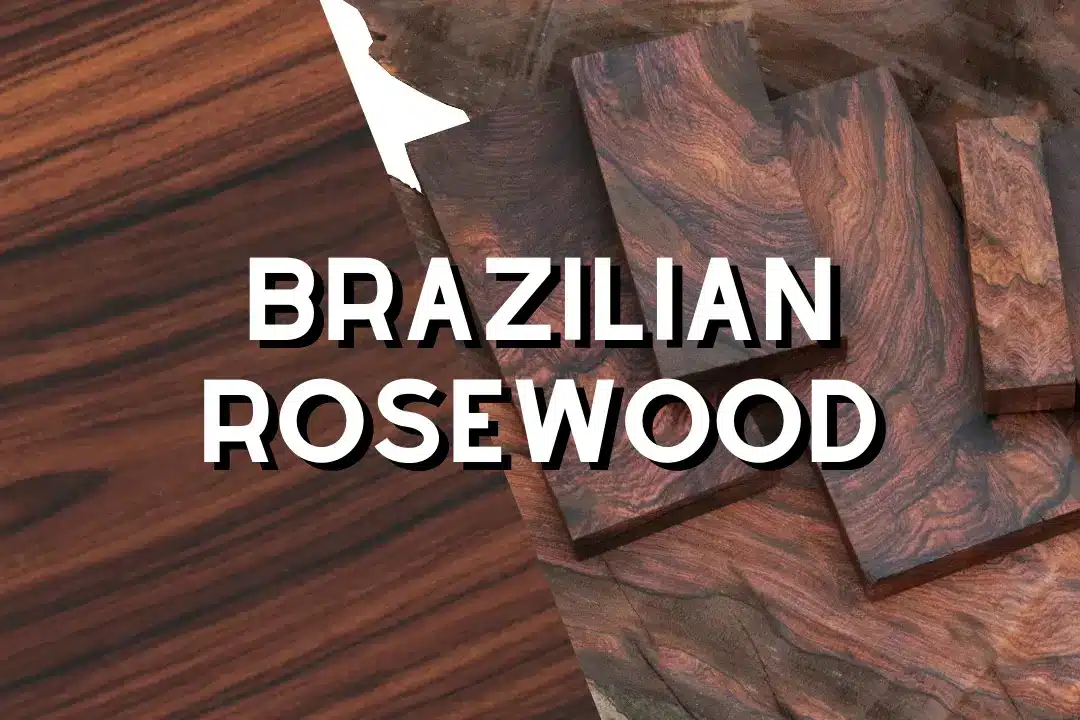
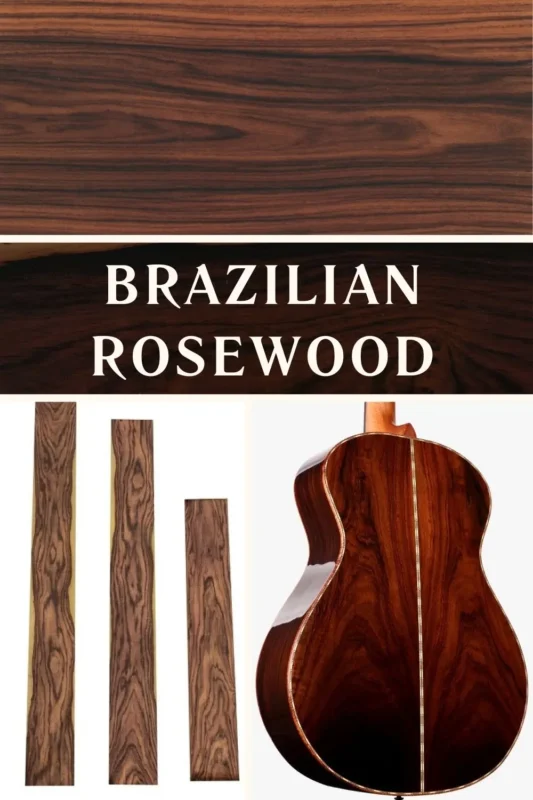
Brazilian rosewood color can range from chocolate brown and reddish brown to orange brown, violet brown, golden brown, or nearly black streaked brown. The most prized pieces often show dark ink-like striping over a warmer background.
Grain may be straight, interlocked, wavy, or dramatic with spider-web figure. On bookmatched guitar backs, the figure can look like mirrored smoke, river lines, or dark mountain ridges under finish.
Smell and Workability
Brazilian rosewood smell is often sweet, floral, and spicy when freshly cut or sanded. The scent is memorable, but it fades with age, and other rosewoods can smell pleasant too, so smell is a clue rather than proof.
Under tools, oily density creates both pleasure and trouble. A sharp plane can leave a glossy surface, yet interlocked grain may tear, sanding dust feels fine and peppery, and glue joints can fail if surfaces sit too long after preparation.
Hardness and Weight
Hardness data helps set expectations. The Wood Database reports Brazilian rosewood around 2,790 lbf Janka hardness and about 52 lb/ft³, or 835 kg/m³, average dried weight; see The Wood Database for species property notes.
That weight matters in use. A dense board can make flooring, furniture, or instrument parts feel substantial, but it also dulls cutters, heats sanding belts, and punishes weak dust collection.
Why Visual ID Fails
Visual ID fails because rosewood traits overlap across species. Indian rosewood, Madagascar rosewood, cocobolo, Honduran rosewood, Amazon rosewood, pau ferro, and dyed veneer can all show dark streaking or rich brown color.
Reliable verification may require microscopic anatomy, expert appraisal, lab testing, provenance records, DNA testing, or stable isotope work in enforcement settings. For most buyers, documents and seller history carry more weight than phone photos.
Dust and Allergy Safety
Rosewood dust can irritate skin, eyes, and lungs, and sensitization can build after repeated exposure. I’ve seen fine reddish-brown dust hang in the air after sanding dense rosewood substitutes, then leave a dry tickle in the throat if extraction is poor.
Use a woodworking respirator, sharp tools, local dust collection, gloves when needed, and a clean long-sleeve shirt for heavy sanding. Beginners often blow dust off the bench with compressed air; vacuuming keeps less dust in your breathing zone.
Uses: Guitars, Veneer, Furniture, Flooring
Brazilian rosewood uses include guitars, veneer, antiques, cabinetry, flooring, and small luxury objects. Modern use should favor documented existing material because new large-scale production is legally risky and ethically hard to justify.
Brazilian Rosewood Guitars
Brazilian rosewood guitars are prized for backs and sides, especially in acoustic and classical instruments. Players often describe the sound as deep, glassy, overtone-rich, and sustaining, yet build quality, top wood, bracing, age, and setup shape the final voice.
Before buying a Brazilian rosewood guitar, verify the year, serial number, manufacturer records, species claim, CITES documents, and which parts contain Dalbergia nigra. Some instruments have only a headplate or decorative trim, not full back and sides.
Veneer and Cabinetry
Brazilian rosewood veneer was historically useful because thin sheets stretch rare wood across large surfaces. Antique cabinets, desks, wall panels, speaker fronts, and luxury doors may use veneer over a stable substrate rather than solid boards.
For restoration, veneer thickness and substrate matter. Sanding through old rosewood veneer happens fast; the safer move is to clean lightly, repair loose edges first, and test finish in a hidden area before touching the show face.
Furniture and Antiques
Brazilian rosewood furniture can include tables, cabinets, casework, desks, and decorative panels. Antique value depends on maker, condition, original finish, provenance, and whether the piece can legally move if sold internationally.
Many antique owners damage value by stripping finishes too aggressively. A better restoration approach starts with gentle cleaning, loose veneer repair, humidity control, and a conservator’s opinion before sanding or refinishing.
Brazilian Rosewood Flooring
Brazilian rosewood flooring is rare today, and many listings for “brazilian rosewood floor” may refer to lookalike species, engineered products, or trade names rather than Dalbergia nigra. Treat any new flooring claim with caution and ask for the exact botanical name.
True Brazilian rosewood floor material would be dense, dark, and visually striking, but it’s usually impractical for modern flooring because of cost, legal restrictions, sourcing risk, and the volume of wood required. For floors, pau ferro, jatoba, ipe, or engineered dark wood can be more realistic choices; compare options in our dark wood types guide.
Small Specialty Items
Small items include knife scales, turned boxes, jewelry, handles, inlays, bridge blanks, and decorative accents. These pieces can be beautiful, but they’re often the hardest to authenticate because scraps lose their original inventory context.
Beginners often buy tiny “Brazilian rosewood blanks” online because the price feels reachable. The expert workaround is simple: if documentation is missing, treat the piece as an unidentified rosewood-like hardwood and don’t build it into export-sensitive work.
Brazilian Rosewood Comparisons
Brazilian rosewood comparisons matter because many woods share similar trade names, colors, or guitar uses. The safest comparison starts with species, not appearance, since “rosewood” can mean true Dalbergia, pau ferro, essential oil, veneer color, or marketing language.
Brazilian vs Indian Rosewood
Brazilian vs Indian rosewood is the most common guitar comparison. Brazilian rosewood is Dalbergia nigra from Brazil and CITES Appendix I; Indian rosewood is Dalbergia latifolia and remains far more common in modern guitars and furniture.
Brazilian material often shows higher contrast, spider-webbing, and darker ink streaks, while Indian rosewood often looks more uniform purple-brown to dark brown. Still, visual overlap is real, and lab or document support may be needed.
Brazilian vs Bolivian Rosewood
Bolivian rosewood is usually pau ferro or morado, often listed as Machaerium scleroxylon, and it isn’t Brazilian rosewood. The shared word “rosewood” misleads buyers because these woods come from different botanical groups and legal contexts.
Pau ferro can be dense, attractive, and practical for fingerboards, turning, furniture, and flooring. For many projects, pau ferro gives a rosewood-like look with less legal risk than Dalbergia nigra.
Cocobolo and Honduran Rosewood
Cocobolo is Dalbergia retusa, a dense, oily, colorful Central American rosewood with orange, red, brown, and black streaks. It can be stunning for handles, turning, and instruments, but its dust can be harsh and its trade status still needs checking.
Honduran rosewood, Dalbergia stevensonii, is known for density and resonance, including marimba bars and specialty instrument parts. It differs from Brazilian rosewood in species, origin, appearance, supply, and legal treatment; see our cocobolo guide for a closer look at another oily Dalbergia wood.
Madagascar Rosewood
Madagascar rosewood can refer to several Dalbergia species from Madagascar, many tied to serious conservation concerns. Some pieces resemble Brazilian rosewood enough to confuse buyers, especially in dark, highly figured veneer or guitar sets.
Do not treat Madagascar rosewood as a simple legal substitute. Ask for species, origin, harvest legality, export history, and current trade documents before considering any restricted tropical rosewood.
Rosewood Essential Oil
Rosewood essential oil is usually linked to Aniba rosaeodora, not Dalbergia nigra lumber. Aromatherapy products, fragrance oils, and “Brazilian rose” labels should never be treated as proof of Brazilian rosewood wood content.
This naming confusion also appears in furniture stains, laminate colors, and décor. A rosewood color product can look dark and luxurious without containing any regulated Brazilian rosewood.
How to Buy or Verify Brazilian Rosewood
Buying Brazilian rosewood safely means verifying species, provenance, documents, seller history, and shipping limits before payment. If the seller can’t provide paperwork, assume international resale or shipment may be impossible.
Buyer Documentation Checklist
Documentation checks should happen before you fall in love with the grain. The U.S. Fish and Wildlife Service explains permit concepts for listed wildlife and plant materials through its International Affairs permits resources, and other countries have their own CITES authorities.
- Ask for the exact species: Dalbergia nigra.
- Confirm whether it is raw lumber, veneer, a guitar set, furniture, or a finished instrument.
- Request CITES paperwork, pre-Convention proof, invoices, and import/export records.
- Ask whether the documents are tied to the specific piece, batch, serial number, or item.
- Confirm whether it can be sold domestically, exported, imported, or re-exported.
- Get clear photos, dimensions, weight, moisture content, defects, and return terms.
Questions for Sellers
Seller questions reveal risk fast. Ask where the wood is located, when it was acquired, who owned it before, whether the paperwork travels with the item, and who pays if customs rejects the shipment.
A careful seller won’t be offended by provenance questions. Evasive answers, rushed payment requests, or claims that “CITES doesn’t apply to finished goods” should stop the transaction until a qualified authority confirms the rules.
Authenticity and Lab Testing
Authenticity testing can include microscopic wood anatomy, expert review, DNA work, stable isotope testing, or comparison to verified reference samples. The right method depends on whether you’re verifying an antique table, a guitar back, veneer, or a loose board.
Lab testing has limits. It may require a small sample, cost more than cheap blanks are worth, or still need paperwork to support legal origin, so testing should complement documents rather than replace them.
Customs and Shipping Risks
Customs risk is highest when the shipment crosses borders with vague descriptions. “Wood parts,” “rosewood veneer,” or “old guitar” can trigger delays if the paperwork doesn’t identify Dalbergia nigra and the legal basis for movement.
In practice, a shipment may be delayed, inspected, returned, seized, or require permits the seller didn’t mention. The safest shipping workaround is to pause the purchase until both exporting and importing authorities confirm what documents are needed.
Legal Disclaimer
Legal rules vary by country, item type, date, and purpose of movement. This article is informational, not legal advice, and buyers should contact the relevant CITES management authority before importing, exporting, or re-exporting Brazilian rosewood.
Practical note: the safest Brazilian rosewood purchase is the one where the documents are clear before money changes hands.
Glamorwood buyer guidance
Alternatives, Finishing, and Ethical Sourcing
Brazilian rosewood alternatives make sense for most modern projects because they reduce legal risk, cost, and sourcing pressure. No substitute is identical, but many woods and veneers provide rich color, density, and visual depth without relying on restricted Dalbergia nigra.
Legal Rosewood Alternatives
Legal alternatives include Indian rosewood, pau ferro, walnut, mahogany, cocobolo with proper sourcing, Honduran rosewood with proper sourcing, and engineered or dyed veneers. For furniture and guitars, mahogany wood can be easier to work and easier to document.
Match the substitute to the job. Use Indian rosewood for classic guitar backs and sides, pau ferro for dense fingerboards or accents, walnut for furniture warmth, and veneer when the goal is appearance rather than rare solid stock.
Not Verified Dalbergia nigra Products
These products should be treated as alternatives, craft materials, veneers, or finishing supplies, not verified Brazilian rosewood or Dalbergia nigra. Use them where a rosewood look or dense exotic hardwood performance is useful without claiming restricted provenance.

Bolivian Rosewood Blank
- Beautiful natural rosewood figure
- sized for small woodworking projects
- stable hardwood for crafting
- great for turning, inlay, and accents
- single-piece blank for quality results
 Buy on Amazon

Figured Rosewood Veneer
- Thin natural veneer with striking grain
- ideal for furniture and décor upgrades
- flexible for detailed DIY applications
- great for speakers, trim, and interiors
- adds a luxury wood look with ease
Buy on Amazon

Dark Rosewood Veneer Sheets
- Rich dark grain for a premium finish
- ideal for restoration and craft work
- flexible sheet format for easy application
- great for cabinets and speaker builds
- adds natural elegance to surfaces
Buy on Amazon

Exotic Wood Shield
- Deep-penetrating oil finish
- protects exotic hardwoods outdoors
- enhances natural grain and color
- helps resist weathering and wear
- one gallon size covers larger projects
Buy on Amazon

Deep Penetrating Wood Oil
- Made for exotic hardwood exteriors
- penetrates deeply to nourish wood
- brings out rich natural tones
- helps protect against sun and moisture
- one gallon for broad coverage
Buy on Amazon
Rosewood-Look Veneers
Rosewood-look veneer works well for speakers, cabinet panels, drawer fronts, restoration patches, and decorative trim where full-thickness Brazilian rosewood would be wasteful or legally risky. Veneer also lets you use stable substrates that move less than solid tropical hardwood.
Watch for thin face layers, brittle backing, mismatched figure, and aggressive sanding. Press veneer with even pressure, use a flat caul, and trim with a sharp blade so the dark edge doesn’t chip.
Finishes for Oily Hardwoods
Oily hardwoods need clean, freshly prepared surfaces. Sand progressively, remove dust, test on scrap, and finish soon after final prep because natural oils can interfere with adhesion if the surface sits too long.
Oil finishes deepen color, shellac adds warmth, lacquer suits guitars and fine furniture, and exterior oil fits outdoor substitutes better than rare true Brazilian rosewood. For more surface prep detail, see our guide to the wood hardness scale so density doesn’t surprise you during sanding.
Care and Maintenance
Care routines should control humidity, sunlight, abrasion, and harsh cleaners. For guitars, use proper case humidification; for furniture, dust with a soft cloth and avoid silicone-heavy sprays that can complicate future finish repair.
Practical Notes From Real-World Use: dense rosewoods and substitutes often feel slick under a cloth after oiling, but excess finish can stay tacky in pores. Wipe back harder than you think, use thin coats, and let each coat cure before adding another.
Conservation and Reclaimed Wood
Ethical sourcing favors documented reclaimed wood, antique restoration material, certified pre-Convention stock, and legal domestic-only transactions where allowed. The strongest modern claim for Brazilian rosewood is often reuse, not fresh harvest.
Avoid undocumented international listings, suspiciously cheap “Brazilian rosewood,” vague origin claims, and sellers who dismiss CITES rules. If you don’t need verified Dalbergia nigra, choose a safer substitute from a responsible supplier and keep the paperwork with the finished project.
FAQs
Affiliate Disclosure: Some links in this post are affiliate links. If you make a purchase through these links, we may earn a small commission at no extra cost to you. We only recommend products we genuinely believe in.