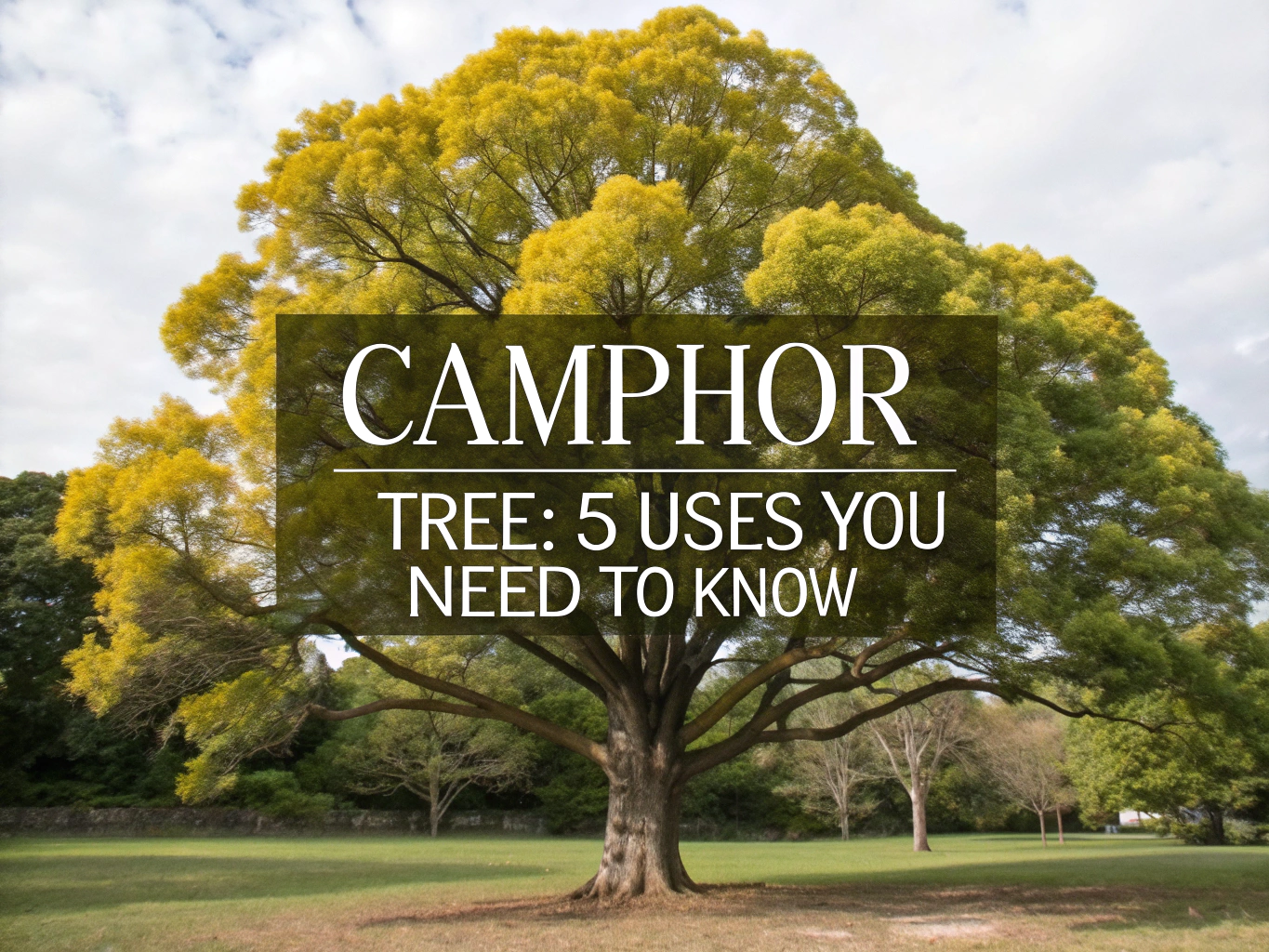

Did you know a single camphor tree can ease breathing and help keep pests away? The tree, also called Cinnamomum camphora or camphor laurel, gives a strong, fresh scent used for aromatherapy and some remedies. This post shows five clear uses for its oil, leaves, and wood. Read on to find safe, practical ways to try them at home.
Table of Contents
The camphor tree brings a rich mix of fragrance, traditional uses, and practical benefits to homes and gardens. This guide covers cinnamomum camphora facts, safe uses, and ways to make the most of camphor laurel products with clear steps.
What Is the Camphor Tree?
Botanical Profile
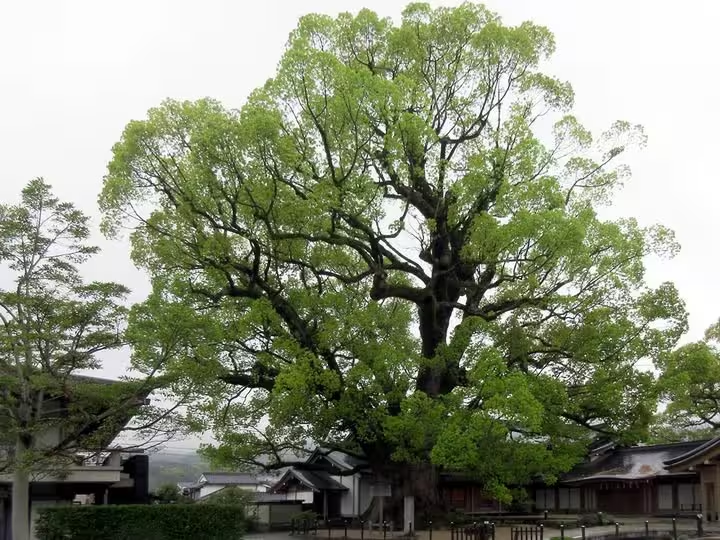
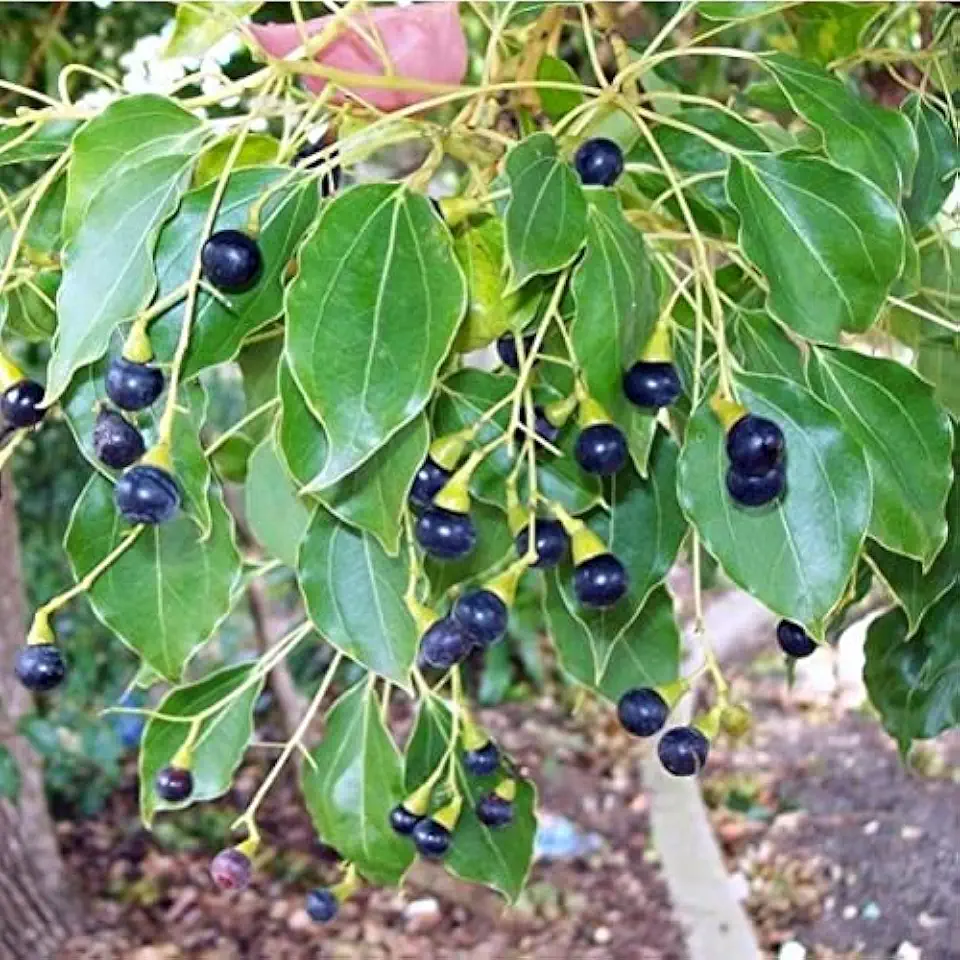
The camphor tree (Cinnamomum camphora), also called camphor laurel, is an evergreen with glossy, aromatic leaves and small black fruits, and can reach 30 meters (100 feet) in its native range; many know it for the terpenoid camphor found in its wood, leaves, and bark.
Mature trunks form textured, pale bark and broad canopies that cast dense shade, while crushed leaves release a sharp, clean scent that signals the presence of natural camphor compounds.
Origins and Characteristics
Native to China, Japan, and Taiwan, the cinnamomum camphora camphor tree adapts well to warm temperate and subtropical climates, growing in parks, streets, and large gardens; it’s long-lived and can thrive for centuries with basic care Camphorwood tree overview.
Leaves are oval and glossy with reddish new growth, flowers are small and cream-colored, and the wood has an unmistakable scent used historically for storage chests, carvings, and aromatic boxes.
Stress Relief and Aromatherapy Benefits
Mental Clarity and Relaxation
Camphor’s crisp scent can help settle racing thoughts, promote mental clarity, and support a calmer mood; many users report easier breathing and a “clean air” feel that helps them unwind fast Benefits and uses of camphor oil. For a convenient option, consider a pure, diffuser-ready oil that you can also dilute for topical massage

Siva Camphor Essential Oil — 4 fl oz
- Concentrated camphor oil for diffusers and aromatherapy
- Includes dropper for precise, mess-free dosing
- Can be diluted for topical use in massage or skincare routines
- Promotes a refreshing, invigorating scent in spaces
- Useful for hair and scalp rituals when used per instructions
 Buy on Amazon
Try a simple practice: diffuse 3–5 drops of camphor oil for 20 minutes while you breathe slowly through the nose, or add a few drops to bath water with a carrier oil to support a relaxing soak and better sleep.
Aromatherapy Applications
Use a cool-mist diffuser for quick room scenting, make a personal inhaler for on-the-go clarity, or blend camphor with eucalyptus or rosemary to create a focused, “breathe-easy” mix that’s simple to apply daily.
For topical aromatherapy, always dilute in a carrier oil (for example, 1–2% for general body use), then massage onto the chest or shoulders to help clear the senses and ease tension.
Respiratory and Pain Relief Properties
Decongestant Benefits
Camphor acts as a topical decongestant in chest rubs and inhaled vapors, helping open nasal passages and reduce cough; over-the-counter rubs typically keep camphor up to 11% in line with safety labeling standards today Camphor monograph.
- Rub a small amount of chest balm on chest and throat; avoid nostrils and eyes for safe use.
- Run a hot shower to create steam, then inhale the infused air at a comfortable distance to help clear mucus.
- At night, diffuse a camphor blend for 15–30 minutes to promote easier breathing and restful sleep.
Anti-inflammatory Effects
Topical camphor can calm redness and discomfort by modulating sensory receptors in the skin, which helps reduce localized inflammation and supports faster comfort.
Muscle and Joint Pain Relief
Massage a diluted camphor oil blend over sore calves, shoulders, or stiff joints for a warming-cooling effect that can soothe aches after workouts or long days and improve range of motion.
Skin Care and Healing Applications
Antimicrobial Properties
Camphor shows antibacterial and antifungal actions in topical formulas, so it’s used in creams and gels that target itching, irritation, athlete’s foot, and minor skin discomfort with practical relief What is camphor?.
Wound Healing Benefits
Formulas with camphor may support the skin’s repair response and help reduce the urge to scratch, which protects fragile areas around minor injuries and promotes clean recovery.
Anti-aging Effects
Some cosmetic blends use camphor to help calm irritation, which indirectly supports smoother texture and a fresher look by reducing flare-ups that age skin’s appearance fast.
Natural Pest Control Solutions
Insect Repellent Uses
Camphor balls or tablets release a scent that repels moths and silverfish in closets and linen chests; pair them with breathable storage bags and rotate every few weeks for steady protection Camphor tree benefits.
Many people also like adding cedar blocks for a layered aroma and extra deterrence, which pairs well with camphor in drawers and trunks; learn more about cedar wood if you want a complementary option with a pleasant woodsy scent.
Household Freshening
Place a few tablets in a cup on a high shelf to deodorize a room, or dissolve one tablet in warm water and use the cooled solution to wipe bins and shoe racks, keeping spaces smelling clean.
Here are two popular camphor options for closets and rituals that many households keep on hand for fabric care and spiritual use with minimal effort:

TooGet Camphor Balls — 30 Balls + 6 Bags
- Natural camphor balls for protecting clothes and linens
- Fresh fragrance repels moths and unpleasant odors
- Convenient 30-ball supply with six breathable storage bags
- Safe for closets, drawers, and suitcases when used as directed
- Long-lasting aroma to keep fabrics fresh between uses
Buy on Amazon

Soul Sticks Camphor Tablets — 32 pcs
- Pure camphor tablets crafted for puja and aromatherapy
- Strong, clean fragrance suitable for rituals and cleansing
- Compact tablets are easy to burn or dissolve for use
- Long-lasting form factor delivers sustained aroma
- Ideal for spiritual practices and home fragrance
Buy on Amazon
Ornamental and Landscape Value
Shade Tree Benefits
As a landscape tree, camphor laurel offers a dense, glossy canopy that cools patios, streets, and lawns while adding year-round greenery and fragrant foliage.
Plant it with ample space from foundations and drains because roots can spread widely; prune young trees to build a strong structure and a safe, balanced street profile.
Growing Your Own Camphor Tree
Give young trees full sun, well-drained soil, and light irrigation during the first summers, then water deeply but less often once established for resilient growth.
| Factor | Recommendation |
|---|---|
| Climate | USDA zones ~9–11; protect saplings from frost |
| Light | Full sun for best canopy and leaf gloss |
| Soil | Loamy or sandy, well-drained, pH slightly acidic–neutral |
| Watering | Regular in year 1; deep, infrequent after establishment |
| Spacing | 8–12 m from structures and underground lines |
| Pruning | Train a single leader; remove weak or crossing branches |
For larger projects or street planting, discuss site selection and root zone space with a local arborist, and compare with durable species like teak wood if you need timber-focused plantings rather than ornamental shade.
If you’d like to start from seed, these options suit hobbyists and landscapers who want multiple plantings or trial batches with practical variety:

Camphor Tree Seeds — 55 Pack
- 55 viable Cinnamomum camphora seeds for multiple plantings
- Fast-growing tree with glossy ornamental foliage and good shade
- Suitable for gardens, landscaping and street planting
- Natural source of camphor scent and traditional uses
- Includes planting tips for improved germination and establishment
Buy on Amazon

Camphor Tree Seeds — 1/4 oz (64 seeds)
- Generous 64-seed lot for larger planting plans
- High potential for multiple healthy saplings and transplants
- Creates fragrant foliage and ample shade as trees mature
- Good option for nurseries, landscapers, or hobby growers
- Clear planting instructions to maximize success
Buy on Amazon

Camphor Tree Seeds — 60 Pack
- Sixty fresh Cinnamomum camphora seeds for bulk planting
- Excellent value for landscaping, reforestation, or projects
- Produces attractive glossy leaves and natural camphor scent
- Versatile uses from ornamentals to traditional remedies
- Seed storage and planting tips included to aid germination
Buy on Amazon

Camphor Tree Seeds — 10 Pack
- Ten Cinnamomum camphora seeds ready for planting
- Great for starting trees in containers or small gardens
- Produces attractive, fragrant foliage and natural shade
- Useful for landscaping, permaculture, and herbal uses
- Simple planting instructions to help germination success
Buy on Amazon

Camphor Tree Seeds — 0.25 oz
- Quarter-ounce of seeds ideal for multiple seedlings
- Valued for attractive foliage and broad shade canopy
- Perfect for garden or street tree projects
- Seeds sourced and packaged by MySeeds.Co for quality
- Guidance included for best planting and care
Buy on Amazon
Camphor Tree Seeds — Set of 12
- Twelve Cinnamomum camphora seeds for small plantings
- Ideal for backyard planting or sharing with friends
- Develops into a fragrant, shade-providing ornamental tree
- Suitable for landscaping projects and traditional uses
- Simple seed care tips included to improve germination
Buy on Amazon
Religious and Cultural Significance
Traditional Ceremonies
Camphor incense and tablets play a role in puja and other rituals, symbolizing purification and clarity; the uplifting aroma helps people focus and set a calm, reverent atmosphere fast.
Spiritual Cleansing Practices
Light a stick or tablet in a safe holder, walk through rooms in a clockwise path, and let the smoke drift toward corners and doorways, then ventilate after use for a refreshed, peaceful space
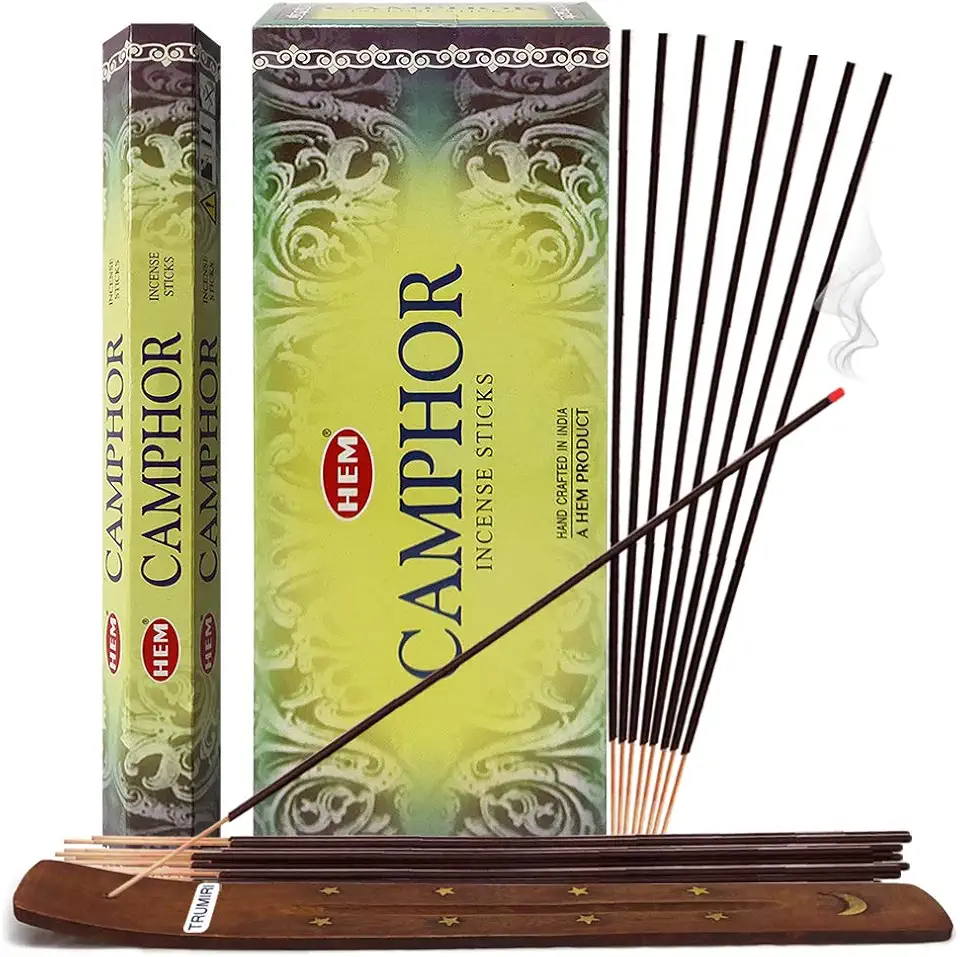
Pure Camphor Incense Sticks + Holder
- Rich natural camphor aroma ideal for meditation and puja
- Long-lasting sticks deliver steady burn and fragrance
- Made from traditional ingredients for authentic scent
- Includes a compact holder for safe, neat use
- Perfect for home purification and calming atmospheres
Buy on Amazon
Safety Guidelines and Precautions
Proper Usage Methods
Use camphor topically or via inhalation only, and stick to labeled concentrations for rubs and oils; dilute essential oil before skin contact to reduce risk of irritation issues.
Patch test a small area on the inner forearm and wait 24 hours, use smaller amounts for kids or older adults, and keep products away from eyes, nostrils, and broken skin.
Important Safety Warnings
Never swallow camphor or apply it to open wounds, and store it securely since ingestion can be toxic; pregnant or nursing people and those with seizures should consult a clinician before any use.
Stop use if burning, rash, or dizziness occurs, ventilate rooms after heavy scenting, and don’t heat camphor directly on the stove or open flames because fumes can become irritating quickly.
For related woods and materials used in homes and furniture, explore quick guides on types of wood for furniture to compare qualities beyond aroma alone.
FAQs
What Are The Benefits Of Camphor Trees?
Camphor trees Provide Dense Shade, Year-Round Foliage, And A Pleasant Aromatic Scent From Their Leaves And Wood. They Can Improve Air Quality, Support Wildlife By Offering Habitat And Food, And Yield Camphor Oil Used In Traditional Remedies And Aromatherapy. Additionally, Mature Trees Often Add Landscape Value And Provide Windbreaks Or Erosion Control.
How Do You Care For A Camphor Tree?
Plant Camphor Trees In Full Sun To Partial Shade With Well-Draining Soil, Watering Regularly Until Established. Mulch Around The Root Zone, Prune To Remove Dead Or Crossing Branches And To Control Size, And Apply Balanced Fertilizer If Growth Is Poor. Protect Young Trees From Frost And Avoid Overwatering To Prevent Root Issues.
Are Camphor Trees Invasive?
Camphor Trees Are Considered Invasive In Some Regions Because They Produce Many Seeds And Can Naturalize In Native Vegetation, Outcompeting Local Plants. Their Invasiveness Depends On Climate And Location, So Check Local Regulations And Planting Advice; If Invasive, Manage Them By Removing Seedlings, Controlling Suckers, And Avoiding Planting Near Natural Areas.
Can Camphor Trees Grow In Pots?
Young Camphor Trees And Dwarf Cultivars Can Be Grown In Large Pots For Several Years, But They Require Spacious Containers, Regular Watering, Fertilization, And Periodic Root Pruning Or Repotting. Long-Term Container Growth Will Limit Size Compared With Ground-Planted Trees, And Mature Specimens Often Outgrow Pots, So Plan For Transfer To The Ground Or Frequent Maintenance.
What Is The Lifespan Of A Camphor Tree?
Camphor Trees Are Long-Lived; In Favorable Conditions They Can Live For Many Decades And Often Exceed A Century, With Some Specimens Surviving Several Hundred Years. Lifespan Varies With Climate, Soil, Pests, And Care, So Proper Maintenance Can Significantly Extend A Tree’s Healthy Life.