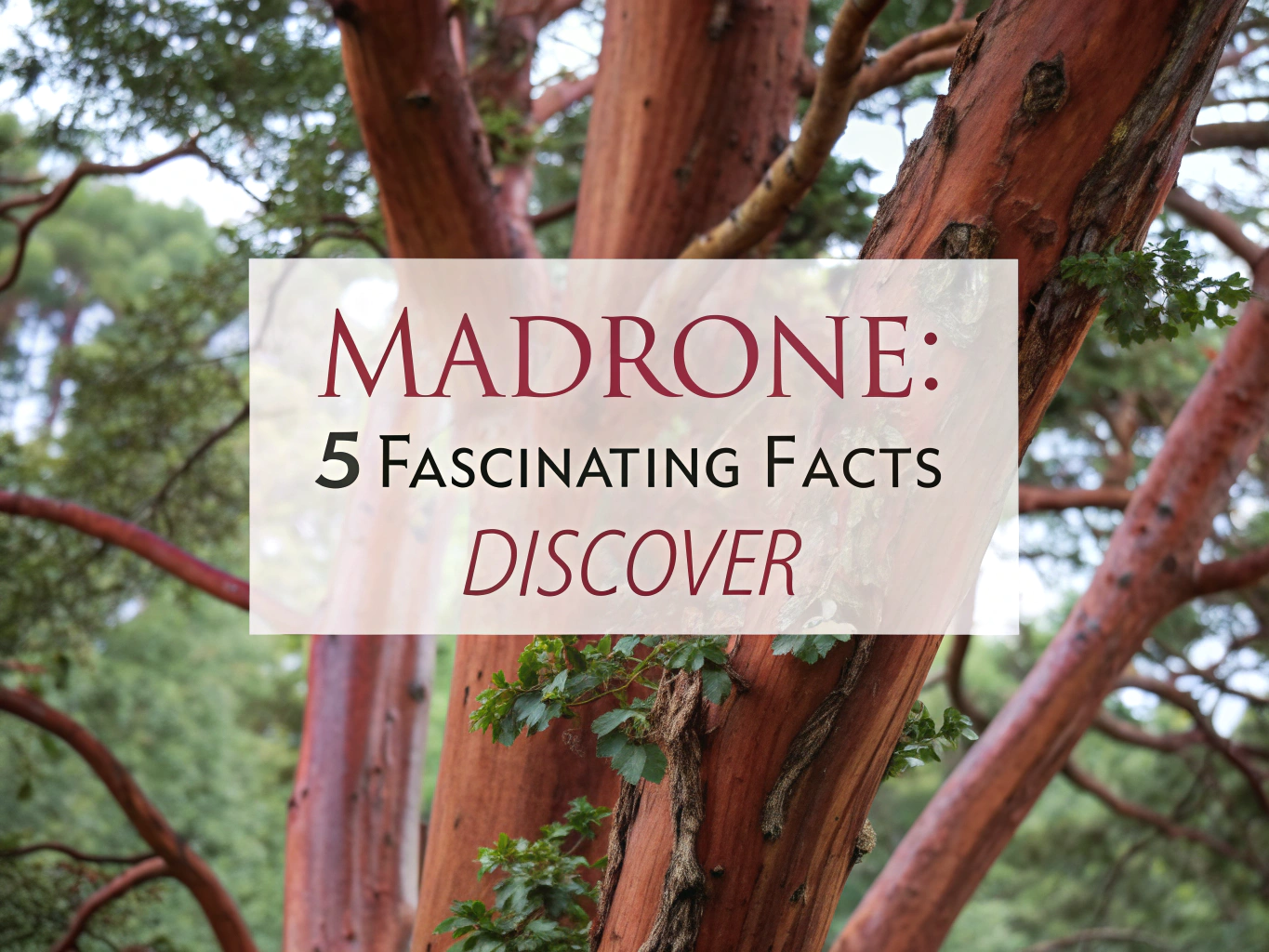

Have you ever seen a tree with smooth, red bark that peels like paper? That is the madrone. Its peeling bark and glossy leaves are easy to spot. Birds eat its berries and bees visit its flowers, so it supports wildlife. Its roots stay cool, which helps in dry weather. Read on for five clear facts about the madrone tree and why madrone wood is prized.
Table of Contents
Madrone (Arbutus menziesii) is a striking evergreen native to the Pacific coast, known for peeling red bark, glossy leaves, and clusters of red-orange berries. This guide covers its key traits, wildlife value, cultural ties, wood uses, and growing tips for gardeners and wood lovers.
What Makes the Madrone Tree So Distinctive
Striking Physical Features
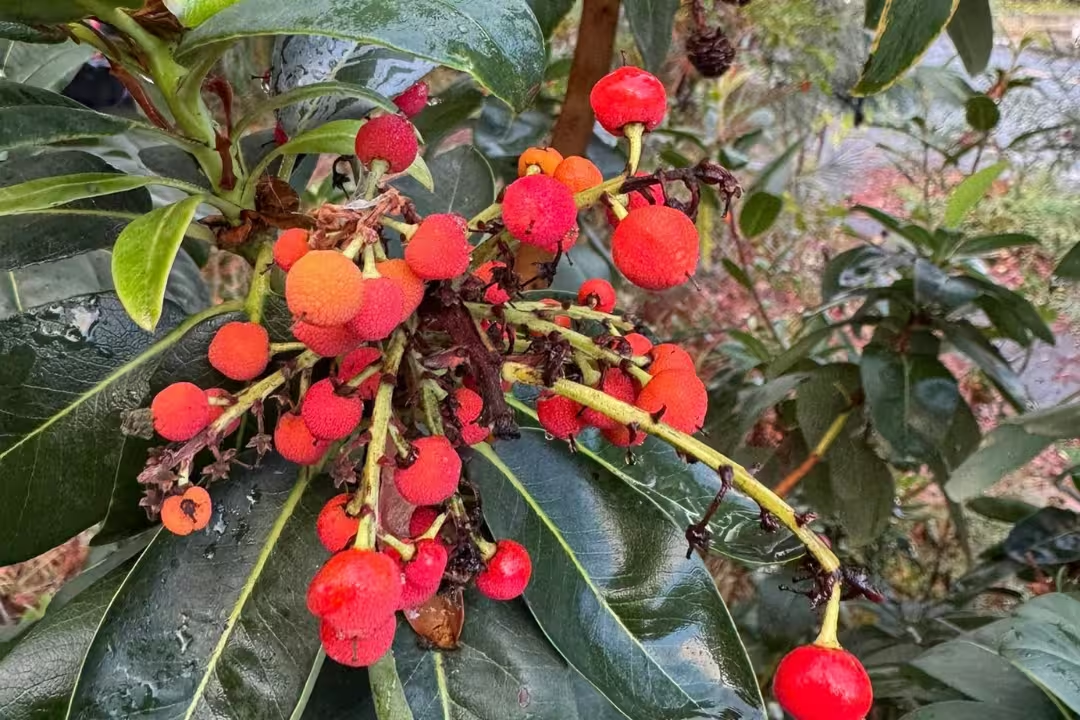
The evergreen leaves are oval, leathery, and glossy dark green on top with a lighter underside, usually 4–6 inches long. Spring brings drooping clusters of white flowers, followed by fall berries that ripen to red-orange and persist into early winter (National Park Service: Pacific madrone).
Trunks and limbs twist in sculptural forms, often leaning over rocky slopes where soil is thin. This growth habit gives mature trees a muscular look that stands out in mixed evergreen forests.
Bark That Tells a Story
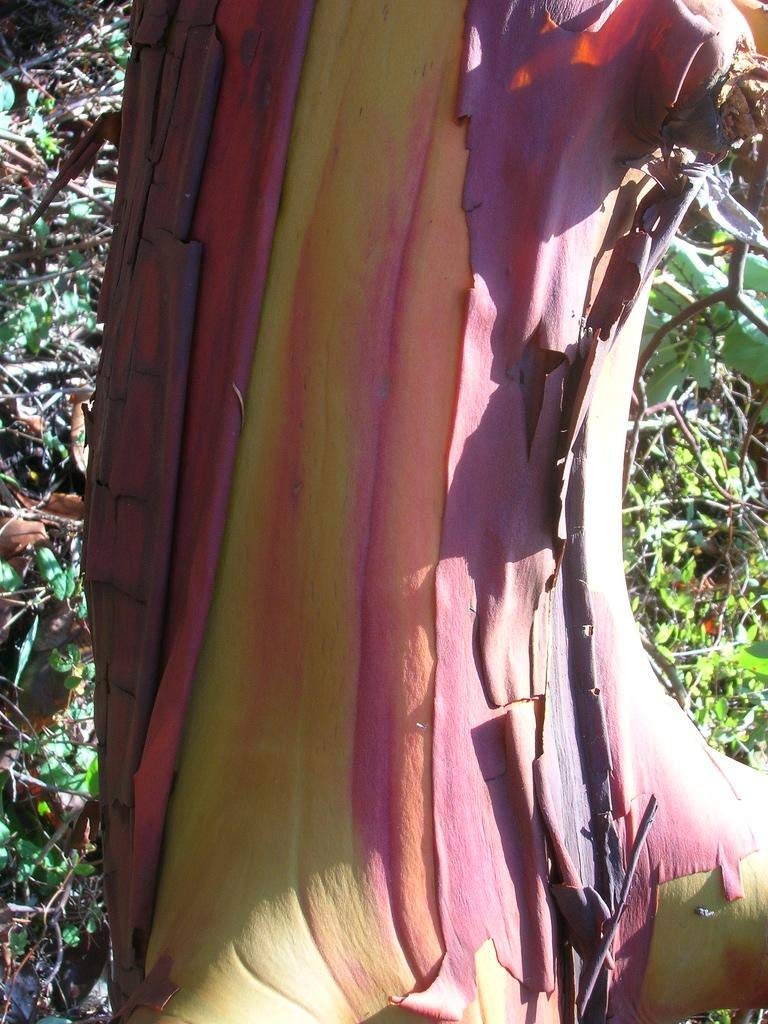
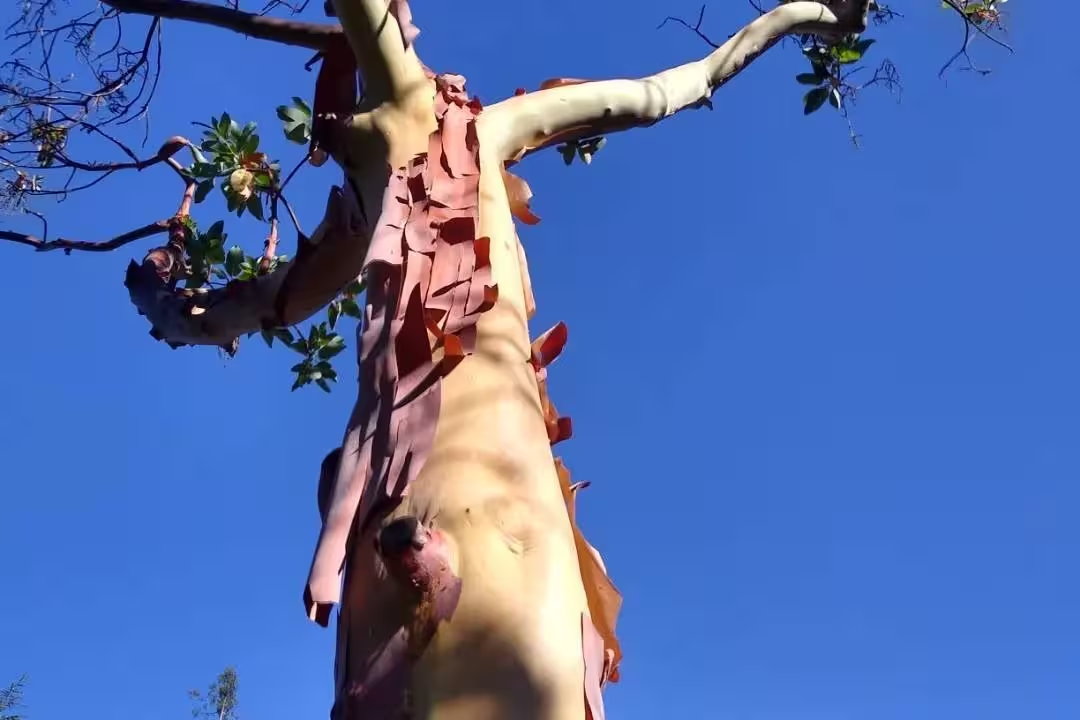
Madrone bark peels in thin, papery sheets, revealing fresh green or coppery layers that slowly deepen to orange and red. The smooth surface feels cool to the touch, which sparked the nickname “refrigerator tree.”
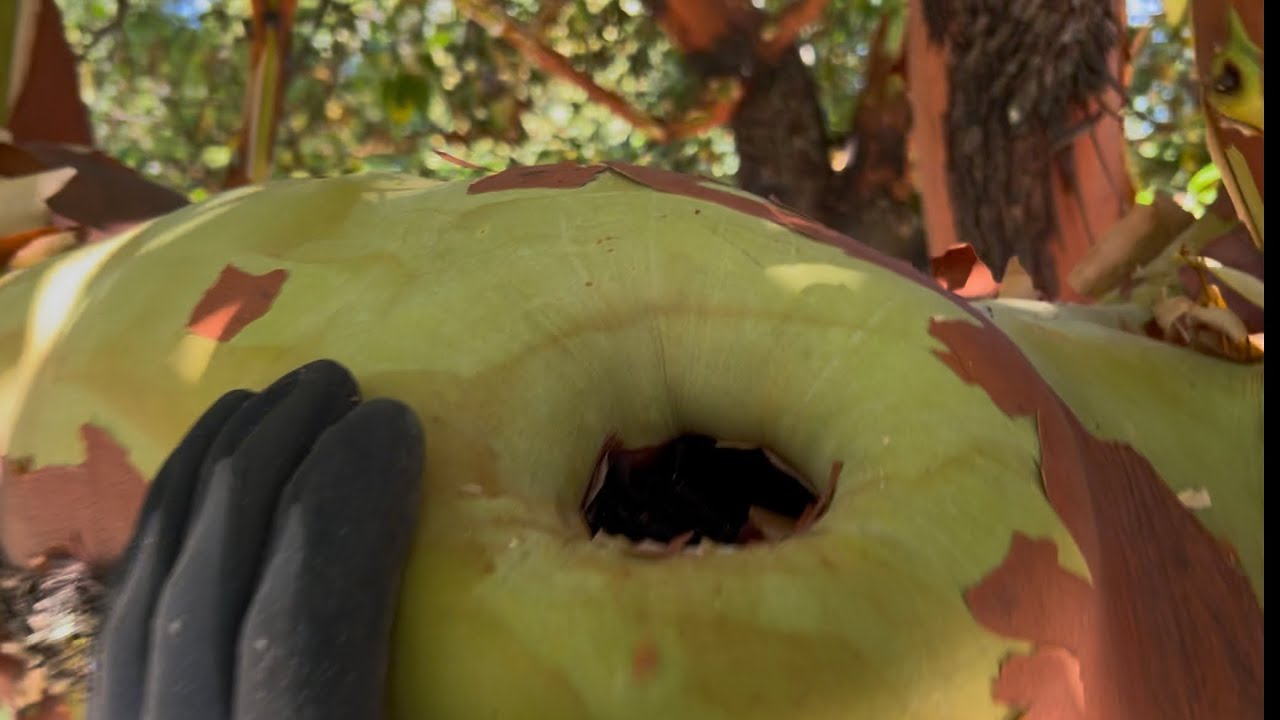
Color shifts are most dramatic in fall and early winter as sheets lift and curl away. The contrast of red bark, emerald leaves, and orange berries creates a show few trees can match.
Size and Longevity
Wild trees often reach 50–100 feet, with rare giants over 120 feet and trunks surpassing three feet thick. Many specimens live two to three centuries, and elders can approach 400 years in protected sites.
Pacific Madrone Tree Seeds (10-Pack)
- Includes 10 Pacific Madrone (Arbutus menziesii) seeds
- Drought-tolerant evergreen ideal for warm, dry spots
- Glossy leaves with striking orange-red peeling bark
- Berry clusters that birds love—great for wildlife gardens
- Native-adapted choice that supports biodiversity
 Buy on Amazon
5 Fascinating Facts About Madrone Trees
The Refrigerator Tree Phenomenon
The smooth, exfoliating bark sheds heat fast, so it feels cool even under sun. Hikers often press a hand to the trunk and notice the temperature drop.
Record-Breaking Giants
Exceptional madrones have exceeded 120 feet with massive girths measured in many feet. These outliers arise on steep, well-drained slopes with low competition and room for deep roots.
Ancient Survivors
Longevity comes from tough leaves, dense wood, and drought-savvy roots that explore rocky fractures. Old trees often show fire scars yet keep vigorous crowns.
Underground Partnerships
Madrone teams up with mycorrhizal fungi that trade nutrients and water for sugars, boosting tree health and disease resistance; these networks can link madrone to neighbors like Douglas-fir and salal (Tacoma Tree Foundation: Madrone). This symbiosis helps the tree thrive on poor, dry sites.
Seasonal Transformations
Fall brings sheets of peeling bark and heavy clusters of berries that brighten winter. Spring follows with fragrant blossoms that feed bees before summer drought arrives.
Ecological Role and Wildlife Benefits
Critical Food Source for Wildlife
Late-season berries keep birds and mammals fed when other fruits fade, supporting waxwings, robins, and more (Friends of Edgewood: Pacific madrone). The fruit hangs into early winter, offering reliable calories when days are short.
- Fall: berries ripen and attract flocks of robins and waxwings.
- Early winter: fruit lingers for thrushes and small mammals.
- Spring: blossoms feed native bees before many shrubs bloom.
Erosion Control Champion
Deep, tenacious roots stitch into fractured rock, holding slopes and bluffs where finer-rooted trees fail. In mixed chaparral, madrone complements live oak and the manzanita tree to stabilize thin soils.
Pollinator Haven
Urn-shaped flowers produce nectar during a spring gap, giving native bees and hoverflies a timely boost. The glossy evergreen canopy also shelters insects that fuel the food web year-round.
Cultural Heritage and Traditional Uses
Indigenous Applications
Communities used berries fresh or dried, brewed leaves and bark into teas, and pressed fruit for cider. These practices paired well with the tree’s steady crop and evergreen presence along coastal routes.
Folklore and Artistic Inspiration
Artists celebrate the tree’s peeling bark and sinuous limbs in poetry, painting, and sculpture. Its winter berries and year-long color make it a symbol of resilience in coastal narratives.
The madrone wears new skin as the seasons turn, reminding us that change can be both stark and beautiful.
Regional saying
Madrone Wood: Properties and Applications
Woodworking Excellence
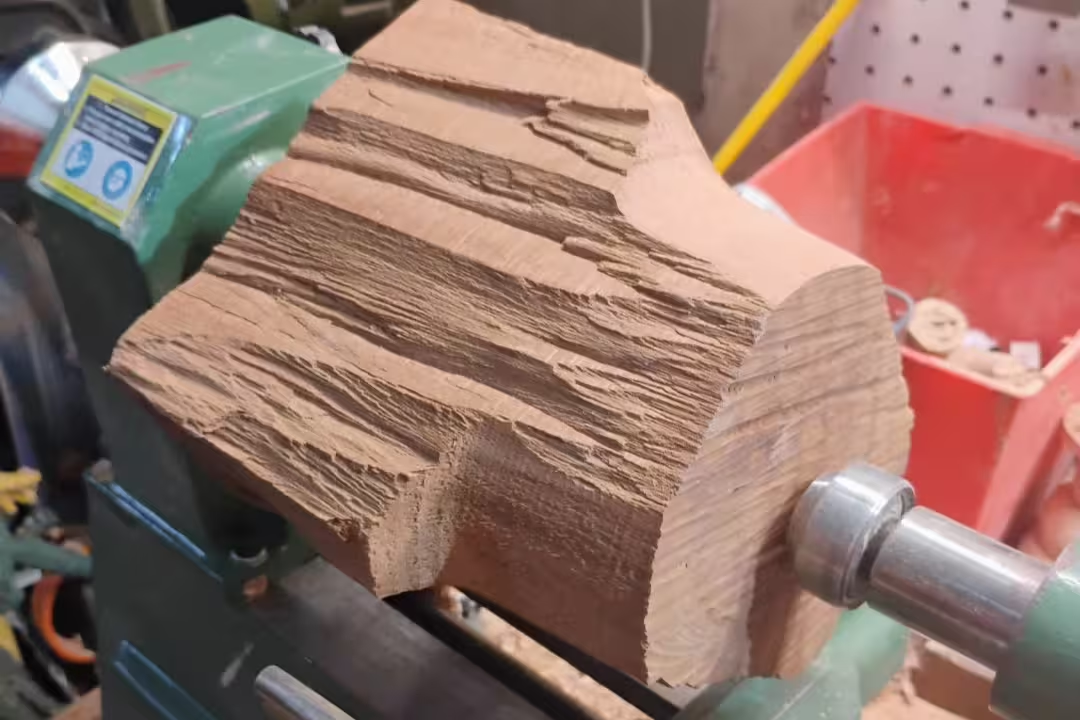
Madrone wood is hard, dense, and fine-grained, taking a high polish for furniture, bowls, and veneer; careful drying reduces warp and checks (Portland Nursery: Arbutus menziesii). For comparison on color and density, many turners also explore manzanita wood for small, intricate pieces.
| Property | Madrone Wood |
|---|---|
| Density | High; heavy boards |
| Grain | Fine, subtle figure |
| Workability | Machining okay; watch for movement |
| Finishing | Takes a glossy polish |
| Best Uses | Furniture, turning, flooring, veneer |
Premium Firewood Choice
Split logs burn hot and clean with minimal sparks, making madrone a prized fuel where it’s abundant. Many cooks also use small splits for mild, pleasant smoke on grills and in smokers.
Growing Challenges and Requirements
Soil and Water Preferences
Choose dry, rocky, or sandy sites with excellent drainage; avoid rich soil and regular irrigation once established (Gardening Know How: Madrone Tree Information). Young trees benefit from light watering the first summer, then do best with neglect.
Mulch lightly with coarse gravel or bark so the trunk base stays dry. Keep lawn sprinklers and compacted soil away from the root zone.
Garden Suitability
Madrone shines in naturalized areas, rocky banks, and restoration plantings where water is scarce. Formal lawns and frequent pruning stress the tree and shorten its life.
Pacific Madrone Tree Seeds (10-Pack)
- Includes 10 Pacific Madrone (Arbutus menziesii) seeds
- Drought-tolerant evergreen ideal for warm, dry spots
- Glossy leaves with striking orange-red peeling bark
- Berry clusters that birds love—great for wildlife gardens
- Native-adapted choice that supports biodiversity
Buy on Amazon
Literary Connections to Madrone
Readers who love place-based writing often seek books that capture madrone’s spirit and setting. Explore these selections for poetry, essays, and stories rooted in coastal forests.
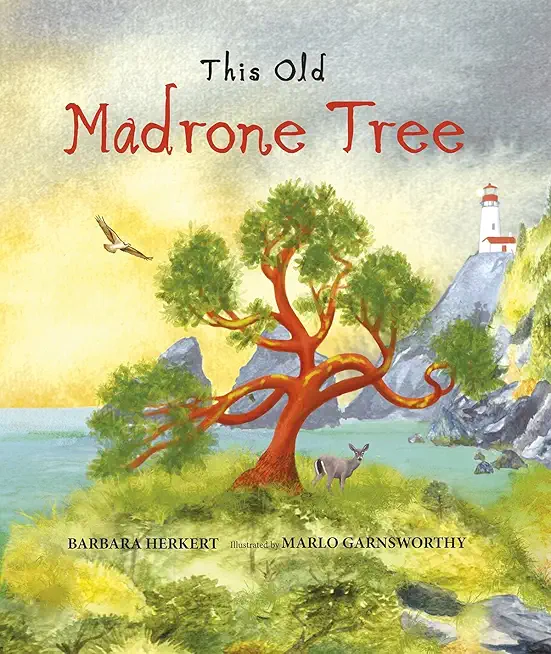
This Old Madrone Tree — Poetic Memoir
- Lyrical reflections on nature and memory
- Rich, evocative imagery that brings the madrone to life
- Intimate personal essays that feel immediate and honest
- Thoughtful pacing ideal for contemplative reading
- Leaves a lasting emotional impression
Buy on Amazon

Madrone — Tales Rooted in Place
- Vivid sense of setting and landscape
- Complex, memorable characters with depth
- Stories that explore identity and belonging
- Accessible prose with emotional resonance
- Perfect for readers who love sense-of-place fiction
Buy on Amazon
FAQs
What Are The Uses Of Madrone Wood?
Madrone wood is a dense, fine-grained hardwood prized for furniture, cabinetry, veneer, and turned objects like bowls and pens. It is also used for flooring, tool handles, and small musical instruments. Additionally, madrone burns hot and steady, making excellent firewood and charcoal, and has long been used by Indigenous peoples for carving and fuel.
How Do You Care For A Madrone Tree?
Plant madrones in well-drained soil with plenty of sun. Water deeply but infrequently—especially during the first few years—allowing the soil to partially dry between waterings. Mulch to retain moisture, avoid planting too deep, and reduce lawn competition and soil compaction around the roots. Prune in summer to remove dead or crossing branches, and avoid heavy pruning during wet seasons to minimize disease. Monitor for root rot, borers, and other pests, and consult a local arborist if the tree shows signs of decline.
Why Is My Madrone Tree Losing Its Leaves?
Leaf loss can be caused by drought stress, transplant shock, root diseases (such as Phytophthora), insect damage, or environmental stress like poor soil or salt exposure. Madrones may also shed leaves naturally when under stress. Check soil moisture, inspect roots and trunk for cankers or decay, and look for signs of insects; early diagnosis improves the chance of recovery.
Are Madrone Berries Edible?
Yes, madrone berries are edible, but they tend to be mealy and mildly sweet rather than juicy or highly flavored. Indigenous peoples traditionally ate them fresh, dried, or fermented. The seeds are gritty and usually not eaten; the fruit is more valued as a foraged food or for preserves than as a common table fruit.
What Animals Eat Madrone Berries?
A wide variety of wildlife eat madrone berries: many birds (robins, thrushes, waxwings, and jays) feed on them, and mammals such as squirrels, chipmunks, deer, and bears will eat the fruit or browse the foliage. The berries provide important fall and winter food for local wildlife.