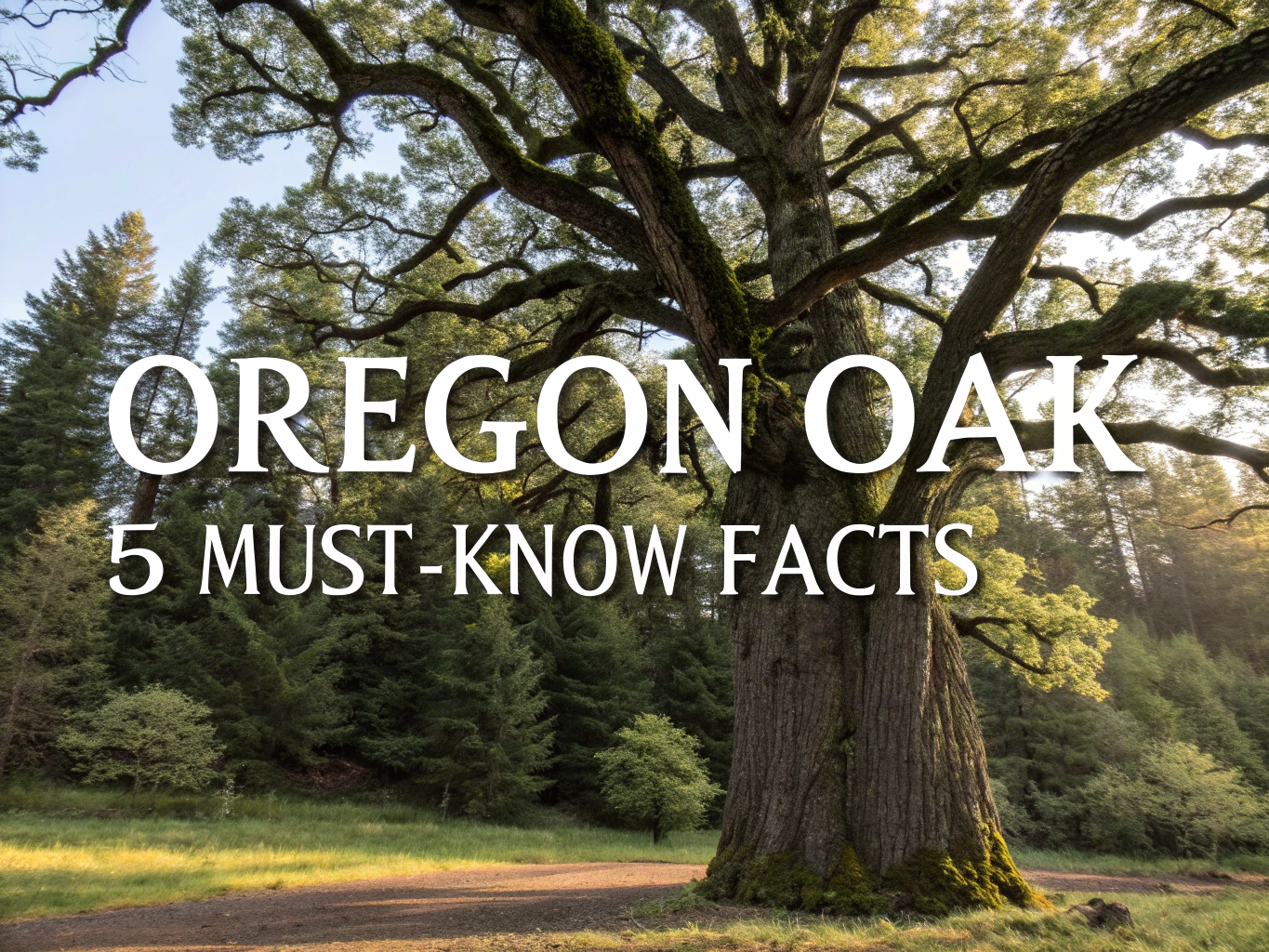

Did you know the Oregon white oak supports many birds and mammals but now has much less habitat than it once did? This post shares five clear facts about the Oregon oak for 2026. You will learn where it grows, why habitat loss matters, how slow growth and long life shape its role, which species rely on it, and how its wood is used. Read on for short, useful facts and simple steps you can take to help.
Table of Contents
The Oregon oak (Quercus garryana) shapes dry prairies and woodlands from British Columbia to California, with deep roots in ecology and culture. This guide distills research into clear steps, with facts current for 2025 and practical tips for land stewards, woodworkers, and homeowners.
Oregon Oak Species Overview and Natural Range
Scientific Classification
Also called Oregon white oak and Garry oak, this species carries the scientific name Quercus garryana. It belongs to the white oak group, sharing traits like closed pores, tyloses, and durable heartwood with other white oaks.
Geographic Distribution
The tree’s native range runs from southern British Columbia through Washington and Oregon into northern California. You’ll find it in interior valleys and foothills, occurring up to about 3,800 feet in the north and 7,500 feet in the south, as summarized in the FEIS species profile.
Physical Characteristics
Mature Oregon oaks reach 50–90 feet tall, with exceptional trees near 120 feet. Trunks usually measure 24–40 inches DBH, while ancient veterans can exceed 97 inches in diameter.
Preferred Growing Conditions
The species thrives in wet-winter, dry-summer climates on many soils, from droughty gravels to heavy clays. It competes well on sunny sites with seasonal moisture stress, especially where root systems can spread wide.
The Critical State of Oregon Oak Habitat
Habitat Loss Statistics
Less than 10% of historic Oregon oak habitat remains across the region, with roughly 25% left in Oregon. Oak prairies and woodlands saw over 90% loss or degradation, according to the Oak Alliance facts and figures.
Endangered Ecosystem Status
Many remaining stands are fragmented and invaded by conifers and weeds, so they no longer function like open savannas. Without active care, they lose sunlight, native plants decline, and wildlife that depends on acorns and cavities vanishes.
Old-growth Oregon oak stands are irreplaceable—once lost, restoration takes centuries.
Field-based conservation guidance
Threats to Survival
Major pressures include urban growth, agriculture, conifer encroachment from decades without fire, and invasive plants. Fragmented ownership adds hurdles for coordinated action across watersheds.
Cultural and Historical Impact
Many Indigenous communities shaped oak landscapes with low-intensity burning, which supported foods, fibers, and open travel routes. Loss of habitat also disrupts these living traditions and knowledge systems.
Growth Patterns and Remarkable Longevity
Slow Growth and Maturity Timeline
Oregon white oak grows slowly and can live well past 500 years. It often needs 100–200 years to rebuild woodland structure after disturbance, per Oregon State University notes.
Acorn Production Cycles
Flowering occurs in spring, with acorns ripening from August–November. Yields swing widely; about half of trees may produce few or no acorns in a given year, while older trees in sunny savannas often set the best crops.
Fire Resistance Adaptations
Thick bark and resprouting ability give Oregon oak strong fire tolerance. Regular, cool burns historically held back conifers, kept light on the ground, and sustained open-grown crowns.
Maximum Size and Age Potential
Ancient trees can tower near 120 feet with immense girth. Broad, spreading limbs create habitat that younger stands won’t match for centuries.
Exceptional Wildlife and Biodiversity Support
Species Dependent on Oak Ecosystems
Oregon oak feeds and shelters hundreds of species, from birds to pollinators. Many cavity-nesters rely on snags and old limbs that form in mature trees.
- Birds: acorn woodpecker, western bluebird, white-breasted nuthatch
- Mammals: deer, squirrels, bats
- Invertebrates: native bees, acorn weevils, butterflies
- Fungi and lichens that cycle nutrients and build soils
Food Web Relationships
Acorns provide high-energy food for wildlife, while leaves, bark, and sap support insects that birds consume. The tree’s shade and litter also regulate soil moisture and microbial life.
Understory Plant Communities
Native grasses, wildflowers, and shrubs like serviceberry and native roses form diverse understories. These plants stabilize soils and host pollinators that keep oak systems resilient.
Protected Species Connections
More than 46 oak- and prairie-dependent species are so imperiled they now carry legal protection. Regional conservation groups document these ties and publish action steps for private landowners at the Clackamas Conservation District page.
Oregon Oak Wood Properties and Applications
Wood Characteristics
Oregon oak wood is dense and hard, with attractive grain and closed pores typical of white oaks. It shows moderate to high decay resistance and takes finishes beautifully.
| Trait | Summary for Oregon oak wood |
|---|---|
| Porosity | Closed pores with tyloses; suitable for cooperage and liquid contact |
| Hardness | High; resists dents and wear in flooring and furniture |
| Decay Resistance | Moderate to high; fits many indoor and select outdoor uses |
| Grain | Pronounced medullary rays; striking in quarter- and rift-sawn cuts |
| Stability | Good dimensional stability with proper drying and sealing |
| Structural Behavior | Strong, not prone to windthrow in forest settings |
Traditional and Modern Uses
Common uses include flooring, furniture, trim, cooperage, and restoration work. For species comparisons and design ideas, see white oak wood and red oak vs white oak guides.
Durability and Weather Resistance
The wood handles ice, snow, and moderate cold with strong resilience. For visible ray fleck and improved stability in panels, many makers prefer quarter-sawn oak or rift-cut white oak cuts.
Structural Stability Features
In forests, Oregon oak trees resist windthrow, holding against storms with deep, wide root systems. Lumber stays stable when dried and sealed with care before installation.
Conservation Efforts and Restoration Strategies
Current Protection Initiatives
Most remaining habitat sits on private land, so progress hinges on local partnerships and incentives. State briefings track threats and responses; see the Oregon Department of Forestry tree health bulletin for regional context.
Controlled Burning Programs
Planned, low-intensity fire helps maintain open structure, boost acorns, and limit conifers. Work with trained crews and tribal partners to set objectives and timing that fit your site.
Invasive Species Management
Cut and treat Scotch broom, Himalayan blackberry, and tall oatgrass to free light for seedlings. Follow up over several years so natives recover before weeds re-sprout.
Community Involvement Opportunities
Join volunteer burns, plantings, and monitoring days with local partners. For homeowners restoring habitat, consider planting region-appropriate stock like Oregon white oak seedlings to add future canopy.

Oregon White Oak Seedling (Medium)
- Native white oak ideal for reforestation and landscaping
- Medium size ready for planting in yards or restoration projects
- Fast-growing hardwood that establishes strong roots
- Provides habitat and food for local wildlife
- Easy to plant and maintain
 Buy on Amazon
Planning a remodel with regionally appropriate materials? Many builders pick Oregon white oak or related species for cabinetry; see ideas in white oak cabinets projects that balance beauty and long-term durability.
FAQs
What Are The Characteristics Of The Oregon Oak Tree?
The Oregon oak, commonly called Garry oak (Quercus garryana), is a medium-sized deciduous tree with a broad, rounded crown, thick lobed leaves, grey to furrowed bark as it ages, and small acorns; it often develops gnarled branches, tolerates drought and coastal conditions, and supports diverse wildlife.
How Do I Identify An Oregon Oak?
Identify Oregon oak by its deeply lobed, glossy green leaves with a paler, sometimes slightly hairy underside, small rounded acorns with shallow cups, grey furrowed bark on mature trees, and a distinctive gnarled growth form often found in open sunny areas.
Where Can You Commonly Find Oregon Oak In The Wild?
Garry oak is native to the Pacific Northwest — from southern British Columbia through Washington and Oregon into northern California — and is commonly found in oak savannas, open mixed woodlands, rocky bluffs, dry slopes, and other well-drained, low-to-moderate elevation sites.
Is Oregon Oak Wood Good For Furniture Making?
Yes. Oregon (Garry) oak yields a dense, durable hardwood with an attractive grain that finishes well, making it suitable for furniture, flooring and cabinetry; however, it can be challenging to dry properly and is less commercially available than other oak species.
What Are The Ideal Growing Conditions For Oregon Oak Trees?
They prefer full sun, well-drained sandy or loamy soils, and moderate drought once established. They tolerate poor soils but not waterlogging, need good airflow and space to develop a broad crown, and perform poorly in deep shade or compacted soils.