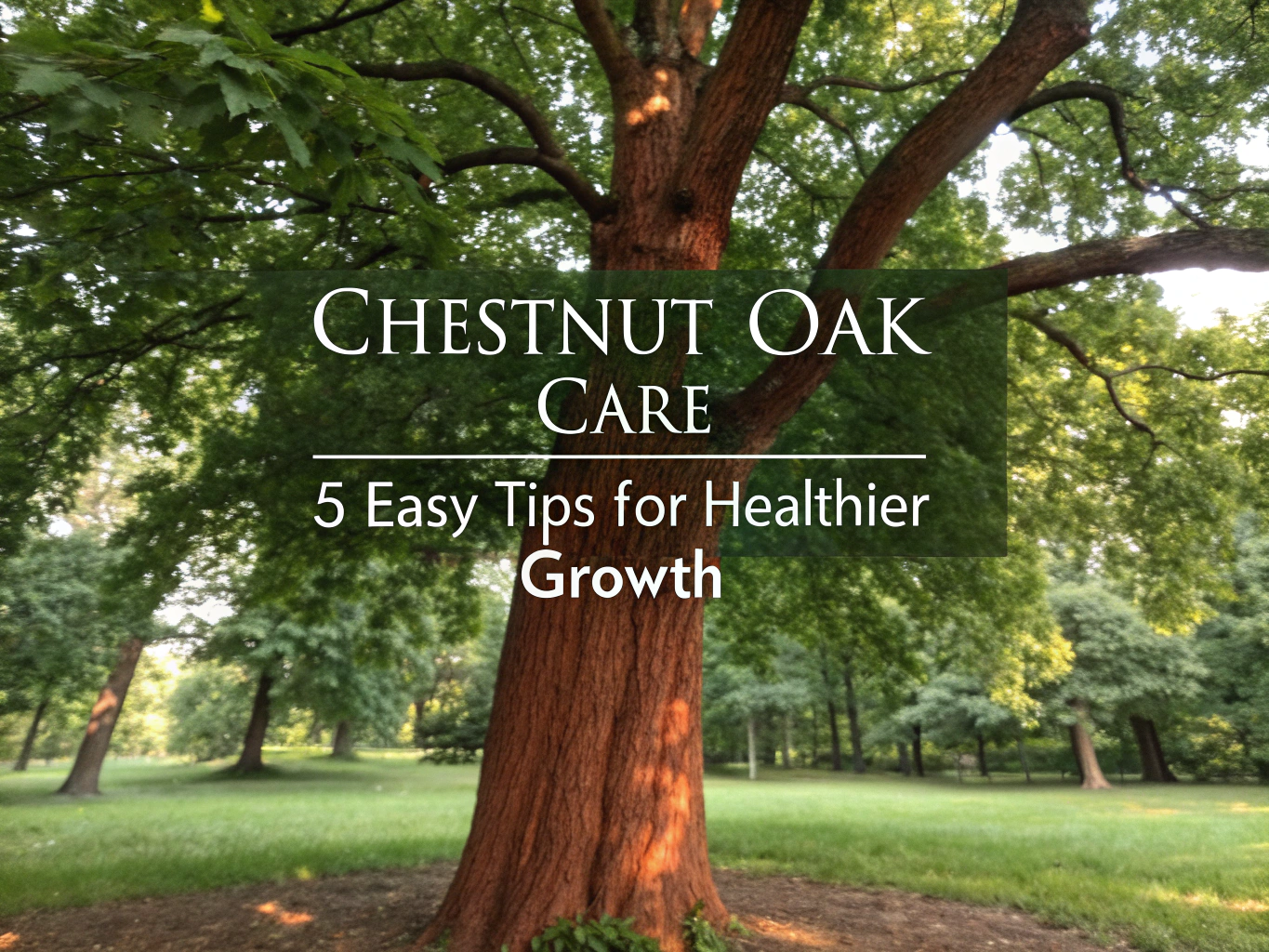

Want your chestnut oak to grow stronger and live longer? Start with the right spot, good soil, and room to spread. Water new trees, add mulch, and prune dead branches in late winter. Watch for pests and add nutrients only when the tree shows slow growth.
Table of Contents
Chestnut oak care is simple if you match the tree to the site, water it well early on, and keep stress low. This guide explains planting, pruning, pest checks, and how it differs from swamp chestnut oak, horse chestnut, and buckeye.
Introduction to Chestnut Oak Care
Botanical Overview
Chestnut oak (Quercus montana, formerly Q. prinus) is a broad, deciduous oak in the beech family, native to eastern North America, known for leathery, chestnutlike leaves and sturdy wood; it thrives in USDA zones 4–8. For botanical details on size, foliage, and habitat, see the Morton Arboretum.
Growth Characteristics
Mature trees reach about 60–70 feet tall and wide, forming a rounded crown with deeply ridged bark and strong limbs. Growth is moderate, with best performance in full sun and well-drained soil that ranges from slightly acidic to slightly alkaline.
Wildlife and Ecological Value
Oaks support hundreds of butterfly and moth species, and chestnut oak contributes heavily to this web by feeding larvae and offering nesting sites. Its acorns feed deer, squirrels, and birds, while fall color adds red, orange, and yellow-brown highlights to the landscape.
1. Plant in the Right Location
Sunlight Requirements
Full sun drives sturdy growth and dense canopies; target 6+ hours of direct light daily. Young trees tolerate some light shade, then need more sun with age; see the GrowIt BuildIt guide for site notes.
Soil and Drainage Needs
Well-drained soil is nonnegotiable; pick sandy loam, loam, or silty soils with no standing water. Do a quick percolation test: dig a hole 12 inches deep, fill with water twice, and plant only if the second fill drains within 4 hours.
Proper Spacing Considerations
Give room for a 60–70 foot spread; plan for at least a 50-foot open diameter so branches don’t crowd structures or utilities. Think long term: map future shade, driveway clearance, and overhead lines before you dig.
2. Water and Mulch Effectively
Watering Young Trees
New plantings need steady moisture for 2–3 years: give 5–10 gallons per week per inch of trunk diameter, split into two soakings. During heat or drought, add one extra deep watering so the root ball never dries out fully.
Mulching Benefits and Techniques
Mulch 2–4 inches deep with shredded leaves, wood chips, or pine fines across a wide ring, keeping mulch 3–6 inches off the trunk. Trees can grow up to five times more fine roots under mulch than under turf grass, per the Rainbow Treecare oak guide.
Root Development Enhancement
Encourage depth by watering less often but more deeply, expanding the mulch ring yearly, and keeping grass away from the root zone. Add 1–2 inches of compost under the mulch each spring to feed soil life and improve structure.
3. Prune Properly for Healthy Growth
Best Timing for Pruning
Late winter to very early spring is the safest window, before new growth begins. Avoid heavy cuts in the growing season so pests aren’t attracted to fresh wounds.
Removing Dead and Dying Branches
Cut hazards as soon as you spot dead, broken, or crossing branches; use the 3-cut method to prevent bark tearing. Keep the branch collar intact, and stop if limbs need ropes or ladders—call a certified arborist for large work.
Wound Care and Protection
Small cuts usually need no treatment, but very large wounds may benefit from breathable protection recommended by your arborist. Keep tools sharp and clean with 70% alcohol to reduce infection risk.
4. Monitor for Pests and Diseases
Two-Lined Chestnut Borer Prevention
Stress invites borers; keep trees watered, mulched, and uninjured to cut risk. Watch for thinning crowns, D-shaped exit holes, and dieback, and get a pro evaluation if you see multiple symptoms.
Common Disease Issues
Chestnut oak can face oak wilt, root rot in soggy soils, and leaf spot after wet spells. Reduce stress by planting on well-drained sites, pruning at the right time, and removing infected debris promptly.
Regular Health Assessments
Set a routine check each spring and late summer; early action usually saves more canopy than late fixes. Use the list below as your quick seasonal scan.
- Leaf check: color, size, and even coverage across all sides
- Canopy shape: new shoots on most branch tips, no sudden thinning
- Bark scan: cracks, oozing, galleries, or new holes
- Root zone: mulch depth 2–4 inches, no mower gouges, soil not waterlogged
- Branch safety: deadwood over walkways or driveways
Plant replacements or gap-fill areas in late fall or early spring if you’re building a wildlife grove, and keep new saplings on a steady watering plan. A small starter bundle makes it easy to expand your stand

Chestnut Oak Seedlings — 3 Pack (1–2 ft)
- Healthy 1–2 ft saplings ready for planting
- Easy-to-establish trees ideal for yards and reforestation
- Native chestnut oak offers strong growth and long-lasting shade
- Ships as three robust seedlings for quicker canopy development
- Supports wildlife habitat and future timber value
 Buy on Amazon
5. Fertilization and Soil Enhancement
Natural Nutrient Requirements
Most sites don’t need fertilizer for chestnut oak; good soil biology and mulch usually do the job. If growth stalls and leaves pale, test soil first, then correct by adding organic matter or targeted nutrients.
When to Apply Fertilizer
If needed, apply a balanced slow‑release product (such as 10‑10‑10) in early spring after you see new growth, roughly 2 cups per inch of trunk diameter per year. See rate guidance in the Edible Landscaping chestnut guide and adjust to your soil test.
Soil Improvement Strategies
Build soil with 1–2 inches of compost or leaf mold under mulch each spring, plus periodic core aeration beyond the dripline. If pH is off, add sulfur (to lower) or garden lime (to raise) based on a lab test, not guesswork.
Swamp Chestnut Oak vs Chestnut Oak
Habitat Differences
Swamp chestnut oak (Quercus michauxii) thrives in bottomlands and tolerates periodic flooding, while chestnut oak prefers uplands with dry to medium moisture and sharp drainage. For habitat notes and wildlife value, see the Grow Native profile.
Growth Rate Comparison
Swamp chestnut oak often grows faster in rich, moist soils, producing large, palatable acorns loved by deer and hogs. Chestnut oak grows steadily on drier slopes and ridges where many other trees struggle.
Identifying Features
Leaves and bark look similar, but swamp chestnut oak tends to have thicker, leathery leaves with softly hairy undersides, while chestnut oak leaves are firm with shallow lobes and glossy tops. Bark in both is grayish and ridged, yet chestnut oak often shows deeper blocky plates on upland sites.
Chestnut Wood Uses and Characteristics
Durability and Applications
Chestnut wood is prized for natural decay resistance and light weight, making it a favorite for furniture, beams, fencing, and trim. For comparison on movement and grain, see how it stacks up against white oak wood in cabinetry and joinery.
Flooring Options
Engineered floors labeled “chestnut” or “chestnut oak” deliver warm color and rustic texture; plank cuts like quarter-sawn oak and rift-cut white oak give straight grain and stability. Look for 1/2‑inch construction, compatible underlayments, and durable finishes for busy rooms.
Here are a few well-rated engineered options that pair chestnut tones with practical specs.

Sango Premier Engineered Oak — Chestnut (26.24 sqft/box)
- Durable 1/2-inch engineered construction for stability
- Hand-scraped European oak planks add rustic character
- Warm chestnut finish suits both modern and classic interiors
- Random lengths create a natural, seamless look
- 26.24 sqft per box simplifies ordering and planning
Buy on Amazon

Sango Premier Engineered Oak — Chestnut (26.24 sqft/box)
- 1/2-inch engineered plank for superior dimensional stability
- Hand-scraped European oak surface hides wear and adds texture
- Warm chestnut hue enhances cozy, inviting spaces
- Random lengths reduce visible seams for a natural appearance
- Box covers 26.24 sqft for accurate project estimating
Buy on Amazon

Sango Premier Engineered Oak — Chestnut (Handscraped)
- Engineered construction delivers long-term stability and performance
- Authentic handscraped texture offers rustic, lived-in appeal
- Rich chestnut finish complements many décor styles
- Versatile plank sizing for smooth installation and transition
- 26.24 sqft per box for straightforward coverage calculations
Buy on Amazon
Chestnut vs Buckeye: Understanding the Differences
True Oaks vs Aesculus Species
Chestnut oak is a true oak that makes acorns and sits in the Fagaceae family; buckeyes and horse chestnuts belong to Aesculus. This resolves “chestnut vs buckeye” confusion: they aren’t related, and Aesculus seeds are toxic to people and pets.
European Horse Chestnut Comparison
European horse chestnut (Aesculus hippocastanum) shows showy spring flowers and spiny husks, which differ from oak catkins and acorns. Its palmately compound leaves also separate it from chestnut oak’s simple, oblong leaves.
| Species | Main Features | Botanical Name | Native Range | Notable Differences |
|---|---|---|---|---|
| Chestnut Oak | Large, rounded tree, leathery leaves | Quercus montana | North America | Oak family; acorns for wildlife; durable wood |
| Swamp Chestnut Oak | Fast-growing; flood-tolerant | Quercus michauxii | SE North America | Wetland-adapted; sweet, large acorns |
| European Horse Chestnut | Showy flowers, spiny fruits | Aesculus hippocastanum | Europe | Not an oak or true chestnut; inedible seeds |
| Buckeye | Palmately compound leaves, smooth seeds | Aesculus spp. | North America & Europe | Related to horse chestnut; toxic seeds |
| Chestnut (American/European) | Edible nuts, toothed leaves | Castanea spp. | North America/Europe | Not an oak; edible nuts; hit by chestnut blight |
Identifying Key Characteristics
Field tips: oaks have clustered buds at twig tips and make acorns; Aesculus has opposite buds and palmately compound leaves with husked capsules. If you see leathery, shallow-lobed leaves and blocky gray bark on dry slopes, you likely found chestnut oak.
FAQs
What Are Common Characteristics Of Chestnut Oak Trees?
Chestnut oak Is A Medium-To-Large Deciduous Oak With A Rounded Crown, Deeply Ridged Dark Bark, And Stout Branches. It Grows Slowly But Lives Long, Produces Large Acorns, And Is Noted For Its Drought Tolerance And Preference For Dry, Rocky Soils.
How Can I Identify A Chestnut Oak Leaf?
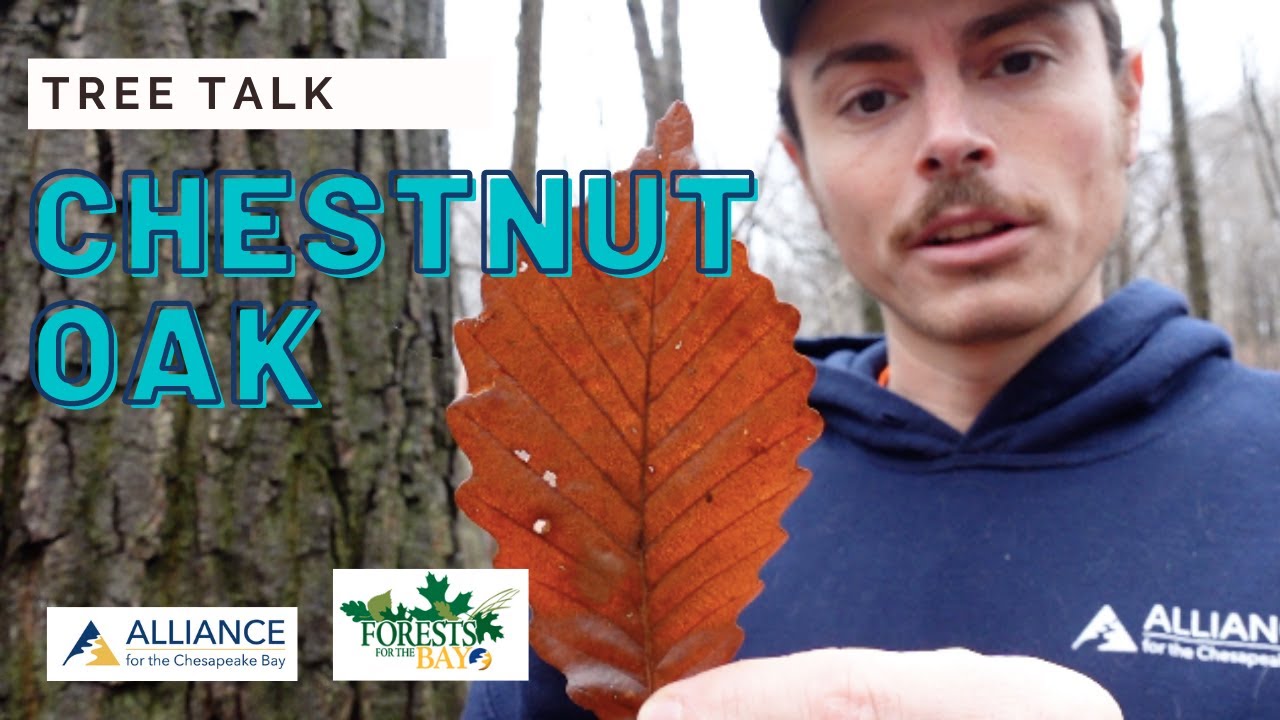
A Chestnut Oak Leaf Is Typically Obovate To Broad-Oval, About 3–6 Inches (7–15 Cm) Long, With Coarse, Rounded Teeth Rather Than Deep Lobes. The Upper Surface Is Dark Green While The Underside Is Paler And Slightly Hairy; Prominent Veins And The Bark Or Acorns Can Help Confirm Identification.
What Are The Benefits Of Planting Chestnut Oak In My Backyard?
Planting A Chestnut Oak Provides Long-Lasting Shade, Attractive Bark For Winter Interest, And Low-Maintenance Growth On Poor Or Dry Soils. It Also Helps Control Erosion, Adds Native Habitat, And Produces Acorns That Feed Wildlife.
How Do Chestnut Oaks Affect Local Wildlife?
Chestnut Oaks Are Valuable For Wildlife: Their Acorns Are A Reliable Food Source For Squirrels, Deer, Turkeys, And Many Birds, While The Tree’s Foliage And Branches Offer Nesting Sites And Shelter. They Also Support Insects And Caterpillars That Feed Songbirds, Making Them Important For Local Ecosystems.
Where Are Chestnut Oak Trees Typically Found?
Chestnut Oaks Are Native To Eastern North America, Commonly Found In The Appalachian Region And Nearby Upland Areas From New England Southward Into The Mid-Atlantic And Parts Of The Midwest. They Favor Dry, Well-Drained, Rocky Slopes, Ridges, And Other Upland Sites.