
Ever wonder why makers keep choosing Indian Rosewood? You find it in luxury furniture, top‑quality guitars, thin veneers, floors, and carved art. The East form, east indian rosewood, stands out for deep color, tight grain, and warm tone. This guide shows five key uses and what to watch for when sourcing the wood.
Table of Contents
Indian rosewood is a premium hardwood valued for rich color, tone, and long service life in furniture, instruments, and fine craft. You’ll learn its top uses for 2025, key traits of the Dalbergia latifolia species, and how to buy legally and responsibly.
What Makes Indian Rosewood So Special
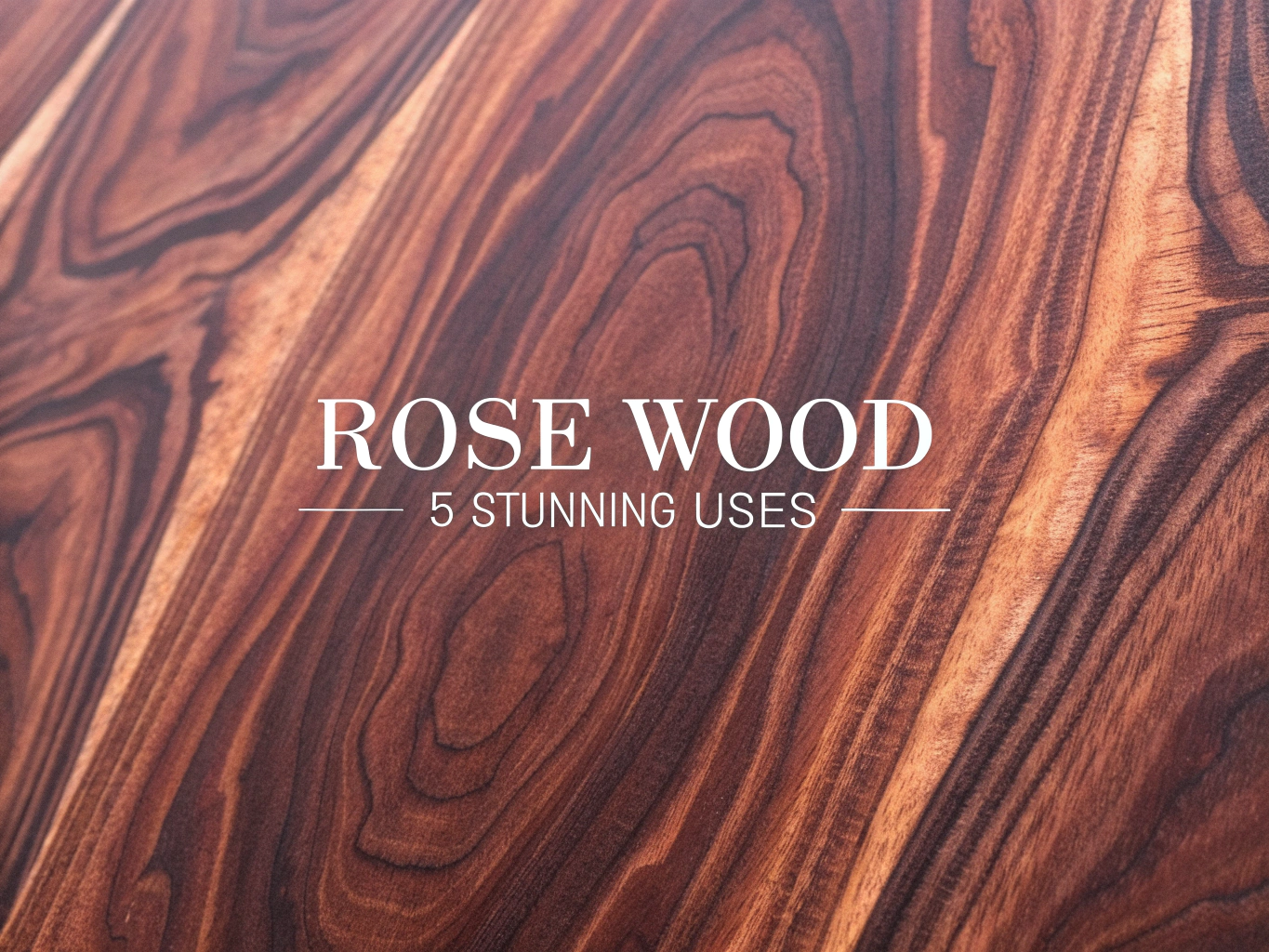
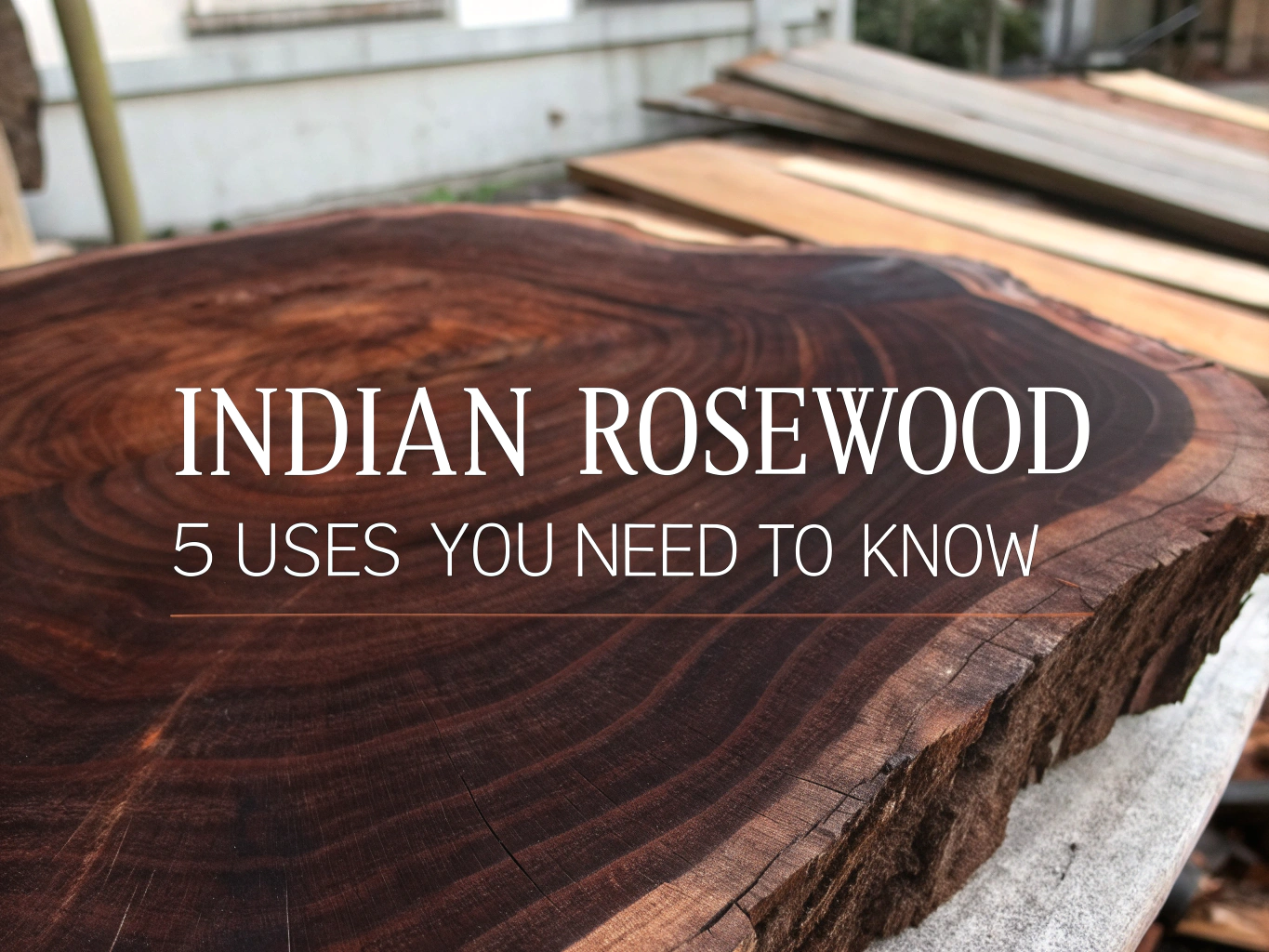
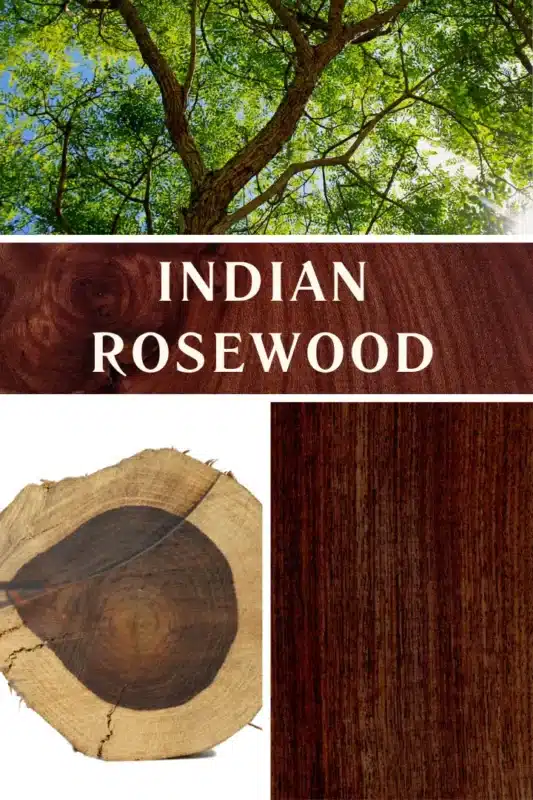
Dalbergia latifolia (also called East Indian rosewood) combines density, stability, and beauty, which explains its role in heirloom furniture and concert-grade instruments. Craftspeople prize its tight pores, dark purples and browns, and a natural luster that finishes to a deep, glassy glow.
Understanding East Indian Rosewood
East Indian rosewood refers to the same species as Indian rosewood, widely grown in India and parts of Southeast Asia. Many compare it with Brazilian rosewood, yet Indian rosewood offers a similar visual drama and dependable supply from managed forests.
Woodworkers look for steady density, fine grain, and minimal movement across seasons. These traits allow precise joinery, low fret wear on fingerboards, and stable panels that hold shape for decades (Characteristics of Indian Rosewood).
| Property | Typical value/range | Why it matters |
|---|---|---|
| Botanical name | Dalbergia latifolia | Correct species for tone and longevity |
| Mature height | Up to ~80 ft | Large logs yield wide boards and veneers |
| Maturation age | ~60–80 years | Slow growth builds dense, even fibers |
| Janka hardness | ~2,440 lbf | High wear resistance for floors and fretboards |
| Air-dry density | ~800–900 kg/m³ | Mass contributes to sustain and stability |
| Natural oils | Moderate | Improves moisture and insect resistance |
| Grain/figure | Straight to interlocked; cathedral patterns | Striking appearance for luxury interiors |
Growth and Characteristics of Indian Rosewood Trees
Indian rosewood trees thrive in the Western Ghats and moist deciduous forests across South Asia. Trees grow tall with clean boles, producing long boards that reduce waste in furniture and architectural projects.
Slow maturation delivers denser, more uniform wood with a smooth, satiny surface after planing. For regional context and cousins used in carpentry, see the sissoo tree, which shares some workability traits.
1. Luxury Furniture Creation
Heirloom-Quality Pieces
Indian rosewood wood shines in dining tables, bed frames, cabinets, desks, and chairs that last generations. Makers value its weight, rigidity, and tight joints that stay true under seasonal humidity (Indian Rosewood Timber).
Natural Beauty and Durability
Natural oils and a closed pore structure help resist moisture, insects, and everyday wear. Many artisans apply thin film finishes or oils to highlight the wood’s deep purples, browns, and near-black streaks without masking the grain.
Modern and Traditional Applications
Versatility lets shops combine hand tools with CNC and power joinery for consistent results. In contemporary spaces, it pairs beautifully with matte metals; in classic décor, it complements teak and brass accents.
- Live-edge tables that showcase dramatic cathedral grain
- Panel beds with bookmatched headboards
- Shaker-style cabinets with clean lines and hand-fit doors
- Executive desks with solid tops and inlay borders
- Accent chairs using sculpted arms and carved details
2. Musical Instrument Crafting
Acoustic Properties and Tonal Quality
East Indian rosewood is famous for warm, balanced tone with rich overtones and long sustain. Density and internal damping create clear fundamentals, which players hear as a round low end and sparkling highs (About East Indian Rosewood).
“Rosewood backs and sides add depth, shimmer, and a piano-like sustain to steel‑string guitars.”
Luthier’s workshop note
Guitar Components and Fretboards
Fingerboards, bridges, and headplates cut cleanly and hold frets with minimal wear. Many builders also consider ebony wood for brighter attack, then choose Indian rosewood for a slightly warmer feel under the fingers.
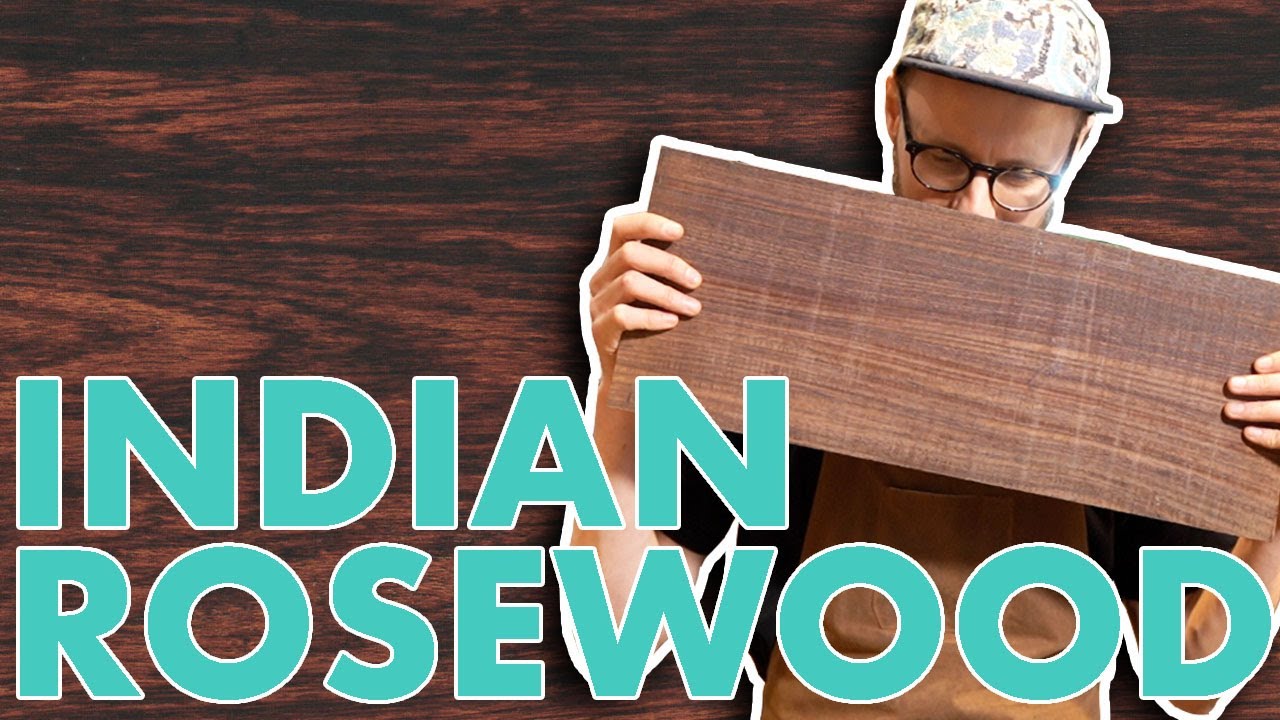
Recommended lutherie materials below cover fretboards, bridges, and headplates for custom builds and repairs.

StewMac Unslotted Indian Rosewood Fingerboard
- Premium fingerboard wood suited for custom fretwork
- Unslotted design lets you cut slots to exact specs
- Smooth, hard surface reduces fret wear and enhances playability
- Natural tonal qualities complement acoustic and electric builds
- Ready to glue, fret, and finish for professional results
 Buy on Amazon

Pack of 5 East Indian Rosewood Fingerboard Blanks
- Five fretboard blanks sized for classical and steel-string guitars
- Dense, resonant wood enhances tone and sustain
- Consistent thickness for straightforward truing and fretting
- Fine grain accepts frets and finish cleanly
- Great value pack for luthiers and hobby builders
Buy on Amazon

East Indian Rosewood Guitar Bridge Blank 8x2x1/2
- Precision-cut blank sized for bridge crafting
- Dense tonewood enhances sustain and resonance
- Fine grain for clean routing and shaping
- Stable stock minimizes movement after glue-up
- Ready for sanding, finishing, and installation
Buy on Amazon

East Indian Rosewood Headplate Blanks 8-inch
- Pre-cut headplate blanks ideal for guitar headstock work
- Rich grain adds visual character and warm tones
- Stable thickness ready for shaping, routing, and slotting
- Easy to veneer or laminate for custom looks
- Perfect for repairs, replacements, or custom builds
Buy on Amazon
Traditional and Classical Instruments
Indian classical instruments such as sitars and veenas benefit from the wood’s stability and sustain. Builders also select it for bows, fingerboards, and backs on cellos and violins where consistent grain aids precise carving.
3. Decorative Veneers and Inlay Work
Luxury Paneling Applications
Veneer-grade sheets deliver cathedral figure and color consistency for wall panels, yacht cabins, and aircraft suites. Luxury projects often bookmatch consecutive sheets for mirror symmetry (East Indian Rosewood Veneer).

24-Pack East Indian Rosewood Veneer Sheets for Inlay
- Thin, uniform sheets for precise inlay and marquetry
- Premium color and grain for professional-looking results
- Flexible veneers conform to curved surfaces and edges
- Convenient pack size for multiple guitar and craft projects
- Sandable and stainable to match surrounding woods
Buy on Amazon
Intricate Inlay Patterns
Inlay artists combine Indian rosewood with lighter woods and metals for contrast. Tight grain accepts knives and scalpels cleanly, which reduces tear-out on delicate motifs and script lettering.
Architectural Millwork
Custom millwork—from door panels to column wraps—takes a crisp edge with careful tooling. For alternatives in similar price tiers and density, some designers compare with bubinga wood for color and figure variety.
4. Premium Flooring and Paneling
High-End Flooring Applications
Dense planks withstand high foot traffic in residences, hotels, and restored heritage buildings. The wood’s hardness reduces denting while its varied browns hide wear better than pale species.
Natural Durability Benefits
Termite resistance and moisture tolerance help floors and wall panels perform for decades. Finishing with penetrating oils or hardwax blends keeps the tactile feel while adding protection and easy spot repair.
Traditional Architecture Uses
Paneling and trims in classic Indian architecture often use rosewood for stability and deep color. Designers also pair it with lime plaster and stone to balance warmth and texture in period renovations.
5. Wood Turning and Artistic Carvings
Handcrafted Objects and Sculptures
Carvers and artists achieve sharp detail thanks to the wood’s fine, even texture. Sanded surfaces polish to a deep gloss, making bowls, statues, and display pieces visually striking.
Turning Projects and Lathe Work
Lathe projects like bowls, pens, and handles benefit from the stock’s stability, especially when air-dried. Sharp carbide tools and light cuts prevent burnishing and keep details crisp.
Custom Boxes and Keepsakes
Small boxes and keepsakes use offcuts efficiently while showcasing dramatic grain on tight corners. For contrasting accents, makers often add maple stringing or pair with cocobolo details.
Turners and makers can start with pre-sized blanks listed below for predictable results.
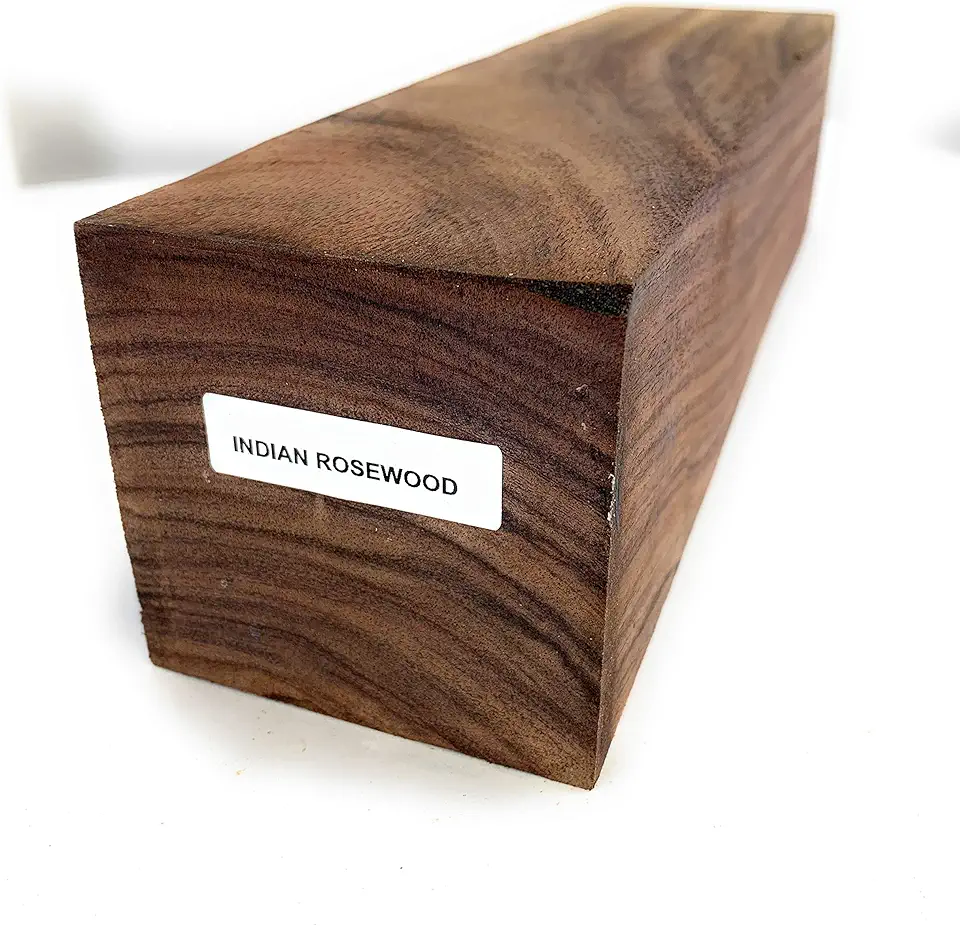
East Indian Rosewood 3x3x12 Turning Lumber
- Solid, dense hardwood ideal for turning and carving
- Straight-grain blank for consistent cuts and clean finishes
- Smooth surface sands and polishes to a high sheen
- Air-dried stability reduces warping during projects
- Versatile for bowls, pens, small furniture, and craft pieces
Buy on Amazon

East Indian Rosewood 6x6x2 Bowl Blank
- Spacious blank sized for bowl turning and hollow forms
- Dense, stable wood yields smooth cuts and crisp detail
- Attractive grain pattern creates striking finished pieces
- Air-dried stock helps minimize cracking and movement
- Excellent for decorative bowls, serving pieces, and gifts
Buy on Amazon

East Indian Rosewood 1x1x12 Turning Blank (Air Dried)
- Long, straight blanks perfect for spindle turning
- Air-dried for improved dimensional stability
- Fine, even grain yields smooth tooling and finishes
- Ideal for pens, handles, and small lathe projects
- Easy to sand and polish to a rich luster
Buy on Amazon
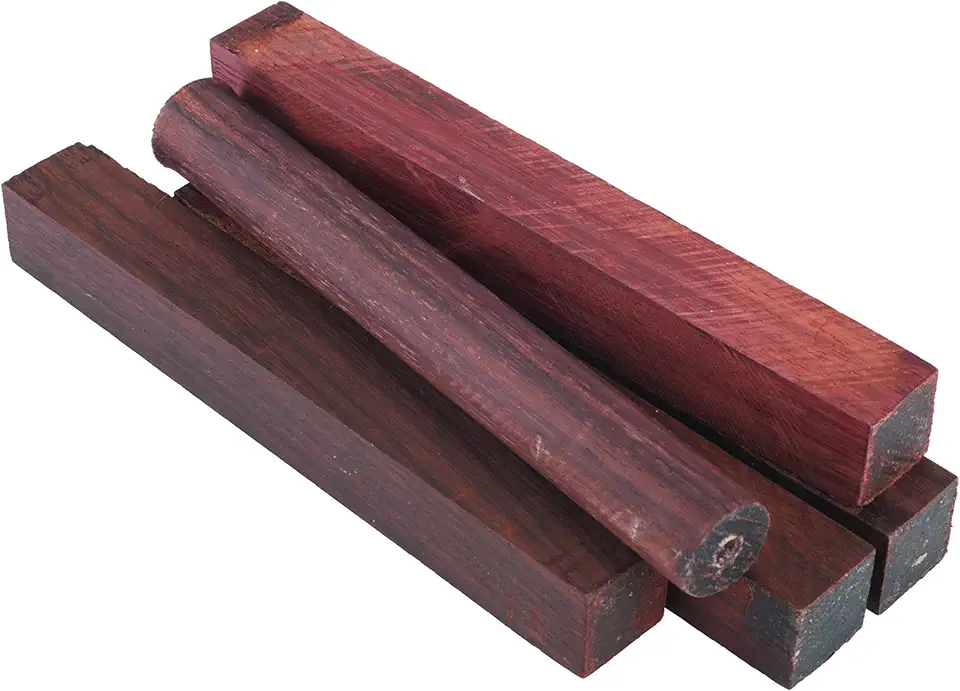
East Indian Rosewood Pen Blanks 5-Pack (3/4 x 5)
- Five matched blanks ready for pen turning projects
- Dense tonewood provides crisp detail and a smooth finish
- Consistent sizing speeds up lathe setup and drilling
- Sands to a high polish and accepts finish evenly
- Perfect for custom pens, small handles, and gift items
Buy on Amazon

Antique Indian Rosewood 3-inch Keepsake Box
- Handcrafted vintage-style design adds charm to any room
- Compact 3-inch size perfect for jewelry and small treasures
- Sturdy wood construction showcases rich rosewood grain
- Smooth finished interior protects delicate items
- Lovely decorative piece or thoughtful gift
Buy on Amazon
Sustainable Sourcing and Conservation
Ethical Harvesting Practices
Responsible buyers request chain-of-custody documents and confirm legal origin before purchase. Look for vendors who support managed forests in Asia and invest in replanting programs that replenish future stock.
CITES Regulations and Legal Considerations
Regulatory status for Dalbergia species includes trade controls that affect export, import, and certificates. Review current listings and permits through CITES species before ordering across borders.
Supporting Forest Conservation
Practical steps: choose reputable suppliers, avoid vague “rosewood” labels, and keep paperwork for customs checks. For alternative tonewoods and looks, explore Brazilian wood families and regional substitutes when east indian rosewood isn’t available.
FAQs
What Are The Uses Of Indian Rosewood?
Indian rosewood is prized for high-end furniture, cabinetry, veneers, flooring, turned objects and carvings, musical instrument backs and sides (notably guitars), and joinery because of its durability, stability, rich color and attractive grain.
How Can You Identify Indian Rosewood Furniture?
Indian rosewood typically shows warm brown to purplish tones with darker streaks, a fine, often interlocked grain and a natural oily luster; it’s relatively heavy and hard, may emit a sweet, rose-like scent when freshly cut, and is best confirmed by seller documentation, maker stamps or laboratory testing for certainty.
Is Indian Rosewood Considered An Endangered Species?
Indian rosewood (Dalbergia latifolia) is not classified as extinct but international trade is regulated under CITES Appendix II to prevent overexploitation; some Dalbergia species are more threatened (for example Brazilian rosewood is much more strictly protected), so check CITES listings and local laws before buying, selling or exporting.
How Do You Care For Indian Rosewood Wood Products?
Dust regularly with a soft cloth, avoid harsh chemicals and excessive water, keep items away from direct sunlight and extreme humidity changes, apply a quality oil or wax occasionally to preserve finish and prevent drying, and repair scratches with gentle touch-ups or professional refinishing as needed.
What Is The Difference Between Indian Rosewood And Brazilian Rosewood?
Indian rosewood (Dalbergia latifolia) generally has lighter brown to purple tones and straighter grain and is more available, while Brazilian rosewood (Dalbergia nigra) is rarer, darker with dramatic black veining, often considered superior for tonal qualities and is far more restricted legally; price, appearance, tone and legal status are the main differences.