

What wood can stand in soil for decades and still hold strong? Post oak wood. Builders use it for posts. Makers pick it for furniture and floors. Pitmasters love the steady smoke. Even post oak pellets keep backyard cooks happy. This guide covers five smart uses, plus quick tips for buying and care.
Table of Contents
Post oak wood is a durable white oak species prized for outdoor builds, furniture, flooring, barrels, and BBQ. This guide explains properties, pricing, uses, and how to pick logs, chunks, chips, and post oak pellets for cooking.
Post oak wood at a glance
Key properties
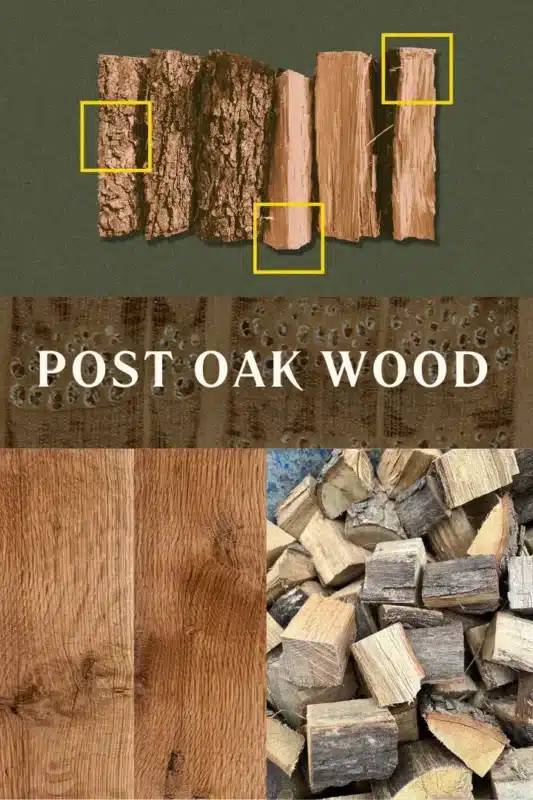
Post oak (Quercus stellata) sits in the white oak group, so it resists rot, holds fasteners, and performs well outdoors. Color runs light to medium brown with a straight to coarse grain; quartersawn boards show ray fleck similar to white oak wood for a classic look.
Mechanical traits are comparable to white oak, with firm hardness and good bending strength. For more technical data, see Wood Database: Post Oak.
| Attribute | Details |
|---|---|
| Group & species | White oak group; Quercus stellata |
| Color & grain | Light–medium brown; open grain; strong ray fleck when quartersawn |
| Durability | High decay resistance; excellent in ground contact |
| Workability | Machines well with sharp tools; pre-drill for screws; glues and finishes cleanly |
| Common thicknesses | 4/4 to 12/4; thicker, quartersawn boards are premium |
| Typical uses | Fence posts, outdoor timbers, furniture, flooring, veneer, cooperage, cooking wood |
Price and availability
Expect a moderate price, usually a bit higher than red oak, with a jump for thick, quartersawn stock. Supply is steady in many regions, so you can shop around mills and yards for better value or special cuts.
Distribution and habitat
The tree is widespread across the eastern and central United States, thriving on dry, sandy, or rocky soils. Slow growth and drought tolerance help it dominate poor sites where other hardwoods struggle.
1. Fence posts and outdoor builds
Why it excels
Few domestic woods beat post oak for ground contact, which is why “post” is in the name. Its long service life for exterior use is well documented by municipal and forestry sources like Princeton NJ – Post Oak.
Common applications
Use these go-to projects for long outdoor life and low upkeep.
- Fence posts and split-rail sections
- Gate frames and ranch panels
- Grape and orchard trellises
- Raised garden beds and edging
- Retaining timbers and landscape steps
- Deck understructure and joists
- Footbridges and trail features
- Outdoor benches and picnic tables
Other construction uses
Builders also choose post oak for lathing, siding, mine timbers, trim, particle board, and pulp uses. Its toughness provides a practical alternative where red oak may decay faster outdoors.
Care tips
Seal end grain with wax or a commercial end sealer right after cutting to reduce checks. For posts, set on gravel, keep tops beveled for runoff, use stainless or hot‑dip galvanized hardware, and refresh UV oil every 1–2 years.
2. Furniture and interior woodworking
Strength and looks
Post oak blends strength with attractive grain that takes stain and oil beautifully. Quartersawn or rift material brings clean lines; see quarter-sawn oak and rift-cut white oak for pattern ideas that also apply here.
Best projects
Great choices include tables, benches, cabinets, interior trim, and stair treads or risers. For kitchens, its tone pairs nicely with painted bases and white oak cabinets for contrast.
3. Flooring and veneer
Wear resistance
Expect very good wear in busy spaces thanks to its hardness and density. Use site-finished polyurethane or a high-solids hardwax oil, and let material acclimate before install for fewer gaps.
Design uses
Designers pick post oak for veneer wall panels, casework faces, and doors. Mix plainsawn planks with herringbone or chevron inlays to break up large rooms without visual clutter.
4. Barrels and boatbuilding
Moisture resistance
As a white oak, the pores contain tyloses that slow water movement. That structure helps barrels swell tight and small craft parts survive cycles of wet and dry.
Flavor contribution
Cooperage-grade post oak can add a mild, slightly sweet oak note to beverages. Toast level, stave thickness, and aging time control intensity for the producer.
Typical projects
Use it for staves in small casks, planter barrels, rub rails, frames, and small-boat planking. Steam-bend thin stock over forms and keep grain straight to avoid failures.
5. Cooking, grilling, and smoking
These post oak smoking logs and chunks work for offsets, kettles, and wood-fired ovens.

Post Oak Smoking Logs for BBQ
- Thick logs provide long lasting smoke for extended cooks
- Post oak gives a classic, slightly sweet smoky flavor
- Uniform twelve inch pieces make stacking and loading simple
- Ready to use in grills, smokers, and wood ovens
- Compact box keeps wood dry and easy to store
 Buy on Amazon
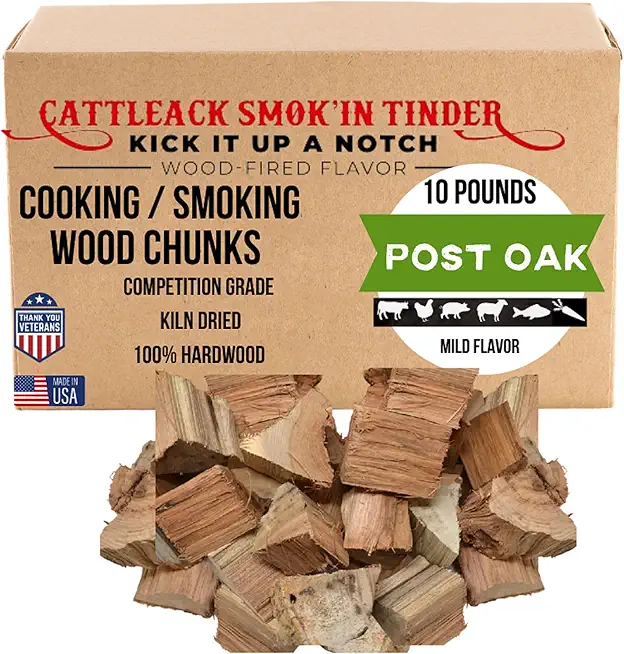
Premium Post Oak Smoking Chunks
- All natural, kiln dried chunks for pure wood flavor
- Generates steady smoke for deep bark and rich aroma
- Ideal chunk size for grills and offset smokers
- Made in the USA from responsibly sourced oak
- Easy to use and blends well with other woods for custom flavors
Buy on Amazon

Cutting Edge Post Oak Smoking Chunks
- Premium post oak for bold, traditional BBQ flavor
- Burns hotter and longer for improved smoke penetration
- Mixes well with milder woods to customize your taste profile
- Kiln dried for reliable ignition and low moisture
- Standard box size makes storage and refilling easy
Buy on Amazon
Flavor profile
Post oak delivers a classic Central Texas BBQ profile: mild, clean, slightly sweet, and beef-friendly. It shines on brisket, ribs, poultry, pork shoulder, and pizza ovens that need steady, even heat.
Forms and pellets
You can buy kiln-dried logs, splits, chunks, chips, mini pizza-oven sticks, and post oak pellets for pellet grills. Look for 100% oak with no flavor oils; see options from Butler Wood post oak for reference.
Cooking tips
Run a small, clean fire for thin blue smoke; thick white smoke tastes bitter. Mix with fruit woods for poultry, soak nothing, and start with 2–3 chunks on charcoal, a handful of chips in foil on gas, or a 50/50 pellet blend to soften flavor for fish.

Recommended products
Grab chips, chunks, or cooking logs to match cook time and desired smoke level.

B&B Charcoal Smoking Chunks
- Large chunks deliver steady smoke for low and slow cooks
- Great for long burns and consistent heat
- Adds deep hardwood flavor to ribs, brisket, and poultry
- Kiln dried for easy lighting and minimal sparking
- Convenient size for grills, smokers, and fire pits
Buy on Amazon

Post Oak Smoking Chips 2 Pack
- Fine chips ignite quickly for fast smoke infusion
- Post oak imparts a balanced, mild smoky flavor
- Perfect for short cooks and quick smoking sessions
- Twin pack keeps extra chips on hand for longer use
- Works well on gas, charcoal, and electric smokers
Buy on Amazon
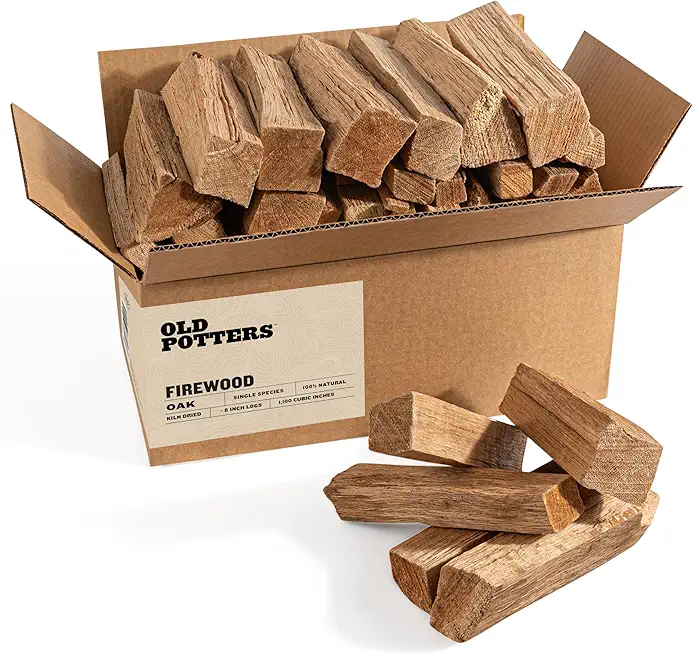
Kiln-Dried Oak Cooking Logs
- Precisely cut for grilling, smoking, and firepit use
- Oak offers a robust, savory smoke profile
- Low moisture content for quick ignition and steady burn
- Consistent sizing ensures predictable heat and smoke output
- Ideal for backyard cooks and weekend firepits
Buy on Amazon
Mini splits keep compact pizza ovens hot and clean burning without excess ash.

Mini Split Oak Pizza Oven Wood
- Cut for small pizza ovens and mini stoves for easy loading
- Oak delivers clean, authentic wood fired flavor
- Kiln dried for easy lighting and low startup smoke
- Slim splits fit Ooni and other compact ovens
- Long burn time lets you cook multiple pizzas per load
Buy on Amazon

Mini Oak Pizza Oven Logs
- Sized to fit Ooni, Gozney, and other mini pizza ovens
- Kiln dried for fast ignition and steady, high heat
- Provides smoky, authentic wood fired flavor for pizzas
- Barkless, clean burning logs reduce ash and mess
- Perfect for quick pizza sessions and small stove use
Buy on Amazon

8 Inch Kiln-Dried Oak Logs for Pizza Ovens
- Full length logs designed to fit most wood fired pizza ovens
- Kiln dried for quick lighting and consistent, even heat
- Barkless logs offer cleaner burn and less ash cleanup
- Oak produces robust, authentic wood fired flavor for crusts
- Approximately 15 pound bundle provides multiple bakes
Buy on Amazon
Environmental and wildlife benefits
Wildlife food and habitat
Post oak acorns feed wildlife like deer, turkey, and squirrels, while cavities in mature trees host nesting birds and small mammals. See species details from Missouri Dept. of Conservation.
Pollinators
The tree supports moth and butterfly larvae, adding value to native plantings. Spring pollen and leaf litter also feed soil life that supports beneficial insects.
Mulch and landscaping
Coarsely chipped bark makes a long-lasting mulch that slows evaporation and adds organic matter. Age fresh chips or supplement with nitrogen near heavy feeders to avoid temporary nutrient tie-up.
Sustainability
Post oak is abundant and sustainably harvested in many regions, with no threatened status reported. Responsible forestry and local sourcing keep transport impacts low.
Buying and usage tips 2025
Selecting lumber
Pick boards with Straight grain, minimal pith, and few end checks; favor quartersawn for stability and ray fleck. For interiors, target 6–8% moisture; for exterior builds, let stock air out and pre-finish faces before assembly.
Choosing post oak pellets
Buy 100% post oak pellets with no binders, low fines, and uniform length. Quality pellets feel slick, snap cleanly, and arrive in sealed bags; avoid crumbled pellets or wet storage.
Safety and storage
Wear a respirator when sanding oak, since tannins can irritate skin and lungs. Store cooking wood and pellets off concrete in dry, ventilated spaces, keep rags from oil finishes in metal cans, and use stainless or galvanized fasteners to reduce stains.
For more on white-oak relatives and comparisons, see red oak vs white oak for grain and durability differences. You can adapt those insights when choosing post oak for your next project.
FAQs
What Is Post Oak Wood Used For?
Post oak Is A Dense, Durable Hardwood Commonly Used For Fence Posts, Railroad Ties, Flooring, Furniture, Cabinetry, Veneer And Heavy Millwork. Its Heartwood Is Relatively Rot-Resistant And Holds Fasteners Well, Making It Useful Outdoors And For Structural Posts; Smaller Pieces Are Also Used For Firewood And Smoking Meats.
How Does Post Oak Wood Compare To White Oak?
Post Oak And White Oak Are Closely Related But Differ In Grain, Stability And Uses. White Oak Typically Has A Straighter, More Uniform Grain And Is Preferred For Cooperage And Boatbuilding Because Its Pores Contain Tyloses That Improve Water Resistance. Post Oak Is Often More Cross-Grained, Heavy And Very Durable—excellent For Posts And Heavy Millwork—but It Can Be Harder To Work Cleanly For Fine Furniture Compared With White Oak.
Is Post Oak Wood Good For Smoking Meat?
Yes. Post Oak Is A Popular Smoking Wood, Especially In Parts Of The Southern United States, Because It Produces A Mild-To-Medium Sweet Smoke That Pairs Well With Beef, Pork And Poultry. Use Well-Seasoned Or Kiln-Dried Wood And Avoid Green Or Chemically Treated Lumber; Post Oak Burns Steady And Adds A Clean, Balanced Flavor To Long Smokes.
Where Can I Buy Post Oak Wood?
Post Oak Is Available From Local Hardwood Lumber Yards, Sawmills And Firewood Suppliers, As Well As From Online Hardwood Retailers And BBQ-Specific Wood Vendors. You Can Also Check Tree Services, Reclaimed Lumber Dealers Or Local Classifieds For Freshly Milled Or Seasoned Post Oak. For Smoking Or Fine Woodworking, Ask For Kiln-Dried Or Properly Seasoned Material.
What Is The Density Of Post Oak Wood?
Post Oak Is A Relatively Dense Hardwood. Typical Oven-Dry Specific Gravity Values Fall Around 0.6–0.8 (Which Roughly Equates To About 40–50 lb/ft³), With Many Sources Citing Figures Near 0.72 g/cm³ (Around 45 lb/ft³). Exact Density Varies By Tree, Site Conditions And Moisture Content.