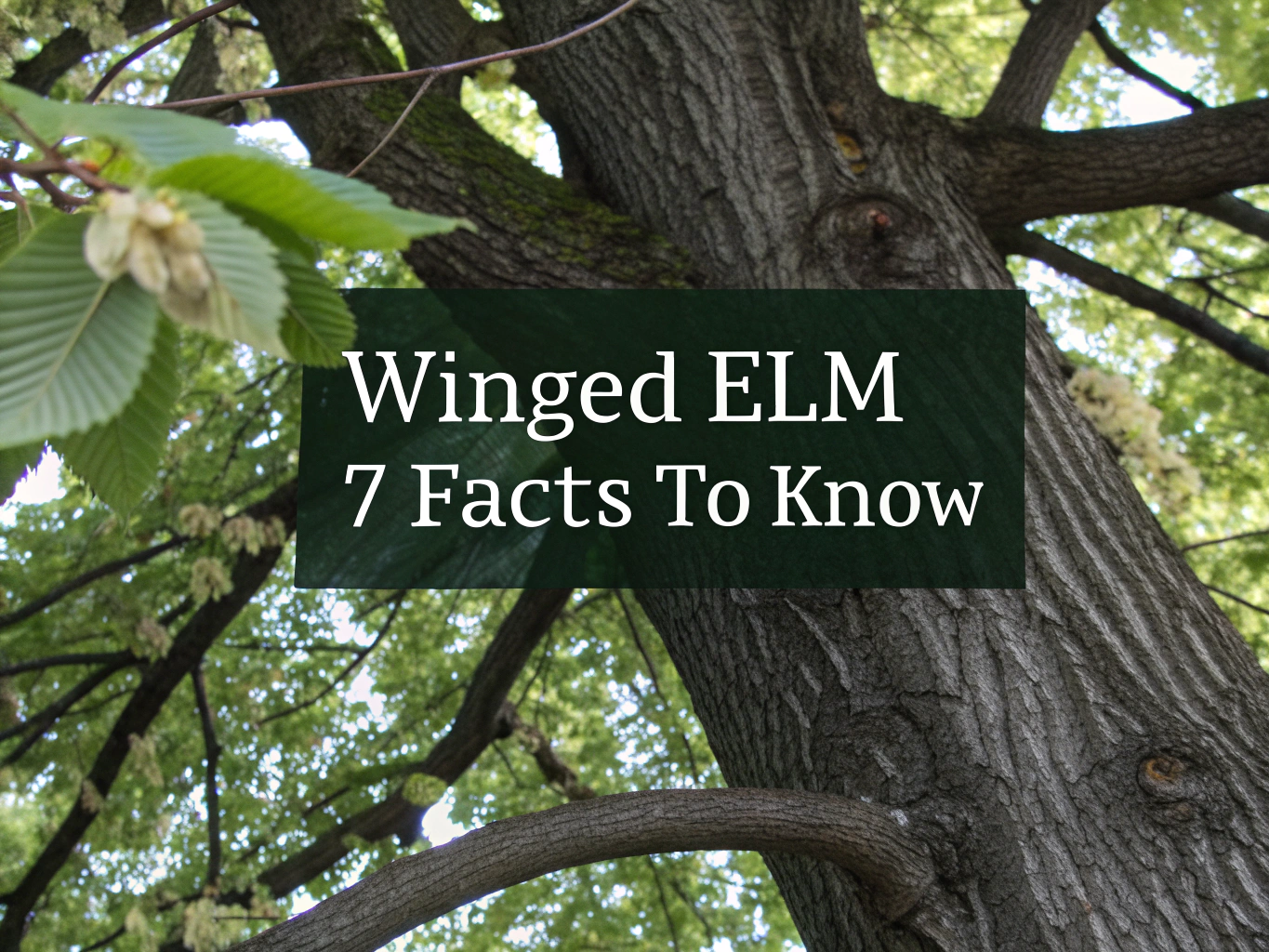

Did you know some elms have ridges that look like wings? The winged elm (Ulmus alata) is easy to spot because of those corky ribs on its twigs. It grows as a small to medium tree and provides food and shelter for wildlife. Read on for seven clear facts to help you recognize, plant, and care for this useful tree.
Table of Contents
The winged elm is a small to medium native tree with distinctive corky twigs that stand out in winter. This guide covers 7 fast facts about Ulmus alata to help you pick, plant, and care for it in 2025.
What Makes the Winged Elm Unique
Botanical name and meaning
The scientific name is Ulmus alata, often written as “ulmus alata winged elm” or “winged elm ulmus alata” in plant listings. The Latin “alata” means “winged,” a direct nod to the tree’s corky twig ridges; see the Virginia Tech Dendrology profile for a concise overview.
Distinctive corky wing features
Twigs and small branches develop flat, corky ridges that look like paired “wings.” These corky wings often appear on opposite sides of twigs and give the tree striking winter texture for easy ID once leaves drop.
Native range and habitat
This species grows across the southeastern and south-central U.S. in sites ranging from dry uplands to moist, well-drained bottoms. The winged elm tree adapts to many soil types and thrives in both urban and rural settings.
Size and Growth Characteristics
Typical mature dimensions
Most winged elms reach 30–40 feet tall with a trunk up to about 24 inches in diameter. Rare forest specimens can hit 89–130 feet, so site the tree with mature size in mind; see growth notes from UF/IFAS Extension.
Growth rate advantages
Young trees put on quick height and canopy, making fast shade in new yards. This fast growth also helps restoration projects stabilize sites sooner than many hardwoods.
Crown shape and appearance
Expect a rounded to vase-shaped crown with fine branching that casts dappled shade. The form pairs well with lawns and paths where filtered light is welcome.
Leaf characteristics and fall color
Leaves are smaller and narrower than many elms, giving a delicate summer look. Fall color trends yellow, adding a clean, seasonal glow before leaf drop.
Wildlife and Ecological Benefits
Food sources for birds and mammals
Seeds (samaras) feed songbirds like American Goldfinch and Purple Finch, while squirrels forage both seeds and buds. Learn more habitat notes from the Louisiana Native Plant Society, a helpful native-plant resource.
Shelter and nesting opportunities
Fine branching offers cover for small birds, and older trees provide stable structure for nests. In mixed plantings, a winged elm adds vertical habitat without shading out understory shrubs too quickly.
Larval host for butterflies
The species hosts larvae of the question mark butterfly (Polygonia interrogationis). Planting one tree can support a small insect guild that benefits garden food webs.
Deer browsing patterns
Deer often browse young shoots, so guard new plantings with a 5–6 ft cage or repellents until the trunk thickens. Early protection saves leaders and keeps the tree’s form intact.
Adaptability and Landscape Applications
Soil tolerance range
Winged elm accepts dry, sandy soils and also thrives in loams with decent drainage. Avoid chronically wet sites; healthy roots prefer aerated soil with occasional drying between rains.
Light requirements
Full sun fuels fastest growth, though the tree performs well in partial shade. Give it at least 4–6 hours of direct light for a balanced, dense crown.
Drought and wind resistance
Once established, this species tolerates dry spells and holds up in breezy sites. Deep, infrequent watering builds tougher roots and better storm resilience.
Common landscape uses
Designers use winged elm for quick shade, street plantings, screens, and native restorations. Its winter twig texture adds unique off-season interest in parks and large gardens.
- Shade tree for lawns and patios
- Street tree where space allows
- Hedgerows or windbreak edges
- Habitat plantings for birds and pollinators
- Reclamation and soil stabilization projects
Maintenance requirements
Prune lightly in late winter to set good structure and remove crossing branches. Keep mulch off the trunk flare, water deeply in the first two summers, and skip heavy fertilizer unless a soil test calls for it.
Disease and Pest Considerations
Dutch elm disease susceptibility
Winged elm shows moderate tolerance compared with many American elms, yet it’s still vulnerable in outbreaks. Plant diversely, keep trees healthy, and consider sanitation pruning to reduce pathogen spread; see the overview at Ulmus alata on Wikipedia.
Elm yellows risk
Elm Yellows can appear in some regions and may cause rapid decline. Remove severely affected trees and replant with a species mix to spread risk across your site.
Overall resistance compared to other elms
Compared to old American street elms, Ulmus alata fares better yet still isn’t bulletproof. For high-traffic sites, consider mixing in Chinese elms or non-elm shade trees for a resilient canopy.
Growing Winged Elm Trees
Propagation methods
Most growers start winged elm from seed or plant bareroot/container seedlings. Home propagation focuses on seed because viability is good and supplies are affordable.
Seed stratification requirements
For best germination, cold‑moist stratify seeds for about 60–90 days. Use a labeled bag with slightly damp peat, keep at 34–41°F, then sow shallowly under light for quick sprouting.
Here are starter options to plant this season, chosen for simple setup and reliable results with Ulmus alata.
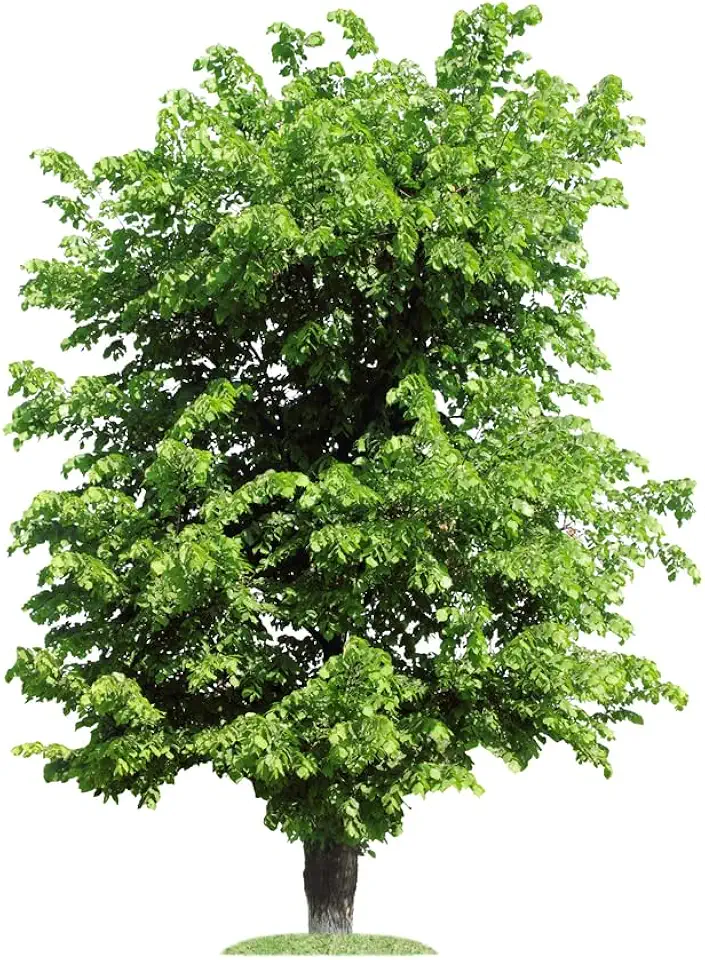
Winged Elm Seedling — Single Young Tree (No CA Shipping)
- Healthy young winged elm ready for transplant
- Easy to establish in sun to part shade
- Attractive vase-shaped growth and winged samara seeds
- Great for landscaping, hedges, and wildlife habitat
- Shipped as a single live seedling with planting tips
 Buy on Amazon

Green Winged Elm Seeds — 30-Pack
- High-germination winged elm seeds for propagation
- Includes 30 seeds for multiple plantings or backups
- Ideal for garden beds, restoration, and learning projects
- Easy to start indoors or direct-sow after stratification
- Affordable way to grow trees for landscaping and wildlife
Buy on Amazon
Planting recommendations
Pick a sunny spot with room for a 30–40 ft crown, then dig a hole 2–3× wider than the root ball. Set the root flare at grade, backfill with native soil, water to settle, apply a 2–3 in mulch ring, and stake only if the site is very windy.
During the first two summers, water deeply once per week in dry spells. Reduce frequency as roots spread so the tree gains better drought tolerance; watch the quick planting walkthrough below.
Winged Elm vs Other Elm Species
Comparison with lacebark elm
| Species | Key Feature | Typical Size | Ornamental Use | Disease Resistance |
|---|---|---|---|---|
| Winged Elm (U. alata) | Corky, winged twigs; yellow fall | 30–40 ft common; up to 130 ft rare | Distinctive branches, shade | Moderate; still susceptible |
| Lacebark Elm (U. parvifolia) | Mottled, flaking bark; small leaves | 40–50 ft | Colorful bark, dense habit | Higher Dutch elm tolerance |
Key identifying features
Winged elm shows flat corky ridges on twigs, especially visible in winter. Lacebark elm lacks wings but shows patchy bark in tan, orange, and gray, making bark the primary clue.
Ornamental value differences
Choose winged elm for quick shade and winter twig interest; pick lacebark for year-round bark color and compact branching. Both pair well with native grasses and low shrubs that like bright sites.
Disease resistance variations
Lacebark elm lines often rate higher for Dutch elm disease tolerance, which suits busy streets and campuses. If you want that look without sacrificing toughness, a curated lacebark trio can fit tight spaces

Drake Chinese Elm Trio — 3 Live Lacebark Plants
- Three semi-evergreen Ulmus parvifolia with striking lacebark
- Vivid fall color with red, purple, and yellow tones
- Compact size suitable for gardens, bonsai, or streetscapes
- Ships as live plants ready to pot with care instructions
- Low-maintenance, drought-tolerant once established
Buy on Amazon
Cultural History and Commercial Value
“Wahoo” elm origins
“Wahoo” is a traditional name credited to Creek Indians for this species. The nickname persists in parts of the South and shows up in regional plant lore; see a grower’s note at Flowing Well Tree Farm.
Timber uses and limitations
The species is a “hard elm” sometimes mixed into flooring and furniture, yet it rarely commands high prices. For wood characteristics across elms, see our guide on elm wood, then plant winged elm mainly for habitat and shade value.
Historical cultivation practices
Gardeners in North America have planted winged elm for its form and adaptability, with occasional trialing overseas. Demand stays modest, yet interest rises where native trees with wildlife value are preferred.
Notable specimen records
Forest-grown giants have reached roughly 128–130 feet in parts of the Southeast. Those records highlight the tree’s potential in deep soils with ample space.
FAQs
What Are The Characteristics Of A Winged Elm Tree?
Winged elm (Ulmus alata) Is A Small-To-Medium Deciduous Tree Noted For Corky Ridging Or ‘Wings’ Along Young Twigs, Ovate Serrated Leaves With An Uneven Base, Gray-Brown Ridged Bark, And Small Samara Fruits. It Often Has A Rounded Crown, Yellow Fall Color, And Tolerates A Range Of Soil Conditions From Dry Uplands To Moist Bottoms.
How Fast Does A Winged Elm Grow?
Winged Elm Typically Grows At A Moderate To Fast Rate, Often Adding About 1 To 2 Feet (30–60 Cm) Per Year Under Good Conditions. Growth Is Faster On Fertile, Moist Sites And Slower On Poor, Dry Soils; Trees Often Reach Maturity Within 20–30 Years.
Is Winged Elm Wood Good For Woodworking?
Elm Wood Is Tough And Durable With An Interlocked Grain That Resists Splitting, Making It Suitable For Rustic Furniture, Tool Handles, And Bentwork. However, Winged Elm Often Produces Smaller, Irregular Logs So Lumber Is Limited, And The Interlocked Grain Can Be More Challenging To Plane And Finish Compared With Straight-Grained Hardwoods.
How Can I Identify A Winged Elm Tree?
Identify Winged Elm By Its Distinctive Corky ‘Wings’ On Twigs, Alternately Arranged Rough Leaves With Serrated Edges And An Uneven Base, Small Samara Fruits, And Gray-Brown Ridged Bark. The Presence Of Winged Twigs Is The Most Reliable Field Characteristic.
Are Winged Elm Trees Beneficial For Wildlife?
Yes. Winged Elms Provide Food And Habitat For Wildlife: Their Seeds Are Eaten By Birds, Leaves And Twigs Support Insects And Browsing Mammals, And The Trees Offer Nesting Sites And Shelter. They Also Help Stabilize Soil And Support Local Biodiversity.