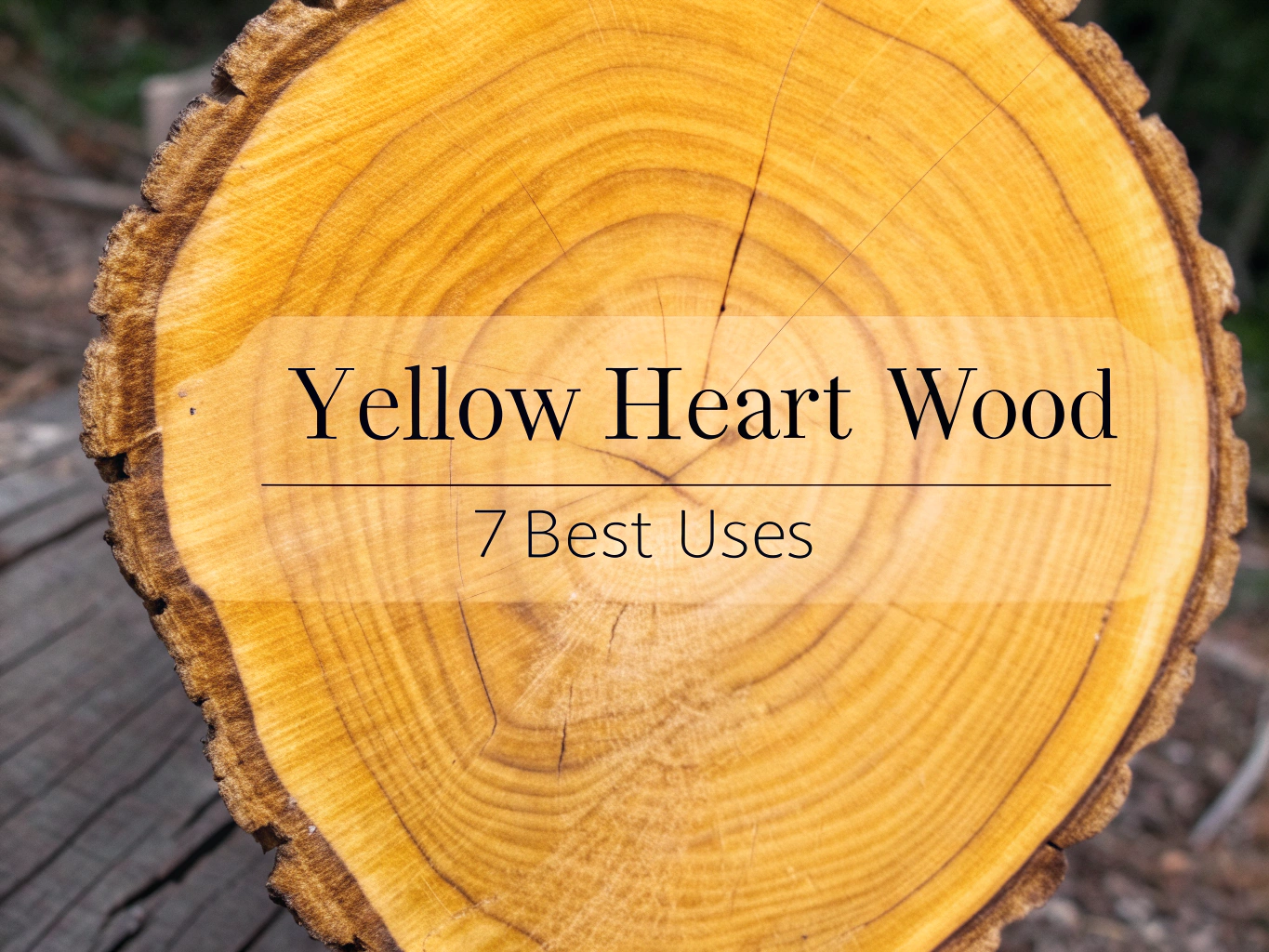

Ever wondered what gives certain wooden floors their striking golden tones? It’s often the work of yellow heart wood, celebrated for its vibrant hue and durability. Let’s uncover how this fascinating wood can reshape your home and projects.
Table of Contents
Yellow heart wood (often called yellowheart or yellowheart lumber) offers a vivid, lasting golden color, fine texture, and strong performance from floors to fine inlays. You’ll learn practical specs, finishing tips, and real project ideas so you can pick, machine, and care for this distinctive hardwood with confidence.
Flooring with yellow heartwood
Hardness and durability
Janka hardness averages about 1,805 lbf, placing yellow heart wood near hickory and well above domestic red oak for wear resistance; density runs high, so the floor feels substantial underfoot. For homes, keep indoor humidity near 35–55% and acclimate planks 5–7 days to limit movement and preserve joints, then fasten or glue with a moisture-cured or urethane adhesive rated for exotic species (Woodsense: Yellowheart).
Traffic rating suits living spaces and hallways if you use hard finishes and felt pads under furniture. For comparison, a durable softwood like yellow pine will dent sooner, while yellowheart’s tight grain shrugs off most daily scuffs.
Design impact
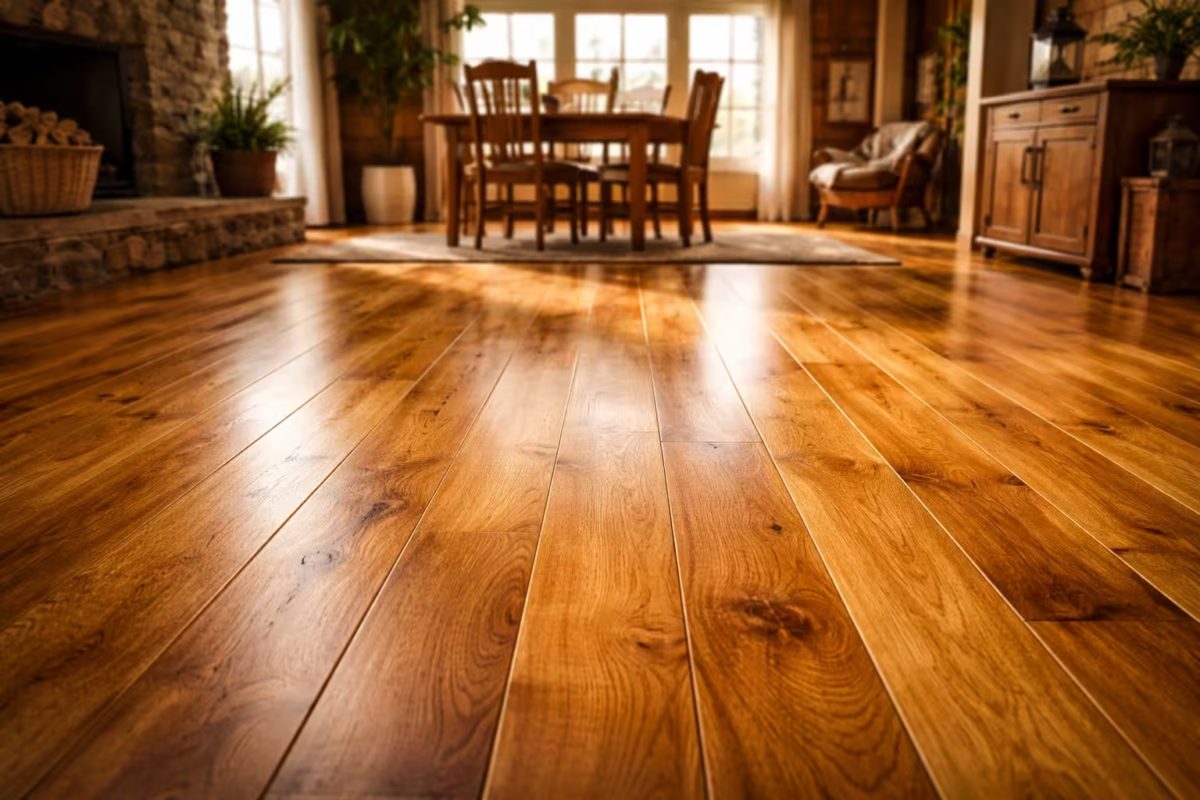
Color starts bright golden and deepens slightly with time, creating eye-catching contrast against white walls, dark cabinets, or concrete. Lay boards in straight runs for a clean, modern look, or try herringbone to break up large spaces with rhythmic visual interest.
Pairings that work: cool grays, charcoal, and black metals tone down the warmth, while walnut trim and matte brass pull the room toward a high-end boutique aesthetic. If the room runs small, choose narrow planks to reduce visual weight and keep the space feeling open.
Residential use
Best rooms include living rooms, bedrooms, offices, and stair treads that see consistent but moderate traffic. Keep entry grit outside with walk-off mats, and rotate area rugs twice yearly to keep sun exposure even across the floor.
Finish and care
Finishes that protect color include waterborne polyurethane with UV inhibitors or a hardwax oil designed for exotics. Sand to 150–180 grit before finishing to maintain clarity, and test a small offcut to confirm adhesion and sheen.
- Weekly cleaning: Vacuum with a soft brush; damp-mop lightly with pH-neutral cleaner.
- Scratch control: Use felt pads and lift, don’t drag, heavy furniture.
- Spot repairs: Rub light marks with a white pad and a few drops of finish-compatible cleaner.
- Refinish timing: Screen-and-recoat every 3–5 years in active areas to keep the surface fresh.
Yellow heart wood furniture
Strength and texture
Yellowheart glues well, machines cleanly with sharp cutters, and leaves a naturally smooth surface thanks to its fine, even grain. For mortise-and-tenon frames, aim for tight shoulders and a 1/3-thickness tenon; the wood’s stability helps joints stay crisp during seasonal swings.
Weight is notable (about 4.4 lb per board foot in air-dry stock), so plan rigid substrates for large tabletops. Break up big panels with under-bevels or chamfers to lighten the visual mass without losing the bold color.
Common pieces
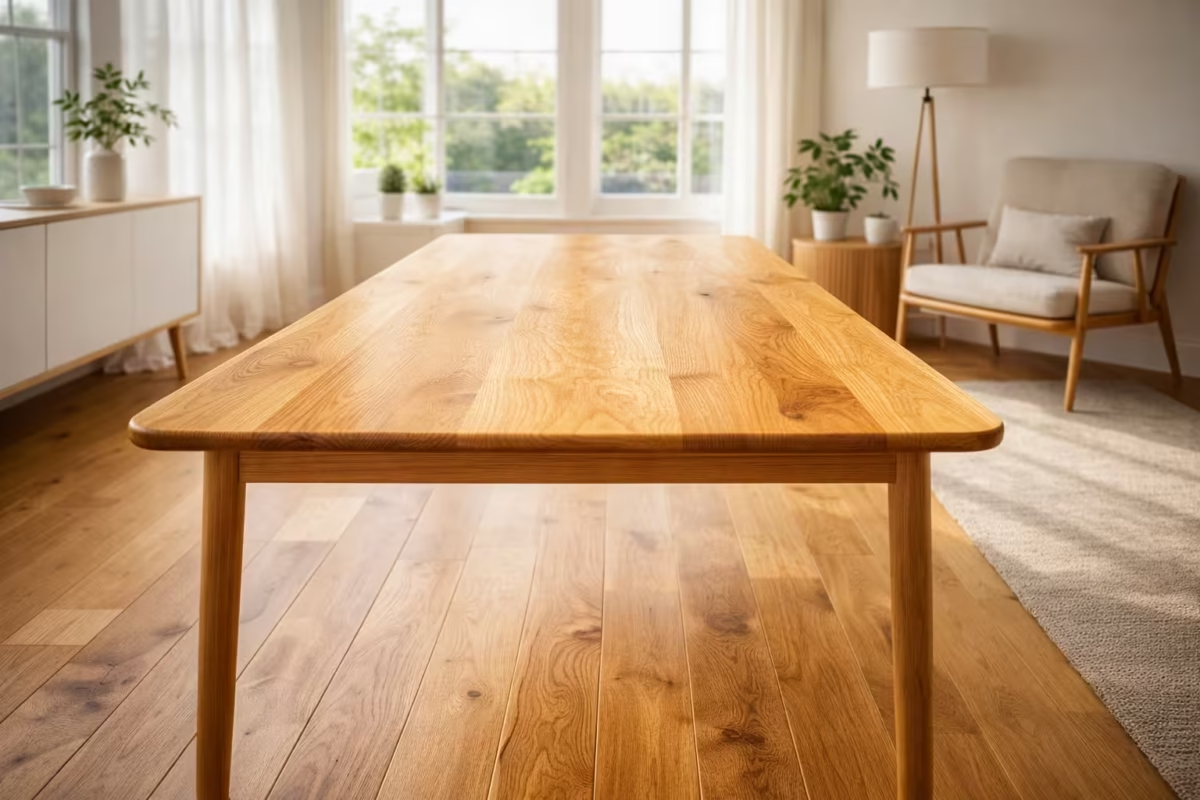
Ideal builds include side tables, credenzas, drawer fronts, shelves, and statement chair parts. Combine yellowheart with dark frames or banding—purpleheart or walnut rails—to create sharp two-tone furniture that pops in photos and in person.
Finishing options
Surface prep: Sand to 180–220 grit, raise grain with a light water wipe, then final sand before finish for a silky feel. Waterborne topcoats keep the color truer; oil-based varnishes warm it up a notch for a deeper golden tone.
Edges burnish smoothly, so break corners with a 0.5–1 mm chamfer to prevent chipping in use. For tabletops, apply 3–4 thin coats with light 320-grit scuff-sanding between coats for an even sheen and durable finish.
Recommended stock for small furniture and accents:

Yellowheart Lumber Boards — 3/4 x 4 (2-pack)
- Warm golden color ideal for visible trim and accents
- Kiln-dried stock for stable, predictable performance
- Smooth faces that take stain and finish beautifully
- Handy 3/4 x 4 size for small projects and repairs
- Durable hardwood suited for carving, inlays, and turning
 Buy on Amazon
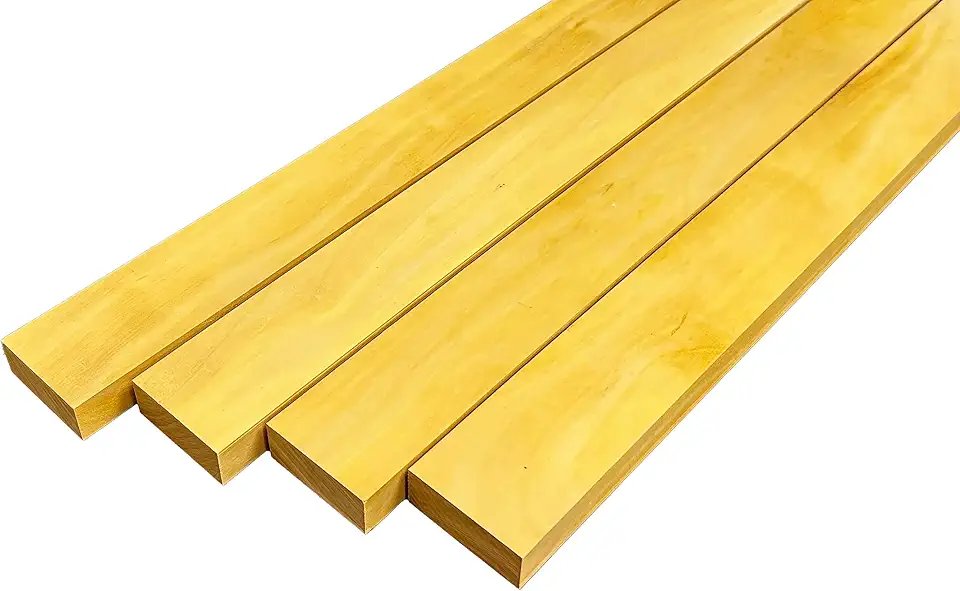
Yellowheart Narrow Lumber — 3/4 x 2 (4-pack)
- Bright yellowgrain adds a striking accent to projects
- Consistent 3/4 x 2 dimensions for accurate joinery
- Kiln-dried to minimize movement and warping
- Pre-surfaced for easier sanding and finishing
- Great for trim, inlays, and small turned parts
Buy on Amazon

Yellowheart Wide Boards — 3/4 x 6 (2-pack)
- Wide boards showcase bold yellowheart grain and color
- Stable, kiln-dried lumber for reliable use
- Generous width for larger panels, boxes, and shelves
- Smooth finish surface that accepts stain and oils well
- Strong hardwood ideal for structural accents and woodworking projects
Buy on Amazon
Boatbuilding and outdoor projects
Moisture resistance
Yellowheart lumber handles damp conditions better than many domestics thanks to its dense, fine structure and moderate decay resistance; it’s suitable for brightwork, thwarts, cleat backers, and decorative rub rails. Seal end grain promptly and overcoat with UV-stable marine varnish or a two-part clear if the project sits dockside (Yellowheart wood traits).
Decks and trim
For decking, space boards 1/8–3/16 in for drainage and predrill near ends to prevent splitting. Use thin reveal lines on trim pieces (about 1–2 mm proud) to create shadows that hide seasonal movement and keep edges crisp after sanding and varnishing.
Joinery and fasteners
Hardware choices matter: 316 stainless or silicon bronze fasteners prevent staining and corrosion. For glue-ups, use epoxy or polyurethane adhesives; wipe oily surfaces with alcohol right before bonding to improve wetting and bond strength.
Finish care
Maintenance is simple—wash salt and grime with fresh water, spot-sand worn areas, and recoat thinly before the film breaks down. Outdoor pieces last longer if you cover them during long wet spells and keep feet off soil with pads or risers.
Regional sourcing often traces to Brazil; for background on related species and origins, see Brazilian wood and shop suppliers that provide clear origin statements.
Turned objects and woodturning
Texture and stability
On the lathe, yellow heart wood cuts cleanly with sharp HSS or carbide; start between centers at 1,200–1,800 RPM for small spindles and slow down as diameter grows. Sand through 240–400 grits, then buff friction polish or apply thin shellac and wax for a fast, glossy finish.
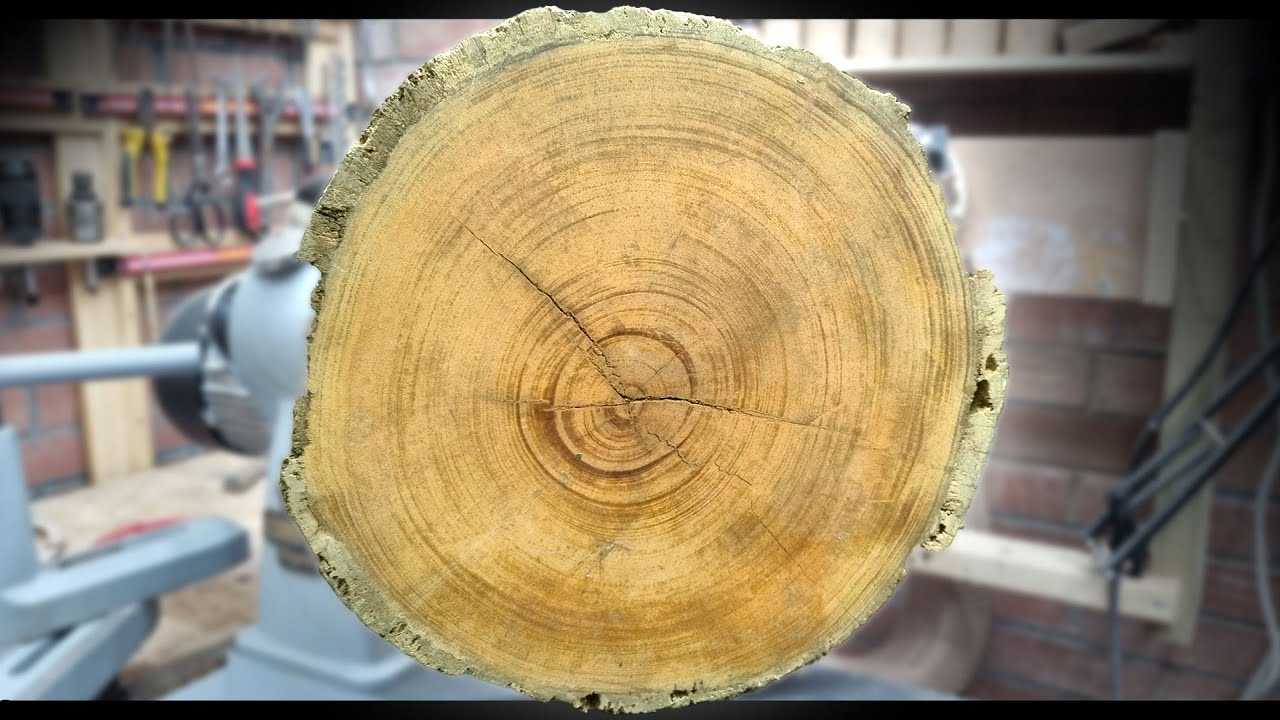
Stability is good, so thin-walled forms survive sanding heat without warping if you work with a light touch. If you see slight tearout on interlocked grain, switch to a shear-scraping pass and take whisper cuts before final sanding.
Typical turnings
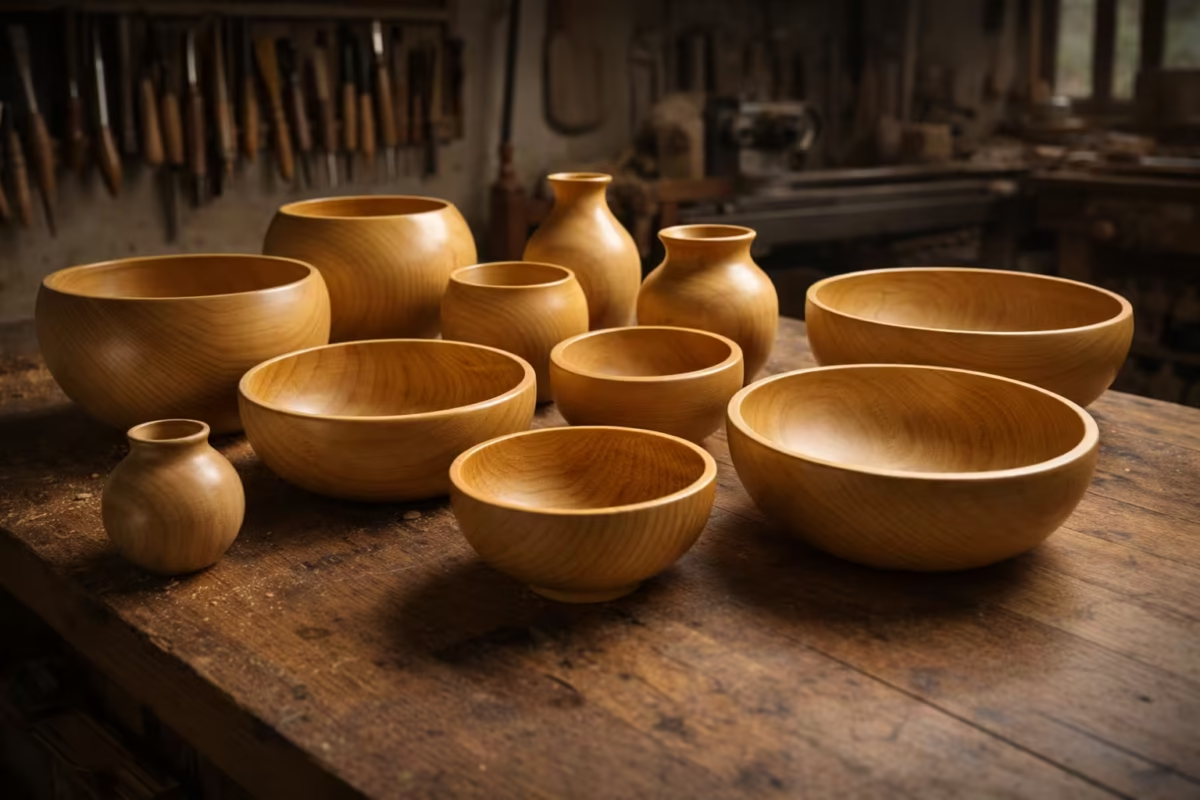
Popular pieces include pens, bottle stoppers, knobs, vases, and small bowls. Finish pens with CA for durability, and treat bowls with polymerized oil or a food-safe hardwax for a natural look.
Ready-to-turn blanks that suit beginners and experienced turners:

Yellowheart Turning Blanks — 2 x 2 (4-pack)
- Compact 2 x 2 blanks sized for pens, knobs, and small turnings
- Vibrant yellowheart grain creates eye-catching finished pieces
- Kiln-dried for better balance and reduced cracking
- Ready-to-turn dimensions save prep time
- Excellent for both beginner and advanced woodturners
Buy on Amazon

Yellowheart Bowl Blank — 2 x 6 x 6
- Thick blank sized for small to medium bowls and hollow forms
- Attractive grain produces a warm, eye-catching finish
- Kiln-dried for improved stability on the lathe
- Ready-to-mount dimensions speed up setup and turning
- Excellent for both decorative and functional wooden bowls
Buy on Amazon
Inlays and decorative accents
Color contrast
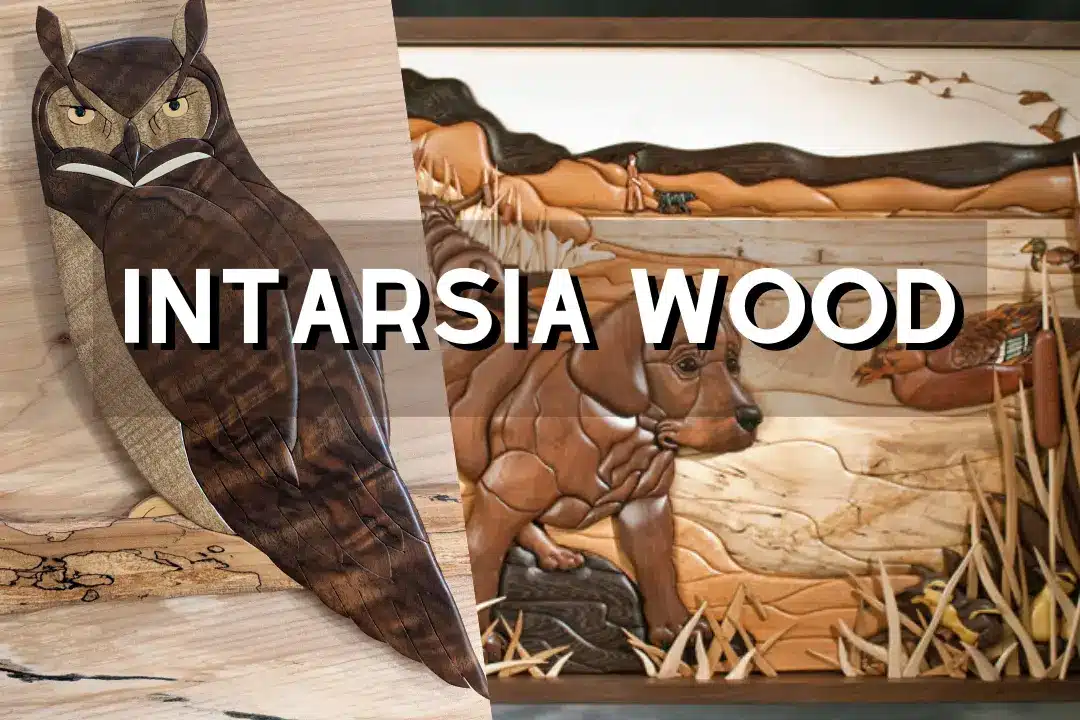
High contrast with walnut, ebony, and wenge makes yellow heart wood a favorite for line-and-berry work, box lids, and accent strips. For bold pairings, add a narrow purpleheart pinstripe to set off the yellow without overpowering the main panel.
Marquetry and banding
Veneer slicing at 1–2 mm works well; resaw with a fine-tooth blade, sticker the pieces to relax, and plane on a carrier board to final thickness. Keep knives razor sharp and score across the grain to reduce splinters along tight curves.
Fine joinery
Tight inlays depend on crisp mortises and minimal squeeze-out—use blue tape to mask edges and wick in thin CA only if needed. For small handles and custom scales, the wood’s stability keeps pins seated and transitions clean bocote wood also pairs nicely for contrast

Yellowheart Knife Scale — 5 x 1.5 x 0.3 in
- Vibrant yellowheart adds unique color to custom knife handles
- Precisely milled thickness for easy fitting and shaping
- Stable hardwood that holds pins and hardware securely
- Smooth faces reduce sanding and finishing time
- Ideal size for single-piece or paired handle scales
Buy on Amazon
Musical instruments
Woodwinds and strings
Luthiers use yellowheart for bindings, purfling, and decorative laminations on guitars and basses; its color highlights body contours and headplates. Some makers fit recorder bodies or blocks from yellowheart for a bright, articulate look, then seal with shellac to stabilize moisture exchange.
Percussion parts
Drum builders add yellowheart hoops, vent rings, and badges to contrast darker shells. For grip and longevity, round over hoop edges slightly and finish with a tough clear to resist stick strikes.
Visual accents
Contrast woods like pau ferro or cocobolo balance yellowheart’s vibrancy on headplates, fingerboards, and trim. Thin laminations (0.5–1 mm) between neck layers create a crisp line that photographs beautifully on stage.
Crafts and small projects
Scrollwork and carving
Scroll saw users get clean edges with fine, reverse-tooth blades and light feed; apply painter’s tape to reduce tearout on the exit side. For carving, hone gouges keenly and use short, controlled cuts because the dense fibers resist dull edges.
Models and repairs
Small parts like wedges, shims, bushings, and model frames benefit from the wood’s stiffness. Pre-fit pieces dry, mark for orientation, then bond with PVA or thin CA depending on the joint size and time constraints.
Common items
Project ideas: jewelry boxes, picture frames, knife handles, pens, knobs, tool totes, and keepsake lids. Keep offcuts for inlay strips and dowels—you’ll use them often for last-minute accents.
Handy packs for craft benches:
Yellowheart Narrow Lumber — 3/4 x 2 (4-pack)
- Bright yellowgrain adds a striking accent to projects
- Consistent 3/4 x 2 dimensions for accurate joinery
- Kiln-dried to minimize movement and warping
- Pre-surfaced for easier sanding and finishing
- Great for trim, inlays, and small turned parts
Buy on Amazon
Yellowheart Knife Scale — 5 x 1.5 x 0.3 in
- Vibrant yellowheart adds unique color to custom knife handles
- Precisely milled thickness for easy fitting and shaping
- Stable hardwood that holds pins and hardware securely
- Smooth faces reduce sanding and finishing time
- Ideal size for single-piece or paired handle scales
Buy on Amazon
Workability, sourcing, and safety
Key properties
Species commonly sold as yellowheart is Euxylophora paraensis from Brazil; it shows fine to medium texture, straight to interlocked grain, and a bright, uniform yellow heartwood that holds color well (Rare Woods USA: Yellowheart). It’s not listed by CITES or IUCN, and reputable suppliers offer consistent stock for both small and large builds.
| Property | Typical Value |
|---|---|
| Janka hardness | 1,805 lbf (8,025 N) |
| Density (air-dry) | ~845 kg/m³ (~4.4 lb/BF) |
| Texture | Fine to medium, even |
| Grain | Straight; may be wavy/interlocked |
| Color change | Mild deepening over time |
| Durability | Moderate rot resistance |
Tooling and finishing
Sharp cutters are key; resharpen more often if you spot minor burnishing or pushback. For planing interlocked grain, skew the cut 20–30 degrees or switch to a high-angle plane to minimize tearout, then sand progressively for a glassy surface.
Glue-ups are straightforward—PVA for interiors, epoxy for high stress or moisture. Waterborne clear coats keep the yellow bright, while oil/varnish mixes add warmth; test both on scraps to preview the final hue.
Sustainability and sourcing
Responsible buying starts with clear species labeling (Euxylophora paraensis) and documented origin; “yellowheart” can also name regional species like Indian yellowheart in some markets. Read supplier specs, ask for kiln-dried moisture levels, and review return policies—see background on Brazilian wood to place species and sourcing in context.
Safety and maintenance
Dust can irritate skin and airways for some people, so wear gloves and a respirator when milling, and use effective dust collection. Wipe benches after sanding and apply finish in ventilated spaces; discard oil-soaked rags in a sealed metal container to prevent fires.
Related woods
Comparisons: purpleheart adds deep violet contrast, while canary wood leans orange-gold with lively figure. Pair these with yellowheart for striking inlays and laminations on boxes, instruments, and furniture edges.
Sample packs that complement Yellowheart projects:
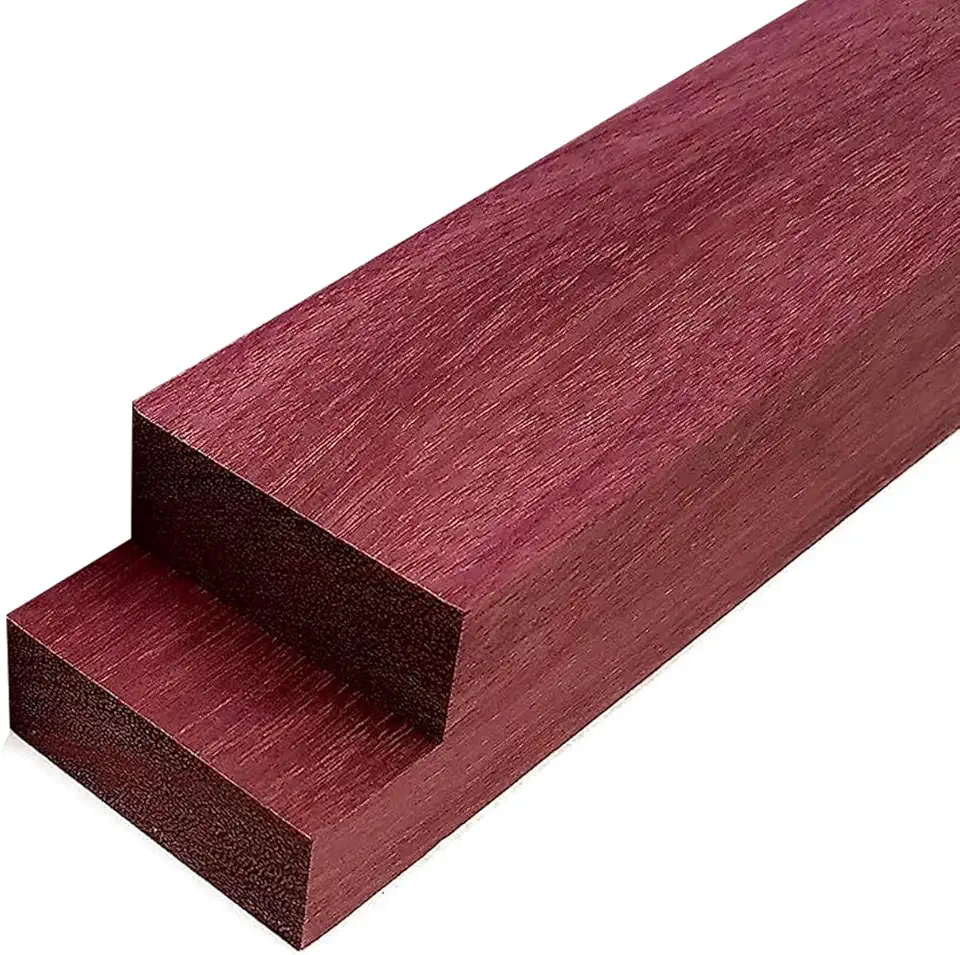
Purpleheart Lumber — 3/4 x 2 x 24 (2-pack)
- Striking natural purple hue adds bold color to any project
- Kiln-dried to reduce warping and reduce stability
- Straight, consistent boards ideal for inlays and handles
- Smooth surface takes finish and polish exceptionally well
- Exotic hardwood prized for distinctive looks and durability
Buy on Amazon

Canarywood Lumber — 3/4 x 2 (4-pack, 48 in)
- Distinctive warm color that brightens projects
- Long 48 in boards ideal for continuous runs or long trims
- Kiln-dried to help prevent warping and splitting
- Smooth surface ready for finishing or machining
- Perfect for fine woodworking, moldings, and decorative accents
Buy on Amazon
Final tip: keep labeled offcuts of yellowheart, purpleheart, and canarywood in a small bin so you can grab color-matched strips for quick inlays or test finishes fast.
FAQs
What Is Yellow Heart Wood Used For?
Yellowheart Is Commonly Used For Decorative And Functional Woodworking Projects Like Furniture Accents, Inlays, Turned Objects, Musical Instruments, Veneers, Flooring, And Boat Trim Where Its Bright Yellow Color Provides A Striking Accent.
How Durable Is Yellow Heart Wood?
Durability Varies By Source But Yellowheart Is Generally Dense And Stable With Good Wear Resistance And Moderate Natural Decay Resistance; When Properly Finished And Maintained It Performs Well For Furniture And Decorative Trim But May Not Be As Hard As Some Dense Exotics For Heavy Structural Use.
Is Yellow Heart Wood Sustainable?
Sustainability Depends On The Source; Some Yellowheart Is Harvested From Well-Managed Plantations Or Certified Suppliers, While Other Stocks Come From Threatened Tropical Forests. To Ensure Sustainability, Look For FSC Or PEFC Certification, Buy Reclaimed Material, Or Ask Your Supplier About Chain Of Custody.
Where Can I Buy Yellow Heart Wood?
You Can Buy Yellowheart From Specialty Exotic Lumber Dealers, Online Wood Retailers, Pen Blank And Turning Suppliers, And Some Local Hardwood Yards. When Purchasing, Check For Certification, Read Supplier Reviews, And Confirm Shipping Restrictions Or Import Regulations.
How Do You Finish Yellow Heart Wood?
Finish Yellowheart By Sanding Smooth, Applying A Sealer Or Thin Sanding Sealer To Prevent Blotching, Then Use Oils, Lacquers, Or Polyurethane To Enhance And Protect The Color. Test Finishes On A Scrap Piece, Consider UV Protection Since The Color May Darken In Sunlight, And Use Tack Cloths To Remove Dust Between Coats.