Pau Ferro Wood Guide: Properties, Fretboards, and Rosewood Comparison

Pau ferro is a dense South American hardwood (often sold for instruments) known for its smooth feel, bright-and-warm response, and streaked brown-to-reddish color. It’s widely used for a pau ferro fretboard because it resists wear well, polishes fast, and ships more easily than many true rosewoods.
Table of Contents
What is pau ferro wood?
Pau ferro wood typically refers to Libidibia ferrea (often marketed alongside “Santos rosewood” type trade naming), a tropical hardwood used in furniture, flooring, and a lot of guitar parts. In hand, it feels slick and glassy once sanded past the mid-grits, with a faint spicy/woody smell that shows up the most when you fresh-plane it or hit it with a scraper.
Brazilian pau tree names
You’ll see the Brazilian pau tree described under multiple labels, and beginners often assume they’re all identical species. “Pau ferro” is the common shop term, while listings may also use trade names like Santos rosewood; that marketing overlap is why you should verify the botanical name when you’re buying blanks for fretboards or bridges.
If you’re comparing it against actual rosewoods for a build plan, link it back to your reference on Indian rosewood so you’re not mixing trade names with regulated Dalbergia species and making the wrong call on pore-filling or shipping paperwork.
Appearance and grain
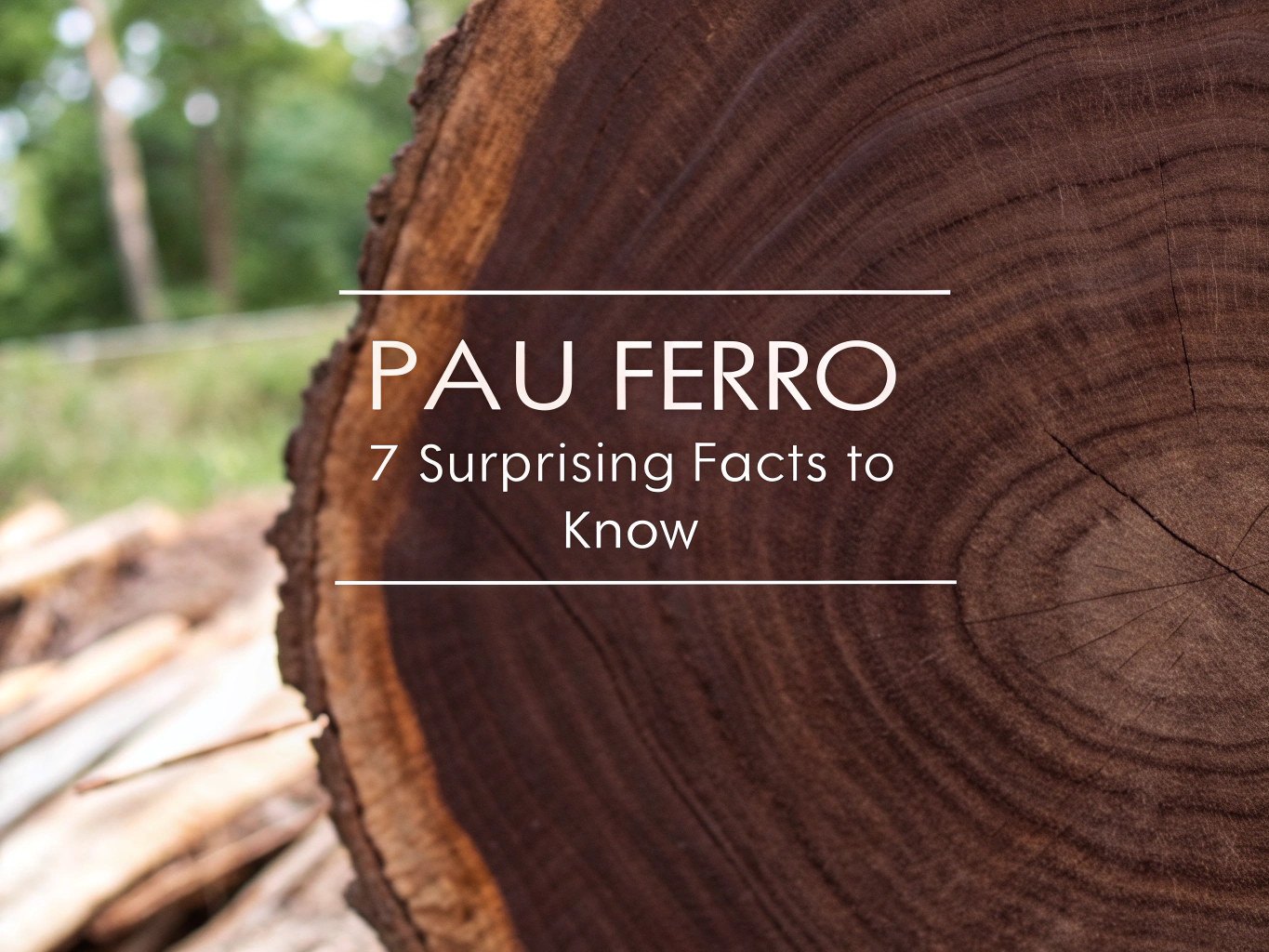
The heartwood runs from reddish-orange through chocolate brown into violet-brown, often with inky dark streaks that look almost “printed” after oil or finish hits it. Grain is usually straight to interlocked with a fine texture, which is why it can take a crisp edge on a fretboard radius—yet that interlock can still tear out if you rush your cutter direction.
Pore structure is diffuse-porous with medium vessels, so it can look “rosewood-like” from a couple feet away but won’t always show the same dramatic open pores once you level-sand. For a deeper refresher on what you’re seeing, your guide to grain cues in wood grain pattern helps when you’re trying to predict tearout areas before you route or plane.
Where it grows
Pau ferro commonly enters the market from Brazil and Bolivia, and the growing region matters because density and color can swing from board to board. When a shipment shows up drier than expected, I can feel it in sanding: the dust gets finer and sharper (more “mineral” feeling) and clogs paper less than freshly milled, resinier stock.
For baseline species notes and distribution references, cross-check with Wood Database’s pau ferro profile before you commit to a big batch, since vendor naming isn’t consistent across the instrument and flooring markets.
Pau ferro wood properties and specs
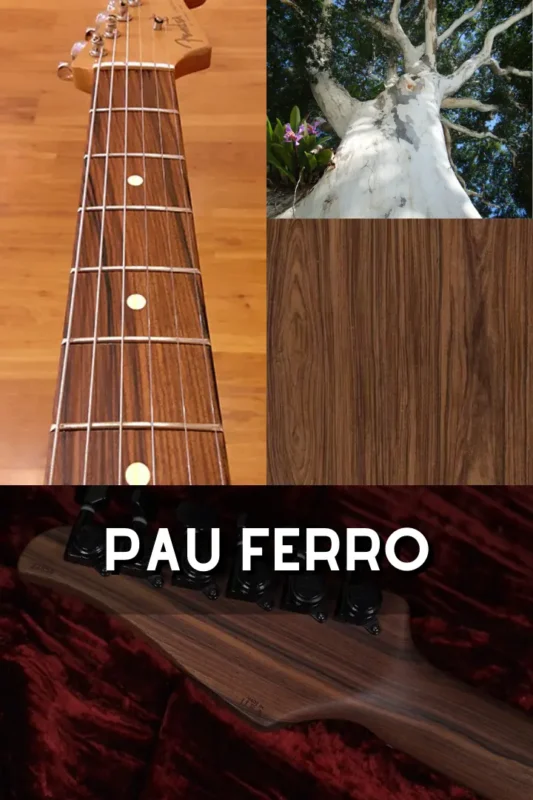
Pau ferro sits in that sweet spot where it’s hard enough to resist fretboard divots and bridge wear, yet still workable if your cutters are truly sharp. The trade-off is that it’s dense enough to punish dull tooling, so your real “cost” can show up as extra sharpening time and more cautious feed rates.
Density and weight
Average dried weight is often listed around 54–55 lb/ft³ (roughly 865–995 kg/m³ depending on the specific stock), which you’ll notice immediately when you pick up a neck blank or a thick fingerboard slab. On a bench, it has that “dead-drop” heft—it doesn’t feel springy like lighter mahoganies; it feels compact and solid.
If you like comparing materials by numbers, it helps to keep a density cheat sheet handy; your internal reference on density of wood makes it easier to predict whether a body build will end up shoulder-heavy once hardware is installed.
Janka hardness
Janka hardness is commonly reported in the 1,960–3,000 lbf range, which is why pau ferro holds up well under roundwound bass strings and aggressive bending. It’s also why beginners sometimes burnish it accidentally: too much pressure during sanding can heat-polish the surface and make glue or finish behave unpredictably later.
If you want context for what that means across species, refer back to wood hardness scale so you’re choosing sanding grits and scraper angles that match the hardness instead of fighting it.
Strength metrics
Commonly cited strength figures include a modulus of rupture around 17,750 lbf/in² (about 122 MPa), elastic modulus around 1,574,000 lbf/in² (about 10.9 GPa), and crushing strength around 8,830 lbf/in² (about 60.9 MPa). In practical shop terms, it feels stiff and snappy when you flex thin offcuts, which is one reason it behaves predictably as a fretboard and bridge material.
Shrinkage and stability
Typical shrinkage is reported around 2.8% radial, 6.7% tangential, and 9.9% volumetric, with a T/R ratio around 2.4. That translates to good real-world seasonal stability for many builds, but don’t treat it as “set-and-forget”: flatsawn pieces can still cup, and interlocked grain can twist if lumber wasn’t dried evenly.
| Spec | Pau ferro (typical) | What it means in the shop |
|---|---|---|
| Density | ~865–995 kg/m³ | Feels heavy; stable fretboards; dulls tools faster |
| Janka hardness | ~1,960–3,000 lbf | Resists string wear; can burnish if sanded too hard |
| Volumetric shrinkage | ~9.9% | Moves less than many exotics; still needs acclimation |
| Texture / luster | Fine, naturally lustrous | Polishes fast; finish can look “deep” with minimal build |
Pau ferro vs rosewood
Pau ferro vs rosewood questions come up for two reasons: visual similarity and trade restrictions on many Dalbergia species. In real builds, the decision is less about internet tone debates and more about pore behavior, finishing time, and how the wood reacts in dry winters or humid gig seasons.
Look and pores
Rosewood often shows larger open pores and a more obviously “oily” look, while pau ferro can look smoother and tighter-grained after leveling. That tighter look can fool beginners into skipping proper surface prep; if you plan to glue bindings or inlays against pau ferro, treat it like an oily exotic anyway and prep for adhesion risk.
If your baseline for “rosewood” is actually regulated species, compare against your site’s rose wood guide so you’re not mixing up true rosewood traits with similarly colored exotics sold under rosewood-style names.
Tone and response
On a fretboard, pau ferro tends to feel quick on attack with a clean top end that still keeps some warmth—many players describe it as sitting between rosewood and ebony. The edge case is ultra-bright rigs (hot pickups, lots of presence, stainless frets): pau ferro can tip the sound into extra bite, so I often compensate with pickup height, tone cap value, or slightly heavier strings.
If you want a reference point at the other end of the spectrum, compare this to ebony wood, since ebony’s feel and transient snap make the contrast obvious in a mix.
Stability and cracking
Pau ferro often shows fewer humidity tantrums than some rosewoods, but it’s not immune to checking if it’s rushed from a dry warehouse into a wet shop (or the reverse). Beginners also miss a common crack trigger: they oil a fretboard heavily, then store the guitar in a hot car—oil plus heat can soften grime and create localized swelling around fret slots that later shrinks and telegraphs lines.
A simple workaround that saves fretboards: let the instrument acclimate in its case for a day before doing any fret work, and keep fret slot depth consistent so the tang doesn’t wedge too aggressively in seasonal changes. For a broad view of dark fingerboard options that behave differently, check dark wood types.
Price and logistics
From a buying standpoint, pau ferro is attractive because it’s often far cheaper per board foot than restricted rosewoods, and shipping is simpler since it’s widely traded without the same permit friction. In practical shop purchasing, that can mean you can buy extra stock for color match and grain selection—something I rarely do with expensive rosewood where every blank feels like a one-shot decision.
For regulatory background on rosewoods, CITES timber guidance helps frame why some rosewood supply chains add time, paperwork, and cost even before the wood hits your bench.
Pau ferro fretboard: tone and feel
A pau ferro fretboard is popular because it combines wear resistance with a fast, dry touch that doesn’t feel sticky once it’s clean. After a string change, I can feel the difference immediately: pau ferro has a smooth, low-drag glide under bends, especially once you wipe it down and the pores aren’t packed with sweat and skin oil.
Attack and sustain
Pau ferro tends to give a clear initial hit without the glassy sharpness some players associate with ebony, and it supports sustain well because the surface stays hard and consistent under the string. One edge case I see in setups: if the fretboard is very dry and you run super-light strings, you can get a slightly “clickier” transient—dial it back by easing pick attack, lowering treble-side pickup height, or moving up one string gauge.
Smooth playability
Well-prepped pau ferro feels silky under the fingertips, especially after a proper fret end dress where the board edge gets a gentle roll. The beginner mistake is over-oiling: too much oil turns into a dust magnet, then the board feels gritty within a week; instead, I use a light wipe once or twice a year (or less) and focus more on keeping hands and strings clean.
The “best” fretboard wood is often the one that stays stable in your climate and matches your setup habits—cleaning, humidity control, and string choice matter as much as species.
Shop floor observation
Common guitar uses
Pau ferro shows up most often as fingerboards, but it’s also used for bridges, headplates, decorative veneers, and sometimes backs/sides in boutique builds. Its fine texture makes it great for laser-clean inlays and crisp fret slot walls, but you need to manage chipout around interlocked areas by scoring lines and taking lighter passes.
- Electric guitar and bass fretboards (common on Fender-style builds)
- Acoustic bridges and bridge plates when hardness is desired
- Decorative veneers for headstocks and laminations
- Small parts like knobs, inserts, and accent strips where polish matters
Pau ferro guitars and parts to consider
If you want to hear the pau ferro fretboard effect in context, these guitars and replacement parts are solid starting points for side-by-side comparisons.

Fender Newporter All Mahogany
- Warm, resonant all mahogany tone with balanced low end
- Comfortable concert body ideal for fingerstyle and strumming
- Pau ferro fingerboard for smooth feel and clear attack
- Includes gig bag for easy transport and protection
- Two year warranty for added peace of mind
 Buy on Amazon

Fender SRV Stratocaster Sunburst
- Signature Stevie Ray Vaughan inspired tone and feel
- Pau ferro fretboard adds clarity and tight lows
- Iconic three color sunburst finish for vintage looks
- Versatile pickup setup for blues, rock, and lead playing
- High quality build for stage and studio use
Buy on Amazon

Fender Vintera 60s Jazz Bass
- Classic 60s jazz bass tone with vintage voicing
- Pau ferro fingerboard brings brightness and articulation
- Period correct neck profile for comfortable playability
- Three color sunburst finish with authentic vintage aesthetics
- Versatile sound suitable for studio and live performance
Buy on Amazon

Fender American Pro II Left Hand Jazz Bass
- Built for professional players with refined playability and tone
- Left hand configuration for comfortable ergonomics
- Pau ferro fingerboard offers balanced attack and sustain
- Upgraded pickups and electronics for clear, punchy sound
- Rugged construction ready for touring and heavy use
Buy on Amazon
One practical tip: when you compare instruments, keep string type and pickup height consistent; otherwise you’ll credit pau ferro for changes that really came from fresh strings or a hotter pickup setting. If you’re picking a brighter wood elsewhere in the build (like wenge or bubinga), your total system can end up too forward in the upper mids, so plan the whole spec, not just the board.
Sustainability and sourcing of pau ferro
Pau ferro’s popularity rose fast because it hits the sweet spot of availability and performance without the same trade bottlenecks that complicate many rosewoods. Still, “easy to buy” doesn’t mean “no questions asked”—you still want paperwork from reputable suppliers and stable drying practices to reduce movement and end-checking.
CITES-free trade
Pau ferro is widely sold as a CITES-free option compared with many Dalbergia rosewoods, which can simplify cross-border shipping for instrument parts and finished guitars. In real purchasing, that can translate into fewer delays and a lower chance your build gets stuck in transit while a broker sorts out species codes and documentation.
IUCN listing status
Many references note no IUCN Red List status for the commonly marketed pau ferro species in tonewood channels, which is part of why manufacturers adopted it for high-volume models. The mistake beginners make is assuming any “pau ferro” listing equals the same tree; always verify the supplier’s botanical ID and origin statement when you’re buying for resale or export.
To sanity-check conservation status categories and how they’re defined, refer to IUCN Red List so you’re reading listings correctly rather than relying on vendor claims.
Export cost advantages
Because it’s commonly traded with fewer restrictions than many rosewoods, pau ferro can carry lower export friction, which often reduces total landed cost for builders. A real-world upside: you can afford to reject boards with ugly runout or sap streaks and still hit budget, instead of forcing a questionable piece into a high-stress neck or fingerboard role.
Pau ferro woodworking tips and challenges
Pau ferro machines nicely when your process is set up for dense hardwood, but it punishes shortcuts. Most problems I see—tearout, glue creep, cloudy finish—trace back to rushing surface prep or using the wrong adhesive schedule for a wood that can have natural oils.
Tool dulling and tearout
Expect faster edge dulling than on maple or mahogany; you’ll feel it when a plane stops making that crisp “zip” sound and starts pushing dust instead of shavings. Interlocked grain can tear if you take heavy passes, so I’ll switch to a high-angle plane setup, climb-cut risky areas on the router, and leave extra thickness for final passes.
Gluing prep and failures
The most expensive beginner mistake with pau ferro is a glue joint that looks fine for a day, then pops under stress or seasonal movement. Untreated oily surfaces can cause reported adhesion failure rates around 20–30% in hobby shops; the workaround is simple but time-sensitive: scuff-sand, wipe with acetone, let it flash off fully, then glue promptly, or use epoxy when you need extra gap-filling insurance.
Watch out for another trap: over-sanding to ultra-high grits before gluing can burnish the surface and reduce mechanical tooth. Stop around 120–180 grit for glue faces, then do your beauty sanding after the joint is cured and cleaned.
Finishing and polish
Pau ferro can polish to a deep shine quickly; at the buffer it warms up fast and you can feel the surface get almost slick like stone. The risk is swirl marks that only appear under raking light—workaround: stop buffing earlier, let the finish cure longer, and do a final hand polish with light pressure so you’re not heat-softening the top layer.
Durability and insects
Pau ferro is often described as very durable for rot resistance, yet some stock can be insect-susceptible if stored poorly. Don’t keep offcuts on a damp concrete floor or in a shed where humidity spikes; sticker and elevate it, and if you see fine powder or tiny pinholes, quarantine the piece and treat storage areas before the problem spreads to other exotics.
Lessons Learned in Practice
Pau ferro’s biggest surprise is how inconsistent it can be across batches: one board routes like butter and another chips at the same feed rate because the grain reverses more aggressively. After getting burned by that, I’ll do a quick test route on an offcut before I commit to binding channels or truss access cuts, then adjust bit sharpness and pass depth to match that specific piece.
Another friction point shows up on fretboards: if you level frets and leave abrasive dust on the board, it can feel gritty under bends even after a wipe. The fix that actually works is a two-step clean—vacuum first (don’t just blow it into pores), then wipe with a barely damp cloth followed by a dry cloth; oil only if the board still looks chalky after it’s fully dry.
Cracking complaints I hear most often aren’t “pau ferro problems,” they’re humidity problems paired with fast shipping and no acclimation. If a neck arrives cold or hot, let it sit bagged in its case so temperature equalizes slowly; moving straight from a porch into a warm bench can cause micro-checking that you won’t see until finish or oil makes the lines stand out.
One last gotcha: pau ferro can look “finished” at 220 grit because it already reflects light, so beginners stop sanding too soon and later wonder why the finish shows scratch haze. I won’t chase mirror prep on raw wood forever, but going through 320 and inspecting under angled light saves rework once the first coat makes every stray scratch pop.
Pau ferro wood samples and references
If you’re trying to decide whether a board’s color and grain fit your build, a small pau ferro wood sample saves money and time—especially because photos often exaggerate contrast. It also lets you test glue and finish schedules on the exact surface you’ll be working with.
These options make it easy to compare appearance, feel, and finishing behavior before you order larger stock.

Pau Ferro Veneer Sample 4 inch x 6 inch
- Authentic pau ferro appearance with rich grain and color
- Thin flexible veneer ideal for laminating and inlays
- Raw no backing for direct gluing and finishing
- Easy to cut, sand, and stain for custom projects
- Perfect sample size for crafts and repairs, one forty second inch thick
Buy on Amazon
When you evaluate a sample, run three quick checks: sand a patch to 320 for scratch reveal, wipe with naphtha to preview color, and do a small glue test on a scuffed area versus a burnished area. That last test catches the most common failure mode early: a joint that seems fine until you flex it and it releases with a clean, shiny glue line that screams “surface prep issue.”
FAQs
Is A Pau Ferro Fretboard Good For Guitars?
Yes, a pau ferro fretboard is a good choice for guitars.
It Delivers A Balanced Tone With Clear Highs And Warm Mids, Feels Smooth Under The Fingers, And Is Typically Harder And More Durable Than Many Rosewoods. It’s A Practical Alternative For Players Wanting Rosewood-Like Feel And Slightly Brighter Response Without The Rarity Or Trade Restrictions Of Some Rosewoods.
What Does Pau Ferro Wood Feel Like Compared To Rosewood?
Pau ferro feels slightly harder and denser than typical rosewood.
Its Surface Is Smooth But Often A Touch More Satiny And Less Oily Than Classic Rosewood, Which Some Players Find Faster For Fingering. The Grain Can Be More Streaky And Less Porous, So It Usually Requires Little Break-In To Feel Comfortable.
Does Pau Ferro Sound Brighter Than Rosewood?
Yes, pau ferro generally sounds a bit brighter and more focused than many rosewood varieties.
It Emphasizes Upper Mids And Adds Clarity And Note Definition While Retaining Warmth, So The Difference Is Noticeable But Not Extreme. Body Wood, Pickups, Strings, And Setup Also Shape The Final Tone.
Is Pau Ferro The Same As Santos Rosewood Or The Brazilian Pau Tree?
No, pau ferro is not the same as Santos rosewood or the Brazilian pau tree.
Trade Names And Appearances Can Overlap, But These Are Different Species With Distinct Grain, Color, And Legal Status. Always Check Scientific Or Trusted Trade Names When Purchasing Wood To Confirm The Exact Species And Any Export Restrictions.
Do You Need To Oil Or Condition A Pau Ferro Fretboard?
You don’t strictly need to oil a pau ferro fretboard, but occasional conditioning helps maintain its appearance and prevent drying.
Lightly Apply A Small Amount Of Lemon Oil Or A Specialized Fretboard Conditioner Once Or Twice A Year, Wipe Off Excess, And Avoid Over-Oiling Which Can Cause Buildup. If The Board Feels Smooth And Healthy, Minimal Care Is Fine.