

Did you ever wonder why so many guitars and pianos use spruce wood? It pairs light weight with good strength, and its straight grain and warm spruce color look great in the home. This post lays out top spruce picks for trim, veneers, instrument parts, craft boards, and shims. We also cover key differences between engelmann spruce and norway spruce tree wood, and simple care tips to keep your projects lasting longer.
Table of Contents
Spruce wood brings light weight, clean grain, and reliable strength to DIY builds, furniture, and even instruments. This guide explains properties, color, species, tool tips, product picks, and care so you can pick the right pieces with confidence.
What Makes Spruce Wood Special for Home Projects
Physical Properties and Strength
Builders like spruce wood for its strong stiffness-to-weight ratio and straight grain that keeps parts stable. Typical Janka hardness runs low to mid 400–520 lbf (Engelmann ~390, Sitka ~510), which suits trim, frames, and soundboards; see the Spruce (Picea) profile for species figures and uses.
The wood stays light, so handling long boards or installing overhead moldings is easier. For load paths and spans, consider member sizing like you would with any construction wood and keep spans short on highly loaded pieces.
Spruce sits below hardwoods in dent resistance, yet it performs well in frames, cleats, and non-wear faces. For denser studs or beams, look at Douglas fir wood where higher compression strength is valuable.
Natural Color and Grain Characteristics
You’ll see a pale yellow-brown spruce color with a fine, even texture and low contrast growth rings. The straight grain minimizes tear-out and gives trim, panels, or instrument tops a uniform look that finishes clean with clear coats or light stains.
Knots are typically small on quality boards and veneers, keeping lines crisp on visible faces. If you want warm, knotty character, select grade accordingly and test stains on offcuts to gauge tone shift.
Workability and Finishing Options
Hand and power tools cut spruce smoothly, and the straight grain planes well with sharp irons. Pre-drill near edges, use tight clamping pressure for laminations, and sand to 180–220 grit before stain or clear finishes for a consistent sheen.
For finishing, thin sealing coats prevent blotching and help stains sit evenly. Outdoors, use penetrating oil or exterior polyurethane over a primer/sealer, and raise the grain once with a damp rag before the first coat for best leveling.
Keep dust extraction strong and wear a good mask since softwoods can irritate airways. For product comparisons and surface tips, see the brief on spruce vs. fir finishing at Stikwood Workbench.
Top 5 Spruce Wood Picks for Your Home 2026
1. Spruce Wood Strips for Trim and Framing
Straight-grained strips give repeatable cuts for trim, small frames, and model work, and they take paint or varnish well. Use these for casing repairs, lattice, or custom cleats, then finish to match surrounding woodwork for a seamless look.

Spruce Wood Strip - 1/4×1/2×36 in (7)
- Straight-grained spruce for clean cuts and strong pieces
- Consistent 1/4×1/2×36 in sizing for repeatable builds
- Smooth surface ready for painting, staining, or varnishing
- Versatile for trim, framing, model making, and repairs
- Bulk pack of 7 saves time on sourcing individual strips
 Buy on Amazon
2. Natural Spruce Veneer for Decorative Applications
Thin veneer overlays shelves, door panels, or speakers with low weight and a clean grain. Bend it over gentle curves using heat or steam, then press with cauls for bubble-free laminations that finish like solid wood.

Natural Spruce Veneer Sheets 6.7×11 in (2 pack)
- Thin 0.8mm veneer ideal for lightweight laminations and repairs
- Straight-line grain for a clean, attractive finish
- Flexible and easy to bend for curved work like paddles or ribs
- Accepts glue, stain, and finish for seamless integration
- Perfect for table tennis, models, luthier work, and crafts
Buy on Amazon
3. Musical Instrument Components
These components fit common acoustic builds and repairs, taking advantage of spruce’s resonance and low mass. Use them for bracing, soundposts, and seams when you want clarity and projection without added weight.

Spruce Cello Sound Posts - 18cm (5pc)
- Precisely sized 18cm posts for 3/4 and 4/4 cellos
- Spruce transfers top vibrations for improved tone and resonance
- Kiln-dried for stability and reduced movement over time
- Smooth, tapered ends help fit and adjust quickly
- Pack of 5 gives spares for fitting and repairs
Buy on Amazon
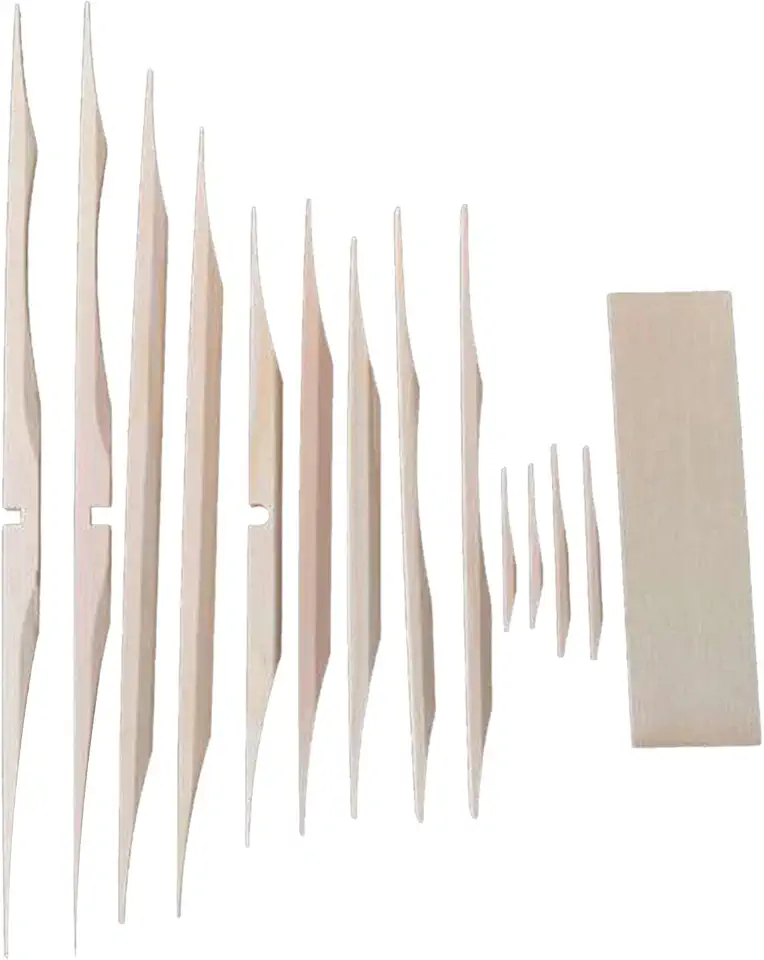
Spruce Guitar Brace Kit for Acoustic Luthiers
- Pre-cut spruce braces matched for tonal balance and strength
- Lightweight wood enhances resonance without excess mass
- Consistent thickness simplifies shaping and scalloping
- Ideal for repairs, replacements, or building new tops
- Helps improve structural stability and sound projection
Buy on Amazon
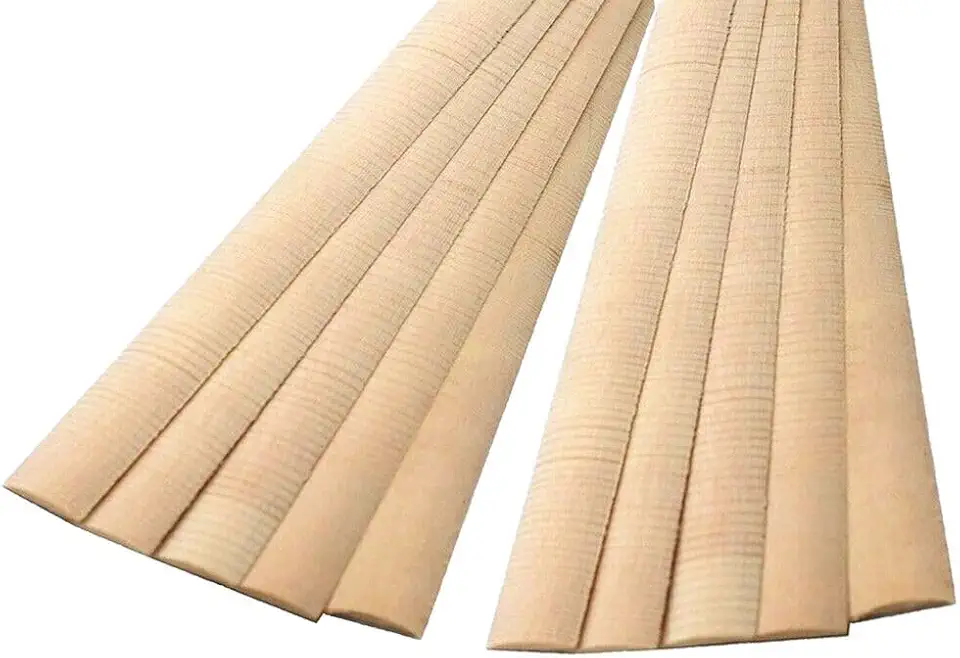
Spruce Back-Joint Reinforcement Strips 18.5 in (10pc)
- Pre-shaped arc strips match instrument back joints for easy repair
- Strong spruce construction reinforces seams without adding bulk
- 470mm (18.5 in) length fits most ukuleles and small guitars
- Ready to glue and clamp for permanent reinforcement
- Ten-piece pack provides spares and multiple repairs
Buy on Amazon
4. Craft Boards for DIY Projects
Pre-sanded blocks save prep time for signs, art panels, and small shelves. Paint, stain, or carve them, or try laser engraving for crisp lettering on home décor pieces.
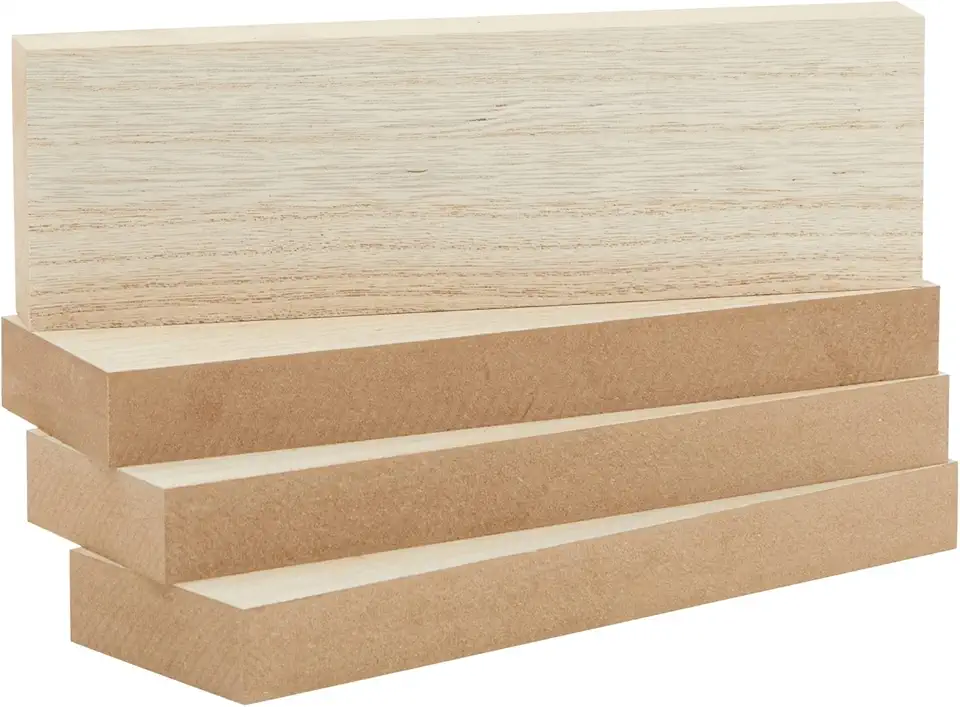
Unfinished Craft Wood Boards 3×10×1 in (4 pack)
- Solid 1-inch thickness for durable craft and carving projects
- Sanded, unfinished surface ready for paint, stain, or carving
- Ideal size for signs, shelves, art panels, and DIY decor
- Easy to cut, drill, and shape with standard tools
- Four-pack gives options for multiple projects or practice pieces
Buy on Amazon
5. Structural Shims for Installation Work
Long tapered shims help level doors, windows, cabinets, and subfloors with precision. Tap them in, check for plumb, and trim flush for sturdy installations that won’t shift under load.

Extra-Long Tapered Wood Shims 15 in (13 pack)
- Extra-long 15 in length handles deep gaps and tall installs
- Tapered design allows fine adjustments when leveling
- Made from spruce and fir for strength and weather resistance
- Ideal for doors, windows, cabinets, and flooring work
- 13-pack gives plenty of pieces for large remodeling jobs
Buy on Amazon
Benefits of Using Spruce Wood at Home
Lightweight and Easy to Handle
Light stock cuts fast, lifts easily, and reduces fatigue on install days. That helps during ceiling trim, tall wall paneling, or large jig building in a small shop.
- Faster setup on site and in the shop
- Better balance on long runs
- Lower shipping cost for online orders
- Less strain for solo installers
Cost-Effective Building Material
Spruce often beats hardwoods on price while still giving clean, straight lines. For budget interiors, pair with paint-grade trim and check our quick guide to types of wood for furniture to plan matching pieces.
Sustainable and Eco-Friendly Choice
Fast-growing spruce from managed forests supports renewable supply. Ask for certifications and choose local sources to cut transport impact where possible.
Engelmann Spruce vs Norway Spruce Tree Wood
Both species deliver pale color, straight grain, and high acoustic response. Engelmann tends to be lighter and softer; Norway spruce (Picea abies) offers wide availability and consistent boards for many uses.
| Species | Common Uses | Key Properties |
|---|---|---|
| Engelmann spruce | Instrument tops, light framing, trim | Low density (~390 lbf Janka), lively resonance |
| Norway spruce | Paneling, instrument tops, construction | Similar hardness (~400–500 lbf), pale uniform color |
For density, stiffness, and growth zone effects on softwoods, see the technical notes at Swedish Wood. Numbers change with site, so test sample billets for weight and ring spacing before critical builds.
Engelmann Spruce Characteristics
Lighter density supports quick response in soundboards and reduces mass in frames. Fine, even grain seasons predictably, which helps luthiers voice plates and brace sets with repeatable results.
Norway Spruce Properties
Norway spruce tree wood delivers pale, uniform color and good stock sizes at common yards. That consistency aids paneling, built-ins, and acoustic tops where matching boards matter.
Best Applications for Each Type
Pick Engelmann for responsive tone in guitars or violins and for ultra-light trim. Choose Norway spruce for paneling runs, case parts, and budget structural work needing predictable supply.
Important Considerations Before Purchase
Moisture Resistance Limitations
Spruce isn’t decay-resistant, so exposed or damp spots need a film finish or penetrating sealer. For wet zones, consider cedar wood or larch wood that handle moisture better.
It’s a softwood and dents easier than maple or oak, a point covered by WoodWorkly’s spruce overview. Place spruce in low-wear areas or add protective edges on tabletops and shelves.
Proper Finishing Techniques
Seal end grain first, apply thin initial coats, and sand lightly between coats for a uniform finish. For exterior parts, back-prime hidden faces and keep edges sealed to limit water uptake.
Safety and Allergen Awareness
Some makers react to softwood dust; use extraction and a P2/P100 mask for health. Wear gloves if your skin gets irritated, and vacuum, not sweep, to keep dust out of the air.
Maintenance Tips for Spruce Wood Projects
Sealing and Protection Methods
For indoor pieces, renew clear coats as soon as sheen dulls to keep moisture out. On exterior parts, wash gently, dry fully, and recoat with UV-protective finish on a 12–24 month schedule depending on sun exposure; see technique notes at Stikwood Workbench.
Long-Term Care Guidelines
Keep relative humidity stable (about 35–55%) to limit seasonal movement. Use coasters or pads on spruce tops, and rotate sun-facing items a few times a year to prevent uneven color shift.
Thin, frequent maintenance coats outlast thick, infrequent ones on softwoods like spruce.
Shop advice
If a dent appears, try a damp cloth and a hot iron to steam the fibers back up, then spot-finish. For deeper damage, sand the area flat, fill if needed, and refinish the full panel for a uniform look.
FAQs
What Are The Uses Of Spruce Wood In Construction And Furniture Making?
Spruce Is Commonly Used For Framing, Roof Trusses, Sheathing, And Subflooring In Construction Because Of Its High Strength-To-Weight Ratio; In Furniture It Is Used For Panels, Shelves, Table Tops, And Lightweight Casework Where A Straight Grain And Easy Workability Are Desired. It Machines Well, Takes Paint And Veneer Nicely, But It Requires Proper Finishing Or Treatment For Long-Term Durability, Especially Outdoors.
How Does Spruce Wood Compare To Pine For Woodworking Projects?
Spruce And Pine Are Both Softwoods, But Spruce Tends To Be Lighter, Straighter-Grained, And Often Has Fewer Knots, Making It Easier To Plane And Better For Structural And Soundboard Uses. Pine Is Generally Denser And More Resinous With A More Pronounced Grain Pattern, Which Can Be Better For Rustic Furniture Or When You Want Visible Character; The Choice Depends On The Project’S Strength, Appearance, And Finishing Needs.
What Is The Best Way To Treat And Maintain Spruce Wood For Outdoor Use?
For Outdoor Use, Pressure Treatment Or A Good Preservative Is Recommended, Followed By A Quality Primer And Paint Or Regular Applications Of Exterior Oil Or Sealer To Protect Against Moisture And UV. Keep Spruce Off Direct Ground Contact, Ensure Good Drainage And Ventilation, Inspect And Refinish Periodically, And Use Corrosion-Resistant Fasteners To Extend Service Life.
Is Spruce Wood Good For Making Musical Instruments Like Guitars And Violins?
Yes — Spruce Is A Classic Choice For Acoustic Instrument Tops Because Of Its Excellent Stiffness-To-Weight Ratio And Clear, Responsive Tone; Sitka, Engelmann, And Alpine Spruces Are Widely Used For Guitars And Violins. For Backs And Sides Luthiers Often Prefer Hardwoods, But A Carefully Selected, Quarter-Sawn, Well-Dried Piece Of Spruce Can Make An Excellent Soundboard.
How Can I Identify Spruce Wood Among Other Types Of Softwood?
Identify Spruce By Its Pale, Creamy To Light-Yellow Color, Straight Tight Grain, Uniform Texture, And Light Weight; It Usually Has Small, Evenly Spaced Knots And Lacks The Large Resin Canals And Pronounced Knotty Character Of Many Pines. A Simple Test Is To Compare Density And Grain: Spruce Feels Softer And More Uniform Than Pine, And On Close Inspection The Growth Rings Are Typically Less Distinct.