

Cedar elm, Ulmus crassifolia, is a deciduous elm native to the south-central United States and northeastern Mexico, commonly reaching 50–70 feet tall. It makes a durable shade tree for large sites, though its broad canopy, substantial root system, branch structure, and susceptibility to elm diseases require planning.
The sections below cover cedar elm identification, growth, roots, planting, seed propagation, common failures, and the practical qualities of cedar elm wood.
Table of Contents
Cedar Elm Overview and Quick Facts
A cedar elm tree is a native broadleaf elm valued for heat tolerance, dense shade, and its ability to grow in alkaline clay. Its small, rough leaves and unusual fall seed production help separate it from many familiar spring-fruiting elms.
Botanical Identity
The accepted botanical name is Ulmus crassifolia Nutt. It belongs to Ulmaceae, the elm family, and the species name refers to its comparatively thick leaves.
This is a deciduous shade tree, so it drops its leaves each year. The foliage usually turns yellow or yellow-brown before falling, though color intensity changes with temperature, moisture, and tree health.
Quick Facts Table
| Feature | Cedar elm details |
|---|---|
| Scientific name | Ulmus crassifolia |
| Family | Ulmaceae |
| Native range | South-central United States and northeastern Mexico |
| Typical height | 50–70 feet |
| Potential height | 80–90 feet or more on favorable sites |
| Typical spread | 40–60 feet |
| Growth rate | Moderate, with wide site-related variation |
| Sun | Full sun preferred; limited partial shade tolerated |
| Commonly cited zones | USDA zones 6–9 |
| Soil | Clay, loam, alkaline soil, and seasonally wet ground |
| Flowers and seed | Usually produced from late summer into fall |
| Fall color | Yellow to yellow-brown |
Name and cedar myth: cedar elm isn’t a true cedar and doesn’t belong to the conifer genus Cedrus. The common name probably arose because the tree often grows near Ashe juniper and related junipers commonly called “cedar” in Texas.
That name can cause a costly wood-selection mistake. Cedar elm wood lacks the familiar cedar scent and shouldn’t be assumed to have the natural decay resistance of cedar lumber.
Native range: the species occurs across much of Texas and parts of Oklahoma, Arkansas, Louisiana, Mississippi, neighboring south-central areas, and northeastern Mexico. The Texas A&M tree guide is useful for regional identification and distribution checks.
Natural habitat: cedar elm grows in bottomlands, stream terraces, low woods, limestone country, and clay sites that cycle between wet and dry. Natural companions can include live oak, pecan, hackberry, and Ashe juniper, depending on elevation and drainage.
Ecological value: its canopy offers shade, nesting space, and shelter, while elm foliage can feed regionally occurring moth and butterfly larvae. Wildlife use varies across the range, so one local insect relationship shouldn’t be presented as universal.
How to Identify Cedar Elm

Identify cedar elm by combining small rough leaves, asymmetrical leaf bases, furrowed gray-brown bark, occasional corky twig ridges, and samaras produced in fall. No single feature is reliable on every specimen.
Leaves, Bark, and Twigs
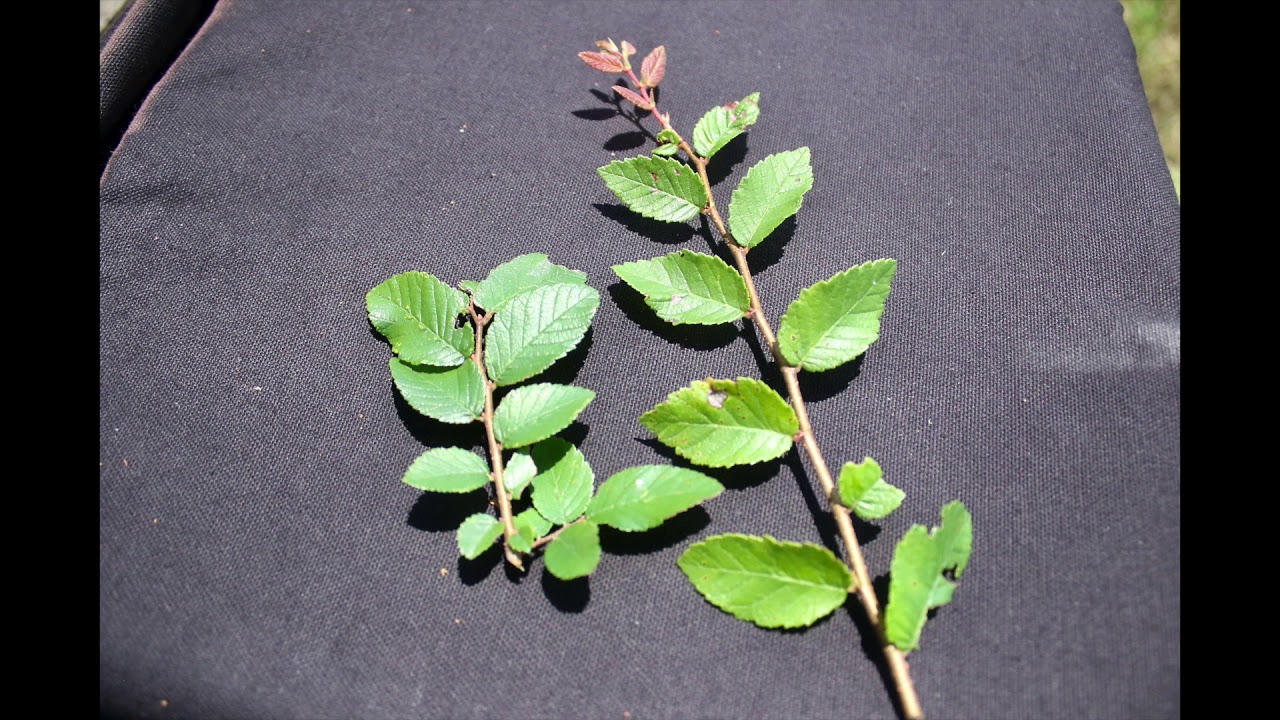
Leaves and fall color: leaves are alternate, simple, roughly 1–2.5 inches long, and oval to elliptical. The upper surface feels dry and sandpapery against a fingertip, while the toothed edge can feel lightly abrasive when stroked from tip to base.
The leaf base is usually uneven or asymmetrical, a classic elm trait. Yellow is the normal fall color, though drought-stressed foliage may brown at the margins and drop before producing a clean display.
Bark characteristics: younger bark appears fairly smooth and gray. Mature trunks develop intersecting gray to brown-gray ridges and furrows, but bark depth changes with age, vigor, and exposure.
Twigs and corky wings: slender twigs may carry corky ridges that resemble narrow fins. Some trees have obvious wings and others have almost none, so beginners often misidentify wingless specimens or mistake strongly winged ones for winged elm.
Flowers, Samaras, and Mature Tree Form
Flowers and samaras: tiny wind-pollinated flowers commonly appear in late summer or early fall. Small flattened samaras mature in fall, a useful difference from the spring fruiting cycle of many North American elms.
Local weather can shift flowering and seed timing. A hot, dry season may shorten the collection window, while storms can strip mature samaras before they’re noticed from the ground.
Mature tree form: young trees often look upright or narrowly oval. Older trees usually form a dense rounded or broadly spreading crown, with the final shape influenced by light, competition, wind exposure, pruning, and available soil depth.
- American elm: often has larger leaves, spring flowers, and a pronounced vase-shaped crown.
- Winged elm: tends to carry more consistent corky wings; compare it with this detailed winged elm guide.
- Chinese elm: commonly shows peeling, mottled bark and comes from eastern Asia.
- Siberian elm: is introduced in North America, often seeds heavily in spring, and can spread aggressively.
- True cedar: is an evergreen conifer with needles and cones rather than toothed broad leaves and samaras.
American elm differences: reproductive timing is especially useful. American elm typically flowers before leaf emergence in spring, while cedar elm usually flowers and fruits much later in the year.
Winged elm differences: twig wings alone can mislead. Confirm leaf texture, samara timing, mature bark, and regional range before assigning a name.
Chinese elm differences: Chinese elm, Ulmus parvifolia, often develops smooth exfoliating patches of gray, tan, orange, and green. Cedar elm bark becomes more deeply ridged instead of forming the same mottled patchwork.
Siberian elm differences: Siberian elm often has thinner, less abrasive foliage and prolific spring samaras. Native status also matters because Siberian elm can be invasive outside cultivation in several regions.
True cedar differences: cedar elm is a flowering hardwood, while true cedars are needle-bearing conifers. Their wood aroma, grain, color, and outdoor performance shouldn’t be treated as interchangeable.
Cedar Elm Growth, Pros, and Root System
Cedar elm is a moderate-growing large tree that commonly reaches 50–70 feet tall and 40–60 feet wide. Its roots aren’t inherently destructive, but a restricted planting site raises the risk of pavement lifting, soil drying, and conflicts with existing defects.
Growth Rate, Height, Canopy Spread, and Lifespan
Growth rate: avoid fixed annual promises. A young tree in full sun with a broad mulched root zone may grow visibly each season, while one confined by pavement can produce short shoots and sparse leaves despite receiving irrigation.
Height and canopy spread: 50–70 feet tall and 40–60 feet wide describes many mature trees. Favorable specimens can pass 80 feet, which rules out narrow side yards, small foundation beds, and spaces below utility lines.
Lifespan and site fit: healthy trees can persist for many decades, often beyond one homeowner’s occupancy. Longevity drops after root severance, repeated topping, deep planting, chronic saturation, or storm damage that opens the trunk to decay.
Cedar Elm Pros, Cons, Roots, and Practical Notes From Real-World Use
Cedar elm pros include native status, broad shade, yellow fall color, heat tolerance, and better performance in alkaline clay than many ornamental trees. Once established, it also survives periodic drought and short periods of wet soil.
Cedar elm cons include a mature size that overwhelms small properties, dense shade that thins turf, seasonal leaf and samara litter, and branch attachments that may need early correction. The species can also develop elm diseases, mistletoe, wetwood, and pest damage.
Cedar elm root system: roots form a broad structural and absorbing network rather than a compact underground ball. Most moisture-absorbing roots occupy oxygen-rich upper soil and may extend well beyond the canopy edge where soil conditions permit.
Roots don’t deliberately attack sound concrete foundations. They grow through usable soil and may exploit existing cracks, leaking pipes, loose joints, or damp backfill where oxygen and moisture are readily available.
Foundation and pavement risks: roots can lift thin walks or curbs when the tree receives too little open soil. In expansive clay, water uptake may contribute to uneven drying, but tree roots are rarely the sole cause of structural movement.
Site-specific risk depends on soil, distance, and defects, so one universal setback number won’t fit every property. Existing foundation movement calls for input from both a qualified arborist and a structural specialist rather than root cutting based on guesswork.
Field observation: cramped cedar elms often show shallow surface roots, sparse outer foliage, and dry soil that becomes hard underfoot. Trees with a wide mulch bed tend to develop steadier shoot growth and suffer less mower damage around the trunk.
A common beginner error is cutting large roots near pavement without assessing stability. The workaround is to reroute or bridge the hard surface where possible; removing a major buttress root can trade a cosmetic problem for tree failure.
Planting and Cedar Elm Care

Plant cedar elm with its root flare visible, a hole two to three times wider than the root ball, and no deeper than the root mass. Give the tree full sun, broad rooting room, 2–3 inches of mulch, and measured establishment watering.
Site Selection, Root-Flare Planting, and Mulching
Site selection: allow for a canopy up to 60 feet wide and check wires, easements, underground utilities, buildings, drainage, and future construction. A small opening in concrete doesn’t provide enough usable soil for a mature cedar elm.
Root-flare planting: remove enough soil from the top of a nursery root ball to locate the first major structural roots. Set those roots at or slightly above finished grade; many container trees arrive with several inches of excess medium over the flare.
Dig the hole two to three times wider than the root ball but never deeper. Remove the container, trunk twine, and synthetic material, then inspect for circling roots before backfilling mainly with the original soil.
Mulching: spread 2–3 inches of coarse organic mulch across the largest practical area. Leave a clear gap beside the bark because a damp mulch mound hides girdling roots, traps moisture, and encourages trunk injury.
Watering, Soil, Fertilizing, Pruning, and Construction Protection
Establishment watering: water immediately after planting, then check both the root ball and neighboring soil by touch. Soil should feel cool and slightly moist several inches down, not slick, sour-smelling, or saturated.
Calendar-only watering causes many failures. Hot wind and drought increase demand, while clay soil, shade, rainfall, and poor drainage lengthen the interval between applications.
Sun and soil: full sun supports a denser, stronger crown. Cedar elm tolerates clay, loam, alkalinity, and changing moisture, but permanent saturation and severe compaction still deprive roots of oxygen.
Fertilizing: don’t feed routinely without a soil test, deficiency symptoms, or a diagnosis. Excess nitrogen can produce long, weak shoots while doing little to correct buried roots, drainage failure, or limited soil volume.
Structural pruning: guide young growth around a suitable dominant leader and well-spaced scaffold branches. Shorten competing stems gradually, remove broken or rubbing branches, and avoid stripping out a large share of the living crown in one visit.
Never top a cedar elm. Topping creates weak shoots around large wounds, followed by decay and repeated maintenance at greater height.
Construction protection: fence off a broad root area before equipment arrives. Trenching, grade changes, parked vehicles, concrete washout, and material storage can injure roots, with canopy decline appearing two or three seasons after the work ends.
Cedar Elm Problems and Failure Prevention
Cedar elm can develop Dutch elm disease, insect damage, wetwood, root rot, mistletoe, and stress caused by poor planting or construction. Similar symptoms have different causes, so diagnosis should come before treatment or removal.
Diseases, Insect Pests, Wetwood, and Mistletoe
Dutch elm disease: cedar elm is susceptible rather than immune. Flagging leaves, yellowing, wilting, branch death, and brown vascular streaking can occur, but drought, severed roots, and herbicide exposure may look similar.
Suspected vascular disease needs accurate laboratory diagnosis before major action. Pruning at the wrong time or moving infected wood carelessly may create fresh insect access or spread material beyond the property.
Insect pests: elm leaf beetles, aphids, scales, mites, and borers may occur. Light leaf chewing or sticky honeydew rarely calls for broad pesticide use, while borer activity often signals pre-existing drought or root stress.
Wetwood and slime flux: internal bacterial activity may force dark, fermented liquid through a wound. It can smell sharp and sour in warm weather, leaving a bleached or dark streak down the bark.
Repeated drilling and drain tubes can create new trunk wounds without curing wetwood. Protect the bark, manage tree stress, and have suspicious cavities assessed for structural decay.
Mistletoe: heavy clusters remove water, add branch load, and weaken already stressed limbs. Cutting visible shoots at the surface doesn’t remove internal tissues; branch removal must extend below the attachment where branch size permits.
Root Rot, Water Stress, Deep Planting, Abiotic Damage, and Arborist Assessment
Root rot: intermittent wetness is different from permanently airless soil. Sparse leaves, short shoots, early fall color, branch death, and fungal structures near the root collar warrant checks for irrigation leaks, buried flare tissue, and drainage changes.
Drought and overwatering can produce similar thinning and leaf scorch. Probe the soil at several depths and positions because a wet surface may hide a dry nursery root ball, while an apparently dry crust can cover saturated clay.
Deep planting: soil piled against the trunk keeps bark damp and can hide circling roots. Slow decline may take years, which leads owners to apply fertilizer instead of correcting the root collar and drainage problem.
Abiotic damage: check for herbicide drift, deicing salts, lightning, freeze injury, mower wounds, compacted soil, severed roots, grade changes, and reflected heat. A southwest-facing trunk can feel strikingly hot beside pavement during summer afternoons.
Arborist assessment: seek qualified help for large dead limbs, trunk cracks, fungal fruiting bodies, sudden lean, soil lifting, hanging branches, or decline near buildings and public areas. The ISA arborist directory can help locate tree-care providers.
Growing Cedar Elm From Seed
Grow cedar elm from fresh fall samaras in a moist, free-draining medium, using supplier guidance for stored seed. Germination varies with harvest maturity, storage history, seed fill, temperature, and fungal losses.
Seed Collection, Storage, Germination, and Seedling Care
Seed collection: gather samaras when they’ve matured and begun drying but before wind strips most of them from the branches. Discard moldy, damaged, insect-chewed, and obviously empty seed.
Seed storage and viability: elm seed can lose viability under poor storage. Record the collection date and request harvest date, germination-test results, moisture guidance, and pretreatment details when buying seed.
Germination requirements: fresh cedar elm seed may germinate without lengthy cold treatment. Stored or dormant lots may respond to a supplier-tested cold-moist protocol, so applying one generic stratification schedule to every lot can waste viable seed.
Sow in a clean draining medium that remains evenly moist rather than waterlogged. A clear cover can preserve moisture, but stagnant condensation and warm saturated soil invite damping-off.
Seedling care: give emerging plants bright filtered light, airflow, and protection from rodents. Acclimate them to stronger sun in stages; tender leaves can bleach and crisp within hours after an abrupt move into hot direct light.
Seedling Variability, Seed Quantity, Pricing, Shipping, and Optional Sources
Seedling variability: seed-grown trees aren’t clones. Crown form, vigor, fall color, stress response, and disease response can differ, which makes several seedlings more useful than one if the goal is to select a strong plant.
Seed quantity and quality: five seeds suit a trial but leave little margin for empty seed, failed germination, damping-off, or transplant loss. Quarter-ounce and one-ounce lots work better for selection, education, or group planting.
Nursery pricing and shipping: compare harvest date, tested germination, seed weight or count, local genetics, container size, and freight charges. Large live trees may carry shipping costs that exceed the listed plant cost, so local native-tree nurseries are often the practical source.
Optional seed sources: product listings can change, and packet weight doesn’t prove germination percentage. Check the botanical name Ulmus crassifolia, seller storage details, and any restrictions on moving seed across borders.

Cedar Elm Tree Seeds
- True cedar elm species seeds
- Ideal for growing Ulmus crassifolia
- Helps establish a native shade tree
- Cedar elm is valued for heat tolerance
- Compact five-seed packet for small projects
 Buy on Amazon
The five-seed packet suits a small experiment, but it offers little room for nonviable seeds or early seedling loss. Use separate cells so one damping-off outbreak doesn’t affect every seed.

Cedar Elm Trial Seed Packet
- Ulmus crassifolia cedar elm seeds
- Trial packet suits first-time growers
- Grow a hardy native shade tree
- Known for attractive autumn color
- Useful for small garden planting projects
Buy on Amazon
This trial-size option fits first-time propagation. Verify seed count, harvest date, and storage instructions before ordering rather than judging the listing by packet size alone.
Cedar Elm Seeds Quarter Ounce
- Quarter-ounce pack of cedar elm seeds
- Genuine Ulmus crassifolia tree seeds
- Good size for home propagation
- Supports native tree planting projects
- Cedar elm provides appealing fall color
Buy on Amazon
A quarter-ounce lot supplies more candidates for selecting healthy seedlings. Seed weight alone can’t reveal how many samaras contain sound embryos, so tested germination data remains valuable.
Cedar Elm Seeds One Ounce
- One-ounce supply of cedar elm seeds
- Ulmus crassifolia native tree species
- Suitable for larger propagation projects
- Develops into a resilient shade tree
- Offers seasonal fall color interest
Buy on Amazon
The one-ounce supply fits larger propagation or educational work. Restoration projects should favor locally sourced genetics where possible, since distant seed may differ in timing and adaptation to local heat, rainfall, or winter lows.
Cedar Elm Wood and Firewood
Cedar elm wood is hard, dense, and interlocked, making it resistant to splitting but difficult to machine and dry. Properly seasoned wood provides useful firewood, yet it isn’t naturally equivalent to decay-resistant cedar lumber.
Appearance, Weight, Hardness, Workability, and Uses
Appearance and grain: heartwood commonly ranges from light to medium brown with reddish or gray-brown tones, while sapwood looks paler. The medium-to-coarse grain often reverses direction, producing attractive figure and frustrating tear-out on the same board.
For broader comparison, see the site’s guide to elm wood and its discussion of the twisting grain shared by many elm species.
Weight and Janka hardness: published reference values place air-dried density near 40–42 pounds per cubic foot, or about 640–675 kilograms per cubic meter. A commonly cited Janka value is roughly 1,300 pounds-force, with variation among trees, boards, and moisture conditions.
Those figures make more sense beside a broader wood hardness scale. Hardness measures resistance to indentation; it doesn’t directly predict stability, rot resistance, or ease of splitting.
Workability challenges: reversing fibers can tear rather than shear, leaving a fuzzy or chipped patch that feels rough across the grain. Sharp carbide cutters, light passes, reduced feed pressure, and cuts made from the favorable direction reduce damage.
Predrill close to board ends and support exit faces with a backing board. Interlocked grain resists splitting, which benefits impact-prone pieces but makes hand processing and straight riving difficult.
Drying and distortion: irregular grain can twist, cup, or bow if moisture leaves unevenly. Seal fresh board ends, stack on aligned stickers, add top weight, and use a conservative drying schedule rather than exposing green boards to intense sun.
Moisture comparisons should use boards at similar conditions; the guide to wood density explains why green and air-dried figures can’t be compared directly.
Durability outdoors: decay resistance isn’t cedar elm’s main strength. Keep finished pieces away from ground contact, shed standing water through good joinery, seal exposed end grain, and renew protective finishes before they crack.
Woodworking uses: sound lumber can serve furniture, turned objects, handles, boxes, rustic interior work, and treated fence components. Its grain character suits pieces where small changes in reflection reveal rippled bands across a freshly planed surface.
Lumber availability: commercial supply is irregular compared with oak or maple. Urban logs may hide nails, fencing, screws, or wire, so salvaged trunks should be scanned before a sawyer risks an expensive blade.
Firewood Heat, Splitting, Seasoning, and Safety
Firewood heat value: dense, dry cedar elm produces useful heat and a steady coal bed. Real output varies with moisture, piece size, stove settings, airflow, and the amount of bark or decay in the load.
Splitting and seasoning: the interlocked fibers can make a maul rebound or bury itself without opening a straight crack. Split knotty rounds while green with a hydraulic machine, then stack pieces off the ground beneath a top cover with open sides.
Test a newly exposed interior face with a firewood moisture meter. Aim for about 20% moisture or lower; readings taken from bark or an old exposed face can look dry while the center still contains excess water.
Wet elm often hisses, darkens the stove glass, and gives off thick smoky exhaust instead of clean heat. It also increases creosote-forming emissions and wastes energy boiling water from the wood.
Firewood safety: never burn painted, pressure-treated, glued, or chemically contaminated wood. Follow regional firewood-movement rules, keep combustible materials away from the appliance, and have heavily used chimneys inspected and cleaned.
The most common processing mistake is splitting large dry rounds by hand after the fibers have hardened around knots. Cut manageable lengths, process them while green, and reserve hydraulic splitting for twisted trunk sections and branch unions.
FAQs
Is Cedar Elm A Good Tree For A Yard?
Yes, cedar elm is an excellent yard tree for many warm, dry regions. It provides dense summer shade, tolerates heat and drought, and adapts well to a range of soils. Its small leaves are easier to manage than those of many larger shade trees, although it needs adequate space for its broad mature canopy.
How Fast Does A Cedar Elm Tree Grow?
Cedar elm grows at a moderate rate of about 1 to 2 feet per year in good conditions. Young trees grow fastest when they receive regular watering, sunlight, and occasional pruning. Growth may be slower in poor soil or during drought, but established trees are notably tough and long-lived.
Are Cedar Elm Roots Invasive?
Cedar elm roots are not generally considered invasive, but they can spread widely as the tree matures. Like most large shade trees, its roots may lift sidewalks or affect nearby structures when planted too close. Plant cedar elm at least 15 to 20 feet from foundations, driveways, and underground utility lines.
Is Cedar Elm Native To Texas?
Yes, cedar elm is native to Texas and much of the south-central United States. It naturally grows in Texas woodlands, floodplains, and urban areas, making it well suited to the state’s heat and changing weather. Its native status also makes it a useful choice for supporting local wildlife and pollinators.
Is Cedar Elm Wood Good For Firewood?
Yes, cedar elm wood makes good firewood because it burns hot and produces long-lasting coals. The wood is dense and should be properly split and seasoned for at least several months before burning. It can be harder to split than softer woods, but it is a dependable choice for fireplaces and wood stoves.
Affiliate Disclosure: Some links in this post are affiliate links. If you make a purchase through these links, we may earn a small commission at no extra cost to you. We only recommend products we genuinely believe in.