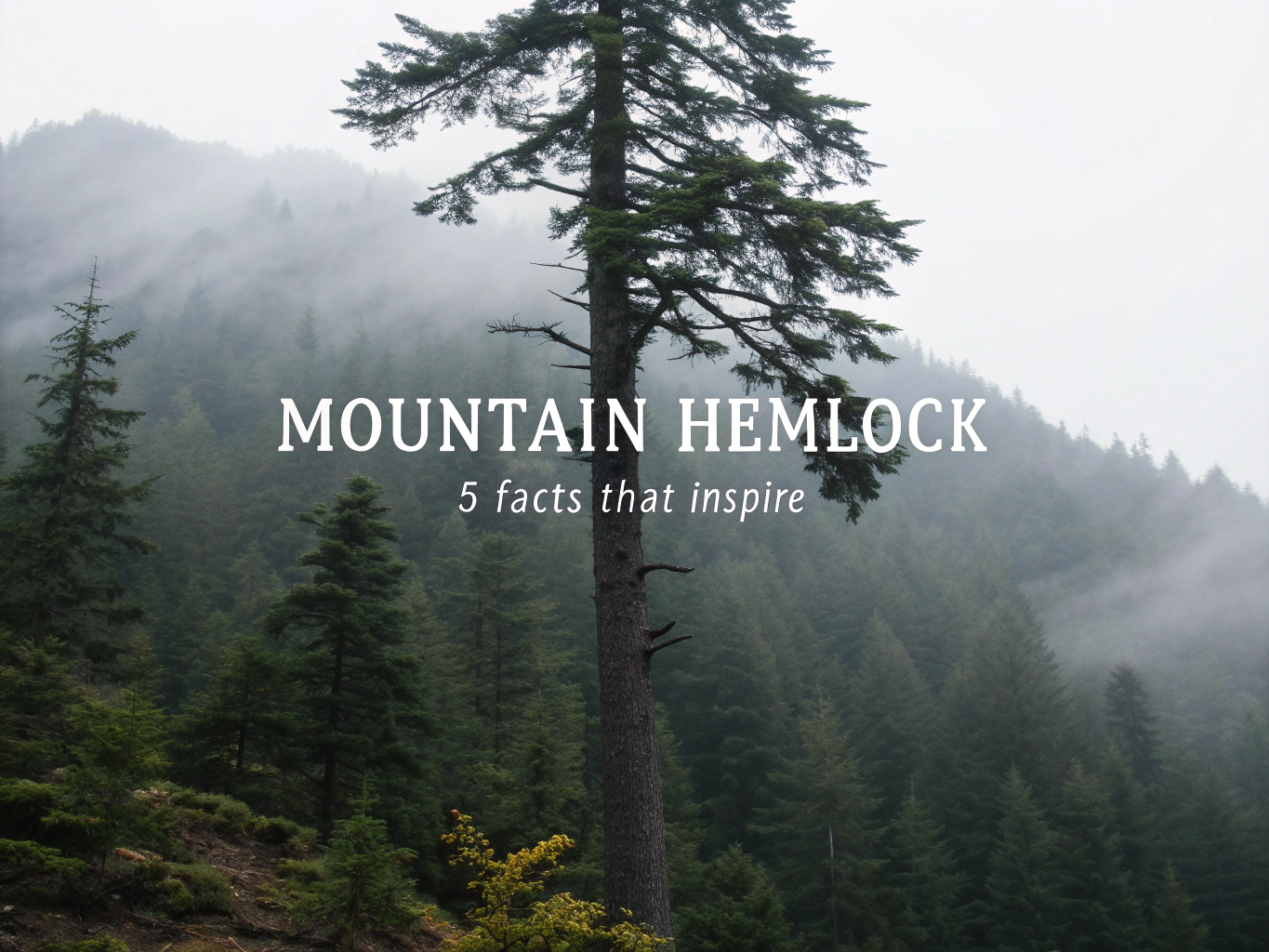

Have you ever spotted a bluish tree on a wind-swept ridge and wondered what it was? That is often the mountain hemlock. It grows near treeline and shows off blue-green needles, small cones, and a shape shaped by wind. It can live in old forests and start new ones after change. Read on for five facts that make this tree worth knowing.
Table of Contents
The mountain hemlock is a resilient conifer prized for its beauty, ecology, and design versatility. This guide explains what makes the mountain hemlock tree special and how to use it wisely in gardens and learning spaces.
II. Unique Physical Characteristics of Mountain Hemlock
Impressive Size and Growth Pattern
In native forests, this evergreen tree often reaches 75–100 feet, with rare giants over 150 feet; plan long-term space even for ornamental selections. For home sites, expect slow growth, so plant 12–15 feet from structures to give the narrow crown room to mature without pruning stress (Tsuga mertensiana profile).
Young trees build height steadily once established, then thicken with layered branches that cast light, dappled shade. Space multiple trees 15–20 feet apart to keep airflow healthy and reduce moisture-related issues on lower foliage.
Distinctive Trunk and Crown Features
Look for a strongly tapered trunk, drooping leader, and a spire-like crown that stays graceful even in snow. In older trees, bent or twisted crowns appear after wind or ice, which helps you identify mature mountain hemlock in mixed stands.
For quick field ID, check the branchlets: they hang slightly, and the crown narrows to a fine point rather than a blunt dome. This differentiates it from broad-topped conifers like species covered in our Douglas-fir wood guide.
Adaptable Growth Forms
Form shifts with exposure: tall and straight at lower elevations, then stunted and shrubby near treeline. Gardeners can use this trait by choosing compact forms for rock gardens and allowing moderate wind to keep the profile tight.
- Cold, windy site: expect a low, spreading form with dense, wind-clipped tips.
- Sheltered site with moisture: expect a taller, pyramidal tree with even tiers.
- Thin, rocky soil: growth slows; mulch to protect surface roots and retain moisture.
III. Native Range and Natural Habitat
West Coast Distribution
The species ranges from Alaska’s Kenai Peninsula through British Columbia and the Pacific Northwest, then south into northern California, with inland pockets in southeast BC, northern Idaho, and western Montana (FEIS: Tsuga mertensiana). In mixed stands, you’ll often see it with true firs and hemlocks, plus neighbors discussed in our cedar wood and larch wood resources.
High-Elevation Preferences
Peak abundance occurs in coastal subalpine belts, especially 5,200–10,010 feet in the Cascades and Sierra Nevada. In Alaska, trees can grow from sea level up to about 3,300 feet, reflecting strong snow tolerance and cool-summer growth.
| Region | Typical Elevation | Notes |
|---|---|---|
| Alaska (coastal) | Sea level–3,300 ft | Cool summers; persistent snowpack common |
| Cascades | 5,200–9,000 ft | Strong subalpine presence near treeline |
| Sierra Nevada | 6,500–10,010 ft | Thrives on moist slopes and basins |
| Inland BC/ID/MT | 4,000–8,000 ft | Patches on cold, moist aspects |
Climate Requirements
Cool, moist air and reliable winter snow favor the mountain hemlock tree, which handles short growing seasons well. For plantings, aim for sites with morning sun, afternoon shade, and steady soil moisture through summer.
Mountain hemlock typifies subalpine forests where snow lingers late into spring.
FEIS: Tsuga mertensiana
IV. Ecological Importance and Forest Role
Old-Growth Forest Component
As a key old-growth species in subalpine belts, it creates structure for birds, small mammals, and snow-dependent understory plants. Uneven-age stands with mountain hemlock improve winter windbreaks and slow snowmelt, which supports streamflow stability (BC Government: Mountain Hemlock).
Pioneer Species Capabilities
After fire or avalanches, seedlings can colonize cold, coarse soils and hold slopes together while other trees return. Foresters value this early presence for stabilizing colluvial material and jump-starting multi-layered forests.
Natural Pest Resistance
Compared with many conifers, mountain hemlock shows high resistance to common pests; laminated root rot and dwarf mistletoe are the main watch-outs. Keep stands spaced, manage debris, and avoid soil compaction to maintain vigor and reduce infection risk, a maintenance approach familiar from our Atlas cedar notes.
V. Distinctive Blue-Green Foliage and Cones
Spirally Arranged Needles
Needles wrap the twig in a gentle spiral and glow blue-green, giving year-round color that stands out against snow. For clear ID photos, shoot side-lighted branchlets and include a hand or ruler for scale (Tsuga mertensiana).
Characteristic Cone Features
Cones are oval, light brown, and about 2–3 inches long, hanging near the ends of branchlets. Collect cones in late summer, dry them in a paper bag, and store cool and dry if you plan small-scale propagation.
VI. Landscape and Cultivation Potential
Garden Design Applications
The slender, pyramidal habit suits rock gardens, narrow screens, and high-elevation themes where a sculptural conifer fits. Pair with heathers, dwarf rhododendrons, and stone mulch to highlight the blue-green needles; a simple care kit helps with staking and watering .
For multi-season interest, underplant with spring bulbs and summer ferns to match the tree’s cool palette. Avoid heavy shearing; use selective thinning cuts to keep natural tiers intact.
Urban Growing Conditions
In cities, mature specimens usually reach 25–30 feet tall and 10–15 feet wide, which works for modest yards and courtyards (Seattle: Mountain Hemlock). Plant in full sun to part shade, keep soils moist yet well drained, and mulch 2–3 inches deep without touching the trunk.
Water deeply in dry spells, especially during the first three summers, and check stakes after winds. Avoid siting under power lines or too close to eaves, since leaders tend to droop and regain height in spurts.

Size Considerations for Planting
Place trees at least 15 feet from buildings and 25 feet from overhead lines to accommodate the leader and crown. For hedging effects, stagger plants in a triangle at 12–15 feet; this keeps privacy while preserving each tree’s form (Seattle: Mountain Hemlock).
VII. Cultural and Artistic Inspiration
Literature and Storytelling
Families can pair hikes among hemlocks with a classic read-aloud, then ask kids to map the story’s setting on a simple trail sketch. Create a short reading log with favorite lines and one new word learned per chapter.
Here are a few mountain hemlock inspired picks for reading, art, and home.

The Bears on Hemlock Mountain — Timeless Children's Tale
- Charming coming-of-age story with gentle suspense
- Short, accessible chapters ideal for early readers
- Warm imagery that sparks imagination
- Themes of courage, family, and independence
- Perfect for read-alouds and classroom use
 Buy on Amazon
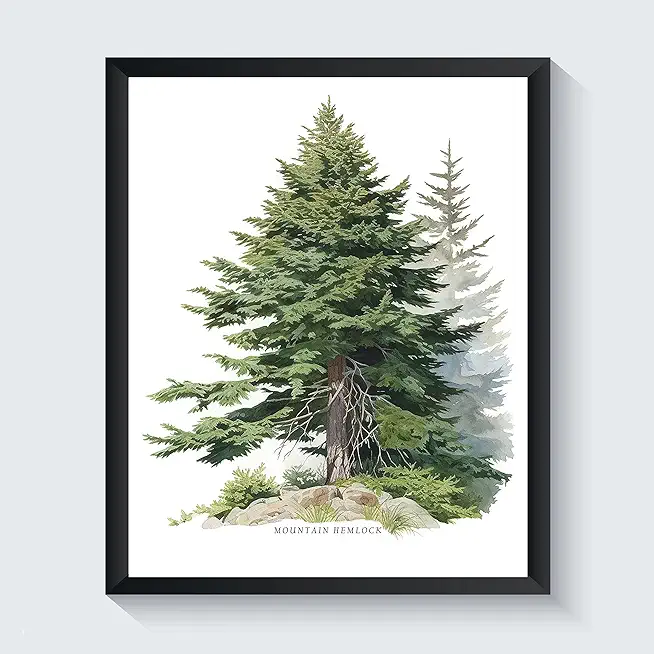
Mountain Hemlock 11x14 Art Print
- High-resolution nature print featuring mountain hemlock
- 11x14 unframed size fits standard frames
- Muted green palette suits Nordic and cottage decor
- Printed on quality paper for vivid detail
- Easy to display in living rooms or bedrooms
Buy on Amazon

Mountain Hemlock 8x10 Vintage Art Print
- Compact 8x10 size ideal for small spaces and shelves
- Vintage-style forest illustration with pine trees
- Unframed print fits standard mats and frames
- Printed on archival paper for lasting color
- Perfect for bathrooms, bedrooms, or gallery arrangements
Buy on Amazon

Hemlock Park Amber & Gold Coconut Wax Candle
- Handcrafted coconut wax blend for a cleaner burn
- Wood wick delivers a soothing crackle and steady flame
- Infused with palo santo and mountain sage essential oils
- Compact 7.2 oz size fits any room or gift box
- Made with natural ingredients and artisanal care
Buy on Amazon
Nature Art and Decor
Display a blue-green print above a wood bench and repeat the palette with mossy textiles. Add a small candle and a foraged cone on a tray to keep the look grounded and seasonal.
Educational Materials
Teachers can build a quick ID station: one pressed twig, one cone, a map card, and a short note on habitat. Invite students to compare needles and cones with a nearby species, then write two facts about snowpack and growth.
FAQs
What Are The Distinguishing Features Of Mountain Hemlock Trees?
Mountain Hemlocks Have Short, Soft Needles That Are Often Bluish-Green, A Slender, Conical Crown, And A Tendency For The Leader To Be Drooping Or Irregular In Exposed Sites. Bark Is Thin And Fissured On Older Trees, And Cones Are Small And Pendant. They Often Form Dense, Wind-Sculpted Stands At Subalpine Elevations And Show A Compact, Slow-Growing Habit In Harsh Sites.
How Tall Do Mountain Hemlocks Typically Grow?
In Optimal Conditions Mountain Hemlocks Commonly Reach 40–80 Feet (12–25 Meters), Though Specimens In Rich, Low-Elevation Sites Can Grow Taller—Up To About 100 Feet (30 Meters). In Harsh Subalpine Or Exposed Sites They Often Remain Stunted Or Develop A Krummholz Form Only A Few Feet Tall.
Where Do Mountain Hemlocks Naturally Grow?
Mountain Hemlock (Tsuga Mertensiana) Is Native To The North Pacific Coast Of North America, From Alaska South Through British Columbia, The Cascades, And Into The Sierra Nevada And Coastal Ranges Of Northern California. They Grow Primarily In Cool, Moist, High-Elevation Or Coastal Mountain Forests And Subalpine Zones.
What Are Ideal Growing Conditions For Mountain Hemlock?
They Prefer Cool, Moist, Well-Drained, Acidic Soils With Consistent Humidity And Summer Moisture. Partial Shade To Morning Sun Is Often Best, Especially At Lower Elevations; At Higher Elevations They Tolerate Full Sun. They Thrive Where There Is Good Air Circulation, Natural Snowpack In Winter, And Protection From Prolonged Heat Or Drought.
How Do You Care For A Mountain Hemlock In Your Garden?
Plant In A Sheltered, Cool Spot With Acidic, Well-Draining Soil; Amend With Organic Matter If Needed. Water Regularly During The First Few Years And During Dry Spells, Apply Mulch To Retain Moisture And Protect Roots, And Avoid Hot, Exposed Sites. Prune Sparingly To Maintain Form, Fertilize Lightly Only If Growth Is Poor, And Watch For Root Rot In Poorly Drained Soils. Choosing A Local Provenance Or Shade Helps Reduce Stress And Improves Establishment.