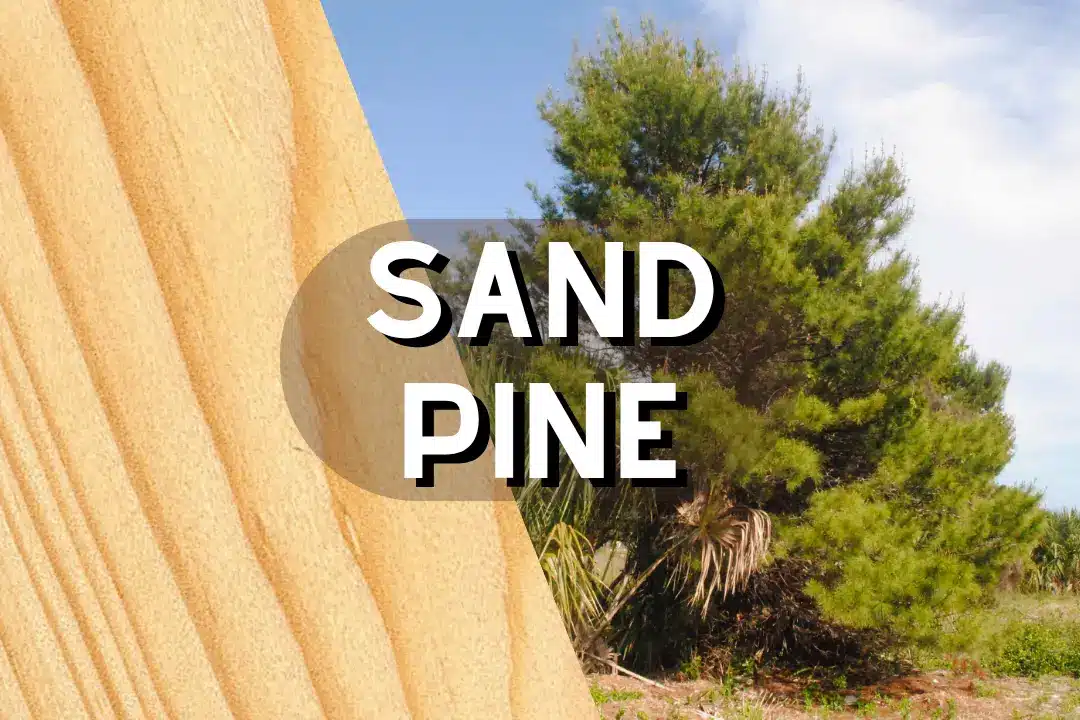

Did you know some pines keep their seeds trapped until a fire opens their cones? The sand pine (Pinus clausa) uses serotinous cones to wait for fire. It can make cones by age five and helps hold sandy soil in place. Its sand pine wood is mostly used for pulp and fuel, while the tree supports many scrub species like the Florida Scrub Jay.
Table of Contents
Sand pine (Pinus clausa) is a fire-adapted conifer native to Florida’s scrub that matures fast, stabilizes dunes, and shelters rare wildlife. This guide covers features, varieties, fire ecology, wood value, and practical management for landowners and students.
What Makes Sand Pine Unique Among Conifers
Scientific Classification and Names
Botanists place sand pine in the genus Pinus, species clausa; common names include “sand pine” and “Florida sand pine.” For technical details on taxonomy, growth, and ecology, see the USDA FEIS profile.
Physical Characteristics and Size
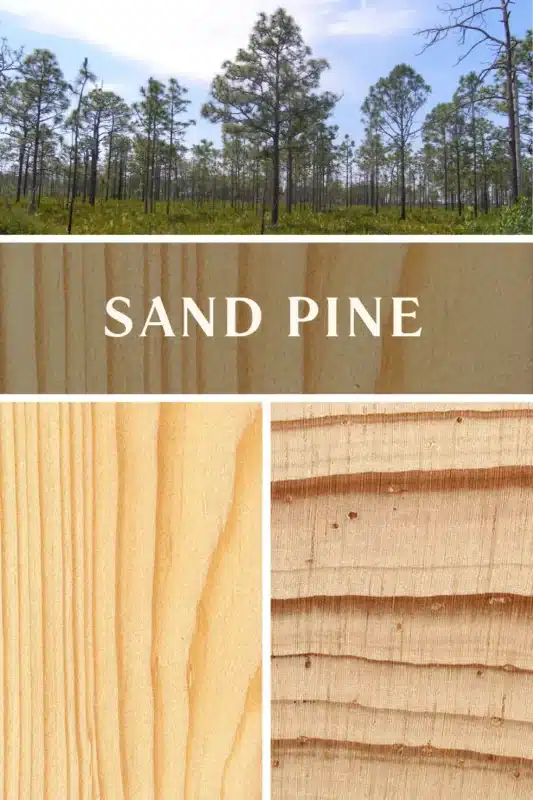
Sand pine is a small, narrow evergreen that often reaches 16–33 ft (5–10 m) and can hit 66 ft (20 m) on the best sites. Needles grow in pairs (2–4 in / 5–10 cm), the bark is thin and flaky, and many trees show a leaning habit with dense, divided branches.
Geographic Distribution
This species is endemic to the Southeast, centered in central and northern Florida, with outlying stands in south Georgia and Alabama. It thrives on dry, well-drained, acidic sands derived from ancient dune and marine deposits.
1. Fire-Dependent Reproduction Sets Sand Pine Apart
Serotinous Cone Adaptation
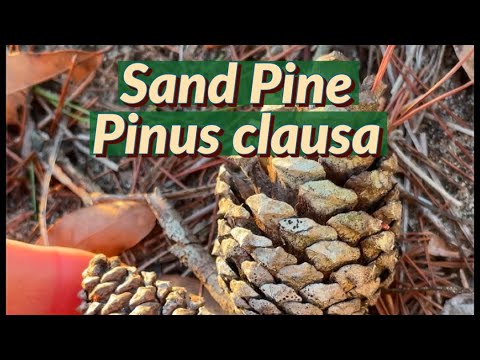
Many stands carry closed, resin-sealed cones that stay shut for years until intense heat opens them. This “serotiny” times seed release with ash-enriched soil and open light, a classic strategy among fire-adapted pines documented in the USDA FEIS profile.
Post-Fire Regeneration Process
After a hot burn, cones heat, scales part, and seeds shower bare sand, where sunlight is abundant and competition is low. Germination follows quickly, producing dense cohorts that rebuild the sand pine forest within a few seasons.
Natural Fire Cycles
In sand pine scrub, natural fire intervals often span a few decades, long enough for heavy cone crops to accumulate. Without periodic fire, shade-tolerant oaks expand, and sand pine can be replaced by mixed hardwoods.
Browse these curated books if you’re studying fire-adapted pines and sandy habitats.
2. Two Distinct Varieties Serve Different Purposes
Ocala Sand Pine (Pinus clausa var. clausa)
Ocala sand pine dominates central and northeastern Florida scrub and bears strongly serotinous cones. Stands often contain many years of closed cones that open en masse following a hot wildfire, leading to dense regeneration pulses (Pinus clausa).
Choctawhatchee Sand Pine (Pinus clausa var. immuginata)
This variety occupies northwest Florida and southern Alabama, with cones that open at maturity without fire. Growth is often straighter, making it suitable for limited timber use and regional tree farms for holiday markets.
| Trait | Ocala sand pine | Choctawhatchee sand pine |
|---|---|---|
| Cone behavior | Serotinous; fire opens cones | Non-serotinous; opens at maturity |
| Primary range | NE & Central Florida | NW Florida & S Alabama |
| Form | Often leaning, twisted | Usually straighter |
| Use potential | Restoration, wildlife habitat | Some timber; Christmas trees |
Christmas Tree Applications
Growers in the panhandle prefer the straighter Choctawhatchee type for small-scale Christmas trees. Its denser branching and form produce a classic shape without heavy shearing.
3. Critical Habitat for Endangered Species
Florida Scrub Jay Dependency
The Florida scrub jay relies on scrub mosaics that include sand pine patches, open sandy gaps, and low oaks for foraging. Management that maintains patchiness helps jays nest, cache acorns, and move across the scrub (UF/IFAS overview).
Over 20 Threatened Species
Sand pine scrub supports over 20 listed species, including the Florida sand skink, gopher tortoise neighbors, and rare scrub insects. Dense cover and seed crops aid birds and small mammals while open sand offers basking and burrowing sites.
Ocala National Forest’s Big Scrub
The Big Scrub in Ocala National Forest contains roughly 250,000 acres of sand pine and scrub, the largest continuous stand of its kind. Land managers use prescribed fire and mechanical treatments to keep habitat in a mosaic state for wildlife.
4. Limited Commercial Value Despite Ecological Importance
Sand Pine Wood Characteristics
Sand pine wood tends to be small in diameter with a twisted grain, which limits high-grade lumber recovery. For construction comparisons, see how builders evaluate construction wood and why straight-grained species are preferred.
Pulp and Fuel Uses
Mills mainly chip sand pine for pulp and fiberboard, and some stands are cut for low-grade fuel. The small, lean stems align better with fiber markets than with structural framing.
- Common outputs: paper pulp, chip-n-saw, mulch.
- Occasional uses: poles, posts, craft wood.
- Local fuelwood where other species are scarce.
Construction Limitations
Because stems are short and often crooked, sand pine rarely competes with yellow pine or other staple framing species in markets. Extension notes consistently rate its timber value as limited (Port St. Lucie Botanical Gardens).
5. Remarkable Early Maturity and Soil Stabilization
Cone Production at 5 Years
Sand pine can set cones as early as five years, with Ocala stands often producing frequent crops. Early seed output helps rapid recovery after fire and supports small wildlife.
Fibrous Root System Benefits
A dense, fibrous root network grips loose sand and resists erosion on dunes and dry ridges. This trait makes the species valuable in reclamation, road cuts, and large-scale restoration sites.
Sandy Soil Erosion Control
Use sand pine on deep, acidic sands with full sun where quick cover and long-lived roots can hold the substrate. Mix with scrub oaks and native grasses to create multi-layer cover that resists windblown erosion.
Growing and Managing Sand Pine
Propagation Methods
Seeds germinate well after cold-dry storage; use open trays or tubes with a gritty, acidic medium. For landscape trials, start several seedlings because form varies and some trees lean or branch awkwardly.
Soil and Sunlight Requirements
Plant in full sun on fast-draining sands; avoid low, wet sites where root rot can spread. Native scrub soils are nutrient-poor, so go light on fertilizer to keep growth compact and wind-firm.
If your goal is furniture, consider proven species from these types of wood for furniture guides instead of sand pine. Straight-grained options mill cleaner and finish with less waste.
Maintenance Considerations
Prune lightly during dry weather to correct lean and reduce breakage, but avoid heavy topping which invites decay. For restoration blocks, favor group planting and plan for periodic prescribed fire or mechanical thinning.
Conservation Challenges and Restoration Uses
Threats from Development
Urban expansion fragments scrub, isolates wildlife, and removes the open sandy patches that rare species need. Conservation plans prioritize large, connected tracts and use prescribed fire to keep scrub in a patchwork state.
Pest and Disease Susceptibility
Bark beetles, sawflies, and root rots can cause local declines, especially in stressed, overcrowded stands. Reduce losses by planting on suitable sites, avoiding overwatering, and thinning if crowns become heavily suppressed.
Large-Scale Restoration Projects
Agencies use sand pine in dune repair, mined land reclamation, and scrub restoration where fast cover and seed rain rebuild plant communities. Its quick maturity and fibrous roots make it a practical first-wave species for sandy ecosystems.

Sand and Fire — Pine Barrens Landscape
- Rich photographic exploration of Pine Barrens ecosystems
- In-depth look at fire ecology and rare dune habitats
- Blends scientific insight with engaging narrative
- Ideal for naturalists, students, and landscape enthusiasts
- High-quality images and accessible writing
 Buy on Amazon
Keep patches varied in age and density; diversity in structure supports more scrub species.
Field notes
For construction comparisons beyond sand pine wood, explore how builders rate Douglas fir wood for framing and how that differs from scrub pines.
FAQs
What Are The Characteristics Of A Sand Pine Tree?
Sand pine is a small-to-medium evergreen with short, stiff needles usually in pairs, a compact or irregular crown, thin scaly bark, and relatively small, stout cones; it is well adapted to dry, nutrient-poor sandy soils and tolerates drought and periodic fire.
Where Do Sand Pine Trees Typically Grow?
Sand pines naturally occur in the southeastern United States—especially Florida and parts of the coastal plain—growing on well-drained sandy ridges, dunes, scrub, and xeric flatwoods where soils are poor and drainage is rapid.
How Can You Identify A Sand Pine?
Identify sand pine by its short needles in bundles of two, relatively short and often resinous cones that may remain closed until heat or fire, an irregular crown, and thin, flaky bark; the overall compact appearance and preference for sandy sites are also clues.
What Is The Lifespan Of A Sand Pine Tree?
Sand pines typically live several decades to over a century in favorable conditions—commonly around 50–150 years—though harsh, nutrient-poor sites and frequent disturbance can shorten their lifespan.
Are Sand Pines Good For Reforestation Projects?
Sand pines can be useful for reforestation on sandy, degraded sites because they establish quickly, tolerate drought, and help stabilize soils, but they are best used where native species are appropriate; consider biodiversity goals, local provenance, and fire management before relying on them exclusively.