
Have you ever stood beneath a maple tree and wondered if it was a black maple or a sugar maple? They can look very similar at a glance. Small clues in the leaves, the bark, and a curious pair of “fleshy ears” at the leaf base tell the real story. Read on for five clear facts that make the black maple tree easy to spot and care for.
Table of Contents
The black maple (Acer nigrum) is a native North American shade giant with distinctive leaves, bark, and syrup-worthy sap that set it apart from sugar maple. This guide covers black maple identification, care, comparisons, ecology, and even décor ideas for 2026.
What Makes Black Maple Trees Unique
Distinctive Leaf Characteristics
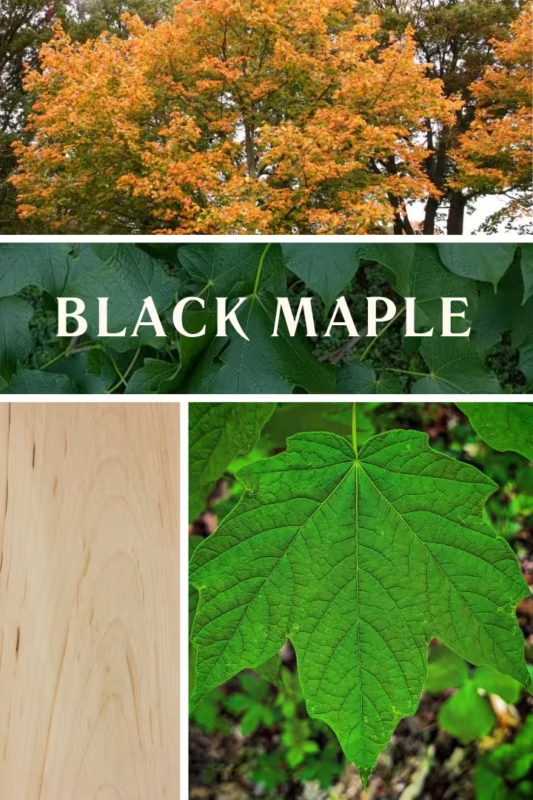
Leaves often show three strong lobes with drooping sides, giving black maple its soft, relaxed look compared with sugar maple’s five, sharper lobes. You’ll also see a slightly hairy underside and smoother margins that help with fast field ID.
Color cues help too. Summer foliage is a darker green, then shifts mainly to yellow in fall rather than the frequent orange tones of sugar maple.
Dark Bark and Growth Patterns
Mature bark appears dark and deeply furrowed, creating strong texture on large trunks and older limbs. The crown becomes dense and rounded with age, and the tree reaches about 60–100 feet tall and 40–50 feet wide at full maturity.
Growth is moderate. Black maple tends to grow a bit slower than sugar maple, which matters for yard planning and long-term shade goals.
Wood from hard maples is valued in furniture and instruments, though most commercial boards are labeled sugar maple; for wood grain study and project ideas, see maple wood. If you’re curious about figure types, compare curly maple and birdseye maple for distinct patterns.
Native Range and Habitat
Black maple grows across the eastern and central U.S., favoring moist, fertile soils on floodplains and forests while tolerating alkaline sites and some dryness. It’s hardy in USDA Zones 4–8, handling full sun to part shade and even full shade in cooler regions; see the Black maple profile for regional notes and care details.
Black Maple Identification Guide
Key Visual Differences from Sugar Maple
Spot the three-lobed look, drooping sides, and hairy leaf undersides to separate black maple from sugar maple’s crisper five-lobed leaves. For quick field checks across native North American maple trees, Purdue’s guide on distinguishing maples is handy.

Cross-check your tree with a broader family view to increase accuracy. This quick refresher on types of maple trees adds context across species and common lookalikes.
Seasonal Changes and Fall Colors
Expect a deep green canopy in summer that shifts to a strong yellow palette in fall. Sugar maple often mixes in orange, while black maple typically keeps to the yellow range.
Signature Fleshy Ears at Leaf Base
Look at the petiole base for small stipules, often called “fleshy ears.” That tiny feature is a reliable field marker many novices miss during early ID practice.
Black Maple vs Sugar Maple Comparison
Leaf Shape and Texture
Black maple leans toward three main lobes with drooping sides and a hairy underside, while sugar maple shows five crisp lobes with smoother texture. For horticultural notes across both species, browse the Morton Arboretum entry and compare traits across your region.
| Trait | Black Maple (Acer nigrum) | Sugar Maple (Acer saccharum) | Norway Maple (Acer platanoides) |
|---|---|---|---|
| Lobes per Leaf | 3–5 (usually 3) | 5 | 5–7 (usually 7) |
| Leaf Underside | Hairy | Less hairy | Smooth |
| Leaf Edge/Carriage | Smoother, drooping | Crisp, not drooping | Broad, more lobes |
| Fall Color | Yellow | Orange/yellow | Yellow |
| Native/Invasive (US) | Native | Native | Invasive |
Fall Color Variations
Black maple favors a clear yellow show from canopy to groundcover. Sugar maple mixes in bolder oranges, which can mislead quick ID in mixed-species stands.
Growth Rate Differences
Expect moderate growth from black maple, slower than sugar maple in many sites. Plan spacing and pruning schedules to support a dense, rounded crown over time.
Growing and Caring for Black Maples
Ideal Soil and Sun Conditions
Choose moist, well-drained soil with neutral to slightly acidic pH, though black maple tolerates alkaline conditions. Aim for full sun to part shade in hot summers, with extra watering through the first two growing seasons.
- USDA Zones 4–8 tolerance; shade-friendly in cooler areas.
- Handles occasional drought once established; keep soil evenly moist early on.
- Works in river bottoms, loams, and high-pH sites better than many maples.
- Mulch 2–3 inches deep to moderate moisture and soil temperature.
Planting and Establishment Tips
Plant saplings during spring or fall for quicker root take and less transplant shock. Water deeply after planting, then follow a steady schedule through the first growing year.
- Dig a hole 2–3 times wider than the root ball, no deeper than the root flare.
- Set the root flare at or slightly above grade; backfill with native soil.
- Water to settle soil; add 2–3 inches of mulch, keeping it off the trunk.
- Stake only if wind-exposed; remove stakes after one season.
- Water 1–2 inches per week during the first year, rain included.
Pruning and Maintenance
Prune in late winter to remove dead, damaged, or weakly attached limbs and to keep strong structure. Space scaffold branches, maintain a single leader, and sanitize tools between cuts.
Prune during dormancy to reduce sap bleed and lower disease risk on maples.
Purdue Extension
Watch for leaf scorch in heat waves and water during dry spells. If you’re assessing lumber or storm salvage, compare figure types like spalted maple wood and ambrosia maple for project uses.
Decorative Black Maple Products for 2026
Realistic Black Maple Leaves and Stems
These artificial black maple leaves make bold centerpieces, wreaths, and seasonal accents for easy home styling. Pick sets that match your vase height and desired fullness.

Janinka 29-inch Black Currant Maple Stem - 3 Pack
- Lifelike black currant maple leaves for dramatic seasonal displays
- 29-inch stems ideal for vases and table centerpieces
- durable silk construction for repeated use
- easy to arrange into bouquets or farmhouse decor
- perfect for Halloween and Thanksgiving styling
 Buy on Amazon

RECUTMS Pack of 6 Black Maple Leaf Stems
- Six realistic silk maple leaf stems for fuller arrangements
- natural-looking texture and color for seasonal displays
- flexible stems make arranging simple and customizable
- ideal for table centerpieces, wreaths, or bouquets
- durable and reusable for multiple holidays
Buy on Amazon

XunYee 8-Pack Black Maple Leaf Branches
- Eight stems provide plenty of material for bouquets and centerpieces
- faux maple leaves offer a dramatic black autumn look
- flexible stems are easy to trim and arrange
- lightweight pieces work well in vases or table displays
- ideal for Thanksgiving and Halloween decorating
Buy on Amazon

500-Pack Black Artificial Maple Leaves
- Huge 500-piece set for table scatter, confetti, or craft projects
- realistic shape and texture for convincing displays
- great for weddings, Halloween, and seasonal events
- lightweight and easy to arrange across surfaces
- reusable and simple to store between uses
Buy on Amazon
Black Maple Garlands for Seasonal Decor
Garlands shape mantels, banisters, and photo backdrops in minutes, giving you consistent color without mess. Layer two runs for extra depth or lighted accents for warm ambiance.

11.8ft Black Maple Leaf Garland - 2 Pack
- Long 11.8ft garlands give generous coverage for mantels and doorways
- realistic maple leaves add seasonal texture and color
- lightweight and flexible for easy hanging
- great for weddings, parties, and holiday displays
- reusable and easy to store after use
Buy on Amazon
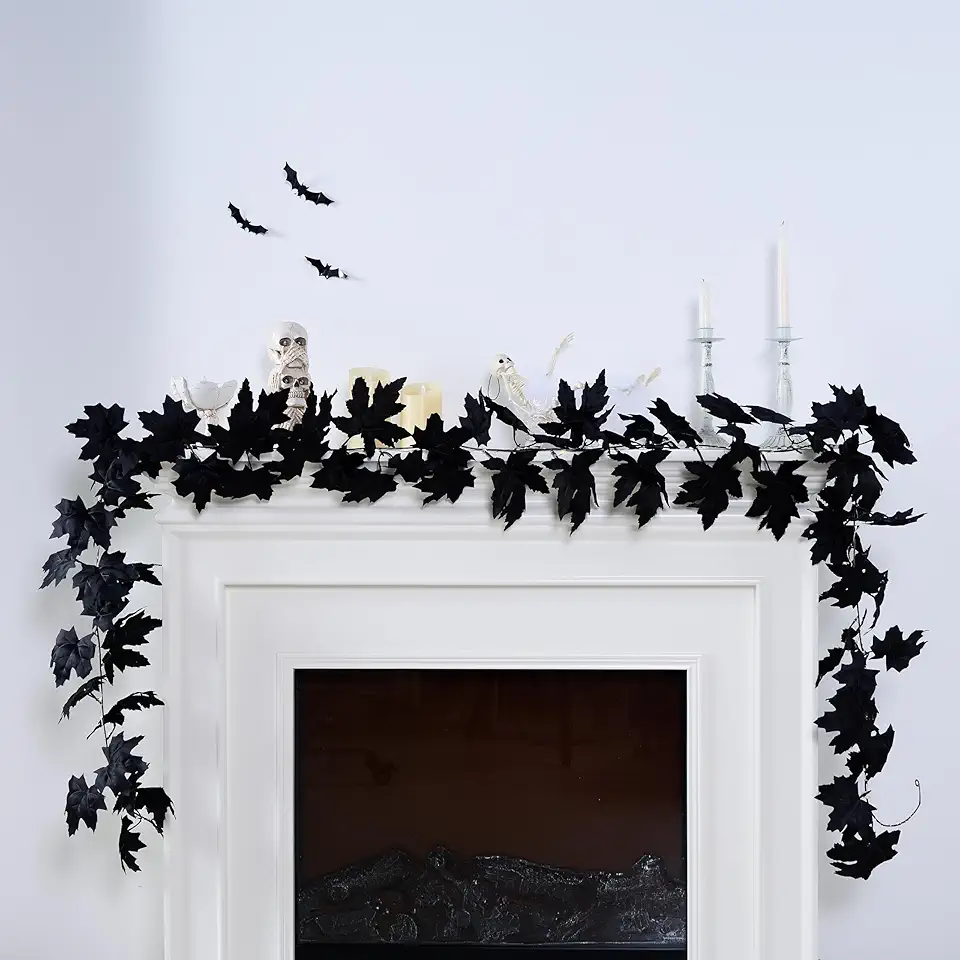
9ft Pre-Lit Black Maple Garland
- Thick, full garland with built-in lights for instant ambiance
- 9ft length covers mantels, staircases, or long tables
- warm pre-lit glow enhances Halloween and fall scenes
- easy to hang and shape for custom looks
- reusable seasonal decoration for indoor displays
Buy on Amazon
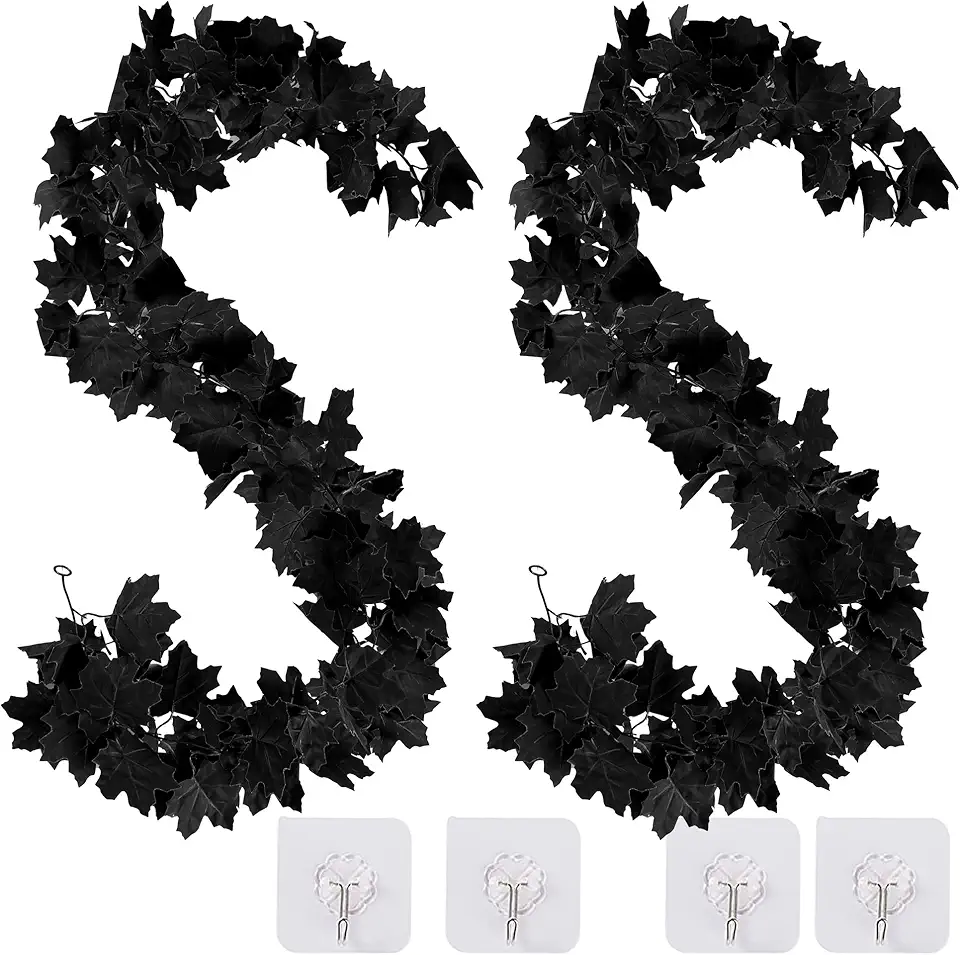
Sggvecsy 2-Pack 5.7ft Black Maple Garlands
- Two 5.7ft garlands for layered or double-sided décor
- realistic black maple leaves for a bold seasonal statement
- easy to drape over mantels, railings, or tables
- lightweight and simple to secure with hooks or tape
- reusable for parties, weddings, and holiday setups
Buy on Amazon

2-Pack Black Maple Leaf Garlands
- Two matching garlands for symmetrical or doubled-up decor
- artificial maple leaves offer consistent seasonal color
- flexible and lightweight for easy hanging and styling
- perfect for parties, weddings, and holiday backdrops
- durable material ready for reuse year after year
Buy on Amazon
Lighted and Themed Black Maple Decorations
Lighted branches and themed mini trees add focal points for Halloween parties and fall displays. Use timers and dimmers to set scene lighting and reduce plug clutter.

120-LED Lighted Black Maple Branches (32 in)
- 120 LEDs in orange and warm white create a spooky, warm glow
- 32-inch branches bend and shape for custom arrangements
- 10 lighting functions plus timer for easy control
- plug-and-play setup for quick decorating
- perfect centerpiece lighting for Halloween and fall décor
Buy on Amazon

4ft Black Maple Halloween Tree with LED Skull Lights
- 4ft tree with 96 LED skull lights for eye-catching spooky decor
- waterproof design suitable for indoor or outdoor use
- dimmable lights and timer for customized display
- included 16ft cord gives flexible placement options
- decorated with spiders for an instant Halloween focal point
Buy on Amazon
Black Maple’s Ecological Importance
Wildlife and Pollinator Support
Spring flowers feed insects, and the large canopy shelters birds and small mammals. Mixed hardwood stands gain diversity from black maple’s genetic overlap with sugar maple.
Conservation Status and Rarity
Black maple is less common in parts of New England, so preserving wild specimens in those areas helps maintain regional diversity. See the Go Botany species page for habitat and trait notes you can apply to local surveys.
Native vs Invasive Maple Species
Don’t confuse black maple with Norway maple, which spreads aggressively and displaces native understory. If you’re weighing yard choices, browse quick profiles of types of maple trees and pick species that support local habitats.
Black Maple in Maple Syrup Production
Sap Quality and Sugar Content
Black maple sap boils down into rich maple syrup similar to sugar maple, thanks to hard maple sugars and flavor compounds. Many sugarbushes include natural hybrids, which still produce excellent syrup.
Woodworkers prize dense hard maple boards for furniture and floors, showing that the species supports both culinary and material uses. For project planning, skim this overview of maple wood and match boards to your build.
Tapping Season and Methods
Tap in early spring when days rise above freezing and nights drop below, which drives sap flow. Learn basic methods and site selection from this concise maple trees guide before you place your first spile.
Commercial vs Backyard Production
Sugarhouses scale with tubing systems and evaporators, while backyard setups use a few taps, food-grade buckets, and a propane burner or small evaporator pan. Start small, keep good records, and upgrade gear as your yields grow for a simple kit.
FAQs
What Are The Differences Between Black Maple And Sugar Maple?
Black maple (Acer nigrum) and sugar maple (Acer saccharum) are very similar species, but black maple typically has leaves with fewer, more drooping lobes and a downy underside, while sugar maple leaves are usually more sharply lobed with smoother undersides. Bark and overall form are alike, though black maple can appear darker and sometimes coarser; genetic variations and hybrids are common, so leaf shape, hairiness on the leaf underside, habitat, and fall color patterns are the best ways to distinguish them.
How Can I Identify A Black Maple Tree?
Look for leaves that often have three broad, drooping lobes and a fuzzy or downy underside, especially along the veins. The tree’s bark becomes furrowed and dark with age, and the samaras (winged seeds) appear in paired clusters like other maples. Habitat can help too—black maple tolerates slightly drier, lower-quality soils in some regions. When in doubt, compare leaf hairiness and lobe shape to nearby sugar maples or consult a local arborist.
Is Black Maple Wood Good For Furniture?
Yes; black maple wood is very similar to sugar maple and is valued for furniture, cabinetry, flooring, and musical instruments. It’s a hard, dense wood with a fine, attractive grain that finishes well. Availability and figure can vary, so while it’s excellent for furniture, costs and workability may differ slightly from commercial sugar maple depending on local supplies.
Does Black Maple Produce Good Syrup?
Yes, black maple produces sap that can be boiled down to make maple syrup and the flavor is comparable to syrup from sugar maples. Sap sugar content and yield can vary by tree and site, and sugar maple is often preferred for slightly higher and more consistent sugar concentrations, but black maple is a perfectly good source for syrup if tapped and processed correctly.
How Do You Care For A Black Maple Tree?
Plant black maples in well-drained soil with full to partial sun and water regularly during establishment. Mulch to conserve moisture and protect the trunk, prune dead or crossing branches in late winter, and avoid compacting roots or deep planting. Monitor for common maple issues (aphids, scale, tar spot, verticillium wilt) and provide professional care if pests or diseases appear; fertilize only if a soil test indicates a deficiency.