
Did you know that the lignum vitae tree is so dense it actually sinks in water? This incredible characteristic is just one aspect that makes this unique tree stand out. Dive into the world of lignum vitae as we explore its fascinating wood properties, historical significance, and the challenges it faces today. Whether you’re a nature enthusiast or just love discovering fun facts, this tree has stories to tell.
Table of Contents
The lignum vitae tree is a small evergreen famous for its incredibly dense wood and striking blue flowers. This guide covers the tree’s biology, the properties of lignum vitae wood, uses, history, and current conservation facts.
Lignum vitae tree overview
Species and names
The lignum vitae tree mainly refers to Guaiacum officinale and Guaiacum sanctum, two closely related species prized for dense timber and ornamental value. You may also hear common names like palo santo, “bastard greenheart,” and “bois saint,” reflecting its long trade history across the Caribbean.
Size and form
Mature trees usually grow 20–30 feet tall (6–9 m) with a trunk about 1–2 feet thick. In dry or windy sites, G. sanctum often stays shorter at roughly 2.4–3.7 m, forming a stout, multi-stem habit with strong branching.
Leaves, bark, crown
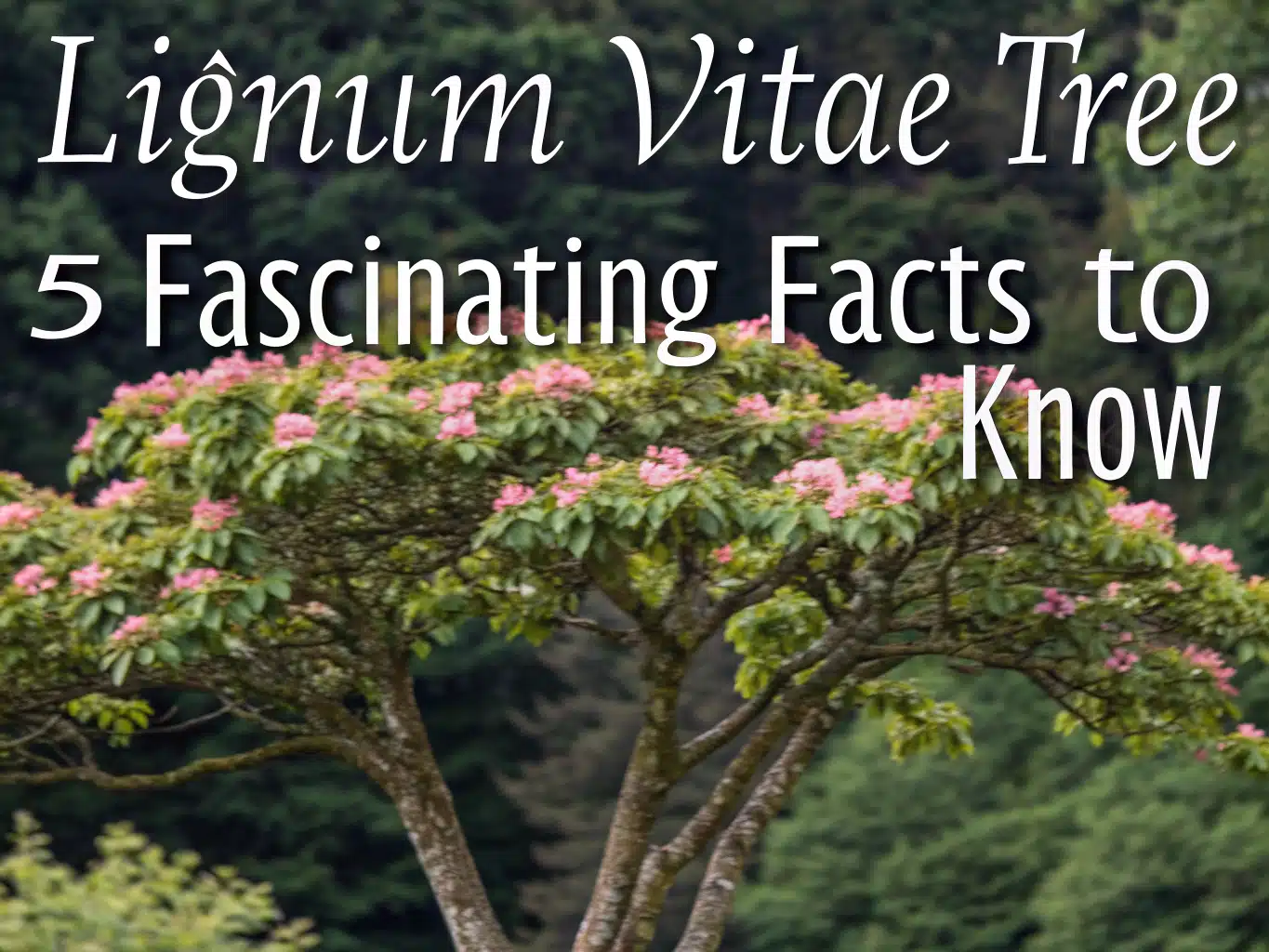
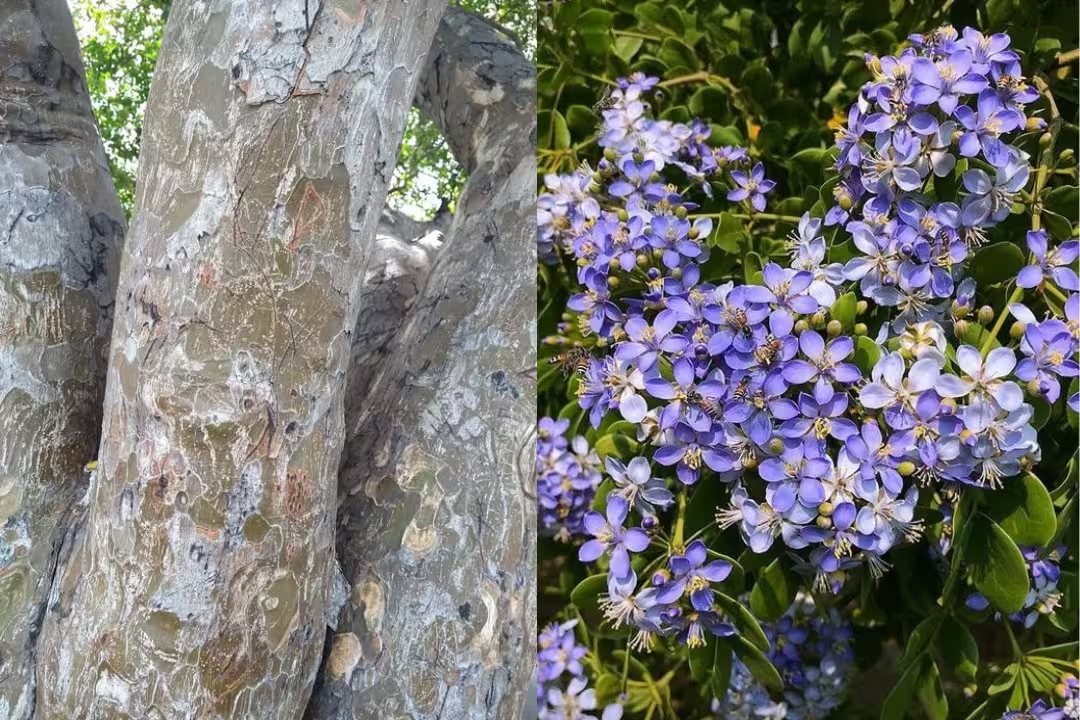
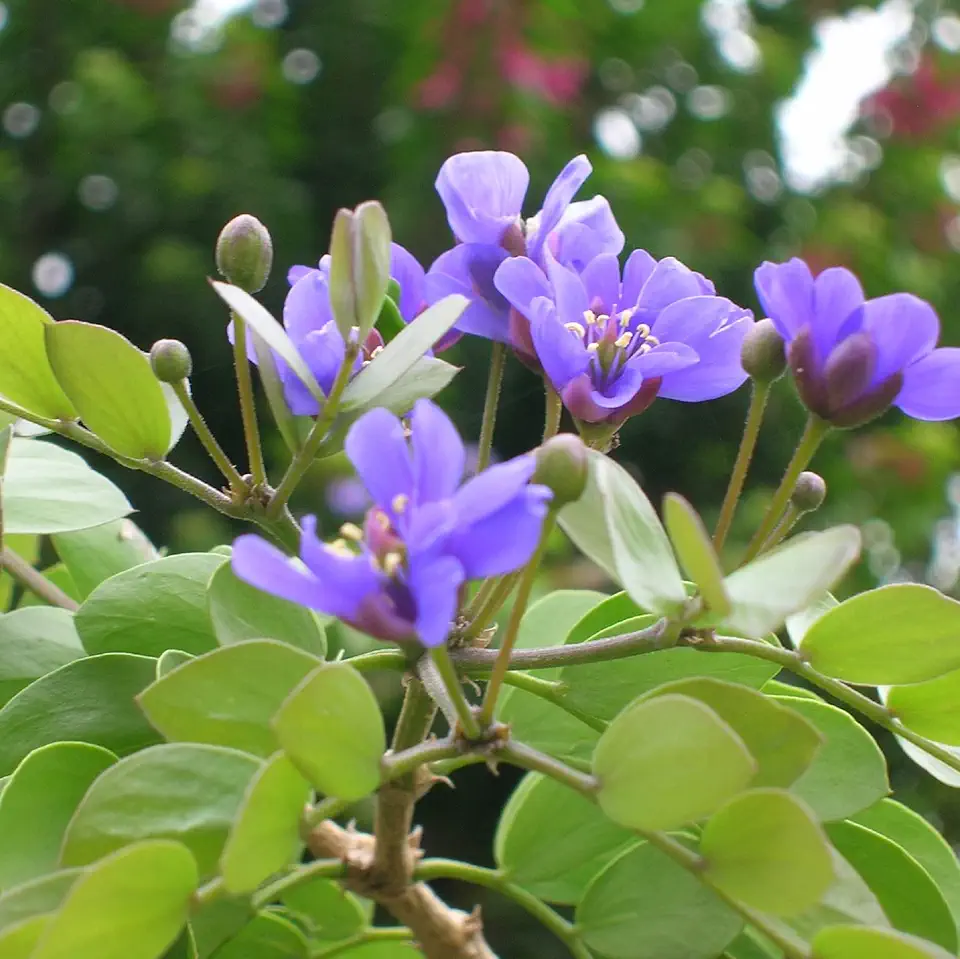
The crown is compact with waxy, olive-green leaflets that hold year-round. Bark ranges from mottled creamy white and gray to dark brown, giving mature trunks a distinct, textured look.
Flowers and bloom
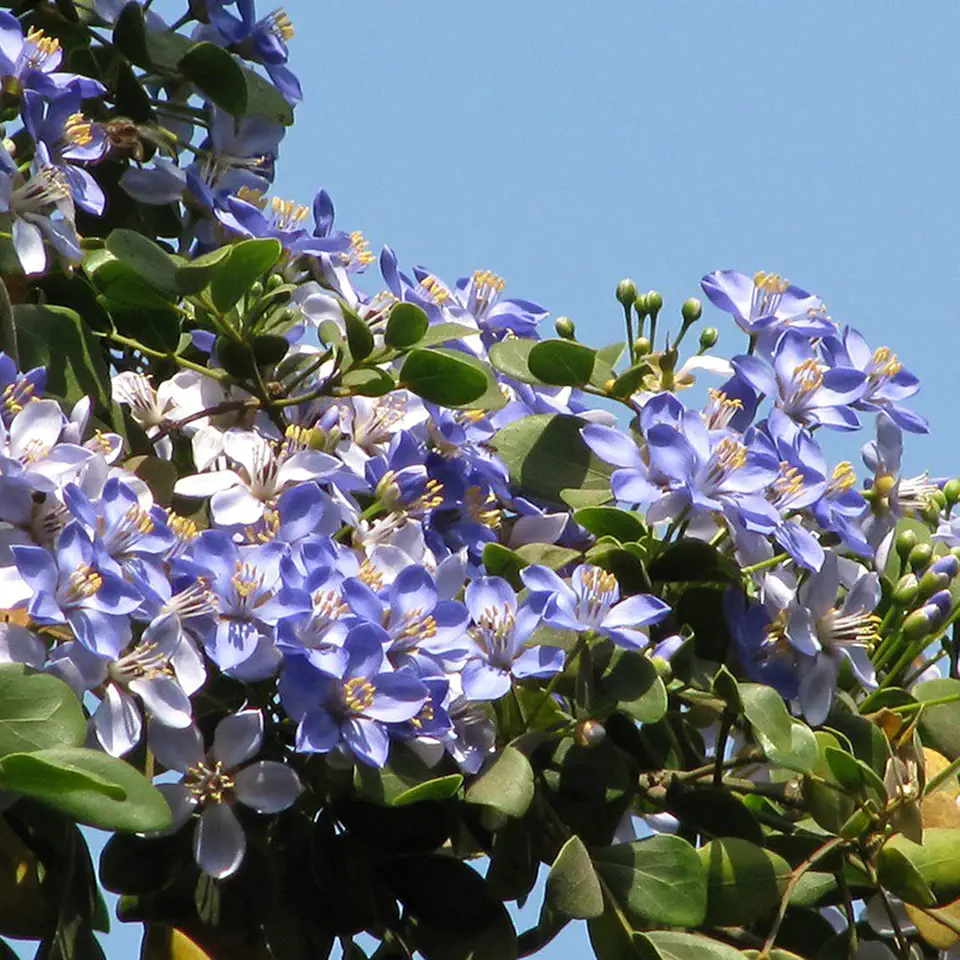
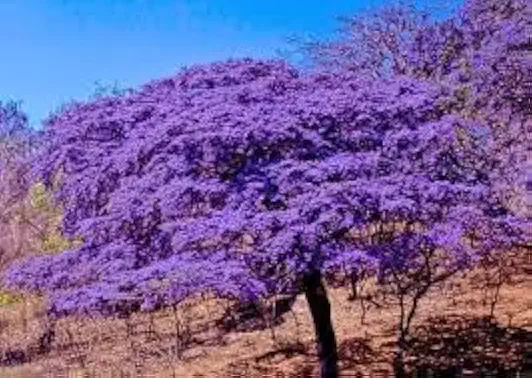
Five-petaled blossoms appear purplish-blue to sky blue, and occasionally white. Trees flower in spring and often sporadically through the year, adding subtle fragrance and pollinator appeal.
Fruit and seeds
Fruits are flattened, heart-shaped orange capsules that split to reveal glossy black seeds. Each seed sits in a bright red aril that attracts birds when ripe.
Native range and habitat
Lignum vitae is native to the Caribbean, the Bahamas, Central America, and northern South America. It handles dry, coastal, and rocky sites, making it a tough Brazilian wood region neighbor and a resilient choice for xeric gardens.
1. Densest commercial wood
Dried density 79 lb/ft³
Lignum vitae wood averages about 79 lb/ft³ (≈1,260 kg/m³) when dry, leading all major trade timbers by a wide margin. For a clear overview of its dense structure and workability, see Woods to Know: Lignum Vitae.
Specific gravity 1.09
The specific gravity sits near 1.09, above most hardwoods and even above water. That extreme density pairs with natural oils to create a tough, wear-resistant material.
| Property | Typical Value |
|---|---|
| Dried density | ≈ 79 lb/ft³ (1,260 kg/m³) |
| Specific gravity | ≈ 1.09 |
| Water behavior | Sinks |
Sinks in water
Dry boards will sink in water, unlike most woods that float. This property reflects the extraordinarily compact cell structure and high oil content.
Implications for use
High density means superb wear resistance for parts like bearings and pulleys. It also means cutting is slow and heavy, so compare tool plans and finishes with dense species like snakewood or ebony wood to manage weight and tooling time.
2. Hardness and durability of lignum vitae wood
Janka hardness 4,390 lbf
On the Janka scale, lignum vitae reaches about 4,390 lbf, far above hickory (1,820) and red oak (1,290). See the comparative figures on Lignum vitae for context on hardness and density.
Oily, self-lubricating
Natural guaiac resin gives the wood a self-lubricating surface that reduces friction. Parts run cooler and last longer under load, a major edge for moving components.
Marine and mechanical uses
Historic and modern uses include ship shaft bearings, propeller bushings, pulley sheaves, mallets, and precision wear pads. The combo of hardness, oiliness, and dimensional stability suits wet, high-load settings.
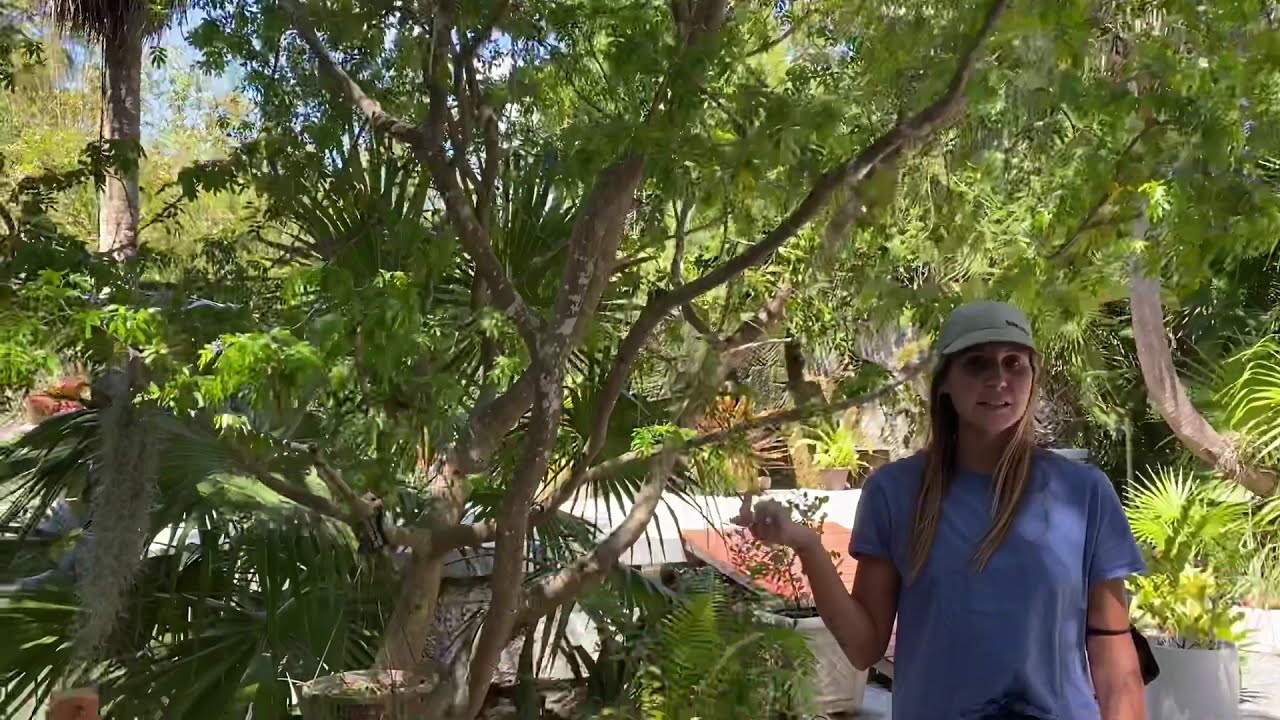
For a quick look at density and sinking behavior, watch this short clip on super-dense wood in action.
Decay and insect resistance
Extractives in the heartwood resist decay and borers, even in warm marine zones. This durability cuts maintenance for parts that see salt spray and abrasion.
Woodturning stock
Turners prize this species for dense, clean details in mallets, bearings, and gauges; sharp tools and slow feeds work best. Ready-to-use blanks speed up small projects and testing of finishes

Lignum Vitae Wood Bar 1.5 x 1.5 x 12 in
- Dense, oil-rich hardwood ideal for turning and precision projects
- Naturally self-lubricating and wear-resistant for bearings and tools
- Stable, heavy timber with excellent finishing properties
- Pre-cut to 1.5 x 1.5 x 12 inches for convenient use
- Suitable for marine, mechanical, and specialty woodworking
 Buy on Amazon
3. Medicinal history and “wood of life”
Name origin
The Latin name translates to “wood of life,” a nod to herbal use by sailors and coastal communities. Trade records and diaries often cite lignum vitae in apothecaries and ship chests.
“Lignum vitae” reflects a long-held belief in the wood’s life-giving properties.
Traditional saying
Resin and folk remedies
Guaiac resin and teas were used for coughs and aches, including arthritis and bronchial issues in folk medicine. A helpful overview of these historical uses appears in Lignum Vitae information.
Medicinal hardwood legacy
Modern practice treats these claims with care, yet the tree’s cultural legacy remains rich. You’ll still see references to guaiac extracts and traditional recipes shared among Caribbean families.
4. Conservation status and slow growth
Slow-growing evergreen
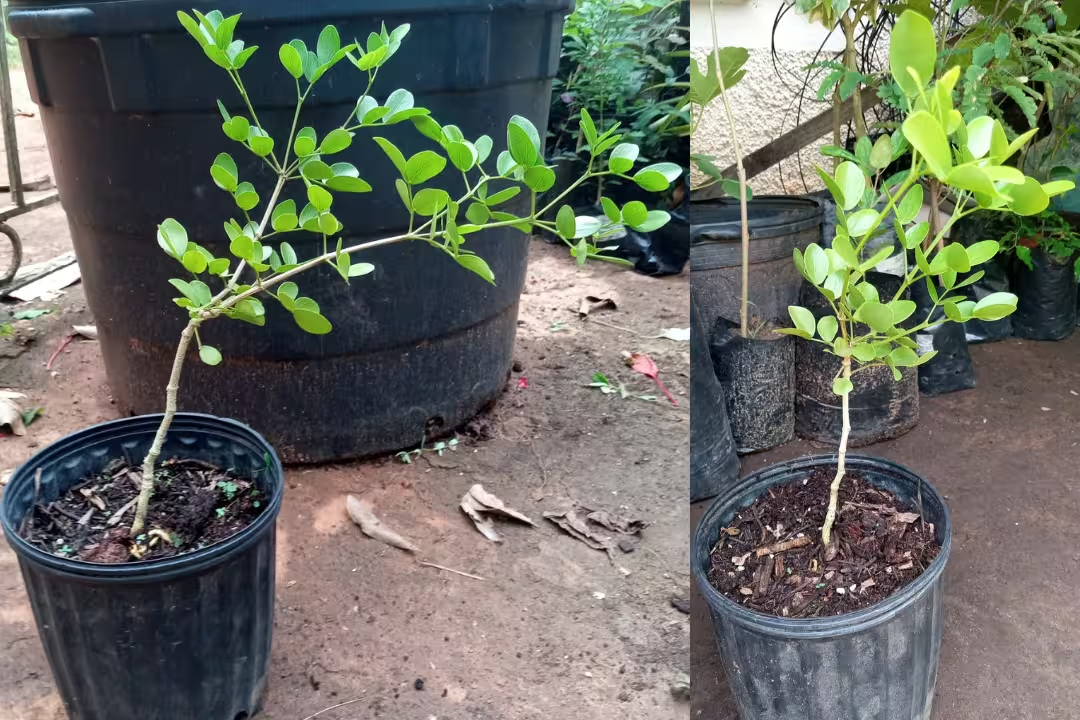
Lignum vitae grows slowly, often forming multi-stemmed trunks with heavy limbs low on the tree. That slow pace creates dense wood but also means recovery from harvest takes many decades.
Endangered and near threatened
G. officinale is listed as endangered in many references, while G. sanctum is often noted as near threatened. Historic overuse and habitat loss reduced wild populations across much of the range.
Florida protections
In Florida, lignum vitae is treated as a protected species, and collection from the wild faces strict limits. Regional profiles like the FNAI field guide highlight rarity, habitat, and identification details for land managers.
Seeds for collectors
Growers should buy legally sourced seeds, plant in warm, well-drained sites, and be patient with the slow pace. Here are curated seed options for hobbyists and collectors.
Guaiacum Lignum Vitae — 25-Seed Packet
- 25 seeds for growing fragrant evergreen specimen trees
- Slow-growing ornamental with aromatic blossoms and glossy foliage
- Ideal for gardens, parks, and specimen planting
- Drought-tolerant once established and low-maintenance
- Great choice for landscaping and pollinator-friendly plantings
Buy on Amazon
Lignum Vitae Seeds — 25 Pack
- Pack of 25 seeds for home planting and propagation
- Produces evergreen, fragrant flowering trees for ornamentals
- Suitable for garden beds, containers, and specimen planting
- Low-care and drought-resilient after establishment
- Good option for collectors and landscapers
Buy on Amazon
Guaiacum Sanctum 25-Seed Pack
- 25 seeds of drought-tolerant Guaiacum sanctum for landscaping
- Slow-growing evergreen with attractive foliage and flowers
- Useful as a privacy screen or specimen tree
- Performs well in warm, well-drained sites
- Adds striking texture and interest to garden designs
Buy on Amazon

Lignum Vitae 10-Seed Pack — Rare Exotic Tree
- 10 seeds of rare lignum vitae for collectors and growers
- Produces dense, long-lived ornamental trees with fragrant blooms
- Slow-growing hardwood prized for its unique timber
- Suited for specialty gardens and specimen planting
- Low-water needs once established
Buy on Amazon
5. Cultural and ecological significance
National tree status
Lignum vitae holds national tree status in Jamaica and the Bahamas. You can read quick background and symbols on Lignum vitae.
Pollinators and wildlife
The blue flowers feed bees and butterflies, and the bright arils attract birds. Gardeners in warm zones use it as a compact tree to boost urban biodiversity.
- Spring blooms support native pollinators during dry spells.
- Dense foliage offers shelter for small birds.
- Fruit color aids seed dispersal by fruit-eating species.
- Evergreen canopy adds year-round structure to plantings.
Traditional crafts and ships
Historic shipyards turned lignum vitae into bushings and sheaves that ran for years without added grease. Today, collectors compare it with other famous exotics like cocobolo and entries on the most expensive wood lists for rarity and performance.
FAQs
What Are The Uses Of Lignum Vitae Wood?
Lignum vitae is prized for its exceptional density, natural oils, and resistance to wear and decay. It’s traditionally used for underwater bearings and propeller shaft bearings, tool handles, mallet heads, pulley blocks, bushings, and other heavy-wear components, and is also sought for fine turnery, carvings, bowls, and jewelry.
Why Is The Lignum Vitae Considered An Endangered Species?
Several Guaiacum species are considered threatened because of overharvesting for their valuable timber and habitat loss in the Caribbean and parts of Central and South America. The trees grow slowly and reproduce poorly when their populations are reduced, so illegal logging and land conversion have pushed some species toward endangered status and prompted legal protections and conservation efforts.
How Do You Care For A Lignum Vitae Tree?
Caring for a lignum vitae tree requires a warm, frost-free climate, well-draining soil, and full sun to partial shade. Water regularly while young but avoid waterlogged conditions; once established the tree tolerates some drought. Because it grows slowly, provide light, infrequent fertilization, protect seedlings from pests and competition, and prune minimally to maintain structure; propagation is typically by seed or slow-growing cuttings.
What Are The Medicinal Properties Of Lignum Vitae?
Historically, extracts from lignum vitae (guaiacum) were used in traditional medicine for conditions such as rheumatism and arthritis and as a topical remedy, due to resinous compounds with anti-inflammatory properties. Modern scientific evidence supporting these uses is limited, and some preparations can cause side effects, so consult a healthcare professional before using it medicinally.
How Does Lignum Vitae Compare To Other Hardwoods?
Compared with other hardwoods, lignum vitae is among the densest and most oil-rich, giving it outstanding natural lubrication, wear resistance, and rot resistance. It is much heavier and harder to work than woods like oak or teak and will blunt tools more quickly, but its mechanical properties make it superior for bearings, high-wear components, and specialized marine uses; it is also rarer and often more expensive.