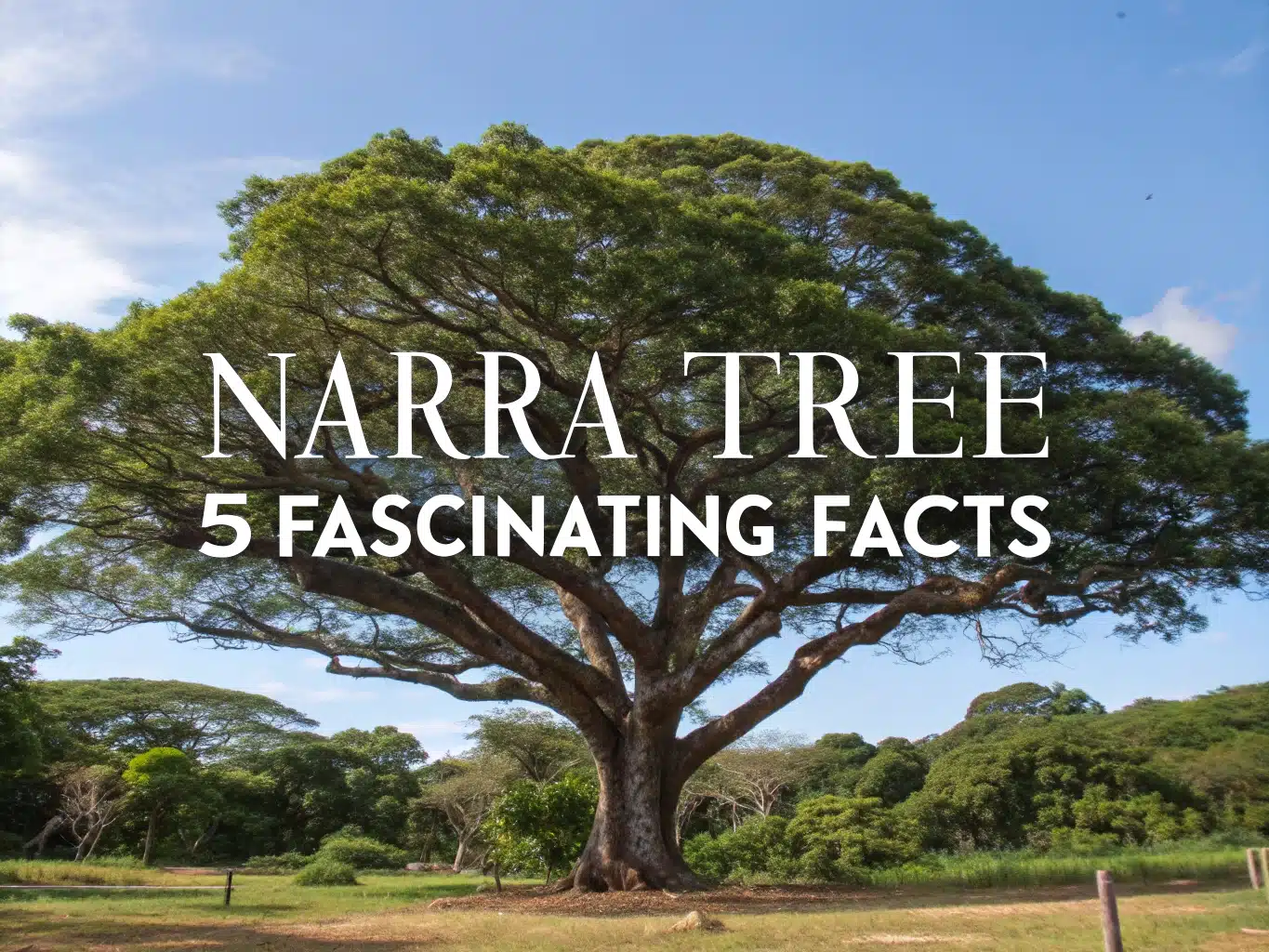

Did you know that the narra tree is more than just a symbol of beauty? This majestic tree holds secrets of strength and sustainability that few people know about. Whether you’ve strolled under its shade in the Philippines or seen its striking yellow blooms, the narra tree stands out for its many roles and significance. Let’s explore why this tree is so beloved and what it offers to our world.
Table of Contents
The narra tree is a grand tropical legume prized for its golden blooms, strong wood, and cultural value. This guide covers identification, uses, care, laws, and why people across Asia value the narra tree.
Quick overview: the narra tree
Botanical profile
Botanically, the narra tree is Pterocarpus indicus, a Fabaceae species that produces winged pods. It’s also called Philippine mahogany in trade, though it’s a legume, not a true mahogany wood.
Genus name “Pterocarpus” means “winged fruit,” a nod to its flat samaras that ride wind to spread seed. The tree can be semi-deciduous or evergreen depending on local rainfall.
Size and leaves
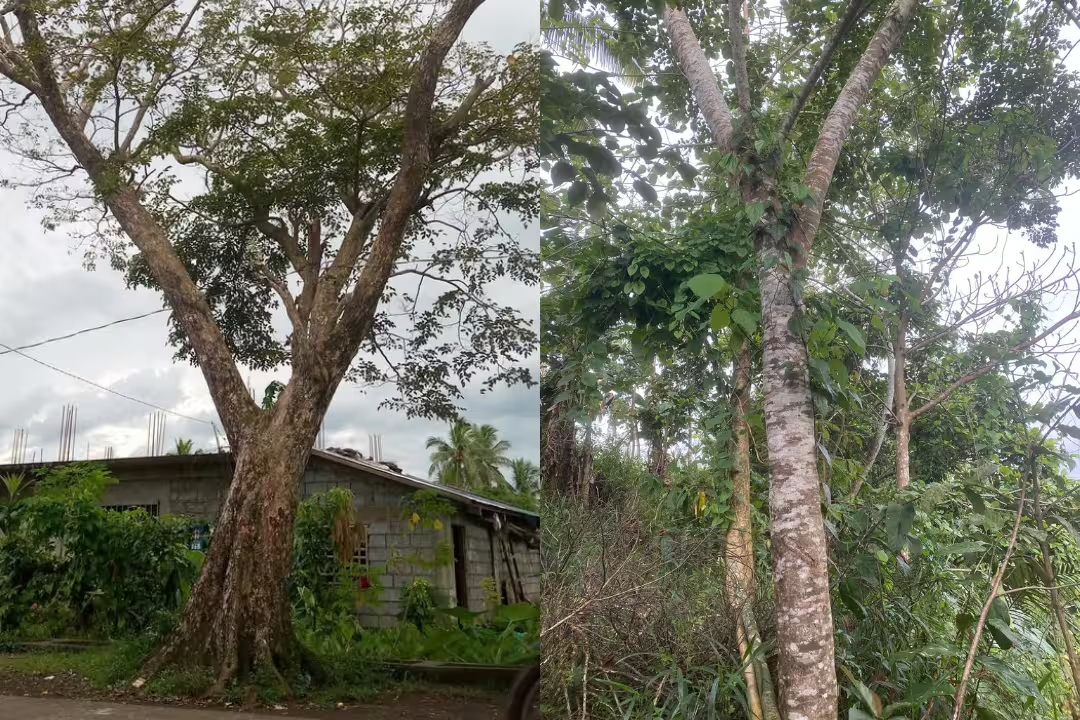
Mature narra often reaches 25–35 m tall with thick trunks up to about 2 m in diameter. Leaves are pinnate with 5–11 leaflets and total lengths roughly 12–22 cm, giving the crown a dense, domed look.
Range and habitats
Narra grows across Southeast Asia including the Philippines, Malaysia, Indonesia, Thailand, and Papua New Guinea. It thrives in warm coastal plains, river valleys, and lowland forests with sun and well-drained soils (Pterocarpus indicus — Wikipedia).
Pterocarpus forms
Two forms appear in references: forma indicus (smooth fruit) and forma echinatus (short-prickled fruit). Some botanists keep them under one species because differences are small across the range (Pterocarpus indicus — Wikipedia).
Growth and care
Narra grows fast in heat, so it suits urban planting and reforestation. Give it full sun, space for roots, and pruning in youth to train a strong scaffold.
- Pick a sunny site with good drainage; avoid compacted, waterlogged spots.
- Water deeply the first dry seasons; mulch 5–8 cm to keep soil moist.
- Stake only if windy; remove stakes once the trunk stands steady.
- Prune crossing limbs in late dry season to set a clear central leader.
- Inspect for borers; remove dead twigs to reduce pest entry points.
Cascara tree vs narra
The cascara tree (Rhamnus purshiana) from North America differs from narra in looks, family, and uses. Cascara is a small buckthorn valued for laxative bark, while narra is a large legume grown for timber, shade, and flowers.
| Tree | Main regions | Key uses | Notes |
|---|---|---|---|
| Narra (Pterocarpus indicus) | SE Asia | Timber, shade, ornaments | Reddish wood, yellow blooms, nitrogen-fixing |
| Cascara (Rhamnus purshiana) | Pacific NW, NA | Medicinal bark | Smaller tree, unrelated to narra |
Narra tree savannah
In open tropical grasslands, a “narra tree savannah” planting can stabilize soils and add shade. Spaced individuals or clusters break wind, feed pollinators, and provide seed pods for wildlife while leaving room for grasses or crops.
1) National symbol and pride
Narra tree Philippines
The narra tree Philippines story is both cultural and historic. Since 1934 it has stood as the national tree, a living emblem seen in public spaces and ceremonies across the archipelago.
Declared the national tree in 1934, narra symbolizes the Filipino people’s resilience and pride.
UST Manila tree inventory — Narra
Strength and resilience
People link narra’s tough, reddish wood with strength and endurance. Many communities celebrate the tree in rites that honor perseverance and independence.
Schools and parks
Schools and parks plant narra for shade, symbolism, and education. Labels, student clean-ups, and flower-watching days make the species part of daily life.
2) Exceptional timber qualities
Reddish durable wood
Narra heartwood runs from warm red to reddish-brown, often with a sweet scent. The wood resists termites, holds fasteners well, and finishes to a rich glow (Pterocarpus indicus — Kiddle).
For buyers comparing tropical hardwoods, narra sits alongside African mahogany and Brazilian rosewood in premium applications. Clear, straight-grain boards suit long panels, while figured pieces shine in accents and fronts.
Furniture and veneer
Cabinetmakers prize narra for furniture, flooring, doors, and high-grade veneer. Pre-drill screw holes, use sharp cutters, and consider oil or shellac to highlight chatoyance.
Boats and instruments
Coastal builders value narra in boats and trim thanks to its durability in tropical conditions. Luthiers and makers of marimba keys also use select pieces for tone and stability.
Burl wood value
Narra burl shows swirling figure that commands premium prices in tabletops and turned art. Ask for documented origin and sustainable sourcing; rare pieces often sell fast
3) Ecosystem contributions
Nitrogen fixer
Narra forms symbioses that fix nitrogen, improving soils for nearby plants. This boosts fertility in farms, parks, and restored sites (UST Manila tree inventory — Narra).
Urban shade
Broad crowns cast deep, cool shade across streets and courtyards. Plant along avenues with 8–12 m spacing to let canopies spread without conflict.
Agroforestry roles
In agroforestry, farmers interplant narra with cacao, coffee, or fodder grasses. The tree offers light shade, leaf litter for mulch, and timber as a long-term savings account.
Bee-friendly blossoms
Abundant yellow flowers feed native bees and boost honey flows. Place hives 100–300 m from mature trees and time harvests to peak bloom in the dry spell.
4) Brilliant blooms
Yellow flower display
Narra erupts with masses of yellow flowers after leaf drop, creating showy canopies that light up streets. Dry-season flushes are common; pruning and sun exposure help trigger abundant bloom.

Biodiversity support
Flowers attract bees, butterflies, and urban birds seeking nectar and insects. Seed pods add seasonal food for wildlife, expanding the value of green corridors.
5) Medicine and research
Folk remedies
Communities use bark decoctions and leaf rinses as home remedies, and leaf infusions as shampoo. Resin finds occasional use in crafts and traditional preparations.
Flavonoid antioxidants
Leaves carry flavonoids with reported anti-inflammatory and anti-allergic activity in preliminary studies. Extract strength varies by season and location, so potency can differ batch to batch.
Evidence and safety
Herbal use deserves care: discuss supplements with a health professional, watch for allergies, and avoid mixing with medications without advice. For growers, keep children and pets from chewing fresh bark or pods.
Conservation and legal status
Protected designation
Narra suffered from heavy logging, leading to stronger protections in range countries. Many cities inventory mature specimens and treat them as heritage trees.
Cutting permits
In the Philippines, cutting or transporting narra usually needs a government permit. Always check current local rules before any removal or commercial use (Pterocarpus indicus — Wikipedia).
Angsana wilt threat
Singapore reported major losses from Angsana Wilt caused by Fusarium oxysporum, spread by wood-boring beetles. Quick removal of infected trees and sanitation cut re-infection risks (Pterocarpus indicus — Wikipedia).
Resistant selections
City arborists now favor resistant selections and diverse street plantings to avoid single-species failures. Choose stock from vetted, wilt-free mother trees and plant mixed avenues with other durable species like African padauk wood relatives where suitable.
Tree-inspired gifts and decor
If you like tree motifs or need a quick gift, these nature-themed picks fit desks, mantels, and small spaces.

Acrylic Family Tree Keepsake
- Elegant tree-shaped acrylic plaque for desk or shelf
- Heartfelt inspirational message ideal for grandparents
- Compact size fits mantels and workspaces
- Clear acrylic finish resists dust and scratches
- Perfect ready-to-gift keepsake for family occasions
 Buy on Amazon
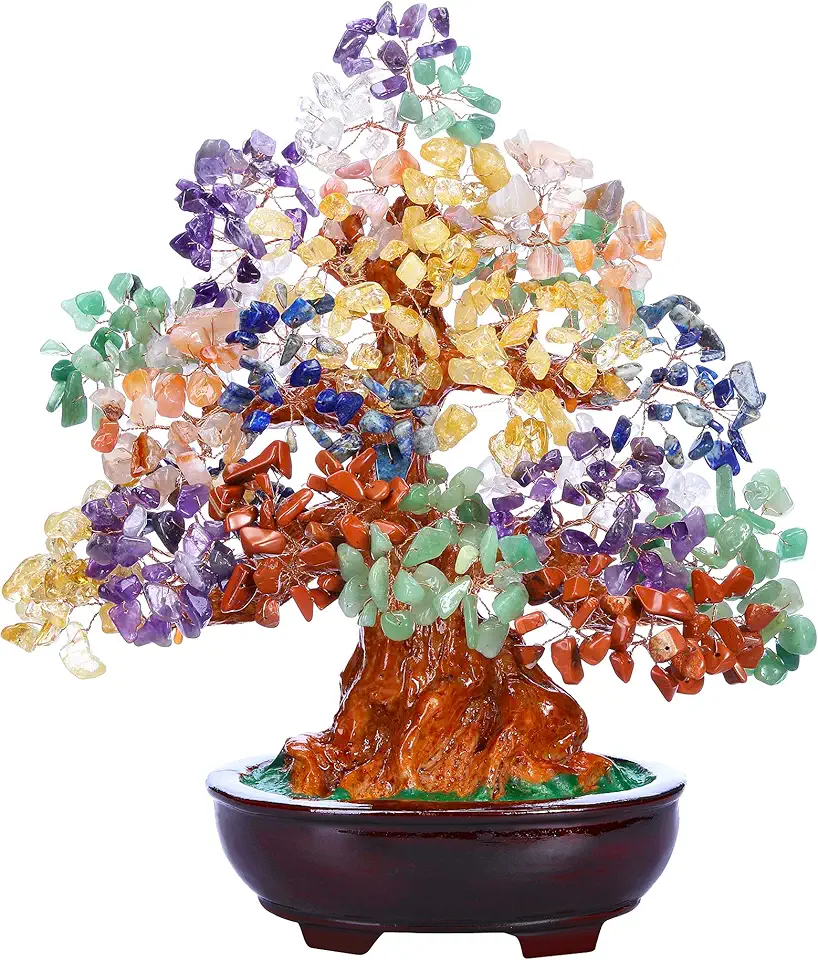
10-Inch 7-Chakra Crystal Bonsai
- Handcrafted stone branches with seven chakra crystals
- Promotes calming energy and balanced decor for any room
- Sturdy base keeps the tree upright on desks or shelves
- Natural stone colors add a soothing, earthy look
- Ideal as a feng shui accent or thoughtful gift
Buy on Amazon
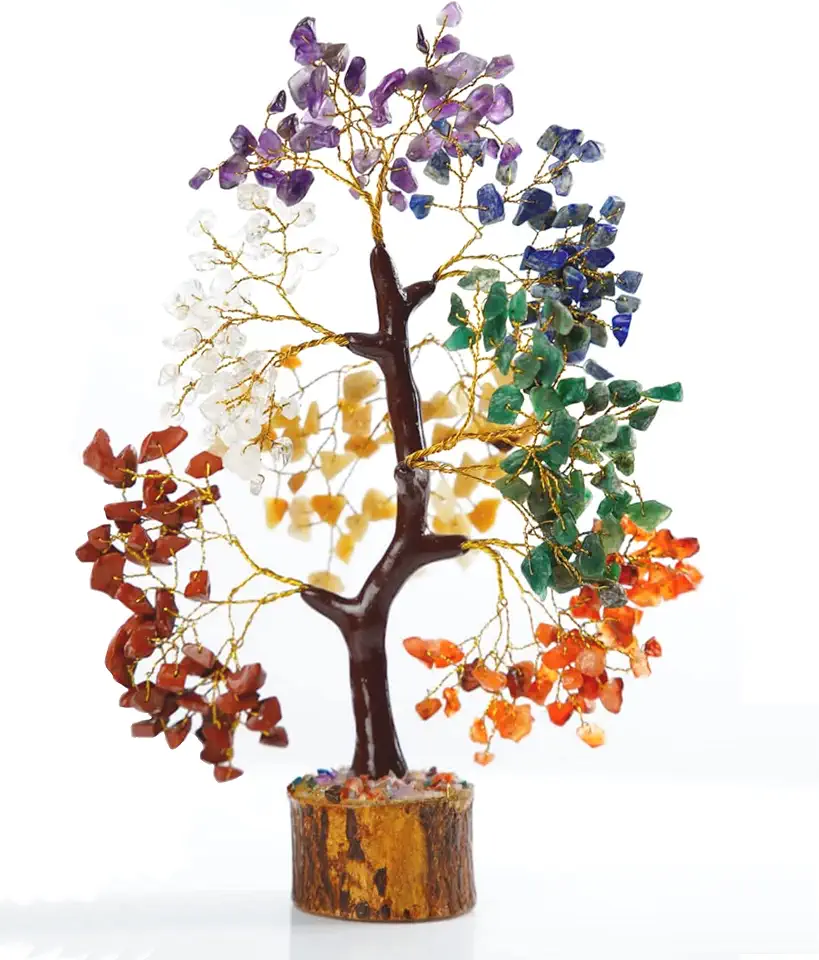
7-Chakra Healing Money Tree
- Bonsai-style tree featuring seven chakra stones
- Designed for feng shui and positive energy displays
- Durable artificial bonsai for low-maintenance decor
- Adds color and texture to living rooms or offices
- Handy gift option for birthdays and special occasions
Buy on Amazon
For more context on premium timbers linked in this guide, scan our quick primers on sapele wood and related species. These pages help you compare color, grain, and use-cases before you buy.
FAQs
What Are The Uses Of A Narra Tree?
Narra Is Valued Primarily For Its Dense, Attractive Hardwood Used In Furniture, Cabinetry, Flooring, Veneers And Carving. It Also Serves As An Ornamental And Shade Tree In Landscapes, Supports Wildlife And Pollinators, Can Be Used In Reforestation And Erosion Control, And Has Traditional Medicinal And Dye Uses In Some Cultures.
How Do You Care For A Narra Tree?
Plant Narra In Full Sun Or Light Shade With Well-Drained Soil, Water Regularly While Establishing, And Mulch To Retain Moisture. Avoid Waterlogging, Prune To Remove Dead Or Crossing Branches And To Train A Strong Form, Fertilize Lightly If Soil Is Poor, And Protect Young Trees From Pests And Grazing. Once Established, Narra Tolerates Periodic Drought And Urban Conditions.
Is The Narra Tree Endangered?
Pterocarpus Indicus (Narra) Faces Population Declines In Many Areas Due To Overharvesting And Habitat Loss, And Is Considered Vulnerable Or Protected In Several Regions. Conservation Status Varies By Country—Check Local Regulations Or The IUCN Red List For Current Classification—and Support For Sustainable Harvesting And Planting Programs Helps Restore Populations.
What Are The Benefits Of Planting Narra Trees?
Planting Narra Offers Multiple Benefits: High-Value Timber, Shade And Landscape Beauty, Soil Improvement Because It Is A Legume, Carbon Sequestration, Habitat For Pollinators And Wildlife, Erosion Control, And Potential Non-Timber Uses Like Traditional Medicinal Remedies And Honey Production, Which Can Support Local Livelihoods.
How Long Does It Take For A Narra Tree To Grow?
Narra Trees Often Show Relatively Fast Early Growth, Reaching Noticeable Size Within 5–10 Years. However, Achieving Mature, Timber-Quality Size Typically Takes Several Decades—Commonly 20–50 Years—Depending On Climate, Soil, And Management Practices. Good Care Can Accelerate Early Growth, But Patience Is Needed For Large Timber Uses.