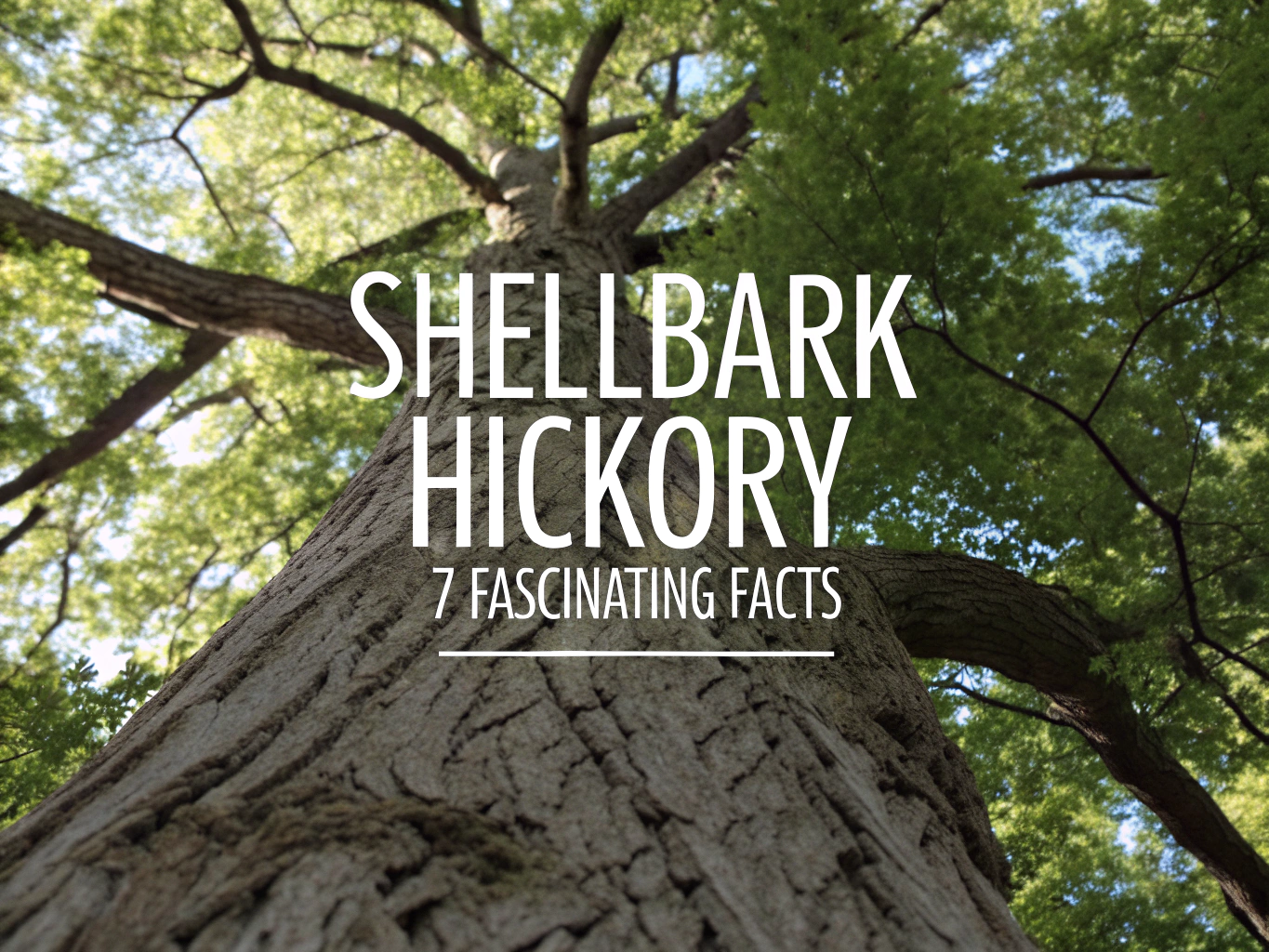

Did you know the shellbark hickory produces the largest nuts of any hickory in North America? These big nuts have thick shells and a rich, nutty flavor. The tree also has seven leaflets per leaf and rough, plate-like bark. This article will help you identify the tree, compare shellbark vs shagbark hickory, and learn simple growing and use tips.
Table of Contents
Shellbark hickory stands out for giant nuts, shaggy bark, and stout twigs that make it a favorite of foragers and tree lovers. This guide covers ID, range, nut quality, growing tips, and clear shellbark vs shagbark comparisons.
Shellbark Hickory Tree Identification and Characteristics
Distinguishing Physical Features
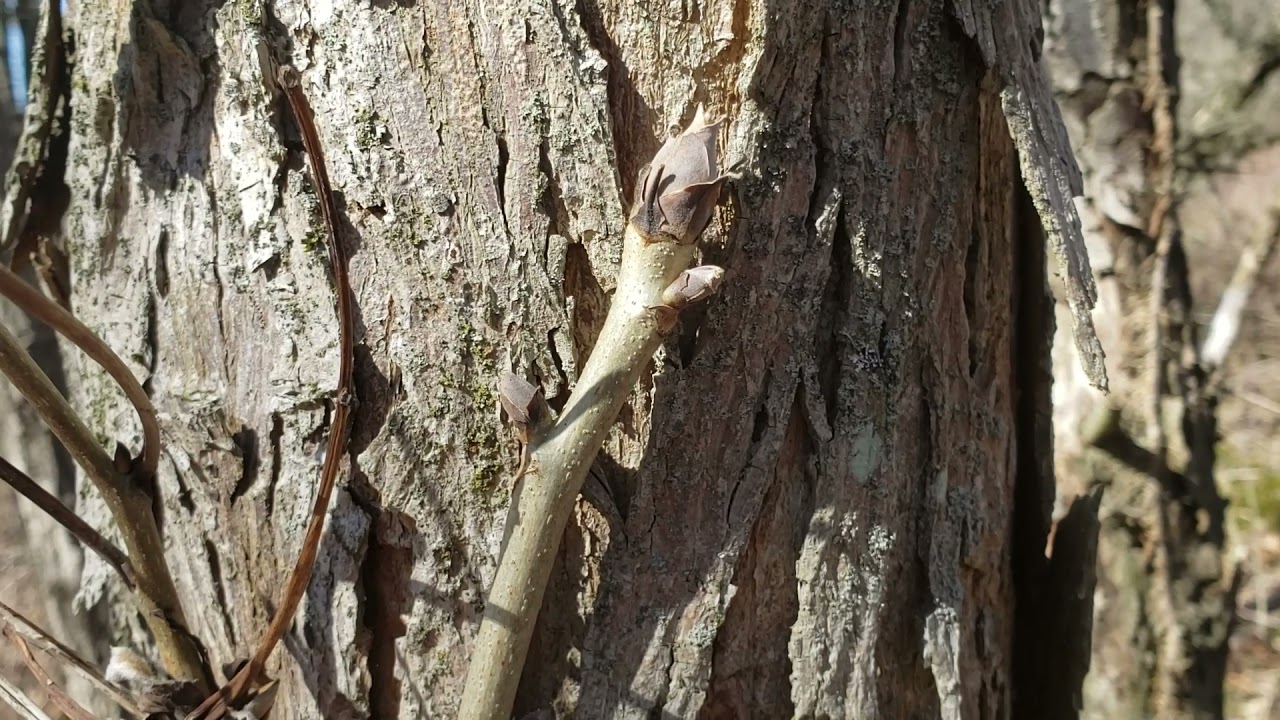
The shellbark hickory tree shows shaggy gray-brown bark that peels in plates, stout orange-brown twigs, and very large compound leaves with seven leaflets; these traits separate it from most hickories and line up with field guides like Shagbark Hickory vs. Shellbark Hickory.
- Shaggy bark: plates and strips, but usually less shaggy than shagbark.
- Seven leaflets: a reliable, fast ID vs. shagbark’s typical five.
- Very stout twigs: thicker than shagbark, with large buds.
- Huge nuts: thick brown husks enclosing “kingnut” kernels.
- Wide crown: mature trees often show a broad, spreading top.
Size and Growth Patterns
Mature trees often reach 60–80 feet, and exceptional specimens can top 100–120 feet with a broad crown. Growth is slow in youth, but established trees live long, which suits parks, estates, and large yards.
Botanical Classification and Natural Range
Scientific Name and Common Names
The scientific name is Carya laciniosa, a member of genus Carya (hickories) with common names like kingnut, big shellbark, bottom shellbark, and western shellbark; some folks even say “hickory shellbark.” You can read a practical grower overview at Arthur’s Point Farm.
Habitat and Distribution
Its sweet spot is moist, well-drained bottomlands—riverbanks, terraces, and floodplains south of the Great Lakes, where it’s naturally less common than shagbark. Scarcity links to site specificity, past overharvest, and the long taproot that makes wild or nursery stock harder to move successfully.
1. Shellbark Hickory Nuts Are the Largest in North America
Size and Shell Characteristics
Shellbark hickory nuts often measure 1.5–3 inches across, making them the largest of any hickory and a prime reason it’s nicknamed “kingnut.” Shells are thick and brown yet crack more cleanly than many expect, especially compared with the off-white, thinner shells of shagbark.
Flavor Profile and Culinary Uses
The nutmeat tastes rich and buttery with a faint fruit or banana note that shines in brittle, cookies, and quick breads. Foragers enjoy them raw or roasted, and bakers often prize their aroma in pies and candies.
Curious to try a small batch? The picks below offer mixed wild lots that include shellbark kernels for baking or snacks.

Wild Shagbark & Shellbark Hickory Nuts — 16 oz
- Buttery, rich hickory flavor perfect for snacking and baking
- Hand-foraged mix of shagbark and shellbark for varied texture and taste
- Ready-to-eat whole nuts ideal for pies, candies, and trail mixes
- Resealable packaging helps keep nuts fresh and crunchy
- High in healthy fats and protein for satisfying energy
 Buy on Amazon

Wild Hickory Nuts — Shagbark & Shellbark, 16 oz
- Small-batch, wild-foraged hickory nuts with bold, nutty flavor
- Great for roasting, baking, or eating straight from the bag
- Mixed varieties add complexity to recipes and snacks
- Packed to retain freshness and crunch for longer shelf life
- Natural, additive-free snack rich in protein and healthy oils
Buy on Amazon
2. Seven Leaflets Distinguish It from Shagbark Hickory
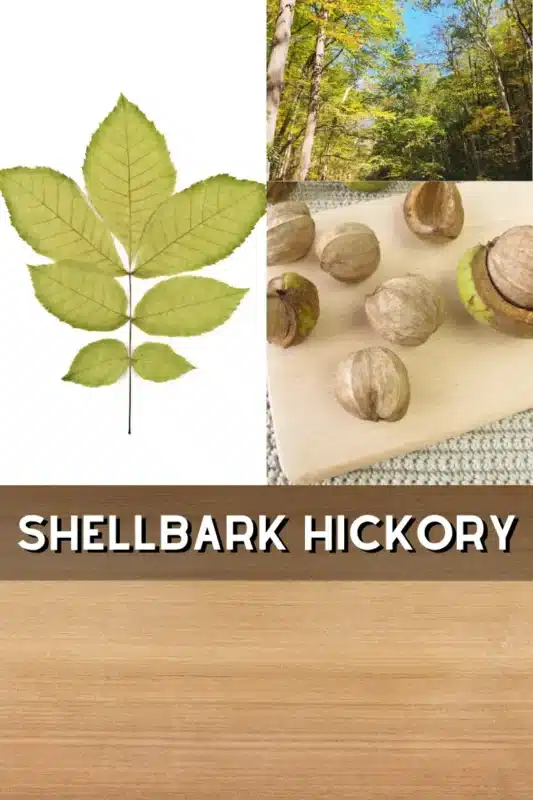
Count leaflets on a mature compound leaf: shellbark usually shows seven, while shagbark usually shows five. Pair that quick check with stout twigs and larger nuts for confident field ID.
3. Shellbark vs Shagbark Hickory: Key Differences
Bark and Leaf Variations
Both species have peeling bark, yet shagbark flakes hang longer and look shaggier, while shellbark tends to form broader plates. Leaves also help: shellbark carries seven leaflets more often, versus shagbark’s five.
Nut Size and Shell Color
Shellbark nuts are usually bigger, often with thicker brown shells that still crack cleanly; shagbark nuts run smaller with off-white shells. If you’re sorting mixed husks under a tree, size and shell color give fast clues.
Geographic Distribution
Shagbark spreads widely across uplands in the Northeast and upper Midwest, while shellbark centers south of the Great Lakes on rich bottomlands. Local floodplain soils and moisture patterns strongly influence vigor.
| Feature | Shellbark Hickory | Shagbark Hickory |
|---|---|---|
| Scientific Name | Carya laciniosa | Carya ovata |
| Leaflets per Leaf | 7 | 5 |
| Nut Size | Largest (1.5–3 inches) | Large, smaller than shellbark |
| Shell Color | Brown, thick, easy to crack | Off-white/cream, thinner |
| Usual Range | Bottomlands south of Great Lakes | Widespread Northeast, uplands |
| Crown Spread | Often wider | Moderate |
| Wildlife & Culinary Value | High; prized flavor | High; common availability |
4. Growing and Planting Considerations
Soil and Climate Requirements
Pick a site with moist, well-drained loam or silt near waterways, full sun, and room for a broad crown; avoid compacted high ground. Home growers sometimes start with a nursery seedling to save time and reduce losses

Shellbark Hickory Seedling — 1-Pack, Ready to Plant
- Healthy nursery-grown shellbark hickory seedling ideal for transplanting
- Produces large, flavorful nuts valued by foragers and gardeners
- Suitable for many temperate landscapes and backyard orchards
- Low-maintenance once established and attracts wildlife
- Note: does not ship to California due to state regulations
Buy on Amazon
Transplanting Challenges
A long, dominant taproot forms early, so bare-root trees suffer if moved late or handled roughly. Plant young, keep the root flare at grade, mulch a wide ring, and water deeply during the first two growing seasons.
5. Ecological and Cultural Significance
Wildlife Food Source
Shellbark and shagbark feed squirrels, chipmunks, turkeys, and wood ducks, while providing shade and soil stability in bottomland forests. Fallen husks also recycle nutrients and draw insects that become bird forage.
Hickory nuts support many mammals and birds for months each fall, making mast a key seasonal resource.
Arthur’s Point Farm
Traditional Wood Uses
Wood from shellbark sees use in tool handles, mallets, flooring, and meat smoking thanks to high shock resistance and heat value. For more grain and property details, see our guide on hickory wood and compare it with other hardwoods.
6. Commercial Products and Availability
Finding pure shellbark kernels can be tricky, since orchards are rare and trees grow slowly; most retail packs are mixed wild lots or seasonal farmer’s market finds. If you want consistent baking stock, buy in fall, store cool, and crack only what you need to keep freshness.
7. Hybridization and Breeding Programs
Hican Crosses
Breeders have produced Hicans—hybrids between hickories (shellbark or shagbark) and pecan—that sometimes crack easier and tolerate colder winters, though many show low nut fill or variable yields; see grower notes at Arthur’s Point Farm. Gardeners who plant these should test a few cultivars before scaling up.
Cold-Hardy Pecan Development
Breeding programs also explore cold-hardy pecans using hickory relatives to push nut set farther north. If you’re curious about lumber traits from these cousins, compare our overview of pecan wood with hickory for practical shop decisions.
FAQs
What Are The Main Differences Between Shellbark Hickory And Shagbark Hickory?
Shellbark And Shagbark Hickories Are Similar But Distinct: Shagbark Has Long, Peeling Strips Of Bark That Hang In Shags, While Shellbark’s Bark Is Thicker And Breaks Into Larger, More Blocky Plates. Shellbark Typically Produces Larger, Thicker-Shelled Nuts And Often Has More Leaflets Per Compound Leaf (Commonly 7–9 Versus Shagbark’s Usual 5). They Also Prefer Slightly Different Sites—Shagbark Is More Widely Tolerant, While Shellbark Often Favors Richer, Moist Bottomlands.
How Can I Identify A Shellbark Hickory Tree?
Look For A Massive Trunk With Thick, Plate-Like Bark, Compound Leaves With Usually 7–9 Narrow Leaflets, And Large Round Nuts Enclosed In A Four-Part Husk. In Autumn You’ll See The Large Nuts On The Ground, And In Winter The Bark’s Deep, Blocky Plates Help Distinguish Shellbark From The Long, Peeling Strips Of Shagbark.
What Are The Uses Of Shellbark Hickory Wood?
Shellbark Hickory Wood Is Extremely Hard, Dense, And Shock-Resistant, Making It Excellent For Tool Handles, Flooring, Furniture, And Sporting Goods. It’s Also Valued As Firewood And For Smoking Meats Because Of Its High Heat Output And Pleasant Flavor. The Wood’s Strength And Durability Have Made It Useful Historically For Wheels, Handles, And Heavy-Duty Items.
Where Do Shellbark Hickories Typically Grow?
Shellbark Hickories Are Native To Eastern And Central North America And Are Common In Rich, Moist Sites Such As River Bottoms, Floodplains, And Heavy, Well-Drained Loams—Especially In The Midwest And Great Lakes Regions. They Prefer Fertile Soils And Often Occur In Mixed Hardwoods Rather Than Dry, Rocky Ridges.
Are Shellbark Hickory Nuts Edible?
Yes—Shellbark Nuts Are Edible, Rich, And Oil‑Filled; They’re Larger Than Many Other Hickory Nuts And Are Praised For Their Good Flavor. The Shell Can Be Thick And Requires Cracking, But The Kernels Can Be Eaten Raw, Roasted, Or Used In Baking And Confections; Wildlife Also Heavily Forages These Nuts In Autumn.