
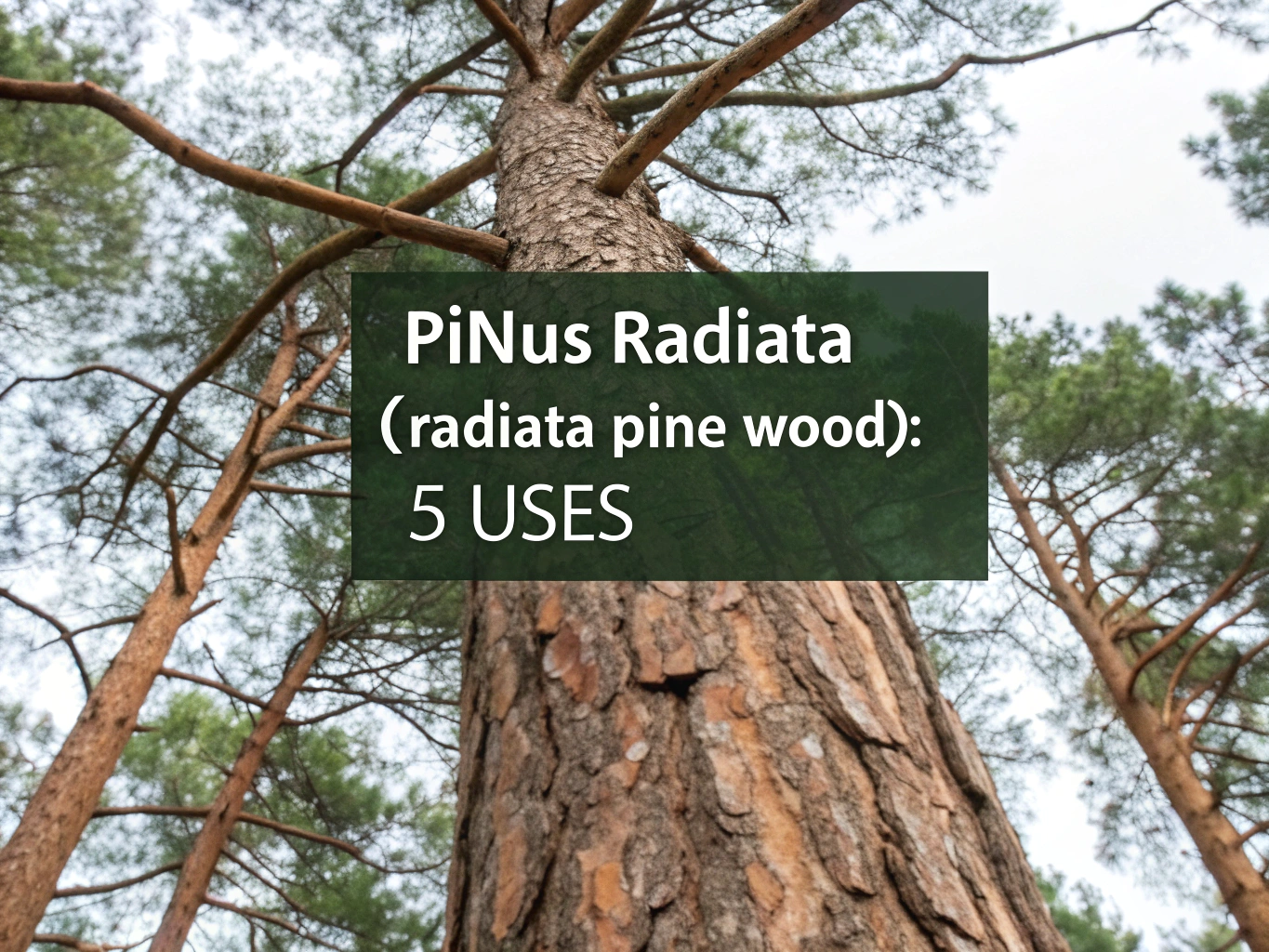

Did you know Pinus radiata is one of the most planted softwoods worldwide? Its wood grows fast and mills easily. Builders use radiata pine for framing and radiata pine plywood. Woodworkers make cabinets and furniture from it. Paper mills turn it into pulp, and gardeners rely on its bark as orchid bark. Below are five clear uses for Pinus radiata in 2026, with simple notes on where and how each is used.
Table of Contents
Pinus radiata, also called radiata pine or Monterey pine, is one of the most planted softwoods on Earth. You’ll learn what it is, where it grows, how its wood performs, and the best ways to use radiata pine plywood and lumber across projects.
What Is Pinus Radiata?
Native Origins and Commercial Growth
Born on the central coast of California, Pinus radiata thrives in plantations far from its native stands. A concise USFS species profile notes its limited native range but wide use abroad, where growers prize its fast growth and straight stems.
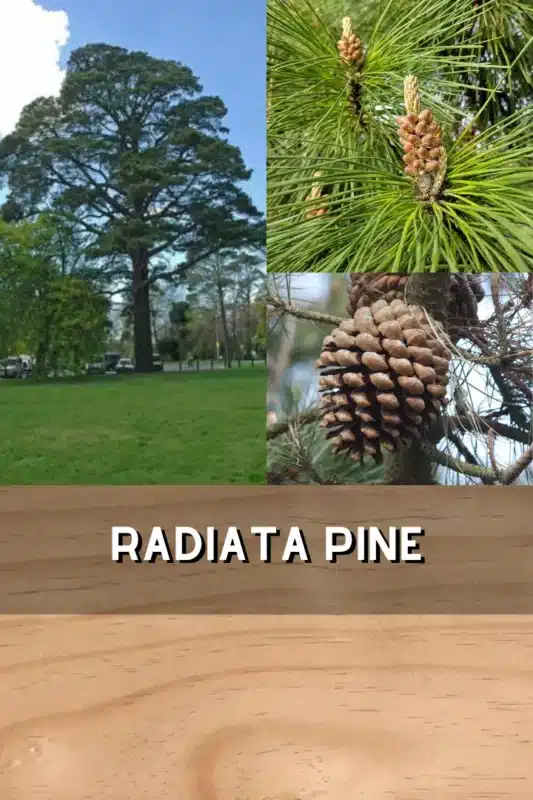
Key Characteristics of Radiata Pine Wood
The timber shows a pale cream to light yellow color, usually with a straight grain and even texture. It’s easy to cut, glue, and finish, and it accepts preservative treatment that upgrades durability for outdoor work.
| Property | Typical value (12% MC) |
|---|---|
| Density | ~450–560 kg/m³ |
| Janka hardness | ~3.0–3.5 kN |
| Modulus of Elasticity (MOE) | ~8–11 GPa |
| Workability | Good with hand or machine tools |
| Treatability | Readily pressure treated |
Values vary by site and grade, but builders rate radiata pine as lightweight, stable, and friendly on tools. Knots are common in some grades, so select clear stock where appearance or high strength matters.
Global Plantation Distribution
Commercial forests of pinus radiata dominate in New Zealand, Chile, Australia, and South Africa, supplying construction, furniture, and pulp markets. Growers harvest trees at roughly 20–30 years, which keeps wood supply predictable and costs competitive.
1. Construction and Structural Applications
Framing and Structural Timber
Builders use radiata pine for framing, trusses, studs, joists, and rafters in houses and light commercial buildings. Check local span tables and pick structural grades that fit the loads for your construction wood project.
For predictable results, buy straight kiln-dried stock and confirm nominal-to-actual sizes with a quick look at sawmill lumber dimensions. Use corrosion-resistant fasteners near coastal areas to protect the timber and connectors.
Engineered options like laminated beams and I-joists reduce weight while keeping stiffness. These components pair well with the species’ workability and help speed onsite assembly.
For technical properties and grade use in building, see the FWPA radiata pine report. It summarizes common structural applications and provides context on product performance in housing.
Radiata Pine Plywood and Engineered Products
Radiata pine plywood is popular for sheathing, subfloors, roof decks, cabinetry cores, and furniture panels. Typical thicknesses include 6, 9, 12, 15, and 18 mm; confirm options with local mills and this quick guide to plywood dimensions.
Exterior-rated panels use phenolic resins and tight layups, making them suitable for humid or wet cycles when edges are sealed. Designers also specify LVL, CLT, and OSB variants that incorporate radiata fibers for high strength-to-weight projects.
Keep cut edges sealed, especially in exposed uses, to limit moisture uptake and swelling. Label checks (bond type, stress grade, face grade) help match the panel to the application quickly.
Pressure-Treated Outdoor Construction
Radiata pine accepts preservative treatment deeply, which transforms it for outdoor projects like decks, cladding, pergolas, fences, and poles. Seal all field cuts, allow ventilation gaps, and pick the right fasteners to avoid corrosion and staining.
- H3: Above-ground exposed (cladding, fascia, external trim).
- H4: Ground contact (fence posts, garden beds, sleepers).
- H5: In-ground severe or fresh water (piles, utility poles).
Choose hot-dip galvanized or stainless fixings for treated lumber. End-grain sealing and proper spacing extend service life and keep surfaces looking good longer.
2. Furniture and Interior Design Uses
Cabinetry and Millwork
The light color and straight grain of pinus radiata wood suit cabinets, shelving, doors, and trim. Stable, kiln-dried S4S pieces reduce sanding and speed assembly; learn the basics with this primer on S4S lumber.
Use clear grades for high-visibility work, and knotty grades for rustic style at a lower cost. Many shops pick radiata pine cores for veneered panels to keep weight down without losing stiffness.
For a market snapshot on furniture use and supply, see Woodworking Network’s overview. It notes how radiata pine moved from native stands to global plantations that feed interior product lines.
Paneling and Wall Applications
Radiata pine paneling brings warm tone, easy workability, and acoustic benefits when slotted or perforated. Use acclimated boards, leave small expansion gaps, and back-prime tongues and grooves in variable humidity rooms.
For durable wall linings, pick finger-jointed clear lengths that hide seams and reduce waste. Pre-finished coatings cut site labor and keep color consistent across batches.
Finishing and Staining Options
Radiata pine takes paint and stain well but can show blotching without a pre-stain conditioner. Block resin bleed at knots with a shellac-based sealer and spot-sand to 180–220 grit before topcoats.
Waterborne finishes highlight the pale tone; oil-based stains add amber warmth and depth. Kiln-dried stock reduces pitch issues; see how kiln-dried wood helps finishes stay even over time.
3. Pulp and Paper Manufacturing
Paper Production Applications
Fast-grown radiata pine produces fibers suited to kraft pulp for newsprint, tissue blends, and printing papers. Mills value its consistent chip quality and reliable supply chain from large plantations.
Packaging Industry Uses
Converted pulp becomes linerboard, corrugating medium, and paperboard for boxes, bags, and mailers. The material’s strength-to-weight balance supports efficient e-commerce and retail packaging.
Global Processing Operations
Australia and New Zealand host integrated sawmilling and pulp facilities that process radiata pine for domestic use and export. For a concise technical context on product streams, review the FWPA radiata pine report.
4. Specialty Horticulture and Bark Products
Christmas Tree Cultivation
Many growers shape pinus radiata monterey pine into full Christmas trees with early tip-pruning and spacing. It grows quickly, holds form, and responds well to seasonal shearing schedules.
Orchid Growing Medium
New Zealand radiata pine bark chips promote airflow, resist breakdown, and keep orchid roots healthy. Pick chip size by plant age: fine for seedlings, medium for standard pots, large for mature specimens and mounted epiphytes.
Here are well-reviewed bark products made from 100% New Zealand Pinus radiata for reliable potting mixes.

Power Plus Orchid Bark (1/2–3/4 in)
- 100% New Zealand Pinus radiata for natural quality
- chunky pieces improve aeration and drainage
- long-lasting media that resists rapid breakdown
- helps prevent root rot and promotes healthy roots
- ideal for repotting and long-term orchid culture
 Buy on Amazon

Gardenera Medium Orchid Bark (9–12 mm, 1 qt)
- Premium hand-mixed New Zealand pine for consistent quality
- medium 9–12 mm chips balance moisture and airflow
- enhances root oxygenation and reduces compaction
- suitable for potting, repotting, and mounting
- organic and untreated for healthy growth
Buy on Amazon

Orchiata Medium Orchid Bark (1/2 in, 1 gal)
- Consistent medium chips that promote excellent airflow
- reduces compaction for longer potting intervals
- natural New Zealand Pinus radiata, untreated
- supports vigorous healthy root systems
- easy to use in orchid mixes and containers
Buy on Amazon

Orchiata Small Orchid Bark (3/8 in, 1 gal)
- Finer chip size ideal for smaller pots and young plants
- maintains good aeration while retaining adequate moisture
- gentle on delicate roots and crowns
- natural New Zealand pine with minimal processing
- promotes quicker root establishment
Buy on Amazon

Orchiata Extra-Large Orchid Bark (1 in, 2.5 gal)
- Extra-large chips for maximum drainage and airflow
- excellent for coarse mixes and mounted specimens
- very slow to decompose for long-lasting media
- prevents waterlogging and root rot
- perfect for large orchids and epiphytes
Buy on Amazon
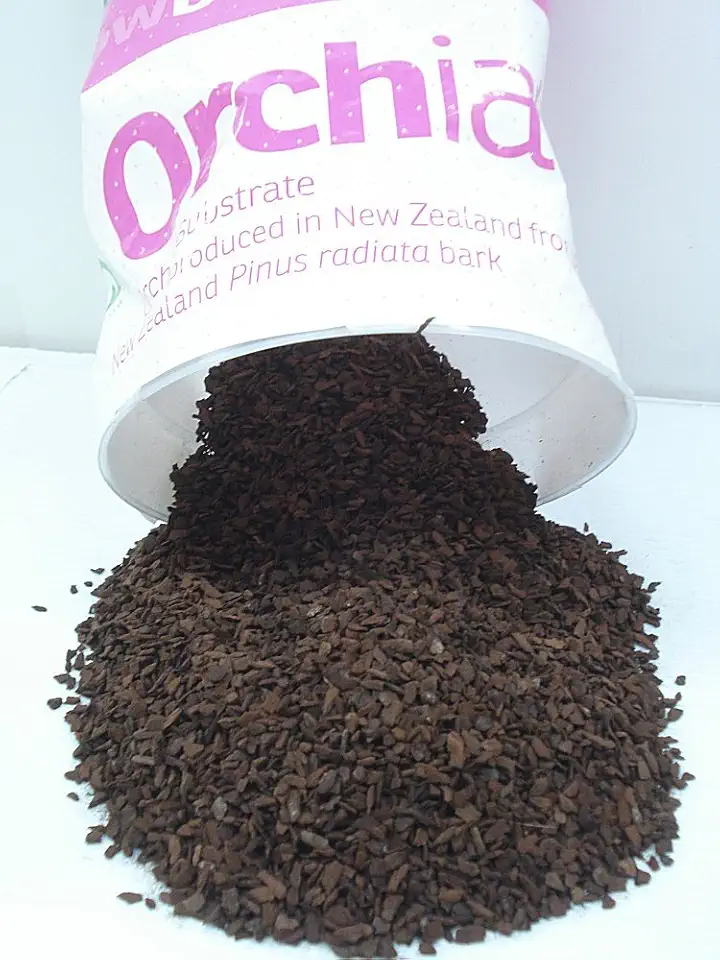
Orchiata Extra-Small Orchid Bark (1/8 in, 2.5 gal)
- Fine-textured chips suited for seedlings and small orchid pots
- holds moisture without suffocating roots
- blends well with perlite and other media
- untreated New Zealand pine for natural growth
- helps tender roots establish quickly
Buy on Amazon

Orchiata Large Orchid Bark (3/4 in, 1 gal)
- Large chips increase aeration and speed drainage
- sturdy pieces prevent compaction over time
- durable organic potting medium for longer use
- supports strong, healthy root systems
- ideal for mature orchids and larger containers
Buy on Amazon
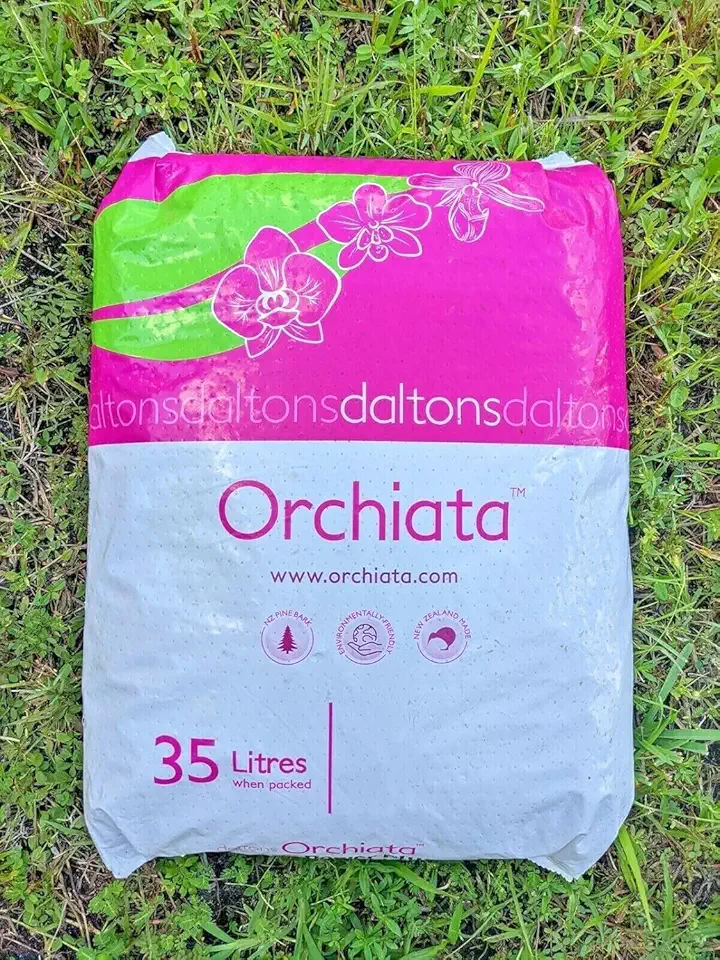
Orchiata Power Mix Orchid Bark (35L, 3/8–1/2 in)
- Bulk 35L supply of 100% New Zealand Pinus radiata
- balanced particle size for reliable aeration and moisture retention
- great value for multiple repottings and large collections
- organic and untreated for healthy roots
- promotes longevity and reduces repotting frequency
Buy on Amazon

Orchiata Power Grade Bark (35L, 3/8–1/2 in)
- Power grade mix optimized for airflow and drainage
- consistent sizing for predictable performance
- long-lasting organic bark that slows decomposition
- ideal for a wide range of orchid species
- supports robust root growth and plant health
Buy on Amazon

Orchiata Medium Orchid Bark (1/2 in, 2.5 gal)
- Generous 2.5 gal supply of medium chips for repotting
- improves aeration and prevents waterlogging
- natural New Zealand pine with slow breakdown
- encourages strong root systems and healthy growth
- ready-to-use for mixes and containers
Buy on Amazon
5. Landscaping and Environmental Applications
Agricultural and Vineyard Uses
Farmers and growers use treated radiata pine for posts, rails, and trellises because the straight fibers and treatment uptake make long-lasting components. Space posts to load demands and cap cut tops to shed water in wet climates.
For roadside or property fencing, pick hazard classes that match soil moisture and decay risk. Smart hardware choices and drainage details add many years of service life in fields and vineyards.
Erosion Control and Reforestation
Fast growth and strong root systems make Pinus radiata useful for windbreaks, slope stabilization, and site rehab. Combine it with native shrubs and grasses to anchor soil and diversify habitat.
Mulch, brush barriers, and planted rows work together to slow runoff and trap sediment. Monitor survival rates and replant promptly to close gaps after the first season.
Renewable Energy and Biomass
Residues from forests and mills become chips, pellets, and biomass fuels, reducing waste and supplying heat or power. Bark and fines also feed composite panels and mulch markets that cycle material efficiently.
Economic Impact and Sustainability
Global Market Significance
Radiata pine supports jobs from nurseries to ports and anchors construction, furniture, and packaging exports. Its steady rotation age and high recovery rates help mills plan capacity and control costs.
Certification and Forest Management
Look for FSC or PEFC labels and ask for chain-of-custody certificates on orders. Thinning, pruning, and erosion control practices keep stands productive while protecting soils and waterways.
Plantation management should balance productivity with biodiversity and water quality at every stage of the rotation.
Sustainable forest principles
Environmental Considerations
Research on soils and microbiomes in pine plantations is growing, helping managers fine-tune inputs and harvest methods. A recent open-access review discusses how plantation practices influence belowground communities and nutrient cycling (microbiome impacts in forests).
To reduce emissions, optimize transport routes, upgrade kiln efficiency, and increase biomass use for heat. Substituting radiata pine for higher-carbon materials in buildings can also support lower lifecycle footprints.
For species comparisons in construction, you can review yellow pine attributes before choosing a framing package. Matching species to service class and exposure often delivers the best long-term value.
FAQs
What Are The Uses Of Pinus Radiata Timber?
Pinus radiata Timber Is Extremely Versatile; It Is Commonly Used For Structural Framing, Plywood, Veneer, Flooring, Joinery And Furniture, As Well As Pallets, Packaging, Poles And Packaging Materials. It Is Also A Major Source Of Pulp For Paper, Biomass For Energy, And Is Favoured In Plantation Forestry Because It Machines Easily And Accepts Preservative Treatments Well.
How Fast Does Pinus Radiata Grow?
Pinus Radiata Is One Of The Fastest-Growing Commercial Pines; On Good Sites It Can Add Around 1–2 Metres Of Height Per Year. Plantation Rotations Vary By End Use And Site Quality—Pulp And Plywood Rotations May Be 20–30 Years, While Sawlog Rotations Commonly Range From 25–40 Years. Growth Rates Depend Heavily On Climate, Soil, Silviculture And Age, With The Fastest Growth Occurring In The First Decade.
Is Pinus Radiata Considered An Invasive Species?
Outside Its Native Range Pinus Radiata Can Become Invasive In Some Regions, Particularly Where The Climate Is Similar To Its Preferred Conditions. It Has Escaped From Plantations And Established Wild Stands In Areas, Potentially Competing With Native Vegetation. Its Status Varies By Country—Some Places Classify Or Manage It As A Weed—So Check Local Guidelines And Use Appropriate Control Measures Where Necessary.
What Climate Is Best For Growing Pinus Radiata?
Pinus Radiata Prefers Temperate, Mediterranean-Type Climates With Mild, Wet Winters And Warm, Dry Summers And Typically Does Well In Coastal And Lowland Areas With Moderate Rainfall (Roughly 600–1,500 Mm Annually). It Performs Best On Well-Drained Soils; Young Trees Are Sensitive To Severe Frost And Waterlogging, While Extremely Arid Or Cold Regions Limit Growth.
How Can I Identify A Pinus Radiata Tree?
Pinus Radiata Is Identified By Needles In Bundles Of Three That Are Long (Typically 12–20 Cm), Slender And Flexible. Cones Are Generally Small To Medium (Around 4–7 Cm) And Open As They Mature. Young Trees Have A Conical Crown And A Straight Trunk, While Mature Bark Is Thick And Brown, Breaking Into Scales. The Combination Of Three-Needle Bundles, Long Needles And Characteristic Cones Makes Identification Straightforward.