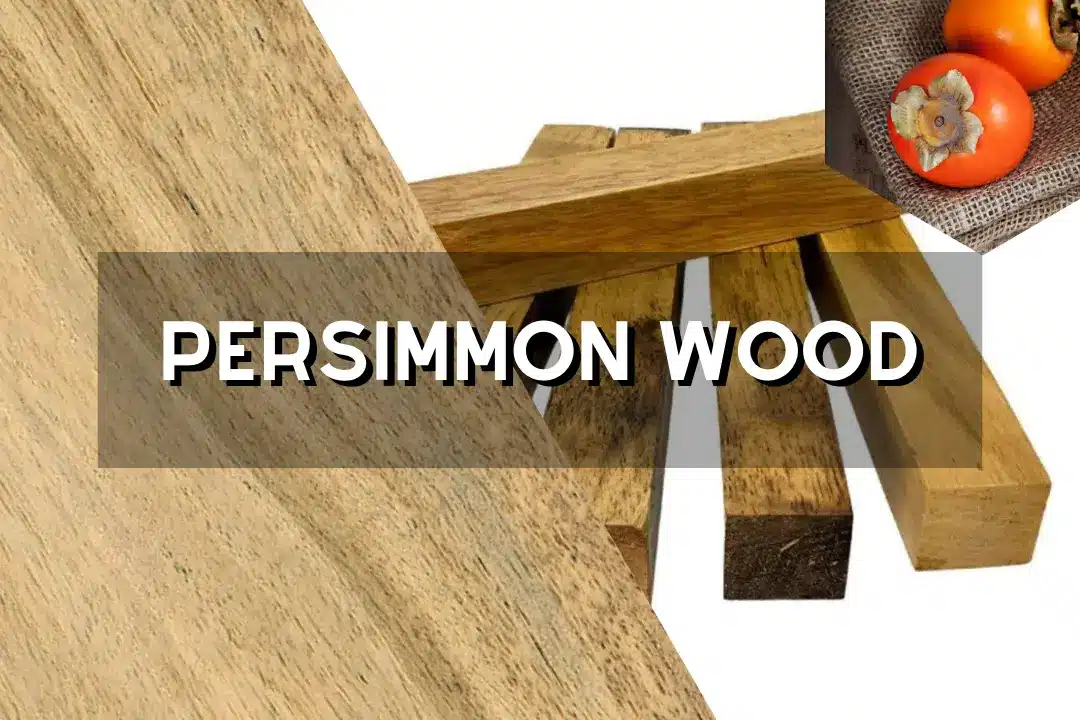
Persimmon Wood Guide: Properties, Uses, Hardness, and Buying Tips

Table of Contents
Persimmon wood is a dense, hard North American hardwood best known for golf club heads, tool handles, turning blanks, knife scales, walking sticks, and small craft work. It usually means American persimmon, Diospyros virginiana, a pale “white ebony” relative with high hardness, high shrinkage, and limited wide-board supply.
What Is Persimmon Wood?
Persimmon wood comes from persimmon trees, and in North American woodworking the name usually points to American persimmon. The wood is hard, heavy, fine-textured, and much paler than the black ebony people often picture when they hear the genus name Diospyros.
American persimmon grows across much of the eastern and central United States, and the USDA lists Diospyros virginiana as a native tree in many states through its USDA Plants Database. Yard trees can produce usable wood, but they often have short trunks, branch knots, embedded metal, storm cracks, or pesticide history that makes milling risky.
American persimmon
American persimmon wood is the main material sold as persimmon lumber, persimmon turning blanks, persimmon knife scales, and persimmon walking stick stock in the United States. Asian persimmon, Diospyros kaki, can have usable wood too, but it is far less common in North American lumber trade and is more often grown for fruit.
Tree size matters with this species. Persimmon rarely gives the wide, clear boards you expect from maple, oak, or walnut; most good stock appears as small boards, handle blanks, spindle blanks, golf-club-size billets, and craft packs.
Diospyros virginiana
Diospyros virginiana belongs to the Ebenaceae family, the same family that includes true ebony species such as black ebony and Macassar ebony. That relationship explains the “white ebony” nickname, but persimmon isn’t a substitute for black ebony when a project needs jet-black color; for that material, compare it with ebony wood.
Hardwood or softwood is a botanical question first. Persimmon is a hardwood because it comes from a broadleaf angiosperm tree, and it is also hard in the everyday sense, rating far above many familiar domestic hardwoods; for background on the category, see our guide to hardwood trees.
Wood versus color causes real buying mistakes. Persimmon wood is a real hardwood from a persimmon tree, while persimmon color is a finish, dye, paint, or design term and may not involve the wood species at all.
Appearance and Wood Properties
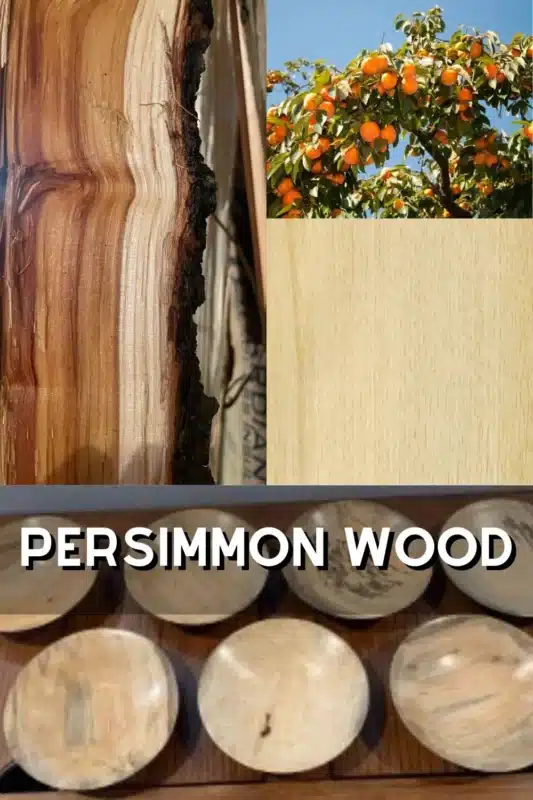
Persimmon wood properties combine pale color, fine grain, high density, high hardness, and high shrinkage. The wood feels cool and heavy in the hand, and freshly planed stock can show a smooth, almost waxy surface before finish touches it.
Reliable figures vary by tree, site, and drying method, but American persimmon is often listed at about 2,300 lbf Janka hardness and about 52 lb/ft³ dried weight by The Wood Database. Those numbers explain why small persimmon blanks can feel surprisingly dense for their size.
Color and grain
Color is subtle in most persimmon boards. Sapwood is usually cream, grayish white, pale yellow, or light tan, while heartwood can appear gray-brown, dark brown, or nearly black in streaks; our broader guide to colors of wood helps place it beside darker and redder species.
Grain stays fine and even compared with oak, ash, walnut, or rosewood. I notice the biggest visual reward after sanding past 220 grit: the dust turns silky, the surface loses scratch haze, and the pale grain reflects light without looking busy; for pattern comparisons, see wood grain pattern.
Janka hardness
Persimmon Janka hardness is about 2,300 lbf, making it harder than hard maple, hickory, white oak, black walnut, and cherry. That hardness helps handles and turned items resist dents, but it also punishes dull blades and overheats sandpaper fast.
| Property | Typical American persimmon value | What it means in the shop |
|---|---|---|
| Janka hardness | About 2,300 lbf | Very dent-resistant, hard on cutting edges |
| Average dried weight | About 52 lb/ft³, or 835 kg/m³ | Feels heavy for small blanks and handles |
| Basic specific gravity | About 0.66 | Dense enough for impact and wear parts |
| Specific gravity at 12% MC | About 0.83 | Needs sharp tools and steady feed pressure |
| Modulus of rupture | About 16,600 psi | Good bending strength for small parts |
| Crushing strength | About 9,560 psi | Resists compression in striking and gripping uses |
| Radial shrinkage | About 7.9% | Moves enough to require slow drying |
| Tangential shrinkage | About 11.2% | Flat-sawn boards can cup or warp |
| Volumetric shrinkage | About 19.1% | High drying stress and defect risk |
Sapwood and heartwood can confuse buyers. Many boards are mostly pale sapwood because the dark heartwood zone may be small, uneven, or missing in smaller logs, so don’t order “persimmon” expecting black wood without photos of the exact piece.
Shrinkage and movement are the trade-off behind the wood’s strength. High volumetric shrinkage means persimmon can check, twist, cup, or split if rushed from log to finished part, especially when pith, branch stress, or uneven grain runs through the blank.
Persimmon Wood Uses

Persimmon wood uses cluster around small, hard-wearing projects rather than wide furniture panels. It is good for golf club heads, tool handles, knife handles, turned parts, walking sticks, scroll saw work, small crafts, chopsticks, smoking wood, and properly seasoned firewood.
Golf club heads made persimmon famous because the wood combines density, impact resistance, and clean machining. Before metal woods took over, a good persimmon driver gave a solid, muted strike that players still describe as more connected than the sharp metallic crack of modern titanium.
Tool and knife handles suit persimmon well when the stock is dry and stable. The surface feels firm rather than spongy, takes crisp shaping around palm swells, and resists dents better than walnut or cherry, though thin knife scales may benefit from stabilization if they’ll see wet use.
Turning and carving are best on small pieces with straight grain. Persimmon cuts cleanly on the lathe with sharp tools, but beginner carvers often push too hard, then slip when the edge stalls in the dense fiber; lighter slicing cuts solve most of that problem.
- Good projects: mallet heads, tool grips, chisel handles, pens, knobs, small bowls, boxes, inlays, scroll saw ornaments, walking sticks, chopsticks, and display stands.
- Use caution: large panels, wide tabletops, exterior ground-contact parts, wet benches, and beginner carving blocks with heavy grain changes.
- Save clean offcuts: short pieces can become knife scales, plug stock, ferrules, repair patches, or test blocks for stain and glue.
- Season before burning: persimmon can be firewood, but straight defect-free pieces are often worth more as craft stock.
Walking sticks and crafts
Walking sticks made from persimmon feel strong and dense, with a planted, confident tap on packed dirt. Keep the diameter modest, round over grip edges, and seal the end grain well, because a thick staff can become tiring on long hikes.
Craft pieces benefit from the pale color and fine texture. Scroll saw blades track cleanly when sharp, but the wood burns if you pause too long in a tight curve, so back off the feed pressure and let the teeth clear dust.
Firewood and smoking
Persimmon firewood burns like a dense hardwood once seasoned, and it can work for smoking meat in small, clean chunks. Use only untreated, pesticide-free, well-seasoned wood; green persimmon can hiss, smell sour, and lay down bitter smoke before it dries.
Smoking meat with persimmon should be mild and controlled, closer to other fruitwoods than heavy woods such as mesquite. Beginners often overload the firebox because the wood smells pleasant at first; a smaller chunk gives better color and keeps poultry or pork from tasting acrid.
Persimmon Golf Clubs

Persimmon golf clubs were prized because persimmon can absorb repeated impact, hold shape, machine smoothly, and take a polished finish. The best drivers and fairway woods balanced dense head weight with a lively, controlled feel that laminated woods and later metal heads changed forever.
Golf history still drives search interest in MacGregor persimmon woods, vintage persimmon drivers, and traditional wooden golf clubs. The USGA Museum discusses wooden club history and material changes in its USGA Museum resources, which helps explain why collectors still care about these clubs.
Why drivers used it
Persimmon drivers worked because the wood has a rare mix of hardness, density, fine texture, and shock resistance. It could be shaped into compact aerodynamic heads, drilled for shafts, fitted with face inserts, screwed to sole plates, and refinished many times.
Vintage club appeal comes from feedback. A centered strike on a persimmon driver feels dense and warm through the hands, while a miss feels obvious without the harsh ping of thin metal, which is why some players still practice with them to improve contact.
Restoration concerns
Common failure points include neck cracks, hosel splits, loose shafts, face insert separation, sole plate screw movement, finish checking, compression marks, and water intrusion through damaged finish. A glossy old club can still hide a structural crack under whipping or stain.
Restoration mistakes usually start with sanding away original shape, over-tightening screws into brittle old wood, or flooding cracks with the wrong adhesive. Workaround: clean first, mark centerlines, check the neck under bright side light, repair structure before cosmetics, and test any stain under the sole plate area before touching visible grain.
Working and Finishing Persimmon
Working with persimmon rewards sharp edges and patience. It cuts cleanly, turns beautifully, and finishes smooth, but density creates heat, dust, blade wear, and glue-joint problems if surfaces get burnished.
Cutting and machining
Cutting persimmon feels different from softer hardwoods because the tool loads up fast and the surface can scorch. Use sharp carbide blades, clear chips often, and choose a steady feed rate: too slow burns the cut, while too fast can chip edges or strain small machines.
Turning and carving need slicing cuts, not scraping pressure. On a lathe, light passes leave a satin surface right off the tool; with carving tools, a fresh edge matters more than muscle because dense end grain can grab a dull gouge and throw it off line.
Sanding and gluing deserve extra care. Don’t polish glue faces glass-smooth; plane or sand shortly before assembly, remove dust, use moderate clamp pressure, and avoid starving the joint, because dense persimmon can reject glue if the surface is burnished.
Clear finish options
Clear finishes show persimmon’s pale, fine texture best. Water-based polyurethane keeps the color lighter, shellac adds warmth, lacquer builds fast on small objects, oil-based polyurethane deepens the tone, and hardwax oil gives handles a soft hand feel without a thick plastic film.
Stains and dyes can work, but test on offcuts because dense grain may absorb color unevenly. If you want an orange-red persimmon color rather than actual persimmon wood, use a finish made for that look and keep the terms separate.

Turner Persimmon Color Juice
- Odorless formula for comfortable use
- Adds warm persimmon tone to finishes
- Handy 500 ml size for multiple projects
- Smooth application for even coverage
- Great for craft and woodworking color work
 Buy on Amazon
Beginner mistake: applying dark stain straight to a sanded handle and expecting even color. Better approach: sand consistently, wipe with mineral spirits to preview blotching, use dye or conditioner if needed, then topcoat after the color fully dries.
Drying, Durability, and Safety

Drying persimmon wood is the hardest part of using it well. The wood’s high shrinkage can cause end checks, surface checks, internal checks, cupping, twisting, and hidden stress cracks if the log is cut, stacked, or kiln-dried carelessly.
Moisture targets depend on the project, but indoor fitted parts usually need about 6% to 10% moisture content after acclimation. The USDA Forest Products Laboratory explains moisture movement and drying behavior in the Wood Handbook, and persimmon sits on the demanding side of that discussion.
Drying best practices
Seal ends fast after cutting, then rough mill oversized before deep checks run into usable stock. Stack boards with even stickers, add weight on top, keep the pile shaded with airflow, and avoid the pith in blanks that need to stay straight.
Drying defects often start before the board reaches the shop. Wax on turning blanks can hide end cracks, and small-diameter logs can contain tension wood that moves after one face is cut, so leave extra thickness for final truing.
Outdoor durability is fair only when protected. Persimmon is hard, but hardness doesn’t equal rot resistance; keep it out of ground contact, seal end grain, use exterior-rated finish, and recoat walking sticks or canes when the grip starts feeling dry or fuzzy.
Better outdoor woods exist for wet structures. If the project needs posts, benches, or parts exposed to soil and rain, compare decay-resistant choices such as black locust wood or white oak heartwood before using scarce persimmon.
Toxicity and food contact
Persimmon toxicity is not widely flagged like some irritating exotic woods, but any hardwood dust can bother eyes, skin, nose, and lungs. Wear a respirator during sanding, run dust collection, and wash exposed skin because the fine pale dust clings like flour and can dry the fingertips.
Food contact projects such as chopsticks need clean, untreated, fully dry wood and a food-safe finish. Avoid salvaged yard wood for utensils if it may have been sprayed, stained, pressure-treated, glued, or exposed to oil, fence wire, nails, or soil contamination.
Practical workaround: for kitchen handles or chopsticks, finish with mineral oil, a food-safe wax/oil blend, walnut oil if allergies aren’t a concern, or a cured finish rated for food contact. Let cured finishes reach full cure before use, not just dry-to-touch.
Buying Persimmon Wood
Buying persimmon wood is easiest when you think in blanks, scales, and small boards rather than wide furniture lumber. Good pieces can be valuable because clean logs are limited, drying losses are real, and sellers often spend time cutting around checks and unstable pith.
Price and availability change with size, dryness, color, figure, and format. Rough lumber, kiln-dried boards, turning blanks, knife scales, scroll saw packs, golf repair stock, chopsticks, and walking sticks all get priced differently because labor and shipping can exceed the wood cost on small orders.
Lumber and blanks should be judged by final usable size, not rough size alone. Ask for surfaced dimensions, moisture content, end-check photos, and whether the piece contains pith; dark heartwood streaks can cost more, but they may also come with cracks near the center.
Buying checklist
- Confirm the species if you want Diospyros virginiana, not just a persimmon-colored product.
- Ask whether the stock is air-dried or kiln-dried, and request the measured moisture content.
- Check for end checks, honeycomb, pith, bark inclusions, knots, and hidden cracks under wax.
- Buy knife scales with straight stable grain, matched thickness, and no center pith.
- Choose turning blanks oversized so you can true warped faces after acclimation.
- Compare shipping cost before ordering small blanks, because postage can distort the real value.
Professional habit: I let small persimmon blanks sit in the shop for at least a week before final shaping, then recheck flatness. If a scale rocks on the bench after acclimation, I flatten it before drilling pin holes, because drilling first can lock in a twist that shows up at glue-up.
Project examples
Project examples include scroll saw ornaments, knife handles, thin craft boards, dining items, and walking staffs. These product formats match how persimmon usually reaches buyers: small, dry, sorted, and ready for compact woodworking rather than large cabinet runs.
Useful persimmon options include craft packs, handle scales, thin stock, chopsticks, and walking sticks that fit common small-project needs.

Sanded Persimmon Wood Pack
- Thin kiln dried stock for clean cuts
- Smooth sanded surface saves prep time
- Great for scroll saw and small projects
- Stable hardwood for detailed shaping
- Handy size for crafts and repairs
Buy on Amazon
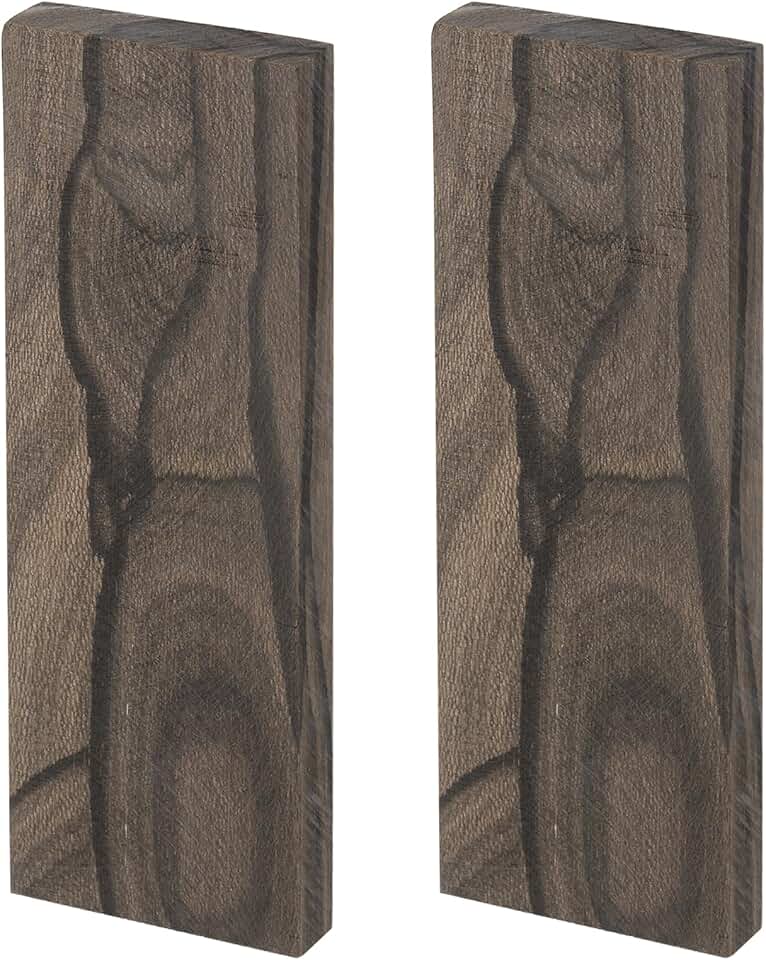
Persimmon Handle Scales
- Pair of custom knife handle blanks
- Compact size suits small blade projects
- Durable wood with attractive natural grain
- Easy to shape for DIY crafting
- Ideal for knives, tools, and accents
Buy on Amazon

Fine Persimmon Wood Pack
- Thin kiln dried boards for precision work
- Extra slim profile for fine cutting
- Sanded surface helps reduce prep
- Perfect for scroll saw and crafts
- Versatile stock for models and small builds
Buy on Amazon

Persimmon Chopsticks
- Made from natural persimmon wood
- Lightweight feel for easy everyday use
- Smooth finish offers a comfortable grip
- Ideal size for meals and gifts
- Simple design with a classic look
Buy on Amazon

Spiral Persimmon Walking Stick
- Handcrafted spiral design with natural appeal
- Durable persimmon wood offers solid support
- Extra long 60 inch staff for walking use
- Unique grain makes each piece distinctive
- Great for collectors, hiking, and display
Buy on Amazon
Furniture use is possible, but persimmon is rarely the first pick for large casework because wide boards are scarce and movement is high. For bigger builds, compare more available choices in our guide to types of wood for furniture.
Persimmon Wood Comparisons
Persimmon wood comparisons help because this species sits in an unusual niche: domestic, pale, very hard, fine-grained, and hard to find in wide boards. It overlaps with ebony botanically, maple visually, hickory in utility, and dogwood in small hard-wearing uses.
Persimmon vs ebony
Persimmon vs ebony starts with family, not color. Both sit in the Diospyros group, but ebony is usually darker and denser, while persimmon is usually pale, domestic, and better suited to handles, golf heads, turning, and small crafts than luxury black inlay.
White ebony is a useful nickname only if it doesn’t mislead the buyer. If a drawing calls for black wood, persimmon won’t replace black ebony visually; if the job needs a hard, pale, fine-textured domestic wood, persimmon may fit better than imported ebony.
Persimmon vs maple, hickory, and dogwood
Persimmon vs maple is a hardness and supply trade. Persimmon at about 2,300 lbf is harder than hard maple at about 1,450 lbf, but maple wood is far easier to buy in wide boards for cabinets, furniture, butcher blocks, and flooring.
Persimmon vs hickory favors persimmon on Janka hardness, while hickory wins on handle tradition, shock use, and supply. Hickory/pecan is around 1,820 lbf, and it remains easier to source for axe handles and impact tools, while persimmon gives a finer texture and a stronger golf connection.
Persimmon vs dogwood is a closer small-stock comparison. Both woods are dense, hard, and often found in modest sizes, but dogwood has its own history in shuttles and tool parts, while persimmon stands out for golf club heads and its ebony-family identity.
Hardness context matters more than a single number. Use the wood hardness scale to compare dent resistance, then pair that with density, movement, availability, and project size before choosing a species.
FAQs
What Is Persimmon Wood Good For?
Persimmon wood is good for tool handles, specialty turnings, golf club heads, and small woodworking projects. It is valued for its fine grain, smooth finish, and toughness. Hobbyists also use it for decorative items and other projects where a hard, polished surface is useful.
How Hard Is Persimmon Wood?
Persimmon wood is very hard and dense. It is often compared to ebony and can be difficult to cut, plane, or sand with regular tools. That hardness makes it durable, but it also means sharp blades and steady technique are important.
Is Persimmon Wood Related To Ebony?
No, persimmon wood is not the same as ebony, but it is sometimes called a type of “white ebony” because of its hardness and dark heartwood. Both woods are dense and prized for fine work. They come from different tree families, though, so they are only similar in use and appearance.
Is Persimmon Wood Valuable?
Persimmon wood can be valuable, especially when it is straight-grained, well-dried, and free of defects. Its value comes from its hardness and usefulness in specialty items rather than from large lumber demand. Small clear pieces are often more sought after than wide boards.
Is Persimmon Wood Good For Smoking Meat?
Persimmon wood can be used for smoking meat, but it is not as common as hickory, apple, or cherry. It gives a mild, slightly sweet smoke when properly seasoned. Use only clean, untreated wood and start with small amounts to see how the flavor works for your food.
Affiliate Disclosure: Some links in this post are affiliate links. If you make a purchase through these links, we may earn a small commission at no extra cost to you. We only recommend products we genuinely believe in.