

Looking to buy a loblolly pine for shade, timber, or screening? The Pinus taeda grows fast and fits many uses, but the right choice depends on purpose and site. This short guide shares five clear tips on picking the right tree, where to plant it, and how to care for it during establishment and after. With a little planning, your new pines will settle in and grow strong.
Table of Contents
This guide explains what a loblolly pine is and how to plant, grow, and use it with confidence. You’ll get clear steps, data-backed tips, and product options that fit home or land projects.
What Is a Loblolly Pine?
Pinus taeda Overview
The loblolly pine (Pinus taeda) is a fast-growing evergreen native to the southeastern United States, valued for timber, pulp, and quick privacy screens. Needles come in bundles of three and measure about 5–7 inches, with sturdy cones and a straight, upright trunk that forms a pyramidal canopy in youth.
“A defining pine of the Southeast, recognizable by three-needle bundles and rapid early growth.”
Clemson Extension
Foresters and landowners choose loblolly for quick site coverage, wildlife benefit, and reliable wood supply. For visual ID tips and regional context, see Clemson’s guide on pine identification (Differentiating between Loblolly, Longleaf, and other Southern pines).
Natural Habitat and Adaptability
The name “loblolly” points to success in low, muddy flats, yet the species adapts to many soils, including clay and moderate drought once established. It thrives in full sun and grows best on deep, fertile, acidic loams that keep roots cool and oxygenated.
Common Uses and Applications
Loblolly pine supports lumber, plywood, and pulp, and it’s a mainstay for fast windbreaks and wildlife cover. Builders often group it under yellow pine in markets, and it’s frequently processed into plywood dimensions used across homes and light commercial projects.
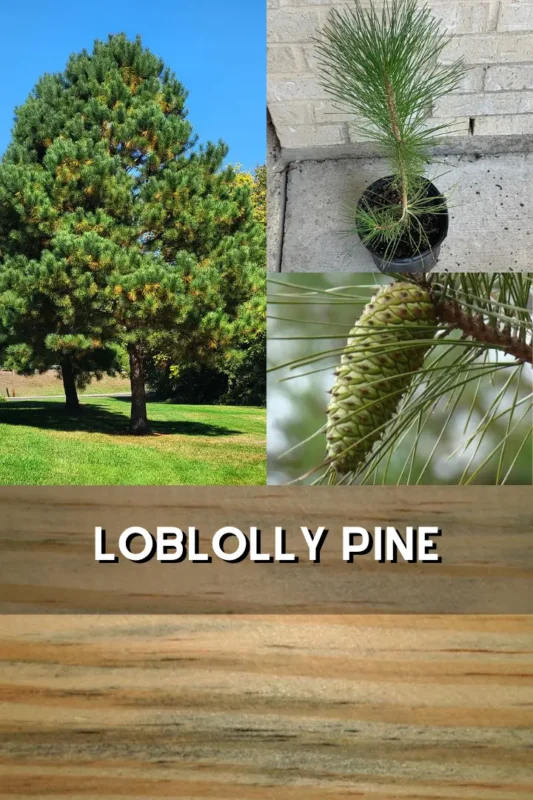
1. Select the Right Loblolly Pine for Your Purpose
Timber vs. Landscaping Considerations
Clarify your end goal first, since timber and landscape projects favor different stock types. The points below make selection quick and practical for both small yards and acreage.
- Timber focus: Choose uniform seedlings for dense planting, future thinning, and straight stems used in construction wood.
- Landscaping focus: Pick larger container trees for instant impact, fast shade, and sturdier transplants.
- Wildlife/windbreaks: Mix rows for spacing flexibility and quicker screening.
- Restoration: Bulk seedlings or seed packs offer economical coverage for large areas.
Seedlings vs. Container Trees
Bareroot seedlings are budget-friendly and plant fast in cool seasons, while container trees give immediate height and higher survival in tougher sites. For quick curb appeal or privacy, container sizes (1–3 gallons) reduce transplant shock and speed early growth .
Drought and Heat Tolerance
Once established, loblolly handles heat and periodic dry spells, especially with mulch over the root zone to retain moisture. In the first season, water deeply once or twice weekly, then taper to occasional soakings during extended dry weather.
Here are product picks that fit common planting needs and site sizes, from starter seedlings to larger landscape-ready trees for quick shade.

Loblolly Pine 3-Pack Seedlings — Fast-Growing Evergreens
- Three live seedlings ready for planting
- Rapid early growth for quick landscape impact
- Ideal for large spaces, screens, and windbreaks
- Minimal care with adaptable soil tolerance
- Supports wildlife and provides year-round greenery
 Buy on Amazon
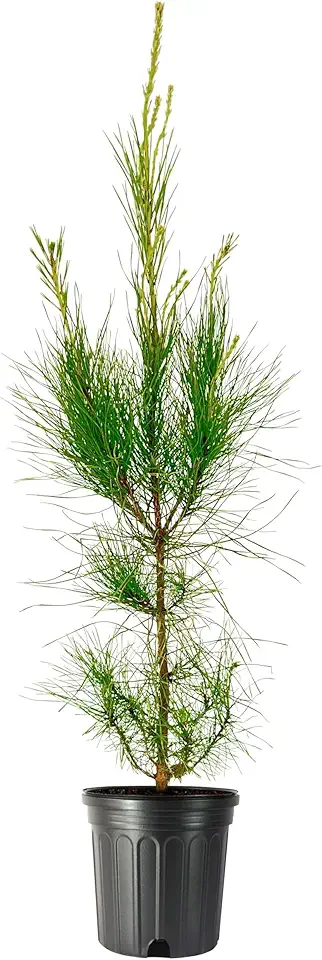
Loblolly Pine 3 Gallon Trees — Fast-Growing Shade Evergreens
- Three large gallon pots for easy transplanting
- Fast-growing habit provides quick shade and privacy
- Sturdy trunks and deep roots for landscape stability
- Thrives in full sun and tolerates varied soils
- Low maintenance once established
Buy on Amazon

Loblolly Pine 5-Pack Seedlings — Attractive Evergreens
- Five healthy seedlings ready for backyard or project planting
- Attractive evergreen foliage for year-round landscape interest
- Fast establishment and steady growth in suitable conditions
- Easy to transplant with minimal initial care
- Excellent choice for screens, windbreaks, and habitat
Buy on Amazon
2. Understand Growth Rate and Size Expectations
Mature Height and Width
Loblolly pine often reaches 100 feet or more with trunks up to 4 feet thick in favorable sites, forming a broad, oval canopy over time. Branching typically begins around the lower third of the trunk, giving space for equipment or understory plantings.
Annual Growth Rates
Expect rapid juvenile growth of about 1.5–2.5 feet per year under good moisture, full sun, and fertile soils, with speed slowing as stands mature. Forestry references report strong early gains that make loblolly a prime pick for fast screens and early volume (Forest Health Guide: Southern Pine).
Canopy Development Timeline
You’ll see useful shade within 3–5 years from container trees, with full neighborhood screening in roughly 7–10 years. Timber stands start closing canopies after early thinnings, improving stem form and boosting productivity.
3. Site Selection and Soil Requirements
Optimal Growing Conditions
Pick a full-sun spot with room for height and spread, keeping lines and structures in clear view. Aim for pH near acidic (about 4.5–6.5), steady soil moisture, and spacing that supports airflow and straight stems.
Soil Adaptability Range
Loblolly tolerates clay and periodic wetness better than many pines, yet it still prefers well-aerated soils that don’t stay waterlogged. For a data-backed comparison across pines and site types, see bplant.org species compare for habitat notes and traits.
Sunlight and Drainage Needs
Full sun drives growth and reduces lower branch dieback, while consistent drainage keeps roots healthy. If water lingers after rain, plant on a slight mound and add mulch rings to buffer temperature swings and moisture loss.
4. Loblolly Pine vs Longleaf Pine Comparison
Growth Rate Differences
Loblolly leaps ahead during its first decade, while longleaf often spends years in a “grass stage” before vertical growth takes off. That early speed makes loblolly ideal for quick screens and shorter timber rotations on fertile, well-watered sites.
Site Preferences
Choose loblolly for moist to mesic soils with decent fertility; choose longleaf for deep, sandy soils and areas managed with prescribed fire. Rotation ages differ too, often ~24 years for loblolly and ~45 years for longleaf in many management guides (Loblolly or Longleaf Pine? — Pickens).
| Feature | Loblolly Pine (Pinus taeda) | Longleaf Pine (Pinus palustris) |
|---|---|---|
| Growth Rate | Fast; ~1.5–2.5 ft/yr early | Slow early (grass stage), faster later |
| Typical Rotation | ~24 years | ~45 years |
| Height at Maturity | 100+ ft | 100+ ft |
| Needle Length | ~5–7 in, bundles of 3 | ~8–18 in, bundles of 3 |
| Site Preference | Moist, fertile, adaptable | Sandy, fire-managed sites |
| Economic Use | Timber, pulp | Sawtimber, pine straw income |
| Fire Tolerance | Moderate | High |
| Ease of Establishment | Generally easier | More site prep |
Economic Value Comparison
For quick cash flow, loblolly’s short rotation and pulp markets often win, while longleaf can yield higher-value sawtimber and ongoing pine straw revenue. Mills may prefer dried stock for stability, so look for explanations of kiln-dried wood and drying targets used in regional processing.
5. Maintenance and Long-Term Care
Establishment Period Care
Water deeply during the first growing season, keep a 2–3 inch mulch ring off the trunk, and clear grass inside a 2–3 foot circle for rapid rooting. A light starter fertilizer in spring, guided by a soil test, can boost vigor on nutrient-poor soils (A look at three pines).
Pest Management
Keep stands vigorous to reduce risk from southern pine beetle and fusiform rust by planting on good sites, avoiding wounding, and thinning on a smart schedule. Promptly remove dead or storm-damaged stems so they don’t attract pests that spread to nearby trees.
Pruning and Thinning
In landscapes, prune in late winter to remove broken or crossing limbs and keep a strong central leader. Plantation managers often plan a first thinning near age 12–15, then manage spacing for diameter growth and future sawmill lumber dimensions that meet market grades.
Bulk Planting and Seed Options
Going big on acreage or restoration? These seed packs help you propagate large numbers of loblolly pines with economical coverage.

Loblolly Pine Seed Pack — 50+ Viable Seeds
- Generous pack of 50+ seeds for nurseries or projects
- Great for reforestation, landscaping, or propagation
- Can be started indoors or sown directly outdoors
- Opportunity to grow fast, hardy evergreens from seed
- Detailed planting tips boost germination success
Buy on Amazon
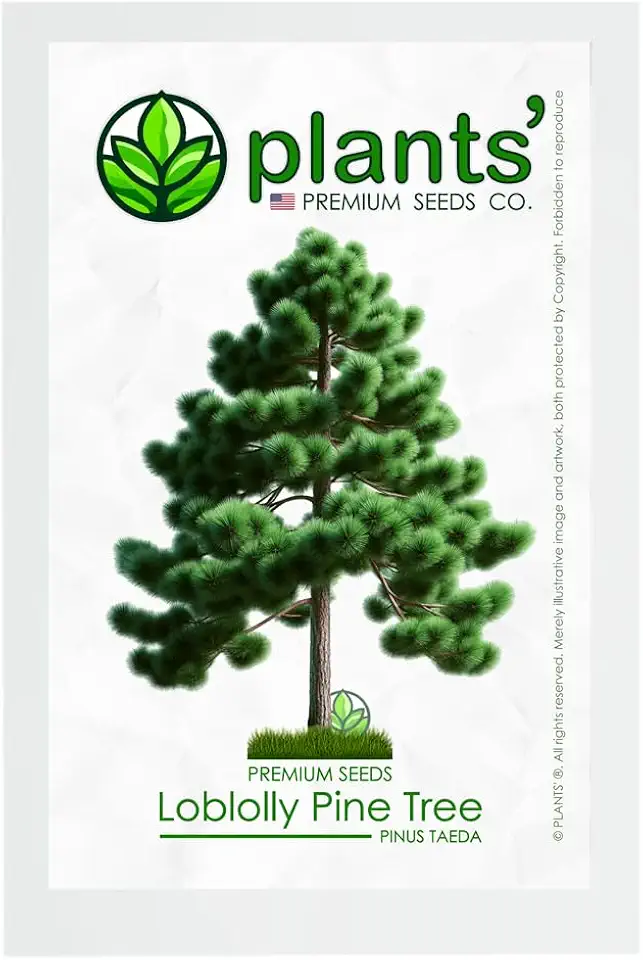
Loblolly Pine Premium Seeds — Pack of 100
- High-quality seeds in a 100-count pack for mass planting
- Excellent for restoration, shelterbelts, or large landscapes
- Consistent germination when following included instructions
- Economical choice for nurseries and reforestation projects
- Grow resilient evergreens suited to varied conditions
Buy on Amazon
Prefer live starters grown organically? Pick from these bulk seedling packs for quick planting and early project momentum.

Organic Loblolly Pine 10-Pack — 6 to 12 in Starters
- Ten organically grown seedlings sized 6 to 12 inches for quick starts
- Naturally sprouted for strong early vigor and root development
- Fast-growing variety that establishes quickly in the landscape
- Suitable for organic planting projects and restoration
- Compact seedlings are easy to handle and plant
Buy on Amazon

Organic Loblolly Pine 25-Pack Starters
- Twenty-five organically sprouted seedlings sized 6 to 12 inches
- Bulk pack ideal for reforestation, windbreaks, or large plantings
- Strong starter roots for reliable establishment and fast growth
- Low-input care after planting in suitable sites
- Great value for landscapers and restoration projects
Buy on Amazon
FAQs
What Are The Uses Of Loblolly Pine Wood?
Loblolly pine wood Is Widely Used For Construction Lumber, Plywood, Utility Poles, Pallets And Crates, And Is Also A Major Source Of Pulp For Paper And Fiberboard. Its Straight Grain And Ready Availability Make It Popular For Framing, Millwork, And Some Furniture Applications, While Lower Grades Are Used For Industrial Products And Landscape Timbers.
How Fast Do Loblolly Pines Grow?
Loblolly Pines Are Among The Fastest-Growing Southern Pines, Often Adding About 2–6 Feet Per Year Under Good Site And Management Conditions. In Plantations They Can Reach Pulpwood Size In 10–15 Years And Sawtimber Size In 25–40 Years; Growth Varies With Soil Quality, Moisture, Spacing, And Local Climate.
Where Can I Buy Loblolly Pine Seeds?
You Can Buy Loblolly Pine Seeds From State Forestry Agencies, University Extension Offices, Reputable Nurseries, Commercial Seed Suppliers, And Online Forestry Retailers. Look For Certified Or Locally Adapted Seedlots, Buy From Suppliers With Good Reviews, Or Consider Buying Seedlings If You Prefer Easier Establishment.
What Is The Difference Between Loblolly And Other Pine Trees?
Loblolly Pines Tend To Grow Faster And Prefer Warmer, Moist Lowland Sites Compared With Many Other Pines. They Typically Have Needles In Bundles Of Three, A Straight, Tall Form, And Less Fire Tolerance Than Longleaf Pine. Key Differences Include Growth Rate, Habitat Preference, Needle And Cone Characteristics, Bark Texture, And Adaptation To Fire And Soil Types.
How Long Do Loblolly Pines Live?
In Natural Stands Loblolly Pines Can Live Roughly 100–200 Years, Though Many Individual Trees Are Harvested Much Earlier In Managed Plantations (Often 25–40 Years). Actual Longevity Depends On Site Conditions, Disease, Competition, And Disturbances Such As Storms Or Fire.