Osage Orange Wood Guide: Properties, Uses, Firewood, and Buying Tips

Table of Contents
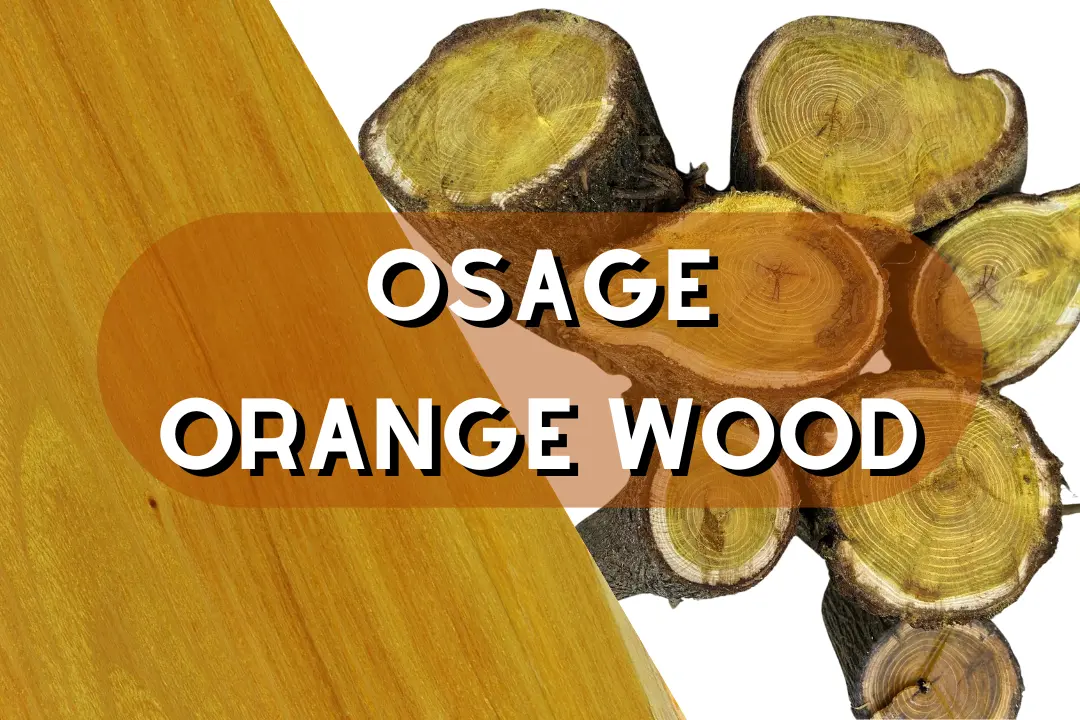
Osage orange wood is a dense, extremely hard, yellow-orange hardwood from Maclura pomifera. It has a Janka hardness of about 2,620 lbf, strong rot resistance, and high firewood heat, which makes it useful for bows, fence posts, turning blanks, tool handles, and carefully managed firewood.
Quick answer: choose Osage orange when you need strength, decay resistance, heat output, or a striking small-project wood; avoid it when you need wide furniture boards, easy machining, low sparking firewood, or a pale color that stays bright forever.
What Is Osage Orange Wood?
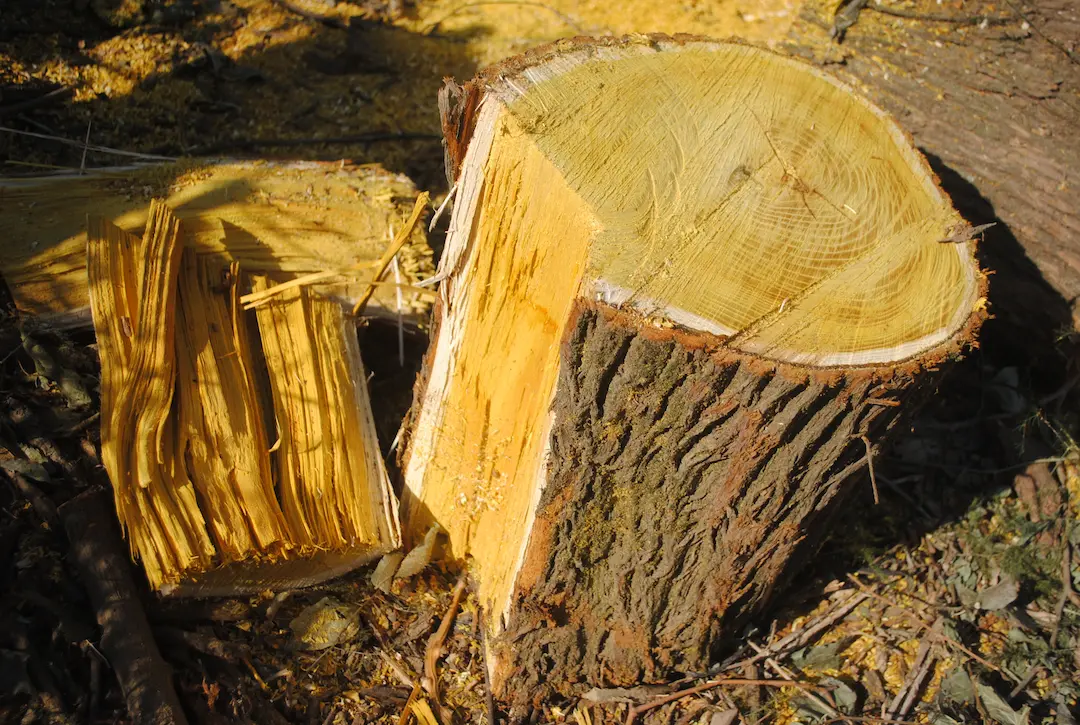
Osage orange wood comes from the Osage orange tree, a deciduous hardwood known for thorny branches, green wrinkled fruit, milky sap, and vivid yellow-orange heartwood. The tree is widely recognized in North America under names like bodark tree, hedge apple tree, bois d’arc tree, horse apple, and hedge.
The wood matters because it connects tree biology with practical use: the same dense, thorny hedgerow growth that made it useful as a living fence also creates crooked logs, short boards, embedded wire risk, and lower lumber yield. That’s why Osage orange lumber is often sold as bow staves, turning blanks, pen blanks, craft boards, smoking chunks, or firewood rather than wide cabinet boards.
Maclura pomifera Basics
Maclura pomifera belongs to the mulberry family, Moraceae, not the citrus family. The USDA lists Osage orange as Maclura pomifera, and its plant profile confirms the accepted botanical name and distribution data through the USDA PLANTS Database.
In the shop, fresh-cut Osage orange feels heavy before the tape measure even comes out; a small block has that compact, cold-in-the-hand feel you get from very dense hardwood. The sawdust can look almost turmeric-yellow at first, and the freshly planed face often has a bright glow that later shifts toward amber brown.
Common Names
Common names include Osage orange, hedge apple, horse apple, bodark, bois d’arc, bow wood, hedge, and hedge apple wood. “Bodark” is an English spelling of the French phrase bois d’arc, which means “wood of the bow.”
Search terms vary by region and language, so you may also see oranger des Osages, naranjo de Osage, or osage baum in plant and lumber searches. All of these names can point back to the same tough hardwood, but sellers sometimes use loose names, so verify the scientific name if species accuracy matters.
Not Citrus Wood
Osage orange is not orange tree wood from a citrus orchard. That distinction affects smoking flavor, tool expectations, hardness, weight, and buying decisions because true citrus wood is much different from Osage orange hardwood.
Beginners often assume the name means sweet orange scent or citrus smoke, then overload a smoker or grill. Treat it as a strong hardwood smoke, not a fruitwood, and test a small amount before using it on a full brisket or pork shoulder.
Tree, Fruit, and Range
The tree produces large green to yellow-green fruits with a wrinkled, brain-like surface. These hedge apples are not true oranges, and people don’t usually eat them; their hard latex-rich texture and bitter character make them more of an identification clue than a food crop.
Native range centers around parts of the south-central United States, with strong historic ties to Texas, Oklahoma, Arkansas, and Missouri. It was planted far beyond that range for hedgerows, windbreaks, erosion control, livestock barriers, and durable fence posts.
History and Bois d’Arc
Bois d’arc means “wood of the bow,” and that name fits the wood’s long history in archery. Straight, clean Osage orange bow staves were valued because the wood combines compression strength, elasticity, durability, and high density in a way few North American hardwoods match.
Before barbed wire, farmers planted thorny Osage orange hedges as living fences that could hold livestock when pruned and woven tightly. After those hedges matured, the heartwood also supplied long-lasting posts, stakes, and rough outdoor material.
Osage Orange Wood Properties

Osage orange properties explain why this wood performs so differently from common hardwoods like oak, cherry, walnut, and maple. It is much harder than most domestic species, very dense, naturally durable in the heartwood, and visually striking when freshly cut.
The main trade-off is workability. The same hardness that makes Osage orange excellent for bows, handles, posts, and turning also increases tool wear, splitting risk, drying defects, and fastening problems.
Properties Table
These figures give a practical baseline for identifying and comparing Osage orange wood. Many published wood property values align with the species profile at The Wood Database, though real boards vary by growth conditions, moisture content, and defects.
| Property | Figure or Description | Why It Matters |
|---|---|---|
| Scientific name | Maclura pomifera | Confirms true Osage orange, not citrus orangewood |
| Family | Moraceae | Places it with mulberry relatives, not citrus trees |
| Common names | Osage orange, hedge apple, bodark, bois d’arc, bow wood | Helps match regional lumber, firewood, and bow-stave listings |
| Janka hardness | About 2,620 lbf | Roughly twice as hard as red oak |
| Average dried weight | About 54 lb/ft³ / 855 kg/m³ | Explains the heavy feel, high heat, and slow drying |
| Specific gravity | 0.76 basic / 0.83 at 12% moisture content | Shows very high density for a North American hardwood |
| Modulus of rupture | About 18,650 psi | Supports bow, handle, and impact-use performance |
| Elastic modulus | About 1,689,000 psi | Relates to stiffness under load |
| Crushing strength | About 9,250 psi | Useful for compression-heavy uses like bows and posts |
| Shrinkage | 3.8% radial, 6.9% tangential, 10.6% volumetric | Moderate figures, but checking can still be severe if dried fast |
| Durability | Very durable heartwood | Reason for historic fence-post use |
| Firewood heat | About 32–33 million BTU per cord | Among the hottest common North American firewoods |
| Color | Bright yellow-orange fresh, amber brown with age | Decorative appeal, but color change must be expected |
Hardness and Density
Osage orange Janka hardness is about 2,620 lbf, which puts it far above red oak, white oak, hard maple, and hickory. If you’ve worked oak and then cut Osage orange, the difference shows up fast: the blade tone gets higher, feed pressure rises, and burn marks appear if you pause too long.
The dried weight is about 54 lb/ft³, so a short board can feel oddly heavy for its size. That density helps with durability and heat output, but it also slows drying and makes thick blanks more prone to internal stress if rushed.
Strength and Shrinkage
Strength values are high: modulus of rupture around 18,650 psi, elastic modulus around 1,689,000 psi, and crushing strength around 9,250 psi. Those numbers explain why bowyers, handle makers, and turners keep searching for clean pieces instead of treating every log as firewood.
Shrinkage numbers look moderate on paper, with 3.8% radial and 6.9% tangential shrinkage, but real logs can still split aggressively. The problem usually comes from density, end-grain moisture loss, growth stress, knots, and hot sun hitting fresh-cut surfaces too soon.
Color and Grain
Fresh heartwood can be brilliant golden yellow, yellow-orange, or vivid orange. After air and UV exposure, it shifts toward golden brown, amber brown, or medium brown, so don’t design a project that depends on the fresh neon color staying unchanged.
The grain ranges from straight to irregular or interlocked, with a fine to medium texture and a smooth polish when sharpened tools do the cutting. End grain is dense and ring-porous, and the surface can feel slick after high-grit sanding or burnishing.
Rot Resistance
Osage orange heartwood is one of the more naturally durable North American hardwoods. That rot resistance is the reason old hedge posts can survive ground contact for many years while softer sapwood, cracks, and water-trapping checks fail sooner.
Outdoor success still depends on design. Keep end grain from sitting in water, shed rain where possible, pre-drill fasteners, and don’t assume any natural wood is immune to insects, movement, checking, or soil conditions.
Heartwood vs Sapwood
The heartwood carries the color, density, and decay resistance people usually want. Sapwood is pale yellow, narrower, and much less durable, so it lowers value in fence posts, outdoor pieces, and premium craft blanks.
For buying, ask how much sapwood is present before paying premium prices for Osage orange boards or blanks. A pen blank with a little sapwood can look attractive, but a ground-contact post with too much sapwood won’t perform like solid heartwood.
Best Uses for Osage Orange Wood
Osage orange uses are strongest where hardness, strength, density, and decay resistance matter more than easy machining or wide board availability. It’s best for bows, fence posts, turning blanks, tool handles, mallets, small crafts, high-heat firewood, and limited barbecue use.
Project selection matters because a crooked log may be poor lumber but excellent firewood, while one straight, knot-free stave can be worth far more than a whole pile of checked branches. Sort by use before cutting everything into the same size.
Bows and Staves
Bow staves are the premium use for high-quality Osage orange wood. Bowyers look for straight grain, clean length, slow drying, minimal twist, small knots, and proper growth-ring orientation because a hidden defect can fail under draw stress.
The common mistake is cutting a log into short craft blocks before checking if it contains bow-grade sections. If a trunk has long, straight, clean grain, split it into staves first; you can always cut failed staves into blanks later, but you can’t rebuild a bow stave from small blocks.
Fence Posts

Fence posts are a classic Osage orange use because the heartwood resists decay in ground contact better than many common hardwoods. A post cut from dense heartwood can outlast softer untreated material, especially in farm or garden settings.
Pre-drilling helps when attaching wire, brackets, or rails. Dry Osage orange can split near edges, and old fence-row logs may hide staples or wire, so scan, trim cautiously, and don’t run unknown posts through a planer without checking for metal.
Turning Blanks

Turning blanks are a practical way to use Osage orange because small pieces show the color and density without needing wide boards. Pens, bottle stoppers, bowls, handles, knife scales, and small boxes can polish to a smooth, glassy surface.
Sharp tools make the difference between a clean ribbon shaving and a dusty, chattering mess. Seal green blanks right away, rough-turn bowls thick, and dry slowly so end checking doesn’t run deep into the finished shape.
Tool Handles
Tool handles benefit from the wood’s density, compression strength, and wear resistance. Chisel handles, mallets, wedges, walking sticks, and shop-made striking tools can perform well if the grain runs straight through the length.
Handle comfort needs attention because heavy wood can make a tool feel nose-light or tiring in hand. Round edges generously, sand through the grits, and avoid sharp shoulders where impact stress can concentrate.
Small Woodworking
Small projects fit Osage orange better than large casework. Accent strips, inlays, drawer pulls, knife scales, mallet heads, boxes, decorative panels, and mixed-hardwood pieces make good use of narrow boards and vivid color.
For design balance, pair Osage orange with calmer woods like walnut, cherry, or white oak so the color doesn’t overwhelm the piece. If you want to compare durability and outdoor use, our guide to white oak wood gives a useful benchmark.
Furniture Limitations
Large furniture is possible, but Osage orange is rarely the easiest choice. Trees often grow short, crooked, thorny, and fence-row stressed, so wide, clear, flat boards are much less common than small blanks or narrow lumber.
The workaround is using it as a feature wood rather than the whole build. Use stable, dry stock for pulls, legs, wedges, inlay, breadboard accents, or turned components, then let more available woods handle wide panels and case sides.
Firewood, Smoking, and Safety
Osage orange firewood is excellent for heat output, but it burns extremely hot and is famous for sparks and popping. Use it with care in wood stoves, outdoor boilers, and screened fireplaces, and avoid stuffing a stove full of it on the first cold night.
For smoking meat, Osage orange is usable by some pitmasters, but it’s strong, earthy, and not citrus-like. Clean, seasoned, untreated wood is the rule, and small test amounts are safer than treating it like apple, cherry, or pecan.
Firewood BTU
Osage orange BTU output is commonly listed around 32–33 million BTU per cord, with many charts citing about 32.9 million BTU per cord. Utah State University Extension firewood data places Osage orange among the highest heat-value woods in its wood heating guide.
That heat density makes it valuable where one cord of wood price depends on usable heat, not just volume. In practice, a cord of Osage orange can deliver more heat than many common hardwoods, but local pricing still depends on region, seasoning, delivery, split size, and seller honesty.
Sparks and Popping
Sparks are common with Osage orange, especially in open fires. The pops can throw small glowing pieces with a sharp crack, so use a tight fireplace screen indoors and don’t burn it near dry leaves, tents, mulch, or stacked firewood.
In wood stoves, load smaller amounts and mix it with oak, ash, maple, or other milder hardwoods. Overfiring can damage stove parts, warp metal, and raise chimney temperatures faster than a beginner expects.
Seasoning Time
Seasoning time should be at least 12 months, with 18–24 months better for large splits. Dense wood releases moisture slowly, so split it soon after cutting, stack it off the ground, leave airflow through the sides, and cover only the top.
Green hedge firewood can hiss, smoke, waste heat, and increase creosote risk. If a split still feels cold, heavy, and damp against the cheek, give it more time or meter it before relying on it for steady winter heat.
Smoking Flavor
The smoke profile is bold, dense, earthy, and sometimes sharp if overused. Because Osage orange is not citrus orange wood, don’t expect a sweet orange aroma or light fruitwood behavior.
A safer method is blending one small chunk with oak, hickory, or a mild fruitwood. If the smoke smells harsh, acrid, or chemical-like, stop using that wood and check for green moisture, mold, contamination, or poor combustion.
Best Meats
Best matches include beef brisket, pork shoulder, ribs, sausage, venison, and other game meats. These foods can handle a stronger smoke better than fish, chicken breast, mild vegetables, or soft cheeses.
For barbecue comparison, hickory stays more familiar and forgiving for most cooks, while Osage orange feels more specialized. Our hickory wood guide explains why it remains a standard smoking and handle wood.
Smoking Safety
Only smoke food with clean, seasoned, untreated, pesticide-free wood. Avoid old fence posts, painted scraps, treated lumber, moldy chunks, road-edge trees, and hedge-row pieces that may contain chemicals, wire, or unknown residue.
These smoking options are useful if you want prepared Osage orange chunks or pellets instead of cutting unknown wood yourself.

Osage Orange Smoking Chunks
- Chunk-sized wood for smoking and grilling
- Adds bold flavor to meat and barbecue
- Convenient gallon bags for longer use
- Works well with smokers and fire pits
- Two-pack offers great value
 Buy on Amazon

Osage Orange Smoking Pellets
- Fine pellets for clean, steady smoke
- Adds distinct flavor to barbecue and meats
- 9 pound bag for extended cooking sessions
- Works with compatible smokers and grills
- Convenient fuel for backyard smoking
Buy on Amazon
Working With Osage Orange Wood
Working Osage orange rewards patience and punishes dull tools. It cuts, turns, sands, and finishes well, but the density raises heat, dust, blade wear, checking risk, and splitting around fasteners.
Real-world note: when a sharp tool is right, Osage orange makes tight yellow curls and the surface shines quickly; when the edge is dull, it squeals, burns, chatters, and leaves dust that feels gritty between your fingers. That feedback tells you when to slow the feed rate or sharpen before damage spreads.
Cutting and Milling
Cutting Osage orange works best with sharp carbide blades, steady feed, and shallow passes where possible. Logs from fence rows may be crooked, thorny, tension-filled, checked, or metal-contaminated, so inspect before milling.
Expect lower yield than straight plantation logs. A small crooked trunk may produce valuable bow staves, handle stock, or turning blanks, but it may disappoint anyone hoping for long, flat, furniture-grade boards.
Drying Without Checking
End sealing is the first move after cutting logs, boards, or blanks. Wax, commercial end sealer, or thick paint slows moisture loss through end grain and reduces deep end checks.
Dry it slowly out of direct sun during the early stage. For bowl blanks, rough-turn thick, seal the end grain, bag or box the blank with shavings, and let it lose moisture gradually until it nears equilibrium moisture content.
Sanding and Shaping
Sanding takes time because the wood is dense and can polish before scratches are gone. Don’t skip grits; scratches left at 120 grit can still show after oil turns the surface a deeper orange-brown.
Scrapers help on interlocked grain where a plane tears out. For turning, use fresh edges and light cuts near the final profile to avoid chatter rings that take too long to sand out.
Gluing and Finishing
Gluing works when surfaces are freshly planed or sanded, clean, dry, and clamped well. Dense latewood can limit glue penetration, so avoid dusty, burnished, oily, or old oxidized surfaces at glue-up.
Oil finishes deepen the yellow-orange color and make the grain glow, while clear film finishes can slow color change but won’t stop UV darkening. Test finish on offcuts because the color shift can be stronger than expected.
Tool Wear
Tool wear is real with a 2,620 lbf hardwood. Saw blades, drill bits, router bits, turning gouges, and planer knives dull faster than they do on walnut, cherry, or many oaks.
Carbide tooling pays off if you cut Osage orange often. For occasional work, slow the feed, clear chips, avoid overheating, and sharpen before the tool starts rubbing instead of cutting.
Fastening Outdoors
Pre-drill holes for screws, lag bolts, and nails, especially near ends or edges. Dry Osage orange can split suddenly with a sharp snap, and forcing fasteners can crack an otherwise good outdoor part.
Use corrosion-resistant fasteners outdoors and design joints so water can drain. Checks, end grain, and trapped moisture cause more trouble than the species name suggests, even in a decay-resistant hardwood.
Value, Buying, and Availability
Osage orange value depends more on form, dryness, straightness, and defect level than on species name alone. Bow-grade staves, dry clear blanks, vivid boards, and specialty craft pieces can sell well, while crooked checked logs may be worth firewood money only.
Availability is regional: in former hedgerow country, logs and firewood may be common, but wide, clear lumber is still scarce. Specialty hardwood dealers, sawyers, bow-stave sellers, online marketplaces, and turning suppliers are better sources than big-box stores.
What Makes It Valuable
High-value pieces are straight, dry, clear, mostly heartwood, and suited to a known project. A clean bow stave, a sealed turning blank, or a small kiln-dried board with vivid color can be worth far more per board foot than rough firewood-grade material.
Bow wood pricing is especially quality-sensitive because long, clean, straight-grained sections are hard to find. A premium seasoned stave can command much more than ordinary lumber because one hidden knot, twist, or check may ruin bow potential.
What Reduces Value
Value drops with deep end checks, surface cracks, twist, knots, heavy sapwood, insect damage, embedded wire, unknown chemical exposure, and fast drying damage. Dirty fence-row logs can be risky for sawmills because one old staple can destroy a blade.
Beginner sellers often overprice any orange-colored log as bow wood. The professional workaround is grading by use: bow-grade, craft-grade, turning-grade, post-grade, smoking-grade, or firewood-grade.
Price Ranges
Typical ranges vary by region, but small turning blanks often sell from a few dollars to $20+ each depending on size and figure. Pen blanks are commonly sold in multipacks, while small craft boards cost more per board foot because cutting, drying, and packaging small lots takes time.
Bow staves can range from about $50 to several hundred dollars when straight, clean, seasoned, and suitable for serious archery work. Firewood is priced locally by cord, face cord, truckload, or bundle, and high BTU output may raise its value where buyers know hedge firewood.
Buying Checklist
Check the details before buying Osage orange lumber, blanks, smoking wood, or seeds. The right questions prevent paying bow-stave prices for cracked craft wood or smoking with unsafe scrap.
- Ask whether the piece is mostly heartwood or sapwood.
- Confirm kiln-dried, air-dried, green, or unknown moisture status.
- Ask for actual dimensions, not just nominal dimensions.
- Inspect end checks, surface cracks, knots, twist, and worm holes.
- For bows, confirm grain straightness, ring orientation, knots, twist, and drying history.
- For smoking, use clean, seasoned, untreated, pesticide-free wood only.
- For turning, ask whether blank ends were sealed after cutting.
- For outdoor use, plan pilot holes and stainless or coated fasteners.
Lumber and Boards
Osage orange boards are easier to find in short, narrow, or small craft sizes than in wide furniture stock. Check moisture content with a meter if the piece will live indoors, and let it acclimate before final milling.
For dense alternatives, compare Osage orange with species like mesquite when choosing small boards, handles, or decorative hardwood accents. Our guide to mesquite wood covers another heavy, durable hardwood with strong character.
Blanks and Craft Wood
Blanks are often the best entry point for hobbyists because they avoid the search for wide, flat lumber. Pen blanks, handle blanks, knife-scale stock, bowl blanks, and craft boards let you use the color and density without processing a whole thorny log.
These woodworking options fit small projects like pens, craft boards, handles, blocks, and turning practice.

Osage Orange Lumber Pair
- Solid hardwood boards for crafting
- Precut size saves prep time
- Ideal for small woodworking projects
- Distinctive exotic wood grain and color
- Comes as a convenient 2-piece set
Buy on Amazon

Osage Orange Pen Blanks
- Perfect size for pen turning projects
- Exotic hardwood with rich natural character
- Great for DIY crafts and custom gifts
- Ready for woodturning and shaping
- Bulk 24-pack for multiple builds
Buy on Amazon

Osage Orange Craft Board
- Unfinished hardwood for creative projects
- Works for crafts, scroll saw, and laser work
- Smooth material ready for custom finishing
- Durable wood with attractive grain
- Compact board size for small builds
Buy on Amazon

Osage Orange Wood Block
- Versatile blank for many woodworking uses
- Great for turning, carving, and shaping
- Suitable for cue parts and knife scales
- Dense exotic wood with natural appeal
- Handy size for custom projects
Buy on Amazon

Osage Orange Pen Blank Set
- Five-piece set for pen making projects
- Exotic wood with striking natural color
- Ideal for turning, carving, and DIY crafts
- Uniform blanks help simplify your work
- Great starter pack for hobbyists
Buy on Amazon
Seeds and Growing
Growing Osage orange from seed makes sense for hedgerows, wildlife-style plantings, windbreak experiments, or collectors, but don’t plant one casually in a small yard. The tree can be thorny, messy with fruit, and wide-spreading when mature.
These seed options are for gardeners who want to grow Osage orange trees rather than buy lumber or blanks.
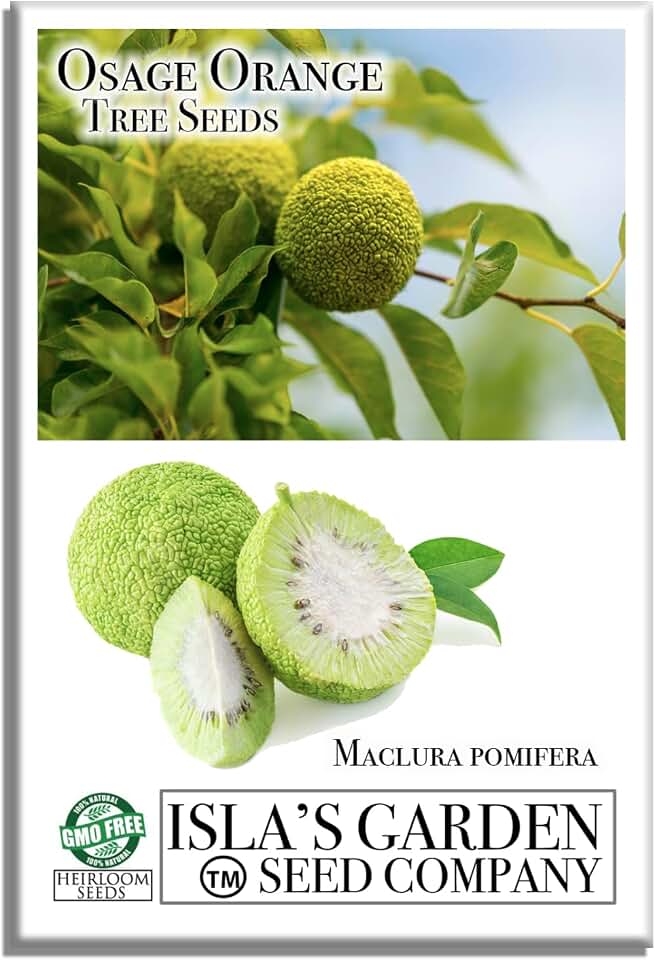
Rare Osage Orange Seeds
- Premium heirloom seeds for planting
- Non GMO and open-pollinated
- Strong germination potential
- Grow a unique ornamental or hedgerow tree
- Great for gardeners and collectors
Buy on Amazon

Osage Orange Tree Seeds
- Packet of 20 seeds for planting
- Grow a distinctive native-style tree
- Suitable for home gardens and landscapes
- Heirloom seed choice for collectors
- Easy way to start a rare tree
Buy on Amazon
Osage Orange vs Other Hardwoods
Osage orange compares as harder, denser, and more decay-resistant than many familiar North American hardwoods, but it is less available in wide boards. That makes it a specialist wood rather than a universal replacement for oak, hickory, locust, or mulberry.
The best comparison depends on project type: oak wins for large furniture, hickory for common smoking and shock tools, black locust for durable outdoor stock, and Osage orange for bows, posts, high-heat firewood, and small dense objects.
Comparison Table
| Wood | Janka Hardness | Rot Resistance | Firewood Heat | Workability | Best Uses |
|---|---|---|---|---|---|
| Osage orange | About 2,620 lbf | Very high heartwood durability | About 32–33 million BTU/cord | Hard on tools; prone to checking if rushed | Bows, posts, turning, handles, hot firewood |
| White oak | About 1,360 lbf | Good to very good by species and selection | High | More practical for large boards | Furniture, flooring, barrels, outdoor projects |
| Red oak | About 1,290 lbf | Lower than white oak and Osage orange | Good | Easy to source and machine | Furniture, flooring, interior work |
| Hickory | About 1,820 lbf | Moderate | High | Tough, stringy, hard but common | Handles, smoking, tool parts, firewood |
| Black locust | About 1,700 lbf | Very high heartwood durability | High | Hard but more outdoor-project friendly | Posts, outdoor structures, durable boards |
| Mulberry | Usually lower than Osage orange | Good heartwood durability | Good | Easier than Osage orange | Small woodworking, posts, turning |
Osage Orange vs Oak
Osage orange is much harder than red oak or white oak and often more decay-resistant in the heartwood. Oak is easier to buy, easier to match, and far more practical for floors, cabinets, tables, and wide panels.
Choose oak when you need consistent boards and predictable furniture stock. Choose Osage orange when you need a dense accent, a bow stave, a post, a turning blank, or a hard-wearing shop part.
Osage Orange vs Hickory
Osage orange is harder by Janka rating and more decay-resistant outdoors, while hickory is famous for toughness, shock resistance, tool handles, and barbecue familiarity. Both are strong, but they feel different under tools.
Hickory fibers can feel stringy and tough, while Osage orange feels dense, glassy, and heat-prone under a cutter. For smoking, hickory is safer for broad appeal; for bow wood, Osage orange has the stronger tradition.
Osage Orange vs Black Locust
Both woods are excellent choices for natural outdoor durability, especially in heartwood. Black locust is easier to use for many outdoor structures, while Osage orange is harder, brighter, and more prized for bows.
For posts, either species can be a strong choice if the stock is mostly heartwood and sound. If you’re comparing natural durability, our black locust wood article gives a close outdoor-use comparison.
Osage Orange vs Mulberry
Mulberry and Osage can both show yellowish heartwood, but Osage orange is usually heavier, harder, and more specialized. Mulberry tends to be easier to work and less extreme in density.
For small projects, both can look warm and durable, but Osage orange brings more tool wear and more dramatic color change. Compare color, hardness, and workability in our mulberry wood guide before choosing one for decorative work.
Toxicity, Myths, and Misconceptions

Osage orange wood is not usually treated as a highly toxic wood, but dust can irritate skin, eyes, and lungs. Use dust collection, eye protection, and a good respirator when sanding or machining dense dry stock.
Hedge apple myths also cause confusion: are hedge apples poisonous, are Osage oranges edible, and do hedge apples repel spiders are separate questions from woodworking safety. North Carolina State Extension notes ingestion concerns and irritation potential in its Maclura pomifera plant profile.
Wood Dust Safety
Wood dust safety matters with any dense hardwood. Osage orange dust can feel dry and sharp in the nose during sanding, and fine particles hang in still air longer than beginners expect.
Use protection: respirator, dust collection, eye protection, and skin cleanup after sanding. Don’t blow dust off the bench with compressed air unless you want it in your face and filters.
Food Contact
Food-contact use should be limited to clean, untreated, properly dried wood finished with a food-safe finish. The wood is hard enough for small utensils or boards, but checking and cracks can trap food residue.
Cutting boards need stable, dry stock and careful design. Avoid unknown fence-row wood, treated wood, pesticide-contaminated pieces, and boards with open checks that can hold moisture or bacteria.
Hedge Apple Safety
Hedge apples are not true oranges and aren’t normal human food. Some animals may investigate the fruit, but bitter latex, size, and texture make it poor eating for people.
Pet owners should avoid letting animals chew large amounts or swallow chunks. If a child or animal eats part of the fruit and shows symptoms, call a medical or veterinary professional rather than relying on folk advice.
Citrus Wood Myth
The citrus myth leads to bad smoking and buying decisions. Osage orange is Maclura pomifera, not orange orchard wood, so it doesn’t carry the same properties, scent, or smoke profile as citrus wood.
For barbecue, label accuracy matters. If a seller says “orange wood,” ask whether it is true citrus wood or Osage orange because those two products behave very differently in a smoker.
Pest Repellent Claims
Hedge apples have a folk reputation for repelling spiders, roaches, and insects, but household results are often overstated. Placing fruit around a room is not a substitute for sealing gaps, reducing moisture, cleaning food residue, and using proven pest control.
The common mistake is assuming a strong smell equals reliable pest control. If you use hedge apples, treat them as a traditional curiosity, not a guaranteed insect barrier.
Color Change Myth
Osage orange color does not stay bright yellow forever. Fresh surfaces darken with air, handling, finish, and UV exposure, shifting toward amber, golden brown, or medium brown.
The best workaround is planning for the aged color from the start. Keep finished pieces out of direct sunlight, use UV-resistant clear coats where appropriate, and save offcuts so you can show clients or buyers how the wood changes over time.
FAQs
What Is Osage Orange Wood Good For?
Osage orange wood is excellent for high-wear uses because it is extremely hard, strong, and durable. It is commonly used for fence posts, tool handles, bows, and small woodworking projects that need toughness. Its density also makes it a favorite for long-lasting outdoor applications when properly installed.
Is Osage Orange Good Firewood?
Yes, Osage orange is one of the best firewood options because it burns hot and produces long-lasting coals. It is especially valued for wood stoves, fireplaces, and outdoor burning where high heat is desired. Because it is so dense, it should be well-seasoned before use for the best results.
Is Osage Orange Wood Valuable?
Yes, Osage orange wood is valuable because it is strong, durable, and relatively uncommon. Its value is highest for specialty uses like bows, tools, turning blanks, and premium firewood. Larger straight pieces and well-seasoned wood usually bring the best price.
Can You Smoke Meat With Osage Orange Wood?
Yes, you can smoke meat with Osage orange wood, but it should be used carefully and in small amounts. It is dense and can give food a strong flavor, so many people mix it with milder woods. Use only properly seasoned wood and avoid green wood for the best smoke quality.
Is Osage Orange Wood Toxic?
Osage orange wood is not considered highly toxic, but the dust can irritate some people when cutting or sanding it. It is best to wear a mask and use good ventilation during woodworking. For cooking and smoking, use clean, seasoned wood and avoid bark or moldy pieces.
Affiliate Disclosure: Some links in this post are affiliate links. If you make a purchase through these links, we may earn a small commission at no extra cost to you. We only recommend products we genuinely believe in.