Rainbow Poplar Wood Buying Guide: Uses, Properties, and Price

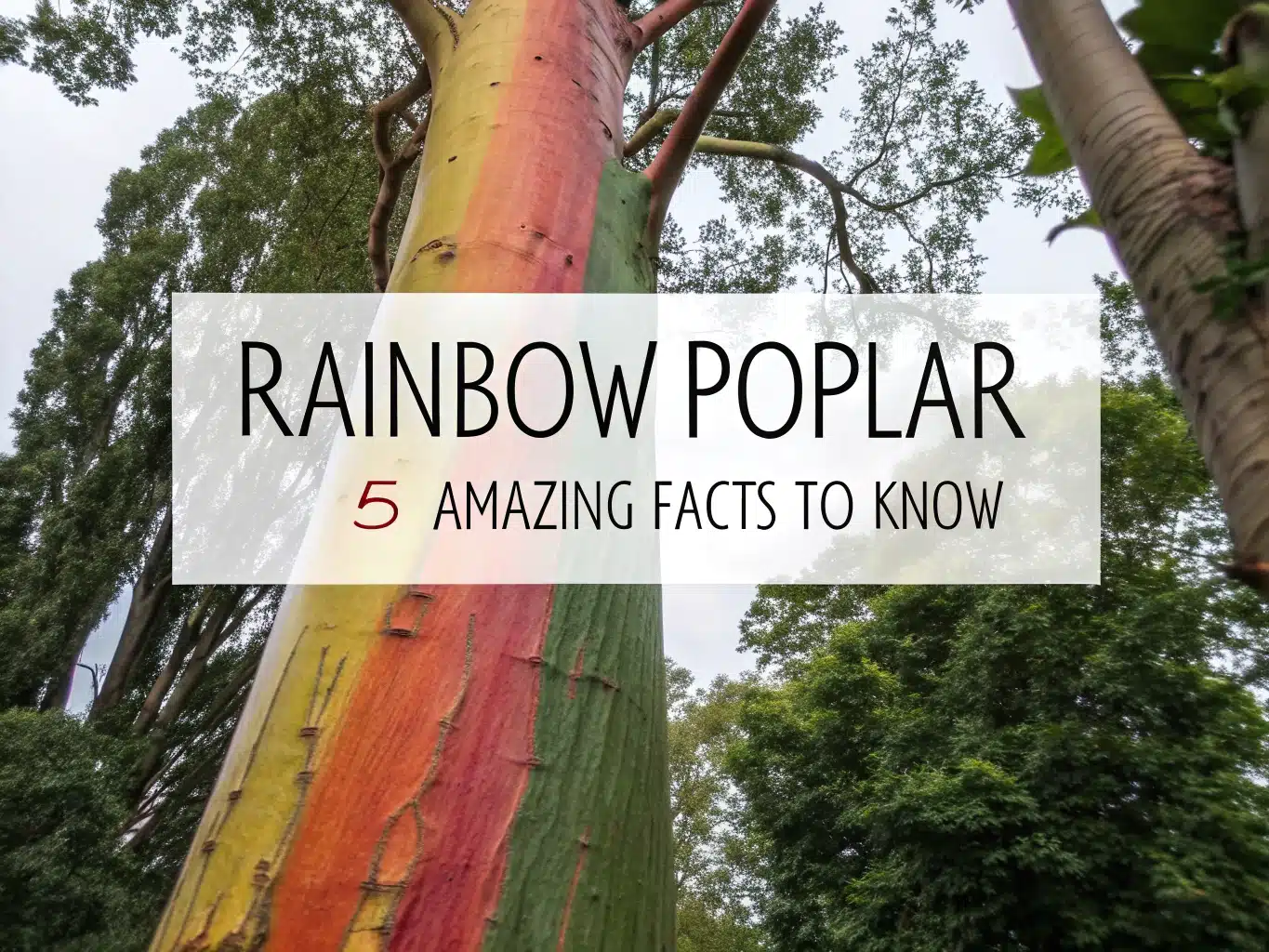
Rainbow poplar is a descriptive name for poplar wood, usually yellow poplar, that shows natural multicolored streaking from mineral staining and heartwood variation. It’s popular for decorative lumber, slabs, turning blanks, furniture accents, and clear-finished projects where color matters more than hardness.
If you’re comparing rainbow poplar wood, poplar white lumber, or poplar usa listings, treat “rainbow” as a visual lumber description, not a guaranteed species name. Ask the seller about species, drying, moisture content, finish behavior, and whether the photos show the exact board you’ll receive.
Table of Contents
What Is Rainbow Poplar?
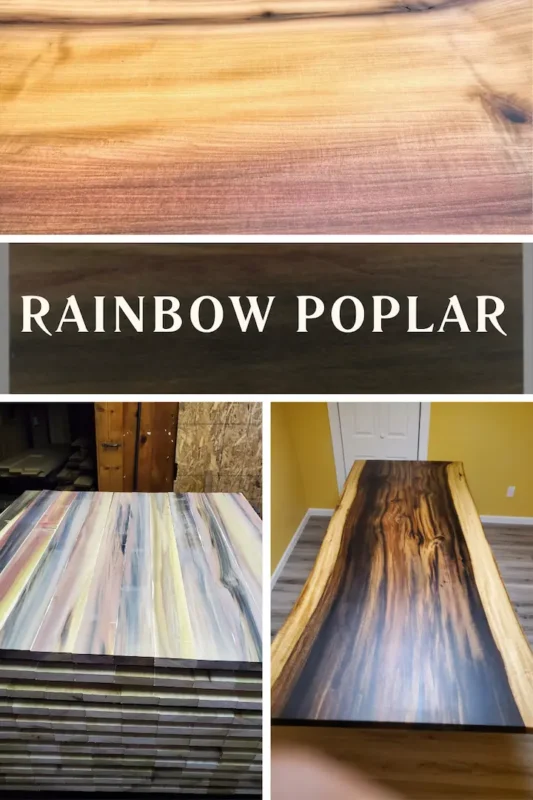
Rainbow poplar is usually yellow poplar lumber with green, purple, gray-blue, olive, cream, yellow, or brown streaking. Freshly surfaced boards often have a faint sweet, grassy smell, and the colored bands can feel slightly different under a sharp scraper because mineral-stained zones sometimes cut a little fuzzier than pale sapwood.
Short Definition
Rainbow poplar is a natural colored poplar product, most often yellow poplar, that gets its multicolor look from mineral staining and heartwood color variation. It is real wood, but “rainbow poplar” is not a formal botanical species or a standardized hardwood grade.
Yellow Poplar Identity
Most rainbow poplar lumber comes from yellow poplar, also called tulip poplar, tulip tree, or American tulipwood. Its botanical name is Liriodendron tulipifera, and the USDA PLANTS Database lists it as native across much of eastern North America.
Natural or Dyed
Natural rainbow poplar is not dyed; the color sits inside the wood and follows grain, heartwood, and mineral lines. Dyed or stabilized blanks exist in turning markets, so ask directly if the piece is natural, dyed, resin-stabilized, or pressure-treated with color.
A quick shop check helps: plane a thin shaving from an offcut and look at the fresh edge. In natural rainbow poplar, the color continues into the shaving instead of sitting only on the surface like stain or paint.
Visual Lumber Grade
Buyers should view rainbow poplar as a visual-grade board, much like curly maple or ambrosia maple gets sold for appearance. A board may have dramatic color and still include knots, checks, bark pockets, pith, or wane, so color alone doesn’t prove furniture-grade quality.
For a broader base on the species, compare these details with our guide to poplar wood properties. That background helps you separate common paint-grade poplar from the more decorative rainbow poplar lumber sold by specialty dealers.
Rainbow Poplar vs White Poplar
Rainbow poplar is usually linked to yellow poplar, while white poplar is a different tree named Populus alba. This distinction matters because online searches for poplar white can mix tree identification, pale lumber, and true Populus species with yellow poplar products.
Yellow Poplar Taxonomy
Yellow poplar is not a true Populus poplar. It belongs to the magnolia family, Magnoliaceae, which surprises many buyers because lumberyards still call it poplar across the USA hardwood trade.
The tree grows large, straight, and fast enough to supply wide domestic boards, interior millwork, cabinet parts, and clear-finished decorative stock. In a lumber rack, yellow poplar often feels light but solid, with a smooth, chalky surface after planing.
White Poplar Basics
White poplar is Populus alba, a true poplar in the willow family, Salicaceae. The tree gets its name from pale, often fuzzy leaf undersides, and the USDA Forest Service notes that it can spread aggressively in parts of North America.
White poplar wood is usually pale, light, and less associated with dramatic green-purple mineral streaking. If a seller uses the phrase poplar white, ask whether they mean white-colored poplar lumber, Populus alba, or ordinary light sapwood from another poplar-type species.
Poplar White Confusion
The phrase poplar white causes confusion because buyers use it in several ways. Some mean white poplar tree, some mean pale poplar boards, and some mean painted white poplar trim from a home center.
In woodworking, rainbow poplar vs white poplar usually compares a colorful yellow poplar product with a paler true Populus wood. For tree ID details, our white poplar identification guide gives the leaf and growth clues that lumber listings rarely explain.
Poplar USA Context
In poplar usa lumber listings, “poplar” most often means yellow poplar, not Populus alba. That matters for buyers because yellow poplar is a major domestic hardwood in the eastern United States, while white poplar has a different botanical identity and a different ecological story.
| Name in Lumber or Search | Common Botanical Meaning | What Buyers Should Check |
|---|---|---|
| Rainbow poplar | Usually colorful yellow poplar, Liriodendron tulipifera | Ask if it’s natural, kiln-dried, and the exact board pictured |
| Yellow poplar | Tulip poplar, not a true Populus species | Good domestic hardwood for interior work and painted millwork |
| White poplar | Populus alba, a true poplar | Usually paler wood and less tied to rainbow mineral color |
| Poplar white | Ambiguous search phrase | Confirm whether it means species, color, or finished trim |
Mineral Staining and Color Changes
Mineral staining gives rainbow poplar its multicolored heartwood. The colors form inside the tree, then shift after cutting, drying, sanding, finishing, and light exposure.
Mineral Stained Poplar
Mineral stained poplar can show dark lines, cloudy gray zones, olive-green patches, and purple streaks that run with the grain. On a fresh planer pass, the pale areas look creamy while the stained bands often look wetter and deeper, even before finish touches the board.
Mineral staining differs from spalting. Spalted wood gets its figure from fungal activity, while rainbow poplar color is more often tied to tree chemistry, minerals, heartwood development, and oxidation; our guide to spalted wood explains that separate process.
Common Rainbow Colors
Common rainbow poplar colors include green, purple, blue-gray, olive, tan, brown, yellow, cream, and charcoal mineral lines. Boards with broad color bands and clean faces usually bring more attention than boards with scattered narrow streaks.
- Green and olive: common in yellow poplar heartwood and often deepened by oil finishes.
- Purple and violet: prized when vivid, but prone to mellowing under sunlight.
- Blue-gray: attractive in clear-coated panels, though it can look muddy under amber finishes.
- Brown and tan: common transition colors that add contrast but can dominate after oxidation.
- Cream sapwood: useful for bright contrast, but it can make boards look less “rainbow” if color bands are narrow.
Why Colors Form
The colors form from a mix of heartwood chemistry, minerals moving through the tree, soil conditions, moisture movement, and oxidation after the log is cut. Two boards from the same log can look different because mineral movement rarely follows a neat pattern.
Beginners often assume every green or purple board will stay bright forever. In practice, thin purple streaks can turn quieter after a few months in a sunny room, while olive and brown bands usually remain more visually stable.
Finish and UV Effects
Finish choice can change rainbow poplar more than buyers expect. Oil-based finishes add warmth and amber tone, while water-based clear coats usually keep cool colors cleaner.
The video below is useful near the finishing stage because rainbow poplar is easiest to judge when you see color, grain, and surface sheen together. Watch how the wood changes under light before choosing a final clear coat.
For display pieces, keep finished rainbow poplar away from direct sun if color preservation matters. A UV-resistant topcoat helps, but no clear finish freezes natural wood color in place forever.
Visual ID Examples
Good visual ID starts with pattern, not just color. Natural rainbow poplar streaking follows grain direction, wraps around knots, and shows depth on end grain; surface dye often looks flatter and more uniform.
When sorting boards, wet a small end or offcut with mineral spirits to preview contrast. The smell is sharp and solvent-heavy, but the quick flash of color gives a better read than dry, dusty lumber under warehouse lighting.
Rainbow Poplar Wood Properties
Rainbow poplar has the working properties of yellow poplar: it’s a lightweight hardwood, easy to machine, easy to dent, and best suited to interior projects. It cuts cleanly with sharp tools but can fuzz during sanding or routing.
Hardness and Density
Typical yellow poplar has an average dried weight near 29 lb/ft³, or about 455 kg/m³, and a Janka hardness around 540 lbf. Those figures place it far below hard maple, oak, ash, and hickory in dent resistance; published values align with The Wood Database.
You can feel the softness with a thumbnail on an offcut: the surface gives slightly before it springs back, and a dropped clamp can leave a crescent-shaped dent. That doesn’t ruin rainbow poplar, but it changes how you design wear surfaces.
Strength and Shrinkage
Yellow poplar’s typical modulus of rupture is about 10,100 psi, elastic modulus about 1.58 million psi, and crushing strength about 5,540 psi. Radial shrinkage averages 4.6%, tangential shrinkage 8.2%, volumetric shrinkage 12.7%, with a T/R ratio near 1.8.
Those shrinkage numbers explain why wide rainbow poplar boards can cup if one face dries faster than the other. For panels and tabletops, leave the wood in the shop, sticker it flat, and surface it only after moisture equalizes.
Compared With Common Woods
Rainbow poplar is softer than maple, oak, ash, walnut, and cherry, but it is easier to mill than many dense hardwoods. If dent resistance matters more than unusual color, compare it with maple wood before buying.
| Wood | Approx. Janka Hardness | Practical Meaning |
|---|---|---|
| Rainbow poplar / yellow poplar | 540 lbf | Easy to work, dents under heavy use |
| White poplar | 410 lbf | Even softer, pale, less decorative in most lumber markets |
| Black cherry | 950 lbf | Better furniture wear resistance and warmer color |
| Hard maple | 1,450 lbf | Better for cutting boards, floors, and high-impact surfaces |
| White oak | 1,360 lbf | Stronger for tabletops, chairs, and some exterior-rated designs |
Workability and Sanding
Rainbow poplar usually saws, planes, routes, turns, and glues well. The common shop mistake is sanding too fast with dull paper, which leaves fuzzy grain that looks cloudy under clear finish.
Use sharp cutters, light passes on figured or mineral-heavy zones, and a sanding sequence such as 120, 150, 180, then 220 grit for clear finishing. If you use water-based finish, raise the grain with a damp cloth, let it dry, then make one light final pass with 220 grit.
Safety and Dust
Poplar dust can irritate your nose, eyes, throat, or skin, just like many woodworking dusts. Sanding rainbow poplar creates a fine, pale powder that clings to fingers and smells faintly sweet until the dust collector pulls it away.
Wear eye protection, hearing protection, and a respirator during sanding, routing, and turning. Don’t blow dust across the shop with compressed air; vacuum it at the source and clean filters before they clog with fine poplar dust.
Best and Worst Uses
Rainbow poplar works best where visual character matters and abuse stays moderate. It performs poorly where constant moisture, sharp impacts, abrasion, or structural loads dominate the design.
Furniture and Cabinets
Rainbow poplar is a good choice for side tables, shelves, cabinet panels, drawer fronts, headboards, doors, benches with light use, and built-ins. For rainbow poplar furniture, use joinery and finish choices that protect the soft surface from dents and water rings.
A practical note from real-world use: clear-finished drawer fronts can look stunning, but handle areas darken faster from hand oils. I like to add a satin topcoat and choose pulls that keep fingers off the most colorful zones.
Slabs and Live Edge
Rainbow poplar slabs suit console tables, mantels, wall shelves, decorative desktops, and live-edge panels. Thick slabs can check, twist, or hold moisture deep inside, so don’t trust a dry-feeling surface without a moisture reading.
Before buying a rainbow poplar slab, sight down the length, press on bark to test loose edges, and inspect end grain for pith cracks. A slab that smells damp or feels cool and clammy in the center may need more drying time before furniture work.
Turning and Bowls
Rainbow poplar turning blanks can make bowls, platters, pens, handles, lidded boxes, and decorative vessels. It turns best with sharp tools; dull gouges lift fibers and leave fuzzy end grain that takes extra sanding.
For bowls, seal end grain early and rough-turn thick blanks if they’re still above indoor moisture targets. Poplar dries faster than dense woods, but uneven grain and mineral zones can still create small checks around the rim.
Wall Art and Instruments
Wall art, framed panels, laser-cut signs, decorative boxes, speaker cabinets, and some electric guitar bodies can all use rainbow poplar well. It belongs in the broader group of colorful woods that woodworkers choose for visible impact.
For instruments, judge weight, resonance goals, hardware layout, and finish thickness instead of assuming it behaves like mahogany or maple. A guitar body blank can feel pleasantly light in the hands, but soft edges need careful rounding before finish.
Poor Project Choices
Rainbow poplar is a poor first pick for untreated outdoor furniture, ground-contact projects, high-traffic flooring, cutting boards, heavy workbench tops, and structural framing. Its low decay resistance and modest hardness make those uses risky.
Beginners often buy a colorful board for a dining table, then skip protective finish because they fear hiding the color. Use a clear, durable topcoat instead; the right finish protects the surface while keeping the rainbow figure visible.
Buying Rainbow Poplar in the USA
To buy rainbow poplar in the USA, look at hardwood dealers, sawmills, slab warehouses, turning suppliers, online lumber sellers, and local marketplace listings. The best value comes from matching drying, dimensions, grade, shipping, and color to your actual project.
Where to Find It
Rainbow poplar for sale appears most often through specialty hardwood dealers, Appalachian sawmills, local slab sellers, and turning blank suppliers. Big-box stores may carry S4S poplar boards, but they rarely separate rainbow color as a premium visual selection.
For checking a board at delivery, basic shop tools such as a moisture meter, straightedge, and finish samples can prevent expensive mistakes.
Buyer Checklist
Use a checklist before paying for rainbow poplar lumber, slabs, or turning blanks. Sellers vary widely, and a beautiful photo can hide moisture problems, twist, cracks, or a board that isn’t the exact piece being shipped.
- Confirm the species, ideally yellow poplar / Liriodendron tulipifera.
- Ask if the color is natural, dyed, or stabilized.
- Ask for moisture content and kiln-dried status.
- Confirm actual thickness, width, and length, not only nominal size.
- Ask if the listing photo shows the exact board or slab.
- Check for end checks, pith, twist, cup, bow, loose bark, and bug holes.
- Ask whether the wood is rough, S2S, S3S, S4S, flattened, or skip-planed.
- Add shipping cost before comparing board-foot value.
- Confirm return terms for warped, cracked, or misrepresented lumber.
Lumber Terms
Hardwood sellers use thickness terms that confuse many first-time buyers. The National Hardwood Lumber Association publishes hardwood rules and grading references, but project buyers mainly need to know how thickness, surfacing, and board feet affect usable lumber.
In rough lumber, 4/4 means roughly 1 inch thick before surfacing, 5/4 means about 1.25 inches, 6/4 means about 1.5 inches, and 8/4 means about 2 inches. S2S means surfaced two sides, S3S adds one straight-line ripped edge, and S4S means surfaced four sides.
Board Foot Formula
A board foot measures lumber volume. Use this formula: thickness in inches × width in inches × length in feet ÷ 12.
For example, a rainbow poplar board that is 2 inches thick, 10 inches wide, and 8 feet long contains 13.33 board feet because 2 × 10 × 8 ÷ 12 = 13.33 board feet. Add waste, defects, and surfacing loss before deciding how much to buy.
Moisture Content
Furniture-grade indoor lumber is commonly dried near 6%–8% moisture content, depending on region and indoor conditions. The USDA Forest Products Laboratory’s Wood Handbook explains how wood movement, moisture, and drying affect performance.
Air-dried rainbow poplar slabs may still be too wet for indoor furniture, even when the surface feels dry. Use a moisture meter, check more than one spot, and let the lumber acclimate before final milling.
Domestic Sourcing
Yellow poplar is a major domestic hardwood in the eastern USA, so poplar usa sourcing can be a practical alternative to imported decorative hardwoods. Local sawmills often know which logs show green or purple heartwood before the material reaches a retail lumber rack.
Ask about managed forests, regional sourcing, kiln schedules, and whether the supplier separates colorful stock from paint-grade poplar. Domestic sourcing doesn’t automatically prove sustainability, but it gives you a clearer chain from log to board.
Rainbow Poplar Price and Value
Rainbow poplar usually costs more than plain poplar because strong color is selected, photographed, dried, stored, and sold as a specialty visual board. Value depends less on the species name and more on usable yield, stability, and color quality.
Plain vs Rainbow Poplar
Plain poplar is often one of the more affordable domestic hardwoods in the USA and is widely used for paint-grade trim, cabinet frames, drawer parts, and shop projects. Rainbow poplar gets priced higher when the color contrast is strong enough for clear-finished work.
Don’t compare a rough rainbow poplar slab directly with a home-center S4S poplar board by sticker price alone. The slab may include flattening waste, bark loss, cracks, and moisture risk, while the S4S board may cost more per usable board foot.
Price Factors
Rainbow poplar price changes with board width, thickness, color intensity, figure, live-edge shape, kiln drying, surfacing, defect level, and shipping distance. A narrow board with vivid purple-green bands may beat a wide slab with muddy color and deep checks.
- Color intensity: vivid green, purple, and blue-gray bands usually increase demand.
- Width and thickness: wide 8/4 material is harder to dry and store than narrow 4/4 boards.
- Drying quality: kiln-dried, stable lumber saves time and reduces risk.
- Surfacing: S2S, S3S, S4S, or flattened slabs cost more but reveal defects early.
- Defects: knots, pith, bark pockets, end checks, and twist reduce usable yield.
Shipping and Waste
Shipping can turn a cheap rainbow poplar board into a poor value. Long slabs are bulky, heavy, easy to damage on corners, and often need oversize freight rather than small-package shipping.
Plan for waste before ordering. End checks, milling loss, sapwood you don’t like, and matching cuts can remove more material than expected, so buy extra when color layout needs bookmatched panels or continuous grain.
Big-Box vs Dealer
Big-box poplar is convenient, dry, smooth, and ready for small projects, but it’s usually selected for straightness and paintability, not rainbow color. A hardwood dealer gives better odds of finding colored poplar wood in rough, S2S, or slab form.
At a dealer, bring a tape, moisture meter, pencil, and cut list. When you pull boards from the rack, the best pieces often reveal themselves on the edges first, where thin green-purple lines peek through rough saw marks.
Slabs and Blanks
Rainbow poplar slabs and bowl blanks are often priced by the piece rather than by simple commodity board-foot math. The seller may charge for visual character, drying time, blank orientation, live-edge shape, or project-ready preparation.
For turning blanks, inspect waxed ends, cracks, and grain direction before buying. For slabs, check whether flattening is included; a slab that needs heavy router-sled work can lose a surprising amount of final thickness.
Finishing Rainbow Poplar Wood
The best rainbow poplar finish depends on whether you want to preserve cool color or add warm depth. Test on an offcut because each board reacts differently to oil, water-based clear coat, shellac, lacquer, and hardwax oil.
Clear Finish Options
Water-based polyurethane and waterborne acrylic keep pale cream, green, purple, and blue-gray tones cleaner than most ambering finishes. Oil-based polyurethane, shellac, and hardwax oil make the grain feel richer but can turn cool colors warmer or browner.
| Finish | Color Effect | Best Use |
|---|---|---|
| Water-based polyurethane | Keeps color lighter and clearer | Wall art, shelves, tabletops needing clear protection |
| Waterborne acrylic | Very clear, low amber tone | Display panels and pale rainbow boards |
| Dewaxed shellac | Adds warmth and depth | Decorative pieces and seal coats |
| Oil-based polyurethane | Ambers strongly and deepens contrast | Desks and tables where warmth is desired |
| Hardwax oil | Natural low-sheen feel | Low-abuse furniture and touch-friendly surfaces |
| Clear lacquer | Fast, crisp film with moderate color shift | Cabinet panels and sprayed shop work |
Preserving Color
To preserve rainbow poplar color, use a water-clear finish, avoid direct sunlight, and keep samples near a window before finishing a whole project. The common mistake is assuming oil will lock in purple or blue tones; oil usually warms the board.
If you need color stability for wall art, use a UV-inhibiting clear coat and place the piece where sunlight won’t hit it every afternoon. Finished rainbow poplar can still mellow, but controlled light slows the color shift.
Tabletop Protection
For tabletops, desks, and shelves, use multiple coats of a durable clear finish and sand lightly between coats. Poplar dents easily, so pair the finish with coasters, felt pads, and sensible use rather than expecting a soft hardwood to act like oak.
On a tabletop sample, run your fingertips across the final coat after it cures; rough dust nibs feel like tiny grains of sand and will catch light across darker mineral bands. Level them gently with fine abrasive before the last coat.
Common Finish Mistakes
The biggest finishing mistakes are skipping test boards, applying dark pigment stain, sanding unevenly, finishing wet slabs, and using indoor finish outdoors. Poplar is known for blotchy stain, so clear finishes, dyes, seal coats, or toner methods beat heavy brown stain on most rainbow pieces.
If you must adjust color, seal first with dewaxed shellac, then use light toner coats rather than flooding the wood with pigment. This keeps the mineral streaking readable and avoids the muddy look that ruins rainbow poplar grain.
FAQs
Is Rainbow Poplar A Real Wood?
Yes, rainbow poplar is real wood. It is poplar lumber that has unusual color streaks and mineral staining, which gives it a rainbow-like appearance.
The effect is natural, not painted or artificial. Each board can look different, which is part of its appeal.
Is Rainbow Poplar The Same As Yellow Poplar?
Yes, rainbow poplar usually comes from yellow poplar, also called tulip poplar. The wood itself is the same species, but the rainbow look comes from natural discoloration.
Not every yellow poplar board has this pattern. Only boards with strong mineral streaks or staining are typically sold as rainbow poplar.
What Causes Mineral Stained Poplar To Look Rainbow Colored?
Mineral staining from the tree’s growing conditions causes poplar to look rainbow colored. Minerals in the soil, water, or surrounding environment can darken parts of the wood in streaks and patches.
Changes in color can also happen during drying and milling. The result is a unique mix of cream, yellow, brown, green, or gray tones.
Is Rainbow Poplar Good For Furniture?
Yes, rainbow poplar can be good for furniture, especially decorative or painted pieces. It is easy to cut, sand, and machine, which makes it beginner-friendly for many projects.
For clear finishes, the color variation can be a major selling point. For heavily used furniture, you may want to protect it with a durable topcoat because poplar is relatively soft.
Where Can I Buy Rainbow Poplar Lumber In The USA?
You can buy rainbow poplar lumber in the USA from hardwood dealers, specialty lumber yards, and online wood suppliers. Some sawmills and Etsy-style wood sellers also list figured or mineral-stained boards.
Availability changes often, so it helps to search for “rainbow poplar,” “mineral stained poplar,” or “figured yellow poplar.” Buying from a reputable supplier ensures better grading and clearer board photos.
Affiliate Disclosure: Some links in this post are affiliate links. If you make a purchase through these links, we may earn a small commission at no extra cost to you. We only recommend products we genuinely believe in.