
Table of Contents
Monkey pod wood is a tropical hardwood from the Albizia saman tree, also called rain tree, suar wood, or monkeypod. It’s valued for wide slabs, warm brown color, bold grain, and common use in furniture, bowls, carvings, shelves, and woodturning blanks.
If you’re asking what is monkey pod wood, the short answer is simple: it’s a moderately hard, attractive tropical hardwood that works well indoors but needs proper drying, finishing, and care to avoid dents, cracks, and water damage.
What Is Monkey Pod Wood?
Quick Definition
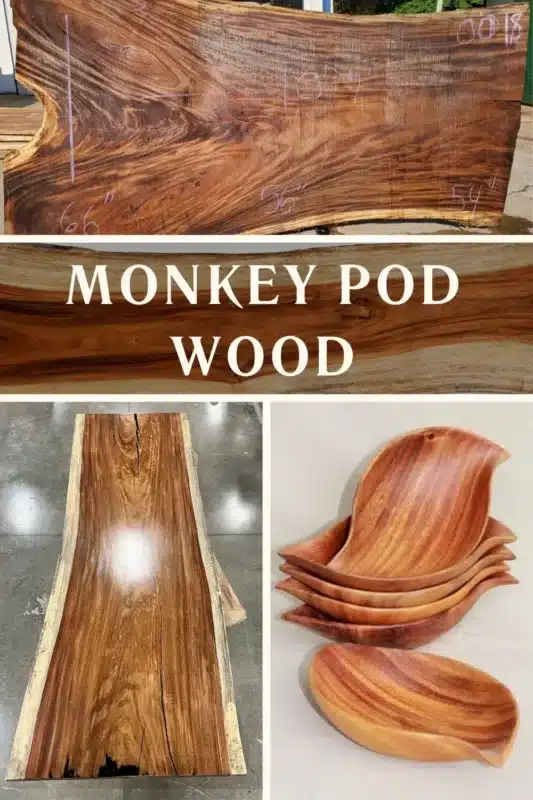
Monkey pod wood comes from Albizia saman, a broad-canopied tropical tree in the legume family. The wood has a warm golden-to-brown heartwood, pale sapwood, open pores, and a lively grain that can look striped, wavy, or almost liquid under a clear oil finish.
In practical terms, monkeypod wood sits between decorative craft wood and serious furniture hardwood. It’s strong enough for tables and shelves, yet soft enough that a dropped cast-iron pan or sharp chair leg can leave a visible dent.
Albizia Saman Names
Albizia saman is the accepted scientific name, while Samanea saman still appears in older books, labels, and lumber listings. Common market names include monkeypod, monkey pod, rain tree, saman, suar wood, raintree wood, and sometimes East Indian walnut, which can confuse buyers because it isn’t true walnut.
Botanical references such as Plants of the World Online list the species under Albizia saman. If a seller can’t connect the lumber to that name, ask more questions before paying for a “genuine monkey pod” slab or bowl.
Hardwood Classification
Monkey pod hardwood is classified as a hardwood because it comes from a broadleaf flowering tree, not because it’s extremely hard. This matters because beginners often assume “hardwood” means scratch-proof, but monkey pod is only moderately dent-resistant.
Its Janka hardness is about 900 lbf, so it’s softer than red oak, white oak, hard maple, and many dense tropical woods. For a full tree profile, see our guide to the monkeypod tree.
Tree Origins
Monkey pod tree wood traces back to tropical Central and South America, then spread widely through planted landscapes. Today the tree grows in Hawaii, India, Indonesia, the Philippines, Southeast Asia, Pacific islands, the Caribbean, and other warm regions where a fast-growing shade tree is useful.
The tree commonly reaches 50–80 feet tall, with trunks around 3–4 feet across and a canopy that can spread 100 feet or more in open ground. That broad canopy gives the tree its rain tree nickname because leaves fold during rain and at night, letting moisture drip through.
Hawaiian Association
Hawaiian hardwoods often get grouped by style, not origin, and monkey pod is a good example. It isn’t native Hawaiian like koa, yet it became closely linked with Hawaiian bowls, tropical furniture, tiki decor, and mid-century island souvenirs.
A vintage monkey pod bowl may be marked “handcrafted in the Philippines,” “Hawaii,” or “saman wood,” and all can be legitimate depending on source and maker. The scent during sanding is mild and dry-sweet, with a warm dusty smell that lingers on your hands after shaping a fresh edge.
Wide Slab Growth
Wide slab growth is one of the biggest reasons monkey pod wood is popular in furniture. Mature trunks and large limbs can yield broad live edge slabs for dining tables, conference tables, benches, and coffee tables without needing many boards glued together.
Large slabs look dramatic, but they carry real movement risk. A slab that feels flat and heavy in a showroom can still cup, check, or open a crack if it wasn’t dried slowly, sealed well, and mounted on a base that allows seasonal expansion.
Appearance and Wood Properties

Color and Sapwood
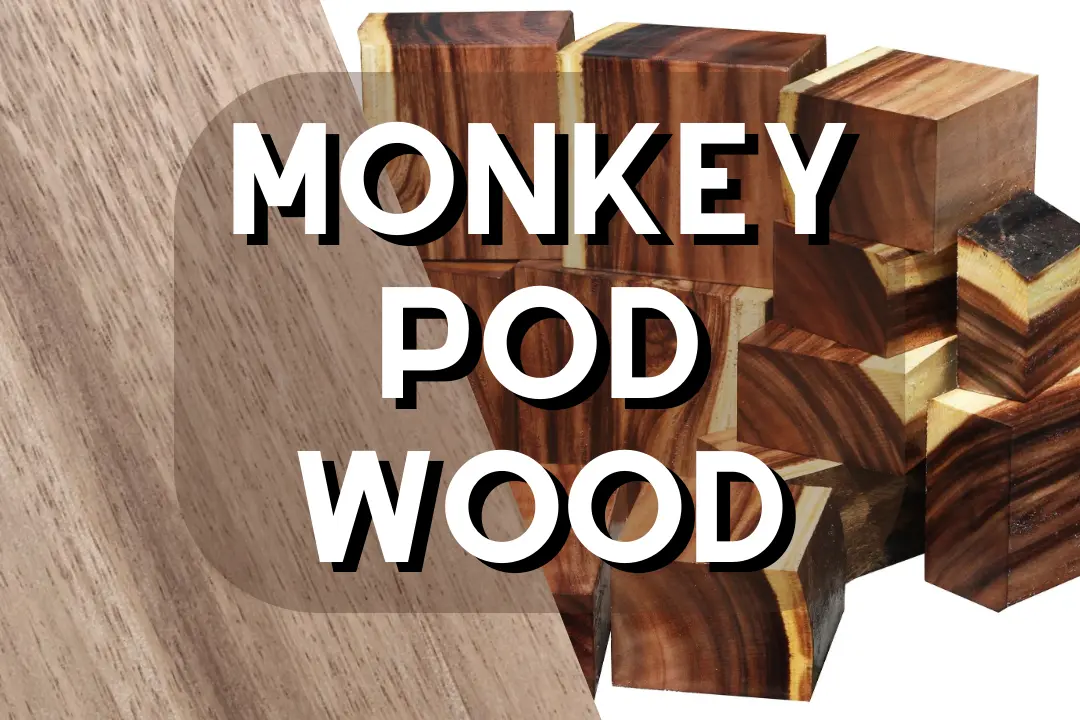
Monkey pod wood color ranges from golden brown and amber to medium brown, reddish brown, and chocolate streaks. The sapwood is much lighter, often cream, pale yellow, whitish, or light tan, so slabs can show a strong two-tone edge.
That pale sapwood can look beautiful, but it’s often the weaker zone for decay and insect marks. When buying a live edge table, press lightly near the sapwood and bark edge; soft, punky, or crumbly spots need stabilization or should be cut away.
Grain and Texture
Monkey pod wood grain may be straight, interlocked, wavy, or irregular. On quartered or figured pieces, the grain can flash with ribbon-like movement, while flat-sawn slabs often show sweeping cathedral shapes and dark mineral-like streaks.
The texture is medium to coarse with open pores, so it doesn’t feel glassy straight off the sander. Run your fingertips across unfinished monkey pod and you can feel faint pore valleys, especially after wiping away the fine tan sanding dust.
Finished Appearance
Clear finishes deepen monkey pod’s brown tones and sharpen the contrast between heartwood and sapwood. Oil makes the grain look warmer and richer, while satin polyurethane or lacquer gives better surface protection for high-use furniture.
Gloss finishes can look striking on live edge slabs, but they show dust, fingerprints, and fine scratches faster than satin or matte finishes. For a dining table that gets used every day, satin hardwax oil or satin polyurethane usually hides wear better.
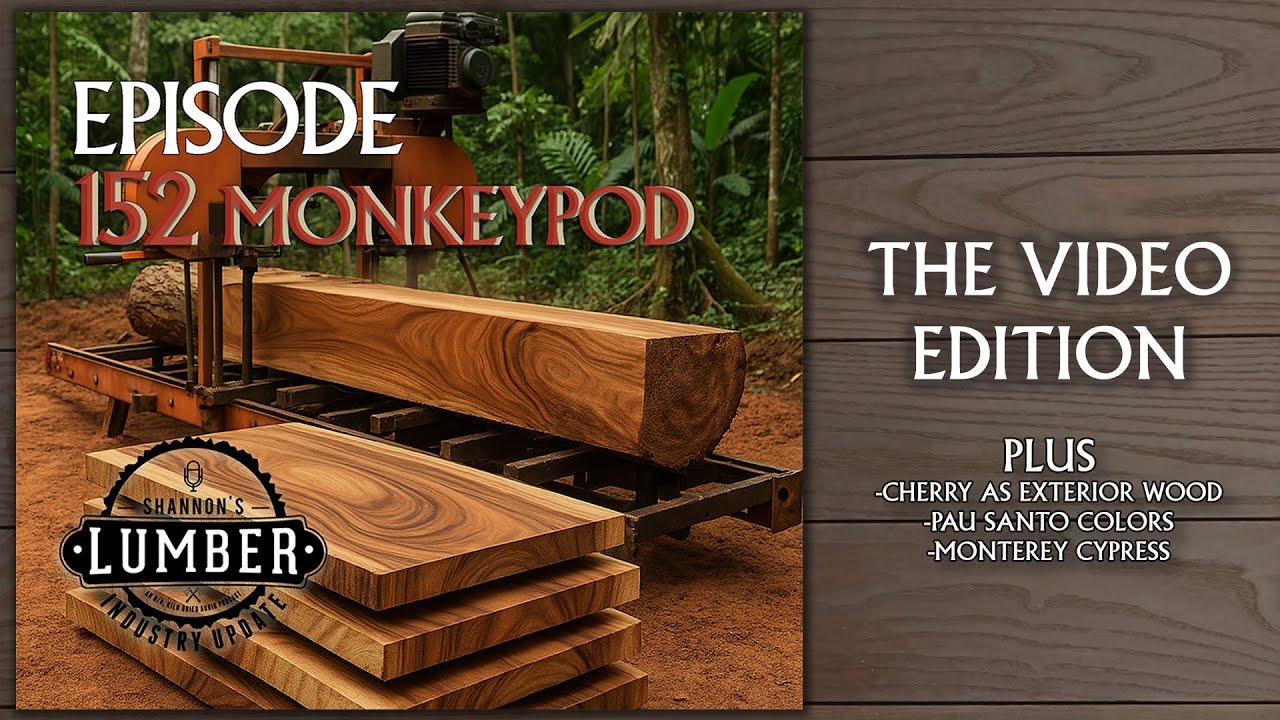
Technical Data Table
Monkey pod wood properties show a moderate-density hardwood with low shrinkage compared with many furniture woods. The values below match commonly cited wood science figures, including data compiled by The Wood Database.
| Property | Approximate Value | Practical Meaning |
|---|---|---|
| Scientific name | Albizia saman | Also sold as rain tree or suar wood |
| Average dried weight | 38 lb/ft³ / 600 kg/m³ | Moderate weight, heavy in large slabs |
| Janka hardness | 900 lbf / 4,010 N | Good for furniture, can dent |
| Specific gravity | 0.48 basic / 0.60 at 12% MC | Moderate density |
| Modulus of rupture | 10,080 psi / 69.5 MPa | Useful bending strength |
| Elastic modulus | 1,438,000 psi / 9.92 GPa | Moderate stiffness |
| Crushing strength | 5,790 psi / 39.9 MPa | Works for legs, frames, and supports |
| Radial shrinkage | 2.3% | Low movement across growth rings |
| Tangential shrinkage | 4.6% | Moderate flat-sawn movement |
| Volumetric shrinkage | 6.9% | Favorable for furniture when dried well |
| T/R ratio | 2.0 | Watch for cupping in wide boards |
Janka Hardness
Monkey pod Janka hardness is about 900 lbf. That places it below black walnut at about 1,010 lbf, teak near 1,070 lbf, koa around 1,170 lbf, red oak near 1,290 lbf, white oak near 1,360 lbf, and hard maple around 1,450 lbf.
This means monkey pod furniture performs well for normal indoor use, but it isn’t the best pick for a workbench top, high-impact floor, or rough kitchen cutting board. Use placemats under ceramic plates because gritty bottoms can leave dull arcs in the finish.
Density and Weight
Monkey pod density averages about 38 lb/ft³ when dry, which sounds moderate until the slab gets large. A thick monkey pod dining table top can easily need two or three people to lift safely, and the live edge makes it awkward to grip.
Weight also affects shipping cost, wall mounting, and shelf hardware. For floating shelves, use studs or strong masonry anchors; drywall anchors alone can fail when the shelf holds books, ceramics, or a heavy plant.
Stability and Shrinkage
Low shrinkage helps monkey pod stay calmer than many hardwoods, with radial shrinkage around 2.3%, tangential shrinkage around 4.6%, and volumetric shrinkage near 6.9%. Those numbers explain why it’s so common in wide slabs.
Still, a monkey pod slab can move if one face is sealed and the other face is raw, or if the top sits above a heat vent. Finish both sides where possible, acclimate the slab before installation, and allow movement at screw points.
Durability, Workability, and Finishing

Indoor Durability
Monkey pod durability is good for interior furniture, decorative bowls, shelves, carvings, turned items, and knife scales. Heartwood is usually more durable than sapwood, so wide pale edges should be inspected closely before buying.
The beginner mistake is calling it indestructible tropical wood. It’s not; a thin lacquer finish can blush under wet glasses, and oil-finished tops can stain if wine, citrus, or alcohol sits long enough to bite into the surface.
Water Resistance
Monkey pod wood is not waterproof. It can handle normal indoor use with a good finish, but standing water, dishwashers, soaked rags, and repeated wet-dry cycles can raise grain, cloud finish, open seams, or create black staining around metal hardware.
For bowls and trays, fast cleanup matters more than the wood species. Hand wash quickly, dry right away, and re-oil unfinished or oil-finished pieces before they look chalky or feel rough under your fingers.
Outdoor Use
Outdoor monkey pod works best under cover, such as a lanai, porch, or sheltered patio. It’s a poor match for bare rain exposure, ground contact, poolside spray, or full sun without a maintained exterior finish.
If you need exposed outdoor furniture, teak wood is usually the safer choice because of its natural weather resistance. Monkey pod wins on indoor slab beauty, not low-maintenance outdoor service.
Cutting and Machining
Machining monkey pod is usually pleasant with sharp tools, but interlocked grain can tear out during planing or routing. Use carbide blades, sharp planer knives, light passes, and climb-cut only where you can control the router safely.
A card scraper often fixes grain tearout better than sanding alone. On figured patches, listen for the plane’s tone to turn rough and feel for fuzzy ridges before moving up the grit sequence.
Sanding and Pores
Sanding monkey pod usually starts at 80 or 120 grit, then moves through 150, 180, and 220 grit. If the surface is already flat from a planer or wide-belt sander, starting too coarse adds scratches that show under oil.
The open pores may need pore filler for a glass-smooth tabletop. Without filler, the finish can look slightly textured in raking light, which many people like on rustic and organic modern furniture.
Gluing and Joinery
Monkey pod glues well when surfaces are clean, dry, and freshly prepared. Mortise and tenon joints, dowels, floating tenons, Dominos, and well-fitted mechanical fasteners all work when the wood is properly dried.
Wide slab tables need movement-friendly attachment, such as elongated screw holes, figure-eight fasteners, Z-clips, or slotted steel plates. Don’t screw a metal base rigidly across the full width, because the slab can split around the fasteners.
Finish Options
Monkey pod finish choices include tung oil, Danish oil, hardwax oil, polyurethane, lacquer, varnish, shellac as a sealer, and epoxy for void filling. Oil gives the richest glow, while film finishes give better water and abrasion protection.
For food-contact pieces, use food-safe finishes suited to the item’s use, such as mineral oil and beeswax for maintained bowls or fully cured film finishes where appropriate. Never assume a shiny imported tray is food-safe unless the seller states the finish type.
Practical Notes From Real-World Use
Real use exposes problems that spec sheets hide. Monkey pod feels warm and slightly waxy after oiling, but a table near afternoon sun can dry unevenly, and a bowl left damp overnight can feel raised and fuzzy by morning.
The workaround is balanced protection: finish both faces, seal end grain, keep furniture away from heat vents, and inspect live edges twice a year. Small checks can often be stabilized early with thin epoxy before they become wide open cracks.
Common Monkey Pod Wood Uses
Live Edge Furniture
Live edge furniture is the signature use for monkey pod wood because the tree can produce broad slabs with dramatic edges. Dining tables, coffee tables, console tables, benches, desks, headboards, and conference tables all suit the species.
For a monkey pod table, check the underside, base attachment, filled cracks, and finish thickness. The top should feel dry and solid, not oily, tacky, or cool-damp at the end grain.
Shelves and Home Decor
Monkey pod shelves work well in rustic, farmhouse, tropical, and organic modern rooms. The live edge adds character without needing heavy carving or dark stain.

Rustic Corner Shelf
- Solid monkey pod wood for lasting strength
- live edge design adds natural character
- hidden brackets create a clean floating look
- compact corner size fits bedrooms and living rooms
- handcrafted finish brings warm farmhouse style
 Buy on Amazon
Mounting is the common beginner failure. A dense corner shelf can pull loose if the hidden bracket misses framing, so locate studs, pre-drill clean holes, and avoid overloading the outer edge.
Bowls and Serving Trays
Monkey pod bowls and trays are common because the wood turns smoothly, looks warm, and feels light enough for serving pieces. Salad bowls, snack trays, divided trays, Lazy Susans, and decorative bowls are all common finds.

Vintage Lazy Susan Tray
- Eleven point seven five inch rotating design for easy sharing
- divided sections keep snacks neatly separated
- monkey pod wood adds a warm vintage look
- perfect for appetizers, nuts, and treats
- stylish centerpiece for kitchen or dining tables
Buy on Amazon
A genuine monkey pod bowl should never go in the dishwasher. Hot water, detergent, and long drying cycles can open the grain, fade the color, and leave the rim rough to the touch.
Carvings and Tropical Decor
Tropical decor made from monkey pod includes tiki carvings, masks, fish bowls, figurines, wall art, and Polynesian-inspired pieces. The wood carves cleanly enough for bold shapes, while the grain keeps even simple forms visually active.
Watch for over-dark staining on carvings. Some sellers use heavy stain to hide mixed sapwood, repairs, or filler, so inspect carved grooves where stain pools and cracks can be harder to see.
Woodturning and Pen Blanks
Monkey pod blanks are useful for pens, bottle stoppers, small bowls, ornaments, handles, and boxes. On the lathe, the shavings come off in dry curled ribbons when the tool is sharp, but dull tools can leave torn patches around interlocked grain.

Monkeypod Pen Blanks
- Pack of 10 for multiple projects
- smooth monkeypod wood works well on the lathe
- uniform size helps consistent pen making
- great for custom writing instruments
- attractive grain adds a premium handmade look
Buy on Amazon
Seal the ends of small blanks if they’ll sit in a dry shop for months. Pen blanks can check at the ends long before the center looks dry.
Knife Scales
Monkey pod knife scales can make attractive handles for light-duty knives, display knives, and custom projects. Stabilized stock is better for heavy kitchen use because handle scales face water, sweat, oils, and repeated cleaning.

Raintree Knife Scales
- Ideal for custom knife handle projects
- monkey pod wood offers striking natural grain
- durable material handles shaping and finishing well
- stable stock helps with precise craftsmanship
- great choice for makers and hobbyists
Buy on Amazon
Pin holes need clean drilling with backing support. Tearout around the exit hole can ruin a thin scale, so drill undersize, support the back face, and finish with sharp bits.
Veneer and Panels
Monkey pod veneer appears on cabinet panels, furniture accents, wall panels, and decorative surfaces. Veneer uses the bold grain efficiently and can give large surfaces a tropical hardwood look without the weight of solid slabs.
Check veneer for balanced construction. A decorative monkey pod face on one side of a thin panel can warp if the backer and adhesive schedule don’t balance moisture movement.
Pros and Cons
Main Advantages
Monkey pod advantages include bold color, dramatic grain, wide slab availability, moderate workability, and strong visual character. It often costs less than premium Hawaiian koa while still fitting Hawaiian-style and tropical decor.
- Attractive color: golden brown to chocolate brown with pale sapwood contrast.
- Large slabs: useful for live edge dining tables and coffee tables.
- Moderate hardness: suitable for normal indoor furniture.
- Good workability: friendly for carving, turning, and shaping with sharp tools.
- Stable when dried: low shrinkage helps, especially in wide boards.
- Flexible finishing: accepts oil, hardwax oil, lacquer, polyurethane, and varnish.
Key Drawbacks
Monkey pod drawbacks include water sensitivity, denting, tearout, sapwood weakness, and variable slab quality. It’s not the best pick for uncovered outdoor furniture or heavy daily cutting boards.
- Not waterproof: standing water can damage wood and finish.
- Moderate hardness: softer than oak, maple, and many dense tropical woods.
- Interlocked grain: can tear out during planing or routing.
- Large slab risk: poor drying can cause cracks, checks, and cupping.
- Mislabeling: may be sold loosely as acacia, suar, or tropical hardwood.
- Outdoor upkeep: needs shelter and regular exterior finish maintenance.
Slab Failure Risks
Slab failure usually comes from moisture, not bad luck. End checks, unsealed undersides, rigid base mounting, and fast moves from humid storage to dry heated rooms can open cracks across a monkey pod slab.
The professional workaround is slow acclimation, sealed end grain, equal finish on both faces, and movement slots in the base. Bowtie keys can stabilize existing cracks, but they don’t replace proper drying.
Mislabeling Issues
Mislabeling happens because monkey pod, suar wood, rain tree wood, and acacia are often sold in overlapping markets. Suar often refers to Albizia saman, while acacia usually refers to different species.
Ask for the scientific name, origin country, drying method, and finish type. If a listing calls the same table monkey pod, acacia, and suar with no explanation, treat the label as marketing rather than species proof.
Monkey Pod Wood Comparisons
Monkey Pod vs Acacia
Monkey pod vs acacia comes down to species and use. Monkey pod is Albizia saman, while commercial acacia may come from Acacia mangium, Acacia auriculiformis, or other acacia species.
Many acacia products are harder and denser, while monkey pod is prized for wide slabs and two-tone figure. For a closer look at acacia options, see our acacia wood guide.
Monkey Pod vs Suar
Monkey pod vs suar is often a naming issue rather than a true wood difference. In many furniture markets, suar wood refers to Albizia saman, the same tree called monkey pod or rain tree.
The catch is market looseness. Some sellers use suar broadly for large tropical slabs, so confirm the scientific name, drying method, and source before assuming both labels mean the same board.
Monkey Pod vs Walnut
Monkey pod vs walnut is a style choice as much as a performance choice. Monkey pod looks tropical, bold, and organic; black walnut looks darker, calmer, and more traditional in fine furniture.
Black walnut is about 1,010 lbf on the Janka scale, slightly harder than monkey pod. Choose monkey pod for dramatic live edge character, or read our black walnut wood guide if you want a classic North American furniture look.
Monkey Pod vs Teak
Monkey pod vs teak is clear for outdoor use. Teak has better natural weather resistance and is widely used for boats, patios, and exterior furniture, while monkey pod belongs mostly indoors or under cover.
Teak is around 1,070 lbf Janka and contains natural oils that help it resist moisture. Monkey pod can look more dramatic as a slab, but it needs more help from finish and shelter outside.
Monkey Pod vs Koa
Monkey pod vs koa matters because both appear in Hawaiian-style decor. Koa is a premium Hawaiian hardwood prized for instruments, fine furniture, and shimmering figure; monkey pod is more available and usually less costly.
Koa is about 1,170 lbf Janka and often commands higher prices. If you’re comparing island-style woods, our koa wood guide explains why koa sits in a different value class.
Monkey Pod vs Mango
Monkey pod vs mango is common in furniture shopping because both woods appear in tables, decor, bowls, and carved pieces. Mango wood often has varied color and spalting, while monkey pod often gives broader slabs and stronger live edge drama.
Both can be sustainable choices when sourced from plantations, orchard removals, or salvage streams. Our mango wood article covers that byproduct angle in more detail.
Sustainability and Buying Guide
Sustainable Sourcing
Monkey pod sustainability depends on source, not just species. The tree grows fast and is often planted for shade, farms, roadsides, estates, and urban landscapes, so salvaged and plantation-grown material can be a good option.
Ask for source details: country, plantation status, salvage story, chain of custody, and drying method. A vague “eco wood” claim means little without documentation or at least a clear origin explanation.
CITES and FSC
Monkey pod wood is not typically listed under CITES trade restrictions, but buyers should still verify sourcing. You can check trade status through the CITES Checklist when buying imported tropical timber.
FSC certification is useful when available, but uncertified wood isn’t automatically bad. Small salvage mills may lack certification while still using removed urban trees; the key is whether the seller can explain the supply path clearly.
Plantation and Salvage
Plantation-grown wood and urban-salvaged slabs can reduce pressure on wild forests. Monkey pod trees removed from parks, farms, roadsides, or storm-damaged areas can become slabs instead of waste.
Salvage wood still needs proper drying. Large tropical logs can hold deep moisture, and a slab that was milled quickly after removal may need months or years of air drying before kiln finishing.
Buyer Questions
Ask before buying because a beautiful slab can hide drying, repair, or finish problems. A good seller should answer these questions without acting irritated or vague.
- Is the wood plantation-grown, salvaged, reclaimed, or wild-harvested?
- What country or region did the slab come from?
- Was it kiln-dried, air-dried, or both?
- What is the measured moisture content?
- Are cracks, knots, insect holes, and voids filled?
- What finish was used: oil, hardwax oil, lacquer, polyurethane, varnish, or epoxy?
- Does the base allow wood movement?
- Is the finish food-safe for bowls, trays, or serving boards?
Price Ranges
Monkey pod price varies by slab width, thickness, figure, drying method, finish quality, and shipping distance. Large single-slab furniture costs more because drying, flattening, defect repair, finishing, crating, and freight all add labor.
| Item Type | Typical Price Range | What Changes the Price |
|---|---|---|
| Small craft blanks | $2–$15 each | Size, figure, dryness, defect-free stock |
| Pen blank packs | $20–$50+ | Pack count, matching grain, stabilization |
| Small bowls, trays, decor | $25–$150+ | Handwork, finish, age, origin, size |
| Raw or surfaced slabs | $10–$40+ per board foot | Width, thickness, figure, drying proof |
| Finished coffee tables | $500–$2,000+ | Base, finish, slab quality, freight |
| Finished dining tables | $1,500–$6,000+ | Single slab size, repairs, finish, base |
| Premium oversized tables | $6,000+ | Rare width, dramatic grain, custom work |
Red Flags
Buying red flags include no species name, no drying information, unclear finish type, no underside photos, and claims that monkey pod is naturally waterproof. Be extra cautious with very cheap large slabs that lack moisture readings.
Reject slabs with active softness, fresh insect dust, severe end checking, or bases screwed tightly across the grain. Repairs aren’t bad by themselves, but they should be disclosed and visible in close photos.
Care and Maintenance

Furniture Cleaning
Clean monkey pod furniture with a soft dry cloth for dust and a barely damp cloth with mild soap for sticky spots. Dry the surface right away so moisture doesn’t sit in pores, cracks, or live edge texture.
Avoid harsh cleaners such as bleach, ammonia, abrasive pads, steam cleaners, and alcohol-heavy sprays. They can dull oil finishes, cloud lacquer, or strip waxy protection from the surface.
Spill Protection
Wipe spills quickly, especially wine, coffee, citrus, oil, and alcohol. Coasters, placemats, and trivets prevent white rings, heat marks, and dull patches from cups, plates, and hot serving dishes.
If a ring appears, don’t scrub hard. Identify the finish first; oil finishes may need cleaning and re-oiling, while lacquer or polyurethane may need careful polishing or spot repair.
Humidity Control
Stable humidity helps prevent cracks and warping. Many indoor wood furniture pieces behave best around 35–55% relative humidity, with slow seasonal changes causing fewer problems than sudden swings.
Keep tables away from heat vents, fireplaces, strong sun, and damp exterior walls. The surface may look calm while the underside dries or swells at a different rate, creating cupping.
Crack Prevention
Prevent cracks by buying properly dried wood, sealing both faces, supporting slabs evenly, and using hardware that allows wood movement. Interior furniture is often dried to about 6–10% moisture content, depending on the local climate.
Check live edge pieces during season changes. A hairline check that catches a fingernail can often be stabilized early; waiting until it opens wide makes repair more visible and more expensive.
Bowl and Tray Care
Monkey pod bowls should be hand washed, dried immediately, and re-oiled when the surface looks pale or feels dry. Use food-safe mineral oil, beeswax board cream, carnauba wax blends, or suitable walnut oil if allergy concerns are addressed.
Never soak, microwave, or dishwasher-clean serving pieces. Heat and water can raise grain, loosen glue lines, fade color, and make the rim feel rough instead of smooth.
Outdoor Maintenance
Outdoor maintenance is demanding for monkey pod. Use it in covered areas when possible, apply an exterior-rated oil, spar varnish, spar urethane, or suitable outdoor finish, and refresh the coating before the surface turns gray and thirsty.
For uncovered rain and sun, choose a more weather-focused hardwood such as teak or compare other tropical options like parota wood. Monkey pod is at its best indoors, where its wide slabs and warm grain can age with fewer repairs.
FAQs
Is Monkey Pod Wood Good Quality?
Yes, monkey pod wood is considered good quality. It is strong, attractive, and commonly used for furniture, tabletops, and decorative pieces. Many people like it because it offers a beautiful grain pattern at a more affordable price than some premium hardwoods.
Is Monkey Pod Wood The Same As Acacia?
No, monkey pod wood is not the same as acacia, but they are often grouped together in the marketplace. Both are hardwoods with similar-looking grain patterns, which can cause confusion. In some products, the names may be used loosely, so it is best to check the supplier’s wood identification.
Is Monkey Pod Wood Waterproof?
No, monkey pod wood is not waterproof. It can handle everyday use well, but it should still be protected from standing water and long-term moisture exposure. A good finish helps improve resistance, but spills should be wiped up quickly to prevent damage.
How Hard Is Monkey Pod Wood?
Monkey pod wood is moderately hard and durable. It is hard enough for furniture and general household use, but it is not as hard as some dense tropical hardwoods. This makes it a practical choice for items that need strength without being overly difficult to work with.
How Do You Care For Monkey Pod Wood Furniture?
Monkey pod wood furniture should be cleaned with a soft, slightly damp cloth and dried right away. Use coasters, avoid harsh chemicals, and keep it out of prolonged direct sunlight and moisture. Occasional oiling or refinishing may help maintain its color and protect the surface over time.
Affiliate Disclosure: Some links in this post are affiliate links. If you make a purchase through these links, we may earn a small commission at no extra cost to you. We only recommend products we genuinely believe in.