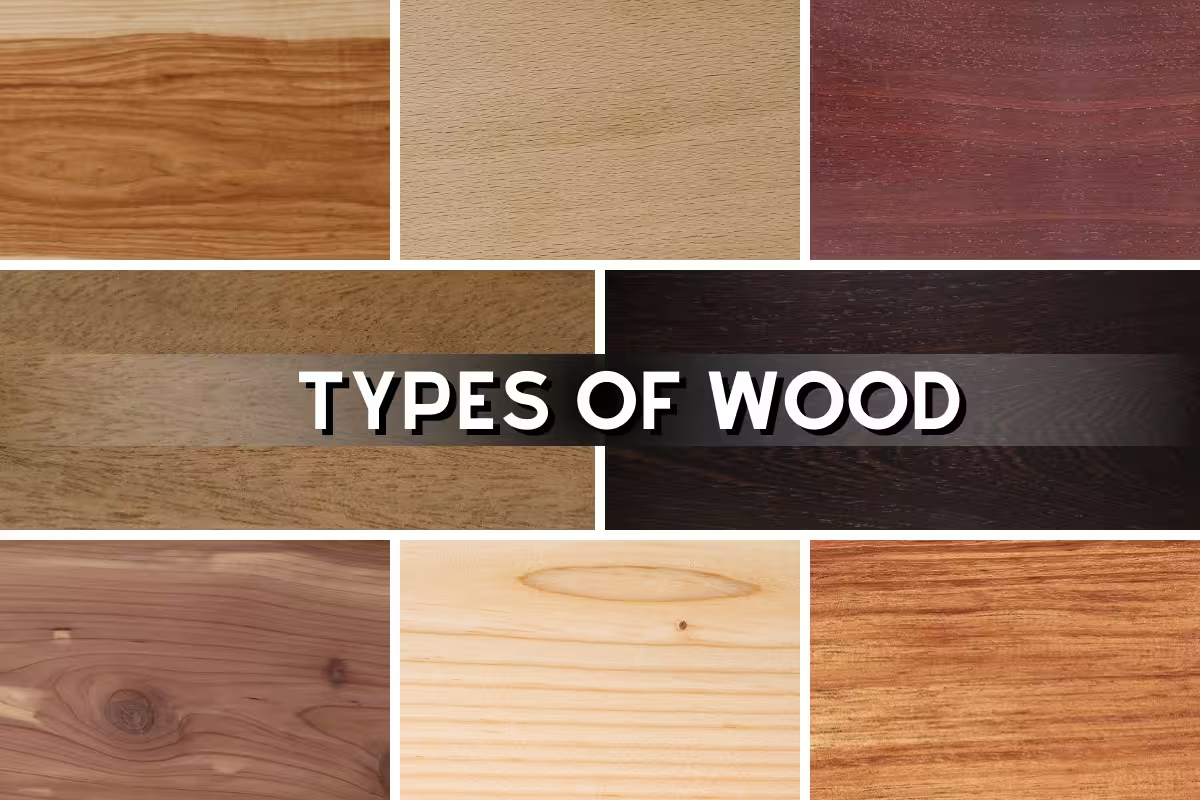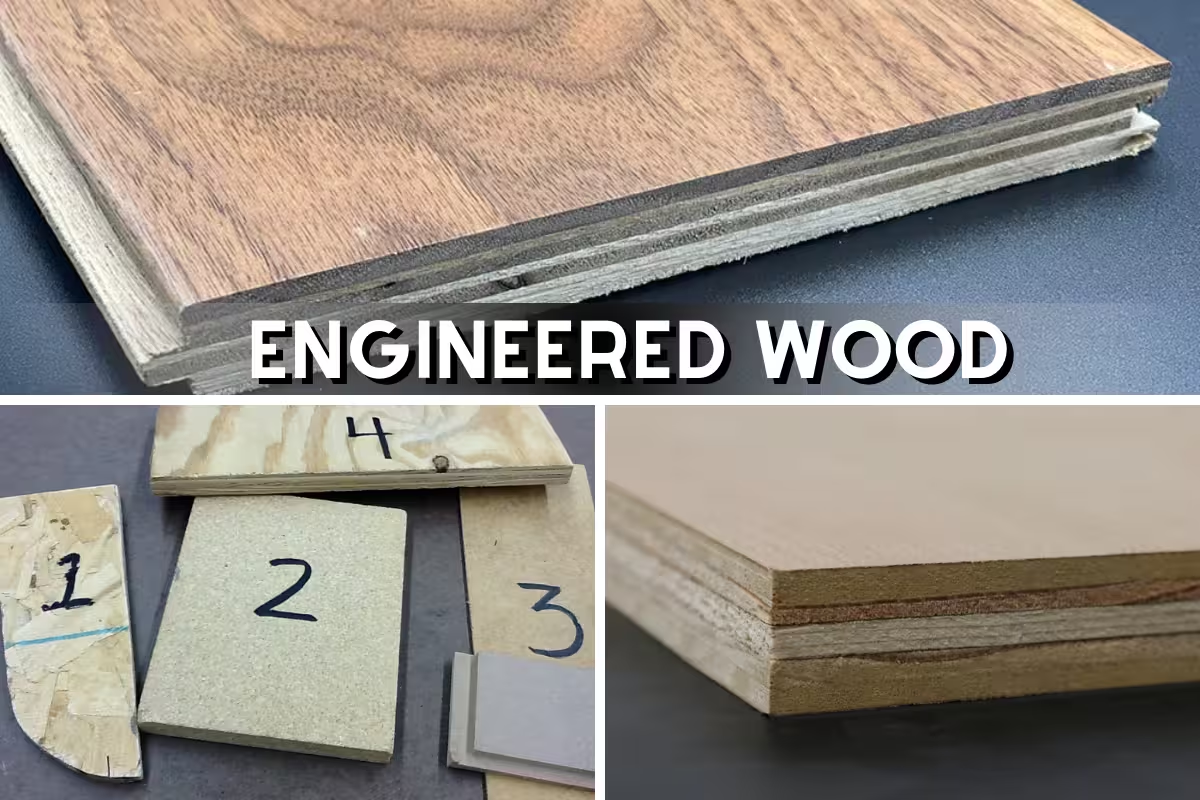


Hard maple is the best wood for cutting board use because its fine, even grain, roughly 1,450 lbf Janka hardness, and dependable wear resistance balance board durability with knife care. Walnut, cherry, beech, teak, acacia, and sapele suit different budgets, colors, maintenance habits, and working styles.
Table of Contents
Best Wood for Cutting Boards at a Glance
Hard maple ranks first for an everyday work surface, while black walnut feels gentler beneath fine knife edges. Construction quality still matters more than a premium species name: a flat edge-grain maple board with tight joints can outlast a poorly glued end-grain block.
Hard Maple Wins Overall
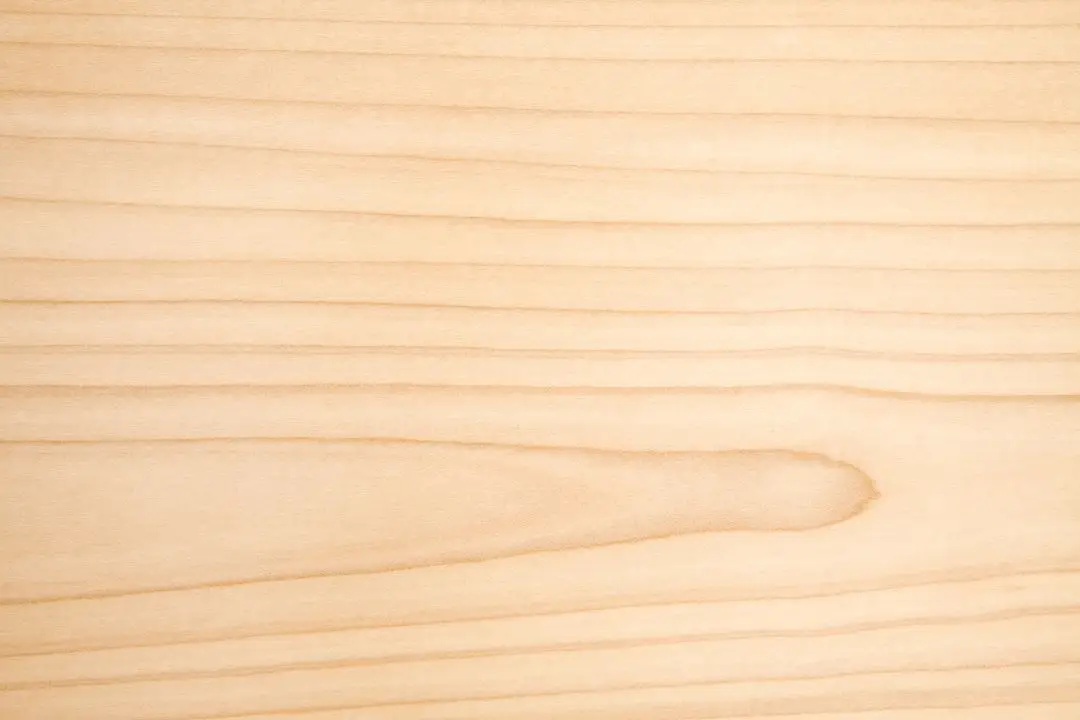
Choose hard maple, also called sugar or rock maple, rather than lumber labeled only “maple.” Its pale surface reveals food stains quickly, feels firm without a glassy impact under the knife, and resists dents better than walnut or cherry. Read more about maple wood before comparing hard and soft species.
Species Comparison Table
The table compares the leading options, but hardness isn’t a ranking by itself. Published figures vary with moisture content, specimen, grain direction, and botanical species, especially for wood sold under the broad acacia label.
| Wood | Approx. Janka hardness | Pore and grain character | Knife feel | Moisture resistance | Best use |
|---|---|---|---|---|---|
| Hard maple | 1,450 lbf | Fine, diffuse porous | Balanced | Moderate | Daily workhorse |
| Black walnut | 1,010 lbf | Fine, usually straight | Very forgiving | Moderate | Dark premium board |
| Cherry | 950 lbf | Fine, even texture | Very forgiving | Moderate | Light or moderate prep |
| American beech | 1,300 lbf | Fine, diffuse porous | Balanced | Fair | Value workhorse |
| European beech | About 1,450 lbf | Fine, even texture | Balanced | Fair | Heavy daily use |
| Genuine teak | About 1,070 lbf | Variable, oily texture | Moderate; contains silica | High | Damp kitchens and carving |
| Acacia | Often 1,100–2,200 lbf | Species-dependent | Variable | Moderate to high | Budget and decorative boards |
| Sapele | About 1,510 lbf | Medium, interlocked grain | Firm | Moderate | Distinctive solid boards |
Best Picks by Priority
- Best overall: hard maple.
- Best for knife care: black walnut or cherry.
- Best value: American or European beech.
- Best water resistance: genuine teak.
- Best budget variety: identified, well-assembled acacia.
- Best premium build: end-grain maple or walnut.
- Best practical build: edge-grain maple, walnut, cherry, or beech.
What Makes Good Cutting Board Wood?
Good wood for cutting boards has moderate hardness, small and evenly distributed pores, predictable moisture movement, known food-contact suitability, and sound construction. Species matters, yet flatness, drying, glue coverage, and finish often determine how long the board lasts.
Janka Hardness and Knife Wear
The Janka test measures the force needed to embed a 0.444-inch steel ball halfway into wood. A loose target of 900–1,500 lbf covers many proven choices, but it doesn’t measure pore size, splintering, silica, glue strength, or knife retention; see the wood hardness scale for wider comparisons.
Pore Structure and Grain
Fine diffuse pores give maple, cherry, and beech a smooth working face. Red oak and ash are ring porous, with prominent earlywood vessels that can hold moisture and debris. “Closed grain” is useful shopping shorthand, not a strict botanical category; the wood grain guide explains these patterns.
Stability and Moisture Movement
Wood expands mostly across its grain as humidity rises. Uneven wetting causes cupping: one face swells while the drier face stays shorter. Wash both faces, wipe the board, and dry it on edge so air reaches each side rather than leaving a damp face against stone.
Species Safety and Sourcing
Use identified untreated hardwood from a reputable mill or maker. Skip pressure-treated lumber, stained reclaimed boards, unknown pallets, and species with uncertain extractives. Wood dust can irritate skin and lungs during fabrication, so builders still need extraction and a suitable respirator even when the finished board is acceptable for normal food contact.
Construction and Glue Lines
Inspect every joint under side lighting. Hairline gaps appear as dark threads, while dried glue may look glossy beside matte wood. Reject cracks, voids, rocking corners, and strips that sit slightly proud; those tiny ledges catch a fingernail and often worsen after repeated washing.
7 Best Wood Species Compared

The seven strongest choices cover daily chopping, knife protection, water exposure, appearance, and price. Hard maple remains safest for an all-purpose purchase, but another species may fit your sink size, knives, or maintenance habits better.
1. Hard Maple: Best Overall
At about 1,450 lbf, hard maple balances wear and knife friendliness. It handles repeated rocking cuts without feeling brittle, though turmeric, berries, and beet juice mark its pale face. Fast cleanup and regular oiling limit staining; soaking can still split maple or open laminated joints.
2. Black Walnut: Best Dark Wood
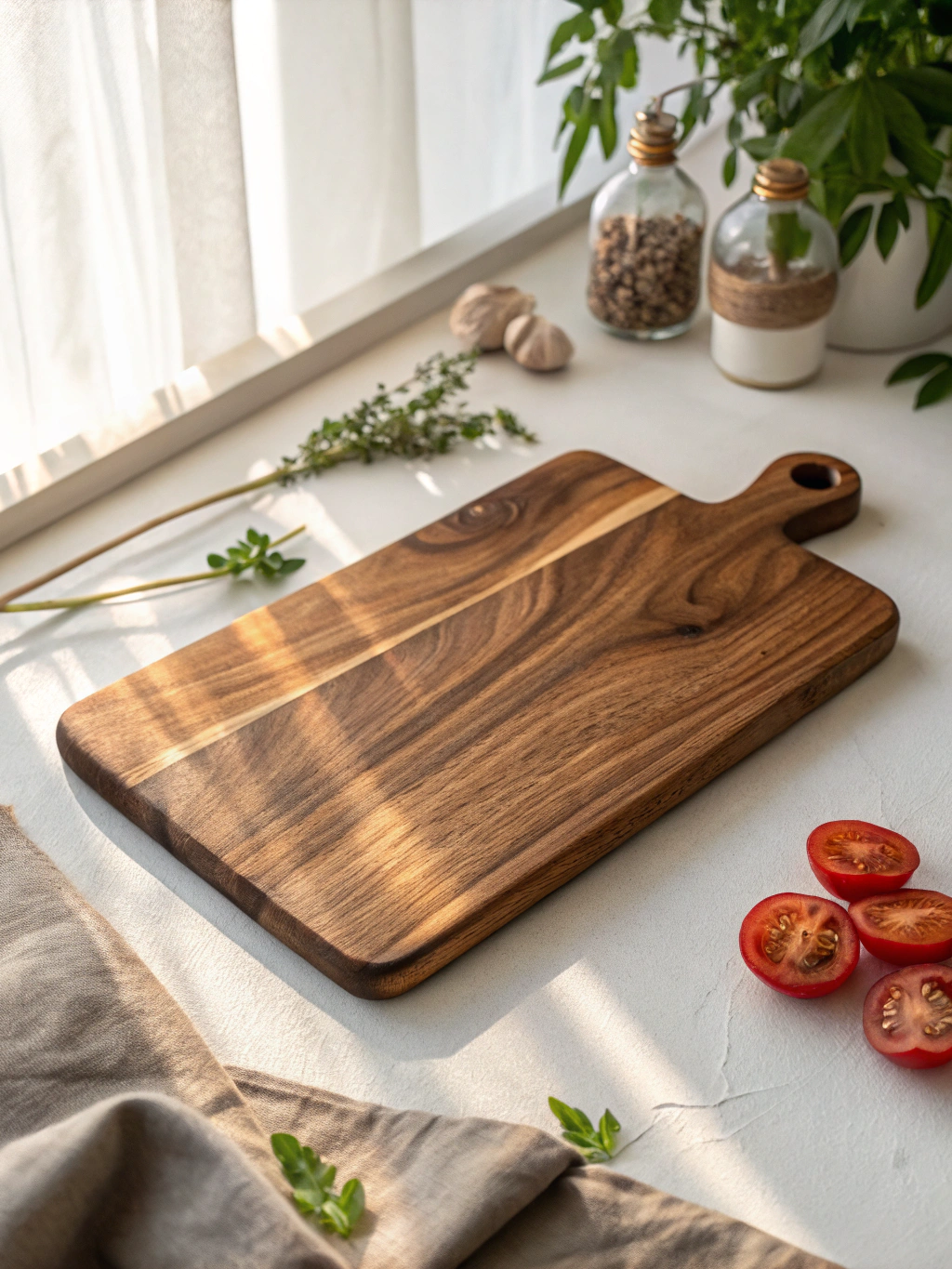
Black walnut feels softer and quieter under a chef’s knife than maple. Its roughly 1,010 lbf hardness protects fine edges, but heavy cleaver work leaves dents sooner. Brown heartwood may include pale sapwood; that natural contrast isn’t a defect. Compare the traits of black walnut wood.
3. Cherry: Best Warm-Toned Wood
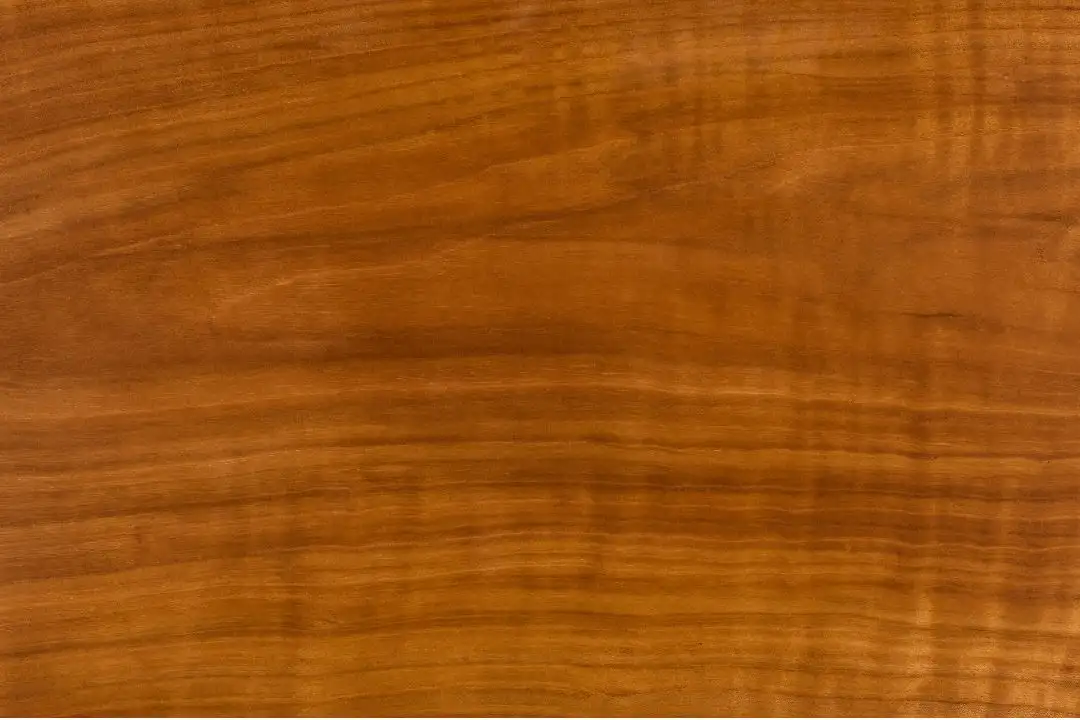
Cherry offers a smooth cut at about 950 lbf. Fresh boards start pinkish brown and deepen into reddish brown as light reaches the surface. Mats, appliances, and permanent countertop clutter can leave lighter patches, so rotate serving boards during their first months. See the natural color range of cherry wood.
4. Beech: Best Value Alternative
A beech cutting board provides fine texture and maple-like firmness without walnut’s usual premium. American beech measures near 1,300 lbf, while European beech often approaches 1,450 lbf. Beech moves noticeably as moisture changes, so never leave it flat beside a wet sink or radiator; learn more about beech wood.
5. Teak: Best Water Resistance
Genuine teak resists moisture through stable structure and oily extractives. Its approximate 1,070 lbf rating sounds knife friendly, yet natural silica can increase edge wear and dull woodworking tools. Verify botanical identity and responsible origin because “teak” also appears in trade names for unrelated timber.

Large Edge-Grain Teak Board
- Teak hardwood provides a durable work surface
- Large size handles bigger prep jobs
- Edge-grain construction is knife friendly
- Deep juice groove helps contain liquids
- Reversible design with built-in handles
 Buy on Amazon
6. Acacia: Best Budget Variety
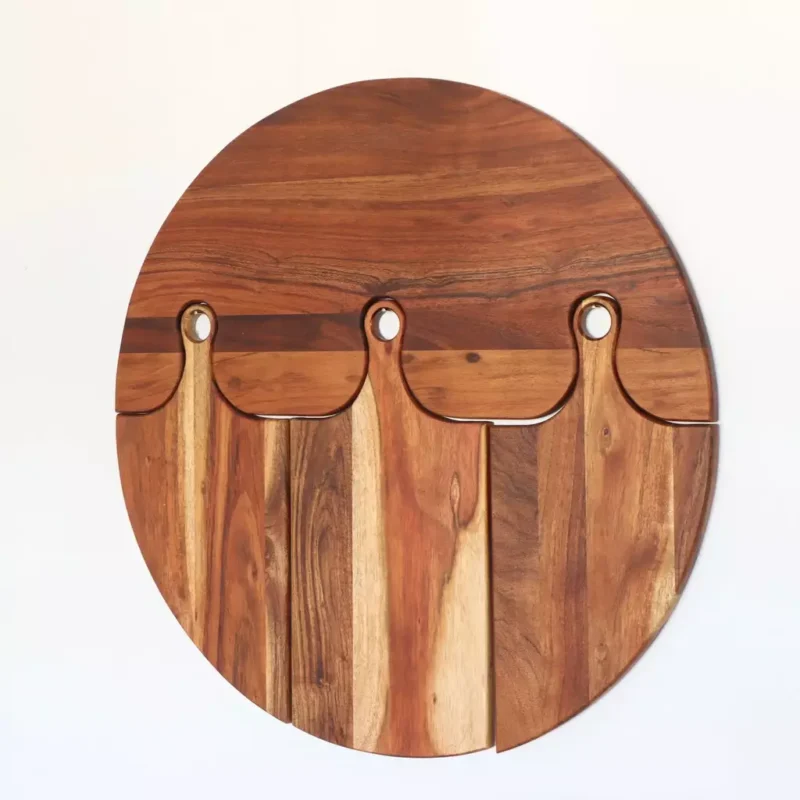
Acacia varies widely because the label covers many species, sometimes ranging from about 1,100 to 2,200 lbf. Check for a named species, even strip alignment, responsible sourcing, and few glue lines. Narrow multicolored strips look attractive but create more joints where poor drying or weak assembly can fail.

FSC Acacia Cutting Board
- Solid acacia offers natural durability
- Knife-friendly wood surface
- Plastic-free construction
- Finished with beeswax flaxseed and lemon oils
- FSC-certified wood sourcing
Buy on Amazon

Acacia Board Set with Stand
- Three acacia boards cover everyday prep tasks
- Included stand keeps boards organized
- Non-toxic wood construction
- Multiple sizes suit different ingredients
- Attractive enough for serving
Buy on Amazon
7. Sapele: Best Distinctive Alternative
Sapele reaches roughly 1,510 lbf and often displays ribbon-like figure from interlocked grain. Choose careful workmanship because that grain can tear during machining, leaving fuzzy patches that feel rough after washing. A thick one-piece board removes glue-line concerns, though solid wood can still cup if dried on one face.

Solid Sapele Hardwood Board
- One-piece solid sapele construction
- No glue joints for a seamless surface
- Pre-oiled for kitchen-ready use
- Reversible edge-grain design
- Thick heavy-duty board for daily prep
Buy on Amazon
Cutting Board Grain and Butcher Blocks
Edge grain offers best value for most kitchens, while end grain gives premium knife feel and face grain suits light prep or serving. Grain orientation changes cost, cut visibility, glue-line count, and repair options more than many shoppers expect.
End-Grain Cutting Boards

End grain exposes fiber ends, letting the knife move between fibers rather than repeatedly crossing them. The surface gives a faint, cushioned thock under chopping and hides shallow marks well. Its many glue joints demand accurate moisture matching, full adhesive coverage, and careful drying.
Edge-Grain Cutting Boards
Edge grain balances cost, strength, weight, and knife care. Long-grain strips face upward, so knife lines show sooner than on end grain, but resurfacing is straightforward. A quality edge-grain board is often the best kitchen cutting board for cooks who need something large enough to work on yet light enough to wash safely.
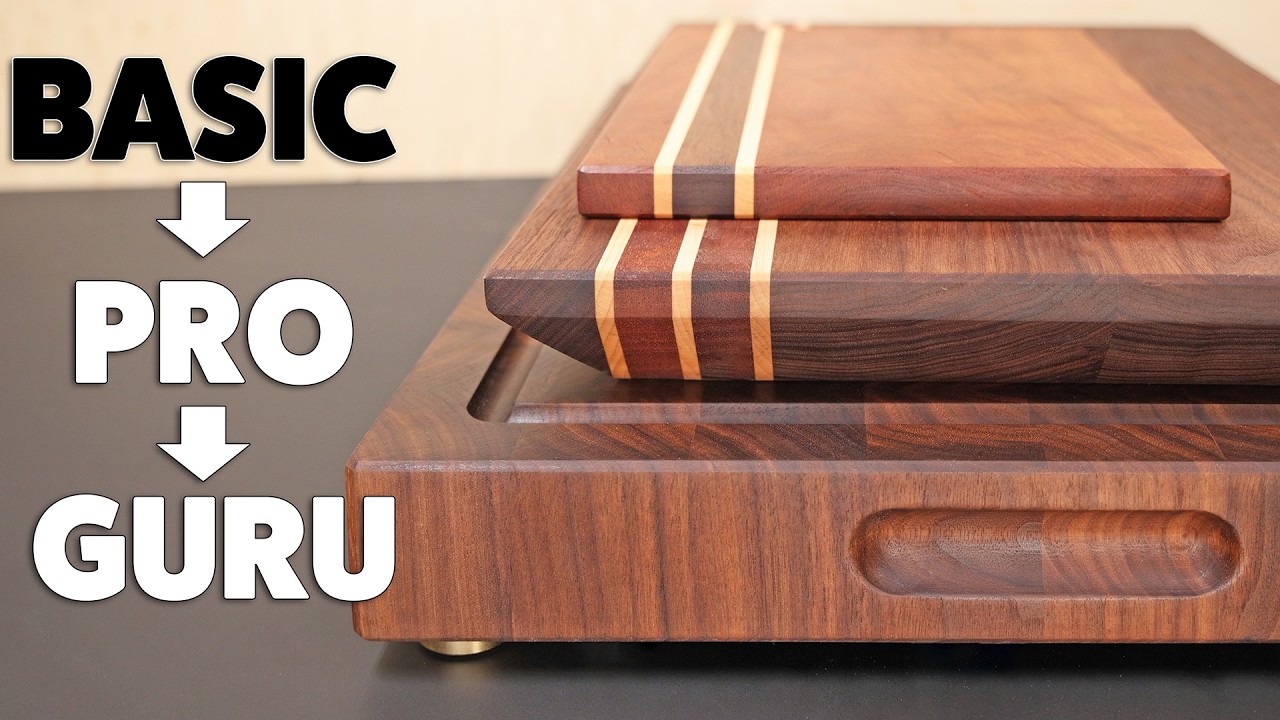
Face-Grain Cutting Boards
Face grain displays broad figure and requires simpler fabrication. Knife marks remain visible, particularly across cathedral grain, while thin boards can warp after uneven washing. Use this construction for bread, cheese, charcuterie, and occasional prep rather than relentless chopping.
Butcher Block Wood Explained
Butcher block wood describes laminated hardwood construction rather than one species. A butcher block may use edge grain or end grain and may appear as a portable board, cart top, or fitted countertop. Maple is traditional, but walnut, cherry, beech, teak, and acacia also appear.
Best Butcher Block Woods
Maple leads for durability, walnut protects knife edges, cherry adds warm color, and beech supplies practical value. Mixed maple, walnut, and cherry blocks work when every strip has similar moisture content and compatible movement. Decorative patterns can’t compensate for gaps or mismatched stock.
Countertop Cutting Warnings
Don’t cut directly on a butcher block countertop without checking its finish and food-contact instructions. Knives score polyurethane, stain, filler, and seams, while water around sink cutouts can seep into exposed end grain. A removable board protects both the knife and costly worktop.
How to Choose a Wood Board
Choose a board that fits your counter, sink, strength, and usual meal size. Oversized blocks often remain dirty because they’re awkward to lift and turn, while tiny boards scatter chopped food and encourage unsafe knife work near the edge.
Board Size and Thickness
An 8 × 12-inch board handles small prep, while 12 × 18 inches suits most meals. Large carving boards start near 15 × 20 inches. Thickness around 1.25–2 inches gives a stable primary surface; 0.75–1 inch weighs less and washes easily but reacts faster to moisture.
Features That Matter
Flatness matters most. Rubber feet add grip and airflow but sacrifice reversibility. Juice grooves contain roasts and watermelon yet reduce chopping space and need brushing at the corners. Recessed handles help with heavy blocks, though deep pockets hold water if they aren’t wiped dry.
Price and Usable Value
Compare usable dimensions and weight, not glossy product photos. Beech and some acacia boards sit in value ranges; maple often occupies the middle; walnut and teak commonly cost more. End grain needs more cuts, glue-ups, flattening, waste, and labor, which explains much of its premium.
Workmanship Before Grain Type
Real-world inspection beats labels: set the board on a stone counter and press each corner. Any click signals rocking. Run a dry fingertip across joints; a smooth board feels continuous, while weak finishing leaves ridges that swell after washing. Some inexpensive store boards perform well, including select IKEA cutting boards, but assess species, joints, flatness, and finish rather than the retailer alone.
Knife Care and Moisture Priorities
Pick walnut, cherry, or end-grain maple for fine knife edges; choose teak where splashes and humid storage are bigger concerns. Titanium cutting boards are hard on knives because metal won’t yield like wood fibers, so they aren’t a comparable knife-friendly alternative despite their stain resistance.
Woods to Avoid for Cutting Boards
Avoid unidentified, treated, highly aromatic, very soft, strongly open-pored, or extremely hard material. Food-safe wood requires context: known species, clean history, sound construction, and a finish suitable for direct food preparation.
Red Oak, White Oak, Ash
Red oak is a poor first choice because its large ring-porous vessels can move liquid through end grain. White oak heartwood contains tyloses that block many vessels and improve water resistance, but its coarse texture remains less conventional than maple. Ash has similarly prominent pores; review ash wood before using it.
Pine, Fir, and Cedar
Softwoods groove quickly, raise splinters, and may carry strong resins or aromas. Aromatic cedar can transfer odor near food, while soft pine collects deep cuts that become harder to scrub. Keep these woods for shelving, boxes, or decorative kitchen pieces rather than a primary cutting face.
Extremely Hard Exotic Woods
Harder isn’t automatically better. Dense exotic species can produce a sharp, clicking impact under a knife and speed edge wear. Some contain silica or sensitizing extractives, while legality and origin may be uncertain. Algarrobo wood can refer to different Prosopis species, so treat the name as incomplete identification.
Reclaimed and Treated Wood
Unknown history means unknown contamination. Pallets and reclaimed boards may have contacted pesticides, fuel, oil, lead paint, preservatives, or industrial chemicals. A heat-treatment pallet stamp says little about later spills, and sanding doesn’t reliably remove material absorbed below the surface.
Bamboo Is Not Wood
Bamboo is laminated grass, not a wood species. Its fast-growing raw material and resistance to gouging attract buyers, but silica and hard glue-rich surfaces can feel less forgiving to knives. Manufacturing quality controls joint life, so compare adhesives and strip alignment using this bamboo lumber guide.
DIY Cutting Board Wood
DIY boards need kiln-dried identified lumber, matched moisture content, clean joints, food-contact adhesive, and enough extra stock for milling. Beginners often focus on color patterns while overlooking twist, checks, glue preparation, and the material lost during flattening.
Kiln-Dried Lumber Selection
Reject lumber with loose knots or checks, bark inclusions, insect holes, severe twist, or unknown treatment. Choose straight stock with enough thickness to joint and plane both faces. Sapwood isn’t automatically defective, but soft or discolored areas need close inspection.
Moisture Content and Acclimation
Many indoor shops use wood around 6%–10% moisture content, adjusted for local conditions. Check several points with a calibrated moisture meter and let stock acclimate before final milling. Gluing a dry strip beside a wetter one can stress joints as both pieces settle.
Board-Foot Yield and Waste
Calculate board feet as thickness × width × length in inches, divided by 144. A 12 × 18 × 1.5-inch blank contains 2.25 board feet before machining. Buy 20%–40% extra for kerf, planing, defect removal, squaring, and the larger waste of end-grain layouts.
Mixed-Species Board Design
Maple, walnut, and cherry create reliable contrast when moisture levels and grain orientation match. Beginners sometimes join very oily tropical strips to dry domestic hardwood without suitable surface preparation. That mix can weaken adhesion and produce uneven movement, so test offcuts before committing the full blank.

Maple Walnut Cherry Board Blanks
- Includes maple walnut and cherry pieces
- Ideal for custom cutting board projects
- Mix hardwood colors for striking patterns
- Eighteen-piece pack supports creative layouts
- Great for DIY butcher block builds
Buy on Amazon
Adhesive and Assembly Quality
Use adhesive rated for the intended water exposure and follow its spread, clamp, and cure instructions. Waterproof glue doesn’t create a dishwasher-safe board. Joint edges must mate cleanly; excessive clamp pressure can starve a joint by squeezing out too much adhesive, while weak pressure leaves gaps.
Food Safety, Cleaning, and Finishing
Wooden boards are suitable for food preparation when they use appropriate close-grained hardwood, remain intact, and receive proper washing and drying. Care controls safety more than unsupported claims that wood “sanitizes itself.”
Wooden Board Food Safety
The FDA Food Code permits hard maple or equivalently hard, close-grained wood for cutting boards and certain other food-contact uses under stated conditions. This isn’t blanket approval for every untreated species, cracked board, unknown finish, or dirty glue joint.
Routine Washing and Drying
Scrape residue, wash with warm water and dish soap, then clean both faces to limit uneven swelling. Dry the board immediately and stand it on edge with airflow. Never soak it or place it in a dishwasher; heat and long wet cycles cause raised grain, cracks, cupping, and joint separation.
Sanitizing After Raw Meat
USDA cutting-board guidance gives a sanitizing mixture of one tablespoon of unscented liquid chlorine bleach per gallon of water. Clean before sanitizing, follow the bleach label for contact and rinsing directions, then air-dry. Never mix bleach with ammonia, vinegar, or another cleaner.
Mineral Oil and Beeswax
Apply food-grade or USP mineral oil to every face and edge, allow it to soak in, and wipe away residue. Reapply when the color looks chalky, the surface feels slightly fuzzy, or water darkens the wood quickly. Beeswax blends add a smooth, satin feel and temporary water resistance, not permanent waterproofing.
Pure Tung Oil
Pure tung oil cures into a more resistant finish when applied in thin coats and allowed enough curing time. Products called “tung oil finish” may contain varnish, solvents, or metallic driers, so read the full label and manufacturer’s food-contact directions rather than trusting the front-panel name.
Oils and Finishes to Avoid
Avoid olive, corn, canola, sunflower, and similar cooking oils because oxidation can create a sticky surface and stale rancid odor. Skip unknown stains, preservatives, and film coatings intended for furniture. A product described as natural still needs clear directions supporting its intended food-contact use.
Repair or Replacement Signs
Shallow scratches can often be sanded and refinished, but replace deeply damaged boards with open glue joints, persistent mold, soft spots, embedded odors, unstable warping, or cracks that can’t be cleaned. Avoid aggressive machine planing on end grain because it can tear blocks loose; use controlled sanding or a properly set router sled.
FAQs
What Type Of Wood Is Best For A Cutting Board?
Hard maple, walnut, and cherry are among the best woods for cutting boards because they are durable, knife-friendly, and naturally stable. Choose a close-grained hardwood that has been properly dried and finished with food-safe mineral oil. Avoid softwoods and highly porous woods, which can scar easily or hold moisture.
Is Maple Or Walnut Better For A Cutting Board?
Maple is usually better for a cutting board if you want maximum hardness and a light, classic appearance. Walnut is slightly softer, darker, and gentler on knife edges, but it can show scratches more easily. Both are excellent food-safe hardwoods when maintained with regular oiling.
Is Oak Good For Cutting Boards?
Oak can be used for cutting boards, but it is generally not the best choice. Its open grain can absorb moisture and food residue more readily than maple or walnut, making cleaning more important. If you use oak, select a tightly grained piece and keep it well oiled and thoroughly dry.
Is Acacia A Good Cutting Board Wood?
Acacia is a good cutting board wood because it is hard, attractive, and reasonably resistant to moisture. However, its variable grain and high hardness can be tougher on knife edges than maple or walnut. Choose a well-made acacia board and condition it regularly to help prevent drying and cracking.
Is End Grain Better Than Edge Grain?
End-grain boards are generally better for preserving knife edges because the wood fibers separate and close around each cut. They are also durable and self-healing, but they cost more and need more careful drying. Edge-grain boards are less expensive, lighter, and still perform very well for everyday use.
Affiliate Disclosure: Some links in this post are affiliate links. If you make a purchase through these links, we may earn a small commission at no extra cost to you. We only recommend products we genuinely believe in.