
Myrtle Wood Guide: Oregon Myrtlewood Properties, Uses, Burning, and Buying

Myrtle wood, often sold as myrtlewood or Oregon myrtlewood, is the decorative hardwood of Umbellularia californica, a Pacific Coast evergreen also called California bay laurel or pepperwood. It’s prized for golden-brown color, olive streaks, curly figure, and use in bowls, turning blanks, knife scales, cutting boards, and small craft goods.
Table of Contents
What Is Myrtle Wood?
Myrtle wood usually means Oregon myrtlewood, not crepe myrtle, true myrtle, or a generic “wood myrtle” tree. In shop use, the name points to a regional hardwood with a spicy scent, dense feel, and dramatic figure that often looks better in hand than it does in flat photos.
Oregon myrtlewood definition
Oregon myrtlewood is the wood of Umbellularia californica, a broadleaf evergreen native to parts of Oregon and California. The USDA Plants Database lists it under common names such as California bay, California laurel, and Oregon myrtle, which explains why lumber sellers use several names for the same material.
Common names
Myrtlewood names vary by region and seller: myrtle wood, myrtlewood, Oregon myrtle, Oregon myrtlewood, California bay laurel, California laurel, bay laurel, and pepperwood. French listings may use “bois de myrte,” while some older craft shops on the Oregon coast simply label bowls as “myrtle.”
Myrtlewood vs crepe myrtle
Oregon myrtlewood comes from Umbellularia californica, while crepe myrtle wood comes from Lagerstroemia species. They are different woods with different tree forms, craft value, availability, and firewood behavior, so don’t use crepe myrtle blanks as proof that you’re buying Oregon myrtlewood.
| Name on listing | Likely meaning | Best use |
|---|---|---|
| Myrtlewood / Oregon myrtlewood | Umbellularia californica | Bowls, knife scales, turning, craft work |
| Crepe myrtle / crape myrtle wood | Lagerstroemia species | Small blanks, yard wood, limited firewood |
| Wood myrtle | Ambiguous phrase | Needs seller clarification |
| True myrtle | Often Myrtus communis | Small specialty items, not Oregon myrtlewood |
Wood myrtle meaning
Wood myrtle is an unclear search phrase, so treat it as a clue rather than a species name. It can mean myrtle wood as a material, true myrtle, Oregon myrtlewood, or wood from a myrtle-like ornamental tree; ask for the scientific name before buying expensive blanks.
Myrtle wood tree facts
The myrtle wood tree behind Oregon myrtlewood is evergreen, aromatic, and tied closely to the Pacific Coast. Fresh leaves smell sharp and bay-like; when I cut fresh stock, the scent can feel peppery in the nose and slightly medicinal, so dust control matters during sanding and turning.
Myrtle Wood Appearance and Properties
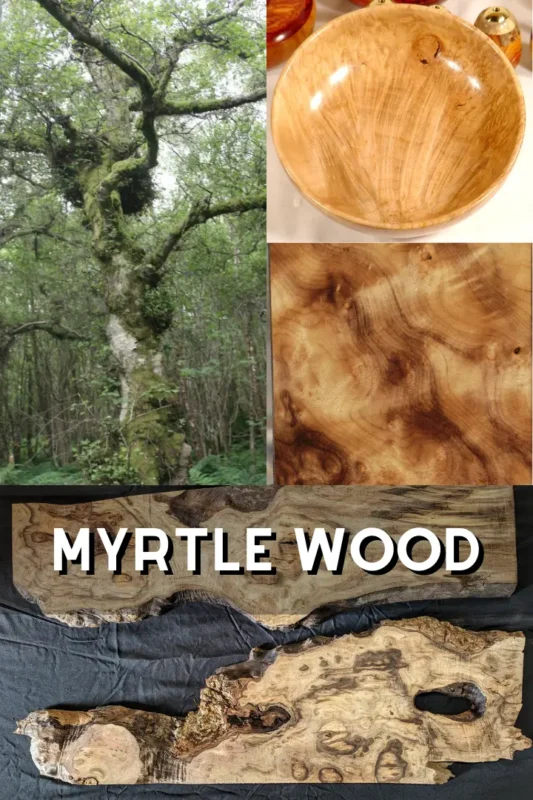
Myrtlewood appearance ranges from pale cream to olive brown, with streaks that can look smoky, golden, greenish, or reddish. Its physical data place it near many domestic hardwoods, but the wide color range and figure make it feel more like a specialty craft wood than a commodity board.
Color and grain
Myrtle wood grain can be straight, wavy, curly, interlocked, mottled, or streaked. Color alone doesn’t identify the species because one board may look tan and quiet while the next carries olive-gray bands and reddish-brown mineral lines; compare the figure with broader wood grain patterns before judging value.
Figure and burl
Figured myrtlewood brings most of the excitement: curl, quilt, fiddleback, crotch figure, and burl can all appear in premium stock. Burl pieces feel heavier and more irregular under the tool, and a small void can suddenly open like a dark pinhole during turning, so keep speed conservative and inspect often.
Texture and luster
The texture is fine to medium, and sanded myrtlewood can develop a warm natural luster before finish. After oil, curly areas often flash when you tilt the piece under a bench light, giving bowls and knife scales a three-dimensional look that plain flat-sawn stock won’t show.
Hardness and density
Myrtle wood hardness is commonly reported around 1,270 lbf on the Janka scale, with an average dried weight near 40 lb/ft³, or about 640 kg/m³. Those figures from The Wood Database put it in a useful middle zone: firm enough for handles and boards, yet not as punishing on tools as many dense tropical woods.
| Property | Typical figure for Oregon myrtlewood | Shop meaning |
|---|---|---|
| Janka hardness | About 1,270 lbf / 5,650 N | Harder than cherry and walnut, softer than hard maple |
| Average dried weight | About 40 lb/ft³ / 640 kg/m³ | Feels solid in small blanks and bowls |
| Specific gravity | About 0.51–0.64 | Moderate density with good polish |
| Texture | Fine to medium | Takes a smooth finish with careful sanding |
| Decay resistance | Low to moderate; often listed as non-durable | Best kept indoors or in dry-use projects |
Strength figures
Strength values often appear near 12,150 psi for modulus of rupture, 1.325 million psi for elastic modulus, and 6,400 psi for crushing strength. That makes Oregon myrtlewood strong enough for furniture accents, boxes, handles, and turned items, but it’s selected for figure and beauty more than heavy structural duty.
Shrinkage and movement
Myrtlewood movement deserves respect because radial shrinkage is about 4.9%, tangential shrinkage about 11.6%, and volumetric shrinkage about 16.8%. The tangential-to-radial gap means flatsawn boards can cup if milled too soon, so let lumber acclimate and leave extra thickness for final flattening.
Rot resistance
Rot resistance is not the reason to buy myrtlewood. Use it for indoor bowls, cutting boards, decorative objects, dry-use furniture accents, and craft blanks; choose something like teak wood or white oak for wet exterior exposure.
Myrtlewood vs Common Hardwoods
Myrtlewood compares most closely to mid-hard domestic hardwoods, but it has more color variation than walnut, cherry, maple, or oak. If you’re choosing by project, treat it as a decorative hardwood first and a performance wood second.
Black walnut
Against black walnut, myrtlewood is usually harder, lighter in base color, and more variable. Walnut gives predictable chocolate-brown furniture boards, while myrtlewood offers streaked gold, olive, and gray tones that can clash in large panels unless you lay out the boards with care; see our guide to walnut wood for a darker comparison.
Hard maple
Against hard maple, myrtlewood is a bit softer and far less uniform. Maple is the safer pick for predictable cutting boards and bright furniture parts, while myrtlewood is better when you want color movement, curl, and a warmer handmade look; compare it with maple wood if hardness drives the project.
Cherry
Against cherry, myrtlewood is harder and visually less predictable. Cherry darkens into a calmer reddish-brown over time, while myrtlewood keeps more streaking and contrast, which suits small boxes, bowls, and accents better than large matched casework; our cherry wood guide covers that aging behavior.
White oak
Against white oak, myrtlewood gives more decorative figure but less moisture confidence. White oak wins for outdoor furniture, boatyards, and wet service because its anatomy resists water movement better; myrtlewood belongs in bowls, instruments, knife scales, and indoor accents where figure gets seen up close.
| Wood | Janka hardness | Visual character | Best fit |
|---|---|---|---|
| Oregon myrtlewood | About 1,270 lbf | Gold, olive, tan, gray-brown, curly or streaked | Bowls, craft blanks, handles, accents |
| Black walnut | About 1,010 lbf | Chocolate brown, calmer grain | Furniture, panels, gunstocks, boxes |
| Hard maple | About 1,450 lbf | Pale, clean, sometimes curly | Cutting boards, work surfaces, flooring |
| Black cherry | About 950 lbf | Warm reddish-brown, darkens with age | Furniture, cabinets, turned pieces |
| White oak | About 1,360 lbf | Coarse grain, ray fleck when quartersawn | Furniture, flooring, exterior-capable projects |
Myrtle Wood Uses
Myrtle wood uses cluster around projects where figure, polish, and regional character matter more than board-foot efficiency. It shines in objects you hold in your hands, where the smooth, cool surface and shifting grain can be felt and seen close up.
Bowls and turning
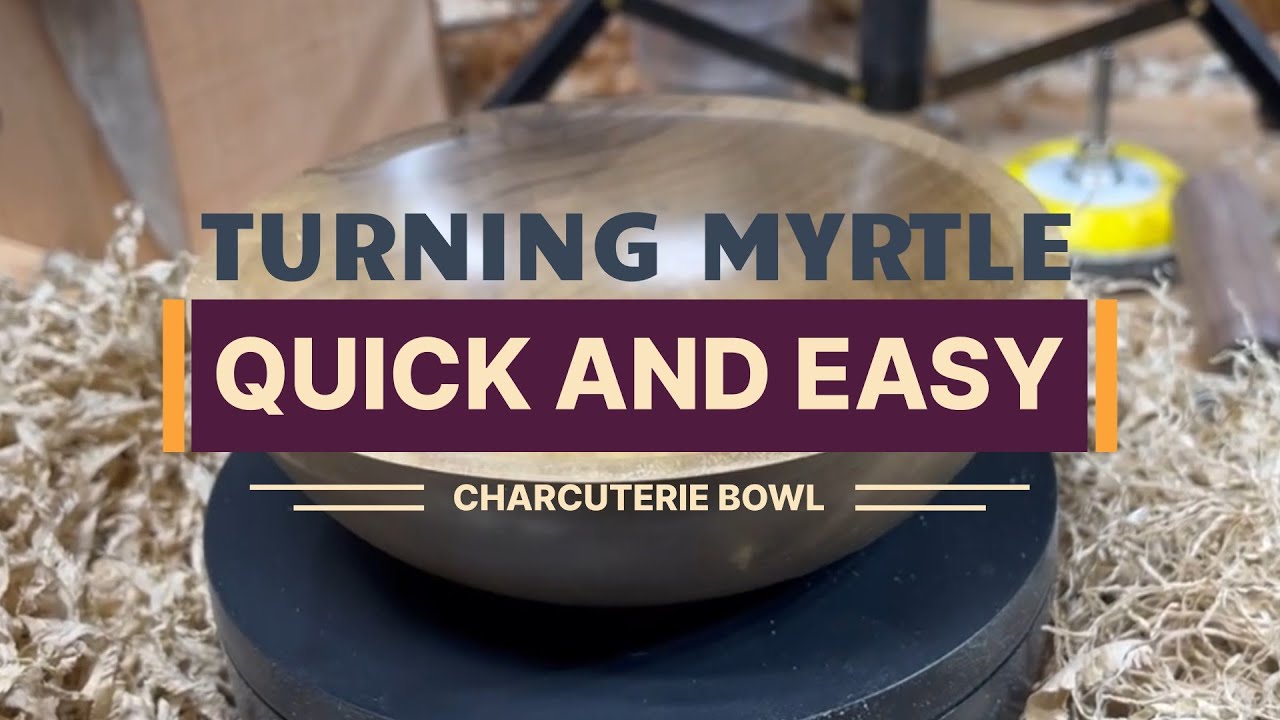
Myrtlewood bowls are the classic use because the wood turns cleanly, sands to a bright surface, and shows figure across curved forms. Bowl blanks with pith, bark inclusions, or burl voids need slower cuts and extra wall thickness because hidden checks can appear after the first roughing pass.
Knife scales
Myrtle wood knife scales work well when the stock is dry, stable, and free of hairline cracks. For hard-use knives, stabilized figured pieces handle sweat, water, and seasonal movement better than raw burl, and matched pairs give a cleaner look on both sides of the handle.
Furniture accents
Furniture accents are a smart use for Oregon myrtlewood because limited supply and busy color can make full furniture sets expensive and visually uneven. Drawer fronts, cabinet door panels, inlays, box lids, and small table tops let the figure stand out without fighting every board in the room.
Cutting boards
Myrtlewood cutting boards are common, but construction matters more than the species name. Avoid cracked stock, open burl voids, and poorly dried boards; use a food-safe finish and expect more maintenance than with a plain hard maple board used every day.
Musical craft items
Musical craft uses include guitar backs and sides, ukulele parts, decorative knobs, rosettes, and small resonant components. Tonewood buyers pay attention to stiffness, quartering, weight, and defect-free dimensions, so pretty curl alone doesn’t make a piece instrument-ready.
- Use plain myrtlewood for stable boxes, boards, and simple turned forms.
- Use curly myrtlewood for handles, lids, panels, and show faces.
- Use myrtlewood burl for pens, jewelry, caps, knobs, and dramatic small objects.
- Use stabilized stock for knife scales, heavy handling, or humid kitchens.
- Avoid pith-centered stock for finished work that must stay flat.
Working With Myrtle Wood

Working with myrtle wood is pleasant with sharp tools, but figured grain can punish rushed cuts. The beginner mistake is treating every board like straight-grained maple; the pro workaround is to read the grain first, cut lightly, and switch to scraping before tearout gets deep.
Machining and tearout
Myrtle wood tearout happens most often in curly, wavy, or interlocked sections during planing, routing, and shaping. Use sharp carbide or freshly honed steel, take shallow passes, climb-cut only where safe and controlled, and finish difficult areas with a scraper rather than forcing a planer to behave.
Turning blanks
Myrtlewood turning blanks should be checked for end cracks, pith, bark pockets, and uneven moisture before mounting. Green blanks cut with a clean ribbon-like shaving and a damp, spicy smell, but they can crack fast after roughing, so seal end grain and dry bowls slowly in paper bags or controlled storage.
Drying and defects
Drying myrtlewood demands patience because thick slabs, burl, crotch grain, and pith-centered pieces can check, warp, or honeycomb. Use a moisture meter, reject blanks with deep radial cracks unless priced as defect stock, and leave extra thickness for movement after acclimation.
Gluing and fastening
Gluing myrtlewood usually works well when surfaces are freshly cut, clean, and not burnished. For oily-feeling or aromatic pieces, scuff the surface, remove dust, glue soon after preparation, and pre-drill screws near edges because small handle blanks can split with little warning.
Sanding and finishing
Finishing myrtlewood rewards slow sanding through 120, 150, 180, 220, and 320 grit when the surface needs polish. Oil, Danish oil, tung oil, shellac, lacquer, wipe-on polyurethane, and wax over sealer can all look good, but skip grits and you’ll see bright swirl marks under raking light.
Dust and allergies
Myrtlewood dust can irritate eyes, skin, throat, or sinuses in sensitive users, partly because the tree is strongly aromatic. I notice the dust has a dry, peppery bite during power sanding, so use collection, wear a respirator, and wash exposed skin before touching your face.
Food-safe use
Food-safe myrtlewood depends on clean stock, sound construction, and the right finish. Use mineral oil, beeswax blends, walnut oil where allergies aren’t a concern, or another finish labeled for food-contact use; never use cracked, moldy, glued-up mystery scraps for serving food.
Practical Notes From Real-World Use
Real shop use shows that myrtlewood’s best pieces are rarely the easiest pieces. A blank with curl and color can chatter, chip, or move more than a plain board, so rough oversized, pause after heavy cuts, and let the wood rest overnight before final fitting knife scales, lids, or tight box parts.
Can You Burn Crepe Myrtle Wood?
Yes, you can burn crepe myrtle wood if it is dry, seasoned, and untreated. It is usually a small-diameter supplemental firewood, not premium heating fuel, and it is not the same material as Oregon myrtlewood.
Short answer
Burn crepe myrtle only when it has dried well and has no paint, stain, pesticide exposure, pressure treatment, glue, or unknown contamination. For cleaner combustion, the EPA Burn Wise guidance favors properly seasoned wood and low moisture rather than green, smoky fuel.
Firewood quality
Crepe myrtle firewood is good for small fires, kindling-sized pieces, outdoor fire pits where allowed, and occasional fireplace use. It’s usually not worth stacking as a main heating wood because ornamental trunks and branches are often short, crooked, branchy, and slow to process compared with oak, ash, or locust.
Seasoning time
Seasoning time depends on split size and climate: small branches may need 6 to 12 months, while larger logs may need 12 months or more. A moisture meter reading near or below 20% is more reliable than a calendar date, especially with dense crotch pieces that stay wet inside.
What not to burn
Do not burn green crepe myrtle indoors, painted wood, stained wood, pressure-treated wood, pesticide-exposed limbs, moldy pieces, or branches from roadside pollution. Beginners often burn fresh pruning piles because the bark looks dry; split a piece first, because the center may still feel cool, damp, and sour-smelling.
Smoking meat caution
Smoking meat with crepe myrtle is not a safe default choice because it isn’t a standard barbecue wood like oak, hickory, apple, cherry, or pecan. Use known cooking woods instead, especially if the tree came from a yard that may have seen sprays, fertilizers, or fungus treatments.
Crepe myrtle craft blanks
Crepe myrtle blanks can interest pen turners and small-object makers, but they are separate from Oregon myrtlewood. Treat them as their own craft stock, and check hardness, dryness, and crack patterns before assuming they’ll behave like commercial myrtlewood.
These examples show crepe myrtle burl blanks for small turning projects, not Oregon myrtlewood.

Crepe Myrtle Burl Pen Blanks
- Sized for standard pen turning projects
- striking burl figure for unique results
- hardwood blank offers solid turning performance
- great for custom gifts and handmade pens
- ideal for woodworkers and hobby turners
 Buy on Amazon

Crepe Myrtle Burl Blanks
- Two-piece set for multiple pen projects
- compact blanks suited for turning on a lathe
- burl wood adds eye-catching grain
- hardwood feel supports quality crafting
- a handy choice for custom pen makers
Buy on Amazon
Crepe Myrtle Burl Blanks Set
- Twelve blanks for larger turning batches
- consistent size for repeatable pen projects
- burl figure gives each piece character
- durable hardwood for smooth shaping
- great value for busy woodturners
Buy on Amazon
Myrtle Wood Buying Guide
Buying myrtle wood is mostly about matching the stock to the project and paying for real figure, dryness, and stability rather than a fancy label. Typical retail ranges vary by size, figure, dryness, and seller, with small craft blanks often in low double digits and premium burl or curly stock costing several times more than plain boards.
Forms commonly sold
Myrtlewood forms include lumber boards, turning blanks, bowl blanks, pen blanks, knife scales, burl blocks, veneer, slabs, finished bowls, cutting boards, utensils, souvenirs, and decorative boxes. Small stock is far easier to find than wide, clear, defect-free boards.
Rarity and availability
Is myrtlewood rare? It’s not impossible to find, but it is regionally limited compared with oak, maple, walnut, ash, cherry, or alder. Highly figured Oregon myrtlewood is much less common than plain stock, and large stable slabs require a seller who understands drying.
Price signals
Price rises with curl, burl, quilt figure, matched grain, larger size, low defect count, kiln drying, stabilization, and clean photographs. Knife scales often cost more per board foot than lumber because the seller has cut around defects and matched faces for a finished handle.
Stock checklist
Check stock before purchase by reading the dimensions, moisture notes, drying method, defect disclosure, and return policy. If buying in person, tap the blank, smell fresh end grain, and inspect end checks under angled light; tiny cracks can turn into open gaps after finishing.
| Project | Best myrtlewood stock | Warning sign |
|---|---|---|
| Knife scales | Dry matched pairs, straight or stabilized figured grain | Hairline cracks near pin areas |
| Bowls | Sealed bowl blanks with clear drying notes | Pith-centered blank sold as stable |
| Pens | Small figured blanks with clean ends | Unseen voids in burl |
| Cutting boards | Sound, dry, crack-free boards | Open checks, mold, unknown finish |
| Furniture accents | Acclimated boards with layout photos | Extreme color mismatch across panels |
Buyer warning signs
Warning signs include no dimensions, no moisture information, dark photos, “burl” claims without visible figure, green blanks sold without drying advice, and finished kitchenware with no care or finish details. A blurry listing can hide end checks, insect holes, bark pockets, or unstable pith.
Sustainability points
Sustainable myrtlewood often comes through regional craft channels, salvaged logs, storm-felled trees, urban harvest, or small local mills. Ask about source region, drying, milling, and whether the piece came from responsible harvest rather than assuming every Oregon-labeled item has the same origin story.
Craft stock examples
This craft piece is an example of small-format myrtle or myrtle-related stock for knife scales, turning, and woodworking projects.
Oregon craft heritage
Oregon myrtlewood craft has a strong coastal identity, especially in bowls, souvenirs, boxes, and small keepsakes. That heritage is part of the value, much like regional woods such as madrone wood or figured burl wood carry stories beyond their raw board footage.
For heritage reading, this book-style reference fits the Oregon myrtlewood craft context.

Myrtlewood Memoirs
- Explores the beauty and legacy of Oregon myrtlewood
- rich blend of art, history, and heritage
- inspiring read for wood lovers and collectors
- showcases craftsmanship and regional tradition
- a thoughtful addition to any reference shelf
Buy on Amazon
Myrtlewood Care and Maintenance

Myrtlewood care is simple: keep it clean, dry, and protected from harsh moisture swings. Most failures in bowls, cutting boards, and knife handles come from dishwashers, soaking, heat, or ignoring dry surfaces until they feel fuzzy and thirsty.
Bowls and cutting boards
Care for bowls by washing by hand with mild soap, rinsing briefly, drying right away, and re-oiling with mineral oil or board conditioner when the surface looks dull. Never soak myrtlewood kitchenware or run it through a dishwasher; heat and water can raise grain, open checks, and weaken glue lines.
- Wash by hand only.
- Dry right after rinsing.
- Re-oil when the surface looks pale or dry.
- Keep wet food and standing water off the wood.
- Sand lightly and refinish if the surface turns rough.
Decorative objects
Decorative myrtlewood needs dusting with a dry or slightly damp cloth and protection from long sun exposure if color preservation matters. Avoid heavy silicone polishes unless you know the original finish, because they can cause repair problems later.
Knife handles
Myrtlewood knife handles should be wiped dry after use and kept out of the dishwasher. Oil-finished natural scales may need wax or oil touch-ups, while stabilized scales need less care but still deserve dry storage and gentle cleaning around pins and tang edges.
FAQs
Is Myrtle Wood The Same As Crepe Myrtle Wood?
No, myrtle wood and crepe myrtle wood are usually not the same. Myrtle wood typically refers to the wood from the Pacific myrtle tree, while crepe myrtle comes from a different ornamental tree commonly grown for flowers.
Is Myrtlewood Rare Or Valuable?
Yes, myrtlewood can be considered both uncommon and valuable. It is prized for its attractive grain, color variation, and workability, which makes it popular for crafts, furniture, and decorative items.
Is Myrtle Wood Good For Woodworking?
Yes, myrtle wood is excellent for woodworking. It machines well, finishes beautifully, and is a favorite for turning, carving, and fine detail work.
Can You Burn Crepe Myrtle Wood In A Fireplace?
Yes, you can burn crepe myrtle wood in a fireplace if it is fully seasoned and dry. It burns best as a supplemental firewood rather than a primary heating source, and green wood should be avoided because it smokes and burns poorly.
Is Myrtlewood Safe For Cutting Boards?
Yes, myrtlewood is generally safe for cutting boards when properly finished and maintained. Use a food-safe finish and clean the board regularly to keep it in good condition for kitchen use.
Affiliate Disclosure: Some links in this post are affiliate links. If you make a purchase through these links, we may earn a small commission at no extra cost to you. We only recommend products we genuinely believe in.