
Hemlock Wood: Properties, Uses, Species, Durability, and Buying Guide

Hemlock wood is a pale, straight-grained softwood used for framing, paneling, millwork, stairs, saunas, furniture, crates, and other utility projects. Western and Eastern hemlock differ in strength and supply, yet both need moisture control because untreated lumber has low natural decay resistance.
Recommended title: Hemlock Wood: Properties, Uses, Species, Durability, and Buying Guide. Suggested meta description: Learn what hemlock wood looks like, where it works best, how Eastern and Western species compare, and what to check before buying lumber for indoor, sauna, structural, or outdoor projects.
Table of Contents
What Is Hemlock Wood?
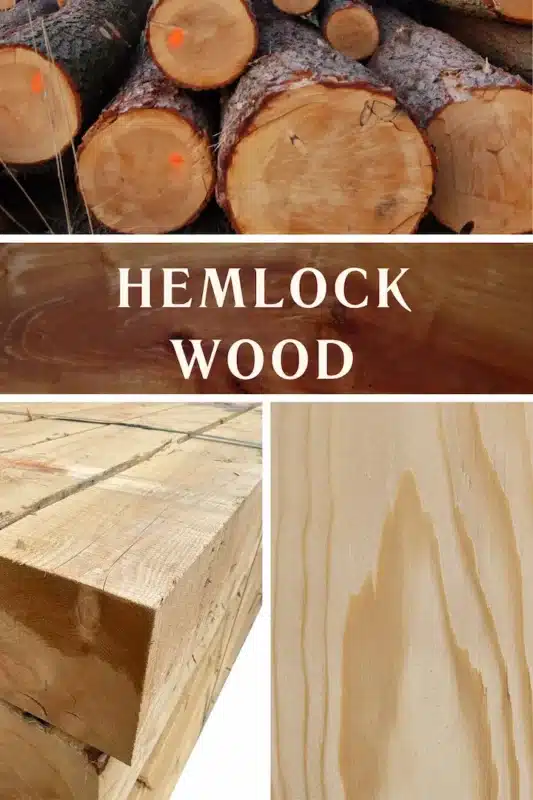
Hemlock wood comes from coniferous trees in the genus Tsuga. Its light weight, moderate strength, subdued grain, and pale color make it useful for interior finishes and graded construction, but it isn’t naturally suited to wet soil or places that stay damp.
Botanical Classification
Hemlocks belong to the Pinaceae family, which also includes pines, spruces, firs, and larches. The main North American commercial species are Western hemlock, Tsuga heterophylla, and Eastern hemlock, Tsuga canadensis; mountain hemlock is a separate species covered in this guide to mountain hemlock.
The genus matters when buying material because sellers sometimes apply regional names loosely. The USDA Silvics of North America describes each species’ range and growth form, helping separate botanical identity from a retail label.
Hardwood or Softwood?
Hemlock is a softwood because it comes from a cone-bearing conifer, not because every board feels soft. Western hemlock averages about 540 pounds-force on the Janka scale, while Eastern hemlock averages about 500 lbf, making both harder than some low-density pines but much softer than oak.
Botanical classes don’t predict dent resistance with precision. A clear hemlock board can feel firm beneath a thumbnail, yet a dropped clamp leaves a visible compression mark; see the broader softwood guide for how conifers differ.
Hemlock and poison hemlock: Hemlock lumber isn’t produced from poison hemlock. Timber trees belong to Tsuga, while poisonous Conium maculatum is a herbaceous member of the carrot family; the shared common name doesn’t indicate a botanical or toxic connection.
Ordinary wood-dust precautions still apply. Cutting creates fine airborne particles and long, sharp splinters, so the fact that the tree isn’t poison hemlock doesn’t make sawdust safe to breathe.
Eastern and Western Hemlock Species
Western hemlock is the stronger, more standardized commercial millwork species, while Eastern hemlock often appears as locally milled framing, barn, sheathing, and utility lumber. Regional or marketing terms such as Canadian hemlock and American hemlock don’t identify a board precisely enough for technical purchasing.
Western Hemlock Wood
Western hemlock wood, Tsuga heterophylla, grows from coastal Alaska and British Columbia through Washington, Oregon, and northern California, with inland populations farther east. Mature forest trees commonly reach 165–200 feet on productive sites, supporting long commercial boards and structural lumber.
Dry Western hemlock averages roughly 29 lb/ft³. Representative clear-wood figures include 540 lbf Janka hardness, 11,300 psi bending strength, 1.63 million psi modulus of elasticity, and 7,200 psi crushing strength; these averages aren’t design values for a graded joist or beam.
Its sapwood looks yellowish white, while heartwood runs from light tan to faint reddish brown. Straight grain and an even, fine-to-medium texture suit doors, molding, paneling, stair parts, sauna products, veneer, boxes, pulp, and approved structural framing.
Western hemlock often appears within the Hem-Fir group. That commercial grouping can include Western hemlock and several true firs, so Hem-Fir on a grade stamp doesn’t mean every piece is botanically hemlock.
Eastern Hemlock Wood
Eastern Hemlock wood, Tsuga canadensis, grows from southeastern Canada through the northeastern United States and Appalachian region. Trees commonly reach 60–100 feet, with larger specimens occurring on favorable old-growth sites.
Dry Eastern hemlock averages about 28 lb/ft³. Typical clear-wood data include 500 lbf Janka hardness, 8,900 psi bending strength, 1.20 million psi modulus of elasticity, and 5,410 psi crushing strength.
The wood ranges from nearly white to pale tan or light reddish brown. Its grain is often straight, but coarse areas, hard knots, and brittle edges can produce bristly splinters that catch against a bare palm.
Canadian hemlock wood commonly means Eastern hemlock, yet the phrase can also describe Canadian-grown Western hemlock or a generic sauna product. Canadian hemlock color is usually creamy white, straw, pale tan, or faint pinkish brown, with gradual rather than dramatic heartwood contrast.
American hemlock is another common name for Eastern hemlock. Since Western hemlock also grows in the United States, the name is too vague for structural specifications, color matching, or replacement millwork.
Species comparison table: The values below represent typical clear specimens. Natural variation, knots, growth rate, moisture, board orientation, and grade can produce different results in finished lumber.
| Property | Eastern hemlock | Western hemlock |
|---|---|---|
| Botanical name | Tsuga canadensis | Tsuga heterophylla |
| Average dry weight | About 28 lb/ft³ | About 29 lb/ft³ |
| Janka hardness | About 500 lbf | About 540 lbf |
| Bending strength | About 8,900 psi | About 11,300 psi |
| Modulus of elasticity | About 1.20 million psi | About 1.63 million psi |
| Radial shrinkage | About 3.0% | About 4.3% |
| Tangential shrinkage | About 6.8% | About 7.8% |
| Natural decay resistance | Non-durable to perishable | Non-durable to perishable |
| Main supply area | Eastern North America | Pacific Northwest and western Canada |
| Common market focus | Rough lumber, barns, framing, utility work | Framing, doors, trim, paneling, stairs, saunas |
Regional availability changes the practical choice. Rough Eastern boards may offer excellent value near small northeastern mills, while clear Western stock is easier to source through established West Coast millwork channels; freight can reverse any apparent price advantage.
Hemlock Wood Properties and Performance

Hemlock has moderate strength, low-to-moderate hardness, a pale straight-grained appearance, and poor natural resistance to decay. It performs well indoors after proper drying, but wet installation, trapped exterior moisture, blunt tools, or careless fastening can cause gaps, rot, splinters, and split ends.
Hardness and Strength
Hemlock is stronger and harder than its pale appearance suggests, yet it isn’t a high-wear hardwood. Eastern white pine is roughly 380 lbf Janka, Eastern hemlock 500 lbf, Western hemlock 540 lbf, Douglas fir about 620 lbf, and red oak roughly 1,290 lbf on the wood hardness scale.
The USDA Wood Handbook explains why moisture, grain direction, density, defects, and test method affect reported properties. Published clear-wood figures help compare species, but knots and slope of grain can govern the real failure point.
A hemlock shelf feels stiff at short spans but can sag under books if it is thin or unsupported. Flooring takes heel dents and pet-claw marks readily, so it fits rustic rooms better than a pristine high-traffic floor.
Color, Grain, and Texture
What does hemlock look like? Fresh boards are creamy white to pale straw, tan, or light reddish brown. Grain lines are usually straight and quiet, with less dramatic earlywood and latewood contrast than Douglas fir or many yellow pines.
Planed clear stock can feel smooth and dry, with little resin on the fingers. Knotty boards are different: dark, hard knots interrupt the softer fibers, and a cross-grain pass can leave tiny hooked splinters around them; the wood grain guide explains these visual shifts.
Canadian hemlock color often warms from cream to honey or pale amber beneath a clear oil-based finish. Water-based clear coats preserve a lighter raw-wood look, while ambering finishes deepen pink or tan areas.
Moisture and movement: Hemlock shrinks across its width as it dries and moves very little along its length. Interior millwork commonly performs well near 6%–9% moisture content, adjusted for local indoor conditions, while KD or S-Dry construction lumber is commonly dried or surfaced at 19% moisture or less.
A meter is more reliable than a fixed acclimation period. Wet tongue-and-groove boards can look tight during installation, then open into dark hairline gaps after heating season begins; vertical-grain or narrower stock tends to move more evenly.
Decay and insects: Both primary species rate non-durable to perishable under decay exposure. Paint and water repellent slow wetting, but neither replaces preservative treatment where ground contact, repeated saturation, or structural code calls for treated material.
Thermal and acoustic qualities: Hemlock transfers heat more slowly than metal or masonry, which supports its sauna use. It isn’t automatically cool to touch, and room acoustics depend on panel thickness, battens, insulation, cavities, openings, and the complete wall assembly.
Benefits of hemlock include restrained color, straight grain, useful strength-to-weight performance, easy handling, paint compatibility, and lower resin character than many pines. It often costs less than clear cedar or premium hardwood millwork, particularly near its growing region.
- Pale color suits modern, rustic, Scandinavian, and traditional rooms.
- Clear Western stock machines into clean doors, trim, paneling, and stair parts.
- Moderate weight makes long boards easier to lift and position.
- Properly graded lumber can serve structural applications.
- Dry, smooth stock works well for many sauna interiors and accessories.
Drawbacks and failures: Beginners often treat hemlock like cedar, install damp material indoors, drive screws close to ends, or stain a finished project without testing. Those mistakes lead to rot, gaps, splits, blotches, and rough fibers.
| Failure | Likely cause | Professional workaround |
|---|---|---|
| Exterior softening or rot | Trapped water or soil contact | Use exposure-rated treatment, drainage gaps, sealed end grain, and maintained coatings |
| Open paneling joints | Boards installed too wet | Meter each batch and condition it near service moisture |
| Cupped faces | Unequal moisture across the board | Ventilate the rear face and use narrower or vertical-grain boards |
| Split ends | Large fasteners placed too close to an end | Predrill and keep connections back from fragile edges |
| Torn grain | Blunt cutter or feed against grain | Use sharp carbide edges, lighter passes, and backed crosscuts |
| Dark stain patches | Uneven sanding or absorption | Test a conditioner or washcoat on same-batch offcuts |
Practical Notes From Real-World Use: Sort boards before machining rather than after. Straight, clear pieces belong at eye level and hand-contact areas; bowed, knotty, or color-mismatched boards can supply short components, backing, blocking, or concealed cuts.
Freshly planed hemlock has a faint, clean conifer scent and a dry surface, but the edge can feel deceptively sharp. Easing exposed arrises with two light sanding passes greatly reduces the needle-like splinters that appear after humidity cycles raise the grain.
Common Hemlock Wood Uses
Hemlock wood uses include interior paneling, cladding, stair parts, doors, trim, furniture, graded framing, rustic flooring, boxes, pallets, crates, sheathing, and pulp. Its best applications keep untreated wood dry or use properly treated and graded material where moisture or structural loads apply.
Paneling and Cladding
Hemlock makes calm-looking interior cladding for walls, ceilings, cabins, and sauna rooms. Check moisture before fitting, calculate tongue-and-groove coverage from the exposed face, leave profile-appropriate movement space, and use corrosion-resistant fasteners in humid rooms.
Random-length planks can reduce waste but require layout planning. Stagger end joints, avoid tiny pieces at corners, and spread pale and darker boards across the surface before fastening so one wall doesn’t develop an accidental color band.

Unfinished Hemlock Wall Planks
- Solid hemlock boards for natural interior finishes
- Suitable for walls ceilings and sauna cladding
- Random lengths create an authentic wood look
- Unfinished surface is ready for stain or sealant
- Covers approximately ten square feet
 Buy on Amazon
Stairs and Millwork
Clear, dry hemlock works for newel posts, balusters, molding, handrail components, windows, and doors. Edge-glued parts can stay straighter than a wide solid timber when the laminations, adhesive, and moisture condition suit the installation.
Stairs require more than attractive wood. Newels, guards, rails, baluster spacing, anchors, and connections must meet the adopted building code; predrilling near shaped ends prevents cracks that can weaken a narrow component.

Sanded Hemlock Newel Post
- Vertical-grain hemlock for staircase projects
- Edge-glued construction adds dependable stability
- Pre-sanded surface saves finishing time
- Notched single-groove design supports railing installation
- Natural wood can be painted stained or sealed
Buy on Amazon

Colonial Hemlock Stair Baluster
- Hemlock spindle adds warmth to stair railings
- Colonial profile suits traditional home interiors
- Solid wood construction supports a finished custom look
- Ready for paint stain or clear protective finish
- Ideal for railing repairs and renovation projects
Buy on Amazon
Furniture and cabinets: Hemlock suits painted furniture, shelves, cabinet frames, built-ins, and rustic tables. Clear kiln-dried boards give cleaner joints, while knotty stock can twist and soft earlywood may dish under aggressive sanding.
Use a harder species for a pristine dining top or workbench. For a hemlock tabletop, add broad supports, protective pads, and a repairable finish, accepting that dents will become part of its appearance.
Structural framing: Western hemlock is widely sold in graded construction lumber, often through Hem-Fir. Eastern hemlock also serves local framing and timber projects, but it can’t automatically use Western Hem-Fir design values.
Check the grade stamp, species group, nominal size, moisture mark, span table, connection schedule, and adopted code. The American Wood Council NDS provides design resources, while load-bearing beams and unusual connections may need project-specific engineering.
Flooring applications: Hemlock flooring works in low-traffic or historically styled rooms where dents and wear are acceptable. Its 500–540 lbf Janka range makes it far easier to mark than red oak, so grit control, felt pads, and a maintainable finish matter.
Boxes, pallets, and utility work: Moderate weight and regional supply make hemlock useful for crates, pallets, blocking, agricultural buildings, sheathing, and rough boards. Shipping and farm applications still need pest, moisture, fastener, and decay planning.
Hemlock Wood for Saunas

Dry, smooth hemlock sauna wood works well because it has pale coloring, a restrained scent, moderate density, and wide availability in paneling and accessories. Sauna suitability depends on ventilation, safe adhesives and finishes, splinter-free surfaces, and complete drying between sessions.

Why Hemlock Works
Hemlock provides a quiet visual finish without cedar’s strong aroma or color variation. Its lower density than many hardwoods can make contact surfaces more comfortable, though any wood can become hot near a heater or poorly placed heat source.
The label “Canadian hemlock sauna” doesn’t confirm Tsuga canadensis. Ask about botanical species, solid versus laminated construction, adhesives, coatings, manufacturing source, moisture content, and permitted operating temperature.
Sauna Installation Requirements
Install dry, smooth boards with eased edges and concealed or safely positioned corrosion-resistant fasteners. Follow the sauna manufacturer’s wall assembly, ventilation, heater-clearance, adhesive, and coating instructions rather than applying ordinary room-finish practices.
Bench and backrest areas deserve extra hand sanding because heat and moisture cycles can raise loose fibers. Run a clean cotton cloth across the finished surface; if it snags, skin probably will too.
Maintenance and mold prevention: Wipe standing water, keep vents clear, leave the room open to dry after use, and inspect corners, bench undersides, and wall bases. Dark spots, a musty odor, persistent dampness, or fuzzy growth indicate a moisture problem rather than normal color aging.
Light sanding can renew rough contact surfaces. Avoid harsh cleaners, chlorine products, and unapproved coatings, since heat can change their odor, emissions, adhesion, or surface feel.
Sauna accessories: Backrests keep skin away from hotter wall surfaces and reduce direct wear on paneling. Select unfinished or sauna-approved products, check for smooth edges, and inspect glued parts according to their heat rating.

Canadian Hemlock Sauna Backrests
- Canadian hemlock construction suits sauna environments
- S-shaped profile follows the natural spine curve
- Supports more comfortable seated relaxation
- Fits traditional and infrared sauna spaces
- Two backrests arrive ready to use
Buy on Amazon

Natural Hemlock Sauna Backrest
- Natural hemlock adds warm sauna-ready character
- Curved support improves comfort while sitting
- No stains or toxic coatings on the wood
- Compact size fits many home sauna benches
- Ready to use without assembly
Buy on Amazon
Small storage fittings keep damp textiles off benches and floors. Mount accessories into suitable backing rather than relying on thin paneling alone.

Hemlock Sauna Towel Rack
- Made from hemlock wood for sauna settings
- Four hooks organize towels robes and accessories
- Wall-mounted design preserves valuable floor space
- Natural wood look complements sauna interiors
- Simple installation suits home steam rooms
Buy on Amazon
A sand timer can help pace a session, but it isn’t a medical safety device. Heat tolerance varies with health, hydration, medications, temperature, and humidity.
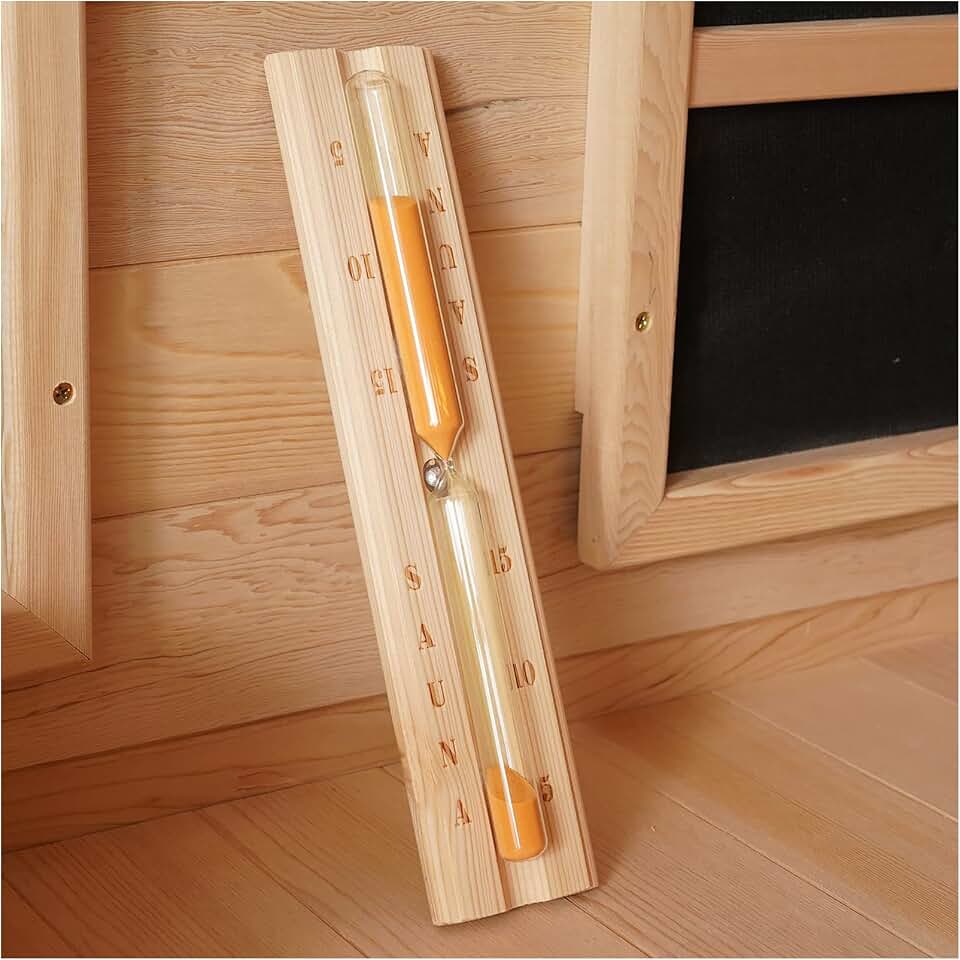
Hemlock Sauna Sand Timer
- Fifteen-minute timer helps manage sauna sessions
- Hemlock wood frame complements natural sauna decor
- Rotatable design makes timing easy to reset
- Suitable for infrared steam and barrel saunas
- Useful accessory for safer paced relaxation
Buy on Amazon
Outdoor Suitability and Wood Comparisons
Can hemlock be used outdoors? Yes, but untreated hemlock isn’t naturally durable in persistent moisture or soil contact. Protected locations can work with drainage, rear ventilation, sealed end grain, compatible fasteners, and maintained coatings; severe exposure needs lumber preservative-treated for the stated use category.
Protected Outdoor Uses
Better candidates include roofed trim, ventilated siding, protected porch details, and above-ground structures that drain quickly. Wide overhangs, sloped caps, flashing, and a clear gap from masonry reduce wetting more effectively than another decorative finish coat.
Prime or seal cut ends before assembly where the coating system permits it. End grain drinks water much faster than a planed face and often becomes the first place where dark staining and checks appear.
High-Risk Applications
High-risk uses include buried posts, garden-bed contact, damp deck framing, uncovered horizontal boards, and unventilated cladding. An untreated 8×8 hemlock post may look substantial, but its size doesn’t give the outer fibers natural resistance to wet soil.
Ground contact calls for treatment rated for that exposure and documented by a treatment tag or supplier paperwork. A brushed water repellent or stain doesn’t turn untreated stock into ground-contact lumber.
Treatments and coatings: Water repellents slow liquid uptake, film-forming paints create a maintained surface barrier, and penetrating stains add color with less peeling risk. Factory preservative treatment addresses biological decay more deeply; each product serves a different job.
Hemlock vs. pine: Hemlock is often harder than Eastern white pine and usually shows less resin and color contrast. Pine varies widely by species, so compare hemlock against the actual pine, such as the material described in this yellow pine guide.
Hemlock vs. Douglas fir: Douglas fir is commonly harder and favored where higher structural values or pronounced grain are wanted. Western hemlock looks quieter and lighter; compare species traits in the Douglas fir guide, then use grade-stamped values for construction.
Hemlock vs. cedar: Western red cedar offers better natural decay resistance and often better exterior dimensional behavior. Hemlock may cost less and provides a pale neutral interior, while cedar has a stronger aroma and richer color; read the Western red cedar comparison before choosing sauna or cladding stock.
Hemlock vs. spruce: Both are pale construction softwoods, but spruce commonly appears in SPF groups while Western hemlock often appears in Hem-Fir. Neither group name identifies one botanical species; the spruce wood guide covers the main spruce traits.
Hemlock vs. oak: Oak is much harder, more wear-resistant, and better suited to high-traffic floors or impact-prone furniture. Hemlock is lighter, easier to cut, and often cheaper, making it a practical choice for paneling, painted trim, and low-impact pieces.
| Wood | Approximate Janka hardness | Natural exterior durability | Best fit |
|---|---|---|---|
| Eastern hemlock | 500 lbf | Low | Local framing, rough boards, utility work |
| Western hemlock | 540 lbf | Low | Millwork, paneling, framing, sauna interiors |
| Douglas fir | 620 lbf | Variable, commonly limited | Structural work and visible grain |
| Western red cedar | About 350 lbf | Better | Exterior cladding and aromatic sauna interiors |
| Red oak | 1,290 lbf | Low for red oak | Floors and hard-wearing furniture |
Working and Finishing Hemlock Wood
Hemlock cuts, glues, sands, stains, and paints well when tools are sharp and surface preparation stays consistent. The chief workshop problems are torn fibers, end splitting, uneven stain absorption, soft earlywood erosion, and fine dust.
Cutting and Sanding
Use sharp carbide cutters, support the exit side of crosscuts, and take light passes around knots or reversing grain. A zero-clearance insert or sacrificial backing board reduces ragged fibers along visible edges.
A practical sequence is 100 or 120 grit for leveling, followed by 150 grit for many interior finishes. Move to 180 only if the finish maker calls for it; polishing softwood too finely can reduce stain uptake and make color harder to control.
Fastening Without Splitting
Predrill near ends, especially in thin, dry, vertical-grain, or shaped pieces. Countersink screw heads rather than forcing them below the surface, and keep nails away from corners where short grain can break away.
Use corrosion-resistant fasteners in saunas, bathrooms, and outdoor assemblies. Structural screws, nails, bolts, and connectors still need the required diameter, embedment, spacing, edge distance, and approved schedule.
Hemlock stain colors: Natural and honey stains warm the wood gently; light oak adds tan; walnut and espresso create stronger contrast; gray stains can look cool and modern. Dark colors often expose absorption differences, sanding scratches, glue smears, and pale sapwood.
Best stain practices: Test the complete schedule on offcuts from the same batch. Sand every piece to the same grit, remove dust, test a conditioner or thin washcoat, wipe stain evenly, and maintain a wet edge to prevent lap marks.
Stained hemlock can shift dramatically beneath a topcoat. Make the test panel large enough to include earlywood, latewood, and a knot, then view it in the room’s daylight and artificial light before finishing all boards.
Painting and clear finishes: Primer and paint hide color variation while preserving the straight-grained profile. Seal knots where bleed-through is possible; for clear work, water-based products retain pale color while many oil-based coatings add amber warmth.
Dust and indoor safety: Sawing and sanding create inhalable particles that can irritate eyes, skin, and airways. Use local extraction, ventilation, eye and hearing protection, and a fitted particulate respirator where extraction can’t keep exposure controlled.
The OSHA woodworking guidance covers dust, machine guarding, noise, and workshop hazards. A weak wood scent isn’t evidence of clean air; the finest dust can remain suspended after visible chips have settled.
For heated rooms, confirm the temperature limits and emissions of adhesives, sealants, engineered parts, and finishes. Let coatings cure for the full stated period before occupancy or sauna heating.
Buying Hemlock Lumber
Buy hemlock by verified species, grade, moisture condition, dimensions, and intended exposure, not by color or trade name alone. Price comparisons only work when quotes use the same unit, surface condition, profile, usable coverage, freight, and waste assumptions.
Verify Species and Trade Names
Ask whether the lumber is Eastern or Western hemlock and whether “Canadian hemlock” describes species, source, or marketing. For structural stock, record the species group, mill number, grade agency, grade, moisture mark, and treatment information before cutting away stamps.
KD means kiln-dried, S-Dry indicates surfaced dry under applicable grading rules, and HT means heat-treated for pest-control or shipping purposes. HT doesn’t mean preservative-treated, waterproof, dry enough for interior millwork, or naturally decay-resistant.
Grades and Grain Orientation
Choose structural grade for load-bearing work, clear or appearance grade for visible millwork, and vertical-grain stock for a straighter visual pattern and more even width movement. Knotty or utility boards suit rustic work, blocking, crates, and short components.
Inspect each piece for loose knots, splits, shake, wane, twist, bow, cup, staining, pitch pockets, and insect evidence. Sight along the edge and face; a slight bow may pull flat, but twist is difficult to remove without losing substantial thickness.
Moisture and lumber marks: Use a calibrated meter on several boards and test both faces where possible. Compare the reading with expected room conditions rather than assuming that several days indoors will correct wet stock.
Sizes, posts, and coverage: Confirm actual dimensions rather than nominal labels. An 8×8 hemlock post may be rough full-size, surfaced smaller, green, dry, structural, decorative, treated, or untreated; each version behaves and prices differently.
For paneling, calculate square-foot coverage from the exposed face after tongue overlap, not total board width. Add waste for defects, end trimming, color sorting, miters, and room layout; 10% is common for simple walls, while irregular rooms or selective color matching may need more.
Board-foot calculations: Multiply thickness in inches by width in inches by length in feet, then divide by 12. A rough 1-inch × 8-inch × 10-foot board contains 6.67 board feet; one board foot equals 144 cubic inches.
| Board | Calculation | Board feet |
|---|---|---|
| 1 × 6 × 8 feet | 1 × 6 × 8 ÷ 12 | 4.0 |
| 1 × 8 × 10 feet | 1 × 8 × 10 ÷ 12 | 6.67 |
| 2 × 10 × 12 feet | 2 × 10 × 12 ÷ 12 | 20.0 |
| 8 × 8 × 10 feet | 8 × 8 × 10 ÷ 12 | 53.33 |
Hemlock lumber prices vary by species, region, grade, drying, dimensions, surfacing, and freight. Illustrative retail ranges are roughly $2–$5 per board foot for locally produced rough Eastern stock, $4–$9 for surfaced Western boards, and above $8–$15 for clear vertical-grain, sauna-ready, or specialty millwork material.
Those figures aren’t commodity guarantees. Profiles may be sold per linear foot, square foot, package, or piece, so convert each quote to usable installed coverage and include waste and delivery before comparing it with a lower-cost wood.
Structural grade requirements: Never substitute clear-specimen strength numbers for grade-stamped design values. Load-bearing work depends on species group, grade, size, moisture, load duration, span, connection details, local code, and any required engineering.
Certified and sustainable sourcing: Look for credible FSC, PEFC, or SFI chain-of-custody claims where available. Local origin can reduce freight, but it doesn’t prove responsible forest management; ask about harvest region, certification, mill recovery, product life, and maintenance.
Hemlock woolly adelgid: Adelges tsugae is an invasive insect that feeds near the base of Eastern hemlock needles. Infested trees can show white cottony masses, needle loss, canopy thinning, reduced growth, and death, producing serious ecological damage across eastern forests.
The USDA APHIS hemlock woolly adelgid resource provides identification and control information. Buyers should follow regional movement rules for logs, bark, nursery trees, and other regulated material rather than transporting suspect wood or plant debris.
A final buying check should cover species, grade, moisture, exposure, and yield. Hemlock is good wood when those five points match the project; most failures begin when a pale, attractive board is chosen by name alone.
FAQs
Is Hemlock Wood A Hardwood Or Softwood?
Hemlock is a softwood. It comes from coniferous trees, although it can feel firmer and more durable than some other softwoods. Its straight grain, light color, and even texture make it easy to machine and finish. Hemlock is commonly used for framing, interior trim, and general woodworking.
What Is Hemlock Wood Good For?
Hemlock wood is good for framing, trim, cabinetry components, and indoor woodworking projects. Its straight grain and stable texture help it cut, sand, and stain evenly. It also works well for utility furniture, doors, and moldings. Choose properly dried, graded boards when strength or appearance is important.
Is Canadian Hemlock The Same As Eastern Hemlock?
Canadian hemlock is the same species as Eastern hemlock. Both names usually refer to Tsuga canadensis, a conifer native to eastern North America. The name Canadian hemlock is often used in lumber and retail markets. Wood characteristics can vary slightly based on growing location and drying methods.
Can Hemlock Wood Be Used Outdoors?
Hemlock wood can be used outdoors only when it is properly protected. Untreated hemlock has limited natural resistance to moisture, insects, and decay. Seal or paint it thoroughly, keep it off the ground, and maintain the finish regularly. For exposed outdoor projects, naturally durable or pressure-treated wood is usually a better choice.
Is Hemlock Wood Suitable For A Sauna?
Hemlock wood is suitable for sauna interiors. It has low resin content, a smooth feel, and good stability in changing heat and humidity. Its light color and subtle grain also create a clean appearance. Use untreated, properly dried hemlock and provide adequate ventilation to help the wood last longer.
Affiliate Disclosure: Some links in this post are affiliate links. If you make a purchase through these links, we may earn a small commission at no extra cost to you. We only recommend products we genuinely believe in.