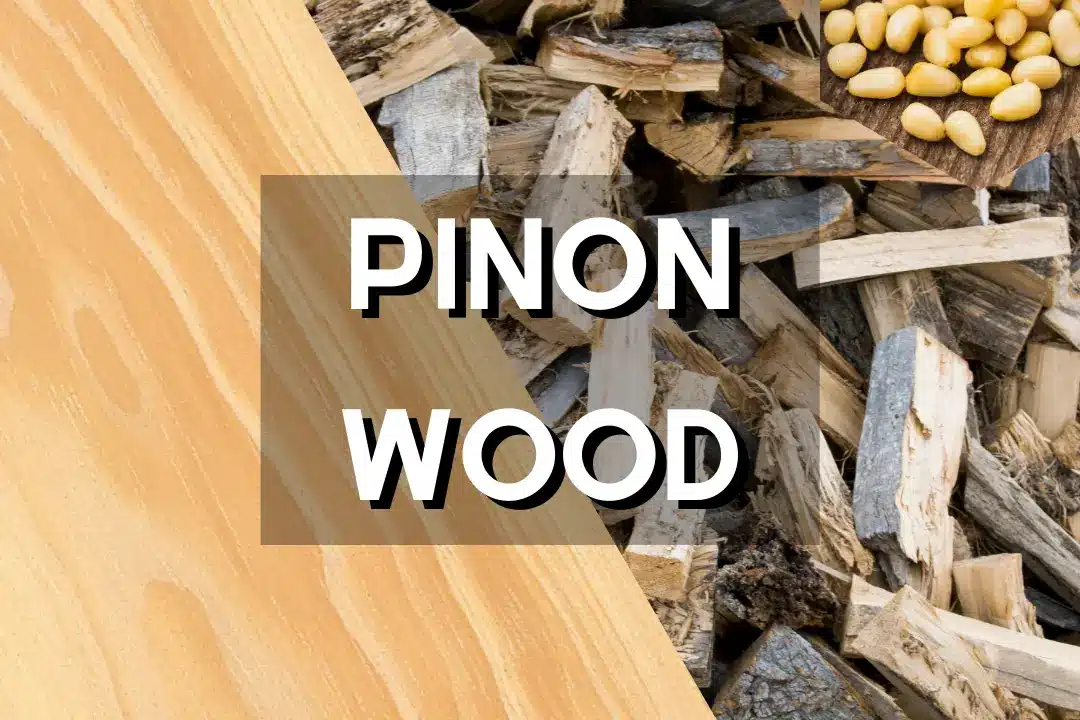

Pinon wood comes from nut-producing pinyon pines native to western North America, most often the two-needle pinyon, Pinus edulis, in Southwest firewood markets. Properly seasoned piñon burns with strong flames, useful heat, and a sweet resinous aroma, but it can spark, smoke, and form creosote if burned wet or without enough airflow.
Piñon is a relatively dense softwood used in fireplaces, approved wood stoves, fire pits, chimineas, and permitted campfires. This guide explains its species, physical properties, burn behavior, safety limits, comparisons, seasoning, purchasing formats, and boxed options.
Table of Contents
What Is Pinon Wood?
Piñon wood comes from several related pinyon pine species in the pine family, Pinaceae. In New Mexico, Colorado, Arizona, and Utah, the name often means Colorado pinyon or two-needle pinyon, Pinus edulis, rather than one standardized firewood grade.
Piñon, Pinyon, Pinon, and Pinion
Piñon and pinyon usually describe the same group of nut pines in consumer searches. Piñon is the Spanish-derived Southwest spelling, pinyon is common in English botanical writing, and pinon is the unaccented form widely used in online searches and retail listings.
Pinion wood is usually a spelling error or search variant rather than a separate tree. A pinion is a small gear, so buyers searching for firewood should look for piñon, pinon, pinyon, or a botanical species name such as Pinus edulis.
Major Pinyon Species
Three major species explain much of the variation sold under the piñon name. Distribution records and accepted botanical names are available through the USDA PLANTS Database.
| Species | Common name | Typical range | Identification clue |
|---|---|---|---|
| Pinus edulis | Colorado or two-needle pinyon | Colorado Plateau and Southwest | Needles commonly grouped in pairs |
| Pinus monophylla | Singleleaf pinyon | Great Basin and nearby dry mountains | Needles commonly borne singly |
| Pinus cembroides | Mexican pinyon | Mexico and parts of the southern Southwest | Regional range, cones, and needle bundles |
Range and identification. Colorado pinyon commonly grows with juniper across dry uplands in New Mexico, Colorado, Arizona, and Utah. Needle count, cones, bark, elevation, and location help identify a standing tree, but split firewood without foliage or cones is difficult to identify reliably.
Aroma and color alone don’t prove species. Weathered piñon may have gray bark and dull tan ends, while a fresh split can reveal pale sapwood, reddish-brown heartwood, sticky amber resin, and a sharp pine scent.
Pine nuts and softwood classification. Piñon pine nuts are edible seeds produced inside cones; they aren’t a kind of wood. The tree is a conifer, making its wood botanically a softwood, regardless of how heavy or hard a dry piece feels.
The hardwood-softwood distinction follows plant reproduction rather than heating performance. Dense piñon can outlast a lightweight pine split, while a properly seasoned oak log may still form steadier, longer-lived coals.
Woodlands, wildlife, and Indigenous importance. Pinyon-juniper woodlands provide cover, erosion resistance, carbon storage, and food for pinyon jays, Clark’s nutcrackers, rodents, and other wildlife. Birds that cache seeds may leave some uneaten, helping new trees establish.

Pinyon nuts and wood also hold longstanding food, fuel, material, and cultural value for Pueblo peoples, Diné communities, Ute communities, and Great Basin tribes. Treating the tree only as a source of decorative Southwest fragrance overlooks these living relationships and the slow growth of many dry-site stands.
Pinon Wood Properties and Aroma
Pinon wood properties vary with species, growth site, moisture, and resin content. Two-needle pinyon is relatively dense and hard for a pine, with knotty grain, resin pockets, and a sweet, earthy pine aroma that becomes more noticeable as the wood warms.
Density and Hardness
Common reference values for Pinus edulis place its average dried weight near 37 pounds per cubic foot, or roughly 600 kilograms per cubic meter. Its Janka hardness is about 860 pound-force, or 3,820 newtons, according to the Pinyon Pine wood profile.
These are specimen averages, not promises for a firewood delivery. Growth rate, knots, latewood percentage, bark, internal moisture, and species all change how a log feels and burns; the density of wood offers more useful combustion context than surface hardness alone.
Janka hardness measures resistance to indentation. It doesn’t directly measure BTU output, ignition speed, coal life, or usable room heat, so don’t select firewood solely from a wood hardness scale.
Grain, Color, and Resin
Freshly split piñon usually shows pale sapwood around yellowish or light reddish-brown heartwood. Grain ranges from straight to irregular, while knots and resin pockets can pull a splitting wedge sideways or leave fragrant, tacky residue on gloves.
The cut face often feels slightly greasy near resin channels. A thin curl lifted from a dry split can release an immediate sweet pine odor, while old wood stored in open sun may smell faint until heat reaches its inner resin.
Boards can display appealing movement around knots, but irregular grain raises tear-out risk during machining. Readers comparing visual structure can use this guide to wood grain patterns; firewood buyers should focus more on moisture, split size, and clean storage.
Southwest aroma profile. Burning piñon is often described as sweet, resinous, earthy, and pine-like. Outdoors, the aroma tends to arrive in warm waves as flames open resin pockets; close smoke can feel dry and biting in the nose rather than pleasant.
Aroma variability. Species, bark percentage, resin concentration, age, storage, moisture, airflow, and fire temperature all affect scent. Juniper in a blend adds a sharper, cedar-like note, while damp wood produces a heavier, acrid smell that can overwhelm the expected fragrance.
Smoke health risks. Pleasant-smelling smoke is not harmless. Fine particles and combustion gases can irritate eyes and lungs, and exposure can be harder on children, older adults, and people with asthma, cardiovascular disease, or chronic respiratory conditions.
Don’t use extra smoke as mosquito control. Claims that piñon repels mosquitoes remain largely anecdotal; screens, fans, removal of standing water, and registered repellents avoid deliberate exposure to wood smoke.
Burning Pinon Wood
Burning pinon wood works well for recreational fires and supplemental heat when the logs contain 20% moisture or less. Dry piñon catches faster than many dense hardwoods, produces lively flames and useful coals, and gives off its characteristic resin scent, but sparks call for a screen or closed stove door.
Good Firewood Qualities
Piñon combines moderate ignition effort with relatively high density for a pine. That balance makes it practical for an evening fireplace, chiminea, or fire pit where a user wants visible flame and fragrance without waiting as long as a large oak split may require.
Dry pieces feel solid in the hand, and smaller splits often catch with a crisp crackle. Resinous sections may flare suddenly or throw pinhead-sized sparks, so a calm-looking fire can change after a pocket opens.
Heat and Burn Time
A frequently cited estimate places piñon near 27 million BTU per full cord. Treat that number as an approximate comparison because species, moisture, bark content, stack density, combustion method, and appliance efficiency can shift both stored energy and usable heat.
No honest answer can assign one burn time to a piñon log. A four-pound split in a closed stove with reduced secondary airflow behaves very differently from the same wood laid over a breezy fire-pit grate.
Ignition, flames, and coals. Thin, dry piñon splits ignite readily and form active yellow-orange flames. Larger pieces tend to char outside before settling into red coals; if their centers remain damp, they hiss, darken, and release white smoke instead.
Use smaller splits to establish a hot coal bed before adding thick rounds. Packing a cold firebox with large pieces often causes a smoky start because the wood absorbs heat faster than the fire can sustain clean combustion.
Fireplaces, stoves, pits, and campfires. Piñon can be used in masonry fireplaces, approved wood stoves, outdoor fire pits, chimineas, and campfires where local rules permit it. An open fireplace provides flame and radiant warmth but loses far more heat up the chimney than a closed, efficient stove.

Cooking with pinon wood. You can cook with clean, untreated piñon identified as food-safe firewood, but its resinous smoke creates a strong flavor. Let flames settle into hot coals, use a small amount, and test it on a short cook before exposing a large cut of meat.
Oak and fruitwoods give many foods a milder, more predictable smoke profile, while mesquite suits recipes that can handle forceful smoke. Never cook over piñon sold with binders, ignition chemicals, paint, preservatives, or an undisclosed blend.
Pine cones in fire pits. You can burn dry, naturally fallen pine cones in an outdoor fire pit where burning is allowed. Use only a few as tinder because cones ignite fast, release sparks, and can roll or lift glowing scales into nearby vegetation.
A wet cone smolders and creates irritating smoke, while decorative cones may carry wax, paint, glitter, fragrance oils, or preservatives. Keep untreated cones inside a screened pit and never gather them where removal is prohibited.
Piñon Firewood Comparisons
Piñon firewood lights more readily than many dense hardwoods and usually burns longer than lightweight pine, but moisture and log weight can reverse those results. Compare equal dry weights or equal stacked volumes rather than judging one small split against a larger log.
Piñon vs. Juniper
Piñon offers a sweeter pine-resin scent and often catches more easily. Juniper wood tends to smell sharper or cedar-like, feels dense, and can extend a fire when mixed with piñon.
A blend isn’t automatically lower quality. It can provide quick piñon flame followed by steadier juniper heat, but it shouldn’t be used to judge the scent, heat, or coal life of pure Pinus edulis.
Piñon vs. Oak
Piñon usually starts faster and smells more resinous, while seasoned oak commonly burns with steadier long-lived coals. Oak often suits sustained heating; piñon suits quicker recreational fires and users who value its fragrance.
| Comparison | Ignition | Aroma | Typical fire behavior | Common use |
|---|---|---|---|---|
| Piñon | Fairly easy when dry | Sweet, earthy pine resin | Active flame; may pop | Fireplaces and fire pits |
| Juniper | Moderate | Sharp, cedar-like | Dense heat and useful coals | Blends and heating |
| Oak | Slower | Mild wood smoke | Steady burn and lasting coals | Sustained heating |
| Mesquite | Moderate | Strong cooking smoke | Very hot and intense | Outdoor cooking |
| Lightweight pine | Fast | Familiar pine scent | Quick flame and shorter coal life | Kindling and short fires |
Piñon vs. mesquite. Mesquite is very dense, burns hot, and supplies a bold smoke flavor prized for certain outdoor cooking methods. Piñon gives a pine-like Southwest fragrance but can impart a resinous taste, making it less predictable for food.
Piñon vs. ordinary pine. “Pine” covers species with very different densities. Piñon often feels noticeably heavier than the same-sized piece of lightweight pine and may maintain coals longer, but no fixed multiplier applies across species and moisture levels.
For comparison, yellow pine, Scotch pine, and piñon have distinct density, resin, and grain patterns. Species-level identification gives a sounder comparison than a generic “pine firewood” label.
Seasoning and Burning Safely

Season piñon firewood until representative pieces measure 20% moisture or less on a newly exposed inner face. Safe burning also requires good draft, a maintained chimney, spark control, working alarms, and compliance with outdoor fire restrictions.
20% Moisture Target
The EPA Burn Wise best practices recommend burning wood at 20% moisture or less. Dry wood ignites with less wasted heat, produces less visible smoke, and helps the firebox reach cleaner combustion temperatures sooner.
End cracks, loose bark, faded ends, lighter weight, and a clearer sound when two pieces strike can suggest dryness. These signs can mislead because hot sun dries the shell of a log long before its center.
Freshly Split Moisture Testing
Split before testing. Drive the meter pins into the newly exposed center, following the grain and the meter maker’s instructions. Testing weathered bark or the old end grain can produce a deceptively low reading.
- Bring frozen logs closer to room temperature before testing.
- Select pieces from the top, middle, and lower parts of the stack.
- Split each sample immediately before taking a reading.
- Measure near the center of the fresh face.
- Burn the load only after representative readings reach 20% or less.
Seasoning and storage. Split rounds expose more surface area and dry faster than intact logs. Stack piñon off the soil with open sides, loose rows, and a top cover that sheds rain while leaving the ends open to moving air.
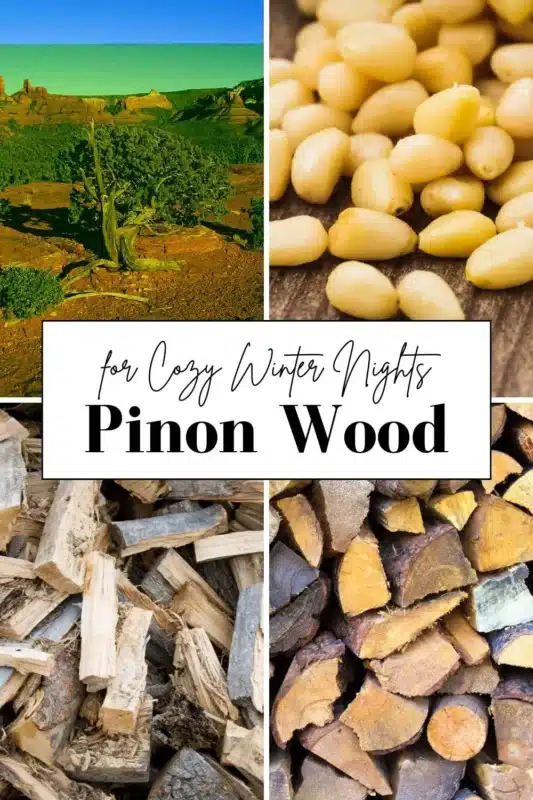
No fixed seasoning period works everywhere. Split thickness, initial moisture, winter temperature, summer humidity, sun exposure, airflow, and stack spacing matter more than the species name alone.
Indoor fire safety. Burn piñon only in a fireplace or stove approved for cordwood. Confirm that the flue is open, use a spark screen or closed door, inspect the chimney, and keep smoke and carbon-monoxide alarms active on every relevant level.
A cold or blocked flue can push smoke into the room regardless of wood quality. Warm a sluggish chimney with a small, hot kindling fire rather than loading large piñon splits and restricting the air immediately.
Outdoor fire safety. Check burn bans, red-flag warnings, wind forecasts, campground rules, and local ordinances before lighting a fire. Clear dry vegetation, keep water or an extinguisher close, and drown and stir the coals until they feel cold.
Smoke, sparks, and creosote. Any wood can contribute to creosote when moisture, low temperature, or weak draft leaves combustible vapors unburned. Piñon’s resin pockets can pop, but resin alone doesn’t determine chimney deposits; wet wood and oxygen-starved operation cause many failures.
Black glass, lazy dark-orange flames, heavy smoke, and a tar-like chimney smell signal poor combustion. Increase combustion air, use smaller dry splits, and arrange a chimney inspection rather than trying to burn deposits away with an uncontrolled hot fire.
Materials never to burn. A fireplace isn’t a disposal unit. Manufactured and chemically contaminated products can release toxic gases, damage appliances, and leave hazardous ash.
- Pressure-treated, painted, or stained lumber
- Plywood, particleboard, and medium-density fiberboard
- Plastic, household trash, and glossy packaging
- Railroad ties and chemically contaminated pallets
- Firewood containing binders or accelerants not approved for the appliance
- Unknown demolition scraps
Practical Notes From Real-World Use. The most common beginner error is judging a load by dry-looking ends. Thick piñon rounds can show deep checks yet release a damp, cool-feeling center when split; meter that center before carrying the load indoors.
Start with wrist-thick splits over pencil- and thumb-sized kindling, then add larger pieces after the flue and coal bed are hot. This staged load reduces the smoky, eye-stinging startup that occurs when cold logs cover a weak flame.
Buying Pinon Firewood

Buy pinon firewood by comparing stated species, moisture, dimensions, weight, usable volume, delivery charges, and heat-treatment status. Local bulk wood usually costs less per fire than parcel-shipped boxes, while boxes suit occasional users who value convenience and aroma.
Full Cords: 128 Cubic Feet
A full cord occupies 128 cubic feet when ranked and well stowed, traditionally a stack measuring 4 feet high by 4 feet deep by 8 feet long. The National Institute of Standards and Technology explains recognized volume measurements used in trade.
A cord measures stacked space, not 128 cubic feet of solid wood, because air gaps remain between logs. “Face cord,” “rack,” “truckload,” and “bundle” may describe different amounts, so ask for stacked dimensions and average log length before comparing quotes.
Boxed Sizes: 11–70 Pounds
Shipped piñon commonly appears in boxes near 11, 18, 35, or 70 pounds. Weight helps compare listings, but wet wood, thick bark, irregular pieces, and kindling can reduce the amount of useful dry fuel in a heavy package.
Price and delivered value. Calculate delivered price per pound when volume isn’t supplied, then check log length, moisture claims, species purity, shipping, and bark content. A low-cost 35-pound box isn’t good value if its 14-inch logs don’t fit the appliance or require more drying.
| Buying format | Best fit | Main value measure | Common drawback |
|---|---|---|---|
| Full cord | Regular heating | Delivered cost per stacked cubic foot | Needs dry storage space |
| Fractional cord | Seasonal home use | Verified stacked dimensions | Sales terms may be unclear |
| 11–18 lb box | One or two small fires | Convenience and log fit | High parcel cost per pound |
| 35–70 lb box | Several recreational fires | Delivered price per pound | Still costly for primary heat |
Pure piñon or blends. Read the full specification for “pure piñon,” “natural piñon,” “piñon blend,” or “piñon and juniper.” A blend may smell and burn beautifully, but the seller should disclose its components before making species-specific performance claims.
Sustainable sourcing. Ask whether the wood came from permitted thinning, local harvesting, storm damage, or salvage. “Natural” doesn’t verify responsible sourcing, and removing live pinyon from a slow-growing dry woodland can affect food production, habitat, soil, and cultural access.
Transport and pest rules. Buy wood near the place where it will burn when possible. Interstate, tribal, state, and campground rules may require certified heat-treated firewood; ordinary kiln drying isn’t automatically the same certification.
Check the origin and destination rules before loading a vehicle or placing an online order. Packaging doesn’t guarantee legal movement, and prohibited wood may be confiscated to limit the spread of forest insects and diseases.
Boxed Pinon Firewood Examples
Boxed piñon firewood suits buyers who want a manageable quantity for occasional fires or can’t find the species locally. Product labels, weights, dimensions, blend descriptions, and moisture claims can change, so verify the seller’s complete specification before ordering.
Compact Piñon Logs
An 18-pound package is easier to store and move than a bulk order. It fits an occasional fireplace or fire-pit user better than someone relying on wood for primary home heating.

Piñon Mini Logs for Cozy Fires
- Made from natural piñon pine
- Clean-burning mini logs
- Long-lasting aromatic firewood
- Suitable for fireplaces and fire pits
- Handy 18-pound pack
 Buy on Amazon
Measure the firebox before buying mini logs. A compact package helps only if the pieces fit comfortably without touching glass, blocking airflow, or forcing an overloaded fire.
Mid-Sized Boxed Piñon
A 35-pound box may supply several recreational fires, depending on log weight, loading rate, moisture, and firebox size. The product description identifies this option as a blend, so don’t assume it represents pure Pinus edulis.

Aromatic Piñon Firewood Box
- Approximately 35 pounds of firewood
- Fragrant piñon wood blend
- Brings Southwest ambiance
- Suitable for indoor and outdoor fires
- Convenient boxed delivery
Buy on Amazon
Bulk Boxed Piñon. A 70-pound delivery reduces repeat ordering and makes sense for several planned fires without the space demands of a local cord. Compare its delivered price per pound with local split firewood and confirm that the log length suits the appliance.

Large Box of Aromatic Piñon Firewood
- Approximately 70 pounds of firewood
- Aromatic piñon blend
- Adds a classic Southwest scent
- Works indoors or outdoors
- Great for fireplaces and fire pits
Buy on Amazon
A heavier box doesn’t prove better seasoning. Open the package in a dry area, inspect for mold or condensation, split and meter several pieces, and restack the logs with airflow if readings exceed 20%.
Piñon and Juniper Blend. This format combines piñon’s sweet resinous character with juniper’s sharper scent and dense burn. It’s a deliberate aroma and fire-duration choice, not a substitute sample for evaluating pure piñon.

Piñon and Juniper Firewood Blend
- Aromatic piñon and juniper blend
- Approximately 35-pound box
- Logs measure 13 to 14 inches
- Ideal for hearths fire pits and campfires
- Adds rich Southwest fragrance
Buy on Amazon
Logs listed at 13 to 14 inches fit many hearths and outdoor pits, but small stoves may require shorter pieces. Never shorten indoor firewood with a contaminated saw surface or store newly cut pieces where rain can soak the fresh ends.
FAQs
Is Pinon Wood Safe To Burn Indoors?
Yes, properly seasoned pinon wood is generally safe to burn indoors in a well-maintained fireplace or wood stove. Use only dry, untreated wood and make sure your chimney has adequate draft and regular cleaning. Avoid burning damp pinon, painted scraps, or wood from unknown sources because they can create extra smoke or harmful fumes.
What Does Pinon Wood Smell Like When Burned?
Pinon wood produces a warm, resinous, pine-like aroma that many people describe as sweet and earthy. Its fragrance is stronger than many hardwoods and can make a fireplace smell pleasant. The scent is most noticeable when the wood is dry and burns cleanly at a steady temperature.
Can You Cook With Pinon Wood?
Yes, seasoned pinon wood can be used for cooking, especially for adding mild, aromatic smoke to grilled or smoked foods. Use only clean, untreated, fully dry wood from a reliable source. Start with a small amount because pinon has a distinctive resinous flavor that can become strong if overused.
How Long Should Pinon Firewood Season?
Pinon firewood should usually season for at least six to twelve months after splitting. Dry climates may shorten the process, while humid conditions can require more time. Stack split wood off the ground with good airflow, and burn it when its moisture content is below 20 percent.
What Is The Difference Between Pinon And Juniper Firewood?
Pinon is a dense, aromatic pine that typically burns hotter and produces a pleasant resinous scent, while juniper often lights quickly and can spark more. Pinon usually provides longer-lasting coals, whereas juniper has a sharper, cedar-like aroma. Both woods should be properly seasoned before burning indoors.
Affiliate Disclosure: Some links in this post are affiliate links. If you make a purchase through these links, we may earn a small commission at no extra cost to you. We only recommend products we genuinely believe in.