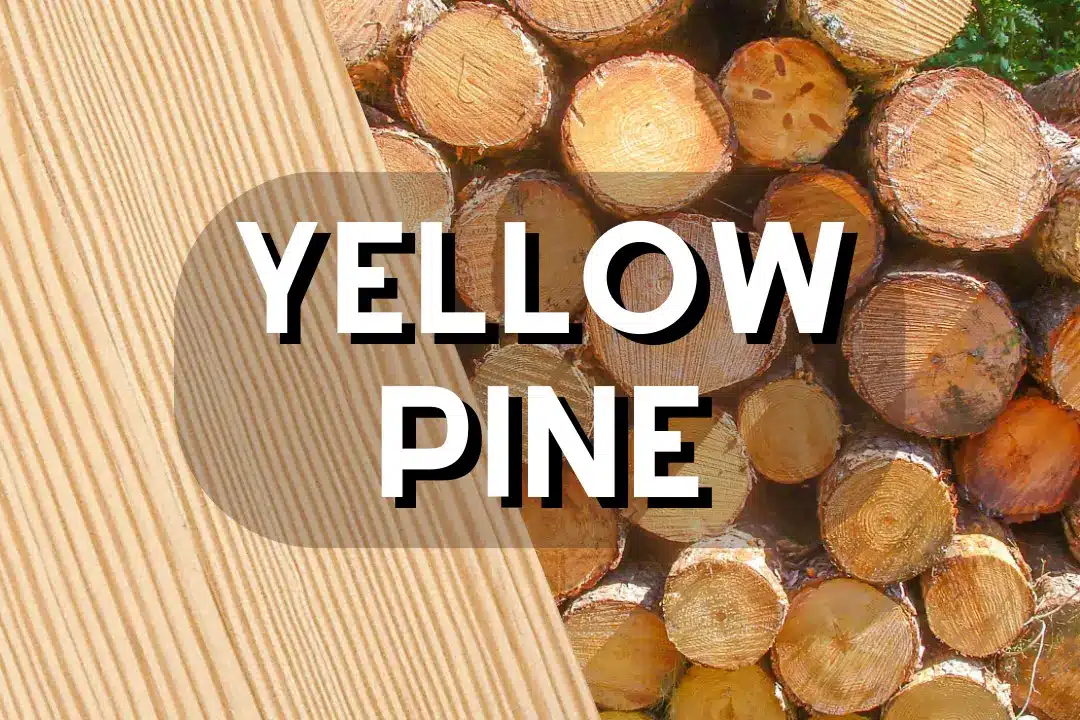

Yellow pine usually means Southern Yellow Pine, a commercial softwood group dominated by loblolly, longleaf, shortleaf, and slash pine. This dense, resinous lumber serves framing, flooring, furniture, decking, and pressure-treated outdoor structures, while western references may use the same name for ponderosa or Jeffrey pine.
The shared name creates purchasing errors because the species differ in weight, hardness, treatment response, and working character. Check the species group, grade stamp, moisture mark, and treatment tag rather than relying on color or a store label.
Table of Contents
What Is Yellow Pine?
Yellow Pine Definition and Classification
Yellow pine wood isn’t one botanical species. In the southeastern United States, the term normally identifies Southern Yellow Pine, or SYP lumber; in western North America, it may identify ponderosa pine or Jeffrey pine.
Hardwood or softwood? Yellow pine is a softwood because it comes from a conifer in the genus Pinus. Botanical classification doesn’t measure physical hardness: dense longleaf pine resists indentation better than several lighter softwoods and holds screws firmly.
The Southern Yellow Pine group contains four principal commercial species: loblolly pine (Pinus taeda), longleaf pine (Pinus palustris), shortleaf pine (Pinus echinata), and slash pine (Pinus elliottii). Mills can grade them as a recognized group, so an SYP stamp may not identify the individual tree.
- Loblolly pine: widely planted and commonly made into framing, panels, pulp, and treated lumber. See the detailed loblolly pine guide.
- Longleaf pine: often denser and more resinous, particularly in slow-grown historical material. Modern plantation lumber shouldn’t be assumed to equal old-growth heart pine.
- Shortleaf pine: a structural species with properties close to loblolly; its range and identification are covered in the shortleaf pine profile.
- Slash pine: common in the lower coastal Southeast and used for lumber, pulp, resin products, and pressure treatment. Compare its traits in the slash pine guide.
Western Species, Appearance, and Identification
Ponderosa and Jeffrey pine are western species sometimes sold under the yellow pine name. Both tend to be lighter and softer than the main southern group, so ponderosa figures shouldn’t be copied into an SYP structural calculation; the regional distinction is explained further in this western yellow pine reference.
Austrian black pine (Pinus nigra) is a separate European species widely planted as an ornamental and shelterbelt tree. Its dark bark and rigid needles may cause name confusion, but “black pine” isn’t a lumber-trade synonym for Southern Yellow Pine.
Color and grain range from nearly white or pale-yellow sapwood to yellow-orange or reddish-brown heartwood. Alternating soft earlywood and dense latewood form bold rings; a freshly cut board often feels slightly tacky and releases a sharp turpentine-like scent as the blade warms the resin.
Reliable identification clues include geographic origin, a grade stamp, supplier records, density, growth-ring structure, and microscopic resin-canal patterns. Color alone fails because age, ultraviolet exposure, finish, sapstain, and kiln schedules can make unrelated pine boards look alike.
A treatment tag reports the preservative, retention, and permitted exposure, but it may identify only a broad species group. For a restoration match, request a botanical identification or documented mill source rather than judging one weathered face.
Yellow Pine Properties and Stability
Species Property Table: Density, Hardness, and Strength
Yellow pine hardness varies sharply by species and growth conditions. Representative dried-weight and Janka figures from the USDA’s Wood Handbook and published species references describe averages, not a promise for every board.
| Species | Average dried weight | Approximate Janka hardness | Practical character |
|---|---|---|---|
| Longleaf pine | 41 lb/ft³ (650 kg/m³) | 870 lbf | Dense, hard, and often resinous |
| Slash pine | 41 lb/ft³ (650 kg/m³) | 760 lbf | Strong with prominent growth rings |
| Loblolly pine | 35 lb/ft³ (570 kg/m³) | 690 lbf | Common structural and treated lumber |
| Shortleaf pine | 35 lb/ft³ (570 kg/m³) | 690 lbf | Moderately dense structural pine |
| Ponderosa pine | 28 lb/ft³ (450 kg/m³) | 460 lbf | Lighter and easier to machine |
Janka hardness measures resistance to indentation, not beam capacity. Modulus of rupture describes bending failure in clear test pieces, modulus of elasticity describes stiffness, and compression values measure resistance to crushing along or across the grain.
Clear-wood values come from small, defect-free specimens. Structural design values account for grade-limiting features such as knots, checks, wane, slope of grain, and splits, so they must come from the correct grade, size, moisture condition, and species-group tables.
Shrinkage, Drying, Acclimation, and Moisture Testing
Shrinkage and movement are significant because southern pine commonly shrinks about 4.6%–5.4% radially and 7.4%–7.7% tangentially from green to oven dry. Installed boards experience only part of that range, yet the larger tangential change explains why flatsawn boards cup more readily than quartersawn stock.
Wet boards often feel cool and heavy in the hand. As one face dries faster, the board may bow, cup, or twist, and fine end checks can open with a faint ticking sound in a hot shop or direct sun.
Drying and acclimation require airflow around every face. Stack boards flat on aligned stickers, shade them from direct sun, and bring interior stock near the building’s expected equilibrium moisture content before milling final dimensions.
Conditioned interiors often call for roughly 6%–8% moisture, though humid coastal buildings can stabilize higher. Test several boards, both faces, and more than one location; pin meters need species correction, while pinless meters can misread thin stock or damp surfaces.
Measure flooring near the center and ends rather than trusting one exposed board. A hidden wet core can remain after the surface feels dry, and machining it immediately may release drying stress that bends an apparently straight blank.
Common Yellow Pine Uses
Framing, Construction, Decks, and Exterior Structures
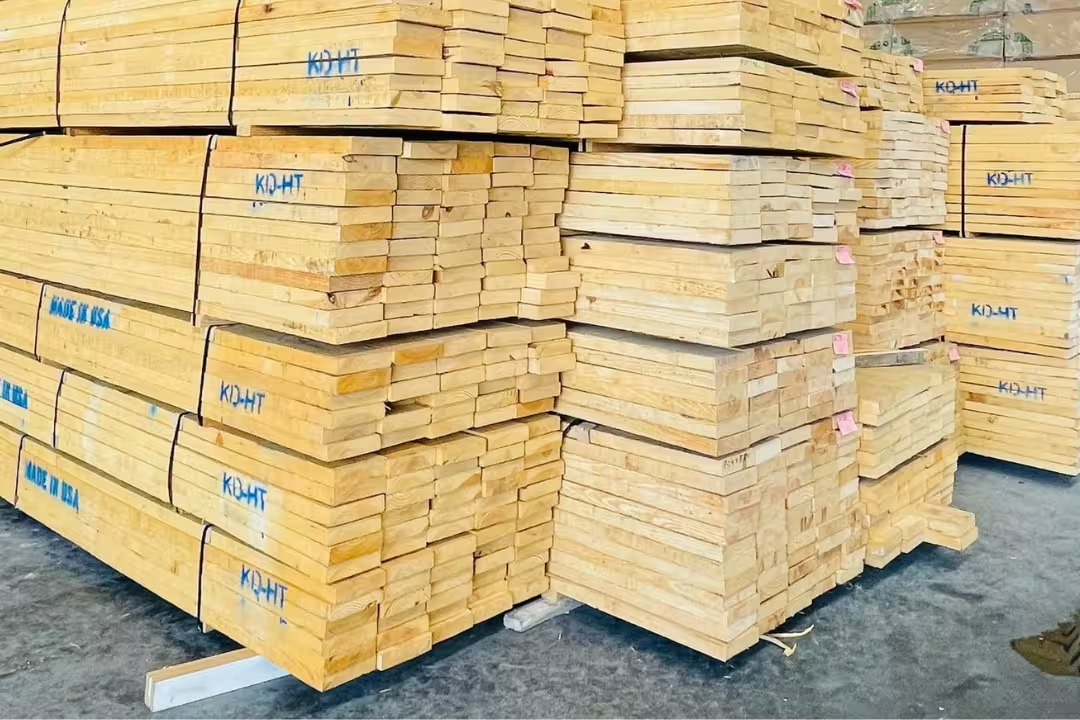
Framing and construction consume large volumes of yellow pine because graded SYP combines useful stiffness, good nail holding, long dimensions, and broad southeastern supply. Common products include studs, joists, rafters, truss parts, headers, timbers, and structural panels.
A strong species name doesn’t approve a beam by itself. Select joists, rafters, and headers from code-recognized span tables using the actual grade, spacing, span, loading, and service condition; this wider guide to construction wood explains why defects and member orientation matter.
Decks and exterior structures commonly use pressure-treated Southern Yellow Pine for joists, beams, boards, stairs, fences, posts, docks, and agricultural buildings. Its treatable sapwood is a major advantage, but each board still needs the correct treatment category for its exposure.
Flooring, Furniture, Doors, and Utility Products
Flooring and stair parts show yellow pine’s dark latewood bands clearly. Dense stock takes daily foot traffic better than western yellow pine, yet chair legs, pet claws, and grit can leave dents; many owners accept those marks as a warm, worn patina.
Furniture and woodworking uses include tables, benches, shelving, chests, workbenches, rustic cabinets, and utility pieces. Yellow pine is good for furniture when the design allows seasonal movement and the maker controls resin, knots, splitting, and uneven stain absorption.
Doors, trim, and frames need straight, dry, stable stock. To make a window frame, choose quartered or vertical-grain pieces where possible, reject pitch pockets, orient sill grain for drainage, seal end grain, and leave glazing and joinery details able to shed water.
Industrial and utility uses include pallets, crates, packaging, treated poles, railway timbers, pulp, paper, pellets, and fiber products. These markets use different grades from furniture stock, so a structural stamp doesn’t promise clear faces or matching color.
- Choose graded, documented lumber for load-bearing framing.
- Use pressure-treated material for the exposure named on its tag.
- Select dry, straight, low-resin boards for doors and fitted furniture.
- Buy flooring by moisture condition, face quality, and milling accuracy.
- Include waste for knots, splits, twist, and unusable pitch pockets.
Is Yellow Pine Good for Outdoor Use?

Untreated and Pressure-Treated Yellow Pine
Can yellow pine be used outdoors? Yes, but pressure-treated lumber or fully protected, well-maintained construction is the safer choice. Untreated yellow pine isn’t reliably decay resistant where rain, soil, freshwater, or trapped moisture keeps it damp.
Untreated outdoor durability varies between heartwood and sapwood, species, and individual trees. Resin may slow water briefly, but it doesn’t prevent fungal decay; horizontal end grain, shaded joints, plant contact, and splashback create the earliest soft, dark patches.
Pressure-treated yellow pine accepts preservatives well, particularly through its sapwood. Treatment reduces decay and insect risk, but it doesn’t stop checking, swelling, ultraviolet graying, finish erosion, or corrosion of incompatible metal.
Treatment categories and tags matter more than the word “treated.” The American Wood Protection Association’s Use Category System separates interior, above-ground, ground-contact, freshwater, and more severe exposures.
Ground and freshwater contact require products labeled for those conditions. Above-ground material can fail early when buried, used in a retaining wall, installed over wet masonry, or placed where replacement would be difficult and drainage remains poor.
Cut Ends, Drainage, Ventilation, and Compatible Hardware
Cut-end protection matters because sawing, notching, or boring may expose a less-treated core. Apply the field preservative named by the treatment instructions to fresh cuts and holes, paying special attention to post tops, end grain, and concealed joints.
Drainage and ventilation often decide service life. Slope caps and rails, separate wood from soil and masonry, avoid water-catching ledges, leave air behind cladding, and use flashing so pressure treatment isn’t forced to compensate for a permanently wet joint.
Compatible fasteners may include approved hot-dip galvanized or stainless-steel nails, screws, bolts, hangers, and post bases. Electroplated coatings can be too thin for wet treated lumber, while mixed metals may trigger galvanic corrosion.
Coastal, poolside, and continuously wet projects often justify stainless-steel hardware, but the grade of stainless and connector approval still matter. Match every hanger and fastener to the preservative system, exposure, load, and connector manufacturer’s instructions.
Fresh treatment can leave boards saturated. Before coating, test the moisture rather than relying on a surface bead test; a dry-looking face may hide a wet inner core that later shrinks, checks, and pushes finish from the surface.
Grades, Labels, and Yellow Pine Pricing
Structural Grades, Grade Stamps, and Moisture Marks
Structural lumber grades may include Select Structural, No. 1, No. 2, No. 3, Stud, Construction, Standard, and Utility, depending on the governing rules and product. A higher structural grade permits fewer strength-reducing defects, but it may still contain unattractive knots or resin streaks.
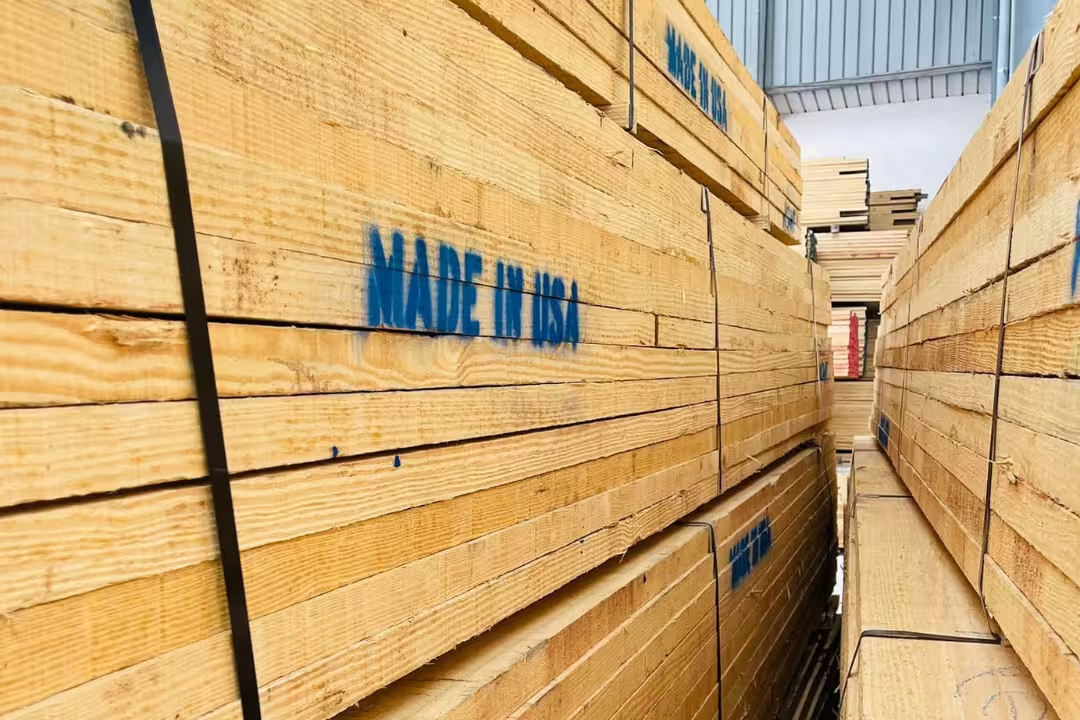
Reading grade stamps starts with the grading agency, mill number, species or group, assigned grade, and seasoning mark. A separate HT mark relates to heat treatment for shipping or pest control; it doesn’t mean the wood is preservative treated.
| Moisture mark | Plain-language meaning | Project implication |
|---|---|---|
| S-GRN | Surfaced above 19% moisture content | Expect meaningful shrinkage during drying |
| S-DRY | Surfaced at 19% or less | Still wetter than many heated interiors |
| KD | Kiln dried, commonly to 19% maximum | Check the governing grading rules |
| KD15 | Kiln dried to 15% maximum | More controlled, but acclimation may remain necessary |
| MC15 | 15% moisture content or less when surfaced | Verify present moisture after storage |
S-GRN and S-DRY describe moisture at surfacing, not the board’s condition months later. Poorly covered stock can regain moisture in a lumberyard, while dry indoor storage can bring it well below its stamped threshold.
KD15 and MC15 aren’t interchangeable with furniture-ready moisture. For fitted cabinets, doors, or flooring, meter the delivered stock and acclimate it to the room rather than treating a stamp as a present-day measurement.
Span tables and codes must match species group, grade, actual dimensions, spacing, load, and wet- or dry-service use. Species-average Janka or bending values can’t size a joist, beam, rafter, header, or column.
Price Factors, Board Feet, and Lumber Dimensions
Yellow pine pricing changes with grade, length, dimensions, moisture condition, surface quality, treatment category, preservative retention, certification, regional supply, freight, and commodity markets. A long clear board or heavy ground-contact timber costs more to produce than a short No. 2 framing piece.
Board-foot comparisons work best for rough or hardwood-style lumber sales. Calculate thickness in inches × width in inches × length in feet ÷ 12, then add expected waste rather than comparing boards solely by sticker price.
A nominal 2 × 4 × 8 contains 5.33 nominal board feet, yet its dressed size is commonly about 1.5 × 3.5 inches. Using actual dimensions gives about 3.5 board feet, showing why nominal and actual calculations shouldn’t be mixed.
Nominal versus actual dimensions also affect coverage, span, joinery, and fastener length. Measure specialty boards and older lumber directly because rough-sawn, planed, dry, and historical dimensions may differ from modern dressed standards.
For a fair quote, compare the same grade, moisture mark, treatment use, actual size, length, and appearance. Add a waste allowance for crook, bow, twist, splits, loose knots, and unusable ends; cheap wet stock can cost more after sorting and drying losses.
Yellow Pine Versus Other Woods
Compact Wood Comparison Table
Southern Yellow Pine is harder and stronger than many light pines, accepts pressure treatment readily, and holds fasteners well. Species, grade, moisture, defects, and local availability can matter more than broad species comparisons for structural work.
| Wood | Relative hardness | Outdoor approach | Common strengths | Common limitation |
|---|---|---|---|---|
| Southern Yellow Pine | Medium to high for pine | Often pressure treated | Framing, decking, flooring, holding fasteners | Resin and drying movement |
| Eastern white pine | Low | Protect or treat for exposure | Carving, trim, light furniture | Dents readily |
| Ponderosa pine | Low to medium | Protect or specify treatment | Millwork and easier machining | Lower hardness than SYP |
| Douglas fir | Medium | Exposure-dependent protection | Stable structural framing | Regional grades and supply vary |
| Cedar | Low | Useful natural decay resistance | Light exterior trim and cladding | Softer and lower fastener holding |
| Oak | High | Species and detailing matter | Hard flooring and furniture | Heavy and often costlier |
White Pine, Western Pine, Douglas Fir, Cedar, and Oak
Yellow pine versus white pine: SYP is usually denser, harder, stronger, and better at holding fasteners. Eastern white pine, near 380 lbf Janka, machines and carves more easily than loblolly at about 690 lbf or longleaf near 870 lbf.
Southern versus western pine: ponderosa and Jeffrey pine usually feel lighter in the hand and cut with less resistance. SYP’s hard latewood bands produce a louder cutting note and stronger grain texture, while western stock is often preferred for easy machining and subdued weight.
Yellow pine versus Douglas fir: both serve structural work, but Douglas fir isn’t a true pine. Compare grade-specific design values, treatment availability, straightness, drying behavior, and local price rather than choosing from species reputation; see this Douglas fir guide for its distinct traits.
Yellow pine versus cedar: cedar is lighter and often chosen for appearance and natural decay resistance, while SYP is normally stronger and harder. Outdoor Southern Yellow Pine commonly relies on pressure treatment; cedar still needs drainage and surface maintenance.
Yellow pine versus oak: oak is a hardwood and usually heavier, harder, and more wear resistant. Yellow pine costs less in many regions, comes in long structural sizes, and creates a bold rustic floor, though it dents sooner under concentrated loads.
Working and Finishing Yellow Pine

Cutting, Drilling, Fastening, Gluing, and Sanding
Cutting and machining work best with sharp carbide edges and steady feed. Dense latewood resists the blade more than pale earlywood, while resin buildup adds drag, heat, dark scorch marks, and a sticky film around teeth or router flutes.
Support knotty areas to limit tear-out and clean cutters with a tool-approved resin remover. Never scrape a spinning blade; disconnect the machine before removing pitch buildup.
Drilling and fastening require pilot holes near ends and edges, especially in dry, dense stock. Match the hole to the fastener’s root diameter, preserve required edge distances, and stop the driver before its head crushes the earlywood.
Gluing resinous surfaces works best on dry, freshly prepared wood without visible pitch. Scrape heavy deposits, make a light final cut shortly before assembly, and use an adhesive rated for the moisture condition and intended exposure.
Sanding uneven grain calls for a firm, flat backing pad and moderate pressure. A soft pad can hollow the pale earlywood while skating over hard latewood, leaving a washboard texture that becomes obvious under side light.
How to Stain Yellow Pine and Control Pitch
How to stain yellow pine: sand evenly, remove dust, test the full finish schedule on offcuts, apply a compatible washcoat or conditioner if needed, then use controlled thin coats. Gel stain often reduces absorption differences because it sits closer to the surface.
Preventing uneven color starts before the stain can. Use boards from one batch, stop sanding every part at the same grit, avoid glue smears, and inspect under raking light; polished latewood and scratched earlywood accept color differently.
A washcoat can reduce blotching, but too much sealer leaves a pale, lifeless surface. Make labeled samples with different dilution ratios and application times, then view them under the room’s lighting before choosing a stain schedule.
Managing pitch bleed requires removing surface resin, allowing the board to condition, and spot-priming knots with a compatible stain-blocking primer. Warm sunlight can reactivate buried resin, so no coating gives a permanent guarantee over a large pitch pocket.
Maintaining exterior finishes means cleaning gently and recoating before the film cracks or the wood turns deeply gray. Seal exposed end grain, repair checks that collect water, and keep vegetation away from surfaces so they dry after rain.
Problems, Safety, and Sustainability
Practical Notes From Real-World Use
Warping and checking often begin with wet lumber stored in sun or supported at only two points. Stack it flat under cover, align stickers vertically, weight the top course, and mill oversized parts in stages so internal stress can settle.
Excessive deck gaps form when saturated treated boards receive generous spacing and later shrink. Meter representative boards before installation and follow the decking supplier’s spacing instructions; boards already near service moisture need a gap, while very wet boards may need little initial space.
Splitting at fasteners usually traces to small edge distances, absent pilot holes, oversized screws, or overdriving. Blunt nail points can reduce splitting in some non-structural work by crushing fibers rather than wedging them apart, but rated connections must follow their approved fastening schedule.
Finish discoloration may come from pitch, moisture behind a coating, iron contamination, mildew, or incompatible hardware. Diagnose the pattern before recoating: amber spots over knots suggest resin, while blue-black halos around screws point to moisture and metal reactions.
Premature outdoor decay commonly appears where an above-ground treatment was buried, a field cut remained bare, or two boards trapped water. Probe suspect areas gently; softened fibers beneath an intact-looking face indicate more than cosmetic graying.
Corrosion and black stains demand attention around hangers, bolts, and screw heads. Replace incompatible hardware, stop the moisture source, and keep dissimilar metals apart rather than hiding active corrosion under paint.
- Check grade, moisture, straightness, and treatment tags before buying.
- Store boards flat, shaded, supported, and ventilated.
- Meter stock before tight installation, gluing, or coating.
- Pre-drill dry, dense boards near their ends.
- Protect field cuts and design joints to drain.
- Test stains and primers on stock from the same batch.
Safe Cutting, Forestry Certification, and Treated-Wood Disposal
Safe cutting and handling call for dust extraction, eye protection, hearing protection, and a suitable respirator. Fine pine dust clings to damp skin and leaves a dry, prickly feeling around cuffs; treated-lumber dust also carries preservative residue, so wash exposed skin before eating.
Wood dust can irritate airways and create a shop fire hazard. Clear accumulations around motors and ducts, avoid compressed-air cleaning that fills the room with suspended dust, and use the control practices described by OSHA woodworking guidance.
Forestry certification can include FSC, SFI, PEFC, or American Tree Farm System claims. Certification provides chain-of-custody and forest-management information; the species name alone says little about biodiversity, land conversion, harvest practices, or transport distance.
Southern pine plantations can supply regional buildings efficiently and store carbon in long-lived products, yet plantation origin isn’t a complete environmental score. Ask for documented certification and source region when forest management affects project requirements.
Treated-wood disposal must follow local rules and the preservative guidance. Never burn treated scraps in a stove, fireplace, fire pit, or open pile, and don’t use treated sawdust as mulch, compost, or animal bedding.
Separate treated offcuts from clean wood during work so disposal remains simple. Local waste facilities may accept residential quantities under different rules from commercial loads, making early waste sorting safer and cheaper than identifying mixed scraps later.
FAQs
What Is Yellow Pine And Which Species Does It Include?
Yellow pine is a common name for several resinous pine species with yellowish heartwood, most often Southern yellow pine in the United States. Southern yellow pine commonly includes loblolly, shortleaf, longleaf, and slash pine. The name may also describe other regional species, so lumber labels can vary by location.
Is Yellow Pine A Hardwood Or A Softwood?
Yellow pine is a softwood, even though it is relatively dense and strong compared with many other softwoods. It comes from coniferous pine trees rather than broadleaf hardwood trees. Its strength, pronounced grain, and resin content make it popular for framing, flooring, and outdoor treated lumber.
Is Yellow Pine Good For Outdoor Use?
Yellow pine is good for outdoor use when it is pressure-treated or properly sealed and maintained. Pressure-treated Southern yellow pine is widely used for decks, fences, posts, and landscaping because the treatment helps resist rot and insects. Untreated boards should be protected from moisture and ground contact.
Is Yellow Pine Good For Furniture?
Yellow pine can make sturdy, affordable furniture with a warm color and noticeable grain. It works well for rustic tables, shelves, benches, and painted projects, although knots and resin can affect the finish. Choose dry, straight boards and sand carefully for smoother results.
What Is The Difference Between Yellow Pine And White Pine?
Yellow pine is generally denser, harder, and stronger than white pine, while white pine is lighter and easier to work. Yellow pine often has a bolder grain and more yellow or reddish tones. White pine usually has a smoother texture, fewer prominent knots, and dents more easily.
Affiliate Disclosure: Some links in this post are affiliate links. If you make a purchase through these links, we may earn a small commission at no extra cost to you. We only recommend products we genuinely believe in.