
Cherrybark Oak: Identification, Leaves, Size, and Growing Guide

Cherrybark oak (Quercus pagoda) is a large deciduous red oak native to the southeastern United States, where it grows best in fertile, moist, well-drained bottomlands. Its dark bark resembles black cherry, while its variable leaves have pointed, bristle-tipped lobes; the tree is an oak, not a cherry.
Table of Contents
Cherrybark Oak at a Glance

A mature cherrybark oak tree commonly reaches 60–90 feet in open sites and can exceed 100 feet on productive bottomland forest soil. Its combination of rapid juvenile growth, a broad canopy, wildlife value, and valuable red-oak lumber makes it useful where ample soil and overhead space are available.
Identity, Names, and Taxonomy
The accepted scientific name is Quercus pagoda Raf. It belongs to the beech family, Fagaceae, and the red oak group, section Lobatae. Bristle-tipped lobes and acorns that need two growing seasons to mature support that classification.
Regional names include swamp red oak, swamp Spanish oak, pagoda oak, and cherry oak. Since cherry oak and black cherry oak can mean different plants in local speech or nursery listings, use Quercus pagoda when confirming a specimen or buying a tree.
| Characteristic | Cherrybark oak facts |
|---|---|
| Scientific name | Quercus pagoda |
| Plant family | Fagaceae |
| Oak group | Red oak group |
| Typical height | 60–90 feet in open sites; 100 feet or more on excellent forest sites |
| Typical spread | About 40–60 feet, sometimes broader with age |
| Leaf type | Alternate, simple, pointed, and bristle-tipped |
| Preferred site | Moist, fertile, aerated bottomland soil |
| Common use | Shade, wildlife habitat, restoration, lumber, and veneer |
Size, Form, and Growth
Forest-grown trees usually develop a long straight bole and a high crown because neighboring trees shade lower limbs. Open-grown specimens keep lower branches and form a rounded or spreading crown, often 40–60 feet wide. Mature trunks commonly measure 2–3 feet across, while exceptional old trees become larger.
Cherrybark oak grows moderately fast for an oak on deep alluvial loam. A young tree may make strong, upright shoots in moist soil, but growth slows sharply in compacted fill, shallow soil, persistent drought, or stagnant water. Mature dimensions matter more than an imprecise “fast-growing” label.
Cherry Oak Name Meaning
The name refers to dark scaly bark that resembles mature black cherry, Prunus serotina. It doesn’t indicate cherry fruit, cherry blossom wood, or botanical kinship with a cherry tree garden plant. Cherrybark oak produces acorns rather than fleshy cherries.
Cherrybark Oak Identification
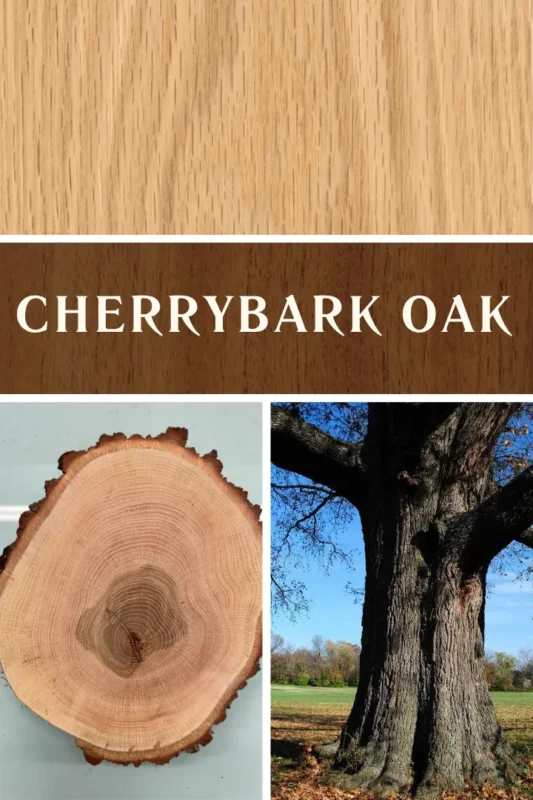
Reliable cherrybark oak identification combines leaves, bark, buds, acorns, site, and geographic range. One leaf can mislead because vigorous shoots, shaded branches, seedlings, and mature sunlit crowns may produce markedly different shapes on the same tree.
Leaves and Fall Color
A typical cherrybark oak leaf is 5–10 inches long, alternate, and simple, with roughly 5–11 pointed lobes. Each lobe ends in one or more fine bristles, while U-shaped sinuses may cut deeply toward the midrib. The terminal section often looks elongated, producing the pagoda-like outline behind the name pagoda.
The upper surface feels relatively smooth and firm, while the underside appears paler and may show soft hair where veins meet. Rubbing a fresh lower surface between two fingers can reveal a faint fuzzy texture near those vein junctions. Check several mature leaves rather than relying on a watersprout leaf with exaggerated lobes.
Fall color is commonly russet, red-brown, or plain brown. Individual trees may turn red in favorable autumn weather, but this species doesn’t deliver dependable scarlet color. For a stronger red display, compare it with scarlet oak, while keeping site and mature-size differences in mind.
Bark and Overall Form
Young bark is gray and fairly smooth. Mature cherrybark oak bark becomes dark gray to nearly black, breaking into scaly plates and narrow ridges that can resemble burnt potato chips pressed against the trunk. Bark differs with age, so smooth juvenile bark doesn’t rule out the species.
Look upward before settling on an identification. A forest tree often carries a high crown above a straight trunk, whereas an open specimen has lower, heavier limbs. The NC State Extension Plant Toolbox provides supporting botanical descriptions, but whole-tree context remains useful in the field.
Twigs, Buds, and Flowers
Twigs range from brown to reddish brown. Several buds cluster at the shoot tip, a useful winter oak clue once leaves have dropped. Buds alone rarely separate similar red oaks, so pair them with retained acorn cups, bark, branching form, and habitat.
Male flowers hang in slender yellow-green catkins during spring, while small female flowers occur on the same tree. Wind carries pollen between trees. These inconspicuous flowers aren’t a strong ornamental feature, and late freezes or poor pollination can reduce a later acorn crop.
Acorns and Maturation
Cherrybark oak produces relatively small acorns, often near ½ inch long, seated in a shallow saucer-shaped cup. The cap covers only a small part of the nut. As with other red oaks, acorns mature during their second growing season rather than the first.
Size varies between trees and growing sites. Compare several intact acorns and cups instead of measuring one damaged nut. Fresh acorns feel dense and cool in the hand; insect-infested ones may feel unusually light and show a round weevil exit hole.
Seasonal Identification Checklist
- Spring: Look for clustered terminal buds, opening bristle-tipped leaves, and hanging male catkins.
- Summer: Compare several 5–10-inch leaves, checking their pointed lobes, deep sinuses, and paler undersides.
- Autumn: Expect russet to red-brown foliage and small acorns in shallow cups.
- Winter: Use clustered buds, reddish-brown twigs, dark mature bark, old acorn cups, and overall form.
- All seasons: Confirm a southeastern bottomland setting with drainage rather than permanent standing water.
Cherrybark Oak Lookalikes
Southern red oak is the closest common lookalike, while Shumard, Nuttall, water oak, and black cherry can also cause confusion. The strongest comparison uses multiple plant parts and habitat rather than a single leaf photograph.
Southern Red Oak Comparison
Cherrybark oak, Q. pagoda, favors rich bottomlands and lower slopes. Southern red oak, Q. falcata, appears more often on dry uplands and poorer soil. Southern red oak leaves commonly have a narrow terminal lobe and curved side lobes, while cherrybark leaves tend to look broader and balanced.
Leaf variation and possible hybridization blur the boundary. Older references may list cherrybark oak as Quercus falcata var. pagodifolia. Habitat provides useful evidence, but planted trees can occur outside their usual setting, so check bark, buds, acorns, and regional flora records.
| Feature | Cherrybark oak | Southern red oak |
|---|---|---|
| Scientific name | Quercus pagoda | Quercus falcata |
| Typical habitat | Fertile, well-drained bottomlands | Drier uplands and poorer soils |
| Leaf outline | Often broad and pagoda-like | Often narrow with curved side lobes |
| Terminal lobe | Elongated but commonly balanced by broad side lobes | Frequently narrow and strongly extended |
| Best diagnostic method | Leaves, bark, acorns, buds, and habitat together | Leaves, bark, acorns, buds, and habitat together |
Black Cherry Differences
Black cherry has unlobed leaves with fine serrations and produces small fleshy fruit. Cherrybark oak has pointed lobes and produces acorns. Their mature trunks share a dark, flaky appearance, but the fruit and leaves separate them at once during the growing season.
Shumard Oak Comparison
Shumard oak, Quercus shumardii, is another large red oak of productive soils. Its leaves often show deeper, more even sinuses and a more symmetrical outline. Acorn dimensions, cup shape, buds, and local distribution offer better confirmation than autumn color, which changes with weather and tree genetics.
Nuttall and Water Oaks
Nuttall oak, Quercus texana, tolerates low, periodically flooded clay sites better than cherrybark oak. Cherrybark usually occupies slightly higher, better-aerated ground. Water oak has smaller, shallow-lobed, highly variable leaves and is often shorter-lived. See the full water oak guide for direct form and leaf comparisons.
Native Range and Habitat
The cherrybark oak range covers much of the southeastern and south-central United States, especially the Coastal Plain, Mississippi embayment, river valleys, and lower Piedmont. It occupies moist bottomlands, yet it performs best where floodwater drains and oxygen returns to the root zone.
Native Range
Native records extend from parts of the Atlantic Southeast west to eastern Texas and north through sections of the Mississippi Valley and lower Midwest. County-level status varies, and a planted record doesn’t prove local nativity. The USDA PLANTS profile is useful for checking documented distribution.
Bottomland Habitat
Natural sites include stream terraces, floodplains, rich lower slopes, river valleys, and bottomland hardwood forests. Deep loamy alluvium supports the best growth because it combines water, nutrients, and pore space. A tree rooted in good bottomland soil often produces long vigorous shoots that feel smoother and less twiggy than growth from a dry, compacted site.
Flooding and Drainage
Periodic dormant-season flooding can be compatible with cherrybark oak. Permanent saturation during active growth is different: water fills soil pores, limits oxygen, kills fine roots, and opens the way for root disease. The name swamp red oak shouldn’t be read as permission to place it in stagnant swamp water.
Forest Associates
Common associates include sweetgum, American elm, green ash, willow oak, water oak, Shumard oak, Nuttall oak, swamp chestnut oak, and loblolly pine on transitional ground. Baldcypress may occupy wetter nearby elevations. These associations help identify the site position, but they don’t replace direct examination of the oak.
Growing Requirements and Landscape Fit
Cherrybark oak needs sun, deep soil, reliable moisture, drainage, and room for a crown that may spread 40–60 feet. It suits parks, campuses, large properties, timber ground, and restoration sites far better than small confined yards.
Sun, Soil, and Hardiness
Use at least six hours of direct sun as a practical target. Seedlings can persist under partial cover, but crown quality declines in dense shade. Deep fertile loam with an acidic to mildly acidic reaction provides the strongest growth. A soil test should guide amendments; routine heavy fertilizer can create weak excessive shoots.
Horticultural references commonly place the species near USDA zones 6–9, but seed origin matters near range limits. Check the USDA Hardiness Zone Map, then account for summer heat, drainage, local rainfall, and whether the seed source matches your regional climate.
Moisture Requirements
Keep young roots evenly moist without submerging them. Sandy soil may need more frequent irrigation, while heavy clay needs slower watering and longer pauses. Push a finger several inches into the mulch-free soil: cool, faintly damp soil is suitable; a sour smell and greasy feel can indicate poor aeration.
Space and Placement
Don’t plant beneath overhead wires or beside a narrow pavement opening. Keep the future crown, trunk flare, and root area away from foundations, septic components, patios, and confined courtyards. Local soil and infrastructure determine the final setback, but the planning unit should be a 90-foot tree, not a five-foot sapling.
Landscape Strengths and Limitations
Field experience insight: young cherrybark oaks often look easy to fit because their crowns remain narrow for several years. Conflicts emerge later, after scaffold limbs thicken and spread over roofs or paving. Marking a 50-foot crown circle before planting exposes tight placement that isn’t obvious while holding a small container tree.
- Strengths: Broad shade, native habitat, acorns, strong regional character, and valuable hardwood.
- Limitations: Large mature size, leaf and acorn litter, establishment watering, and vulnerability to root-zone disturbance.
- Good placements: Parks, large lawns, campuses, riparian buffers on suitable elevations, and mixed native plantings.
- Poor placements: Utility corridors, compacted urban fill, permanently wet depressions, and small paved courtyards.
Planting and Buying Cherrybark Oak
Successful planting starts with correctly labeled Quercus pagoda, a healthy root system, and a site large enough for maturity. A smaller tree with straight, fibrous roots often establishes faster than a taller specimen carrying circling container roots.
Selecting Nursery Stock
Confirm the scientific name on the invoice and ask where the seed originated. Inspect the trunk for wounds, dieback, and weak co-dominant leaders. Slide a container off where nursery policy permits; reject a root ball wrapped in thick circling roots or one with the root flare buried several inches deep.
Bare-root seedlings suit restoration work because they’re inexpensive and easy to transport, but their roots must remain cool and damp. Container stock allows a longer planting window. Large stock has immediate visual presence, yet shipping weight and transplant stress can erase that apparent advantage.
Planting and Establishment
- Find the first major structural roots and measure the root mass from that flare.
- Dig two to three times wider than the roots but no deeper than the measured root system.
- Cut or straighten circling roots where feasible without stripping away most fine roots.
- Set the root flare at or slightly above finished grade.
- Backfill mainly with native soil and water slowly to remove large air pockets.
- Apply 2–3 inches of organic mulch, leaving several inches clear around the trunk.
- Stake only where movement threatens root establishment, then remove supports after establishment.
Water deeply when rainfall doesn’t wet the root zone, then let excess water drain. Maintain a broad mulch ring to reduce weeds and mower injury. Avoid major structural pruning until establishment, apart from broken, rubbing, or hazardous limbs. Trunk guards can limit deer and rodent damage, but tight guards must be checked regularly.
Growing From Acorns
Collect mature acorns soon after natural drop. Keep nuts that feel dense and lack cracks, mold, or insect holes. A float test can screen obvious damage, but it isn’t conclusive; cutting a small sample reveals whether the internal tissue is firm and pale.
Red-oak-group acorns commonly need 30–90 days of moist chilling, depending on seed source and protocol. Refrigerate them in a damp, airy medium rather than a dripping or sealed mixture. Check for mold and early roots. Never let the acorns dry completely, and don’t freeze them.
Sow acorns about 1–2 inches deep and protect them from squirrels, mice, and deer. Deep containers reduce taproot bending, though direct sowing in a protected bed avoids container deformation. Move seedlings while young; a pale taproot can lengthen surprisingly fast and soon presses hard against a shallow pot base.
Common Planting Failures
The most damaging beginner errors are deep planting, mulch against the trunk, uncorrected circling roots, and placement in standing water. Another frequent mistake is improving only the planting hole with rich compost, which can hold water like a basin and discourage roots from entering the surrounding native soil.
A useful workaround is to expose the root flare before measuring hole depth, then test drainage before planting. Fill a test hole with water and watch how long it remains. Slow drainage doesn’t automatically rule out the site, but persistent water calls for a higher planting position, another location, or a better-suited wetland tree.
Buying Cherrybark Oak Seedlings
Online listings can suit buyers who have verified space, drainage, local planting rules, and the botanical name. Ask whether height includes the pot, whether plants ship dormant, and whether provenance is known. Leafless arrival during dormancy isn’t proof of death; scrape a tiny twig area and look for green moist tissue.
These listings offer live plants labeled as cherrybark oak; verify Quercus pagoda and local suitability before ordering.

Cherrybark Oak Seedling
- Live cherrybark oak seedling
- Compact size for easy planting
- Grows into a stately shade tree
- Supports wildlife with acorns
- Ideal for yards and restoration projects
 Buy on Amazon

Cherrybark Oak Trio
- Includes three live oak plants
- Fast-growing tree for future shade
- Native hardwood restoration option
- Acorns help support wildlife
- Great for larger landscape projects
Buy on Amazon

Cherrybark Oak Live Tree
- Live Quercus pagoda tree plant
- Arrives over 16 inches tall
- Develops into a broad shade tree
- Strong choice for native landscapes
- Valuable habitat and acorn source
Buy on Amazon
Cherrybark Oak Pair
- Includes two live Quercus pagoda plants
- Each plant arrives over 16 inches tall
- Creates future shade and structure
- Well suited to native planting plans
- Acorns provide wildlife value
Buy on Amazon
Price and Value Factors
Compare delivered cost rather than the plant price alone. Shipping height, container volume, bare-root packing, quantity, distance, dormancy, and replacement terms affect value. Multi-packs can reduce unit cost, but several cherry oak trees require enough land for several massive mature crowns.
A taller plant isn’t always the better purchase. Root quality, local seed origin, trunk condition, and correct labeling carry greater long-term value than top height. Photograph the unopened package, roots, and broken parts immediately if making a shipping claim, then keep exposed roots cool and damp.
Wildlife, Wood, and Safety
Cherrybark oak supports wildlife, produces valuable red-oak lumber, and fits bottomland restoration on suitable elevations. Its acorns and leaves contain tannins, so ecological value shouldn’t be confused with unrestricted human or livestock food.
Wildlife and Habitat Value
Acorns feed white-tailed deer, wild turkey, squirrels, wood ducks, blue jays, and small mammals. Crops vary with tree age, weather, pollination, insect damage, and mast cycles. A young nursery plant won’t produce immediate wildlife food; substantial crops require sexual maturity and favorable seasons.
The crown supplies nesting and escape cover, while bark, foliage, cavities, and dead wood support insects and other organisms. Native oak caterpillars form an important food source for birds. Fallen leaves also create a damp, earthy-smelling layer that moderates soil temperature and returns organic material to forest soil.
Restoration Uses
Suitable projects include bottomland hardwood restoration, wildlife corridors, alluvial reforestation, and riparian buffers above the wettest elevation. Match the tree to the site’s hydroperiod rather than planting it throughout every low area. Mixed native species spread risk from flooding, drought, insects, and species-specific disease.
Wood and Forestry Value
Cherrybark oak produces heavy, hard, ring-porous wood sold within the commercial red-oak group. Published values often place specific gravity near 0.60 under standard dry conditions and Janka hardness around 1,480 pound-force, though moisture and testing methods alter results. The wood has a coarse open grain rather than black cherry’s finer texture.
Uses include flooring, furniture, cabinets, veneer, millwork, pallets, and general construction. Straight forest-grown logs can command more value than short, branching yard trunks. Diameter, clear log length, defects, access, and local demand govern timber value. The red oak wood guide explains its broader lumber group.
Fresh-cut red oak has a coarse texture and a sharp, damp wood smell. Open pores can move liquid readily through end grain, which affects finishing and moisture exposure. Compare red oak vs white oak before choosing lumber for exterior or liquid-holding work.
Fire and Forest Regeneration
Fire can kill young stems and injure larger trees at the base. Thick bark offers older trunks some protection, but hidden internal decay may follow a basal wound. Regeneration also depends on viable seed, adequate light, suitable soil, control of competing vegetation, and protection from browsing and acorn predation.
Dense shade can keep seedlings alive without producing strong crowns. Releasing every seedling at once may trigger tall, weak shoots or unwanted competing vegetation, so staged release often works better. Forestry plans should account for deer pressure and the uneven timing of mast years.
Acorn and Livestock Safety
Oak leaves and acorns contain tannins. Heavy consumption can harm livestock, particularly cattle, with risk shaped by quantity, animal condition, and access to other forage. Bitter acorns shouldn’t be presented as ready-to-eat human food. Contact a veterinarian after suspected heavy livestock consumption.
Some oak acorns have traditional food uses after correct species identification and repeated tannin leaching, but home processing carries spoilage and identification risks. Don’t eat an acorn simply because wildlife does. Regional food-safety guidance should direct any human food preparation.
Product and Naming Confusion
Cherrybark oak bark isn’t wild cherry bark. Wild cherry bark products typically come from Prunus serotina, while cherry smoking chunks and cherry blossom wood come from cherry species. Generic oak bark tea or beverage-aging chips may come from entirely different oaks.
The same distinction applies to cherry oak wood. Lumber from Q. pagoda normally enters the red-oak trade; it doesn’t become cherry wood because the living tree has cherry-like bark. Never infer medicinal use, flavor, or wood performance from the common name alone.
Pests, Diseases, and Tree Health
Cherrybark oak can suffer from oak wilt, bacterial leaf scorch, cankers, root disease, insects, and stress-related decline. Diagnosis should begin with the symptom pattern, root-zone history, drainage, and rate of change rather than applying a general pesticide treatment.
Oak Wilt and Pruning
As a red-group oak, cherrybark oak can be highly vulnerable to oak wilt caused by Bretziella fagacearum. Infected red oaks may decline quickly. Avoid unnecessary pruning during the locally defined high-risk season, don’t move infected firewood, and follow regional guidance for treating fresh accidental wounds.
Pruning dates differ by climate and disease activity, so a universal calendar can create risk. Sudden wilting or rapid crown discoloration in an oak-wilt area warrants fast contact with Extension staff, a forestry agency, or a qualified arborist. The USDA Forest Service oak wilt guide covers transmission and management.
Bacterial Leaf Scorch
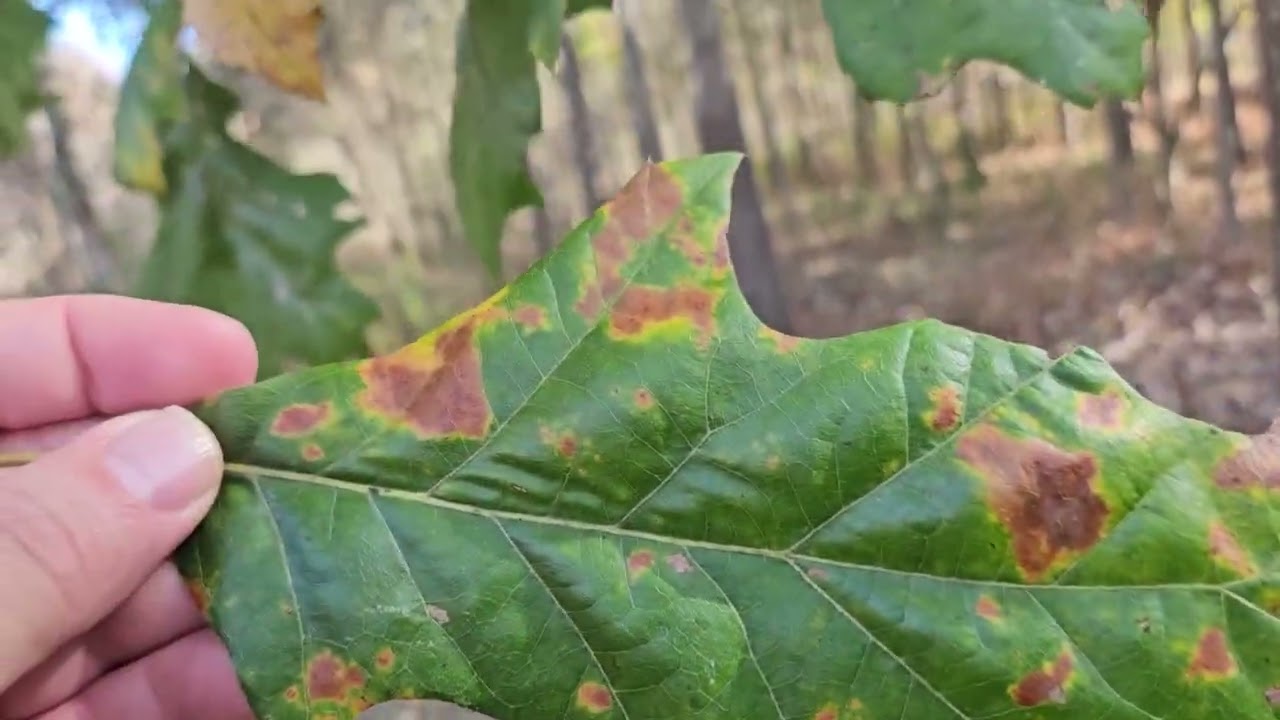
Bacterial leaf scorch, linked to Xylella fastidiosa, can cause brown leaf margins, a yellow or reddish transition band, premature drop, and progressive crown thinning. Drought scorch can look similar. A symptom that begins on exposed leaf edges isn’t enough for a firm diagnosis; laboratory testing may be needed for confirmation.
Cankers and Root Problems
Hypoxylon canker, associated with Biscogniauxia species, often appears after severe drought, root injury, or chronic decline. Peeling bark may expose dusty tan, gray, or black fungal layers. Treating the visible fungus alone won’t reverse the underlying root stress.
Armillaria root rot and oxygen-starved roots can both produce thinning crowns and dieback. Check for buried flares, trenching, grade changes, compaction, irrigation leaks, and mushrooms near the base. Beginners often fertilize a declining tree, but added nitrogen can worsen weak growth while leaving the primary cause untouched.
Insect and Animal Damage
Potential problems include borers, scale, leaf miners, caterpillars, spongy moth, acorn weevils, deer browsing, and squirrel damage. Galls made by wasps or mites often look alarming but remain cosmetic. Identify the organism and assess canopy health before reaching for an insecticide spray.
Young trunks need protection from mower decks, string trimmers, and deer rub. A single bark wound can expose moist, pale tissue and later develop a dark callus edge. Use a broad mulch ring and a loose, ventilated guard rather than wrapping the trunk in material that traps heat and moisture.
Diagnostic Warning Signs
| Warning sign | Possible causes | Practical next step |
|---|---|---|
| Sudden wilting or rapid discoloration | Oak wilt, root failure, or severe water stress | Seek regional diagnosis quickly and avoid moving firewood |
| Brown leaf margins over several years | Bacterial leaf scorch, drought, salts, or root injury | Review irrigation and root-zone history; request testing if decline repeats |
| Dead upper branches | Root loss, compaction, drought, borers, or oak decline | Inspect roots, soil, trunk, and canopy rather than treating one symptom |
| Black fungal layers beneath loose bark | Hypoxylon canker following serious stress | Assess stability, root damage, and overall decline |
| Mushrooms near the trunk base | Root or butt decay | Restrict access beneath the tree and request a risk assessment |
| Soil heaving or trunk movement | Root-plate failure | Keep people away and obtain urgent professional assessment |
| Small leaf galls with a full crown | Gall wasps or mites | Monitor; treatment is often unnecessary |
Urgent warning signs include fresh root-plate lifting, trunk cracking, sudden lean, large hanging limbs, or rapid crown collapse. Keep people and vehicles outside the possible fall zone. A tree with sound-looking leaves can still carry structural decay, so canopy color alone doesn’t establish safety.
FAQs
How Can You Identify A Cherrybark Oak Tree?
Cherrybark oak is identified by its dark, cherry-like bark and broad, deeply lobed leaves. Mature trees develop scaly gray-brown bark with dark grooves, while the leaf undersides often have fine rusty hairs. It is a tall, straight-trunked oak commonly found in rich, moist bottomland soils.
Is Cherrybark Oak The Same As Cherry Oak?
Cherrybark oak and cherry oak usually refer to the same tree, Quercus pagoda. Cherry oak is a less precise common name that may vary by region, so using the botanical name avoids confusion. This oak is prized for its strong timber, shade, and attractive fall color.
How Large Does A Cherrybark Oak Tree Grow?
Cherrybark oak typically grows 80 to 120 feet tall with a spread of 50 to 70 feet. In excellent bottomland conditions, old trees can become even taller and develop a massive trunk. Give it plenty of space, as it becomes a large shade tree rather than a small yard specimen.
Can Cherrybark Oak Tolerate Wet Soil?
Cherrybark oak tolerates moist soil and occasional flooding better than many upland oaks. It grows best in fertile, well-drained loam that stays consistently moist rather than permanently soggy. Avoid planting it where water stands for long periods, because prolonged saturated soil can damage roots.
What Is The Difference Between Cherrybark Oak And Southern Red Oak?
Cherrybark oak is Quercus pagoda, while southern red oak is Quercus falcata. Cherrybark oak usually has broader leaves with several lobes and prefers richer, moister sites, whereas southern red oak often has a long narrow terminal lobe and tolerates drier upland soils. Their bark and growth forms also become noticeably different with age.
Affiliate Disclosure: Some links in this post are affiliate links. If you make a purchase through these links, we may earn a small commission at no extra cost to you. We only recommend products we genuinely believe in.